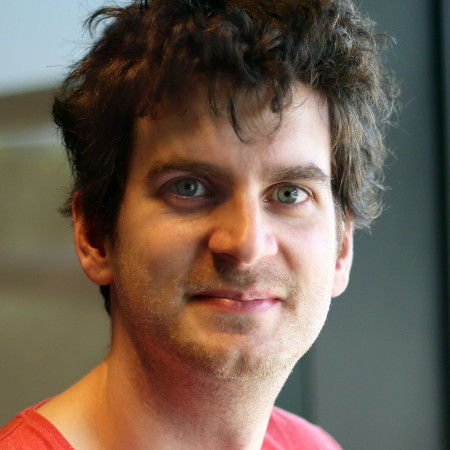
Ruben Verborgh is a Professor of Decentralized Web Technology at the Ghent University – imec and a Visiting Fellow at the Oxford Martin School (University of Oxford). He leads the Internet Technology and Data Science Lab (IDLab) and co-founded the Solid platform with Tim Berners-Lee to re-decentralize the Web. His research focuses on Linked Data Fragments , a paradigm for Web-scale query execution, and explores decentralized data governance , user-controlled data ownership , and rule-based Web agents for policy enforcement. He has co-authored two books on Linked Data and contributed to over 250 publications. Recent articles highlight trends in decentralized data ecosystems , including ODRL policy interoperability , event notification systems , and personal data vaults . His work bridges Linked Data , hypermedia APIs , and privacy-preserving technologies . Verborgh collaborates with institutions like MIT, Oxford, and the European Commission, and advises companies through Inrupt . His labs ( IDLab , Solid Ecosystem ) focus on sustainable data-driven societies.
Aldo Gangemi is a Full Professor in the Department of Philosophy at the University of Bologna, specializing in Informatics (INFO-01/A). His research integrates Semantic Technologies, Natural Language Processing, Data Science, and Cognitive Science to address challenges in knowledge representation, ontology engineering, and cultural heritage informatics. He co-founded the STLab at ISTC-CNR and DHARC at the University of Bologna, and is on leave from Sorbonne Paris Nord University (Computer Science Lab - LIPN). Scientific roles include serving as area chair for Web Semantics , editorial board member for Semantic Web and Applied Ontology , and conference chairs for major events like WWW2015 and ESWC2018. He has led European projects such as GALEN, WonderWeb, NeOn, and MARIO, and developed software tools like FRED, Aemoo, and Framester. Research interests focus on semantic technologies, knowledge patterns, and applications in humanities, medicine, law, and fisheries. Over 250 peer-reviewed publications span these areas, with emphasis on ontology-based knowledge integration, multimodal reasoning, and ethical AI. His work bridges cognitive science and technological innovation, particularly in virtual reality's societal applications and cultural heritage preservation. Notable contributions include the PRIVAFRAME knowledge graph for sensitive data, the ImageSchemaNet ontology for embodied cognition, and the Sandra neuro-symbolic reasoner. His interdisciplinary approach addresses challenges in AI ethics, creative systems, and citizen-driven data curation.
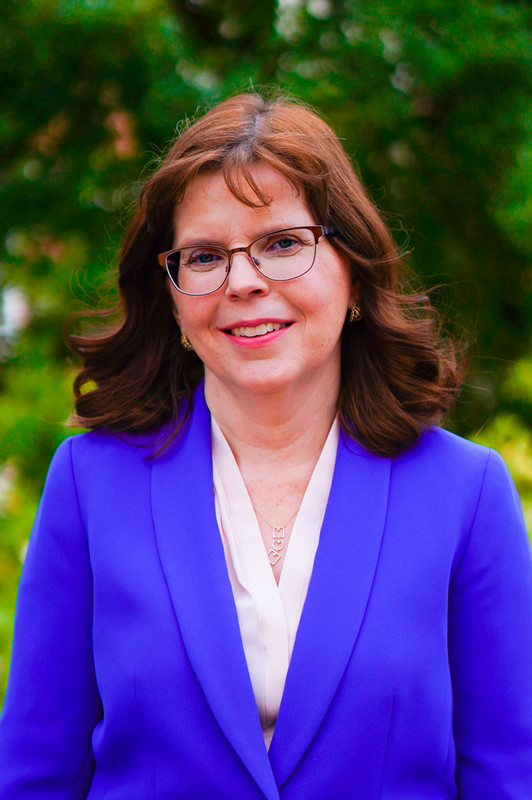
Dr. Stella Boess is a Researcher at the Department of Industrial Design Engineering, Faculty of Industrial Design Engineering at Delft University of Technology. She focuses on interdisciplinary research bridging social sciences and engineering, particularly in sustainable renovation, accessibility, and health technology. Her work emphasizes user-centered design in residential environments, addressing challenges such as heat pump adoption and inclusivity for visually impaired individuals. She teaches courses like Inclusive Design and Prototyping for Interaction , and has collaborated on projects including the HiPP initiative for optimized patient experiences and the NWO usability project. She appeared in media such as NPO's Programme Reference Man in 2022. Her research interests include human-technology relations, sustainable building practices, and co-creation methodologies. She explores how design interventions impact occupant behavior and satisfaction, advocating for holistic approaches to integrate technology with human practices. Recent projects also address mobility design improvements for automotive interiors and inclusive medical solutions for the Global South. Research Projects: HiPP: Optimizing orthopedic patient care pathways NWO design for usability project REIL project: Enhancing rehabilitation interactions AAL project MyGuardian: Supporting aging populations Stella’s publications from 2022 to 2025 reflect a trend toward analyzing socio-technical dynamics in sustainable housing and mobility systems. She highlights the importance of stakeholder collaboration and participatory frameworks to ensure equitable outcomes. No scientific awards are listed, but her contributions to inclusive design and zero-energy renovation are notable.
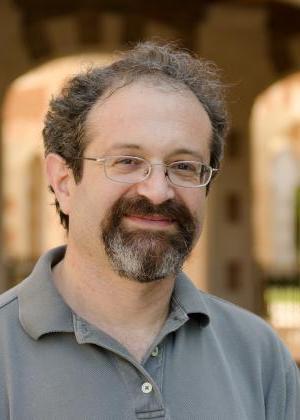
Mark S. Ackerman is the George Herbert Mead Collegiate Professor of Human-Computer Interaction at the University of Michigan, Ann Arbor. He holds dual appointments in the School of Information and the Department of Electrical Engineering and Computer Science. His research focuses on Human-Computer Interaction (HCI), particularly Computer-Supported Cooperative Work (CSCW), exploring expertise sharing, collaborative systems, online communities, and medical informatics. He is affiliated with the SocialWorlds research group, whose projects and publications detail his work. Education: Mark holds degrees from the University of Chicago, Ohio State University, and MIT. Prior to academia, he led development of the first home banking system, designed Billboard Top-10 Atari 2600 games, and contributed to the X Window System's user-interface toolkit. Recognition: He is a member of the CHI Academy and an ACM Fellow. Current roles include no student or postdoc recruitment for AY 25-26. He maintains physical offices in both the School of Information (North Quad) and EECS (Beyster Building). Research Themes: His work spans misinformation dynamics, collaborative environments, and pervasive technologies. The SocialWorlds group's projects emphasize real-world applications of CSCW principles.
David A. Muller serves as the Samuel B. Eckert Professor of Engineering in the School of Applied and Engineering Physics at Cornell University and co-directs the Kavli Institute at Cornell for Nanoscale Science. His research group focuses on developing quantitative electron microscopy methods to understand materials properties at the atomic scale, with particular emphasis on sustainable energy applications and quantum materials. Muller's laboratory utilizes some of the world's highest resolution electron microscopes housed in specially designed, environmentally isolated rooms. Muller received his undergraduate education at the University of Sydney and earned his Ph.D. in Physics from Cornell University in 1996. Between 1997 and 2003, he was a member of the technical staff at Bell Laboratories, where he applied his expertise in imaging single atoms and atomic-scale spectroscopy to determine the physical limits of transistor miniaturization. In 2003, he returned to Cornell as a faculty member, where he has since established himself as a leader in advanced electron microscopy techniques. Muller's research spans multiple frontiers in materials science, with particular focus on understanding how electronic-structure changes at the atomic scale control macroscopic behavior in diverse systems like turbine blades, fuel cells, and transistors. His current work emphasizes the physics of renewable energy materials, atomic-scale control of materials to create electronic phases that cannot exist in bulk, and developing hardware and algorithms for 'big data' acquisition from high-bandwidth pixelated electron microscope detectors. His group's work bridges theoretical physics and experimental techniques, requiring researchers who can think in both real and reciprocal space while considering both fundamental principles and practical applications. Analysis of Muller's recent publications reveals a strong trend toward advancing electron ptychography and 4D-STEM techniques for atomic-scale imaging. His group has pioneered methods for 3D atomic-scale metrology, strain mapping, and imaging of radiation-sensitive materials. The research spans applications from semiconductor technology to quantum materials and energy storage systems, demonstrating the versatility of his microscopy approaches across multiple scientific domains. Top 100 Young Innovator by Tech Review Magazine (2003) Burton Medal from Microscopy Society of America (2006) Ernst Ruska Prize of German Society for Electron Microscopy (2021) John Cowley Medal from International Federation of Societies for Microscopy (2023) Fellow of American Physical Society Fellow of American Association for the Advancement of Science Fellow of Microscopy Society of America Muller has mentored an extensive group of students and postdocs who have gone on to successful careers in academia and industry. His former students hold faculty positions at institutions including Rice University, University of Southern California, Seoul National University, Colorado School of Mines, and the University of Michigan, among others. His research has been supported by substantial grants, including a $22.5M NSF grant that accelerates materials discovery. The Muller lab maintains close collaborations with the Kavli Institute at Cornell and PARADIM (Platform for the Accelerated Realization, Analysis, and Discovery of Interface Materials). The Muller lab operates at the forefront of electron microscopy, housing specialized instrumentation including high-resolution transmission electron microscopes in environmentally isolated rooms. The group collaborates extensively with other research teams at Cornell and worldwide, focusing on understanding materials atom by atom. Current research directions include applying machine learning to electron microscopy data analysis, developing cryogenic techniques for studying low-melting-point materials, and exploring quantum phenomena in engineered materials systems.
Eetu Mäkelä is a Professor of Digital Humanities at the University of Helsinki, leading the research group at the Helsinki Centre for Digital Humanities. He focuses on computational methods in humanities and social sciences, including datafication and interdisciplinary collaboration. He serves as Technical Director of DARIAH-FI and a Research Programme Director at the Helsinki Institute for Social Sciences and Humanities. Currently, he heads the preparatory group for the Helsinki Liberal Arts and Sciences Bachelor’s Programme. His research emphasizes technological and theoretical foundations of computational research, with notable contributions to linked open data, sociolinguistic analysis, and historical text mining. He has developed widely used tools like Recon, Palladio, and Octavo, which are employed in academic and public sectors. His work has garnered over 20 awards, including best paper and open science recognitions. Key areas of expertise include digital humanities methodologies, data integration, and open science practices. He actively contributes to teaching, designing courses such as 'Methods for Digital Humanities' and demonstrating innovative pedagogical approaches. His recent projects involve analyzing 18th-century philosophical texts and sociolinguistic change using computational methods. Awards: Multiple best paper awards, open data awards, and open science awards. Grants/Advising: Leads research initiatives funded by the Academy of Finland and other bodies. Mentors interdisciplinary research teams but no specific student names listed. He maintains active roles in academic infrastructure, including the DARIAH-FI initiative and the Helsinki Institute’s datafication program. His work bridges technical innovation with humanities scholarship, emphasizing practical, enduring systems for academic and public use.
Raisul Islam is an Assistant Professor of Materials Engineering at Purdue University, with a courtesy appointment in Electrical and Computer Engineering. His research focuses on advanced materials for energy technologies, semiconductor devices, and nanoscale memory systems. He holds affiliations with the College of Engineering and is actively involved in interdisciplinary collaborations. His work emphasizes the development of novel materials and device architectures for applications in solar energy, resistive memory, and neuromorphic computing. Key areas include photovoltaic cell optimization, phase-change memory innovation, and the integration of nanotechnology with electronics. Notable research trends from his publications (2020–2023) highlight advancements in tandem solar cell efficiency, thermal management in resistive memory, and multilevel switching mechanisms in ferroelectric tunnel junctions. His work bridges fundamental materials science with practical device engineering, addressing both performance and scalability challenges. Dr. Islam’s lab focuses on experimental and computational materials characterization, with a focus on thin films, nanoscale interfaces, and energy-efficient electronics. His contributions span academic journals and industry collaborations, targeting next-generation energy and computing technologies.
Virginia Davis is the Dr. Daniel F. and Josephine Breeden Professor in the Department of Chemical Engineering at Auburn University's College of Engineering. She holds a Ph.D. in Chemical and Biomolecular Engineering from Rice University, and M.S. and B.S. degrees in Chemical Engineering from Tulane University. Research Focus: Self-assembly of nanomaterials, rheology, lyotropic liquid crystals, additive manufacturing, polymers, nanocomposites, and biosensors Key Projects: USDA-funded agricultural outreach, NSF grant for MXene dispersion studies, Alabama STEM Council member Her recent publications explore cellulose nanocrystals, MXene 3D printing, and sustainable polymer recycling. Davis has received multiple honors including the Breeden Professorship, AIChE Fellowship, and Auburn University Faculty Awards for research and mentorship. Research Trends: Dominated by bio-based nanomaterials (cellulose nanocrystals, MXenes), with applications in additive manufacturing, environmental remediation (PFAS adsorption), biosensors (carbofuran detection, cancer biomarkers), and agricultural delivery systems. Scientific Awards Auburn University Faculty Awards (2023, 2025) AIChE Fellow (2023) Dr. Daniel F. and Josephine Breeden Professorship Davis leads outreach initiatives like the Tomorrow’s Community Innovators camp and collaborates with interdisciplinary teams on plastic recycling innovations. Her work emphasizes both fundamental material science and practical applications addressing environmental and agricultural challenges.
Pascale Trevisiol Okamura is an Associate Professor in Language Sciences and Language Teaching at Sorbonne Nouvelle University, affiliated with the DILTEC research team (EA 2288). Her primary role includes teaching language acquisition and foreign language didactics within the UFR of Literature, Linguistics, and Didactics (LLD). She co-heads the Master 2 program in Language Teaching (FLE/FLS) and holds administrative roles in departmental councils and educational committees. Education Background: Lecturer at Sorbonne Nouvelle University since 2015 Previously taught at Université de Poitiers (2010–2015) and Université Paris 8 (2007–2010) French teaching assistant at Hokkaido University, Japan Research Focus: Specializes in third language acquisition (L3), crosslinguistic influence, and the interface between language acquisition and didactics. Key themes include: Discourse construction in L3 French Input processing and initial language exposure Development of teaching materials for FLE Plurilingual practices among language teachers Current projects involve multilingualism in primary education, Tamil-speaking learners' L3 French acquisition, and reflexive training in research. Teaching & Supervision: Co-supervises doctoral research on topics such as L3 French acquisition in Chinese contexts, translinguistic discourse influences, and plurilingual teacher practices. Teaches advanced courses on language acquisition theories and FLE methodology. Labs/Teams: Member of the Second Language Acquisition Network (ReAL2) and part of the DILTEC team, focusing on language didactics and multilingualism research.
Eleanor O'Rourke is an Associate Professor at Northwestern University with joint appointments in the Department of Computer Science and the Learning Sciences, part of the McCormick School of Engineering. She co-directs the Delta Lab, focusing on interdisciplinary research in Human-Computer Interaction, Artificial Intelligence, and Learning Sciences. Her work examines how learning environments can foster motivation and effective practices in computer science education, supported by grants from NSF and Google. Educated at the University of Washington (PhD, MS in Computer Science & Engineering) and Colby College (BS in Computer Science and Spanish), her research employs mixed methods, including design-based research and grounded theory, to study student motivation, affective responses during programming, and AI-driven interventions. Notable contributions include tools like Ply and Isopleth , which support novice web developers, and studies on student self-assessment biases and growth mindset incentives. Her work has been recognized with multiple Best Paper Awards at ACM conferences, including ICER 2024 and SIGCSE 2022. She teaches courses such as Transformative AI and the Learning Sciences and Design of Learning Environments , and advises a diverse cohort of PhD students and undergraduates. The Delta Lab’s collaborative approach emphasizes innovation in educational technology and human-centered design.
Andrew Plantinga is a Professor of Natural Resource Economics and Policy at the Bren School of Environmental Science and Management, UC Santa Barbara. He also serves as Director of the Productive Landscapes Group at the Environmental Markets Solution Lab (emLab). His academic journey includes faculty roles at Oregon State University and the University of Maine before joining UCSB in 2012. He holds a PhD in Agricultural and Resource Economics from UC Berkeley, an MS in Forestry from the University of Wisconsin, and a BA in English from Grinnell College. Plantinga’s research focuses on the economics of land use, climate change, and forests. Key areas include econometric modeling of land-use decisions, environmental policy analysis, and wildfire risk management. A current NSF-funded project examines how wildfire salience influences public agency decisions. He emphasizes tradable property rights for groundwater management and has authored/co-authored over 80 journal articles, including high-impact publications in Journal of Environmental Economics and Management and Proceedings of the National Academy of Sciences . His work frequently addresses policy implications of land-use changes, such as urban growth boundaries and agricultural intensification. Recent studies explore wildfire management effectiveness, stranded public lands’ economic impacts, and carbon sequestration costs. Plantinga advises PhD students focusing on economics, including Linus Blomqvist. Grants include NSF support for wildfire policy analysis. He teaches Bren School courses like Natural Resource Economics and Cost-Benefit Analysis. His labs and collaborations, such as emLab, aim to bridge economic and ecological approaches to environmental challenges.
Jeffrey S. Lidke is a Professor of Religious Studies and Chair of the Department of Religion and Philosophy at Berry College. He holds a B.A. from the University of Colorado (1990), M.A. (1996), and Ph.D. (2000) in South Asia Religion and Philosophy from the University of California, Santa Barbara. A Fulbright Dissertation Fellow to Nepal (1996-97), his research focuses on Nepalese Tantra, South Asian religious traditions, and the intersection of contemplative practices with neuroscience. His major works include The Goddess Within and Beyond the Three Cities (2017) and Viśvarūpa Maṇḍir: A Study of Chaṅgu Nārāyaṇa (2017). Key research areas include Śākta Tantra's political theology, Abhinavagupta's monistic philosophy, and the neuroscientific implications of Tantric meditative practices. His work bridges textual analysis with ethnographic fieldwork in Nepal and India. Education: B.A., Religious Studies, University of Colorado (1990) M.A., South Asia Religion and Philosophy, University of California, Santa Barbara (1996) Ph.D., South Asia Religion and Philosophy, University of California, Santa Barbara (2000) Research Interests: Indian and Nepalese Tantra Kashmir Śaivism Cognitive Neuroscience of Contemplative Practices Embodied Mysticism in Art and Dance Maṇḍala Theory and Political Theology Key Contributions: Pioneered studies on the Sarvāmnāya Tantra system Explored neuroscientific applications of Tantric meditation Edited volumes on South Asian religious practices and ecology Awards: Fulbright Dissertation Fellowship (1996-97) Professional Activities: Co-editor of Southeast Review of Asian Studies Interviews on Tantric philosophy and Yoga-Neuroscience connections
Jas Brooks is an incoming Assistant Professor at MIT's Department of Electrical Engineering and Computer Science (EECS) and the Computer Science and Artificial Intelligence Laboratory (CSAIL), starting Fall 2026. They completed a PhD in Computer Science at the University of Chicago under Prof. Pedro Lopes, focusing on perceptual engineering—designing interfaces to modulate human sensory perception. Their work addresses challenges in power efficiency and miniaturization for senses like taste, touch, and smell, enabling applications in health, safety, and immersive experiences. Research interests span HCI, olfactory interfaces, thermal feedback systems, and wearable technology. Notable publications include Best Paper Awards at CHI 2020 and CHI 2021, and Honorable Mentions at UIST 2023 and UIST 2021. Awards include the NSF Graduate Research Fellowship, Siebel Scholar, and Rising Star in EECS. Brooks has presented at MIT, UCSD, and international symposia, including a keynote at the 'New Metabolism' event. They co-organized workshops on smell/taste interfaces (STT21, STT23) and led projects like the Timeless Smell Archive and Smell & Paste prototyping toolkit. Teaching includes a graduate VR course at SAIC and contributions to sensory education via the CBORG initiative. Labs/teams include Pedro Lopes' research group at UChicago and collaborations with institutions like the Media Archaeology Lab. Current projects explore adaptive EMS systems, thermal feedback wearables, and historical scent technologies.
Dr. Kaushik Rajashekara is a Distinguished Professor of Engineering at the University of Houston, affiliated with the Department of Electrical & Computer Engineering. He holds leadership roles in academic and industry research, including prior positions at the University of Texas at Dallas, Rolls-Royce, and Delphi Corporation. His expertise spans power electronics, transportation electrification, and renewable energy systems. Education: MBA, Indiana Wesleyan University, 1992 Ph.D., M.S., B.S. in Electrical Engineering, Indian Institute of Science, 1984, 1977, 1974 B.S. in Science & Maths, Bangalore University, 1971 Research Interests: Power electronics and drive systems, subsea electrical systems, electric/hybrid vehicles, aircraft electrification, renewable energy, and microgrids. His work emphasizes sustainable energy solutions and advanced propulsion technologies. Awards: 2022 Global Energy Prize (highest international energy award) Member of U.S. National Academy of Engineering (2012) IEEE Medal for Environmental and Safety Technologies (2021) Multiple fellowships from IEEE, NAI, and SAE Grants & Advising: Extensive industry collaborations, including roles as Chief Technologist at Rolls-Royce and Chief Scientist at Delphi. His research focuses on cutting-edge technologies like flying cars and subsea power systems. Labs/Teams: Active in the PEMSEC lab at UH, advancing power electronics and energy systems. Collaborates globally on projects like offshore renewable energy integration and aircraft electrification.
Immanuel Trummer is a Professor of Computer Science at Cornell University, specializing in database systems, query optimization, and applications of large language models (LLMs) and quantum computing. He leads research projects such as DB-BERT, UDO, and SkinnerDB, focusing on automated database tuning, adaptive query processing, and leveraging LLMs for code synthesis and system optimization. His research interests span quantum computing for database optimization, cost-efficient LLM utilization, and voice-based data exploration. Key contributions include developing systems like CEDAR for claim verification, CodexDB for LLM-driven code generation, and ThalamusDB for multimodal data querying. Trummer has received prestigious awards, including the NSF CAREER Award (2023-2028) and the Best Demonstration Award at BDA 2020. His work has been funded by NSF, Google, Huawei, and others, supporting projects like quantum-index selection and misinformation detection. He advises graduate students in database systems and teaches advanced courses such as CS 6320 (Advanced Database Systems) and CS 7390 (Seminar in Database Systems). His research lab hosts open-source tools like JoinGym and maintains extensive collaborations in industry and academia.