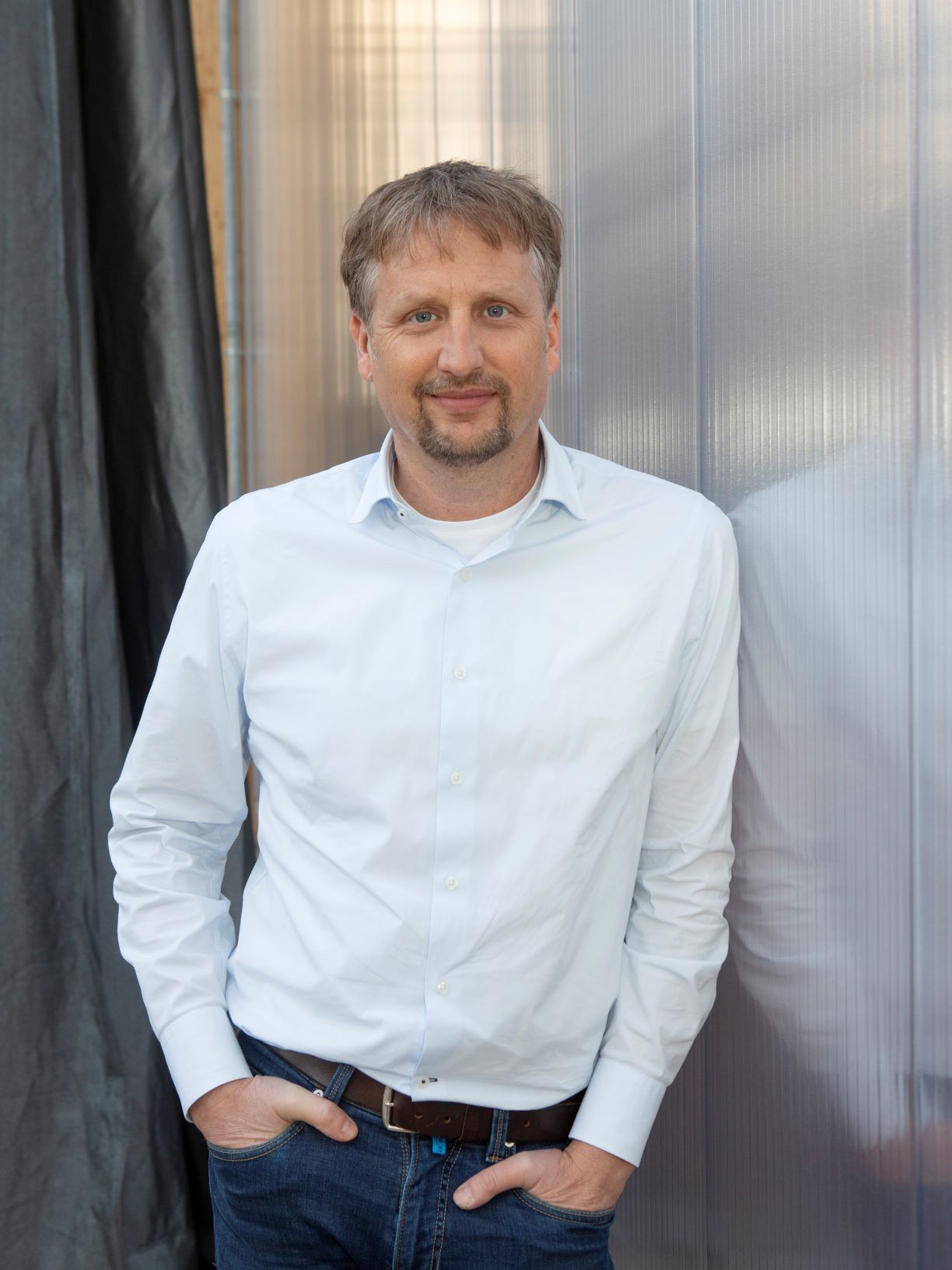
Prof. Alexander Holleitner leads the Chair of Nanotechnology and Nanomaterials at the Department of Physics, Technical University of Munich , under the Walter Schottky Institute. His research focuses on ultrafast optoelectronics, quantum optoelectronics, and excitonic systems in nanoscale circuits. Research Directions : Ultrafast optoelectronics, quantum optoelectronics, excitonic systems, THz time-domain spectroscopy, and nanofabrication of mixed organic/inorganic systems. Publications : Recent work spans hyperbolic polaritons, interlayer excitons, graphene nano-gap dynamics, and defect engineering in 2D materials. Collaborations include interdisciplinary projects with groups studying semiconductor heterostructures and quantum technologies. His lab welcomes students and researchers interested in experimental physics, quantum electronics, and nanofabrication.
Max Planck Institute for Security and PrivacyGermany
Toby Jia-Jun Li is an Assistant Professor in the Department of Computer Science and Engineering at the University of Notre Dame, where he leads the SaNDwich Lab. He also serves as the Director of the Human-Centered Responsible AI Lab in the Lucy Family Institute for Data & Society and is a Faculty Fellow at the Institute for Educational Initiatives (IEI). Previously, he was affiliated with Carnegie Mellon University's Human-Computer Interaction Institute (HCII) and GroupLens Research. Dr. Li's research spans the intersection of Human-Computer Interaction (HCI), End-User Software Engineering, Machine Learning (ML), and Natural Language Processing (NLP), with recent work focusing on addressing societal challenges in the future of work through human-AI collaborative approaches. His work has resulted in over 40 publications at premier venues including CHI, UIST, CSCW, ACL, and ICSE, with 8 papers winning Best Paper or Honorable Mention awards. His recent publications demonstrate a strong focus on human-AI collaboration across various domains, including code understanding, privacy, accessibility, and creative tools. The work shows a trajectory toward increasingly sophisticated integration of human-centered design with AI capabilities, particularly using large language models to enhance human productivity and address societal challenges. Google Research Scholar Award recipient Recipient of Yahoo! Fellowship ($100,000/year) Best Paper Award at UIST 2020 Best Paper Honorable Mention Award at CHI 2021 Best Paper Award at CSCW 2024 Best Paper Award at CHI 2025 Dr. Li actively mentors Ph.D. students and has established collaborations with Google, Microsoft Research, IBM Research, Adobe, Verizon, and J.P. Morgan. His research has been supported by NSF, Google Research Scholar Program, AnalytiXIN Initiative, Yahoo! InMind project, and J.P. Morgan. He is currently recruiting Ph.D. students and undergraduate researchers for his SaNDwich Lab, which focuses on developing interactive systems to empower individuals to create, configure, and extend AI-powered computing systems.
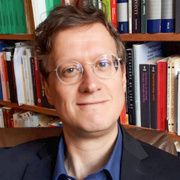
Prof. Dr. Oliver Müller is a Professor at the Department of Philosophy, University of Freiburg, and serves as Vice Dean of the Faculty of Philosophy. His academic journey includes a doctorate from Humboldt University Berlin (2005) and a habilitation in Philosophy (2012). Müller leads research on Philosophical Anthropology, Philosophy of Technology, and Ethics, with a focus on human-machine interactions and Anthropocene ethics. He supervises doctoral and postdoctoral researchers across projects like livMatS and BrainLinks-BrainTools. Research interests span neuroethics, transhumanism, and socio-technological systems, emphasizing ethical frameworks for emerging technologies. Publications explore AI ethics, drone warfare, and phenomenological embodiment, reflecting interdisciplinary engagement with neuroscience and environmental philosophy. Honors include the MTZ Bioethics Award and Heisenberg Fellowship. Müller directs participatory discourse initiatives bridging art and science, fostering public engagement with technological ethics. His work advances critical dialogues on human enhancement and ecological responsibility in the digital age.
Hami Amiraslani serves as Assistant Professor of Accounting at ESMT Berlin, holding a PhD and MSc from the London School of Economics. Previously faculty at INSEAD and a Wharton School visiting scholar, he teaches Management Accounting and Sustainable Business Finance across master's and executive programs. His educational credentials include: PhD in Accounting, London School of Economics and Political Science MRes, City St George’s, University of London MSc in International Accounting and Finance, London School of Economics and Political Science Amiraslani's research investigates capital markets, corporate governance, and sustainability interfaces with financial contracting and regulation. His work critically examines how ESG integration, board oversight structures, and climate disclosure frameworks reshape market efficiency and investor behavior, blending theoretical rigor with empirical analysis of regulatory impacts. Recent publications (2023-2025) reveal three dominant research trajectories: 1) Board-level governance mechanisms for ESG risk management, 2) Regulatory consequences of climate disclosure mandates on capital allocation, and 3) Bond market valuation effects of sustainability performance. These studies consistently demonstrate how governance quality mediates the relationship between sustainability practices and financial outcomes across debt and equity markets. No scientific awards are documented in the provided materials. His teaching portfolio indicates active mentorship in accounting education though specific student advisees aren't listed. Research activities appear institutionally supported through ESMT's academic infrastructure without explicit grant mentions.
Prof. Dr. Barbara Kraus is the Chair of Quantum Algorithms and Applications at the Technical University of Munich (TUM), affiliated with the TUM School of Natural Sciences. She previously held academic positions at the University of Innsbruck, where she founded her research group in 2010. Education : Physics and Mathematics at the University of Innsbruck; Post-doctoral work at MPI for Quantum Optics and University of Geneva. Her research focuses on foundational problems in quantum information theory, particularly entanglement in multipartite systems, quantum simulation, and verification of quantum processors. She develops theoretical tools for quantum many-body systems and explores applications in quantum computing, emphasizing error characterization and experimental validation. Recent publications highlight advancements in Hamiltonian learning, symmetry-resolved entanglement detection, and multipartite state transformations. Her work bridges theoretical quantum physics with practical implementations, including Rydberg platforms and quantum metrology. Key Awards : START Prize (2010), Ignaz L. Lieben Award (2013), Boltzmann Prize (2011), Südtiroler Sparkasse Research Prize (2019). She supervises doctoral students and postdocs in quantum information theory, with a focus on stabilizer states, quantum networks, and entanglement measures. Her courses at TUM include Quantum Information , Quantum Algorithms , and workshops on entanglement manipulation.
Bistra Andreeva is a full Professor of Phonetics and Phonology at Saarland University, Department of Language Science and Technology. She is also a principal investigator of the DFG-funded project “Judeo-Spanish in Bulgaria: a contact language between archaism and innovation” (2022-2025) and leads or co-leads several other externally funded projects on prosody, information structure, and language contact. She teaches and has taught at Saarland University, Sofia University “St. Kliment Ohridski”, and other European universities. Education & Academic Background Habilitation (kumulative Habilitationsschrift): “Contrastive Prosody: Bulgarian vs. German”, Saarland University, 2016. PhD (Dr. phil.): “Zur Phonetik und Phonologie der Intonation der Sofioter-Varietät des Bulgarischen”, Saarland University, 2007. Research Interests Andreeva’s research focuses on the phonetics and phonology of intonation and rhythm, cross-language and individual differences in the production and perception of syllabic prominence, the relation between intonation and information structure, minority languages (especially Judeo-Spanish in Bulgaria), and the interaction between information density and prosodic structure. Her methodological expertise includes experimental phonetics, corpus-based studies, and acoustic analysis. Major Projects SFB 1102 C1: “Information Density and the Predictability of Phonetic Structure” (DFG, 2014-2026) JuSpa: “Judeo-Spanish in Bulgaria: a contact language between archaism and innovation” (DFG, 2022-2025) Prosodic aspects of Bulgarian compared to other languages with lexical stress (Bulgarian National Science Fund, 2019-2024) Prosodic manifestations of focus in French and English from a Bulgarian point of view (DAAD & Sofia University, 2021-2023) Scientific Awards & Recognition While no major named prizes are listed, Andreeva’s work has been continuously supported by competitive grants from the German Research Foundation (DFG), DAAD, and Bulgarian National Science Fund. Her publications appear in top-tier journals and conference proceedings (Journal of the Acoustical Society of America, Interspeech, Speech Prosody, International Congress of Phonetic Sciences). Teaching & Supervision She offers a broad spectrum of courses including Experimental Phonetics, Prosody, Phonetics & Phonology of Slavic Languages, Introduction to Instrumental Phonetics, and seminars on language contact. She has supervised numerous BA, MA, and PhD theses and regularly teaches at the PhD School of Sofia University. Labs & Teams She is affiliated with the Phonetics Laboratory at Saarland University and collaborates closely with the Institute for Bulgarian Language (Bulgarian Academy of Sciences), working in interdisciplinary teams involving phoneticians, computational linguists, and field linguists.
Prof. Dr. Markus Zimmermann leads the Chair of Product Development and Lightweight Design at the Technical University of Munich (TUM). With a background in mechanical engineering from TU Berlin and the University of Michigan, and a doctorate from MIT on solid-state singularities, he bridges academic rigor with industrial application. His career spans 12 years at BMW focusing on vehicle development before transitioning to academia. Specializes in solution space engineering for robust design Expert in additive manufacturing and systems engineering Develops methodologies for managing design complexity and uncertainty His research focuses on multidisciplinary design optimization and lightweight structures , particularly in robotics and automotive systems . His team applies digital twin frameworks and attribute dependency graphs to enhance design processes. Recent publications emphasize topology optimization in robotic systems and thermal management for medical X-ray sources. Key trends in his 2024-2025 publications include: Topological optimization for additive manufacturing and robotics Application of solution spaces to manage design uncertainty Development of compact X-ray systems for medical therapy Integration of digital twin technologies in industrial contexts
Prof. Johannes A. Lercher is a retired professor (as of April 2023) at the Technical University of Munich (TUM), holding the Chair of Chemical Technology II within the Department of Chemistry. His research focuses on heterogeneous catalysis, particularly understanding catalytic processes at solid-liquid and solid-gas interfaces, with applications in sustainable energy production, CO₂ conversion, and catalytic upcycling of polymers. He has held academic positions at the University of Twente (Netherlands) and the Pacific Northwest National Laboratory (USA), and has been Editor-in-Chief of the Journal of Catalysis . His honors include the Alwin Mittasch Prize (2021), ENI Award (2016), and Kozo Tanabe Prize (2013). His recent work emphasizes low-temperature polymer upcycling, methane activation, and bioinspired catalyst design, leveraging advanced spectroscopic and operando techniques. Despite retirement, his contributions to catalysis research remain impactful. Education: PhD (1980) and Habilitation (1985), Vienna University of Technology Visiting Lecturer, Yale University (1982) Research Interests: Heterogeneous catalysis, catalytic interfaces, sustainable energy carriers, CO₂ valorization, and polymer waste upcycling. Key areas include: Design of catalysts for selective hydrocarbon synthesis Mechanistic studies using advanced spectroscopy Development of scalable catalytic processes for industrial applications Recent Trends in Publications: Focus on low-temperature polymer recycling (e.g., PVC and polyolefin upcycling), methane activation via novel catalysts (e.g., Co 2+ in ZSM-5), and bioinspired catalytic strategies. His work bridges fundamental catalysis with industrial relevance, emphasizing sustainability and energy efficiency. Awards and Recognition: Member, Academia Europaea and US National Academy of Engineering Recipient of multiple international catalysis awards (see full list above) Grants and Labs: Led the Institute for Integrated Catalysis (Pacific Northwest National Lab, 2011–present). His research groups have pioneered studies on zeolite-confined reactions and interfacial catalysis, with collaborations spanning academia and industry. Labs/Teams: Active in the TUM Department of Chemistry and international networks focused on catalytic innovation for a carbon-neutral economy.
Christine Selhuber-Unkel is a Full Professor (W3) for Molecular Systems Engineering at the Institute for Molecular Systems Engineering and Advanced Materials (IMSEAM) at Heidelberg University. She serves as co-chair of the Executive Board of the Flagship Initiative 'Engineering Molecular Systems' and is a spokesperson for the 'Cellular Biophysics' section of the German Biophysical Society. Additionally, she is a member of the executive board of the Cluster of Excellence '3D Matter Made to Order'. Education: Studied physics at Heidelberg University (2000-2002) M.Sc. degree in Physics from Uppsala University (2003) PhD in Physics from Heidelberg University (biological adhesion on nanopatterned substrates) Professor Selhuber-Unkel's research focuses on functional interfaces and their interactions with biological systems, including responsive interfaces, micro-/nanostructured interfaces (including 2-photon laser printing), and biofunctionalized hydrogels. Her work specifically targets controlling cellular properties such as parasite migration, with potential applications in soft robotics and biomaterials. She also experimentally studies biophysical properties of cells including mechanosensing, cellular force generation, adhesion forces, and statistical properties of intracellular motion and migration. Her research group is involved in multiple projects related to parasite physics, including studies on Giardia adhesion, Plasmodium infected erythrocytes, and Toxoplasma gondii. Her recent publications demonstrate a strong focus on hydrogel engineering, cellular mechanics, and microfluidic systems for studying cell behavior. The research spans from fundamental biomaterials development to applications in ophthalmology, tissue engineering, and parasite mechanics. Scientific Awards: European Research Council Consolidator Grant (PHOTOMECH) European Research Council Starting Grant (CELLINSPIRED) Feodor Lynen Fellow for research stay at Cornell University Emmy Noether postdoctoral fellowship Otto Hahn Medal from the Max Planck Society Professor Selhuber-Unkel has received significant research funding, including multiple ERC grants and DFG funding. She previously served as spokesperson for the DFG research training group 'Materials for Brain' at Kiel University (2017-2020). Her research group maintains strong collaborations across multiple institutions focused on biophysical approaches to understanding cellular and parasite mechanics. Her laboratory develops advanced techniques including traction force microscopy, atomic force microscopy (AFM), and microengineered systems for studying cellular mechanics in confined environments. The group's work bridges materials science, biophysics, and parasitology to develop novel approaches for understanding and controlling cellular behavior.
Jan Oliver Borchers is a full professor of computer science and head of the Media Computing Group at RWTH Aachen University, where he holds the endowed Chair in Media Informatics and Human-Computer Interaction (Computer Science 10). He established his research group in 2003 and pioneered modern HCI academic research and teaching in Germany, becoming a leading lab in terms of archival publications at CHI, the top international conference in HCI. Before joining RWTH, he held faculty positions at Stanford University and ETH Zurich. His research focuses on Human-Computer Interaction with particular interest in new user interfaces for soft robotics, textile user interfaces, 3D printing and personal fabrication, augmented reality, wearable and tangible computing, interfaces for software development, deceptive patterns, and interactive guides and exhibits. He opened Germany's first Fab Lab in 2009 and has been instrumental in advancing digital fabrication and maker culture in academia. His work bridges theoretical HCI research with practical applications, as evidenced by his consulting for major companies including AirBus, Apple, ARD, Bayer, Children's Museum Boston, Daimler, Handelsblatt, OTIS, Scout24, TEDx, and Deutsche Telekom. His recent publications show a strong focus on deceptive patterns in UI design, textile interfaces, and the intersection of AI with human interaction. The research demonstrates consistent innovation in tactile interaction techniques, with numerous honorable mentions at top conferences like CHI. His lab has produced significant contributions to eyes-free interaction, textile computing, and the ethical implications of dark patterns, particularly regarding children's experiences with deceptive designs. IDC 2025 Best Work in Progress for research on children's assessment of deceptive designs CHI'25 Student Games Competition Winner for The Deceptive Dungeon RWTH-Wissenschaftsnacht 2024 Best Science Slam for Usability: 4 Prinzipien guter User Interfaces Multiple CHI Honorable Mentions spanning from 2008-2021 Best Note and Best Demo awards at ITS and UIST conferences Borchers has served in numerous leadership roles including heading the Computer Science Department's Examination Board (2015-2025), coordinating the department's public relations since 2010, and organizing the weekly Faculty Lunch since 2003. He is an active member of the ACM, SIGCHI, SIGCHI Germany, and GI, and introduced the Interactivity format to the CHI conference in 2005. His PhD thesis, A Pattern Approach to Interaction Design, became the first book to bring design patterns to HCI. The Media Computing Group under his leadership has developed significant expertise in physical computing, textile interfaces, and fabrication technologies, with a strong emphasis on both theoretical contributions and practical applications. His lab continues to push boundaries in interactive technologies while maintaining a strong ethical stance on user experience, particularly regarding deceptive design patterns.
Prof. Dr. Andreas Butz is a Full Professor and Chair for Human-Computer Interaction at the Department for Informatics, Ludwig-Maximilians-Universität München (LMU Munich). He leads the Media Informatics Group, focusing on innovative interaction techniques and interfaces in immersive environments like VR/AR, automotive systems, and smart spaces. His research emphasizes perceptual user interfaces, social robotics, and designing systems that balance invisibility with transparency. Key research areas include: Virtual/Augmented Reality interfaces for productivity and social interaction AI-driven decision support in safety-critical domains (aviation, healthcare) Haptic and wearable interaction technologies Automotive UI design for driver assistance systems Principles of explainable AI and human-AI collaboration His work bridges theory and practice through projects like: VR-based movement training systems AI trust calibration mechanisms Multi-modal interaction frameworks for automotive environments Systems for analyzing long-term music listening behavior Recent articles explore topics ranging from AI support in pilot decision-making to haptic wearables and creative writing interfaces. His team collaborates with industry partners on electric vehicle information systems and in-car interaction challenges.
Gregory D. Hager is the Mandell Bellmore Professor of Computer Science at Johns Hopkins University, with joint appointments in Electrical and Computer Engineering, Mechanical Engineering, and the Department of Surgery at the School of Medicine. He serves as the head of the NSF's Computer and Information Science and Engineering Directorate (as of 2024) and is the founding director of the Johns Hopkins Malone Center for Engineering in Healthcare. Previously, he chaired the Department of Computer Science from 2010-2015 and served as deputy director of the NSF Engineering Research Center for Computer-Integrated Surgical Systems and Technology. Hager's research focuses on collaborative and vision-based robotics, time-series analysis of image data, and medical applications of image analysis and robotics. His work spans surgical robotics, human-machine collaboration, and computer vision with applications in healthcare. As director of the Computational Interaction and Robotics Lab (CIRL), he investigates dynamic spatial interaction at the intersection of imaging, robotics, and human-computer interaction. His research has led to real-world applications in surgical training, medical imaging, diagnostics, and computer-enhanced interventional medicine. Hager's publications demonstrate consistent advancement in surgical data science, with recent work focusing on 3D reconstruction from endoscopic video, surgical skill assessment using AI, and robotic assistance in neurosurgery. His research trajectory shows increasing integration of deep learning with surgical robotics, particularly in real-time guidance systems and objective skill assessment metrics. IEEE Fellow MICCAI Fellow ACM Fellow AIMBE Fellow AAAS Fellow MICCAI Best Paper Award (2006) Fulbright Junior Faculty Award (1988) Morris Ruben Outstanding Dissertation Award (1988) Hager has advised numerous PhD students who have become leaders in computer vision and medical robotics. His lab has secured significant research funding, including NSF Engineering Research Center support. He co-founded two successful startups: Clear Guide Medical (ultrasound-guided procedures) and Ready Robotics (industrial robot usability). As chair of the Computing Community Consortium and member of the International Federation of Robotics Research board, he has shaped national research agendas in computing and robotics. Hager leads the Computational Interaction and Robotics Lab (CIRL), which is associated with the NSF Engineering Research Center for Computer-Integrated Surgical Systems and Technology (ERC-CISST) and the Laboratory for Computational Sensing and Robotics (LCSR). His team collaborates extensively with clinicians at Johns Hopkins Hospital to translate robotics research into clinical practice.
Max Planck Institute for Evolutionary AnthropologyGermany
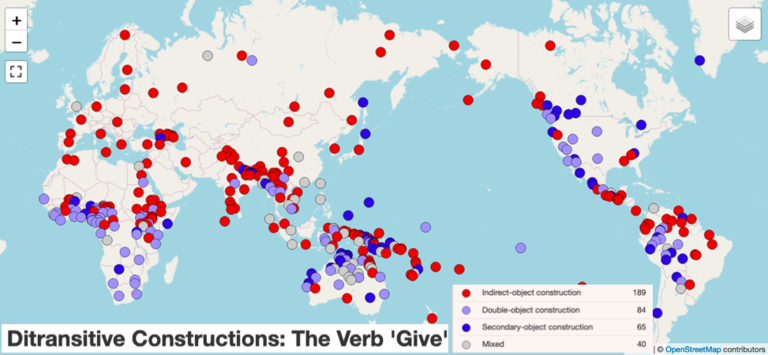
Martin Haspelmath is a Senior Research Scientist at the Department of Linguistic and Cultural Evolution at the Max Planck Institute for Evolutionary Anthropology (MPI-EVA), Leipzig, and an honorary (adjunct) professor at Leipzig University. His research focuses on comparative linguistics, language universals, and typology, particularly in syntactic and morphological systems. He co-edited the World Atlas of Language Structures (2005/2013) and co-founded Language Science Press . Education: PhD in Linguistics, Freie Universität Berlin (1990–1993) MA in Linguistics, University of Cologne and University at Buffalo (1985–1989) Undergraduate studies in Linguistics, University of Vienna (1983–1985) Research Interests: Haspelmath investigates global grammatical diversity, form-function correspondences, and universals in syntax, morphology, and lexical systems. His work emphasizes comparative concepts for cross-linguistic analysis and critiques traditional grammatical categories. Grants & Projects: ERC project leader at Leipzig University (2015–2020) Co-creator of Grambank , an open-access database of grammatical structures Leading initiatives for open-access publication and linguistic data sharing Labs/Teams: Active in the MPI's Department of Linguistic and Cultural Evolution, collaborating on projects like APICS (Atlas of Pidgin and Creole Language Structures) and ValPal (Valency Patterns Leipzig).
Prof. Dr. Florian Scholz is a Professor of Geology and Biogeochemistry at the University of Hamburg , affiliated with the Institute of Geology within the Department of Earth System Sciences . He joined the university in 2024, following leadership of an Emmy-Noether research group at GEOMAR Helmholtz Centre for Ocean Research Kiel. His academic training includes a doctorate (summa cum laude) and habilitation from Kiel University, and a Marie Curie postdoctoral fellowship at Oregon State University. Ph.D., Geomar Helmholtz-Zentrum & University of Kiel (2010) Habilitation, University of Kiel (2019) Diploma in Geoecology, Karlsruhe Institute of Technology & University of Bordeaux (2007) His research lies at the intersection of marine geochemistry , biogeochemistry , and paleoceanography , with a focus on sediment-water interactions , early diagenesis , and the impact of environmental change on biogeochemical cycles . He investigates trace metal cycling (e.g., Fe, Mo, W, Ni), redox processes, and authigenic mineral formation in marine sediments, using field data, laboratory analyses, and geochemical modeling. His recent publications (2024–2025) reveal a strong trend in paleo-redox proxy development (Mo, W, Ni isotopes), trace metal flux quantification in oxygen minimum zones, carbon cycle impacts of sediment disturbance, and ocean-based carbon dioxide removal via seafloor alkalinity enhancement. His work frequently appears in high-impact journals such as Earth and Planetary Science Letters , Geochimica et Cosmochimica Acta , and Communications Earth & Environment . Emmy-Noether-Gruppenleiter, GEOMAR (2016–2023) Marie Curie Fellow, Oregon State University & GEOMAR (2012–2015) Postdoctoral Researcher, SFB 574 & 754 (2010–2012) Prof. Scholz teaches courses including Marine Biogeochemistry , Environmental Geochemistry , and Field Geology at both undergraduate and graduate levels. He leads an active research group focused on marine sediment geochemistry and collaborates widely across international oceanographic projects. His work contributes significantly to understanding past and present ocean chemistry and developing strategies for climate change mitigation.
Gerd Bruder is an Associate Professor at the University of Central Florida , affiliated with the Department of Computer Science . He previously held positions as a Research Associate Professor at UCF's Institute for Simulation and Training (2016-2022), Post-Doc at University of Hamburg (2014-2016), and Post-Doc at University of Würzburg (2011-2014). Habilitation : Computer Science, University of Hamburg (2017) Ph.D. : Computer Science, University of Münster (2011) M.Sc. : Computer Science (minor in Mathematics), University of Münster (2009) Research Interests : Gerd Bruder's work focuses on Extended Reality (XR) systems, spanning Virtual Reality (VR) , Augmented Reality (AR) , and Mixed Reality (MR) . Key areas include human factors , digital twins , 3D user interfaces , and perceptual modeling , with applications in healthcare, military operations, architecture, and smart environments. Recent Publications highlight innovations in XR locomotion , trust calibration with autonomous agents, spatial cognition , and haptic-visual integration . His 2025 articles address task-switching efficiency in XR and collaborative mixed reality design. Scientific Awards : Best Paper at ACM VRST 2023 2021 TechConnect Innovation Award Best Demo at ACM SUI 2021 Multiple Best Paper Awards (2016-2023) Best Poster & Demo Awards (2015-2020) Patents include systems for medical simulation , smart environment interruption management , and adaptive AR interfaces . His work bridges academic research and practical applications across VR, AR, and MR domains.