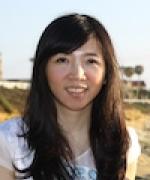
Yingyan (Celine) Lin is an Associate Professor in the School of Computer Science at Georgia Institute of Technology, leading the Efficient and Intelligent Computing (EIC) Lab. Her work focuses on cross-layer innovations in machine learning systems, from algorithms to chip design, aiming to advance green AI and ubiquitous machine learning. She holds a Ph.D. in Electrical and Computer Engineering from the University of Illinois at Urbana-Champaign (2017). Research interests include efficient machine learning, neural rendering (e.g., NeRF), hardware-software co-design for AI acceleration, and graph neural networks. Her lab has pioneered projects like RTML and 3DML, funded by NSF, NIH, DARPA, and industry partners (Qualcomm, Intel, Meta). Awards: NSF CAREER Award (2021), ACM SIGDA Outstanding Young Faculty (2022), Meta Faculty Research Award (2022) Grants: Multi-university projects funded by NSF, NIH, DARPA, SRC, ONR, and industry Recognition: First-place wins at DAC 2022 and TinyML Design Contest 2022, IEEE Micro Top Pick 2023 Her research bridges algorithmic innovation with hardware implementation, emphasizing energy efficiency and real-time performance for applications in AR/VR, computer vision, and neuro-symbolic AI systems.
Robert JOLIET is an Associate Professor of Finance at IÉSEG School of Management in France. He holds a Ph.D. in Economics and Management from HEC-ULg Management School (Belgium) and has held various academic leadership roles, including Director of Academic Development and Academic Director of the PGE (MSc in Management). His research focuses on finance, portfolio management, SRI (Socially Responsible Investing), and corporate finance, with a particular emphasis on international expansion, capital structure, and sustainable investment strategies. Education: 2008: Ph.D. in Economics and Management, HEC-ULg Management School, Belgium 2004: Master of Advanced Studies (DEA), Management Sciences (Finance), University of Liège, Belgium 2002: Master of Science in Business Engineering (Finance), University of Liège, Belgium Research interests span SRI fund dynamics, corporate social responsibility valuation, international debt policies, and market liquidity. Notable contributions include analyzing the impact of SRI mutual funds on corporate governance and environmental practices, and exploring the stability of sovereign debt structures in the Eurozone. Awards include the 2005 FORTIS Award (Third Prize) and the 2003 E.G. de Barsy Doctoral Fellowship. He has published extensively in journals like Economics Letters and Journal of Banking & Finance . Academic leadership roles include directing programs and departments at IÉSEG, alongside coordinating the Finance Track and managing academic development initiatives. His teaching focuses on financial data analysis, active portfolio management, and investment strategies in capital markets. He is a member of the LEM (Laboratoire d'Économie Moderne) research group and contributes to interdisciplinary research in finance and economics.
Professor Maria Craig is a distinguished academic and researcher at the University of New South Wales, Faculty of Medicine & Health, specializing in childhood diabetes research. She holds a prominent position as a Professor with extensive contributions to the field of pediatric endocrinology and diabetes, particularly focusing on type 1 diabetes in children. Professor Craig's educational background includes: MB BS from the University of Melbourne MMedSc(ClinEpid) from the University of Newcastle PhD from the University of Sydney FRACP (Fellow of the Royal Australasian College of Physicians) Professor Craig's research primarily focuses on childhood diabetes, with special emphasis on prediction and prevention of type 1 diabetes. She has a significant interest in the association between viruses and type 1 diabetes, collaborating with the Virology Research Group at Prince of Wales Hospital (POWH). Together with Professor Bill Rawlinson, she leads the viral theme for the multicentre ENDIA study (endia.org.au). As principal investigator for the CoRD trial, she is conducting a world-first phase 1 study using autologous cord blood for prevention of type 1 diabetes in children with islet autoimmunity. Additionally, she serves as principal investigator for the Australasian Diabetes Data Network (ADDN). Her research portfolio also encompasses the epidemiology of various forms of childhood diabetes (type 1, type 2, cystic fibrosis related diabetes and monogenic diabetes) and diabetes complications, in collaboration with Professor Kim Donaghue at the Children's Hospital at Westmead. Professor Craig's extensive publication record, including over 361 journal articles, demonstrates her leadership in advancing our understanding of childhood diabetes. Her recent work shows increasing focus on early detection methods, risk prediction models, technological interventions for diabetes management, and the complex interplay between viral infections and autoimmune diabetes development. She has been instrumental in developing clinical practice guidelines through her role as co-editor of the International Society for Pediatric and Adolescent Diabetes (ISPAD) guidelines. Professor Craig has received numerous prestigious awards recognizing her contributions to pediatric endocrinology and diabetes research: Australian Paediatric Endocrine Group Young Investigator's Award (1997) Asia Pacific Paediatric Endocrine Society Clinical Teaching Award (2008) Lifetime Honorary Member, Caring and Living as Neighbours (2013) Australian Diabetes Society Jeff Flack Diabetes Data Award (2019) Australian Paediatric Endocrine Group Norman Wettenhall Award for Research and Innovation (2019) Throughout her career, Professor Craig has demonstrated exceptional leadership in professional societies, having served as former president/treasurer of the Australasian Paediatric Endocrine Group (APEG) and currently as Scientific Convenor of the Asia Pacific Paediatric Endocrine Society Fellows school. Her work with the ENDIA study and Australasian Diabetes Data Network represents significant collaborative research efforts involving multiple institutions across Australia and internationally. Her principal investigator roles for major studies indicate substantial research funding support. Professor Craig leads several important research initiatives including the ENDIA study, the CoRD trial, and the Australasian Diabetes Data Network. These programs involve multidisciplinary teams of researchers, clinicians, and support staff working collaboratively to advance understanding and treatment of childhood diabetes. Her work at the intersection of virology and diabetes represents a unique and innovative approach to understanding the environmental triggers of type 1 diabetes.
Mauro Bambi is an Associate Professor at Durham University Business School and an Associate Fellow at the Institute of Advanced Studies. His research focuses on Macroeconomic Theory, Endogenous Growth, Habit Formation, and Behavioral Economics. He earned his PhD from the European University Institute (2007) and held positions at ETH Zurich and the University of York. He directs the Centre for Macroeconomic Policy (CEMAP) and has been recognized with the 2008 Italian Association of Applied Mathematics award for his PhD thesis. Education: PhD in Economics (European University Institute, 2007); Postdoctoral Fellowships at Université Catholique de Louvain (Belgium) and ETH Zurich (Switzerland). Research Interests: Macroeconomic Theory and Policy Design Endogenous Growth and Fluctuations Habit Formation in Economic Models Behavioral Economic Preferences Mathematical Methods in Macroeconomics Key Contributions: His work on habit formation models, time-to-build frameworks, and policy design has influenced macroeconomic theory. Recent studies analyze post-COVID demand shifts and pandemic economic impacts. Awards: 2008 Graduate Prize for Best PhD Thesis (Italian Association of Applied Mathematics). Advising and Leadership: Supervised PhD students like Federico Bertoni and Xinyi Xu. Directed CEMAP from 2019–2022, fostering macroeconomic policy research. Active in interdisciplinary collaborations at the Institute of Advanced Studies. Labs/Teams: Leader of CEMAP, collaborating with global institutions on macroeconomic policy analysis.
Pierre De Leo is an Assistant Professor in the Department of Economics at the University of Maryland. His research focuses on international macroeconomics, finance, and monetary policy, particularly the role of expectations in identifying economic shocks, exchange rate dynamics, and optimal policy conduct. During Spring 2025, he will also be visiting the Federal Reserve Bank of Boston. Education: PhD and MA in Economics, Boston College BA and MA in Economics (highest honors), University of Milan - Bicocca Research Interests: De Leo explores topics such as exchange rate fluctuations, monetary policy design, and the impact of global investors on bond markets. His work bridges theoretical frameworks with empirical analysis to address policy-relevant questions in open economies, emphasizing the interplay between expectations and macroeconomic outcomes. Recent Articles: His publications analyze themes like the disconnect between short-term interest rates and policy, speculation in emerging markets, and the implications of imperfect exchange rate expectations. These studies highlight his focus on bridging theory and real-world policy challenges. Labs/Teams: No specific labs or teams are explicitly mentioned in the provided texts. However, his research aligns with broader initiatives in international macroeconomics and monetary policy at the University of Maryland.
Athanasios TRIANTAFYLLOU is an Associate Professor of Finance at IÉSEG School of Management in France. He holds a Ph.D. in Economics from the University of Athens (2017) and has held academic positions including Visiting Professor at Cornell University (2019), Lecturer at the University of Essex (2017–2022), and General Equilibrium Modeler at the National Technical University of Athens (2015). His research focuses on commodity markets, volatility forecasting, risk management, and monetary economics. Key contributions include analyzing commodity price uncertainty's impact on economic activity and financial markets. He has published extensively in journals like Journal of Futures Markets , Economics Letters , and International Journal of Finance and Economics . Education includes a BSc in Mathematics (2008), MSc in Accounting and Finance (2010), and M.Phil. in Economics (2013), all from Greek institutions. Professional experience includes risk management consulting at Ernst & Young (2016–2017). His teaching covers financial derivatives, multinational finance, and commodity markets. Research highlights include exploring the role of commodity price uncertainty in global economic dynamics and the predictive power of market information in corporate defaults. His work often bridges theoretical econometrics with practical policy implications, addressing issues like inflation dynamics driven by oil market risks and the tourism-led growth hypothesis in the Eurozone. TRIANTAFYLLOU’s publications emphasize volatility modeling, commodity market linkages, and the interplay between economic uncertainty and financial stability.
Mungo Wilson is a Professor of Finance at the Saïd Business School , University of Oxford, and an associate member of the Oxford-Man Institute of Quantitative Finance. He holds a PPE degree from Oxford, an MSc in Economics from LSE, and a PhD in Economics from Harvard. His research focuses on asset pricing, credit risk, mutual funds, and macroeconomic influences on financial markets. He has published extensively in top journals and engages actively with industry through board roles and advisory work. Education : Bachelor's in Philosophy, Politics & Economics (PPE), University of Oxford MSc Economics, London School of Economics PhD in Economics, Harvard University Research Interests : Assesses how macroeconomic conditions and credit risk shape asset prices Analyzes mutual fund behavior and market information transmission mechanisms Explores political dynamics' impact on financial markets His professional engagements include board memberships with funds like EA Asia Absolute Return Master Fund and advisory roles at Broadwell Capital. Teaching focuses on microeconomics for MBA programs, covering game theory, market structures, and price discrimination. Advisory & Grants : Supervises doctoral students at Saïd Business School and serves on programme committees for major finance conferences (e.g., European Finance Association, CEPR Annual Spring Symposium). Awards : While no specific prizes are listed, his impactful research has been widely cited and presented globally.
Yaojun Zhang is an Assistant Professor in the Department of Physics & Astronomy and the Department of Biophysics at Johns Hopkins University. She earned her PhD in Physics from the University of California, San Diego (2015), followed by postdoctoral fellowships at the Princeton Center for Theoretical Science (2015-2018) and the Princeton Center for the Physics of Biological Function (2018-2021). Her research focuses on biological physics, particularly the complex behaviors of biomolecules and their assemblies across scales—from single-molecule folding to intracellular transport and biomolecular phase separation. She employs theoretical, mathematical, and computational tools to bridge biological questions with physical principles. Education PhD in Physics, University of California, San Diego (2015) Postdoctoral Fellowships: Princeton University (2015-2021) Research Interests Her group studies biomolecular condensates and liquid-liquid phase separation, exploring how microscopic interactions determine macroscopic properties of cellular compartments. Key areas include: Biomolecular condensate formation and dynamics Phase separation in cellular environments Interactions between biomolecules and cellular components Biophysics of intracellular transport Collaborations & Tools Zhang collaborates with experimentalists to validate theoretical models and develops frameworks for understanding condensate functions, such as surface tension, stoichiometry, and phase diagrams. Her work addresses challenges like condensate stability, molecular exclusion, and biological function regulation. Labs & Resources She leads the Zhang Lab , which integrates experimental and computational approaches. Her team’s research is supported by resources at the Bloomberg Center for Physics and Astronomy.
Christopher J. Palmer is an Associate Professor of Finance at the MIT Sloan School of Management, specializing in financial decision-making, credit markets, and policy interventions. His research focuses on how individuals and institutions respond to economic upheavals in areas like bankruptcy, retirement savings, and real estate. He holds a PhD in Economics from MIT and a BA in Economics and Mathematics from Brigham Young University. Palmer’s work has been published in top journals such as the American Economic Review , Journal of Finance , and Review of Financial Studies . He explores topics including racial disparities in bankruptcy outcomes, consumer payment behavior, and the effects of quantitative easing. His research is supported by affiliations with the National Bureau of Economic Research (NBER) and the Jameel Poverty Action Lab (J-PAL). Key honors include the 2022 Jamieson Prize and the 2019 Society for Financial Studies Best Paper Award. Palmer has contributed to public debates on policy issues like rent control and retirement savings through media outlets such as The New York Times , Bloomberg , and Vox .
David A. Hsieh is the Bank of America Professor of Finance at the Fuqua School of Business, Duke University, where he has been a faculty member since 1993. Previously, he served as Associate Professor and Assistant Professor at the University of Chicago's Graduate School of Business from 1981-1989. His extensive research has significantly contributed to the understanding of hedge funds, financial risk management, and nonlinear dynamics in financial markets. Massachusetts Institute of Technology, Ph.D. in Economics, 1981 Yale University, B.S. in Economics and Mathematics, 1976 (Summa Cum Laude, Phi Beta Kappa) Phillips Academy, Andover, 1972 (Cum Laude) Dr. Hsieh's research primarily focuses on the dynamics of asset prices and their implications for financial risk management. He has made significant contributions to understanding risk and return characteristics in hedge funds and commodity funds, pioneering work on nonlinear dynamics applications to financial markets. His research has evolved from early work on exchange rates and volatility modeling to more recent comprehensive analyses of hedge fund strategies, performance measurement, and industry structure. Hsieh's publication history reveals a clear progression from foundational work on nonlinear dynamics in financial markets to increasingly sophisticated analyses of hedge fund strategies and risk characteristics. His recent work, often in collaboration with William Fung and other prominent finance researchers, has focused on mega hedge fund firms, franchise value in the industry, and the evolution of hedge fund strategies toward more index-like products. The research consistently combines rigorous theoretical frameworks with robust empirical analyses across diverse market conditions. CAIA Award for Excellence in Alternative Investment Research (2015) CFA Institute Graham and Dodd Award of Excellence (2004) Bank of America Faculty Award (2002) Duke Cross-Continent Executive MBA Teaching Excellence Award (2002) Fischer Black Memorial Foundation Robert J. Schwartz Memorial Prize (1999) Smith Breeden First Prize (1990) Yale Science and Engineering Association High Scholarship Award (1976) Russell Henry Chittenden Prize (1976) Dr. Hsieh has served as a consultant for the International Monetary Fund (2007-2016) and the Bank for International Settlements (1998), and as a Visiting Scholar at both the International Monetary Fund and the Board of Governors of the Federal Reserve System. His editorial service includes Finance Editor for Management Science (2003-2009) and Associate Editor roles for several leading finance journals. He has developed extensive research resources including a Hedge Fund Data Library that has become widely used in academic and industry research.
Professor Lisa Strohschein holds dual roles as a Professor in the Sociology Department and Director of Undergraduate Programs at the University of Alberta's Faculty of Arts. Her research focuses on family dynamics and health inequalities, employing longitudinal methodologies to analyze large datasets. She teaches courses on health sociology, mental illness, and socialization, emphasizing sociological perspectives on health distribution and care systems. Her research interests include the interplay between socioeconomic factors and mental health, gender disparities in marital outcomes, and generational shifts in parenting practices. She has published extensively on topics like teen pregnancy correlates, poverty dynamics, and the mental health implications of family structures. Strohschein has received the 2019-20 Killam Annual Professorship and serves as Editor-in-Chief of Canadian Studies in Population, a peer-reviewed journal focusing on demographic research. She also contributes to policy through roles like membership in Statistics Canada's Demographic Statistics Advisory Committee and past presidency of the Canadian Population Society. Her scholarly work bridges theoretical frameworks (life course, stress process theory) with methodological rigor, often using growth curve models and competing risks analysis. Current research trends emphasize cross-national comparisons and applied policy relevance, particularly in understanding how family transitions impact health across the life course.
Refet S. Gürkaynak is a Professor of Economics at Bilkent University and a Research Fellow at the Center for Economic Policy Research (CEPR), where he directs the Monetary Economics and Fluctuations Program. He holds a BA in Economics from Bilkent University and a PhD in Economics from Princeton University. His research focuses on monetary economics, financial markets, and international economics, particularly on extracting monetary policy insights from asset prices. His work has appeared in top journals like the Journal of Monetary Economics , Review of Economics and Statistics , and American Economic Review . Research Interests Monetary Policy Transmission Financial Market Reactions Inflation Dynamics ECB Policy Communication Post-Crisis Economic Modeling Scientific Awards & Grants Central Bank of Turkey Award European Central Bank Award Turkish Academy of Sciences Award ERC Grant Consulting & Affiliations Consultant to multiple central banks Director, Monetary Economics and Fluctuations Program at CEPR Former Economist, Federal Reserve Board's Monetary Affairs Division
Siva Balakrishnan is an Associate Professor at Carnegie Mellon University with a joint appointment in the Department of Statistics and Data Science and the Machine Learning Department . He holds an affiliation with the Dietrich College of Humanities and Social Sciences. Previously, he was a postdoctoral researcher at UC Berkeley's Department of Statistics, advised by Martin Wainwright and Bin Yu, and earned his Ph.D. in Computer Science from CMU's Language Technologies Institute under Jaime Carbonell. His research focuses on statistical machine learning, causal inference, and high-dimensional statistics, with notable contributions to domain adaptation, optimal transport, and robust statistics. Education: Ph.D. in Computer Science, Carnegie Mellon University (Language Technologies Institute) Postdoctoral Researcher, University of California, Berkeley (Department of Statistics) Research Interests: His work bridges theoretical foundations and algorithmic development, emphasizing robust statistical methods and their applications in causal inference, public policy, and machine learning. Key areas include nonparametric methods, optimization, and high-dimensional data analysis. He has pioneered techniques in domain adaptation, such as the RLSbench framework for relaxed label shift scenarios. Awards & Grants: Amazon Research Award (2021) Google Research Scholar Award (2021) NVIDIA Pioneer Award (2018) IMS Lawrence D. Brown Student Award (2020, 2022) National Science Foundation Grants (CCF-1763734, DMS-1713003, etc.) Professional Activities: He serves as an Associate Editor for JASA and on the editorial boards of Foundations and Trends in Statistics . His work has been featured in top venues like NeurIPS, ICML, and the Annals of Statistics. He currently holds a sabbatical at UC Berkeley's Department of Statistics (Spring 2025). Labs & Collaborations: He actively participates in the Statistics and Machine Learning Reading Group and the Causal Inference Working Group , fostering interdisciplinary research in CMU's vibrant academic community.
Professor Jason Rentfrow is a Professor of Personality & Individual Differences and Director of Graduate Education at the University of Cambridge's Department of Psychology. His research focuses on geographical psychology, exploring how regional environments shape personality, cultural differences, and societal outcomes. He also serves as Director of Studies in Psychology at Fitzwilliam College, Cambridge. Key research interests include the psychological effects of geography on traits like openness, conscientiousness, and neuroticism; the role of music preferences in personality expression; and the impact of socioeconomic status on self-concept. He has pioneered studies linking personality to political behavior, urban planning, and public health responses to crises like the 2020 pandemic. His work combines large-scale data analysis with spatial methodology, examining datasets from over 133 nations. Notable contributions include frameworks for measuring regional personality differences and their implications for innovation, entrepreneurship, and electoral outcomes. He has also developed psychometric tools like the Test of Attribute Preferences (TAP) for studying musical preferences. Recent research highlights include analyzing how Roman historical legacies influence modern German well-being disparities, the psychological roots of Brexit and Trump voter behavior, and the link between childhood trauma and adult empathy levels. His interdisciplinary approach spans psychology, sociology, economics, and geography. Professional activities include supervising graduate students, reviewing for top journals, and advising on cultural policy. He maintains an active lab focused on personality-environment interactions and their societal consequences.
Anna Gottard is an Associate Professor of Statistics at the University of Florence, where she leads the Department of Statistics, Computer Science, and Applications. She directs the Florence Center for Data Science (FDS) and participates in the Technical Scientific Committee of the Tuscan Center for Big Data, Data Science, and AI (CBDAI). Her research focuses on multivariate statistical models, particularly graphical models, and extends to statistical machine learning, fair models, and directional data analysis. She is an Associate Editor for the Journal of the Royal Statistical Society Series A (JRSSA) and Statistical Methods & Applications (SMA). Her recent work includes Bayesian approaches for mixed graphical models, uncertainty-aware classification trees, and methodological advancements in latent uncertainty models. Her contributions span theoretical developments and applied research in interdisciplinary areas like biostatistics and sustainability. Her research interests emphasize bridging statistical theory with practical applications, including fairness in machine learning, interpretable models, and tree-based methodologies. She has actively contributed to open-source software, notably the Mix3Trees R package for mixed-effect tree models. Her work addresses challenges in variable selection, graphical model inference, and ethical AI practices. Current projects explore Bayesian frameworks for complex data structures and methodological improvements in graphical model interpretability. Anna has advised on interdisciplinary collaborations, such as studies on GDPR compliance in biobanking and epidemiological modeling of the SARS-CoV-2 pandemic in Tuscany. She collaborates with institutions like the CBDAI to advance data science applications in regional policy and healthcare. Her research trajectory reflects a commitment to both foundational statistical theory and real-world problem-solving across diverse domains.