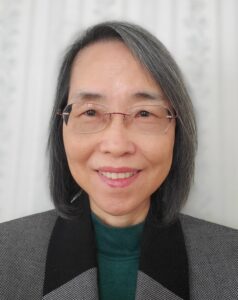
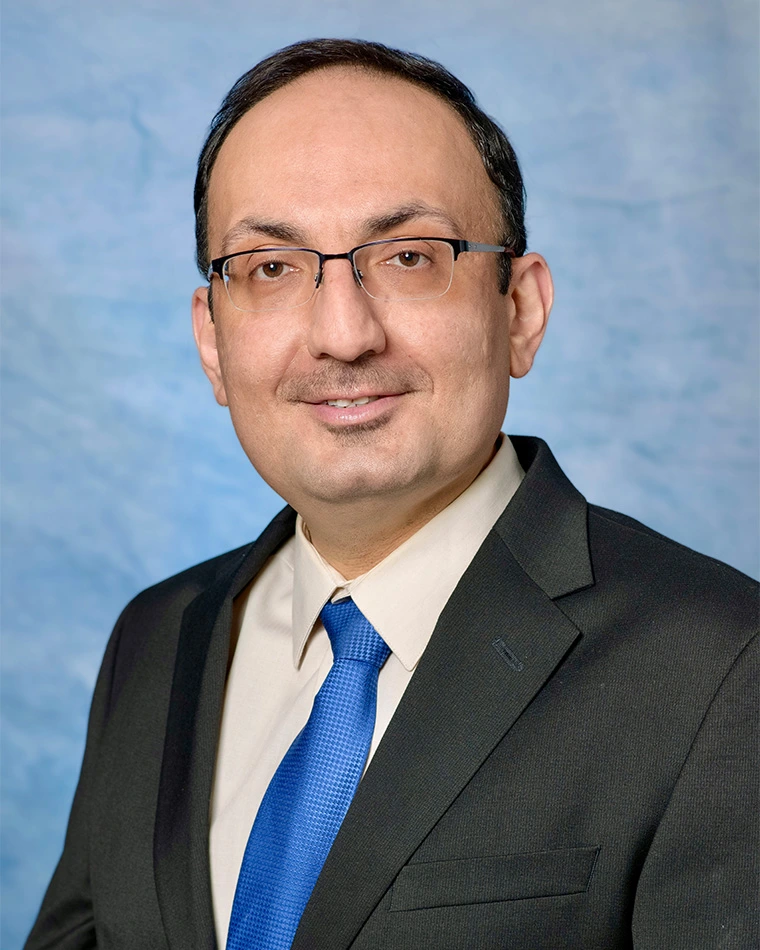
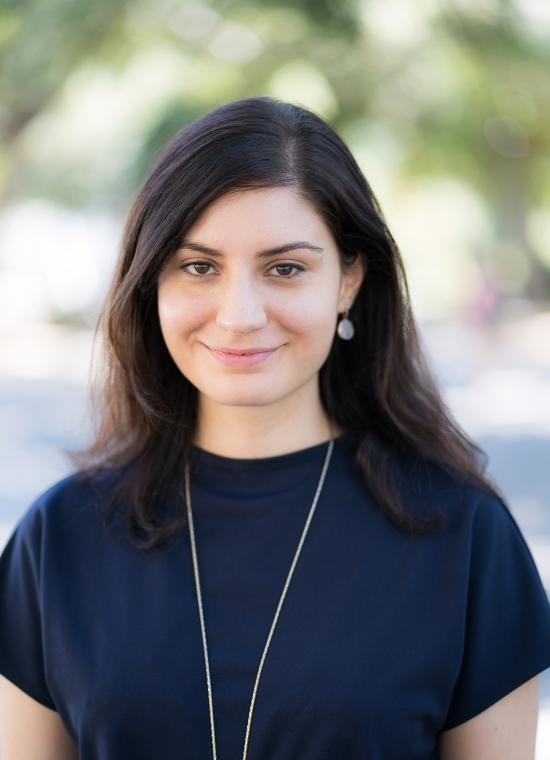
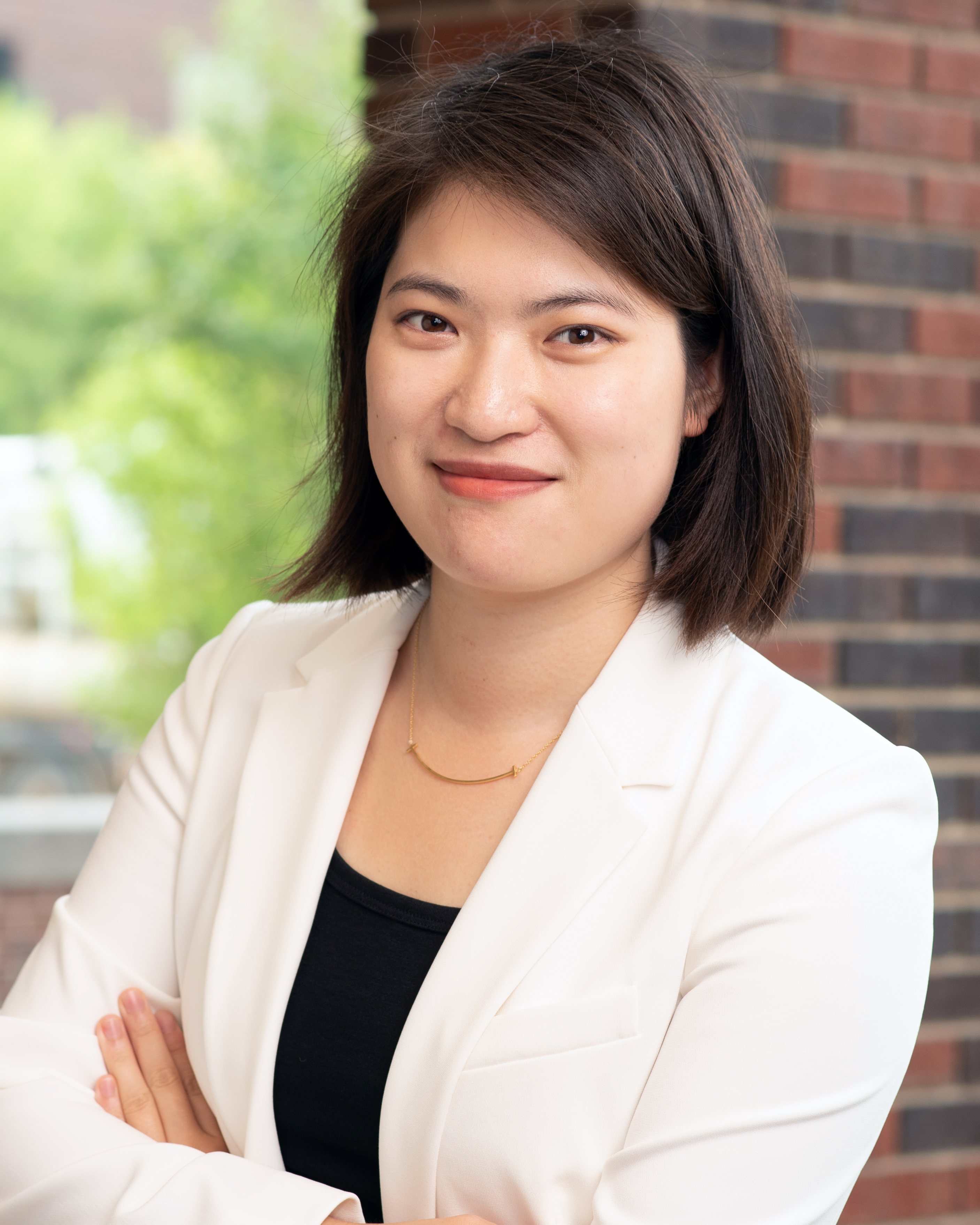
Kwok Pui-lan is the Dean’s Professor of Systematic Theology at the Candler School of Theology, Emory University. Her work bridges postcolonial and feminist theological frameworks with contemporary social justice issues. She is a prominent author of works including Postcolonial Politics and Theology , Occupy Religion , and Introducing Asian Feminist Theology . Her research focuses on globalization, gender, peacebuilding, and the intersection of theology with race, power, and pedagogy. Dr. Kwok actively contributes to academic discourse through her blog (http://kwokpuilan.blogspot.com) and writings for the Wabash Center, addressing themes such as embodied teaching in digital spaces, anti-racism in academia, and theology’s role in responding to societal crises. Her scholarship emphasizes critical reflection on religious education and the ethical implications of emerging technologies. Her teaching philosophy integrates collaborative learning, arts-based methods, and embodied practices to foster transformative education. She has explored topics like machine learning’s impact on religious imagination and the role of spirituality in pandemic-era learning environments. Dr. Kwok’s work consistently interrogates systems of power and oppression, advocating for marginalized voices in theological discourse. Her contributions to the field include reimagining pedagogical approaches to address contemporary challenges in religious education and social justice advocacy.
Prof. Ivan Martinovic is a Professor of Computer Science at the University of Oxford's Department of Computer Science, holding a Fellowship at the institution. He specializes in cyber-physical systems security, wireless network security, and behavioral biometrics. His research focuses on authentication mechanisms, intrusion detection, and trade-offs between security and performance in systems like satellite communications, EV charging infrastructure, and aviation networks. Education: PhD (TU Kaiserslautern); MSc (TU Darmstadt, Germany). Prior roles include postdoctoral research at UC Berkeley (2011) and UC Irvine (2009–2010), supported by a Carl-Zeiss Foundation Fellowship (2009–2011). He has also been an associate lecturer at TU Kaiserslautern. Research Interests: Cyber-physical systems security, wireless networks, behavioral biometrics (e.g., continuous authentication via physiological signals), robust communication protocols, and analysis of security vs. performance trade-offs in distributed systems. Technologies include software-defined radios, NFC/RFIDs, and EEG/eye-tracking devices. Scientific Awards: Carl-Zeiss Foundation Fellowship (2009–2011). Advising & Grants: No explicit student listings; however, his work involves interdisciplinary collaborations and has been funded by government and industrial grants. His research spans labs and teams focused on satellite cybersecurity, smart infrastructure security, and biometric systems. Labs/Teams: Engages with groups exploring satellite communication security, EV charging infrastructure vulnerabilities, and behavioral authentication systems, though specific lab names are not disclosed in the text.
Dr. Susana Castro-Kemp is an Associate Professor in Psychology and Human Development at University College London's Institute of Education (IOE), where she serves as Director of the Centre for Inclusive Education (CIE) since September 2023. Previously, she was a Reader in Education at the University of Roehampton for eight years. Her work focuses on inclusive education policy and practice globally, with particular expertise in special educational needs and disabilities (SEND), early childhood intervention, and mental health in schools. The IOE has been ranked number one in the world for Education for several consecutive years, providing an ideal environment for her impactful research. Dr. Castro-Kemp holds a PhD in Psychology jointly awarded in 2012 by the University of Porto (Portugal) and the University of North Carolina at Chapel Hill (USA). Her doctoral research was fully funded by the Foundation for Science and Technology/European Commission and the Global Education and Development Studies scholarships. She is a Chartered Psychologist with the British Psychological Society, a Senior Fellow of Advance HE, and a Recognised Research Supervisor by the UK Council for Graduate Education. Dr. Castro-Kemp's research centers on policy regulating education, health, and welfare services for children, particularly those with support needs. She examines inclusive education practices from users' perspectives, policy models leading to effective inclusive pedagogy, and country-level policy impacts on outcomes for children with special educational needs. Her work moves away from diagnostic labels toward engagement and civic participation as educational outcomes. She also investigates inclusion and early intervention in low- and middle-income countries, mental health in schools, and quality of early childhood education. Her recent publications reveal several key trends in inclusive education research. There's growing emphasis on understanding educational experiences through the voices of children and families rather than diagnostic labels. Much of her work examines the implementation gap between inclusive education policy and classroom practice. She has conducted significant research on how children with special educational needs experienced the pandemic, revealing both challenges and unexpected "silver linings" for some groups. Her corpus analysis of Ofsted reports shows narrow focus in early childhood education inspections, while her work on SEND policy increasingly takes an international comparative approach. Dr. Castro-Kemp has received recognition for her impactful work, including: Best Digital Humanities Project for Community Engagement Prize (2023) from the National Institute of Humanities and Social Sciences of South Africa for her project "Optimising collaborations and reducing inequalities of Early Childhood Intervention in post-Covid-19 South Africa" Dr. Castro-Kemp has secured approximately £1.3 million in research funding from various sources including ESRC, British Academy/Leverhulme Trust, European Commission, and private sponsors. Her current major project is 'ScopeSEND' (2024-2026), funded by the Nuffield Foundation (£250,000), examining international SEND policies. She has led numerous projects including "Transdisciplinary provision for children with disabilities in the Global South" (£3,500), "Optimising collaborations in South Africa" (£47,200), and "Froebel meets Ofsted" (£19,185). As a supervisor, she mentors MA/MSc and PhD students in education policy, early childhood, and inclusive education, having been nominated for student choice awards for excellent feedback and outstanding research supervision. As Director of the UCL Centre for Inclusive Education since 2023, Dr. Castro-Kemp leads a team focused on advancing knowledge exchange and research in inclusion and special needs. The Centre works with schools, educators, parents, and early years settings to translate research into practice. Her international collaborations include work with the World Health Organization as a technical advisor on the use of the International Classification of Functioning, Disability and Health (ICF) system in educational contexts. She also serves on the SEN Policy Research Forum and has provided oral evidence to the House of Commons Education Select Committee.
Scott E. Denmark is the Reynold C. Fuson Professor of Chemistry at the University of Illinois, Department of Chemistry, within the College of Liberal Arts & Sciences. He earned his S.B. from MIT (1975) and D.Sc. Tech. from ETH-Zürich (1980) under Albert Eschenmoser. His research focuses on synthetic organic chemistry, organoelement systems (Si, P, Sn, S, Li), palladium catalysis, and chemoinformatics. He has pioneered methods in asymmetric catalysis, total synthesis of natural products, and tandem cycloaddition reactions. Denmark chairs editorial boards for top journals and leads the Denmark Group, mentoring over 100 students. Awards include the Paracelsus Prize (2020), Noyori Prize (2019), and membership in the National Academy of Sciences (2018). Education: S.B., Massachusetts Institute of Technology, 1975 D.Sc. Tech., ETH-Zürich, 1980 (Advisor: Albert Eschenmoser) Research Interests: Design of new organic reactions and catalysts Structure-reactivity relationships in organoelement systems Total synthesis of alkaloids, polyenes, and glycosides Machine learning for catalyst optimization Asymmetric phase transfer catalysis Green chemistry using water-based systems Recent Research Trends: Recent work emphasizes indium-catalyzed allylations of carbohydrates (Nature, 2025) and chemoinformatics-driven catalyst design. Collaborations with MIT and industry (e.g., Pfizer, Amgen) highlight applied impact. Awards: Paracelsus Prize (2020) Ryoji Noyori Prize (2019) Member, National Academy of Sciences (2018) Member, American Academy of Arts and Sciences (2017) Advising & Grants: Mentored 40+ PhD students and 60+ postdocs. Active in funding initiatives for chemoinformatics and sustainable catalysis. Recent grants include Pines Fellowship (2025) for student Matthew Albritton. Labs/Teams: Leads the Denmark Group at UIUC, known for interdisciplinary projects merging organic synthesis with computational methods. Collaborates globally, including with ETH-Zürich and Hiroshima University.
Professor Michael Milford is a robotics and computer vision expert at Queensland University of Technology (QUT), serving as Joint Director of QUT's Centre for Robotics. His research bridges robotics, neuroscience, and computer vision, focusing on biologically inspired navigation systems for autonomous vehicles and drones. He has pioneered projects like SeqSLAM and RatSLAM, emphasizing the synergy between biological intelligence and robotic systems. Research Interests: Milford explores navigation algorithms inspired by animal behavior, energy-efficient neural networks, and autonomous systems. His work aims to create robots capable of operating in dynamic environments through interdisciplinary collaboration with institutions like MIT, Harvard, and NASA's Jet Propulsion Laboratory. Awards & Recognition: Awarded the 2019 Batterham Medal and a $2.7M Australian Laureate Fellowship for his project on GPS-independent positioning systems. His work has produced highly cited papers in robotics and computer vision, including breakthroughs in visual SLAM and place recognition under varying conditions. Teaching & Collaboration: Milford mentors students in robotics and AI, launching initiatives like the STEM Storybook to inspire youth. He collaborates globally, emphasizing cross-disciplinary research to bridge gaps between fundamental and applied sciences. Labs & Projects: Leads QUT's Centre for Robotics, advancing technologies for autonomous systems. His projects explore neuromorphic computing, SLAM systems, and bio-inspired navigation, with applications in defense, transport, and environmental monitoring.
Ada M. Fenick, MD, is a Professor of Pediatrics (General Pediatrics) at Yale School of Medicine. She holds multiple leadership roles including Associate Director for Pediatrics in the Biopsychosocial Approach to Health clerkship, Medical Director of School-Based Health Centers, and Medical Director of the Medical-Legal Partnership Project. Her clinical practice focuses on economically disadvantaged pediatric populations, emphasizing developmental aspects of child health and addressing toxic stress impacts. Education: BS in Biomedical Sciences (University of Michigan, 1990), MD (University of Michigan, 1993), Pediatric Residency (Weill-Cornell/NY Medical Center, 1996) Research: Centers on pediatric primary care innovations such as group well-child care models, medical-legal partnerships, and obesity prevention. Key themes include health equity, social determinants of health, and curriculum development. Her recent work emphasizes leveraging medical student experiences to improve curricula addressing social drivers of health. Over 20 peer-reviewed publications since 2020 focus on topics like electronic phenotyping algorithms for obesity screening and frameworks for group pediatric care implementation. Awards: Includes Howard A Pearson MD Teaching Award (2013) and multiple institutional recognitions for clinical excellence and innovation. She leads initiatives like the Yale Primary Care Pediatrics Curriculum and collaborates with community organizations to enhance access to early intervention services for vulnerable children. Her work integrates clinical care, education, and policy advocacy to promote holistic child health outcomes.
Ehsan Azimi is an Assistant Professor in the Department of Electrical and Computer Engineering and the Department of Computer Science at the University of Arizona, where he is also a member of the Graduate Faculty. His research bridges human-AI interactive systems, extended reality, robotics, and human-centered design, with a strong focus on medical applications. His research interests lie in creating synergistic human-AI systems that enhance medical procedures through advanced technologies. Key areas include extended reality for surgical navigation , robotics in minimally invasive surgery , and intelligent user interfaces . His work has led to innovations in smart glasses calibration, intraocular robotic snakes, needle steering, and digital twins for surgical training, all aimed at improving precision, safety, and learning in medicine. The recent articles highlight a consistent trend in medical robotics , augmented reality in surgery , and human-robot collaboration . These works span from hardware development to AI-driven interfaces, emphasizing real-time interaction, user experience, and clinical applicability across disciplines like ophthalmology, otology, and surgical education. Scientific Awards: Siebel Scholar Provost Postdoctoral Fellowship Link Fellowship Ehsan actively mentors students and scholars in research projects, indicating a strong commitment to academic advising. While specific grant details are not listed, his patented technologies and publication record suggest successful funding and translational research outcomes. His work has been featured in Engineering Magazine and other media, reflecting its impact and innovation. His research is conducted within an interdisciplinary lab environment focused on human-centered AI and medical robotics, integrating expertise from computer science, engineering, and clinical medicine to develop next-generation surgical and training systems.
Dr. Saad Khan is a Senior Lecturer in Cyber Security at the Department of Computer Science, School of Computing and Engineering, University of Huddersfield, United Kingdom. He is an active researcher and educator, supervising multiple PhD students and contributing to government-funded cybersecurity projects with Innovate UK, DCMS, and DASA. He is also a Fellow of the Higher Education Academy and serves on program committees for major conferences. His research focuses on intelligent systems for cyber security and digital forensics. Key areas include Security Information and Event Management (SIEM), access control, authentication, vulnerability assessment, anomaly detection, and image forensics. He aims to develop automated software tools that enhance digital infrastructure resilience against modern cyber threats. The recent publications reflect a strong trend in applying machine learning and AI to cybersecurity challenges, particularly in IoT security, zero-day attack detection, and human-centric security awareness. His work bridges technical innovation with practical implementation in real-world environments. Scientific Awards: Fellow of the Higher Education Academy Dr. Khan actively supervises PhD students and contributes to research grants through collaborations with UK government agencies. He has led work in three major funded projects and regularly reviews for top-tier journals and conferences. He is a member of the Centre for Cybersecurity at the University of Huddersfield, where he collaborates on interdisciplinary research initiatives focused on secure digital transformation and intelligent defense systems.
Krishna Gummadi is a Scientific Director and Professor at the Max Planck Institute for Software Systems (MPI-SWS) in Germany, where he leads the Networked Systems Research Group. He also holds a professorship at the University of Saarland, demonstrating his dual commitment to research and academic instruction in computer science. His educational background includes: Ph.D. in Computer Science and Engineering from the University of Washington (2005) B.Tech. in Computer Science and Engineering from the Indian Institute of Technology, Madras (2000) Gummadi's research spans networked and distributed computer systems with a current focus on social computing systems. His work addresses critical challenges in algorithmic fairness, privacy in social media, trustworthiness of online identities, and information dissemination in social networks. He approaches these problems through interdisciplinary methods combining user-centric studies, data-centric analysis, and systems-centric design to create practical solutions that enhance fairness, transparency, and user control in online platforms. His methodology integrates large-scale observational studies, computational modeling, and system implementation to tackle complex human-computer interaction challenges at societal scale. His recent publications reveal a strong emphasis on fairness in algorithmic decision making, with significant contributions to quantifying and addressing discrimination in machine learning systems. His work bridges computer science, social science, and ethics, creating frameworks for fair classification, understanding media bias, and developing privacy-preserving techniques that maintain functionality while protecting user data. The research demonstrates a progression from technical system design to addressing societal implications of computing systems. Among his notable scientific achievements: ERC Advanced Grant in 2017 for 'Foundations for Fair Social Computing' Test of Time Awards at ACM SIGCOMM and AAAI ICWSM Casper Bowden Privacy Enhancing Technologies (PET) and CNIL-INRIA Privacy Runners-Up Awards IW3C2 WWW Best Paper Honorable Mention Multiple Best Paper awards across prestigious conferences Gummadi has advised numerous PhD students and postdoctoral researchers who have gone on to prominent positions in academia and industry. His ERC Advanced Grant has supported extensive research into fair social computing, while his leadership in major conferences (including serving as General Chair for ICWSM 2016 and Program Chair for WWW 2015) has shaped research directions in the field. His teaching portfolio includes courses on Distributed Systems, Human-Centered Machine Learning, and Social Media Analysis. He leads the Networked Systems Research Group at MPI-SWS, which has developed several publicly available systems including tools for fair classification, privacy risk assessment, trust evaluation in social media, and information diet management. The group's work bridges theoretical advances with practical implementations that address real-world challenges in social computing, with numerous software releases and datasets made available to the research community.
Dr. Anett Hoppe is a research staff member at the Leibniz Information Centre for Science and Technology (TIB) in Hannover, Germany, where she works in the Visual Analytics research group. Her research focuses on the intersection of artificial intelligence, education technology, and information science, with particular emphasis on how people learn through search processes and educational video consumption. Dr. Hoppe completed her academic journey with: Ph.D. in Semantic Web technologies for online user profiles from the University of Burgundy, Dijon, France Her primary research interests span Search as Learning, software-based support for scientific reproducibility, and ethical considerations in computer-based decision making. She investigates how visual elements, reading sequences, and AI technologies impact knowledge acquisition during web search and educational video consumption. Her work bridges human-computer interaction, educational psychology, and information retrieval to create more effective learning experiences, with recent publications examining the role of large language models, vision-language models, and visual complexity in educational contexts. Analysis of her recent publications (2024-2025) reveals a strong interdisciplinary focus combining computer science, educational psychology, and information science. Her research examines video-based learning effectiveness, knowledge gain prediction, educational resource discovery, and the impact of visual elements on learning outcomes. She consistently explores how AI technologies can be leveraged to enhance educational experiences while maintaining attention to ethical considerations and scientific reproducibility. Dr. Hoppe maintains active collaborations with researchers across multiple institutions, with frequent co-authorship patterns indicating strong research partnerships, particularly with Ralph Ewerth and other members of the Visual Analytics group at TIB. Her work supports TIB's mission to advance knowledge infrastructure and scholarly communication through innovative technological solutions while directly addressing practical challenges in educational technology and information retrieval.
Alexandra Papoutsaki is an Associate Professor of Computer Science at Pomona College since 2017. Her research focuses on Human-Computer Interaction , particularly in webcam-based eye tracking and shared gaze for remote collaboration . Ph.D. in Computer Science from Brown University M.Sc. in Computer Science from Brown University B.Sc. in Computer Science from Athens University of Economics and Business Her work spans personal informatics , crowdsourcing methodologies , and remote usability testing , with recent projects examining collaborative drawing interfaces, baby tracking reflection, and digital health communities. Earlier contributions include computational biology research in genome-wide survival analysis and pan-cancer mutation networks. Key trends in her publications include: Remote collaboration tools enhanced by eye tracking Personal data systems for health and creative domains Foundational work in crowdsourcing quality control Interdisciplinary approaches combining computer science with psychology and medicine Scientific recognition includes: NSF CRII Grant (2020-2022) Wig Distinguished Professor Award (2020) Best Paper at RECOMB (2013) She has developed multiple open-source platforms including WebGazer for scalable eye tracking and Remotion for mobile usability testing. Her research team has published extensively in top venues like CHI, IMWUT, and IJCAI.
Svitlana Rogovchenko is a Professor at the Department of Engineering Sciences, University of Agder, Norway. Her academic work bridges pure mathematical research in differential equations with innovative pedagogical approaches in engineering and interdisciplinary education. Educational Background: Doctor of Philosophy in Differential Equations (1988), Institute of Mathematics, National Academy of Sciences, Kyiv, Ukraine Master of Science in Mathematics (1983), Kyiv State University, Ukraine Research Interests: Qualitative theory of ordinary and impulsive differential equations, asymptotic methods in nonlinear mechanics, mathematical modeling, and the intersection of mathematics education with engineering and biology curricula. She focuses on conceptual understanding, pedagogical challenges, and commognitive conflicts in learning differential equations. Recent Publications Trends: Her work spans mathematical modeling of vehicle crashworthiness, interdisciplinary education for biologists and engineers, and pedagogical innovations in ordinary differential equations. Articles emphasize assessment design, group work tensions, and bridging mathematical theory with applied contexts.
Mehran Sahami is the James and Ellenor Chesebrough Professor in the School of Engineering and Tencent Chair of the Computer Science Department at Stanford University. He holds the academic rank of Teaching Professor of Computer Science and is also a Senior Fellow by courtesy at the Freeman Spogli Institute for International Studies. As a Bass University Fellow in Undergraduate Education, he has made significant contributions to computer science education at Stanford. Dr. Sahami earned both his undergraduate and PhD degrees from Stanford University's Computer Science Department. After completing his PhD, he worked as a Senior Engineering Manager at Epiphany before joining Google as a Senior Research Scientist from 2002-2007, while also teaching as a Lecturer at Stanford. In 2007, he joined the Stanford faculty full-time, continuing to consult part-time at Google until 2010. Professor Sahami's primary research interests focus on computer science education, machine learning, and information retrieval on the Web. His work has significantly influenced how computer science is taught globally, particularly through his leadership in the ACM/IEEE-CS Joint Task Force on Computing Curricula 2013 (CS2013). He has pioneered approaches to teaching introductory programming and probability theory for computer scientists, with a particular emphasis on analyzing student performance trends as CS enrollments have grown dramatically. His recent publications demonstrate a strong shift toward educational research while maintaining connections to technical expertise in machine learning and data analysis. Bass University Fellow in Undergraduate Education Professor Sahami serves as the ACM Steering Committee Chair for the CS2013 effort to define international curricular guidelines for undergraduate computer science programs. He is also the founder and first Chair of the Symposium on Educational Advances in Artificial Intelligence (EAAI), an annual meeting for researchers and educators to discuss pedagogical issues in teaching AI. He has received significant grant funding through these initiatives and has been instrumental in shaping national and international computer science curriculum standards. At Stanford, he teaches CS106A: Programming Methodology and CS182: Ethics, Public Policy, and Technological Change, with his educational materials widely distributed through the Stanford Engineering Everywhere initiative. Professor Sahami maintains connections to the startup ecosystem through advisory board positions and has published a book on Text Mining with Ashok Srivastava. His career trajectory from industry researcher to academic educator gives him a unique perspective on practical applications of computer science education.
Yi Ding is an Assistant Professor in the Elmore Family School of Electrical and Computer Engineering at Purdue University, where they lead the STYLE (Sustainable computing Systems and LEarning) Lab. Dr. Ding joined Purdue in August 2023 after completing a postdoctoral fellowship at MIT CSAIL as an NSF Computing Innovation Fellow, mentored by Michael Carbin. During their postdoc, they also held a visiting position at Meta Infra Data Center to improve server maintenance efficiency in hyperscale datacenters. They received their Ph.D. in Computer Science from the University of Chicago, advised by Henry Hoffmann. Dr. Ding's research focuses on computer systems, computer architecture, and AI/ML, with strong emphasis on applications in sustainability and healthcare. Their work spans sustainable computing, including energy efficiency in datacenters and LLM serving, as well as healthcare applications such as mental health prediction and EEG analysis. Their recent publications demonstrate a strong trend toward addressing environmental impacts of computing, particularly in datacenters and AI systems, while also exploring innovative healthcare applications. Their research bridges systems, sustainability, and health domains, creating novel solutions for pressing societal challenges. Dr. Ding has received notable recognition including the Seed Funding for High-Impact Review Papers (2024), the Meta Research Award (2021), and was selected as a Computing Innovation Fellow by CRA/CCC (2020). Seed Funding for High-Impact Review Papers (2024) with Inez Hua 1st Place in Research Talk in CoE at Fall 2024 Undergrad Research Expo (awarded to Gavin Fortwendel) 2020 Computing Innovation Fellow by CRA/CCC Meta Research Award on Statistics for Improving Insights, Models, and Decisions (2021) Dr. Ding is actively recruiting self-motivated Ph.D. students interested in AI/ML systems research. They have secured funding for undergraduate research projects through DUIRI, focusing on sustainable AI computing and energy use in training autonomous vehicles. Their lab collaborates with various institutions including MIT, Meta, and interdisciplinary partners at Purdue. The STYLE Lab under Dr. Ding's leadership is actively engaged in multiple research initiatives addressing sustainable computing and healthcare applications, with strong industry connections and funding support from both internal university sources and external partners.
Professor Sir Nigel Shadbolt is Principal of Jesus College Oxford and Professor of Computing Science at the University of Oxford. He is Chairman and Co-founder of the Open Data Institute which he established with Sir Tim Berners-Lee. His career spans multiple prestigious institutions including the University of Southampton and University of Nottingham, where he held leadership roles in AI research. He has served in significant government advisory positions including as Information Advisor to the UK Prime Minister and member of the Public Sector Transparency Board. Nigel Shadbolt earned his undergraduate degree in Philosophy and Psychology from the University of Newcastle (1st Class Honours, 1978) followed by a PhD in Artificial Intelligence from the University of Edinburgh. His academic journey includes positions as the Allan Standen Professor of Intelligent Systems at Nottingham and leadership of the Web and Internet Science Group at Southampton before joining Oxford. Shadbolt's research spans the interdisciplinary field of Web Science, which he helped originate, focusing on human-centered AI, social machines, open data, and ethical considerations in technology. His work examines how humans and computers integrate at web scale to create novel applications, with recent emphasis on children's digital autonomy and privacy. He has published over 500 articles exploring topics from cognitive psychology to computational neuroscience, Artificial Intelligence to the Semantic Web. His notable contributions include the development of data.gov.uk and leadership in establishing Oxford's Institute of Ethics in AI. His 2018 book 'The Digital Ape: how to live (in peace) with smart machines' has been described as a 'landmark book' in the field. Knighted in 2013 for services to science and engineering Fellow of The Royal Society (FRS) Fellow of the Royal Academy of Engineering (FREng) Fellow of the British Computer Society (FBCS) Technology Pioneer status by the Davos World Economic Forum UK national BT Flagship IT Award As an advisor, Shadbolt has supervised numerous PhD students who have gone on to positions at Google DeepMind, the World Bank, and other prestigious institutions. His research has been supported by multiple grants including SOCIAM, KOALA, and ReTiPS projects. He co-founded Garlik Ltd, which was acquired by Experian, demonstrating his commitment to translating research into practical applications that benefit society. Shadbolt leads the Web and Internet Science research group at Oxford, focusing on social machines - applications that succeed at web scale by integrating humans and computers in novel ways. His work on the KOALA Hero Toolkit and CHAITok system addresses critical challenges in children's data autonomy on social media platforms, reflecting his commitment to ethical technology design.