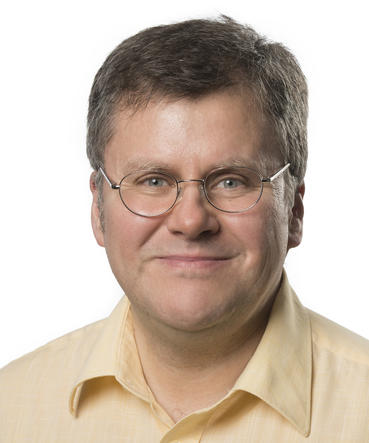
Carlos Guestrin is the Fortinet Founders Professor of Computer Science at Stanford University and serves as Director of the Stanford AI Lab (SAIL) and Senior Fellow at the Institute for Human-Centered AI (HAI). He holds dual roles as Chief Scientist at Visual Layer and Virtue AI. His research focuses on machine learning methods, explainability, fairness, and ethics of AI, alongside systems for scalable AI deployment. Education details are not explicitly provided, but his work spans foundational contributions to machine learning systems (e.g., XGBoost) and explainable AI frameworks like Anchors and LIME. He emphasizes ethical AI through projects like CheckList for model testing and Model Equality Testing for API transparency. His scientific contributions include advancing optimization techniques (AdaScale SGD, TVM compiler) and ethical benchmarks for generative AI. He has been recognized as a Member of the National Academy of Engineering for his transformative impact on AI systems and their societal applications. Guestrin leads interdisciplinary initiatives at SAIL and HAI, fostering collaboration between technical innovation and human-centered design. His work bridges theory and practice, addressing challenges in healthcare (diabetes management systems) and AI security.
Justin K S Yim is an Assistant Professor in the Department of Mechanical Science and Engineering at the University of Illinois Urbana-Champaign with a secondary appointment at the Coordinated Science Lab. His research focuses on bioinspired robotics, particularly legged locomotion systems and dynamic balance control mechanisms derived from animal behavior. Education: Ph.D. in Electrical Engineering (awarded May 15, 2020) Dr. Yim's work centers on translating biological principles—especially squirrel locomotion—into robotic systems capable of complex maneuvers like branch-to-branch leaping and stable landings. His research integrates hardware design, control theory, and biomechanical analysis to address challenges in robot-environment interaction on non-rigid surfaces and complex terrains, with applications in search-and-rescue and construction robotics. Recent publications (2024-2025) reveal a cohesive research trajectory exploring monopedal jumping dynamics, squirrel-inspired balance control, and cooperative cable-driven manipulation. Key themes include state-space stability analysis, nonprehensile foot torque utilization, and programmable surface interactions, demonstrating interdisciplinary convergence of robotics, biomechanics, and materials science. Dr. Yim maintains active affiliation with the Coordinated Science Lab, a premier UIUC research hub fostering innovation in robotics, control systems, and autonomous technologies through cross-departmental collaboration.
Britt Koskella is an Associate Professor at the University of California, Berkeley, affiliated with the Department of Environmental Science, Policy, and Management within the College of Natural Resources. Her research focuses on evolutionary biology, particularly host-pathogen coevolution and microbial interactions, integrating experimental evolution, field studies, and molecular biology. She leads the Koskella Lab, which investigates how microbial communities, phages, and pathogens influence host health and agricultural sustainability. Research Interests: Dr. Koskella explores the coevolutionary dynamics between hosts and their symbionts, including bacteriophage-bacteria interactions in plant microbiomes. Her work bridges ecological and evolutionary principles to address applied challenges in disease management and sustainable agriculture. Key areas include understanding phage-mediated selection in natural populations, the role of microbiomes in host defense, and the spatial/temporal adaptation of pathogens. Advancing Knowledge: Dr. Koskella’s lab employs experimental evolution in greenhouses and lab settings to test hypotheses derived from field observations. Recent studies highlight the indirect role of phages in plant disease protection and the design of synthetic microbial communities for agricultural applications. She collaborates on initiatives like the Joint Berkeley Initiative for Microbiome Sciences (JBIMS), emphasizing interdisciplinary approaches. Lab Team & Contributions: The lab includes students and researchers such as Eli Mehlferber, Asa Conover, and others, advancing projects on microbiome assembly, phage therapy, and pathogen coevolution. Dr. Koskella’s work has been published in high-impact journals like Current Biology , American Naturalist , and Ecology Letters .
Barbara J. Evans is a Stephen C. O’Connell Chair Professor of Law and Professor of Engineering at the University of Florida, with joint appointments in the Levin College of Law and Herbert Wertheim College of Engineering. She focuses on data privacy, AI/ML medical software regulation, genomic technologies, and diagnostic testing, and is a key member of the NIH Bridge2AI project. Education : J.D. from Yale Law School, LL.M. in Health Law from the University of Houston, postdoctoral training in clinical ethics at MD Anderson, and a Ph.D. in Earth Sciences from Stanford. Her research bridges law and engineering, emphasizing ethical and regulatory challenges in AI/ML medical applications, genomic data governance, and DIY biotechnology. She has led initiatives like the LawSeq SM project to standardize genomic analysis policies. The 15 most recent works highlight her interdisciplinary focus on AI ethics in healthcare, genomic privacy, and regulatory frameworks for emerging technologies. Key subfields include biomedical data sharing, FDA compliance, and equitable access to health data infrastructure. Scientific Awards : American Law Institute membership, IEEE Senior Membership, Greenwall Foundation Faculty Scholar. Evans has collaborated with institutions like the American College of Medical Genetics and Genomics (ACMG) and contributed to guidelines for genomic medicine. Her grants include NIH funding for Bridge2AI and LawSeq SM projects.
Prof. Dr. Jürgen Janek is a leading researcher in solid-state electrochemistry, affiliated with the Institute of Physical Chemistry at Justus Liebig University Giessen and serving as Scientific Director of the KIT/BASF Joint Laboratory BELLA . He manages the Giessen Center for Materials Research and leads the FestBatt competence cluster. Expertise in atomic mobility in solids Focus on electrochemical energy storage Key participant in the POLIS Cluster of Excellence His recent research explores solid-state batteries , post-lithium systems (sodium/magnesium), and bioanalytics using TOF-SIMS. Collaborations with BASF AG and Degussa AG drive application-oriented projects on material stability and degradation. Scientific accolades include: Four-time Highly Cited Researcher (Clarivate) 2022 Leopoldina Greve Prize (with Kerstin Volz) Election to the German National Academy of Sciences Leopoldina (2022) Prof. Janek's work involves interdisciplinary collaborations across KIT, Ulm University, and industry partners. His group investigates mixed-ion conductors , electrode kinetics , and plasma-electrochemistry interfaces , supported by grants from BMBF and industry.
Andrew Rowe is a Professor in Mechanical Engineering at the University of Victoria (UVic), with affiliations to the Institute for Integrated Energy Systems (IESVic) and the Advanced Mechanical Research Laboratory (AMRLab). He holds a BEng from the Royal Military College of Canada, MASc and PhD from UVic, and is a licensed Professional Engineer (P.Eng). His research focuses on thermodynamics, energy systems, cryogenics, and heat transfer, with particular expertise in caloric cycles, hydrogen systems, and energy systems analysis. His research emphasizes decarbonization strategies, including hydrogen integration into natural gas networks, grid flexibility under electrification scenarios, and the optimization of magnetocaloric materials for energy-efficient cooling. AMRLab, led by Rowe, develops technologies for energy conversion, storage, and system optimization, addressing challenges in low-temperature thermal systems and integrated energy networks. Recent work explores the systemic impacts of electrification in transportation and buildings, leveraging open-source tools like the NExus Solutions Tool (NEST) for multi-scale energy-water-land system modeling. His projects often address regional energy challenges, such as British Columbia’s transition to renewable energy and grid infrastructure resilience. Key contributions include studies on gas system decarbonization via hydrogen blending, thermal-hydraulic modeling of energy systems, and experimental validation of magnetocaloric materials. Rowe’s publications highlight interdisciplinary approaches to climate mitigation, emphasizing the interplay between technological innovation and systemic policy frameworks.
Dr. Zhiwen Jonathan Zhang serves as Associate Professor in the Department of Bioengineering at Santa Clara University's School of Engineering since 2011, with research spanning biomolecular engineering, drug discovery, and BIOAI to combat super-bacterial infections and advance precision protein technologies. Education: Ph.D. in Chemistry and Biochemistry, University of Texas at Austin (2001) Postdoctoral Research, The Scripps Research Institute (2001-2004) His interdisciplinary research pioneers unnatural genetic codes, trM2H systems, site-specific protein cross-linking, and synthetic antibodies. Current focus includes mitochondrial peptide transport, BIOAI design, subcellular protein synthesis, and engineering bacteria for micro-plastics degradation. His lab unraveled molecular dialogues between mammalian and Gram-positive bacterial cells, enabling groundbreaking anti-infective therapies. Publication trends reveal consistent innovation in protein engineering and translational bioengineering, with recent work emphasizing sortase A applications, fluorescent peptide development, and unnatural amino acid incorporation in mammalian systems—demonstrating a trajectory from fundamental biochemistry to industry-ready biotech platforms. Dr. Zhang has mentored 7 post-doctoral researchers, 2 visiting professors, and 5 Ph.D. students while securing grants from NIH NCI R01, NSF SBIR, American Heart Association, Welch Foundation, JOINN Foundation, IBM, and SCU Internal Research. His patented "Biotech+Techbio" platform has co-founded multiple biotech ventures, including two publicly traded companies and a 2024 acquisition. His laboratory maintains active collaborations with Bay Area biotech firms and academic institutions, driving translational research through the patented Biotech+Techbio platform while advancing BIOAI-assisted enzyme discovery for micro-plastics degradation and next-generation antibacterial therapies.
Prof. Torsten Wolfgang Kuhlen serves as a Universitätsprofessor at RWTH Aachen University, leading the Teaching and Research Area for Virtual Reality and Immersive Visualization within the Department of Computer Science. He is affiliated with Chair of Computer Science 12 (High Performance Computing), the Visual Computing Institute, and remains an integral part of the RWTH IT Center where his research group operates one of the world's largest Virtual Reality laboratories including the 30 sqm aixCAVE visualization chamber. The group maintains strong connections with Computational Science & Engineering Division, National High Performance Computing Center for Computational Engineering Science (NHR4CES), and VR in Science and Industry Network NRW e.V. Prof. Kuhlen's research spans virtual reality, immersive visualization, and multimodal 3D user interfaces with applications across simulation science, production technology, neuroscience, and medicine. His work combines basic research on advanced methods and algorithms with interdisciplinary collaborations involving RWTH Aachen institutes, Forschungszentrum Jülich, and industry partners. Recent publications demonstrate strong focus on audiovisual perception, immersive analytics, collaborative virtual environments, and practical VR applications in education and manufacturing. His research group has produced significant work on listening effort in virtual environments, immersive authoring techniques, and VR applications for scientific visualization. Notable projects include VRScenarioBuilder for automated vehicle testing and applications in monitoring additive manufacturing processes. The group actively participates in major conferences including IEEE VIS and EuroVis, with several award-winning contributions. Prof. Kuhlen has advised PhD students including Martin Bellgardt who recently completed his doctoral degree on "Increasing Immersion in Machine Learning Pipelines for Mechanical Engineering". The research group maintains state-of-the-art VR infrastructure including the aixCAVE facility which is open to all RWTH research groups.
Joachim Weickert is a Professor of Mathematics and Computer Science at Saarland University where he heads the Mathematical Image Analysis Group since 2001. He received his diploma and Ph.D. in mathematics from the University of Kaiserslautern (1991, 1996), and a habilitation degree in computer science from the University of Mannheim (2001). Prior to his current position, he worked as a research assistant at the University of Kaiserslautern, as a post-doctoral researcher at the universities of Utrecht and Copenhagen, and as an assistant professor at the University of Mannheim. His research focuses on image processing, computer vision, and scientific computing, with special emphasis on techniques based on partial differential equations, variational principles, wavelets, morphological and nonlocal methods, as well as neuroexplicit approaches. He has developed mathematical models and efficient numerical algorithms for image restoration, enhancement, segmentation, compression, optic flow computation, stereo reconstruction, shape from shading, and signal processing methods for tensor fields. These ideas have been successfully applied in industry, biomedical image analysis, and other fields. Analysis of his recent publications reveals a strong trend toward combining traditional PDE-based methods with modern deep learning approaches, particularly in the areas of image inpainting and compression. His work increasingly explores the connections between numerical algorithms for partial differential equations and neural network architectures, demonstrating how mathematical foundations can inform cutting-edge AI techniques while maintaining strong theoretical guarantees. Gottfried Wilhelm Leibniz Prize (2010), considered the most important research award in Germany ERC Advanced Grant (2017) for "Inpainting-based Compression of Visual Data" Elected member of Academia Europaea - The Academy of Europe Jan Koenderink Prize for Fundamental Contributions in Computer Vision (2014) Multiple DAGM Prizes and Best Paper Awards throughout his career AAIA Fellow (2021) and Highly Ranked Scholar (2024) distinctions Professor Weickert has supervised over 250 bachelor's and master's theses and initiated the Master Programme in Visual Computing at Saarland University, the first of its kind in Germany taught in English. He has established numerous interdisciplinary collaborations with colleagues from medicine, bioinformatics, pharmacy, physics, mechatronics, and mechanical engineering. As Principal Investigator for Visual Computing within the Multimodal Computing and Interaction Cluster of Excellence, and former dean of the Faculty of Mathematics and Computer Science (2008-2010), he has played a significant leadership role in advancing visual computing research and education. He heads the Mathematical Image Analysis Group, which has been at the forefront of developing mathematical methods for image analysis. The group maintains strong connections with both theoretical mathematics and practical applications, bridging the gap between fundamental research and real-world implementation across various domains including medical imaging, industrial inspection, and multimedia processing.
Prof. Dr. Michael Schloter serves as Director of the Research Unit for Comparative Microbiome Analysis at Helmholtz Munich since 2011 and holds a Professorship in Microbiology at the Technical University of Munich since 2010. He concurrently acts as Principal Investigator at both the German Center for Lung Diseases (DZL) and the Central for Food and Nutrition (ZIEL) at TU Munich, driving interdisciplinary research at the intersection of environmental and human health through the "Planetary Health" framework. His educational foundation was built through diploma studies at Ludwig Maximilian University Munich and doctoral research at the University of Bayreuth, followed by formative work in Brazil and the United States where he pioneered bioinocula development for stress-resilient agriculture. At Helmholtz Munich (formerly GSF), he evolved from group leader in soil microbial ecology (2001) to Research Unit Director, expanding his focus from agricultural systems to human microbiome-health connections. Dr. Schloter's research program centers on microbiome-host crosstalk across ecological scales, investigating how environmental microbiota interact with human and plant microbiomes to influence health outcomes. His work integrates ecological theory with microbiome analysis to decode host-microbe co-evolution patterns, with applications spanning sustainable agriculture, allergy prevention, and infection control. Key thematic pillars include holobiont theory, probiotic development, and microbiome-mediated disease prevention through environmental quality improvement. Analysis of his 2025 publications reveals a strategic research portfolio bridging fundamental and applied microbiome science. Agricultural studies dominate (maize, potato, apple systems), examining microbial inoculants and soil management, while human health investigations explore preterm birth complications and Antarctic mammal microbiomes. Computational approaches for antimicrobial resistance assessment and ecosystem-scale projects like JenaTron demonstrate methodological breadth, all converging on translating microbiome functionality into real-world sustainability solutions. Major recognitions include: Election to the Bavarian Academy of Science (2021) Consistent placement among the top 1% of highly cited global researchers (2019-2021) Heinrich Baur Research Award (2011) for agricultural microbiology contributions As Research Unit Director, Schloter leads large-scale collaborative initiatives including the DZL and ZIEL consortia, securing major funding for microbiome standardization projects and international research networks. His leadership extends to developing analytical frameworks for cross-ecosystem microbiome comparisons and establishing protocols for translating microbial ecology principles into clinical and agricultural applications. The Comparative Microbiome Analysis unit operates as a nexus for multi-host microbiome research, employing comparative genomics, field-scale agricultural trials, and clinical cohort studies to investigate microbiome dynamics across environmental, plant, and human systems. Current infrastructure includes advanced sequencing facilities and experimental platforms for plant-microbe and host-microbe interaction studies under controlled and natural conditions.
Giuliano Di Baldassarre is a Professor of Hydrology and Environmental Analysis at the Department of Earth Sciences, Uppsala University , Sweden. He serves as Head of Division for LUVAL (Air, Water and Landscape Sciences) and directs the Centre of Natural Hazards and Disaster Science (CNDS) (2016–2025). His work bridges water, environment, and society through interdisciplinary methods , focusing on disaster risk reduction, climate adaptation, and sustainable development. Education : Details not explicitly provided in the text. His research examines feedbacks between human activities and hydrological processes , including floods, droughts, and reservoir management . Key themes include social-ecological systems , inequalities in water crises , and policy implications of hydrological extremes . He has pioneered sociohydrology and human-water system modeling . Recent articles highlight global drought-flood interactions , urban water inequality , climate service maladaptation , and sociohydrological modeling . His work spans Nature Sustainability , Science Advances , and Hydrological Sciences Journal . Scientific Awards : International Hydrology Prize (Volker Medal) Plinius Medal (EGU) Witherspoon Lecture Award (AGU) European Research Council Consolidator Grant He led Panta Rhei - Everything Flows (2013–2022), IAHS’s global initiative on water-society interactions. Current efforts include transdisciplinary praxis and climate risk reduction frameworks .
Mads Albertsen is a Professor in the Department of Chemistry and Life Sciences at the Faculty of Engineering and Science, Aalborg University, Denmark. He leads the Albertsen Lab and is a key member of the Center for Microbial Communities. His research focuses on high-throughput DNA sequencing methods to explore uncultivated microbes and populate the tree of life. He is actively involved in major interdisciplinary projects such as NanoEat , Microflora Danica , and DarkScience , funded by the European Research Council, Villum Foundation, and Poul Due Jensen Foundation. His research interests span metagenomics , long-read sequencing , bioinformatics , microbial ecology , and environmental biotechnology . He develops cutting-edge methods to improve throughput in microbial genome recovery and applies them to diverse areas including wastewater treatment, human microbiome studies, and infectious disease diagnostics. His work has significant implications for public health and sustainability. The recent publications highlight a strong trend in long-read sequencing (Oxford Nanopore), metagenome-assembled genomes (MAGs) , and microbial dark matter . His team has published high-impact papers in Nature , Nature Methods , and Nature Communications , with applications in environmental systems and clinical diagnostics, including SARS-CoV-2 and bloodstream infections. His scientific awards include: The Grundfos Prize (2021) The Fritz Kaufmann Prize (2021) The Rising Star Award by IWA & ISME (2016) Research Result of the Year in Denmark (2015) The Spar Nord Fond Research Prize (2015) Mads Albertsen advises numerous PhD students, leads externally funded research projects, and is involved in technology transfer through his co-founding of DNASense ApS (2014–2020). He also serves on scientific advisory boards and contributes to public policy, including as a member of the Danish SARS-CoV-2 variant risk-assessment group. He teaches courses in Data Science, Bioinformatics, Genomics, and Environmental Microbiology at Aalborg University. His lab, the Albertsen Lab , is part of the Center for Microbial Communities , a leading research center focused on microbial systems biology and environmental applications. The lab collaborates extensively with national and international partners in academia, industry, and public health institutions.
Hamza Salih Erden is an Associate Professor (Docent) at the Informatics Institute of Istanbul Technical University in Turkey. His research focuses on energy optimization in data centers, thermal management systems, and computational fluid dynamics applications. With over 34 research outputs and an h-index of 12, he leads projects in energy-grid integration and carbon-aware load management. Research Focus Dr. Erden's work centers on improving energy efficiency in technological infrastructure through: Advanced cooling techniques for data centers Integration of thermal energy storage systems Computational fluid dynamics modeling Demand-response optimization for smart grids AI-driven monitoring of energy systems Publication Trends Recent works (2022-2025) demonstrate strong focus on sustainable energy technologies, particularly optimization of data center operations through thermal management innovations, integration of renewable energy solutions, and AI applications for system monitoring. Economic assessments of energy-saving techniques feature prominently. Awards and Recognition Technical Paper Award (2016) Multiple International Scientific Publication Incentive Awards (2017-2021) Poster Award (2012) Graduate Student Grant (2007) Projects and Funding Leads multiple energy research projects including: Carbon-aware load management in data centers (2025) Grid-integrated energy system modeling for data centers (2021-2023) CFD analysis of CRAH bypass methods (2018-2020) Economizer applications in Turkish data centers (2016-2017)
Matt Ratto is a full Professor in the Faculty of Information at the University of Toronto , where he also serves as Associate Dean, Research . He is a faculty affiliate of the Climate Positive Energy Institute , the Schwartz Reisman Institute for Technology and Society , and an SDG Fellow with the Sustainable Development Goals Institute . His work bridges critical theory and digital innovation , focusing on the social production of knowledge through emerging technologies. His research explores critical making and socio-technical systems , with applications in 3D-printed prosthetics (deployed in Cambodia, Tanzania, and Uganda), AI-driven healthcare solutions , and climate justice in computing . He has received over $6 million in funding, including two Canada Grand Challenge grants , and founded organizations advancing equitable technology access. Ontario Minister of College and Universities’ Award of Excellence (2020) Bell Canada Usability Labs Chair in Human-Computer Interaction (2018–2023) He supervises students such as Olivia Doggett and Sarah Gram , with past advisees including Brian Sutherland and Dan Southwick . His Critical Making Lab fosters interdisciplinary collaboration, and he teaches courses like INF2241: Critical Making and INF351: Information Design Studio .
Matteo Magnani is a Professor in the Division of Computing Science at the Department of Information Technology, Uppsala University. He leads the Uppsala University Information Laboratory and is a founding member of the Uppsala University Computational Social Science Lab. His research spans network science, artificial intelligence, data science, and computational social science, with a focus on social data mining and multilayer networks. PhD in Computer Science, University of Bologna, 2006 Graduated with honours in Information Sciences, University of Bologna, 2002 Studies in Computer Science at University of Marne la Vallée and Imperial College London Matteo Magnani's research interests include social network analysis, multilayer and probabilistic networks, community detection, visual analytics, and the application of AI to digital media and climate communication. His work bridges computer science and social sciences, particularly in analyzing online discourse and digital intermediaries. He has contributed significantly to the understanding of network structures, uncertainty in networks, and the ethical dimensions of algorithmic analysis. His recent publications highlight trends in fairness in community detection, visual saliency in network layouts, emotional reactions to climate visuals online, and deep learning applications in social media. Topics frequently involve YouTube, Twitter, and online public debates, using advanced network and machine learning methods. Rotary Prize for best student of the Science Faculty Best Paper Award Funniest Presentation Award Best Poster Award Pedagogical Prize from UTN Distinguished University Teacher (Sweden) Docent title (Sweden) Magnani has supervised numerous students and collaborated widely, particularly with Luca Rossi, Alexandra Segerberg, and Davide Vega. He has secured funding from major sources including VR, H2020, STINT, and MIUR. He leads active research labs focused on information systems and computational social science, fostering interdisciplinary collaboration and innovation in network-based research.