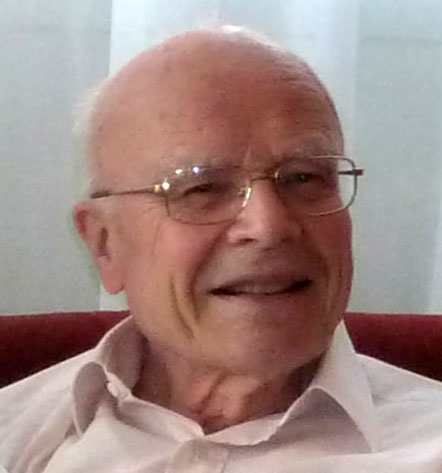
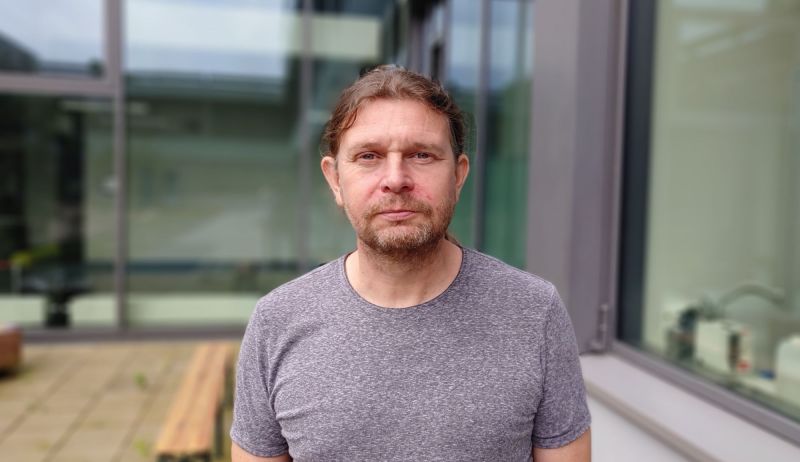
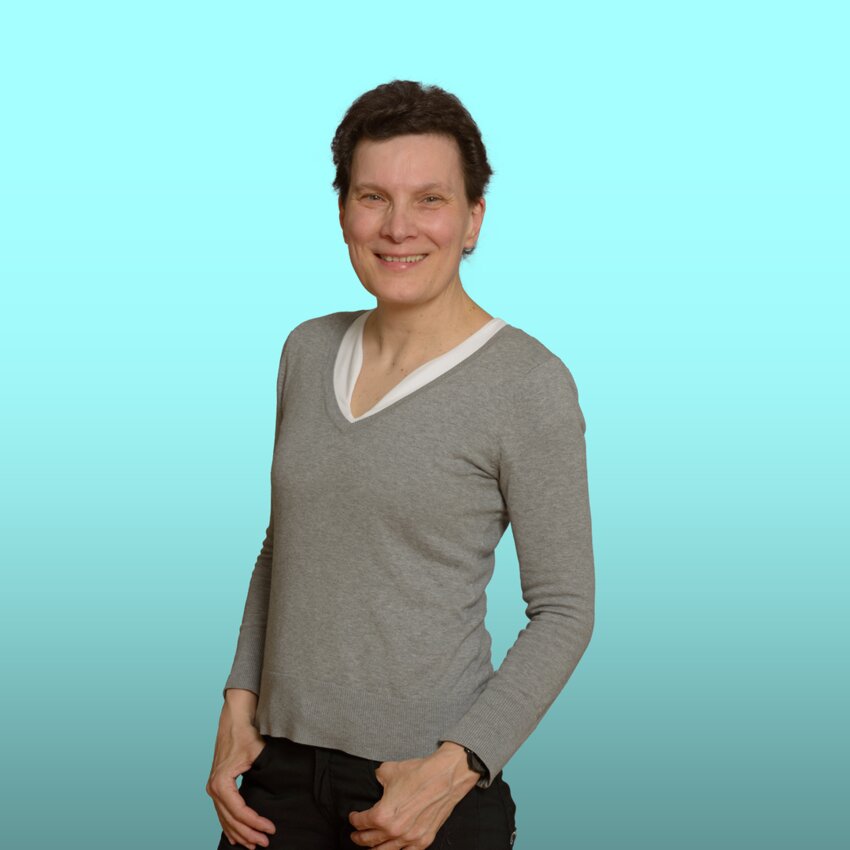
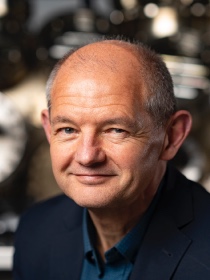
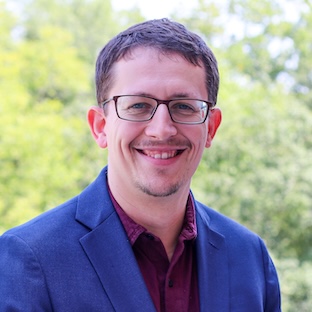
Philibert Jean is a Professor at the Department of Physics, Université Paris-Sud 11, specializing in metallurgy and interdiffusion processes. His career includes pioneering work on diffusion mechanisms in metals and ceramics, notably developing the ZAF method for quantitative analysis with the Electron Probe Microanalyser. He co-authored La Diffusion dans les Solides (1966) and authored Atom Movements: Diffusion and Mass Transport in Solids , alongside textbooks on metallurgy. He was awarded the 1999 Acta Metallurgica Gold Medal for his contributions. Education: Physics and Chemistry studies at the University of Paris. Research focuses include martensitic transformation, interdiffusion in metallic/non-metallic systems, and materials physics. Collaborations with CNRS led to a Materials Physics laboratory, studying diffusion's role in non-metallic materials like oxides and liquid crystals. Over 200 publications and multiple textbook editions highlight his academic impact. Awards: 1999 Acta Metallurgica Gold Medal Contributions: ZAF method, diffusion studies in ceramics/oxides, materials science education
Stéphanie Deputier is an Associate Professor at the University of Rennes 1, specifically with the Institut des Sciences Chimiques de Rennes. She has maintained this position since 1994. Her educational background includes a Ph.D. degree in chemistry from the University of Rennes 1, which she received in 1992. Dr. Deputier's research spans multiple areas of materials science: Solid-state chemistry, particularly phase diagrams and solid phase interdiffusions in metal/semiconductor III-V systems Thin films growth and structural characterizations of dielectric and ferroelectric oxides Epitaxial growth techniques including pulsed laser deposition and sputtering Applications in electronics, optics, photocatalysis, sensors, and environmental fields She has co-authored 90 scientific papers and holds two patents related to her research work. Her teaching portfolio at University of Rennes 1 includes fundamental chemistry courses at Licence and Master levels, as well as specialized instruction at the Graduate School of Engineering (Ecole Supérieure d'Ingénieurs de Rennes). Her laboratory work focuses on structural and microstructural characterizations of thin films using XRD techniques (θ-2θ, φ-scan, ω-scan, X-ray reflectometry, ECP, EDS) and studying the influence of growth parameters on material properties.
Nima Dehdashtiakhavan is an Electrical, Electronic and Computer Engineering Lecturer at the School of Engineering, University of Western Australia. His research focuses on semiconductor materials, nanotechnology, and optoelectronic device development. He contributes to UN Sustainable Development Goals through innovations in infrared sensing and imaging technologies. Research interests include transistor design, nanowire applications, silicon-based semiconductors, and advanced photodetector materials like HgCdTe superlattices. His work addresses interdiffusion effects, carrier transport mechanisms, and device simulation techniques. Key collaborations involve projects on infrared focal plane arrays and field-effect transistor modeling. His recent research outputs span topics from quantum transport in FD-SOI MOSFETs to VLWIR imaging applications. He has secured a major grant (2020-2023) for investigating carrier transport in type-II superlattices, collaborating with international researchers. His work bridges theoretical models with practical applications in photonics and semiconductor engineering.
Ida Westermann is a Professor and Head of Department at the Department of Materials Science and Engineering, NTNU. She leads research in physical metallurgy, focusing on the interplay between processing, microstructure, and properties of metallic materials. Her work spans steel, aluminum, and multi-material systems. She is affiliated with SFI PhysMet, SFI CASA, and SFI Manufacturing. Key research areas include in-situ testing with SEM/DIC, intermetallic phase formation in dissimilar material bonds, and additive manufacturing for multi-material systems. Westermann has taught courses like 'Microstructure and Properties of Metals' and 'Applied Electron Microscopy.' Her research emphasizes understanding strain fields via gold remodeling and studying intermetallic phases in steel-aluminum composites. She has published extensively on topics ranging from super duplex stainless steels to cryogenic spill effects on structural steels. Her recent work highlights advancements in joining dissimilar metals through additive manufacturing and roll bonding, as well as corrosion resistance in duplex stainless steels. She actively contributes to international conferences and journals, focusing on material characterization techniques like EBSD and X-ray microtomography.
Jean Philibert is a Professor in the Department of Physics at Université Paris-Sud 11, with a career spanning groundbreaking research in metallurgy and diffusion processes. His work has significantly advanced materials science, particularly in understanding interdiffusion in metallic and non-metallic systems. Early Career : Studied martensitic transformation at the French Institute for Steel Research under Prof. Charles Crussard. Innovations : Managed the first Electron Probe Microanalyser, developing the ZAF method for quantitative analysis. Academic Leadership : Founded a Materials Physics laboratory at Université Paris-Sud 11 and pioneered degrees in Materials Science and Engineering. His research focuses on diffusion processes in metals, ceramics, and molecular liquid crystals, linking these to high-temperature mechanical properties. Collaborations with Drs. Yves Adda and François d’Heurle produced seminal works like La Diffusion dans les Solides (1966) and Métallurgie, du minerai au matériau (multiple editions). Selected for Ordinary Membership in the Academy of Europe in 1991, Philibert’s contributions were recognized with the 1999 Acta Metallurgica Gold Medal .
Ralf Dohmen is a Researcher at the Institute for Geology, Mineralogy and Geophysics of Ruhr-University Bochum . He specializes in experimental and theoretical petrology , focusing on diffusion processes in minerals and their role in quantifying reaction kinetics, element partitioning, and geological timescales. As Laboratory Head for Pulsed Laser Deposition , he develops thin-film techniques to study mineral diffusion and grain boundary behavior. Education: PhD (Dr. rer. nat.) in Geochemistry, University of Cologne (1999); Physics Diploma, University of Cologne (1996) Positions: Ruhr-University Bochum (1999–2009, 2010–present), University of Bristol (2009–2010) His research spans diffusion chronometry in magmatic systems, isotope fractionation during metamorphism, and Li transport in olivine linked to volcanic rock alteration. He collaborates internationally with institutions such as Imperial College London , University of Lille , and Bavarian Geoinstitute . Recent projects include modeling chemical zoning in meteorites and phenocrysts to constrain solar nebula oxidation events and magma recharge timescales. Dohmen has received the Best Paper award in American Mineralogist (1999) and contributes to teaching at the BSc and MSc levels, including Polarization Microscopy and Thin Section Exercises . His work bridges fundamental mineral physics to applied geochemical modeling.
Prof. Dr.-Ing. Bettina Camin is a Professor and Head of the Materials Engineering department at Bremerhaven University of Applied Sciences. Her research focuses on advanced materials science, particularly in microstructure analysis, creep behavior, and the interplay between material processing and mechanical properties. She leads studies on superalloys, composite materials, and diffusion phenomena like Kirkendall porosity. Research Interests: Microstructure evolution under thermal and mechanical loading In situ synchrotron tomography and diffraction analysis Creep damage mechanisms in multiphase materials Heat treatment optimization for tool electrodes Material interface stability in diffusion couples Key Contributions: Recent work includes phase-field modeling of Kirkendall voids, vacancy dynamics in superalloys, and combined DIC/μ-CT analysis of strain-porosity relationships. Her work bridges experimental characterization (e.g., synchrotron techniques) and computational modeling to advance materials engineering. Professional Activities: Office hours are arranged via email at bcamin@hs-bremerhaven.de. She oversees the Materials Engineering curriculum and coordinates applied research in production technology. Her laboratory focuses on advanced manufacturing processes involving electro-discharge drilling and high-temperature material testing.
Dr. Toshiki Makimoto is a Professor at Waseda University's School of Advanced Science and Engineering, where he has been serving since April 2013. His academic career spans several decades with significant contributions to semiconductor research, particularly in nitride semiconductors and related device technologies. Before joining Waseda University, he held leadership positions at NTT Basic Research Laboratories, including Director from July 2011 to March 2013 and Head of the Department of Functional Materials Science from October 2010 to June 2011. Dr. Makimoto earned his Dr.Eng degree from the University of Tokyo, where he also completed both his undergraduate (1983) and graduate (1985) studies in Electrical Engineering. His educational background provided the foundation for his extensive research career in semiconductor materials and devices. His research focuses on III-V compound semiconductors , nitride semiconductors , crystal growth , and semiconductor devices . Makimoto's work has particularly advanced the understanding of dilute nitride semiconductors like GaAsN, AlGaN/GaN heterostructures, and related device applications including high-electron-mobility transistors (HEMTs) and solar cells. His expertise spans from fundamental material properties to practical device implementation. Analysis of his recent publications reveals a consistent focus on nitride semiconductor technologies, with particular emphasis on material characterization, defect analysis, and innovative device architectures. His work demonstrates strong continuity in semiconductor physics while adapting to emerging challenges in device performance, thermal management, and novel material systems. The research spans fundamental physics of semiconductors to practical device applications. MEXT Minister's Award for Science and Technology (Research Category, April 2015) Fellow of the Japan Society of Applied Physics (September 2014) Dr. Makimoto has made significant contributions to semiconductor research through his leadership roles at both Waseda University and NTT Basic Research Laboratories. His work on hexagonal boron nitride as a release layer for mechanical transfer of GaN-based devices represents a notable innovation in semiconductor technology. He maintains active research collaborations and has contributed to advancing the field of nitride semiconductors through both fundamental research and practical applications. His laboratory focuses on advanced semiconductor materials, particularly nitride-based systems, with research spanning from crystal growth techniques to device fabrication and characterization. The work integrates materials science, solid-state physics, and electrical engineering to address challenges in next-generation semiconductor technologies.
Stefano Frabboni is a Full Professor at the University of Modena and Reggio Emilia (UNIMORE) within the Department of Physical, Computer and Mathematical Sciences. His academic career focuses on experimental physics, particularly in electron microscopy and material science. He teaches courses such as General Physics III , The Profession of Physicist , and Physics Laboratory I , emphasizing mechanical and electromagnetic wave phenomena, data analysis, and laboratory techniques. His research interests span Electron Microscopy , Materials Science , and Quantum Physics , with a strong emphasis on Orbital Angular Momentum (OAM) applications in electron beam shaping and magnetic field analysis. He has contributed extensively to High Entropy Alloys , Computational Ghost Imaging , and Nanoscale Magnetic Spectroscopy . The articles reflect a focus on electron beam manipulation , phase shifts in materials , and high-resolution imaging techniques . Recent article trends include optimizing substrate bias voltage in HEA films , Mo content effects on coatings , enhancing TEM resolution via computational methods , and fabricating 3D nanoarchitectures with direct-write approaches. Sub-fields covered in his work are electron vortex generation , quantum state discrimination , OAM sorting , plasmonic excitation analysis , and defect characterization in semiconductors .
David Smith is Regents' Professor in the Department of Physics at Arizona State University and concurrently a Distinguished Global Futures Scientist within the Global Futures Scientists and Scholars initiative. Since 1984 he has directed ASU’s Center for High Resolution Electron Microscopy and served as Principal Investigator for the NSF National User Facility for High Resolution Electron Microscopy. His leadership roles also include Associate Chair for Space & Infrastructure in Physics (2013–present), Director of the John M. Cowley Center (1991–2006) and President of the Microscopy Society of America (2009). Education D.Sc., University of Melbourne, Australia (1988) Ph.D., University of Melbourne, Australia (1978) B.Sc. (Hons.), University of Melbourne, Australia (1970) Research Overview David Smith’s research is devoted to the development and application of atomic-resolution electron microscopy . Over four decades he has pioneered instrumentation and techniques that allow direct visualization of atomic arrangements in solids, enabling breakthrough insights into semiconductor heterostructures , nanostructures , oxide/semiconductor interfaces , magnetic multilayers and quantum-confined systems . Recent emphasis targets wide-band-gap nitrides for optoelectronics, two-dimensional electron gases at oxide interfaces, and nanoscale dopant distributions critical for next-generation electronic devices. His work integrates aberration-corrected TEM , off-axis electron holography , in-situ microscopy and quantitative image simulation to correlate structure with functional properties at the sub-ångström scale. Selected Scientific Awards & Honors Helmholtz International Fellowship Award, Helmholtz Foundation (2014) Distinguished Physical Scientist Award, Microscopy Society of America (2014) Harold Rose Distinguished Lectureship Award, German Microscopy Society (2019) Fellow, Materials Research Society Fellow, American Physical Society Fellow, Microscopy Society of America Fellow, Institute of Physics (U.K.) Grants & Doctoral Advising Smith has served as PI or co-PI on numerous federal and industry grants exceeding tens of millions of dollars. Current and recent funding includes: DOD-AFOSR – “Modulation-Doped Heterovalent Structures for High-Speed Electronic Device Applications” (2015–2018) UT-Austin – “Charge Transfer at Metal Dielectric Interfaces under Extreme Environments” (2014–2017) WYLE LABS – “Advanced Nanostructural Techniques for Nitride Device Operation” (2013–2016) NSF-MPS-PHY – “SusChEM: FRG: Molecular routes to new classes of polar/non-polar alloy semiconductors” (2013–2016) DOD-ARMY-ARO – “Advanced Microscopy and Analytical Studies for Hg-based Infrared Detector Materials and Substrates” (2013–2016) He routinely supervises Ph.D. dissertations and M.S. theses; course offerings include PHY 799 Dissertation , MSE 554/555 Electron Microscopy II & Lab , and PHY 792 Research . Laboratories & Teams Smith directs operations within the John M. Cowley Center for High Resolution Electron Microscopy , one of the premiere university-based microscopy facilities in the United States, housing multiple aberration-corrected TEMs, environmental TEMs, and dedicated specimen-preparation suites. The center supports interdisciplinary teams spanning physics, materials science, chemistry, electrical engineering and geoscience, and hosts national and international visiting researchers via the NSF user facility program.
Joost Frenken is a Professor and Dean of the Faculty of Science and Engineering at the University of Groningen. His research focuses on surface physics, catalysis, and nanotechnology, with expertise in scanning probe microscopy and friction mechanisms. He holds leadership roles in Dutch academic and research institutions, including the Netherlands Royal Academy of Sciences (KNAW). Education: PhD in Physics (Cum Laude) from Utrecht University (1986). Positions: Director of ARCNL (2014–2022), Head of Interface Physics Group at Leiden University (1996–2017). Research interests include surface dynamics, graphene formation, and catalyst design. He has pioneered advanced microscopy techniques and co-founded companies like Leiden Probe Microscopy BV and Applied Nanolayers BV. Awards: IUVSTA Science Prize (2004), ERC Advanced Grant (2010), MRS Innovation Award (2017). Key contributions: Developed high-speed scanning probe microscopy, revealed oxidation mechanisms of platinum, and elucidated friction energy dissipation at atomic scales.
Tina Bergh is a postdoctoral researcher at the Department of Chemical Engineering within the Faculty of Natural Sciences at the Norwegian University of Science and Technology (NTNU). She specializes in electron microscopy characterization and corresponding data analysis, working primarily within the catalysis group and TEM group at NTNU. Her research integrates advanced microscopy techniques with computational analysis to address challenges in materials science and catalysis. Her educational background includes a doctoral degree from the Department of Physics at NTNU, where she investigated intermetallic phases in aluminum-steel welded interfaces, and a master's degree in Nanotechnology for materials, energy and the environment, also from NTNU. Bergh's research interests focus on advanced electron microscopy techniques including (Scanning) transmission electron microscopy ((S)TEM), scanning electron microscopy (SEM), electron diffraction methods (PED, EBSD, 3D ED), 4D-STEM (particularly SPED), and spectroscopy (EDS/EDX, EELS). She applies these to study aluminum alloys and their precipitates, heterogeneous catalysts (especially silver catalysts for methanol-to-formaldehyde conversion), and various nanoparticle systems. She develops open-source Python-based data analysis workflows using hyperspy and pyxem repositories. Her publication record reveals a strong trajectory in applying scanning precession electron diffraction to characterize aluminum alloy microstructures and catalyst systems, with increasing focus on in situ techniques and computational analysis. Recent work shows progression from fundamental studies of intermetallic phases toward applications in catalysis and multi-material joining technologies. Bergh actively supervises students and collaborates across disciplines, as evidenced by her extensive co-authorship network. She participates in teaching activities including the course TKP4190 - Fabrication and Applications of Nanomaterials, and presents her work at international conferences such as Microscopy and Microanalysis and International Conference on Aluminium Alloys. She maintains active involvement in research communities through the TEM group and Catalysis group at NTNU, with recent presentations at workshops including NordTEMhub and European Microscopy Congress. Her work demonstrates strong integration of experimental characterization with computational data analysis methodologies.
Professor Dougal McCulloch is a Professor and Director of the Microscopy & Microanalysis Facility at RMIT University's Research & Innovation department, based at the City Campus Australia. His research focuses on advanced materials characterization, including microscopy techniques, thin film coatings, and the study of carbonaceous and disordered solids. He leads projects on novel carbon phases under extreme conditions, corrosion-resistant coatings for aerospace alloys, and neuromorphic signal processing. McCulloch coordinates third-year Applied Physics and teaches first-year Life Science Service Physics. He supervises PhD and Masters students in areas like quantum correlation microscopy and carbon material analysis. His work bridges materials science and applied physics, emphasizing experimental and analytical methods. He collaborates on high-pressure synthesis and structural analysis of materials, contributing to both fundamental science and aerospace engineering applications. Research interests include electron microscopy innovations, advanced thin films for industrial applications, and the electronic structure of solids. Projects involve developing environmentally friendly coatings and exploring nanostructured carbons formed under shear or pressure. McCulloch's facility supports interdisciplinary research with cutting-edge microscopy tools. Teaching responsibilities include coordinating applied physics modules and directing the Microscopy Facility, integrating research and education. Supervision focuses on experimental projects at the intersection of materials science and physics. He actively publishes on carbon phase transformations, memristor technologies, and high-pressure material synthesis, reflecting his commitment to advancing analytical and applied materials research.
Nancy A. Burnham is a Full Professor in the Department of Physics at Worcester Polytechnic Institute (WPI), with an affiliation to the Biomedical Engineering Department since 2012. She holds a Ph.D. in Physics from the University of Colorado, Boulder (1987). Her research focuses on nanoscience, atomic-force microscopy (AFM), and the mechanical properties of nanomaterials, with contributions to biophysics, energy materials, and surface analysis. She directs WPI's Switzerland Project Center (since 2015) and teaches courses like Atomic Force Microscopy (PH 561), Relativity (PH 3501), and Intermediate Mechanics (PH 2202). Her work includes over 100 publications, 14,000 citations (h-index 38), and awards such as the 2001 Nanotechnology Recognition Award and AVS Fellowship (2010). Education: BA Colgate University (1980), MS and PhD University of Colorado, Boulder (1985-1987) Professional Experience: Postdoctoral Fellowships at Naval Research Lab, Forschungszentrum Jülich, and École Polytechnique Fédérale de Lausanne Her research interests include characterizing nanomaterials, interpreting AFM data, and developing instrumentation for nanomechanics. She has contributed to studies on bacterial adhesion, asphalt binder microstructures, and perovskite solar cells. Burnham is active in professional societies, including as Treasurer of the AVS Nanoscience Division. Her teaching philosophy emphasizes hands-on learning, with courses designed to bridge theory and application. She has developed a Minor in Nanoscience at WPI and created AFM educational resources, including YouTube tutorials and a textbook.
Dr. Michael Pagan is an Assistant Research Scientist at the University of Georgia's School of Chemical, Materials & Biomedical Engineering, specializing in materials science and advanced manufacturing. His work focuses on the design, production, and performance of metals via additive manufacturing (e.g., metal 3D printing and ultrasonic additive manufacturing). He collaborates with regional manufacturing partners to develop practical solutions while advancing long-term scientific and technological goals. Dr. Pagan employs experimental and computational methods to optimize material properties, microstructures, and manufacturing techniques across multiple length scales. His research bridges fundamental science and industrial applications, addressing challenges in metallurgy, mechanical performance, and scalability. Recent publications highlight innovations in laser beam-directed energy deposition, cold spray additive manufacturing, and ultrasonic bonding of titanium and aluminum alloys. His work emphasizes porosity reduction, strength enhancement, and corrosion/erosion protection for sustainable biomass systems. Collaborations with industry aim to translate research into practical manufacturing solutions. Labs and facilities associated with his research include the I-STEM facility at the University of Georgia, where experimental and analytical work is conducted. Current projects focus on interfacial strengthening in dissimilar metals and neutron irradiation effects on ultra-high-temperature ceramics.