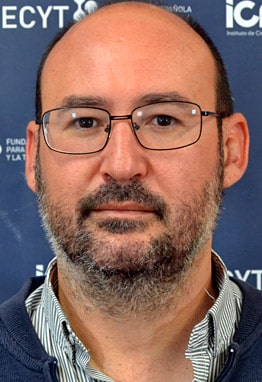
Shenyi Liu is a Doctoral Researcher at Aalto University's Department of Electrical Engineering and Automation , focusing on advanced semiconductor packaging and reliability engineering. Active in the Electronics Integration and Reliability research group, Liu contributes to developing innovative interconnect solutions for MEMS and power electronics. Email: shenyi.liu@aalto.fi Research Interests center on low-temperature bonding technologies , 3D packaging architectures , and failure mechanism analysis in electronic components. Key methodologies include solid-liquid interdiffusion (SLID) bonding and thermal-mechanical stress characterization. Publication Trends show expertise in MEMS integration , interconnect reliability , and power component packaging , with recent work addressing TSV interconnects, die-attach fatigue cracks, and Cu-Sn-In bonding systems. Collaborations span materials engineering and applied physics domains.
Matthew R. Jones is an Associate Professor in the Department of Chemistry at Rice University and holds the Gene and Norman Hackerman Junior Chair and Norman Hackerman-Welch Young Investigator titles. He joined Rice in 2017 after postdoctoral research at UC Berkeley under Paul Alivisatos and a PhD at Northwestern University under Chad Mirkin. His research focuses on systems-level nanoparticle assembly, plasmonics, and metamaterials, with applications in energy storage and biomedicine. Jones has pioneered techniques like 4D-STEM for catalytic nanoparticles and developed adaptive materials via strain-controlled synthesis. Education: B.S. in Materials Science and Biomedical Engineering (Carnegie Mellon University), Ph.D. in Chemistry (Northwestern University as an NSF Fellow). Key awards include the Packard Fellowship (2018) and NSF CAREER Award (2022). His lab hosts over 20 graduate students and postdocs, with notable advisees including Bukky, Zhihua Cheng, and Saxton. Research emphasizes interdisciplinary approaches: combining in-situ microscopy, ligand engineering, and computational modeling to control nanoparticle behavior. Recent studies include strain-preserved nanocatalysts (2024) and chiral superlattices (2024). Collaborations span Rice’s Center for Nanoscale Imaging Sciences and the Electrochemical Society. Lab: Jones Research Group Grants: NSF CAREER, Packard Fellowship, Rice Seed Award Publications: Over 50 peer-reviewed articles, including Science Advances (2024) and Nature Communications (2023)
Mervi Paulasto-Kröckel is a Professor in the Department of Electrical Engineering and Automation at Aalto University, specializing in Electronics Integration and Reliability. With a doctoral degree in Engineering and Technology from Helsinki University of Technology (1995) and a Master's degree from the same institution (1990), her work focuses on microelectronics packaging, MEMS, and sustainable electronic manufacturing. Doctoral Degree: Engineering and Technology, Helsinki University of Technology (1995) Master's Degree: Engineering and Technology, Helsinki University of Technology (1990) Her research explores advanced packaging techniques like SLID bonding, reliability of microbumps, and thermally conductive materials. Recent work includes buried aluminum nitride for silicon-on-insulator and fatigue crack analysis in IGBT modules. Her publications emphasize low-temperature processes, interdiffusion, and MEMS reliability. Awards include the JVST A Best ALD Paper Award (2021) and a Best paper award (2000). She leads projects like PowerizeD and 3DPiezoMems, focusing on digitalization and 3D MEMS development. Best paper award (2000) JVST A Best ALD Paper Award (2021)
Sanjoy Nandi is a Postdoctoral Fellow in the Department of Electronic Materials Engineering at the Australian National University (ANU), specializing in neuromorphic computing and memristor technology. He holds a PhD in Physics from the University of Chittagong (2017). His research focuses on designing novel memristive devices for neuromorphic systems, with particular emphasis on threshold switching, material properties of NbOx and V₃O₅ films, and integrating memristors with CMOS circuits. Nandi has published over 47 peer-reviewed articles, with an h-index of 14 and 161 citations. His work spans memristor-based spiking neural networks, thermosensitive dynamics, and optical tunable oscillators, contributing to advancements in neuromorphic hardware and solid-state electronics. Education: PhD in Physics (University of Chittagong, 2017). Research supervision is registered through ANU's Department of Electronic Materials Engineering. Research interests include memristor engineering, neuromorphic architectures, and nanoelectronics. Key projects involve exploring negative differential resistance in vanadium oxides and developing ternary logic systems using memristor-CMOS hybrids. His contributions also address thermal effects in cross-point devices and material interdiffusion impacts on switching characteristics. Labs/Teams: Collaborates within ANU's Electronic Materials Engineering research groups, focusing on interdisciplinary projects at the intersection of materials science and circuit design. Active in global collaborations through co-authored publications with institutions in Spain, Japan, and the UK.
Dr. Elena Levchenko is an Associate Professor in Applied Mathematics at the University of Newcastle, affiliated with the School of Information and Physical Sciences and the Department of Mathematics. Her research focuses on mathematical physics, computational modeling, and materials science, particularly in the design and analysis of advanced materials at micro, nano, and atomic scales. She holds a PhD from Voronezh State Technical University and has conducted extensive research on the structure-property relationships in materials, supported by fellowships such as the Marie Curie Research Fellowship (2004) and the University of Newcastle Research Fellowship (2007). Her research expertise spans applied mathematics, computational geometry, statistical mechanics, and condensed matter physics. She has organized prestigious international symposiums, including sessions on computer modeling in nanoscience and theory in physics for materials applications. Dr. Levchenko has contributed to over 90 journal articles, focusing on diffusion kinetics, thermal transport, and molecular dynamics simulations in alloys and nanomaterials. Awarded the 2021 Leadership Excellence Award and multiple teaching accolades, she balances research with academic leadership roles, including membership in the Student Engagement Committee and the Advisory Board of the PRC for Geotechnical and Materials Modelling. Her collaborations include leading institutions like Lille University of Science and Technology (France), the European Synchrotron Radiation Facility (France), and Tohoku University (Japan).
Prof. Wolfgang Rheinheimer is a Professor and Institute Director at the Institute for Ceramic Materials and Technologies , University of Stuttgart, since 2023. Previously, he held academic positions at RWTH Aachen (2022-2023), Forschungszentrum Jülich (Emmy Noether Group Leader, 2020-2022), TU Darmstadt (2020), and Karlsruhe Institute of Technology (2010-2017). Academic Rank: Full Professor Research Focus: Advanced sintering technologies, grain boundary engineering, defect chemistry, conductivity in ceramics, and microstructure evolution His research spans experimental and computational approaches to ceramic materials, with emphasis on field-assisted processing (electric/magnetic), grain boundary properties , and solid-state electrolytes . He has pioneered studies on flash sintering , cold sintering , and blacklight sintering mechanisms. Scientific Awards : Emmy Noether Fellowship (2020-2022) for establishing his independent research group His work integrates phase-field modeling with experimental characterization to optimize ceramic properties for energy applications (solid-state batteries, fuel cells) and structural uses. Collaborations include Robert Bosch GmbH and Purdue University (2018-2019 Visiting Professorship).
Dr. Marco Fronzi is a Casual Academic in the Faculty of Science at the University of Technology Sydney (UTS). He holds a PhD in Computational Materials Science from the University of Rome Tor Vergata and has held research positions globally, including at Osaka University, the Tyndall National Institute, and the National Institute for Materials Science in Japan. His research focuses on applying quantum mechanics, machine learning, and computational methods to advance materials science for energy applications, such as battery anodes, thermoelectric materials, and piezoelectric devices. **Education:** PhD in Computational Materials Science, University of Rome Tor Vergata (2005-2009) MSc/BSc in Physics, University of Rome Tor Vergata (1997-2003) **Research Interests:** Quantum mechanics and semiclassical theories applied to materials design Machine learning for materials discovery and screening Energy conversion systems, including lithium-ion batteries and thermoelectric devices Nanostructured materials for energy efficiency His work bridges computational techniques and artificial intelligence to address challenges in sustainable energy technologies. **Funded Research:** "Nanostructured Materials for Energy Efficiency Applications" (2017-2018) "A study of the nature of the oxide heterostructure using a first-principles calculation" (2010-2012) **Teaching & Supervision:** Computational Physics Solid State and Semiconductor Physics Quantum Mechanics Computational Chemistry **Labs/Teams:** Collaborates widely with institutions globally, focusing on interdisciplinary materials research and computational modeling.
Javier Pérez Carvajal is a RyC Researcher at the Institute of Materials Science of Madrid (ICMM), part of the Spanish National Research Council (CSIC). He belongs to the Nanostructured Hybrid, Biohybrid and Porous Materials Research Group, where he develops advanced porous materials for environmental and energy applications. His work focuses on Metal-Organic Frameworks (MOFs) and their composites, targeting water purification and sustainable energy technologies through innovative material design. His research spans Materials Science, Nanotechnology, and Environmental Engineering, with core expertise in Metal-Organic Frameworks (MOFs), porous materials, and nanoarchitectures for water purification. He pioneers MOF/clay films for water treatment, MOF/CNF bionanocomposites for bacterial control under visible light, and energy-efficient adsorption systems. His interdisciplinary approach integrates chemistry, materials engineering, and nanotechnology to solve global sustainability challenges. Analysis of his 2019-2025 publications reveals a dominant trend in water purification technologies, including resonant osmotic diodes for voltage-induced filtration and photothermal water treatment using MXene composites. He has significantly advanced electro-osmotic filtration systems and developed enzyme-powered micromotors for targeted applications. His energy-related work focuses on adsorption cooling with covalent organic frameworks (COFs) and heat transformation using biocarbon materials. No scientific awards were mentioned in available sources. While specific details of student advising and research grants are absent from current sources, his leadership in the research group and consistent high-impact publications indicate active mentorship and competitive grant acquisition in materials science. Dr. Pérez Carvajal's laboratory within the Nanostructured Hybrid, Biohybrid and Porous Materials Group specializes in synthesizing monolithic MOFs, thin films, and nanocomposites. The team employs advanced techniques like spray-drying and interdiffusive surfactant procedures to create scalable materials for real-world water treatment and energy systems, emphasizing practical implementation and environmental impact.
Tove Joelsson is a researcher at Mid Sweden University's Department of Engineering, Mathematics and Science Education (IMD) in Sundsvall, specializing in sustainable pulp and paper technology. Her work focuses on enhancing paper strength through innovative processing techniques. Her educational background includes a Doctoral Thesis (2021) titled The influence of Pulp Type and Hot-pressing Conditions on Paper Strength Development and a Licentiate Thesis (2020) on High strength paper from high yield pulps by means of hot-pressing , both completed at Mid Sweden University. Joelsson's research centers on lignin chemistry and hot-pressing technologies to develop sustainable packaging materials. She investigates how fiber morphology, lignin diffusion, and sulfonation processes affect paper bonding, densification, and wet-strength properties. Her work bridges fundamental wood science with industrial applications for eco-friendly material development. Analysis of her publications (2018-2023) reveals a consistent research trajectory toward optimizing high-yield pulp processing. Early work focused on fundamental aspects of water-resistant packaging (2018), evolving to detailed mechanisms of lignin inter-diffusion (2021-2023) and steel-belt press technologies. Key trends include reducing energy consumption while improving mechanical performance through controlled lignin modification and thermal processing. No scientific awards are currently documented in the source materials. Joelsson actively collaborates with researchers including Pettersson, Norgren, Engstrand, and Svedberg across multiple publications. Her work demonstrates strong industry-academia partnerships in pulp and paper innovation, though specific grant details are not provided in available sources.
Namsoon Eom is a Senior Lecturer in the Department of Mechanics, Materials and Component Design at Lund University’s Faculty of Engineering (LTH). She is also a researcher at NanoLund: Centre for Nanoscience and a member of the LU Profile Area: Light and Materials. Her work focuses on computational nanomaterials research, with a strong emphasis on atomistic simulations and machine learning integration. Primary Affiliation: Department of Mechanics, Materials and Component Design, LTH, Lund University Secondary Affiliations: NanoLund: Centre for Nanoscience, LU Profile Area: Light and Materials Her research spans computational materials science, with a focus on metallic nanoparticles, nanowires, and their interfaces. Key projects include studies of diffusion in bimetallic systems nanowire growth mechanisms oxidation processes in nanoparticles machine learning for pattern recognition in simulation data Recent publications highlight her work in nanotechnology and materials synthesis, particularly in core-shell nanoparticle design and gas-phase synthesis methods. Trends include atomistic modeling of surface segregation, sintering, and oxidation phenomena. Scientific recognition includes the 2019 NanoLund Junior Scientist Ideas Award . She has supervised PhD students in projects related to heterogeneous nanoparticle synthesis and characterization. Her work aligns with UN Sustainable Development Goals, particularly in advancing nanotechnology for sustainable materials and energy-efficient synthesis methods.
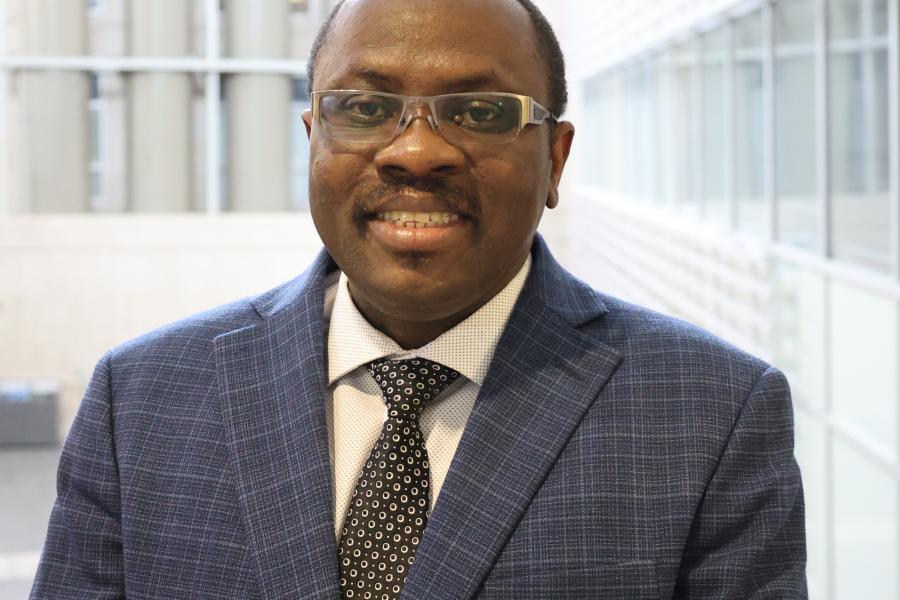
Dr. Olanrewaju (Lanre) Ojo is a Professor and Department Head of Mechanical Engineering at the University of Manitoba's Price Faculty of Engineering. His research focuses on advanced aerospace materials, additive manufacturing, and environmental degradation mechanisms. He holds a BSc (First Class Honors) from Obafemi Awolowo University, Nigeria, and MSc/PhD from the University of Manitoba. Notable achievements include over 200 journal publications, 4,500+ citations, and prestigious awards such as the 2013 Rh Award and 2014 Excellence in Teaching Award. He has supervised >80 graduate students and secured over $7M in research funding. Research emphasizes numerical modeling of material interfaces, diffusion studies, and phase transformation in aerospace alloys. His work bridges fundamental materials science with industrial applications in additive manufacturing and welding. Collaborations with global aerospace companies and government labs highlight his industry-relevant contributions. Education: 1997: BSc (First Class Honors), Obafemi Awolowo University, Nigeria 2002: MSc, University of Manitoba, Canada 2005: PhD, University of Manitoba, Canada Awards: NSERC Postdoctoral Fellowship (2005) 2009 Microscopical Society of Canada Gerard T. Simon Award 2013 Rh Award for Research Excellence 2014 Excellence in Engineering Teaching Award Grants & Funding: Over $7 million in research funding since 2006, secured through partnerships with industry and government agencies. Labs/Teams: Leads advanced materials research groups focused on computational modeling and experimental validation of aerospace materials performance under extreme conditions.
Roberto C. Myers is an Associate Professor in the Department of Materials Science and Engineering at The Ohio State University, holding courtesy appointments in the Department of Electrical and Computer Engineering and the Department of Physics. His research focuses on semiconductor optoelectronics, nanowire heterostructures, and spintronics, particularly in III-nitride systems and β-Ga2O3 materials. He earned his Ph.D. in Materials Science from the University of California, Santa Barbara (2006) and a B.S.E. in Materials Science and Engineering from the University of Pennsylvania (2001). Key research areas include molecular beam epitaxy (MBE) growth of nanowire heterostructures, thermal spin transport phenomena in magnetic materials like YIG, and development of high-efficiency ultraviolet light-emitting diodes (UV LEDs) and photodetectors. Myers explores defect engineering in ZnS and GaN/AlN systems, as well as novel materials such as AgScP2S6 for nonlinear optics. His work bridges semiconductor physics, materials growth techniques, and device applications, emphasizing scalable fabrication methods for nanowire-based optoelectronics. Publications highlight advancements in UV photodetectors with enhanced rejection ratios, anisotropic optical properties of β-Ga2O3, and the role of magnons in spin caloritronics. His research frequently intersects with thermal effects, interface engineering, and the design of exotic material systems for next-generation optoelectronic and spintronic devices.
Dr. Gilberto A. Umana Membreno is an Associate Professor and Principal Research Fellow at The University of Western Australia (UWA), and a Senior Industry Support Engineer for the Australian National Fabrication Facility (ANFF). His expertise spans semiconductor optoelectronics, device design/optimization, and infrared sensing technologies. He leads advanced device design and materials characterization efforts in the MRG, focusing on HgCdTe, type-II superlattices, and wide bandgap materials. He holds a BEng(Hons) and PhD from The University of Western Australia. His research emphasizes semiconductor device physics, optoelectronics, and reliability engineering, with applications in quantum sensing and emerging materials. He has contributed to 156 peer-reviewed publications and secured 17 grants, including projects on infrared technologies and sensor development. Key collaborations include work on GaN-based chemical sensors and III-V superlattice materials. He actively participates in interdisciplinary projects, such as the National Facility for Performance Characterisation of Infrared Technologies (2023-2024), and has supervised two research students. His work aligns with UN Sustainable Development Goals in Agriculture, Space, and Diagnostics through innovations in sensor technologies and material systems.
Hyeji Im is an Assistant Professor in the Department of Materials Science and Engineering at Case School of Engineering, Case Western Reserve University. Her research focuses on designing and manufacturing structural materials with an emphasis on innovation and sustainability. She leads the Innovative Manufacturing Lab, where her team investigates advanced material systems and processes. Research Interests: Designing structural materials for innovation and sustainability Microstructural engineering for harsh conditions Alloy design for extreme environments Nano- and micro-structure modification Deformation mechanism analysis Hybrid manufacturing techniques including laser welding and powder/wire additive manufacturing Sustainable engineering practices such as recycling metal scraps and enhancing impurity tolerance in alloys The recent publications (2018–2024) highlight a strong focus on additively manufactured high-performance alloys, particularly Co- and Ni-based superalloys. Key themes include microstructure control, crack prevention in additive processes, elemental partitioning, and mechanical behavior under extreme conditions. Her work bridges fundamental metallurgical principles with practical manufacturing innovations. Scientific Awards: No scientific awards listed in the provided text. Advising and Grants: While specific graduate students or grants are not listed, Dr. Im actively leads a research group (ImGroup) and mentors researchers in materials science and engineering. Her publications indicate collaborative projects with institutions and co-authors worldwide, suggesting involvement in funded research. The lab's focus on sustainable and advanced manufacturing implies potential grant support in these domains. Labs and Teams: Dr. Im leads the Innovative Manufacturing Lab , which conducts interdisciplinary research at the intersection of materials design, additive manufacturing, and sustainability. The lab aims to balance manufacturing efficiency with environmental responsibility.
Ashley Paz y Puente is an Assistant Professor in the Department of Mechanical and Materials Engineering at the University of Cincinnati since August 2016. She leads the Reaction and Transformation Engineering (RATE) Laboratory, focusing on metallic materials processing, phase transformations, and diffusion kinetics. Her research emphasizes Kirkendall effect-driven microtube fabrication, additive manufacturing of metallic scaffolds, and high-temperature alloy characterization using in situ X-ray tomography. Education: PhD (2016) in Materials Science and Engineering from Northwestern University; MS (2012) and BS (2011) in Materials Science and Mechanical Engineering from the University of Central Florida. Research interests span physical metallurgy, intermetallics, diffusion coatings, and shape memory alloys. She has secured over $1.4M in NSF grants, including a CAREER Award (2022–2027), exploring vacancy migration and Kirkendall pore evolution. Her work bridges fundamental materials science with applications in energy and biomedical systems. Teaching: Courses include MTEN6070/5071 – Phase Transformations. She has mentored undergraduate researchers and served on pedagogical innovation committees at Northwestern University. Awards: NSF Graduate Research Fellowship (2012), Barry M. Goldwater Scholarship (2008), and Summa Cum Laude (2011).