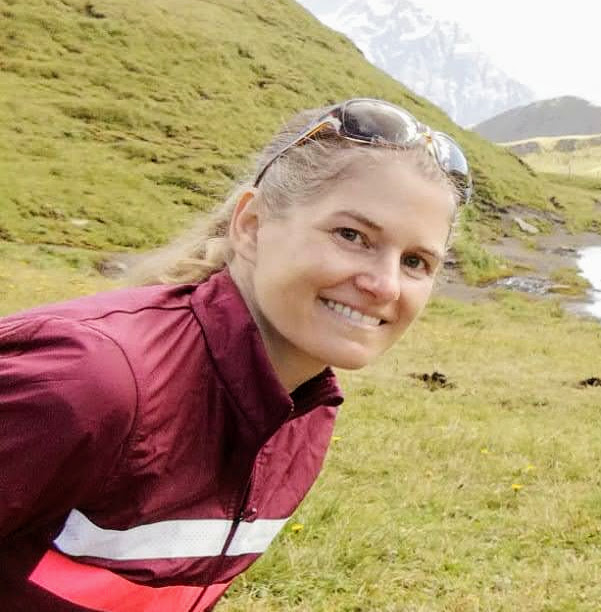
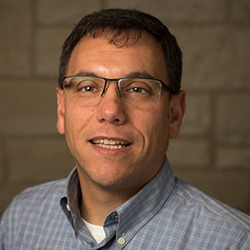
Professor Paul A. Raschky is affiliated with the Department of Economics at Monash University , where he also directs the SoDa Labs and co-founded the KASPR Datahaus PTY LTD and IP Observatory . His academic focus spans Political Economy , Environmental Economics , Insurance Economics , and Development Economics , with a specialization in natural hazards and data science applications. Education: PhD (University of Innsbruck, 2008), with a postdoctoral research visit at the Wharton School . Research: Explores intersections of disaster risk , governance , and economic development , leveraging machine learning and big data . Recent Publications: Focus on generative AI productivity , ethnic favoritism , disaster insurance , and conflict economics . Awards: Recipient of the ABDC Award for Innovation and Excellence in Research (2022) and Dean’s Excellence in Research Award (2016) . Projects: Leads initiatives on internet suppression in Myanmar , news media availability , and AI-driven policy insights in South-East Asia and the Pacific. Future Work: Will be on sabbatical in 2025 , likely expanding on AI applications and disaster resilience .
Nazanin Tajik is an Assistant Professor in the Department of Industrial and Systems Engineering at Mississippi State University (MSU). She holds a Ph.D. from the University of Oklahoma, an M.S. from the University of Tehran, and a B.S. from Sharif University of Technology. Her research focuses on integrating artificial intelligence, machine learning, and social science concepts to develop cross-disciplinary frameworks for infrastructure resilience, smart transportation systems, and disaster management. Her academic journey includes a Ph.D. at the University of Oklahoma where she contributed to the Risk-Based Systems Analytics Laboratory. At MSU, she established a research center bridging AI/ML tools with socio-technical systems. Key research domains include cyber-physical-social infrastructure resilience, search-and-rescue planning, and game-theoretic robotic designs. Tajik's work emphasizes optimization algorithms for network vulnerability assessment, resource allocation in disaster scenarios, and adaptive recovery strategies. She is actively involved with professional organizations such as INFORMS, ISE, and POMS, reflecting her commitment to advancing operations research and systems engineering methodologies.
Dr. Lisa Wang is a tenure-track Assistant Professor in the Department of Civil & Environmental Engineering at Old Dominion University (ODU). She holds a Ph.D. and Postdoctoral Fellowship in Structural Engineering from Colorado State University (CSU), with additional research at NIST’s Center for Risk-Based Community Resilience Planning. She is a licensed California Professional Engineer (PE) and has expertise in multidisciplinary community resilience assessment, mitigation strategies, and policy analysis. Her research focuses on integrating physical, socio-economic, and infrastructural systems to enhance disaster resilience in coastal and hazard-prone communities. Education: Ph.D. and Postdoc (CSU, 2022-2024), M.S. in Structural Engineering (University of Colorado Denver & Jilin University, 2015), B.S. in Civil Engineering (Jilin University, 2012). Professional licenses include CA PE #94251 and CO EIT #007558. Research Interests: Community resilience under multi-hazards (tornadoes, floods, climate change), resilience-based design of structural systems, data fusion across disciplines, and equitable decision-making for disaster resilience. Recent grants include $31k for AI-driven coastal resilience strategies and $10k for minimum building portfolio development. Grants & Awards: Principal Investigator (PI): Trustworthy AI in Coastal Resilience (ICAR, $31k), AI-Driven Building Portfolios (ODU PURS, $10k) Awards: O. H. Ammann Fellowship (ASCE), ICAR Travel Grant, AGU NSF Travel Grant, Jack E. Cermak Fellowship Labs & Teams: Wang Research Group and Structural Engineering Research Laboratory at ODU.
Seth Blumsack is a Professor at the Pennsylvania State University in the Department of Energy and Mineral Engineering and serves as Director of the Center for Energy Law and Policy . He holds an Adjunct Research Professor position at the Carnegie Mellon Electricity Industry Center and is affiliated with the Santa Fe Institute as an External Faculty member. His research spans energy economics , power grid reliability , and complex infrastructure networks . Key projects include: Interdependent natural gas and electricity systems analysis Governance of regional transmission organizations Smart grid consumer behavior studies Power grid reliability tools development He has secured funding from the U.S. National Science Foundation , Department of Energy , Environmental Protection Agency , and private industry. His Best paper award at Hawai’i International Conference on System Sciences (2011) and John T. Ryan, Jr. Fellowship (2011-17) highlight his scientific recognition. Publications emphasize electricity market deregulation , energy infrastructure resilience , and consumer response to smart grid technologies . His work has been cited in major media outlets like The New York Times and The Los Angeles Times , and he has consulted for National Renewable Energy Laboratory , U.S. Department of Energy , and other industry stakeholders.
Keller Easterling is a Professor at the Yale School of Architecture and director of its Master of Environmental Design program. An architect, writer, and theorist, her work interrogates infrastructure space as a medium of political and social innovation. Key themes include global development , spatial justice , and climate resilience , with projects like ATTTNT (2023–2024), a reparations-focused land trust network, and Switch (2015), a mobility framework addressing urban sprawl. Books : Extrastatecraft (2014), Subtraction (2014), Medium Design (2021). Exhibitions : Featured in the Venice Biennale (2014), Architectural League (New York), and the Rotterdam Biennale . Research : Explores spatial products of capitalism , decolonial landholding , and non-extractive design . Engages with HBCUs and land activists to operationalize community economies and mutualist infrastructures . Select Articles : Contributions to Harvard Design Magazine , Domus , and e-flux , analyzing infrastructure as design and spatial counter-logics . Teaching & Collaborations : Leads design studios on medium design and infrastructural reprogramming . Collaborated with institutions like MIT , Guggenheim , and Prada , with recent talks at the European Graduate School (2025) and MoMA (2025).
Thomas Michael Sattich is an Associate Professor at the University of Stavanger , affiliated with the Faculty of Social Sciences and Department of Media and Social Studies . His research focuses on geopolitical implications of sustainability transitions, particularly energy policy interdependence and EU-China relations. PhD in Political Science and Economics Expertise in qualitative methods, mixed methods (cluster analysis), and data visualization Lead researcher on EU-funded digital climate negotiation simulation projects His recent publications examine renewable energy geopolitics, industrial policy competition, and sustainability education frameworks. Methodologically, he specializes in Qualitative Comparative Analysis (QCA) and network analysis, contributing to debates on energy security and regional cooperation.
Dr. Yuki Miura serves as Assistant Professor at New York University's Tandon School of Engineering in the Department of Mechanical and Aerospace Engineering and Center for Urban Science and Progress (CUSP), with additional affiliations at NYU Stern's Volatility and Risk Institute and the New York City Panel on Climate Change (NPCC5). Her academic credentials include a Ph.D. (2022), M.Phil. (2021), and M.S. (2017) in Civil Engineering and Engineering Mechanics from Columbia University, complemented by a B.Eng. in System Design Engineering from Keio University (2015). Dr. Miura's research integrates engineering, climate science, finance, and social sciences to develop actionable resilience solutions. Her work focuses on climate risk quantification , urban adaptation strategies , and socioeconomic impact modeling through advanced data analytics. She pioneers methodologies that couple physical climate modeling with socioeconomic vulnerability assessments to deliver implementable risk mitigation frameworks for public and private institutions. Her publication portfolio demonstrates consistent advancement in climate risk analytics, with recent work addressing urban flooding dynamics, precipitation extremes, and infrastructure protection. These studies reveal a distinct trajectory toward integrated risk modeling that bridges climate physics with financial and social dimensions, increasingly leveraging AI-driven approaches for compound hazard assessment. Recognition for her contributions includes the Mindlin Scholar award from Columbia University (2022), with research featured in The New York Times , The New Yorker , and The Nikkei . As director of the Climate, Energy, and Risk Analytics Lab (CERA), Dr. Miura mentors graduate students in developing data-driven solutions for climate resilience. Her industry experience at Morgan Stanley (2021-2024) in climate risk management directly informs her applied research approach, fostering strong connections between academic innovation and real-world implementation. CERA operates as an interdisciplinary hub developing AI-driven methodologies for urban flood modeling, compound climate risk assessment, and socioeconomic impact analysis. The lab maintains active collaborations with the National Center for Atmospheric Research and New York City/State governments to translate research into actionable climate adaptation policies.
Ivano Cardinale is a Professor and Head of the Institute of Management Studies at Goldsmiths, University of London. He previously held a Junior Research Fellowship at Emmanuel College, Cambridge, and has been a Visiting Fellow at Clare Hall, Cambridge. He founded and directs the Structural Economic Analysis Unit and serves as Editor-in-Chief of Structural Change and Economic Dynamics . PhD, University of Cambridge 2022 Feltrinelli Giovani Prize for Social Sciences (Italy's top award for researchers under 40) 2019 Guest Faculty, Learning Innovation Laboratory, Harvard University His research in Structural Political Economy examines how material, social, and cognitive structures shape economic conflicts and policy outcomes. Key areas include institutional theory, industrial dynamics, and energy transition frameworks. He analyzes systemic interests, sectoral conflicts, and structural conditions through theoretical and empirical studies. Recent publications explore gas market vulnerabilities in EU energy policy, Pasinetti's institutional theory, and networked economic structures. His work appears in Structural Change and Economic Dynamics , Energy Economics , and Cambridge Journal of Economics . Scientific awards include: 2022: Feltrinelli Giovani Prize (Social Sciences) 2019: Political Economy Research Fellowship (ISRF) 2016: Life Membership, Clare Hall, Cambridge He contributes to academic governance through editorial roles and co-edited major handbooks including The Palgrave Handbook of Political Economy (2018) and The Political Economy of the Eurozone (2017).
Lawton R. Burns is the James Joo-Jin Kim Professor of Health Care Management and Professor of Management at the Wharton School, University of Pennsylvania. He serves as Co-Director of the Roy and Diana Vagelos Program in Life Sciences and Management and Chairperson of the Health Care Systems Department since 2008. Dr. Burns holds a PhD in sociology and an MBA in health administration from the University of Chicago, along with a BA from Haverford College. PhD, University of Chicago (1981) MBA, University of Chicago (1984) MA, University of Chicago (1976) BA, Haverford College (1973) His research focuses on healthcare supply chains, organizational innovation, and strategic management in health systems. He has authored or co-authored 15+ books, including analyses of integrated healthcare, pharmaceutical and medical device sectors, and global health systems in India and China. Recent works examine evidence-based healthcare innovation and the role of GPOs/PBMs in drug pricing. Dr. Burns advises on healthcare policy, including Senate testimony on pharmacy benefit managers and antitrust implications of physician-hospital organizations. His teaching covers healthcare strategy, managed care, integrated delivery networks, and the U.S. healthcare ecosystem, with courses requiring competitive analysis of producer, purchaser, and provider organizations. Board of Institute of Medicine, Health Services Research Section (2003) Arthur Anderson Distinguished Visitor, University of Cambridge (2001) Teacher of the Year, Administrative Medicine Program (1999) Edwin Crosby Memorial Fellowship (1992-93) Udall Fellowship (1990-91) Invited Lecture Series, Catholic University of Rome (1997)
Dr. XiaoYue Cathy Liu is an Associate Professor in the Department of Civil & Environmental Engineering at the University of Utah. She holds a PhD in Transportation Engineering from the University of Washington and advanced degrees in Transportation Planning and Electronics Engineering. Her research focuses on sustainable transportation systems, shared mobility, public transit optimization, managed lanes, and intelligent transportation systems. She actively serves on committees including the Transportation Research Board's Highway Capacity Quality of Service (HCQS) Committee and chairs its Technology Transfer Subcommittee. She also advises the Utah Model Advisory Committee and previously served on Salt Lake City’s Transportation Advisory Board. Dr. Liu is a licensed professional engineer in Utah. Education: PhD, Transportation Engineering, University of Washington (2013) MA, Transportation Planning & Management, Texas Southern University BS, Electronics & Electrical Engineering, Beijing Jiaotong University Graduate Certificate, Global Trade & Logistics, University of Washington (2011) Research Interests: Electric vehicle infrastructure and charging networks Smart transportation systems and agent-based modeling GIS-based asset management for transportation infrastructure Snowplowing operations optimization and winter maintenance Managed lanes and high-occupancy toll (HOT) lane analysis Public transit equity and accessibility Her recent publications emphasize data-driven approaches to transportation challenges, including EV demand forecasting, drone delivery networks, and resilience in interdependent transit systems. She collaborates on projects addressing Utah’s unique transportation needs, such as optimizing snowplow routes and integrating renewable energy into public transport systems. Professional Contributions: Board member, Utah Model Advisory Committee Former Chair, Salt Lake City Transportation Advisory Board (2013-2016) TRB Managed Lane Committee member TRB Transit Capacity & Quality of Service (TCQS) Committee member (2016-2019) Dr. Liu’s work bridges transportation engineering with computational methods, focusing on equity, sustainability, and operational efficiency. She leads research initiatives involving large-scale modeling, geospatial analytics, and interdisciplinary solutions for modern mobility challenges.
Dr. Yi-Ping Fang is an Assistant Professor at the EDF Chair SSEC with a joint appointment at the Industrial Engineering Laboratory, CentraleSupélec, Université Paris-Saclay, France. His research focuses on computational methods for risk, vulnerability, and resilience analysis of critical infrastructures including smart grids, electrified transportation, and interdependent lifeline systems. Risk Analysis Resilience Engineering Optimization Under Uncertainty Game Theory Applications His work applies advanced techniques like distributionally robust optimization, POMDP modeling, and interdependency analysis to enhance infrastructure resilience against climate change, natural hazards, and intentional attacks. Publications demonstrate expertise in hybrid optimization algorithms, stochastic modeling, and network vulnerability assessment. Recent trends include: Smart grid resilience enhancement Uncertainty quantification in infrastructure systems Multi-stage decision modeling Game-theoretic approaches for interdependent networks Integration of deep learning for dynamic system prediction
Prof. Dr. Virginia Ruiz-Villanueva is a Professor and leader of the Geomorphology Unit at the Institute of Geography, University of Bern. Her research focuses on river processes, particularly large wood dynamics, flood hazards, and sediment transport in mountainous regions. She holds a prominent role in international collaborations, addressing climate change impacts and river management challenges. Key areas of expertise include geomorphology, environmental hazards, and interdisciplinary approaches to understanding river systems. Her work integrates field observations, numerical modeling, and remote sensing to study processes such as large wood accumulation in rivers, flood risk assessment, and the influence of human activities on hydrological systems. She has contributed to projects across Europe, South America, and the Western United States, emphasizing practical applications for disaster risk reduction and sustainable river management. Recent research highlights include exploring historical changes in mountain river hydrodynamics, quantifying large wood supply in Swiss catchments, and analyzing cascading hazards in Chilean river systems. Her publications frequently appear in high-impact journals such as Earth Surface Processes and Landforms and Science of the Total Environment .
Paolo Sellari is an Associate Professor in the Department of Political Science at Sapienza University of Rome, where he contributes significantly to research and teaching in political and economic geography, geopolitics, and infrastructure security. He is affiliated with the research group Geopolitics of the Sea and plays a key role in the Master in Geopolitics and Global Security , contributing to curriculum development and academic supervision. Department: Department of Political Science University: Sapienza University of Rome Email: paolo.sellari@uniroma1.it His research interests span a broad yet interconnected spectrum, including maritime geopolitics, Mediterranean and Arctic strategic dynamics, Chinese foreign policy (especially the Belt and Road Initiative), infrastructure as instruments of power, and the geopolitics of climate change. He also explores unconventional intersections such as sports and geopolitics. His scholarly work emphasizes spatial dimensions of power, resilience, and connectivity in a rapidly transforming global order. The analysis of his recent publications (2023–2025) reveals a strong thematic consistency focused on maritime routes, infrastructure security, and the evolving geopolitical roles of the Mediterranean and Arctic regions. His work frequently addresses the interplay between physical geography and power projection, with a particular interest in how climate change, technological evolution, and strategic investments reshape global and regional orders. He contributes to both academic journals and reference works, including the Italian Encyclopedia. While specific scientific awards are not listed in the provided texts, his consistent publication record in reputable venues and leadership in advanced academic programs suggest recognition within the academic community. Sellari advises students through the Master in Geopolitics and Global Security and is involved in organizing seminars and educational content. Although no direct mention of grants is made, his editorial roles and institutional leadership imply active engagement in academic projects and collaborations. He supervises thesis work and contributes to academic discourse through prefaces, introductions, and editorial reviews. He is a core member of the Geopolitics of the Sea research group, which focuses on maritime spatial dynamics, naval security, and the geopolitical implications of oceanic infrastructure and climate change. This group serves as a hub for interdisciplinary research connecting geography, political science, and security studies.
Pablo Durango-Cohen is an Associate Professor of Civil and Environmental Engineering at Northwestern University, located in Evanston, IL. He holds a Ph.D. in Industrial Engineering and Operations Research from UC Berkeley, following an M.S. from the same program and a B.S. in Industrial and Systems Engineering from the University of Southern California. His research focuses on developing and analyzing optimization and econometric models for transportation infrastructure systems, integrating environmental design, life-cycle assessment, and policy analysis to address decarbonization challenges in freight systems. He also explores dynamic segmentation models for nonprofit fundraising strategies. Education: Ph.D. Industrial Engineering and Operations Research, University of California, Berkeley (2006) M.S. Industrial Engineering and Operations Research, University of California, Berkeley B.S. Industrial and Systems Engineering, University of Southern California Research Interests: Prof. Durango-Cohen’s work bridges transportation engineering, environmental science, and operations research. He emphasizes infrastructure management through data-driven frameworks, including statistical process control for condition monitoring and predictive maintenance. His recent projects address decarbonization of freight rail systems, electric vehicle impacts on road infrastructure, and optimal auction designs for road concessions. He also applies mathematical models to analyze donor behavior and fundraising efficiency in universities, aiming to improve nonprofit resource allocation strategies. Awards: NSF Faculty Early CAREER Development Award (2006) Young Author Prize, 2007 World Congress on Transport Research Matthew G. Karlaftis Best Paper Awards (2020–2025) Advising & Grants: He advises current PhD candidates including Jing Yu, Adrian Hernandez, and Callahan Skiles, while mentoring former students across sustainability, infrastructure, and fundraising analytics. His research is supported by agencies like the National Science Foundation, Department of Energy (through ARPA-E), and Department of Transportation. He co-leads the LOCOMOTIVES project with ANL researchers, focusing on decarbonizing rail networks, and founded the Virtual Inter-university Symposium on Infrastructure Management (VISIM) to foster academic collaboration. Labs & Teams: As Principal Investigator (PI) on major initiatives like LOCOMOTIVES and VISIM, he collaborates with multidisciplinary teams at Northwestern and Argonne National Laboratory. His group develops tools such as the Locomotives interactive dashboard and a computational framework for input-output lifecycle assessments, accessible via repositories like CivEnv304 .
Hemant K. Bhargava is a Distinguished Professor at the Graduate School of Management, University of California Davis, where he holds the Jerome and Elsie Suran Chair in Technology Management. He serves as Associate Dean for Academic Affairs and Director of the Center for Analytics and Technology in Society (CATS), and previously served as Associate Dean for Instructional Programs (2010–2013) and Faculty Chair. He co-founded and was the first Academic Director of the UC Davis Master of Science in Business Analytics (MSBA) program. His educational background includes: Ph.D. in Decision Sciences, The Wharton School, University of Pennsylvania (1989) MBA, Indian Institute of Management Bangalore (1986) B.S. in Mathematics, University of Delhi (1984) Bhargava is a leading scholar in technology management, information systems, and decision analytics. His research focuses on the economics of digital goods and platforms, pricing strategies, AI in business, healthcare IT, and platform ecosystems. He builds economic models to study operations, marketing, and competitive strategy in tech-driven markets, with applications in healthcare, media, electric vehicles, and generative AI. His recent publications reveal a strong trend toward platform business models, data sharing, AI’s impact on research and education, and healthcare cost transparency. He explores how digital platforms shape competition, how data can be leveraged across markets, and how real-time decision tools can reduce prescription drug costs. His work bridges theory and practice, often involving collaboration with industry and policy makers. His scientific awards include: INFORMS Journal on Computing Test of Time Award (2023) INFORMS CIST Best Paper Award (2021) Google Research Excellence Gift (2017–18) Distinguished Alumni Award, IIM Bangalore (2024) INFORMS ISS President's Service Award (2023) Global 100 Top Academic Data Leaders (2020) Bhargava has played a pivotal role in academic leadership and program development. He co-founded the Theory in Economics of Information Systems (TEIS) workshop and has served on editorial boards of top journals including Management Science (where he is Department Editor for Information Systems), Operations Research, and Marketing Science. He has advised numerous campus initiatives, including the UC Davis Data Lab and Religions of India Initiative. His grants and collaborations include work with Google and healthcare organizations on real-time price transparency tools. He leads the Center for Analytics and Technology in Society (CATS), which focuses on the societal implications of data and AI. He also co-founded the MSBA program and continues to shape the future of business education in the age of AI through strategic planning committees.