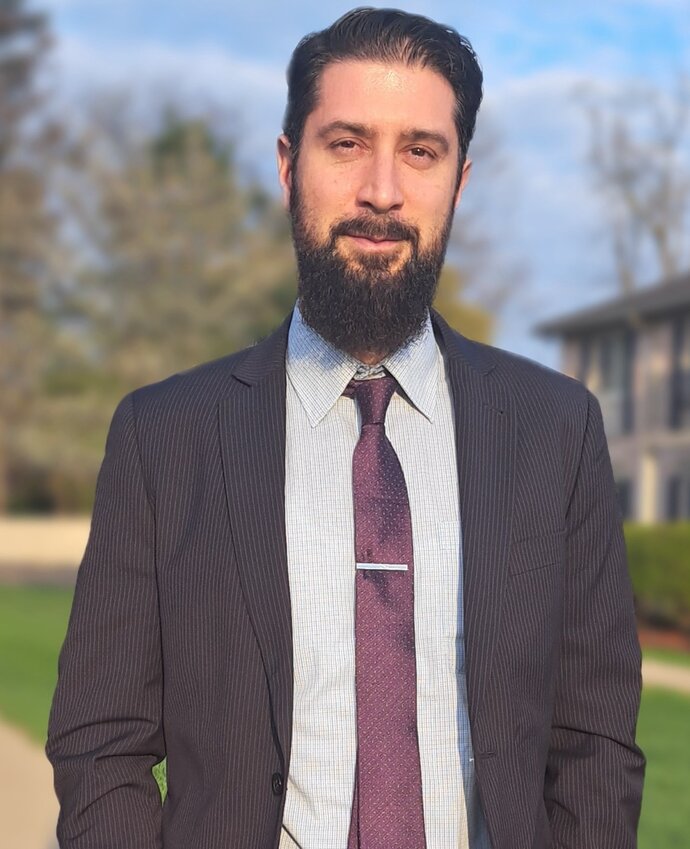
Roland Kostić serves as Senior Lecturer in Holocaust and Genocide Studies and Associate Professor in Peace and Conflict Research at the Uppsala Centre for Holocaust and Genocide Studies, Department of History, Uppsala University, Sweden. He is the Director of the Centre, where he teaches and supervises master's level students. His research focuses on: Transitional justice and reconciliation after mass violence and genocide Knowledge production during mass violence and in peacebuilding interventions How formal and informal networks shape intervention knowledge Social psychology, group attitudes, and memory in post-conflict settings Kostić's scholarly work examines the complex relationship between knowledge production, intervention strategies, and social memory in post-conflict societies. His research methodology combines qualitative fieldwork with interdisciplinary theoretical approaches, particularly analyzing how top-down versus bottom-up approaches to transitional justice impact local communities. He has conducted comparative studies across Sierra Leone, Bosnia-Herzegovina, and Timor Leste, investigating how victims and perpetrators coexist after mass atrocities. His publications reveal a strong focus on peacebuilding, transitional justice, and social memory, particularly concerning the Balkan region. Kostić frequently analyzes the role of transnational actors, think tanks, and informal networks in shaping post-conflict reconstruction and reconciliation processes. His work bridges multiple disciplines including political science, sociology, history, and psychology. At Uppsala University, Kostić supervises master's level students and teaches specialized courses including Genocide and Mass Violence II, Political Psychology of Mass Violence, Transitional Justice: Retribution, Restoration, Coexistence, Methods in Comparative Genocide Studies, and the Master's Thesis course. He has published in journals such as Civil Wars, Third World Quarterly, and Journal of Intervention and Statebuilding, and has edited two book volumes while contributing numerous chapters to edited collections. The Uppsala Centre for Holocaust and Genocide Studies, which Kostić directs, functions as a multidisciplinary research hub examining genocide, mass violence, and their aftermath through historical, sociological, and psychological lenses. The Centre's work addresses contemporary challenges in understanding and preventing mass atrocities while exploring pathways to reconciliation and justice.