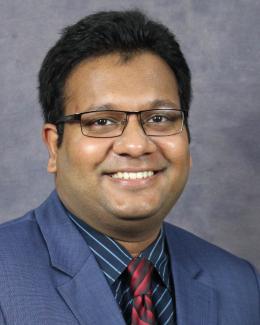
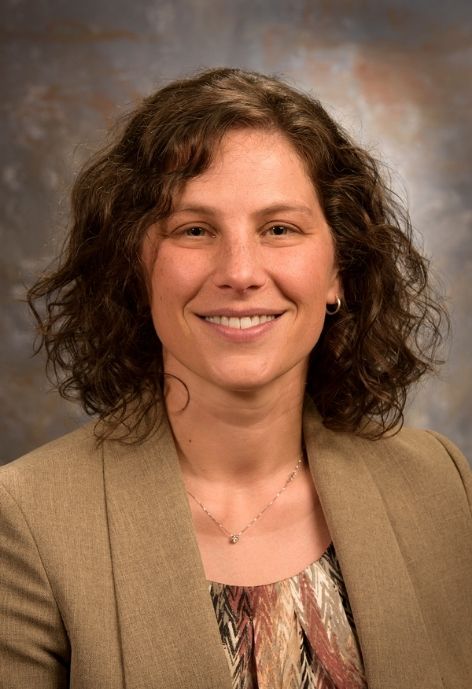
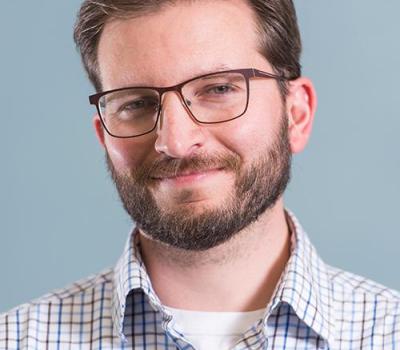
Aswad Adib is a researcher specializing in power electronics and smart grid technologies. He holds a B.Sc. and Ph.D. in Electrical Engineering from Bangladesh University of Engineering and Technology and Kansas State University, respectively. B.Sc., Electrical Engineering, Bangladesh University of Engineering and Technology Ph.D., Electrical Engineering, Kansas State University His career spans roles as a Software Engineer at Samsung R&D Institute Bangladesh and a Postdoctoral Fellow at Kansas State University. Currently, he serves as an R&D Associate Staff Member at Oak Ridge National Laboratory (ORNL) within the Grid Systems Architecture (GSA) group. His research focuses on modeling, advanced control strategies, and real-time simulation of grid-connected power electronic converters, particularly for microgrids, energy storage, and high-power charging systems. Analysis of his publications reveals a consistent focus on medium-voltage power electronics, renewable energy integration, and smart grid innovations, including megawatt-scale charging architectures, grid-forming hubs, and stability-enhancing inverter controls.
Jason O. Hallstrom serves as Professor and Director of the Institute for Sensing and Embedded Network Systems Engineering (I-SENSE) at Florida Atlantic University, affiliated with the College of Engineering and Computer Science and Department of Electrical Engineering and Computer Science. Education: Ph.D., Ohio State University Research Interests: His work centers on Embedded Network Systems, Internet-scale Sensing Infrastructure, The Internet of Things, and Computing Education. These interconnected fields drive innovation in large-scale sensing technologies, embedded systems architecture, and educational methodologies for computing disciplines, with emphasis on real-world IoT deployments and networked sensor infrastructure. Awards: No scientific awards documented in source materials Advising and Grants: Specific student advisees and grant funding details are not provided in the available documentation, though his leadership role at I-SENSE implies oversight of research initiatives and potential mentoring activities. Labs and Teams: As Director of I-SENSE, he leads Florida Atlantic University's dedicated research institute focused on advancing sensing technologies, embedded network systems, and large-scale infrastructure development through interdisciplinary collaboration.
Astrid Kander is a Professor in the Department of Economic History at Lund University, specializing in sustainability transformations over time and space. Her academic work bridges historical economic analysis with contemporary environmental challenges, focusing on the complex interrelationships between economic development and environmental sustainability. Her primary research domain is environmental economic history, examining the interconnections between economic growth, technological innovations, energy systems, and CO2 emissions from 1800 to the present across Sweden, Europe, and globally. She has developed significant expertise in trade and embodied emissions analysis, with current research focusing on the EU's carbon border adjustment mechanism. A secondary research strand involves innovation studies, where she co-established a Literature-Based Innovation Output database covering Sweden and Finland from 1970-2013 to analyze policy impacts, collaboration patterns, and the economic significance of innovations. Her recent publications reveal a strong focus on climate policy integration with trade frameworks, carbon accounting methodologies, and historical energy transitions. These works demonstrate her commitment to translating historical economic patterns into actionable climate policy insights, particularly regarding global trade implications for emissions reduction efforts. Professor Kander actively supervises doctoral students, including on projects related to environmental innovation in the Swedish forest industry and energy transitions during the Little Ice Age. She leads multiple significant research initiatives, including a Swedish Research Council project on the Causes and Consequences of the Little Ice Age Energy Revolution (2021-2025) and the SWINNO 3.0 project tracking Swedish technological innovations since 1970. Her public engagement includes regular contributions to Swedish and international debates through speeches, newspaper articles (including in Dagens Nyheter), and radio interviews. She has presented on topics such as comparing current energy crises with 1970s oil crises and participated in events like Framtidsveckan 2019 and Science and Energy 2018. Her teaching focuses on energy and climate history, and she has engaged in international academic collaboration, including teaching at the University of Seville.
Ruby Batz, Ph.D. is an Assistant Professor of Special Education in the College of Education and Human Development at the University of Nevada, Reno. Her work focuses on equity in early intervention and early childhood special education, particularly examining how race, ethnicity, disability, and language intersect with family-centered practices. Education: Ph.D. in Early Intervention/Early Childhood Special Education Leadership Program, University of Oregon, United States M.A. in Early Intervention, University of Oregon, United States Licenciatura in Educational and Clinical Psychology, Universidad Rafael Landívar, Guatemala Profesorado in Special Education, Universidad del Valle de Guatemala, Guatemala Research Focus: Dr. Batz's research agenda centers on three interconnected areas: investigating sociocultural mechanisms shaping family engagement, examining racialization in special education, and exploring teacher-educators' roles in reproducing or disrupting inequality. Her work particularly emphasizes the educational trajectories of young children at the intersections of disability, race, ethnicity, language, and socioeconomic status. She employs multiple research methodologies including experimental and quasi-experimental designs, observational data analysis, interviews, and case studies. Her commitment as a community-engaged scholar focuses on advancing early schooling practices for families of emergent bilingual children with disabilities, while challenging deficit-based discourses surrounding multiply-minoritized children and families. Scientific Awards and Recognition: AAHHE Faculty Fellow (2021-2022) Fulbright Fellow Society for Research in Child Development Early Career Grant (2021-2023) Spencer Foundation Racial Equity Grant (2022-2025) Grants and Funding: Dr. Batz serves as Principal Investigator on projects supported by the Society for Research in Child Development and Spencer Foundation. As co-investigator, she contributes to a transdisciplinary team awarded a multi-site National Institute of Health (NIH) grant (2022-2027) to study structural inequity in Early Intervention. Professional Background: Prior to joining UNR in 2020, Dr. Batz was a research associate at The Center on Teaching and Learning and an instructor in Special Education and Educational Methodology and Policy Leadership at the University of Oregon. She has extensive international experience, including consulting for the Ministry of Education of Guatemala and various international nonprofit organizations. Her practical experience includes three years teaching preschool and five years as a special education teacher for students with significant disabilities in Guatemala.
Anne E. B. Nielsen serves as an Associate Professor in the Department of Physics and Astronomy at Aarhus University, Denmark, where she leads the Quantum Many-Body Systems Group. Her research program focuses on quantum many-body phenomena with particular emphasis on topological effects, non-thermal behavior, and quantum systems on non-periodic structures. The group's work is currently supported by the Novo Nordisk Foundation, reflecting the significance and impact of their research in the field of theoretical condensed matter physics. Dr. Nielsen's research interests span several interconnected themes in quantum physics. Her work on topology examines how quantum systems behave on fractal lattices and quasicrystals, demonstrating that phenomena like the fractional quantum Hall effect can occur beyond traditional two-dimensional spaces. In non-thermal physics, she investigates quantum many-body scars and many-body localization, exploring systems that violate the eigenstate thermalization hypothesis. Her group has made significant contributions to understanding anyons as probes of topological phase transitions and has developed novel approaches to constructing fractional quantum Hall models on lattice systems. Additional research explores ultracold atoms in optical lattices as experimental platforms for implementing topological models. Analysis of her recent publications reveals a strong focus on quantum scars and their phase transitions, topological phenomena in non-periodic structures, and the interplay between localization and thermalization in quantum many-body systems. Her work consistently bridges theoretical developments with potential experimental implementations, particularly through connections to ultracold atom systems and quantum computing platforms. Dr. Nielsen actively supervises researchers at multiple levels, including postdocs, PhD students, master's students, and bachelor's students. Her group maintains collaborations with researchers internationally, as evidenced by the network visualization of recent external collaborations. The group provides opportunities for students at various academic levels to engage in cutting-edge research in quantum many-body physics. The Quantum Many-Body Systems Group maintains a specialized research focus on five main areas: topology on fractal lattices and quasicrystals, nonthermal quantum systems, anyons, fractional quantum Hall models on lattices, and ultracold atoms in optical lattices. This structured approach allows for deep investigation of interconnected phenomena while maintaining clear research directions within the broader field of quantum many-body physics.
Dr. Orla Kelly is an active Assistant Professor in Social Policy at University College Dublin's School of Social Policy, Social Work and Social Justice. Her work bridges social policy, environmental sustainability, and climate change research, with significant contributions to understanding the social dimensions of ecological crises. She holds positions as an Editorial Board Member for Sociology of Development and is a founding member of the Worktime Reduction Research Network. Her educational background includes a PhD in environmental sociology from Boston College, an LLM in International Human Rights Law from NUI Galway, an MSc in International Business from UCD Michael Smurfit Graduate Business School, and a BComm from University College Cork. Prior to her current position, she worked as a Research Associate (2010-2015) and Research Fellow (2015-2020) at Harvard University's FXB Center for Health and Human Rights. Dr. Kelly's research focuses on sustainable human well-being, eco-social policies, worktime reduction, degrowth, and the social dimensions of climate change. Her work employs quantitative and mixed methodologies to examine the intersection of inequality, environmental sustainability, and social policy. She has developed frameworks for transdisciplinary sustainability education and investigates how reduced worktime impacts environmental and social outcomes. Her research demonstrates how climate change serves as a threat multiplier for violence against children and how educational attainment historically reduced the carbon intensity of well-being. Analysis of her publication record reveals consistent focus on the interconnections between social inequality and environmental outcomes, with recent work emphasizing practical solutions like the 4-day workweek and sustainability education frameworks. Her research spans climate policy analysis, environmental justice, and sustainable development metrics, often employing cross-national and longitudinal methodologies. Runner-up UCD Research Impact Case Study Competition for The 4-day week: making work healthier and more sustainable Donald and Hélène White Prize for the Outstanding Dissertation in the Field of Social Sciences Dr. Kelly has secured significant research funding including the University Climate Change Challenge grant (2021-2022) and the Education in a Warming World research network (2021). She supervises Masters in Public Policy students and welcomes PhD applicants interested in eco-social policies, degrowth, and climate change dimensions. As Principal Investigator of a 4-day workweek research pilot in Ireland and member of an international team studying reduced worktime trials, she leads impactful research with real-world applications. Her work with the Basic Income for the Arts steering group and CAP24 Public Sector Chapter demonstrates her commitment to translating research into policy.
Alexander Zaslavsky is a Professor of Engineering and Physics at Brown University, where he has been a faculty member since 1994. He received his Ph.D. in electrical engineering from Princeton University in 1991 and completed postdoctoral work at IBM Research. His research spans semiconductor device physics with focus on novel device concepts that could supplement silicon transistor technology. He maintains active collaborations with institutions in France and has served as editor of Solid State Electronics since 2003. PhD in Electrical Engineering, Princeton University (1991) MS in Electrical Engineering, Princeton University (1988) BA, Harvard University (1986) Professor Zaslavsky's research focuses on developing alternative semiconductor devices that could supplement conventional silicon technology. His work spans five main areas: (1) quantum transport in silicon-based nanostructures and resonant tunneling; (2) tunneling-based semiconductor devices in silicon-on-insulator and germanium-on-insulator technology; (3) thin film transistors based on conducting oxides and iodides; (4) flexible metallic interconnects for flexible electronics; and (5) probabilistic computing implemented in silicon technology. His research bridges fundamental physics with practical device applications, particularly in low-power electronics and novel sensing mechanisms. Analysis of Professor Zaslavsky's recent publications reveals a strong focus on cryogenic electronics for quantum computing interfaces, novel memory architectures, and germanium-based photodetectors. His work increasingly intersects with quantum computing needs, particularly in developing cryo-CMOS circuitry and memory solutions. There's also continued emphasis on sharp-switching devices for ultra-low power applications and exploration of alternative materials like copper iodide for transparent electronics. The research demonstrates a strategic evolution from fundamental device physics toward applications in emerging computing paradigms. Alfred P. Sloan Fellowship (1995) Office of Naval Research Young Investigator Award (1995) National Science Foundation Career Award (1997) Editor of Solid State Electronics international journal (2003-present) Visiting Senior Chair of Excellence at Nanosciences Foundation, Grenoble (2009-2012) Professor Zaslavsky has mentored numerous students whose alumni have gone on to semiconductor companies (Micron, Applied Materials, GlobalFoundries, Synopsys), government labs (NIST, CNRS, Paul Scherrer Institute), and major industrial companies (EMC, Apple). His research has been supported by extensive funding including: Alfred P. Sloan Foundation ($30,000, 1995-1999); Office of Naval Research Young Investigator award ($265,750, 1995-1998); multiple NSF grants totaling over $1.5 million; Semiconductor Research Corporation subcontract ($95,000, 1998-2002); and Air Force Office of Scientific Research MURI award (sharing $350,000 annually, 2000-2005). Professor Zaslavsky leads an active research laboratory at Brown University focused on semiconductor device physics and engineering. Current projects include Cryo-CMOS and magnetic sensing (with Xiao lab at Brown, Tufts, NIST-Gaithersburg, CoolCAD Electronics, and MIT-Lincoln Laboratory); and Germanium quantum dot photodetectors (with Pacifici lab at Brown). The lab has previously worked on nitride hot electron and tunneling transistors, amorphous indium-zinc-oxide devices, tunneling devices in SOI, noise-immune CMOS design, Si and SiGe nanowire tunneling transistors, carbon nanotube devices, and flexible metal interconnects. The lab emphasizes comprehensive training from device fabrication to characterization and modeling.
Professor Faye Gishen serves as Professor of Medical Education and Palliative Medicine, Director of UCL Medical School, and Head of the MBBS Programme at University College London. With medical qualifications including MBBS (1997), MRCP (2000), FRCP (2014), and EdD, she bridges clinical practice with academic medicine while maintaining an honorary consultant contract at the Royal Free London. Her research spans two interconnected domains: clinical palliative care through collaborations with the Francis Crick Institute on tumor heterogeneity, and medical education innovation focused on curriculum mapping, student resilience, and diversifying medical education. She pioneered UCL's electronic curriculum map which has improved student assessment experiences, and her work on Schwartz Rounds for medical students has informed national practice and enhanced reflection and wellbeing. Her research portfolio demonstrates a consistent focus on improving medical education through evidence-based innovation. Professor Gishen has received numerous awards recognizing her educational leadership, including multiple UCL Provost Awards, Excellence in Medical Education Awards, and was shortlisted for the Royal College of Physicians Excellence in Patient Care Award. She has organized national symposia on medical student resilience attended by 28 of 41 UK medical schools and contributes to curriculum reviews at institutions worldwide including St George's University, King's College London, and international institutions in Singapore, Jordan, and Egypt. UCL Provost Award (2020) UCL Faculty Award UCL Excellence in Medical Education Award (EMEA) UCL Provost Education Award Shortlisted for Royal College of Physicians Excellence in Patient Care Awards (2019) Inaugural Provost Team Award for Embedding Equality, Diversity and Inclusion (2020) As an educator, Professor Gishen has transformed medical education through innovative modules on Sustainability & Climate Change in Healthcare, Doctor as Data Scientist, and Patient Safety. She has supervised numerous postgraduate students and nurtured early career researchers. Her leadership extends nationally as she sits on the Medical Schools Council Executive, the national body for UK medical schools, shaping medical education policy across the country.
Daniel S. Berger is a Principal Researcher at Microsoft's Azure Systems Research Group in Redmond, focusing on the efficiency, sustainability, and reliability of cloud platforms . He is also an Affiliate Assistant Professor at the Paul G. Allen School of Computer Science at the University of Washington, where he teaches graduate classes. His research spans systems stack innovations for sustainability , including work on memory tiering , repair operations , and cooling systems (Zissou). He leverages system prototyping , simulation , and statistical modeling in his work, often collaborating with PhD students and postdocs from institutions like Columbia, University of Toronto, CMU, and Princeton. Recent publications highlight his leadership in CXL-based memory management , carbon-efficient cloud design , and latency-aware caching . His tools, such as Belatedly and FOO , have demonstrated significant improvements in cache performance and latency optimization. Best Paper Awards: USENIX OSDI 2023, HotCarbon 2023, ACM SOSP 2021. Distinguished Paper: ASPLOS 2023. His work has been integrated into Apache Traffic Server and Microsoft production systems , with open-source tools and datasets released for reproducibility. Collaborations include hardware and OS development teams within Azure and academia.
Sangyoung Park is an Assistant Professor of Smart Mobility Systems at the Faculty of Mechanical Engineering and Transport Systems, Technical University of Berlin, and is co-affiliated with the Einstein Center for Digital Future. His research focuses on two main areas: enhancing vehicle safety through digitalization and connectivity, and advancing the electrification of the transport sector with emphasis on electric vehicle battery systems design and management. He leads the Chair of Smart Mobility Systems at TU Berlin, where his team investigates how vehicle connectivity can improve energy efficiency, traffic flow, and safety in autonomous vehicle systems. Dr. Park completed his PhD in Electrical Engineering and Computer Science at Seoul National University in Korea, where he focused on energy management techniques for hybrid energy storage systems in electric vehicles. Before joining TU Berlin in 2018, he conducted postdoctoral research at the Technical University of Munich, working on energy management for smartphones in collaboration with Google and studying battery aging processes. His research interests span smart mobility systems, electric vehicle battery management, energy consumption optimization, vehicle connectivity, and autonomous driving systems. Park's work bridges the gap between design engineers and software engineers, investigating how different energy storage components (fuel cells, supercapacitors, lithium-ion batteries) should be interconnected and managed together for maximum efficiency. His research also addresses the design of charging infrastructure for electric vehicles. Analysis of Dr. Park's recent publications reveals a strong focus on digital twin technology for teleoperated driving, battery management systems for electric vehicles, and vehicle connectivity for improved safety and efficiency. His research increasingly integrates cybersecurity aspects of connected vehicles and explores novel approaches to extend battery lifespan through advanced cell balancing techniques. The interdisciplinary nature of his work connects electrical engineering, computer science, transportation systems, and urban infrastructure planning. Dr. Park supervises multiple doctoral students, including Philipp Kremer, Ongun Türkçüoglu, Kil Young Lee, Maria Claudia Miguel de Priego, Muzaffer Citir, Andrea Reindl, Subhendu Bhadra, and Hueseyin Türkyilmaz. His research is supported by various funding sources including the ECDF grant, DAAD projects (ide3a), and government scholarships. He collaborates with institutions including OTH Regensburg and Siemens Mobility. His laboratory, the Smart Mobility Systems group, focuses on developing system-level approaches for measuring, analyzing, and balancing energy consumption in battery-powered mobile systems. The team investigates how direct communication among autonomous vehicles can enable control scenarios that improve energy efficiency, traffic flow, and safety beyond what human drivers or isolated autonomous vehicles can achieve.
Erica L. Belmont is an Associate Professor in the Department of Mechanical Engineering at the University of Wyoming, leading the Belmont Energy Research Group (BERG). Her work focuses on experimental combustion science, renewable energy conversion, and sustainable materials development within the university's Carnegie R1 research framework. Her academic credentials include: B.S. in Chemical Engineering from Tufts University M.S. in Mechanical Engineering from Tufts University Ph.D. in Mechanical Engineering from the University of Texas at Austin Dr. Belmont's research integrates three interconnected domains: low-temperature combustion chemistry (particularly cool flames for advanced engine applications), biomass energy systems (including co-combustion of beetle-kill wood with coal), and biochar valorization (for carbon sequestration and materials production). Her experimental approach combines species/temperature measurements with numerical modeling to address energy efficiency and environmental sustainability challenges. Recent publications demonstrate consistent innovation in combustion diagnostics and biomass thermochemical conversion, with increasing emphasis on wildfire-derived carbon analysis and sustainable material synthesis. The work bridges fundamental chemical kinetics with practical energy applications, particularly in Western U.S. contexts affected by bark beetle infestations. She mentors a robust cohort of graduate researchers, with 21 advised students (11 Ph.D., 10 M.S.) contributing to BERG's mission. Her group secures research support through university and external partnerships focused on clean energy transitions. BELMONT ENERGY RESEARCH GROUP (BERG) operates specialized facilities for cool flame stabilization, biomass pyrolysis/gasification, and biochar characterization. Current projects include wildfire carbon quantification in Medicine Bow National Forest and development of biomass-derived battery components, reflecting Wyoming's energy landscape and ecological challenges.
Thomas J. Sharpton is a Professor in the Department of Microbiology and Department of Statistics at Oregon State University's College of Engineering. His research focuses on understanding the gut microbiome's role in health, ecology, and evolution through interdisciplinary approaches that combine computational, experimental, and analytical methods. Dr. Sharpton earned his Ph.D. from the University of California, Berkeley and his B.A. from Oregon State University in 2003. His educational background provides a strong foundation for his interdisciplinary research at the intersection of microbiology, statistics, and computational biology. Sharpton's research program centers on three interconnected areas: the microbiome's connection to health and behavior, the impact of exogenous factors on the gut microbiome, and the link between the gut microbiome and vertebrate ecology and evolution. His lab employs systems biology approaches to measure microbiome features and statistically model data to identify those linked to health. They also develop zebrafish as an experimental model to study environmental impacts on the microbiome and explore evolutionary connections across vertebrate species. Analysis of Dr. Sharpton's recent publications reveals a strong focus on using zebrafish models to investigate microbiome-environment interactions, particularly regarding climate change, toxicant exposure, and nutritional impacts. His work increasingly emphasizes computational approaches, including statistical modeling of microbiome data and multi-omics integration. The research spans human health applications, environmental impacts, and evolutionary perspectives on host-microbiome relationships. Dr. Sharpton's work is generously supported by major funding agencies including the National Institutes of Health, the National Science Foundation, and the United States Food and Drug Administration, along with the Morris Animal Foundation and the Oregon Agricultural Research Foundation. The Sharpton Lab manages the Microbiome Core Facility at OSU, which provides services for microbiome data generation and analysis. They value interdisciplinary collaborations, commercial partnerships, and open science practices, developing open-source software and offering training workshops in microbiome data analytics. The lab has processed thousands of samples spanning human, mice, and zebrafish associated microbiomes.
Anjali Adukia is an assistant professor at the University of Chicago Harris School of Public Policy and the founder and director of the MiiE Lab (Messages, Identity, and Inclusion in Education). She is a faculty research fellow at the National Bureau of Economic Research (NBER) in the Economics of Education and Children and Families groups, a research fellow at the IZA Institute of Labor Economics, a non-resident fellow at the Center for Global Development, and an affiliate of the Bureau for Research and Economic Analysis of Development (BREAD). Dr. Adukia earned her doctoral degree from Harvard University Graduate School of Education with a focus on the economics of education, along with master's degrees in international education policy and higher education from Harvard. She completed her undergraduate studies in molecular and integrative physiology at the University of Illinois at Urbana-Champaign. Her interdisciplinary background bridges the natural sciences with social science research methods. Her research explores how to reduce inequalities so children from historically disadvantaged backgrounds have equal opportunities to develop their potential. She examines factors influencing educational decisions and the role of institutions in improving child outcomes, particularly at the intersection of education and health. Adukia's work draws on large-scale data, often using artificial intelligence methods to expand social science tools and data sources. Her research spans educational infrastructure, representation in children's literature, restorative justice practices, and urban-rural educational disparities. Her publications reveal consistent themes in educational equity, with particular focus on how school infrastructure (like sanitation facilities), representation in educational materials, and disciplinary practices impact student outcomes. She employs innovative computational methods to analyze large datasets, including applying AI tools to measure representation in children's books and examining textbook content across different educational systems. NSF CAREER Award in economics (2024-2029) SREE Early Career Award (2023) William T. Grant Foundation Scholar Award (2018-2023) NAEd/Spencer Postdoctoral Fellowship (2018) APPAM PhD Dissertation Award (2014) AEFP Jean Flanigan Outstanding Dissertation Award (2015) 2021 Google Customer Award for Education Dr. Adukia serves on the editorial boards of Education Finance and Policy, Journal of Research on Educational Effectiveness, and Journal of Social Computing (IEEE). She organizes the annual AI in Social Sciences conference at the University of Chicago and continues to work with international non-governmental organizations including UNICEF and Manav Sadhna in Gujarat, India. Her research has been featured in major media outlets including The Economist, Wall Street Journal, Washington Post, and NPR.
Houman Zahedmanesh is an Associate Professor in the Department of Mechanical Engineering at KU Leuven's Faculty of Engineering Science. His work focuses on electromigration reliability in nano-interconnects, leveraging machine learning and AI to address thermal hotspots in semiconductor systems. He leads projects like the 2025-2029 BEOL thermal management initiative and contributes to computational materials science research. Current Affiliation: KU Leuven, Faculty of Engineering Science Department: Mechanical Engineering Research Focus: Electromigration, nano-interconnect reliability, AI-driven materials analysis Research Interests: Dr. Zahedmanesh's research bridges materials science and electrical engineering, with emphasis on: Electromigration-induced failure in copper interconnects Thermal gradient effects on electronic reliability Machine learning applications for predictive material modeling Microstructure-aware simulations in nanotechnology Hybrid physical-statistical frameworks for semiconductor reliability Publication Trends: Recent works demonstrate his expertise in AI-driven materials analysis (2025), microstructure modeling (2024), and multiphysics simulations of electromigration (2023). His research aligns with KU Leuven's focus on computational materials science and nanotechnology.
Mina Mortazavi is a Senior Lecturer at the University of Technology Sydney's School of Civil and Environmental Engineering with over 15 years of experience specializing in structural engineering. Her academic journey includes a PhD in Structural Engineering from Western Sydney University, an MEng in Structural Engineering from Amirkabir University of Technology in Tehran, and a BSc in Civil Engineering from Shahid Beheshti University in Tehran. Her research interests focus on three interconnected fields: cold-formed steel profile assessment and section optimization, modularization in construction, and prefabrication of seismic mounting systems for building services. Mortazavi has developed expertise in applying machine learning techniques to structural engineering problems, particularly in thermal buckling analysis, seismic performance evaluation, and concrete material behavior prediction. Her publication record demonstrates consistent output in high-impact journals such as Thin-Walled Structures , Automation in Construction , and Journal of Building Engineering . Recent research shows increasing integration of artificial intelligence methods with traditional structural engineering problems, particularly in thermal analysis, seismic performance evaluation, and material behavior prediction. Research Innovation Connection grant recipient Multiple contract research projects with industry partners Active PhD and Masters student supervision Mortazavi's teaching portfolio includes courses in Steel and Composite Design, Steel and Timber Design, Mechanics of Solids, and Application of Timber in Engineering Structures. Her industry collaborations demonstrate strong practical application of research findings to real-world structural engineering challenges.