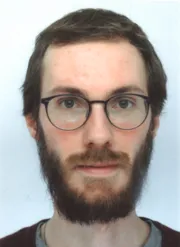
Matthieu Kuntz is a research assistant at the Chair of Audio Signal Processing at the Technical University of Munich since 2018. His work focuses on virtual acoustics , sound field synthesis , and psychoacoustic research , particularly for applications in hearing aids and cochlear implants. Education : Diploma in Vibration and Acoustics (2015-2018) from the National Engineering School of Le Mans (ENSIM) Research : Specializes in spatial sound reproduction, dynamic loudspeaker equalization, and analysis of auditory perception for moving sound sources His publications (2019-2024) demonstrate expertise in ambisonics , interaural features , auralization , and noise transmission applications. He contributes to the Professorship for Audio Signal Processing led by Prof. Dr.-Ing. B. Seeber.
Dr. Nathaniel Green is a Research Professor at the University of Colorado Anschutz Medical Campus, School of Medicine, within the Department of Otolaryngology - Head & Neck Surgery. His laboratory investigates the mechanics and physiology of the auditory system, with emphasis on hearing restoration technologies (cochlear implants, bone conduction devices) and noise-induced hearing loss mechanisms. Research Focus: Dr. Green's work examines how surgical interventions and high-level sound exposure affect inner ear function. Key areas include: Quantifying residual hearing loss in cochlear implant recipients Analyzing non-ossicular sound transmission pathways Developing damage-mitigation strategies for acoustic trauma Measuring intracochlear pressure dynamics during otologic procedures Publication Trends (2023-2025): His 15 most recent articles demonstrate consistent focus on: Intracochlear pressure measurements in surgical and high-noise contexts Binaural/spatial hearing deficits in animal models Age-related auditory processing decline Hearing protection device efficacy Biomechanical responses to extreme acoustics Studies frequently utilize rodent models, cadaver specimens, and advanced pressure monitoring techniques. Laboratory: Dr. Green directs research on experimental approaches to auditory mechanics, emphasizing translational outcomes for hearing preservation and restoration.
Gerard Borst is a researcher at Erasmus MC specializing in Neurosciences . His work focuses on auditory neuroscience, synaptic physiology, and in vivo electrophysiology. Key research topics: Inferior Colliculus, Calyx of Held, Interaural Time Difference, Dendritic Integration. His recent studies explore how neurons in the auditory system process sound localization cues, with emphasis on developmental plasticity and somatic integration of dendritic inputs. Collaborations span electrophysiological recordings and computational modeling. Research trends include in vivo models, synaptic cleft resistivity analysis, and behavioral correlation studies. No awards or specific student names are listed in the provided data.
Matthew Goupell is a Professor in the Department of Hearing and Speech Sciences at the University of Maryland. He holds a Ph.D. in Physics from Michigan State University (2005), an M.S. in Physics (2003), and a B.S. in Physics and Mathematics from Hope College (2001). His research focuses on cochlear implants, binaural hearing, and aging effects in auditory perception, with interdisciplinary expertise spanning physics, electrical engineering, and neuroscience. Goupell co-directs the Center for Comparative Evolutionary Biology of Hearing (C-CEBH) and the UMD-REACH undergraduate training program. He is affiliated with the Neuroscience and Cognitive Science Program (NACS) and the Maryland Language Science Center (LSC). His teaching includes courses like Psychoacoustics (HESP722), Anatomy of Auditory Systems (HESP634), and Professional Development in Research (HESP468H). His research investigates cochlear implant performance, particularly binaural processing, temporal processing deficits in aging populations, and neural models of auditory perception. He has advised numerous graduate students and collaborates on grants exploring implant optimization and auditory signal processing. Goupell's work spans over 100 publications in journals like Journal of the Acoustical Society of America and Ear and Hearing , addressing topics from interaural time differences to cognitive training for implant users. Key collaborations include studies on interaural place-of-stimulation mismatch, spectral-temporal trade-offs in speech understanding, and age-related neural compensation mechanisms. His lab employs advanced acoustic simulations and computational models to advance cochlear implant technology and rehabilitative strategies.
Dr. Yi Zhou is an Associate Professor in the College of Health Solutions at Arizona State University (ASU), with interdisciplinary faculty status in the School of Life Sciences and School of Biological and Health Systems Engineering. She holds a Ph.D. in Biomedical Engineering from Boston University and conducted postdoctoral research at Johns Hopkins University. Her research investigates the neurobiological mechanisms underlying auditory perception, focusing on sound localization and segregation in multisensory environments. This work integrates human/animal behavioral studies, cortical neurophysiology, and computational modeling to understand primate auditory processing. Education includes a B.S. (1996) and M.S. (1999) in Biomedical Engineering from Zhejiang and Tsinghua Universities in China, followed by a Ph.D. from Boston University (2005). She has led multiple NIH-funded projects, including studies on neural computations in communication sound recognition and visual modulation of auditory spatial processing. Her teaching spans courses in hearing science, neuroscience research methods, and scientific writing. Research activity includes over 20 peer-reviewed publications exploring topics like binaural processing ambiguities, multisensory spatial interactions, and cochlear implant efficacy in single-sided deafness. Her grants total over $5M in funding from agencies like NIDCD and NSF. Advising focuses on graduate training in auditory neuroscience and interdisciplinary systems engineering. Key research themes involve understanding how sensory systems combine auditory and visual cues to localize sound sources, particularly in complex environments. This includes modeling neural mechanisms of spatial perception and studying adaptive behaviors in hearing-impaired populations.
Dr. Alan Kan is an Honorary Lecturer in the School of Engineering at Macquarie University, affiliated with the Hearing Research Centre and Future Communications Research Centre. He holds roles across multiple institutions, including past positions at the University of Wisconsin-Madison as a Research Associate and Assistant Scientist, and a Lecturer in the Department of Communication Sciences and Disorders there. His research focuses on hearing technology, spatial hearing, and cochlear implants, with a strong emphasis on audio virtual reality and biomedical signal processing. Education: PhD in Engineering from the University of Sydney (2010). Teaching includes digital systems units (ELEC2042, ELEC3042, etc.) and software design modules at Macquarie. Previously taught electroacoustic instrumentation calibration at UW-Madison. Research interests span signal processing, auditory neuroscience, and computational modeling. Recent projects include the PRISM study (2023–2026) on predicting interaction difficulty and the MOSAIC project (2023–2024) on motion and sound sensors for communication analysis. He serves on the editorial board of the Journal of Speech, Language and Hearing Research and contributes to the Acoustical Society of America. Grants and collaborations involve interdisciplinary teams focusing on hearing technology and sensor applications. Active in editorial and review roles for journals and conferences in signal processing and acoustics. Labs/Teams: Collaborates within the Hearing Research Centre and Future Communications Research Centre at Macquarie, engaging with global networks in auditory neuroscience and biomedical engineering.
Aurelio Bruno is a Lecturer in Psychology and Vision Sciences at the University of Leicester. He holds a Ph.D. in Psychology and Cognitive Sciences from the University of Florence (Italy), where he studied saccadic eye-movement plasticity under Professors Maria Concetta Morrone and David Burr. Previously, he conducted research at University College London's Vision Research Laboratory, investigating spatio-temporal distortions in visual perception with Prof. Alan Johnston. In 2019, he secured a Wellcome Trust Fellowship to lead the project "Temporal Aspects of Gaze Perception in Autism" at the University of York. Education: Ph.D. in Psychology and Cognitive Sciences, University of Florence, Italy (2008-2012) Research focuses on visual perception, temporal processing, and binocular vision. Key areas include the plasticity of vision during saccades, metacognition in perceptual judgments, and neural mechanisms underlying temporal perception in clinical populations. His work employs pupillometry, electrophysiology, and behavioral experiments to study subcortical and cortical pathways. Recent research highlights include investigations into binocular combination mechanisms in the autonomic nervous system, motion-induced duration biases, and the role of confidence judgments in perceptual tasks. His studies often bridge cognitive neuroscience and clinical research, particularly in autism spectrum conditions. Awards include the Wellcome Trust Research Career Re-Entry Fellowship (2019) Grants and supervision: He has secured funding from the Wellcome Trust, Leverhulme Trust, and Human Frontiers Science Program. His research supervision involves projects on temporal perception, motion adaptation, and emotional facial expression analysis. Lab affiliations include the Vision Research Laboratory (UCL) and the University of Leicester's Psychology and Vision Sciences department.
Prof. Werner Hemmert is a Professor at the Technical University of Munich (TUM), affiliated with the TUM School of Computation, Information and Technology. His research focuses on bioanalog information processing, particularly investigating auditory system mechanisms and developing neuroprosthetic technologies. He combines theoretical models with experimental work, collaborating with biology, medicine, and industry partners. Education: Studied Electrical Engineering and Information Technology at TUM; PhD (Dr.-Ing.) from Ruhr University Bochum (1997). Key Career Stints: Research stays at MIT (1998-2000), IBM Zurich (2000-2001), and Infineon Technologies (2001-2007). Professional Memberships: German Acoustic Society, Association for Research in Otolaryngology, IEEE Senior Member. Research Interests: Neuroprosthetics, Auditory Neuroscience, Biomedical Engineering . He explores cochlear mechanics, neural coding of auditory cues, and improving cochlear implant performance. His work bridges engineering and medicine, addressing challenges in hearing restoration and bimodal hearing systems. Key Publications Highlight: Over 50 peer-reviewed articles, including foundational work on cochlear mechanics ( Biophysical Journal , 2000), neural models for interaural time differences ( Frontiers in Neuroscience , 2018), and bimodal hearing optimization ( IEEE Transactions , 2023). Awards: Feodor Lynen Research Fellowship (Alexander von Humboldt Foundation), Helmholtz Prize (1996). His research emphasizes translational science, with direct applications in clinical hearing solutions and neurotechnology innovation.
Francesco Pavani serves as Full Professor of Experimental Psychology and Deputy Dean at the Center for Mind/Brain Sciences (CIMeC) at the University of Trento, where he also holds the Rector’s delegate position for coordinating PhD programs university-wide. His academic leadership spans roles as Head of the PhD School in Cognitive and Brain Sciences (2013–2019) and international affiliations including associate membership at Lyon’s Centre de Recherche en Neuroscience. Pavani’s research bridges cognitive neuroscience, deafness studies, and multisensory perception with translational applications for cochlear implant users. Education Ph.D. in Psychology, University of Bologna (2000; Supervisor: Elisabetta Làdavas) Master equivalent degree (Laurea Magistrale) in Psychology, University of Bologna (1995) Honorary Research Fellow, Institute of Cognitive Neuroscience, University College London (1998; Supervisor: Jon Driver) Visitor Scholar, Center for Neural Engineering, University of Southern California (1994; Supervisor: Michael A. Arbib) Research Focus Pavani investigates multisensory perception and attention mechanisms in typical and atypical populations, with emphasis on deafness, cochlear implantation, and neural plasticity. His work integrates psychophysics, neuropsychology, and neuroimaging to dissect how auditory, visual, and motor systems interact during spatial processing, language comprehension, and metacognitive judgments. Current projects examine spatial hearing rehabilitation through virtual reality, metacognitive aspects of listening effort, and the impact of face masks on communication for deaf individuals—addressing critical gaps in inclusive healthcare and education. Publication Trends His 2024–2025 publications reveal three dominant threads: (1) metacognitive dimensions of hearing (e.g., confidence in spatial judgments, effort tracking during speech-in-noise), (2) neural plasticity in cochlear implant users across ages, and (3) real-world communication barriers like face masks. Methodologically, he pioneers active listening paradigms where motor actions (reaching, postural adjustments) modulate auditory perception—highlighting embodiment’s role in sensory rehabilitation. Over 70% of recent work involves multicentric collaborations, emphasizing clinical translation. Scientific Recognition Giulio Tarra Award for Deafness Research (Pio Istituto dei Sordi di Milano, 2019) Prix Médisite en Neurosciences (Fondation de France, 2016) Chaire CIC-Cerveau et Santé Mentale (Fondation Neurodis, Lyon, 2015) Travel Fellowship, EuroConference on Spatial Neglect (2000) Premio Giovani Ricercatori, Italian Psychology Association (1997) Mentorship and Collaborations As leader of the Cognition Across the Senses (CAtS) research group, Pavani mentors postdocs, PhD candidates, and master’s students in projects spanning basic science (e.g., neural mechanisms of multisensory integration) to applied outcomes (e.g., VR spatial hearing training). His €2M+ grant portfolio includes European Marie Curie Fellowships and French-Italian collaborations like the CRNL partnership. He actively shapes policy as Rector’s delegate for PhD programs and previously coordinated university-wide student recruitment. Research Infrastructure The CAtS group operates within CIMeC’s state-of-the-art facilities, utilizing motion capture systems, eye-tracking, EEG, and custom virtual reality setups (e.g., SPHERE platform for 3D sound localization). Their work directly informs clinical tools like spatial auditory mapping devices (patented in 2024) and sign language accessibility protocols. Current initiatives focus on translating metacognitive training into rehabilitation apps for cochlear implant users and developing inclusive communication standards for healthcare settings post-pandemic.
SungYoung Kim is an Associate Professor in the Department of Electrical and Computer Engineering Technology within the College of Engineering Technology at Rochester Institute of Technology (RIT). His academic work focuses on spatial audio, immersive sound systems, and virtual/augmented reality audio applications, with a research career spanning over a decade of consistent publication and innovation. Dr. Kim's research spans multiple areas of audio engineering and perception. His work investigates how humans perceive spatial audio, develops techniques for more realistic immersive sound reproduction, and creates training methods to improve auditory spatial abilities. He has made significant contributions to understanding the role of height channels in multichannel audio systems, developing methods for personalized spatial audio through head-related transfer functions (HRTFs), and creating augmented reality applications for auditory training. His recent publications demonstrate particular expertise in binaural rendering with head-tracking, automatic audio panning systems, and neurofeedback training applications for auditory spatial attention. His research has practical applications across virtual reality, gaming, music production, and hearing rehabilitation. Recent work includes developing assessment systems for sound localization using Unity and AWS, creating augmented reality auditory training games for hearing-impaired individuals, and investigating the impact of customized interaural time differences on first-person shooter gaming performance. Dr. Kim's publications show a clear progression from fundamental research on spatial audio perception to increasingly applied work with real-world implementation. Japan Society for the Promotion of Science (JSPS) International Fellowships for Research in Japan (L18521), 2018 AES 138th Student Design Competition Silver Award (with Imamura Hidetaka) U.S. Patent US8320590B2 for 'Device, Method, Program, and System for Canceling Crosstalk when Reproducing through Plurality of Speakers Arranged around Listener' (2012) Dr. Kim has secured significant research funding, including grants from Yamaha Corporation totaling over $145,000 for the period 2022-2025, and previously received $179,878 from the Department of Defense for research from 2019-2022. His lab maintains strong industry connections, particularly with Yamaha Corporation, and has extensive international collaborations with researchers in Japan and South Korea. Dr. Kim actively mentors graduate students, as evidenced by his numerous publications with student co-authors across various audio engineering venues, often listing students as first authors to highlight their contributions. Dr. Kim's research group works at the intersection of audio engineering, human perception, and emerging technologies. The lab develops novel audio reproduction techniques, creates assessment tools for sound localization, and explores applications of spatial audio in virtual environments. Recent projects include the development of W-Ambisonics for immersive music reproduction, auditory augmented reality systems that estimate room-specific acoustical materials, and neurofeedback training applications that change oscillatory activity in the parietal cortex related to auditory spatial attention. His work bridges theoretical audio research with practical implementation in real-world applications.