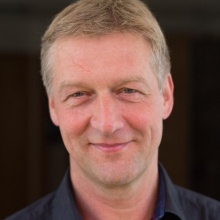
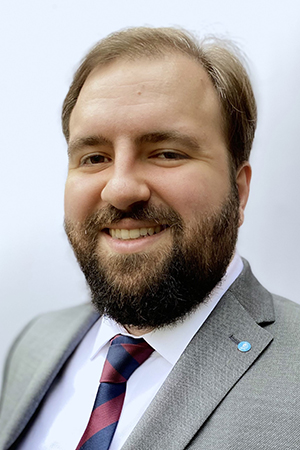
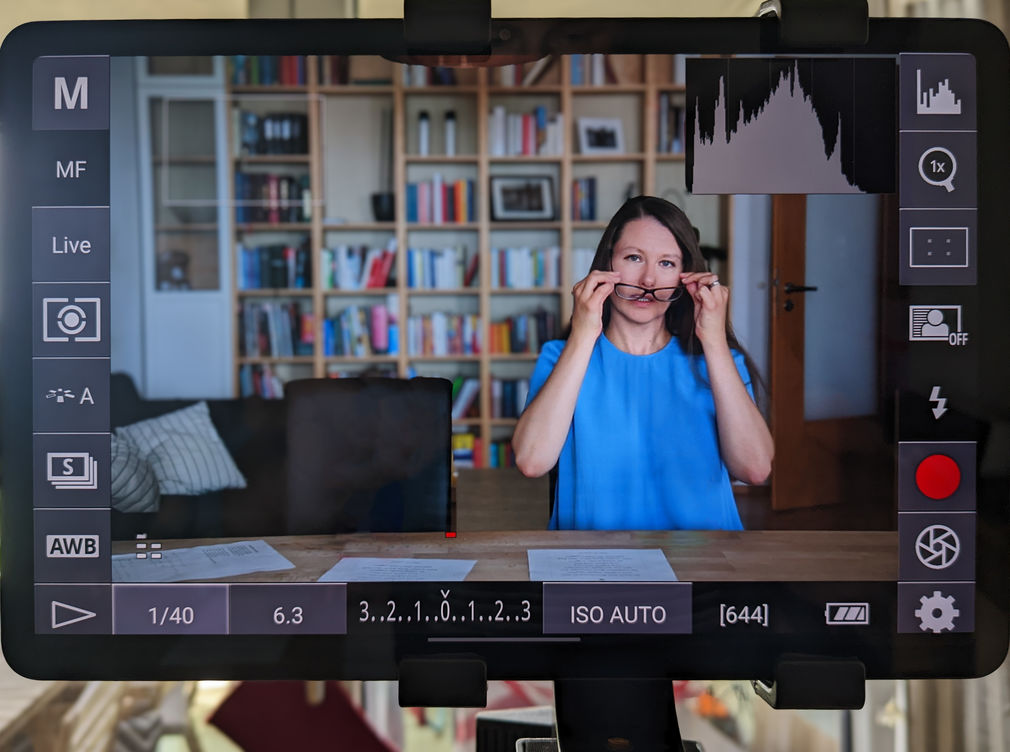
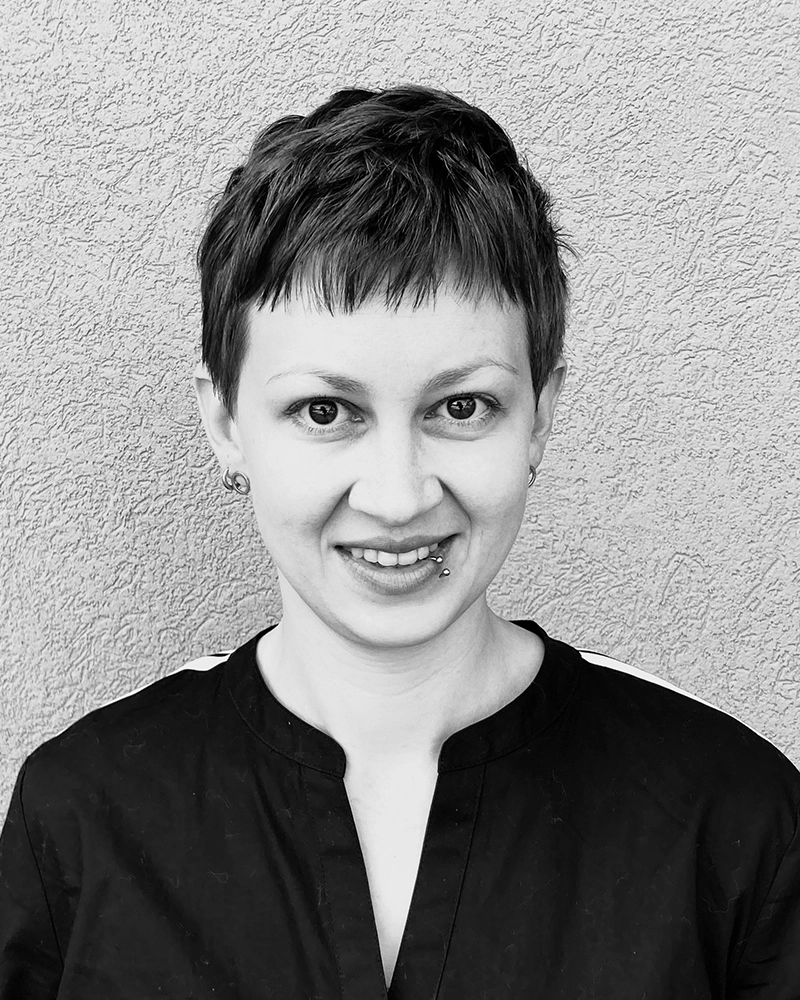
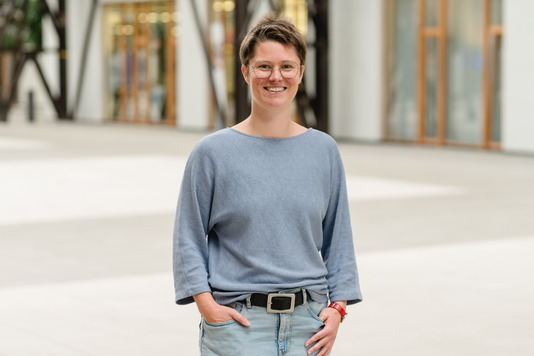
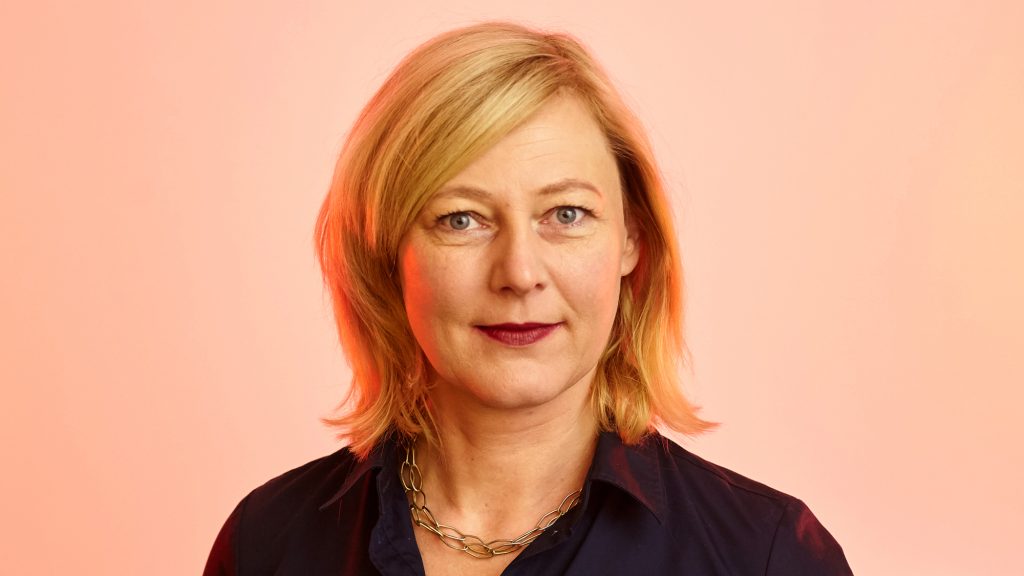
Harald Reiterer is a researcher affiliated with the University of Konstanz , Germany. His work spans Human-Computer Interaction (HCI) , Augmented Reality (AR) , Virtual Reality (VR) , and Mobile Health over three decades. Key Research Areas : Cognitive workload measurement, collaborative immersive analytics, spatial memory in AR/VR, hybrid user interfaces, persuasive technology for health behavior change. Scientific Contributions include designing AR/VR systems for collaborative workflows, evaluating ergonomic patient transfers, and developing tools for visualizing spatio-temporal data. His recent work focuses on haptic props for AR, cognitive load assessment via eye tracking, and multimodal feedback in VR cockpits. Publication Trends : 15+ recent papers on AR/VR interaction techniques, mixed reality visualization, and health-focused digital interventions.
Andrey Chechulin is a Professor at the St. Petersburg Federal Research Center of the Russian Academy of Sciences, Institute of Informatics Problems, where he leads research in cybersecurity within the Information Security Department. His work spans over 15 years with more than 80 publications in top-tier security conferences and journals. Dr. Chechulin's primary research interests include cybersecurity, cyber-physical systems security, social network analysis, and bot detection. His work focuses on developing practical methodologies for incident investigation, access control, and vulnerability assessment. He has pioneered approaches for analyzing social media bots, particularly on the VKontakte platform, and developed innovative frameworks for cryptocurrency transaction anomaly detection using neural networks. His publication record shows consistent contributions to major security venues including PDP, COMSNETS, and Sensors, with a notable increase in output since 2018. Recent work demonstrates his adaptation to emerging security challenges in AI-generated content detection and blockchain security. Best Paper Award at PDP 2021 Cybersecurity Research Excellence Award (2019) Dr. Chechulin maintains strong collaborative relationships with Igor V. Kotenko (60 joint publications), Dmitry Levshun, and Maxim Kolomeets. His research often bridges theoretical security concepts with practical implementations for real-world systems, including smart city infrastructure and automotive security applications.
Holger Kumke is a Researcher at the Chair of Cartography and Visual Analytics at the Technical University of Munich . His responsibilities include teaching, research management, and technical administration of labs and systems. Specializes in 2D/3D cartography, AR/VR/MR, and thermal infrared data visualization. Developed tools like Cartography Playground for interactive geospatial education. Organized major conferences including LBS 2022 and PFGK18 . His publications focus on archaeological 3D modeling, urban thermal visualization, and GIS uncertainty analysis. He supervises academic theses and manages geospatial infrastructure.
Juliane Mai is a Research Associate Professor at the University of Waterloo's Department of Earth and Environmental Science and a former Research Scientist at the Helmholtz Centre for Environmental Research (UFZ) in Leipzig. Her work focuses on computational hydrology, model calibration, sensitivity analysis using high-performance computing, and data dissemination tools like HydroHub and CaSPAr. She develops blended hydrological models that combine multiple process implementations and leads large-scale intercomparison projects (GRIP-E, GRIP-GL) across North America's 3,000+ basins. Her research bridges environmental modeling with machine learning and data science, emphasizing open-access platforms for stakeholders. Key projects: GRIP-E/GRIP-GL model intercomparisons Methodological innovations: xSSA, EEE, MVA sensitivity techniques Created data portals: HydroHub for visualization, CaSPAr for climate data Her 2023 Journal of Hydrology paper outlines calibration strategies for environmental models, while 2022 Nature Communications work quantifies process sensitivities across North America. She received the 2023 ASCE-EWRI best case study award for GRIP-E research and serves on editorial boards like Journal of Hydrology .
Wang Yufei is affiliated with Xiamen University, China, holding positions across the School of Informatics, Institute of Artificial Intelligence, Center for Digital Media Computing, and School of Film. The research spans interdisciplinary domains, integrating artificial intelligence, robotics, and multimedia systems for real-world applications. Wang Yufei's research primarily focuses on artificial intelligence , computer vision , robotic interaction , and multimedia systems . Key areas include 3D scene modeling using Gaussian splatting, diffusion models for storytelling and image generation, reinforcement learning for interactive instruction, and AI applications in healthcare, agriculture, and urban planning. The work emphasizes robustness, real-time feedback, and human-centered design. The recent publications demonstrate a strong trend in deep learning applied to vision and multimodal systems , with increasing focus on interactive AI , embodied environments , and domain adaptation . Topics such as differentiable trajectory optimization, backdoor attacks in compression models, and context-aware assistance systems reflect both technical depth and societal relevance. Wang Yufei has not been mentioned in relation to any scientific awards in the provided text. No information is available regarding student advising or research grants. However, the breadth and volume of publications suggest active research leadership and likely involvement in funded projects. Research is conducted in collaboration with teams at Xiamen University, particularly within the Institute of Artificial Intelligence and the Center for Digital Media Computing, focusing on intelligent multimedia and robotic systems. The integration of AI with cultural and educational applications, such as piano instruction and heritage preservation, highlights a unique interdisciplinary lab environment.
Meredith B. Linn is an Associate Professor at Bard Graduate Center in New York City, specializing in historical archaeology and material culture studies. Her work bridges cultural anthropology, history, and urban studies to explore marginalized communities in 19th-century America. Education: PhD in Anthropology, Columbia University MA in Social Sciences, University of Chicago BA in Art History, Swarthmore College Linn's research focuses on the historical archaeology of New York City , particularly the health and identity formation of Irish immigrants and African American communities. She employs interdisciplinary methods, combining archaeology, documentary analysis, and digital reconstruction to challenge historical stereotypes and reveal everyday agency. Her recent publications address themes like medical materiality , consumer choice in unregulated healthcare , and collaborative heritage advocacy . Linn actively integrates digital humanities into archaeological practice through projects like Envisioning Seneca Village . Linn has taught courses on the archaeology of African American communities , medical materialities , and digital heritage methods , influencing her students' approaches to marginalized histories. She is currently on leave for Fall 2025 while completing her book on Seneca Village.
Norbert Haala is an Adjunct Professor and Deputy Director at the University of Stuttgart's Department of Photogrammetric Computer Vision. He leads the Research Group in Photogrammetric Computer Vision and is involved in ISPRS Working Group II/2 (Point Cloud Generation) and EuroSDR Commission 2 (Modelling and Processing). His work focuses on 3D data collection, SLAM algorithms, LiDAR integration, and UAV-based geospatial technologies. Research interests include image-based data collection, photogrammetric computer vision, and semantic segmentation of 3D point clouds. He has contributed to benchmarks like Hessigheim 3D and TIME, and developed tools like SURE for dense image matching. Teaching includes courses on digital image processing, terrain modeling, and computer vision. His publications emphasize real-time mapping, hybrid georeferencing, and neural surface reconstruction from airborne imagery. Projects involve UAV monitoring, indoor SLAM for robotics, and multi-modal data fusion for urban modeling. He collaborates on EuroSDR initiatives and publishes regularly in remote sensing and robotics domains.
Franz Christopher Kunze is a Researcher at the Department of Automation Technology, Faculty of Electrical Engineering and Information Technology, Ruhr-Universität Bochum. His work focuses on developing advanced alarm management systems for industrial processes using causal directed graphs and machine learning techniques. He collaborates with TU Munich on the DFG-funded CausAlITI project, aiming to improve root-cause analysis during industrial alarm floods. Research interests include causal analysis of alarm patterns, adaptive system modeling, and operator-centric visualization. He teaches courses like Process Automation and Programming for ETIT/ITE students, and supervises bachelor's theses in alarm system development. His publications (2023–2025) address alarm flood dynamics, causal graph applications, and automated model generation using LLMs. Current work emphasizes real-time alarm processing and uncertainty management in industrial systems.
Hilda Deborah is a Senior Researcher at NTNU's Department of Computer Science (IDI Gjøvik), specializing in spectral imaging and mathematical morphology. Affiliated with the Faculty of Information Technology and Electrical Engineering, her work bridges computer science and cultural heritage preservation. She holds dual PhDs in Computer Science (NTNU) and Signal/Image Processing (Université de Poitiers). Her research focuses on texture perception, digital humanities, and innovative imaging dissemination methods. Key awards include the Marie Curie Postdoctoral Fellowship (2018–2020) and NTNU's Outstanding Academic Fellow Programme (2022–2026). She leads projects like the FRIPRO-funded Metrological Texture Analysis and the Lying Pen of Scribes initiative. Recent work includes hyperspectral pigment databases, Dead Sea Scroll fragment analysis, and interactive visualization tools like the Hyperspectral Pigments dataset (2022). Her publications span spectral imaging techniques, artifact analysis, and HCI applications in cultural heritage. She teaches database-related courses (IDATT2002, IDATG2002) and actively collaborates on interdisciplinary projects involving art conservation and digital humanities.
Niklas Schmidt is a researcher at the Department of Design at Offenbach University of Art and Design, focusing on product language theory , ergonomic design , and material experimentation . His work bridges design theory , human-computer interaction , and innovative material applications . Current research examines ambiguity in product semantics , seeking to map unlabeled transitional zones on product surfaces as independent carriers of meaning Known for Snug (2023), an arthritis-inclusive tableware series redistributing physical load across joints Authored Vogo (2019), a pumice stone coffee mug leveraging natural material properties Created Herba Electrum (2019), an interactive digital plant sculpture requiring organic care His phenomenological approach to form analysis, detailed in his publication The Potentials of Form (2023), explores design parameter boundaries through AI-assisted experiments. While no formal awards are listed, his work has been implemented in real-world applications including medical assistive devices and music media design.
Prof. Dr. Olga Moskatova is Professor of Media Theory at HfG Offenbach (Offenbach University of Art and Design), where she teaches and researches in the Department of Art. She previously held a junior professorship in media studies (visuality and image cultures) at Friedrich-Alexander University Erlangen-Nuremberg from 2018 to 2023. Her academic journey includes research at the Bauhaus University Weimar and a doctorate from the Berlin University of the Arts. PhD in Media Theory, Berlin University of the Arts, 2017 Studies in Social and Business Communication, Berlin University of the Arts & Université Stendhal 3 Grenoble Her research centers on the theory and aesthetics of visual media, with a focus on media materiality, new materialism, networked image cultures, avant-garde and media art, and the emerging concept of protective media and immunization dispositifs. She critically examines how AI technologies shape visual culture, particularly in surveillance capitalism and algorithmic image production. The most recent publications and projects reflect a strong engagement with AI and visual media, exploring how machine learning algorithms classify, generate, and moderate images across platforms. Her editorial work includes significant volumes on video conferencing, televisual seriality, and messy image networks, indicating a sustained interest in digital transformation and media infrastructures. Monograph: Painting on Celluloid: On Relational Materialism in Cameraless Film (2019) Monograph: Human-machine eye: The motif of artificial vision in film (2009) Editor: Video Conferencing: Practices, Politics, Aesthetics (2023) Guest Editor: # messy images , Networked Images in Surveillance Capitalism She founded the international research network 'AI and Visual Media', bringing together scholars from media studies, data studies, and contemporary art to investigate the societal and cultural impacts of visual AI. Her work emphasizes interdisciplinary methodologies, including data set archaeology and media ecology analysis. She has presented lectures at institutions such as Yale University, highlighting the global reach of her research. Olga Moskatova leads research initiatives rather than traditional lab structures, fostering collaborative inquiry into the politics inscribed in AI infrastructures. Her recent workshop 'On Protective Media' explores boundary-forming mechanisms in digital culture, indicating a forward-looking trajectory in theoretical media studies.
Katrin Antweiler is a Research Fellow at the Free University of Berlin, focusing on memory studies, museum practices, and contradiction studies. Her work explores the intersections of Holocaust remembrance, human rights education, and global governance frameworks. PhD in Cultural Studies (2022), Justus Liebig University Giessen Research Themes: Memory as governance, decolonial memory, multidirectional narratives Her research examines how Holocaust education for refugees in Germany reveals tensions in plural democracies. Recent publications analyze paradoxes of memory in post-migrant societies and global human rights museums. Notable awards include a DAAD Scholarship, GCSC PhD Scholarship, and a Junior Fellowship at the Munich Institute for Contemporary History. She actively contributes to academic discourse through lectures and conference participation.
Dr. Hanna Wüller is a Nursing Scientist at the University of Applied Sciences Osnabrück , affiliated with the Faculty of Management, Culture and Technology . Her research focuses on the intersection of Nursing Science and Health Technology , with a theoretical lens on New Materialism and Human-Nonhuman Interactions . Education: PhD in Social Sciences (2022), University of Kassel M.Sc. Public Health (2013-2015), University of Bielefeld Dual Bachelor in Nursing (2011-2013), Mathias Hochschule Rheine B.Sc. Business Informatics (2008-2011) Research Interests include: Empirical analysis of care work through reconstructive social research methods like video analysis and objective hermeneutics . Materiality and non-human actors in healthcare workflows. Critical examination of technological integration in nursing practice. Publication Trends show a consistent focus on augmented reality applications in nursing, ethics of digital healthcare , and theoretical disruptions caused by emerging technologies. Key Lectures: New Materialism in supported communication (2025) Simulation in Nursing Education (2024) International conferences on health tech and care innovation (2017-2021)
Prof. Dr. Gesche Joost is the Head of the Design Research Lab at the Berlin University of the Arts and holds affiliations with the German Research Center for Artificial Intelligence (DFKI) , Weizenbaum Institute for the Networked Society , and Einsteincenter Digital Future (ECDF) . Her research focuses on the intersection of digital transformation , human-computer interaction , and socially sustainable design , particularly examining: Participatory design for marginalized groups Wearable computing and tangible interfaces Digital sovereignty and inclusive governance Gender studies in technology contexts Material interactions in urban environments Her publications analyze proxemic mobile design, affective haptics, and critical approaches to digital infrastructure. Key projects include MINODU for local sustainable development, MYOW for DIY wearables, and Calliope gGmbH for children's digital education. She serves on the supervisory boards of SAP, ING, and Ottobock and has contributed to policy through the German government's Federal Internet Ambassador role (2014–2018).
Dr. Mor Geva is a prominent researcher in natural language processing and machine learning, focusing on transformer-based language models, interpretability, and knowledge representation. Their work addresses fundamental questions about model reasoning, uncertainty expression, and factual recall mechanisms. Key research themes: language model interpretability, multi-hop reasoning limitations, numerical encoding, cross-modal knowledge gaps Recent publications analyze gradient projection, attention head functionality, and fallback behaviors under uncertainty 2023-2025 studies reveal insights into factual association recall, knowledge editing ripple effects, and vision-language model interactions. Collaborations span top institutions in ACL, EMNLP, and ICLR venues. Current research explores parametric knowledge tracing, encoder-decoder dynamics, and attention hijacking phenomena. Tools like LM-Debugger enable interactive model inspection, while theoretical work examines base-10 numerical encoding and task vector creation.