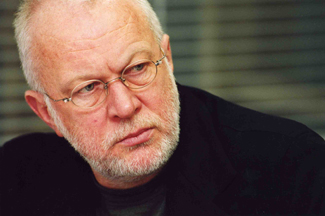
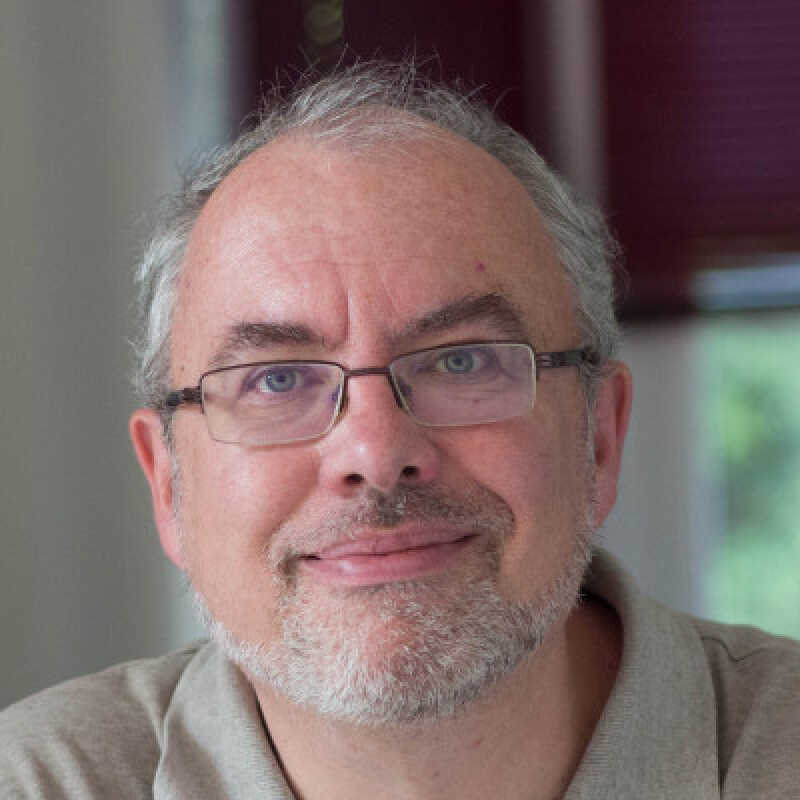
Johnny Guzmán is a Professor of Applied Mathematics at Brown University, specializing in numerical analysis of partial differential equations and scientific computing. He holds a Ph.D. in Applied Mathematics from Cornell University (2005) and a B.S. in Mathematics from California State University, Long Beach (1999). His research focuses on numerical methods for PDEs, including discontinuous Galerkin methods, mixed finite element methods, and fluid-structure interaction problems. Key contributions include work on hybridizable and mixed finite element methods, discontinuous Galerkin discretizations, and stability analysis of numerical schemes. He has been funded by multiple NSF grants, including a Postdoctoral Fellowship (2005–2008) and awards totaling over $1M in research support. Notable recognitions include the Comfort and Urry Family Fund Prize (2013). Guzmán collaborates with institutions globally and serves on editorial boards for journals like Journal of Numerical Mathematics and Calcolo . His teaching spans computational linear algebra, numerical methods for differential equations, and finite element analysis.
Aniket (Niki) Kittur is a Professor in the Human-Computer Interaction Institute (HCII) at Carnegie Mellon University's School of Computer Science. His research focuses on AI-augmented cognition, exploring how humans and computational systems can partner to accelerate knowledge acquisition and innovation. With over 100 peer-reviewed publications and 17 best paper awards or honorable mentions, Dr. Kittur has established himself as a leader in human-computer interaction and social computing. Dr. Kittur's research spans multiple interconnected areas focused on enhancing human cognition through technology. His work on crowd-augmented cognition examines how crowds and computation can collectively enhance human intellect. In social computing, he investigates how sociotechnical architectures can motivate and coordinate large groups for complex tasks. His research in data visualization and sensemaking explores how people collect, organize, and make decisions with online information. Most recently, his work has shifted toward LLM-augmented cognition, investigating how humans and large language models can work together in partnership to achieve better decisions and greater creativity than either could alone. Dr. Kittur's publications reveal a consistent trajectory toward increasingly sophisticated human-AI collaboration systems. Early work focused on crowdsourcing complex tasks (CrowdForge, CrowdSynthesis), then evolved to knowledge acceleration systems (Knowledge Accelerator, Fuse), and has recently centered on LLM-integrated cognition (Selenite, InkSpire, BioSpark). His research consistently demonstrates practical impact, with systems influencing products used by millions and receiving coverage in major media outlets including Nature News, The Economist, and The Wall Street Journal. Kavli fellow NSF CAREER award recipient Allen Newell Award for Research Excellence Inductee into the CHI Academy 17 best paper awards or honorable mentions across his publications Dr. Kittur has advised numerous students, including Andrew Kuznetsov, and has secured major research funding from NSF, NIH, Google, Microsoft, Bosch, Toyota, and other organizations. His Skeema browser extension project, which addresses tab overload through innovative project-based organization, has shown remarkable user retention and represents a practical application of his research on knowledge acceleration. His work with industry partners has influenced products used by millions, including Semantic Reader, Google Shopping, and Wikipedia features.
Howard A. Stone is the Donald R. Dixon '69 and Elizabeth W. Dixon Professor and Neil A. Omenn '68 University Professor in the Department of Mechanical and Aerospace Engineering at Princeton University's School of Engineering and Applied Science. He leads the Complex Fluids Group, conducting interdisciplinary research at the intersection of engineering, physics, chemistry, and biology. Dr. Stone received his B.S. in Chemical Engineering from UC Davis (1982) and Ph.D. from Caltech (1988). After a postdoctoral year at Cambridge University, he joined Harvard University's faculty in 1989, where he became the Vicky Joseph Professor of Engineering and Applied Mathematics before moving to Princeton in 2009. His research focuses on fluid dynamics phenomena across multiple scales, with particular emphasis on microfluidics, complex fluids, and biomechanics . His group investigates multiphase flows, colloidal systems, bio-inspired fluid phenomena, and physicochemical hydrodynamics. Recent work spans from fundamental studies of thin film drainage and droplet dynamics to applications in biological systems including blood flow, bacterial transport, and biomolecular condensates. The Complex Fluids Group employs experimental, theoretical, and computational approaches, often collaborating with industry partners on applications from medical devices to industrial processes. Analysis of his recent publications reveals a continued expansion into biological applications of fluid dynamics, with increasing focus on cellular mechanics, biomolecular condensates, and pathological hemodynamics, while maintaining strong contributions to fundamental fluid mechanics in complex systems. His work consistently bridges theoretical insights with practical applications across multiple disciplines. Major honors include: Election to the National Academy of Engineering (2009) Election to the National Academy of Sciences (2014) APS Fluid Dynamics Prize (2016) G.K. Batchelor Prize in Fluid Dynamics (2008) NSF Presidential Young Investigator Award Professor Stone has advised numerous PhD students through their Final Public Oral examinations, with recent graduates working on topics spanning microfluidics, bacterial transport, and complex fluid phenomena. His research has been supported by diverse funding sources including NSF, NIH, and industry partnerships. The Complex Fluids Group maintains state-of-the-art experimental facilities in the Engineering Quadrangle, featuring specialized equipment for microfluidics, rheology, and interfacial phenomena investigations. The group actively collaborates with researchers across Princeton and globally, maintaining strong connections to both academic and industrial partners working on fluid-related challenges.
Alane Suhr is an Assistant Professor at UC Berkeley's Electrical Engineering and Computer Sciences (EECS) department and a member of the Berkeley Artificial Intelligence Research Lab (BAIR). Her research focuses on natural language processing (NLP), machine learning, and computer vision, emphasizing systems that interact with humans through language. She designs models and datasets for language grounding (e.g., NLVR) and develops algorithms for learning through interaction. Education: PhD in Computer Science, Cornell University (2022), advised by Yoav Artzi Bachelor's in Computer Science and Engineering, Ohio State University (2016), with a Linguistics minor Research Interests: Interactive systems for collaborative language use (e.g., CerealBar) Language grounding in multimodal contexts Embodied agents and reinforcement learning Generalization in NLP and the role of language in learning Key Contributions: Developed the NLVR dataset for visual reasoning with natural language Pioneered work on SWE-Gym for training software engineering agents Contributed to research on language models' sensitivity and commonsense reasoning Awards: ACM Doctoral Dissertation Award (2022) Outstanding Paper Awards at ACL 2023 and EMNLP 2021 Professional Activities: Organized workshops at ICML, NeurIPS, and ACL on topics like agents, generalization, and theory of mind Active in academic outreach and conference speaking (e.g., ICML, NeurIPS, CVPR) Labs/Teams: Berkeley Artificial Intelligence Research (BAIR) Lab SWE-Gym research group
Gianluca Iaccarino is a Professor of Mechanical Engineering at Stanford University and the Robert Bosch Chairholder. He serves as Director of the PSAAP Center and leads large-scale computational research initiatives in uncertainty quantification, exascale computing, and multiphysics simulations. His academic journey includes a PhD in Mechanical Engineering from Politecnico di Bari (2005), postdoctoral work at Stanford's Center for Turbulence Research, and progression from Research Engineer to full Professor. Education : PhD (Politecnico di Bari), MS/BS in Aeronautical Engineering (University of Naples) Research : Computational engineering, turbulence modeling, uncertainty quantification, biomedical fluid dynamics, and exascale-ready algorithms Publications : 15+ recent articles focus on turbulence modeling, data-driven simulations, and uncertainty quantification across diverse applications in aerospace, biomedical, and energy systems Awards : PECASE (2010), APS Fellow (2019), multiple best paper awards (AIAA, ASME), Terman Fellow (2007) Students : Advises doctoral and master's students in mechanical engineering and computational methods Leadership : Director of PSAAP Center (2014-present), Chair of Mechanical Engineering Department (2024-present)
Alexei A. Efros is a Professor in the Department of Electrical Engineering and Computer Sciences (EECS) at UC Berkeley, where he holds the Howard Friesen Professorship and is affiliated with the Berkeley Artificial Intelligence Research (BAIR) Lab. He previously served on the faculty at the Robotics Institute of Carnegie Mellon University (CMU) and completed a postdoctoral fellowship at the University of Oxford. His research spans data-driven computer vision, self-supervised learning, computational photography, and applications to computer graphics and robotics. His research interests include: Data-Driven Computer Vision Self-Supervised and Unsupervised Learning Generative Models and Image Synthesis Visual Representation Learning Applications in Robotics and Human-Computer Interaction Intersections with Human Vision and the Humanities The recent publications highlight a strong trend toward self-supervised learning, visual reasoning, and generative modeling, particularly diffusion models and 3D scene understanding. His work increasingly bridges computer vision with language, robotics, and cognitive science, emphasizing interpretability and real-world applicability. There is a clear focus on leveraging unlabeled data and developing methods for robust, generalizable AI systems. His scientific awards and recognitions include: Berkeley Fellowship Google Fellowship Soros Fellowship NSF Fellowship SIGGRAPH Outstanding Doctoral Dissertation Award Facebook Fellowship Adobe Fellowship CMU School of Computer Science Distinguished Dissertation Award ACM Doctoral Dissertation Honorable Mention Alexei Efros has advised numerous PhD students and postdocs, many of whom have gone on to faculty positions at top institutions including CMU, Stanford, MIT, Columbia, NYU, and Georgia Tech. His lab has received research funding from major tech companies and federal agencies, though specific grants are not detailed in the text. He teaches core computer vision and machine learning courses at both undergraduate and graduate levels at UC Berkeley. His research group is highly active, with ongoing projects in 3D perception, generative modeling, and vision-language systems. He leads a vibrant research lab at UC Berkeley, part of the BAIR consortium, collaborating with leading researchers such as Jitendra Malik, Trevor Darrell, Pieter Abbeel, and Angjoo Kanazawa. His lab fosters strong interdisciplinary connections with institutions worldwide, including Oxford, INRIA, and École Normale Supérieure.
Christopher G. Atkeson is a Professor at the Robotics Institute at Carnegie Mellon University (CMU), where he has been since 2000 after previously holding positions at MIT and Georgia Institute of Technology. His research focuses on fulfilling the science fiction vision of machines achieving human levels of competence in perception, cognition, and action, with particular emphasis on understanding how to get machines to generate and perceive human behavior. Atkeson's work spans two complementary approaches: humanoid robotics and human aware environments. His research interests include nonparametric learning, memory-based learning, reinforcement learning, learning from demonstration, and modeling human behavior. He is particularly known for his work on robot learning of challenging dynamic tasks such as juggling, trajectory-based optimization, and soft robotics (including his contributions to the Baymax character in Disney's Big Hero 6). His recent publications demonstrate a strong focus on tactile sensing (FingerVision), human-in-the-loop optimization for exoskeletons, deep learning for locomotion control, and trajectory-based optimization methods. His work consistently bridges theoretical foundations in machine learning with practical implementations on physical robots. Among his scientific recognitions are an NSF Presidential Young Investigator Award, a Sloan Research Fellowship, and a Teaching Award from the MIT Graduate Student Council. Atkeson has advised numerous students who have gone on to successful careers in academia and industry, including notable researchers like Andrew Moore and Stefan Schaal. His teaching includes courses on dynamic optimization, humanoids, kinematics, dynamics, and control.
Anette Mikes is an Associate Professor of Accounting at the University of Oxford’s Saïd Business School and a Hertford College Fellow. She specializes in risk management, corporate governance, and sustainability, with a focus on the intersection of ethics and organizational control systems. Her research explores how risk frameworks shape corporate decision-making, particularly in climate change and decarbonization contexts. Education: PhD in Accounting from the London School of Economics (2005) Pre-doctoral work in the City of London (2006–2007) studying Chief Risk Officer roles Research Interests: Behavioral approaches to risk management Management control systems for sustainability Ethics in corporate governance Decarbonization strategies in heavy industries Her 2012 Harvard Business Review article (with Robert Kaplan) on risk frameworks remains influential, while her documentary on the Kursk submarine disaster highlights crisis management failures. Awards: 2025 Honorary Doctorate from Uppsala University 2017 ACA Prize for Risk Management Contributions 2014 Global Risk Forum Film Award Key Contributions: Co-developed Harvard’s Risk Management executive program Leads research on ‘Values at Risk’ and corporate purpose Published widely on climate risk governance and ethical leadership Her recent work emphasizes decarbonization strategies and moral accountability in business, bridging accounting practices with environmental and ethical imperatives.
Ali Yazdani is an Adjunct Professor at the University of Illinois Urbana-Champaign's Grainger College of Engineering, Department of Physics, and Director of the Princeton Center for Complex Materials at Princeton University. His research focuses on quantum condensed matter physics, leveraging scanning tunneling microscopy (STM) and spectroscopy to explore novel quantum phases in materials such as graphene, twisted bilayer graphene, and topological insulators. Key achievements include the first direct observation of Hofstadter's fractal energy spectrum in quantum materials (2025), studies on Majorana fermions in atomic chains, and investigations into strongly correlated Chern insulators. His work bridges theoretical predictions with experimental validation, emphasizing quantum materials' topological and correlated properties. Affiliations: Princeton University, Department of Physics; University of Illinois Urbana-Champaign, Grainger College of Engineering. Research Themes: Quantum fractals, topological insulators, superconductivity, Majorana fermions, moiré materials. Research Summary: Dr. Yazdani’s lab employs advanced STM techniques to visualize electronic wavefunctions and study correlated phases. Notable projects include: - Visualization of Hofstadter’s butterfly in twisted bilayer graphene. - Discovery of valley skyrmions in graphene quantum Hall ferromagnets. - Unconventional superconductivity in magic-angle graphene. - Development of methods to detect Majorana zero modes. Labs/Teams: Yazdani Lab at Princeton University focuses on quantum materials and topological phases, collaborating with theorists and experimentalists globally.
Thomas Walz, PhD, is a Professor at The Rockefeller University and Head of the Laboratory of Molecular Electron Microscopy. Previously, he held positions as Assistant, Associate, and Professor at Harvard Medical School (1999–2015) and was an Investigator at the Howard Hughes Medical Institute (2008–2015). He earned his PhD and BS in biophysics from the University of Basel, Switzerland, and completed postdoctoral research at the University of Sheffield. Walz completed his education at the Biozentrum, University of Basel, Switzerland, where he received his Diploma in Biophysics (1992) and PhD in Biophysics (1996). He furthered his training as a postdoctoral researcher at the University of Sheffield (1996–1999). His research focuses on understanding membrane-related processes and the structural biology of membrane proteins in lipid environments. Utilizing cryo-electron microscopy and nanodisc technology, he investigates how lipid bilayers influence membrane protein structure and function. Key areas include mechanosensitive channels, T-cell receptor dynamics, and telomere maintenance mechanisms. Collaborations with the de Lange lab explore the CST-Polα/primase complex's role in telomere regulation. Walz has been recognized with the Genzyme Award for Outstanding Achievement in Biomedical Sciences (2004) and continues to contribute to advancements in structural biology and membrane protein research. While specific student advisees are not listed, Walz actively mentors through his roles in the David Rockefeller Graduate Program and Tri-Institutional programs. His research is supported by grants and institutional funding, though specific grants are not detailed here. He directs the Laboratory of Molecular Electron Microscopy at Rockefeller, a hub for innovative structural biology and membrane protein studies. The lab collaborates widely, integrating cryo-EM with electrophysiology and molecular dynamics simulations.
Tomas Palacios is a Professor of Electrical Engineering at the Massachusetts Institute of Technology (MIT) , where he directs the Center for Graphene Devices and 2D Systems and leads the Microsystems Technology Laboratories (MTL). His research focuses on pushing the boundaries of microelectronics through novel semiconductor materials and device architectures, including Gallium Nitride (GaN) and 2D materials like graphene and molybdenum disulfide (MoS2). Professor, MIT Electrical Engineering and Computer Science Director, MIT Center for Graphene Devices and 2D Systems Clarence J. LeBel Professor, MIT Faculty Director, Northeast Microelectronics Internship Program (NMIP) Research Interests span multiple cutting-edge domains: High-frequency electronics (>300 GHz) for 6G and quantum applications High-voltage power devices (600V–10kV) for energy conversion Post-silicon logic devices using 2D materials High-temperature electronics (e.g., Venus rover applications) Distributed neural networks on large-area 2D materials Graphene-based biosensors and chemical detection systems Scientific Contributions include: Double recipient of the IEEE George Smith Award for groundbreaking GaN transistor work Co-invented first MoS2 electronic circuits Developed world’s first Wi-Fi-to-electricity conversion antenna Led MIT’s Microsystems Technology Laboratories since 2021 Advising Philosophy emphasizes cross-layer expertise, with students gaining experience from materials synthesis to system-level prototyping. His lab has incubated startups like Vertical Horizons , focused on GaN power devices for AI and EVs.
K. Michael Hays is the Eliot Noyes Professor of Architectural Theory at Harvard University's Graduate School of Design (GSD) and Co-Director of the Master in Design Studies program. He has been a faculty member since 1988, specializing in architectural history and theory. His research focuses on European modernism, critical theory, and contemporary architectural practice, with notable contributions to the field through writings on figures like Mies van der Rohe and Peter Eisenman. Education: He holds a Bachelor of Architecture (1976) from Georgia Institute of Technology, a Master of Architecture in Advanced Studies (1979) from MIT, and a PhD in History, Theory, and Criticism of Architecture and Art (1990) from MIT. Research Interests: Hays is renowned for founding the journal Assemblage , a pivotal forum for architectural theory. His work bridges historical analysis and contemporary practice, emphasizing theoretical frameworks for understanding modernism and its evolution. He has curated exhibitions at institutions like the Whitney Museum of American Art (as its first Adjunct Curator from 2000–2009). Publications: His authored and edited works include Architecture's Desire , Inscriptions: Architecture Before Speech , and critical studies on architects such as Buckminster Fuller and Diller + Scofidio. These publications explore themes of representation, modernist aesthetics, and interdisciplinary design. Awards and Roles: While no specific awards are listed, his academic leadership roles include Chair of the GSD PhD Committee (1995–2005) and Director of Advanced Independent Study Programs. He has also served on editorial boards for journals like Assemblage and Thresholds . Labs and Collaborations: Hays collaborates with academic and institutional partners, notably through curatorial projects and his role in shaping the GSD's theoretical curriculum. His influence extends to both pedagogical innovation and scholarly discourse in architectural education.
Wim VAN LENT is a Full Professor of Management at IÉSEG School of Management , France. He holds an HDR in Management from IAE Paris Sorbonne and a Ph.D. in Business Administration from ESSEC Business School. His academic career includes roles as Visiting Professor at Curtin University (Australia), Griffith University (Australia), and Researcher at the University of Paris I Panthéon-Sorbonne. He coordinates the 'Strategy and Sustainability' track and is a member of the LEM research group. His research focuses on Management Strategy , Business Ethics , Innovation and Entrepreneurship , and Historical Methodology . Notable areas include corporate archives' strategic use, temporal dynamics in organizations, and ethical repair mechanisms. His work often employs historical case studies, such as the Dutch East India Company (VOC) and colonial-era corporations, to analyze organizational adaptation and institutional contradictions. Van Lent's publications span top journals like Academy of Management Review , Small Business Economics , and Business Ethics Quarterly . His recent studies explore periodization practices in organizations, entrepreneurial time narratives, and moral repair frameworks. Teaching includes international strategy and corporate social responsibility at the MSc level. His research bridges historical analysis with contemporary management challenges, emphasizing how understanding past institutional dynamics informs modern organizational behavior and ethical decision-making.
Roger Giner-Sorolla is Professor of Social Psychology at the University of Kent's School of Psychology, where he has been a faculty member since 2001 after completing his PhD at New York University in 1996. He served as Editor-in-Chief of the Journal of Experimental Social Psychology from 2016-2022 and currently leads a Leverhulme Foundation grant examining moral heroism across professions. His academic journey includes a postdoctoral fellowship at the University of Virginia and has established him as a leading figure in social and moral psychology. Professor Giner-Sorolla's research focuses on the social role of emotions, particularly moral emotions including self-condemning emotions (guilt and shame) and other-condemning emotions (anger, contempt, and disgust). His work extends to intergroup apologies, dehumanization, emotionally driven prejudice, and collective moral roles, with a notable side interest in the ironic enjoyment of music and aesthetic experiences. He is a strong advocate for transparency in scientific reporting, having written extensively on improved reporting guidelines, pre-registration, and open science practices. Analysis of his recent publications reveals a consistent focus on moral psychology with expanding interdisciplinary reach. His work bridges traditional social psychology with emerging areas including cross-cultural emotion research, replication science, and historical memory. The trend shows increasing attention to methodological rigor while maintaining core interests in emotion and morality, with growing emphasis on practical applications in conflict resolution and intergroup relations. Fellow of the Association for Psychological Science Member of Rising Stars selection committee (2023-2024) Promising Scholars Award (University of Kent, 2006) Vacation Research Scholarship (Wellcome Trust, 2005) Multiple ESRC grants totaling over £400,000 European Science Foundation Workshop Award (2004) Professor Giner-Sorolla has supervised an impressive number of PhD students, with 17 doctoral candidates listed in the documentation including both current and past students. His grant portfolio demonstrates significant research impact with funding from major organizations including ESRC, Wellcome Trust, and Leverhulme Foundation. His supervision style appears to encourage students to pursue research that aligns with his core interests in moral emotions while allowing exploration of novel applications and contexts. While the documentation doesn't specify laboratory or research team structures, his extensive collaborative work suggests leadership of research groups focused on moral psychology and emotion research. His numerous international collaborations and invited workshops indicate an active research program with global reach, likely involving multiple research teams working on interconnected projects related to his core interests in moral psychology and scientific methodology.
Haijun Xia is an Assistant Professor at the University of California, San Diego (UCSD), where he directs the Foundation Interface Lab and contributes to the Cognitive Science and Design Lab. His work focuses on Human-Computer Interaction (HCI) and Human-AI Collaboration , emphasizing the development of dynamic, malleable interfaces that integrate human cognition with intelligent systems to enhance thinking and working paradigms. Education: Bachelor's, Tsinghua University Master's and PhD, University of Toronto His research spans generative AI , interface design , and creative collaboration , with applications in data visualization, programming, and scholarly work. He advocates for treating information as a malleable material that can be flexibly manipulated by users and AI agents. Recent publications highlight advancements in: 2025 CHI Conference - Generative user interfaces, malleable overview-detail designs, and compositional structures for human-AI co-creation 2024 CHI Conference - Structured design space exploration with LLMs, ASCII diagram analysis, and adaptive presentation systems 2023 CHI/UIST Conferences - Data particle visualization, contextual logging tools, and metaphor generation for science communication Scientific recognitions include: Multiple Best Paper Awards and Honorable Mentions at CHI and UIST Hellman Fellowship and grants from NSF , Microsoft , Google , Meta , Apple , and Adobe He actively recruits undergraduate and graduate interns and has an upcoming postdoc position in early 2025 for researchers interested in foundational interface development.