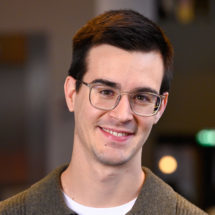
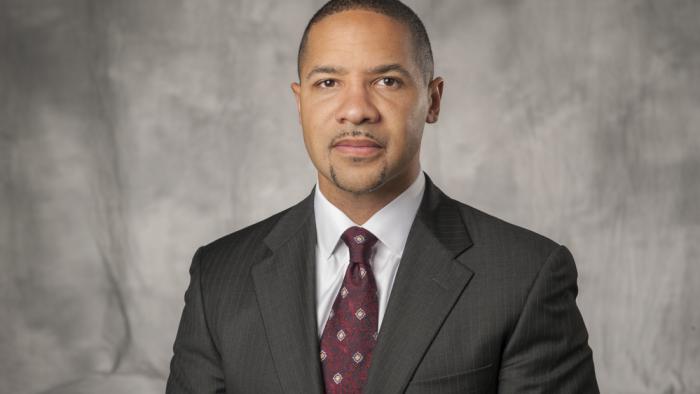
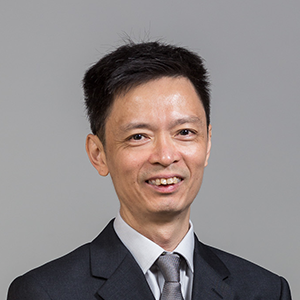
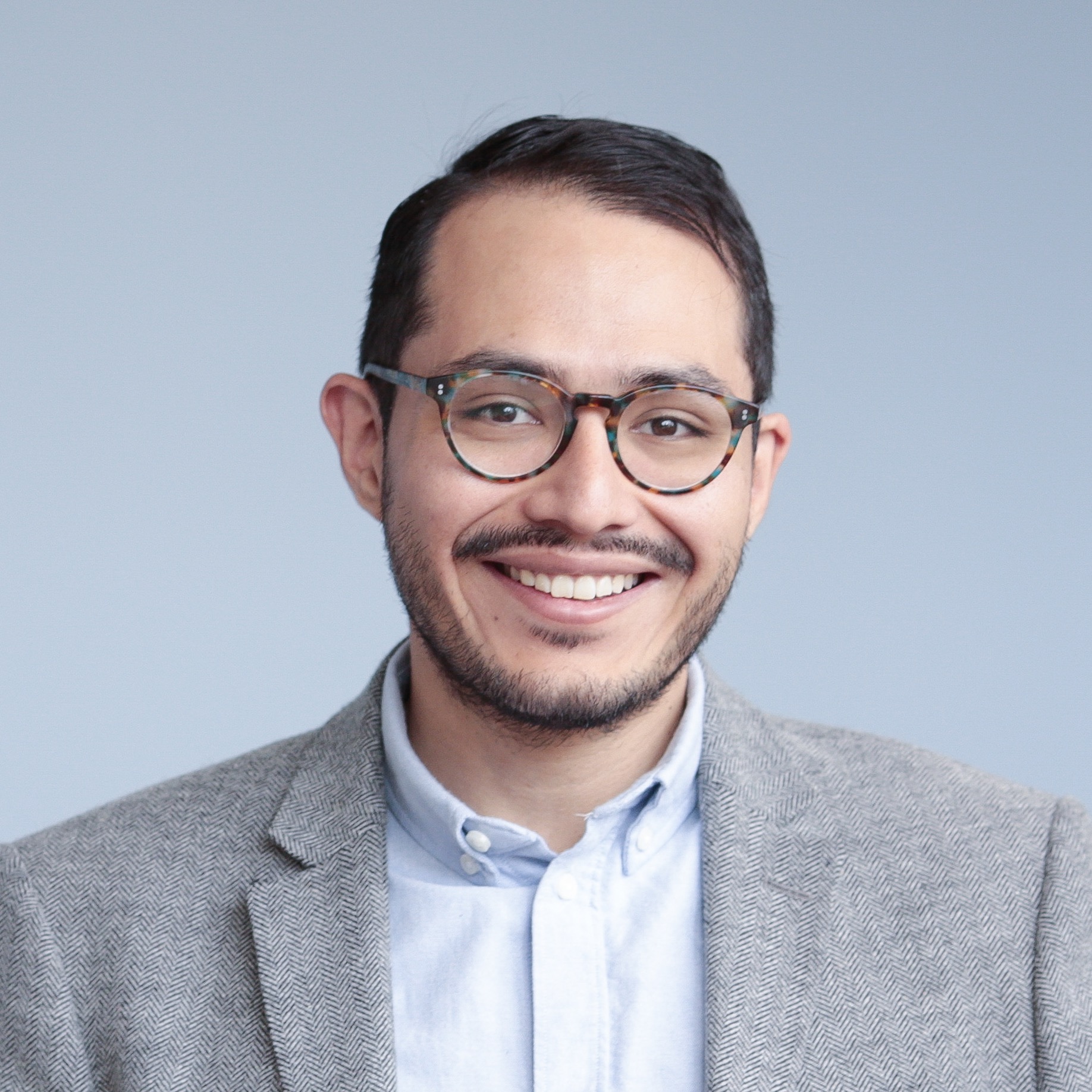
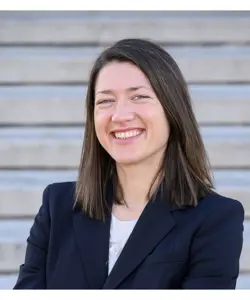
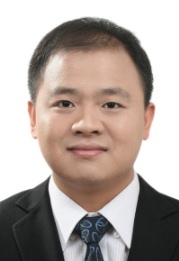
Susanne Ditlevsen is a Professor at the Department of Mathematical Sciences , University of Copenhagen. Her research focuses on statistical inference for stochastic processes , mathematical modeling of physiological systems , nonlinear dynamics , neuroscience , and biomathematics . Research : She develops statistical methods for diffusion processes, hidden Markov models, and stochastic differential equations, with applications in biomedical data and marine mammal behavior. Teaching : Covers basic statistics, probability, stochastic processes, regression, and generalized linear models. Publications highlight her work on climate tipping points (2023, Nature Communications ), nonlinear neuronal systems (2017), and statistical ecology (2020). Her collaborations span Denmark, France, and international institutions.
Dr. Asier Moneva is a Postdoctoral Researcher at the Netherlands Institute for the Study of Crime and Law Enforcement (NSCR) and The Hague University of Applied Sciences , specializing in cybercrime , environmental criminology , and situational crime prevention . His work focuses on offender decision-making in cyberspace, cybercrime victimization patterns, and the application of data science to crime analysis. Education : PhD in Criminology (2020), Master in Crime Analysis and Prevention (cum laude, 2017) from Miguel Hernández University. Current Role : Analyzing cybercrime patterns through environmental criminology frameworks and data science methodologies. Moneva's research examines longitudinal offending patterns in cybercrime, particularly through analyses of web defacement archives ( Zone-H data) and hacker behavior. His studies reveal extreme concentration of cybercrime among chronic offenders, with 2.9% of hackers responsible for 68.5% of defacements. He also investigates repeat victimization dynamics in digital environments and the effectiveness of warning banners as deterrents. Recent publications focus on ransomware payment decisions by SMEs, stolen data markets on Telegram, and the intersection of familial relationships with cybercrime involvement. His work combines quasi-experimental designs , crime scripting , and conjunctive analysis to develop prevention strategies.
Professor Matthew Simpson is a leading figure in applied mathematics at the School of Mathematical Sciences, Faculty of Science, Queensland University of Technology (QUT). He holds the position of Professor of Applied Mathematics and is an Australian Research Council (ARC) Future Fellow, reflecting his sustained research excellence. His work bridges mathematical theory and biological applications, particularly in cell migration, tissue invasion, and multiscale modeling. BE (Environmental) Honours 1, University of Newcastle (1995–1998) PhD (with Distinction), Environmental Engineering, University of Western Australia (2000–2003) Research Fellow, Department of Mathematics and Statistics, University of Melbourne (2003–2006) ARC Postdoctoral Fellow, University of Melbourne (2006–2009) Lecturer (2010–2011) and Senior Lecturer (2011–2013), QUT Associate Professor (2013–2014), QUT Professor and ARC Future Fellow (2014–present), QUT Matthew Simpson’s research focuses on mathematical and computational modeling of biological systems , particularly collective cell motion, diffusion processes, and reaction-diffusion dynamics. His interests span multiscale modeling , random walk processes , cell biology , and numerical and computational mathematics . He develops and analyzes models to understand phenomena such as wound healing, cancer progression, and tissue engineering. His recent publications (2023–2025) demonstrate a strong trend toward integrating data-driven modeling , likelihood-based inference , and equation learning with traditional mechanistic models. These works emphasize parameter identifiability , uncertainty quantification , and prediction robustness in biological contexts. Themes include sharp-fronted wave propagation, mechanical cell interactions, tumor spheroid formation, and generalized diffusivity in food drying, showcasing the breadth and depth of his modeling expertise. Among his key accolades are: J.H. Michell Medal (2012) – Awarded by ANZIAM for distinguished research by an early-career applied mathematician in Australia and New Zealand. ARC Future Fellowship (2013–2017) – For the project 'New data-driven mathematical models of collective cell motion' (FT130100148). Professor Simpson has also played significant editorial and leadership roles, including: Executive Associate Editor, Journal of Engineering Mathematics Academic Editor, PLoS ONE Editorial Board Member, ANZIAM Journal Co-chair of the 2015 ANZIAM meeting He has supervised PhD students on topics such as moving boundary problems, first-passage times, stochastic simulations, and curvature-dependent growth in biological systems. His research projects have been funded by competitive Australian grants (ARC DP and FT schemes), including studies on 3D cell migration, ghrelin’s role in cell invasion, and epithelial-to-mesenchymal transition in cancer and wound healing. He is actively involved in developing computational tools for biological modeling and promoting best practices in scientific publishing.
Lena Roxell is a Lecturer at the Department of Criminology, Stockholm University, where she conducts research on prison systems, recidivism, and criminal networks. She is an active member of the Quantitative Criminology Research Group, established in 2022, which focuses on the possibilities and limitations of quantitative methods in criminology. Her primary research interests include prison research, with particular focus on long-term sentenced prisoners, prison networks, and recidivism patterns. Dr. Roxell examines how prison experiences affect reintegration outcomes and studies the structural aspects of co-offending networks. Her work often employs quantitative methods to analyze large datasets related to criminal behavior and prison administration. Analysis of her recent publications reveals a consistent focus on prison governance, recidivism timing, and the social dynamics within correctional facilities. Her research spans comparative studies (particularly between Sweden and other countries), methodological approaches to criminological research, and specialized topics like faith-based units in prisons and hate crime patterns. The publications demonstrate a sophisticated use of quantitative methods and longitudinal data analysis throughout her career. Dr. Roxell teaches thesis work and supervises students in prison research. Her current research project focuses on analyzing reduced recidivism after prison sentences based on client composition, prison services, labor market connections, and substance abuse. She is actively involved in the Quantitative Criminology Research Group at Stockholm University, contributing to methodological developments in the field and applying these approaches to understand complex prison dynamics and criminal behavior patterns.
Mitchell Walker is the John W. Young Chair and Professor at the Daniel Guggenheim School of Aerospace Engineering , Georgia Institute of Technology. With over 20 years of expertise in electric propulsion and plasma physics , he leads the High-Power Electric Propulsion Laboratory (HPEPL) and directs the Joint Advanced Propulsion Institute . His work spans theoretical and experimental research in spacecraft propulsion , space debris mitigation , and plasma diagnostics , with significant contributions to Hall thrusters , ion engines , and vacuum facility effects . Education : Ph.D., University of Michigan (2004) M.S.E., University of Michigan (2000) B.S.E., University of Michigan (1999) Research Interests focus on electric propulsion systems , plasma physics , and hypersonic aerodynamics . His laboratory investigates Hall effect thrusters , magnetoplasmadynamic thrusters , and pulsed inductive thrusters , emphasizing plasma diagnostics , vacuum testing , and spacecraft integration challenges . Scientific Awards : AIAA Fellow (2023) AIAA Sustained Service Award (2020) Georgia Power Professor of Excellence (2017) Provost's Emerging Leaders Program (Georgia Tech, 2017) Lawrence Sperry Award (2010) AFOSR Young Investigator Program Award (2006) Students include Ph.D. researchers such as Chhavi (2024), Jean Luis Suazo Betancourt (2024), and David R. Jovel (2023), who have explored topics like magnetic field gradients , Laser Thomson scattering , and impedance characterization . Lab & Collaborations : HPEPL operates one of academia’s largest vacuum test facilities, supporting partnerships with NASA, Lockheed Martin, and the Department of Defense. Recent projects include JANUS (Joint Advanced Propulsion Institute) and Helicon Plasma Source development.
Prof. Gerhard Jäger holds the Chair of General Linguistics at the Faculty of Humanities, University of Tübingen . He serves as a Principal Investigator (PI) in the Clusters of Excellence Human Origins and Machine Learning for Science , and leads projects like Phylomilia (funded by Volkswagen Foundation) and CrossLingference (ERC Advanced Grant). His career spans multiple institutions, including Bielefeld University (2004-2009) and Stanford University (visiting scholar, 2004). Habilitation (2002) at Humboldt University Berlin with thesis on Anaphora and Type Logical Grammar PhD (1996) at Humboldt University Berlin on Dynamic Semantics His research bridges computational linguistics , phylogenetic analysis , and game theory , focusing on Bayesian models , language evolution , and cross-linguistic typology . Recent work explores phylogenetic inference from acoustic speech data and geographic influences on language trees . Key contributions include 15+ recent publications on topics spanning phylogenetic typology , cognate detection , and Bayesian language modeling . These works employ machine learning , statistical inference , and evolutionary game theory to analyze language change , typological variation , and linguistic stability . Honors include ERC Advanced Grant , Volkswagen Foundation funding , and DFG-Humanities Centre for Advanced Studies participation. He has taught courses in Computational Historical Linguistics , Phylogenetic Methods , and Bayesian Data Analysis across institutions like Tübingen, Bielefeld, and Stanford. He actively contributes to academic communities through workshop organization (e.g., Quantitative Theoretical Linguistics , Game Theory in Pragmatics ) and serves on the faculty council at Tübingen. His team collaborates with institutions like Max Planck Institute for Evolutionary Anthropology , University of Pennsylvania , and LMU Munich .
Bob Kopp is a Professor at Rutgers University's Department of Earth & Planetary Sciences and Co-Director of the University Office of Climate Action. He leads the NSF-funded Megalopolitan Coastal Transformation Hub (MACH), focusing on climate risk management in the Northeast U.S. and advancing understanding of coastal climate interactions. He co-directs the Climate Impact Lab, a multidisciplinary collaboration assessing climate economic risks. His research spans climate uncertainty, sea-level dynamics, and climate policy, with leadership roles in IPCC assessments and U.S. National Climate Assessments. Education: Ph.D. in Geobiology from Caltech (2000s) and B.S. in Geophysical Sciences from the University of Chicago. Prior to Rutgers, he served as AAAS Science & Technology Policy Fellow at the U.S. Department of Energy and postdoctoral researcher at Princeton University. Affiliations include Rutgers Climate Institute, Energy Institute, and graduate programs in Atmospheric Sciences, Geological Sciences, Oceanography, Statistics, and Planning & Public Policy. Research interests emphasize climate change impacts, sea-level projections, and policy integration. Key contributions include frameworks for probabilistic sea-level assessments (e.g., PaleoSTeHM) and adaptive strategies for coastal resilience. His work bridges scientific analysis with actionable policy, emphasizing stakeholder engagement in megaregions like the New York–Philadelphia urban corridor. Grants include NSF-funded projects totaling millions, supporting interdisciplinary climate solutions. Awards: Not explicitly listed, but recognized for leadership in IPCC and U.S. climate reports. Grants: Includes NSF support for MACH and Climate Impact Lab. Labs/Teams: Directs MACH, Climate Impact Lab, and collaborates with Rutgers' EOAS and Climate Institute.
CHAN Chee Yong is an Associate Professor in the Department of Computer Science at the School of Computing, National University of Singapore (NUS) . He earned his Ph.D. in Computer Science from the University of Wisconsin-Madison and holds B.Sc. and M.Sc. degrees in Computer Science from NUS. Education : Ph.D., Computer Science, University of Wisconsin-Madison M.Sc., Computer Science, NUS B.Sc., Computer Science (1st Class Honours), NUS His research focuses on database systems , emphasizing query processing and optimization , transaction management , and database usability . He has contributed extensively to XML data dissemination, skyline computation, and multicore database performance optimization, with publications in venues like ACM SIGMOD, VLDB, and IEEE ICDE. Recent publications show increasing emphasis on join optimization , transaction healing , and spatial-keyword queries , reflecting trends in multicore systems, complex query processing, and XML data management. His work combines theoretical rigor with practical applications in distributed databases and data engineering. Notable professional roles include Associate Editor for the VLDB Journal , ACM SIGMOD Record , and IEEE Transactions on Knowledge and Data Engineering . He has served on program committees for major conferences like SIGMOD, ICDE, and VLDB across 2003-2026. Dr. Chan has supervised 9 PhD students and 10 M.Sc./M.Comp. students , including WANG TaiNing (2021), LI Meiying (2020), and TRAN Quoc Trung (2011). His advisees have been placed in institutions like the Institute for Infocomm Research and Huawei Shannon Lab.
Marius Gilbert is a Full Professor at Université libre de Bruxelles (ULB) since 2023, with dual administrative roles as Vice-rector of Research and Valorization (since 2020) and Vice-rector of Culture and Scientific Mediation (current mandate). He obtained his PhD in spatial epidemiology from ULB in 2001 after studying Agricultural Sciences (1995) and conducting visiting research at Oxford's Department of Zoology. Key Research Areas: Spatial epidemiology of animal diseases and invasive species Impact of agricultural and ecosystem changes on pathogen emergence Specialization in avian influenza and emerging infectious diseases Development of livestock distribution models and antimicrobial resistance tracking Scientific Contributions: His 15 most recent publications (2025-2021) focus on viral phylogeography , livestock-environment interactions , antimicrobial use forecasting , and pandemic response modeling . Notable work includes COVID-19 spatio-temporal analysis and global antibiotic resistance trends in food animals. Public Engagement: Played a central role in French-speaking media during the pandemic , authored the book "Juste un Passage au JT" , and maintains a Le Soir column on science-society intersections. Co-founded the Spatial Epidemiology Lab (SpELL) in 2016, now led by Simon Dellicour.
Dr Hector Gutierrez Rufrancos is a Senior Lecturer in Economics at the University of Stirling School of Management , where he serves as the Undergraduate Economics Programme Director, PhD Convenor, and Summer School Director for the Scottish Graduate Programme in Economics (SGPE). He is also a Research Fellow at the Global Labor Organization . Education: PhD in Economics (2017), University of Sussex MSc in Development Economics (2010), University of Sussex BA in Economics with Development Studies (2009), University of Sussex His research focuses on the interplay between policy, institutions, and individual well-being, particularly in the context of living standards, inequality, and informality. Key areas include: Living Standards & Well-being: Historical analysis of nutrition, poverty, and inequality (19th–20th centuries) in Britain, Europe, and the USA. Institutions & Political Economy: Studies on unions in Mexico, geopolitical risk spillovers, and informal economies in Sub-Saharan Africa and Latin America. Methodological Expertise: Applied econometric techniques such as causal inference, instrumental variables (IV), regression discontinuity design (RDD), and differences-in-differences (DiD). His recent publications address topics like pollution’s effect on labor supply, informality’s impact on welfare, and historical inequality patterns. He emphasizes empirical rigor in both research and teaching, offering workshops in Stata programming, LaTeX, and causal inference methods. Academic Service: Organized SGPE Summer Schools (2022–present), co-directed SGPE PhD programs (2022–2023), and coordinates MSc dissertations. He actively presents at conferences including the Scottish Economic Society, Royal Economic Association, and UNU-WIDER seminars.
Christopher Rycroft is a Professor and Associate Chair in the Department of Mathematics at the University of Wisconsin–Madison. He leads the Rycroft Group, which focuses on mathematical modeling and scientific computation for interdisciplinary applications in science and engineering. Prior to joining UW-Madison in summer 2022, he was a professor at Harvard University's School of Engineering and Applied Sciences from 2014-2022, and before that a Morrey Assistant Professor at UC Berkeley from 2010-2013. Professor Rycroft's research spans three main areas: numerical methods for material mechanics, data-driven discovery, and computational geometry. His group develops new computational methods while working directly with domain scientists. Key achievements include the development of the reference map technique for fluid-structure interaction, Voro++ software library for Voronoi tessellation, and novel approaches to understanding crumpling physics. His work combines traditional analysis and modeling with machine learning methods to extract scientific insights from complex data. The Rycroft Group's publication record demonstrates a strong trajectory of interdisciplinary research bridging mathematics, physics, materials science, and biology. Recent work has focused on fluid-structure interaction, computational geometry applications, mechanical metamaterials, and biological fluid dynamics. The group develops both theoretical frameworks and practical software tools that have found applications across diverse scientific domains from materials science to virology. Everett Mendelsohn Award for Excellence in Mentorship (2021) Professor Rycroft has advised numerous PhD and master's students who have gone on to postdoctoral positions at institutions including MIT, EPFL, and Cornell. His teaching includes advanced scientific computing courses that have quadrupled in enrollment during his tenure. He has secured research funding supporting his group's work on computational methods and interdisciplinary applications. The Rycroft Group consists of graduate students, postdocs, and collaborators with diverse backgrounds in applied mathematics, physics, engineering, and computer science. The group maintains active collaborations with researchers across multiple institutions and participates in centers such as the Harvard Quantitative Biology Initiative.
Jennifer Nelson is an Assistant Professor in the Department of Education Policy, Organization & Leadership at the University of Illinois, Urbana-Champaign, with a joint appointment in the School of Labor and Employment Relations. Her interdisciplinary work bridges educational leadership, organizational sociology, and social inequality research, focusing on how school structures shape educators' experiences. PhD in Sociology, Emory University BA in Sociology, Columbia University IES Postdoctoral Fellow, Vanderbilt University Former high school teacher in public urban school Nelson's research examines work and organizations through a sociological lens, with particular attention to structures of social inequality by race, class, and gender. As an organizational ethnographer, she investigates how school structures and practices shape teachers' behavior, attitudes, and social interactions. Her work explores teacher networks, interracial relations, job satisfaction, and turnover, with a focus on how principal practices influence teachers' access to workplace resources and support. Nelson also studies urban teachers' job reward bundles as predictors of turnover, early childhood teachers' identity strategies, organizational justice in predicting teacher trust, and determinants of state-level adoption of alternative teacher certification laws. Currently, she is conducting research on principal compensation and evaluation, as well as teacher-principal social interactions. Her scholarly work demonstrates consistent focus on educational leadership, organizational sociology, and social inequality in schools. The majority of her publications appear in top-tier journals across education and sociology disciplines, reflecting interdisciplinary scholarship that bridges theory and practice. Her research methods primarily employ qualitative and mixed-methods approaches, with increasing incorporation of survey data and statistical analysis in recent work. Michael Fullan Emerging Scholar in Professional Capital and Community Award (2020) AERA Division A Outstanding Dissertation Award (2019) Nelson actively contributes to the academic community through editorial work for the journal "Work and Occupations" and teaches graduate courses including EPOL 557: Education and Stratification, EPOL 544: Organizational Theory for Educational Leaders, and EPOL 547: District Change for Equity and Social Justice. Her research is supported by collaborations with colleagues across institutions, particularly with scholars at Vanderbilt University, and addresses critical questions about how school organizations can better support educators and promote equity.
Pan Xu is a tenure-track assistant professor with joint appointments in the Department of Biostatistics & Bioinformatics, Department of Computer Science, and Department of Electrical & Computer Engineering at Duke University's Pratt School of Engineering. Prior to joining Duke, he was a Postdoctoral Scholar Research Associate at the California Institute of Technology, and he earned his Ph.D. in Computer Science from UCLA. His research bridges theoretical foundations with practical applications in machine learning and artificial intelligence. Dr. Xu's research focuses on developing computationally- and data-efficient machine learning algorithms with strong theoretical guarantees, particularly in reinforcement learning, optimization, and high-dimensional statistics. His work addresses two fundamental challenges in sequential decision-making: efficient exploration with minimal interactions and robustness against distributional shifts. His research spans theoretical algorithm design, practical implementation, and real-world applications in bioinformatics and healthcare. His publication record demonstrates consistent high-impact contributions to top-tier conferences including ICML, NeurIPS, ICLR, AAAI, and AISTATS. The research trends show a progression from foundational work in non-convex optimization and multi-armed bandits toward increasingly sophisticated frameworks for robust reinforcement learning, with particular emphasis on distributional robustness, efficient exploration strategies, and practical applications. His work often bridges theoretical guarantees with empirical validation. NSF award on approximate sampling based exploration for sequential decision making Whitehead Scholar award from Duke University School of Medicine PIMCO Postdoctoral Fellowship in Data Science UCLA Outstanding Graduate Student Research Award Rising Stars in Data Science by University of Chicago Best Paper Award for Queer In AI: A Case Study in Community-Led Participatory AI at FAccT 2023 Featured Certification for Wasserstein Distributionally Robust Policy Evaluation and Learning for Contextual Bandits at TMLR Oral Presentation award at AAAI 2024 Dr. Xu actively mentors students and researchers, seeking highly motivated individuals with strong mathematical backgrounds for Ph.D. programs in Biostatistics & Bioinformatics, Computer Science, and Electrical & Computer Engineering at Duke. He has received multiple research grants including an NSF award on approximate sampling based exploration for sequential decision making. His service to the academic community includes roles as area chair for NeurIPS, ICML, ICLR, and AISTATS, as well as action editor for Transactions on Machine Learning Research. His research group develops algorithms that address fundamental challenges in sequential decision-making, with applications spanning healthcare, bioinformatics, and multi-agent systems. Current research directions include distributionally robust reinforcement learning, efficient exploration strategies, and applications of graph neural networks to biological problems.
Sible Andringa is Professor of Second Language Pedagogy at the University of Amsterdam's Faculty of Humanities, officially inaugurated on June 16, 2023. Dr. Andringa serves as Academic Director of the Institute for Dutch Language Education (INTT), Coordinator of the Language Learning, Literacy and Multilingualism research group, and Coordinator of the Master's program in Dutch as a Second Language and Multilingualism. Dr. Andringa's research focuses on second language acquisition and bilingualism, specifically investigating the added value of explicit instruction, how input distribution affects language learning outcomes, and the role of awareness in language learning trajectories. Key ongoing projects include the Meta-LLL project examining how literacy shapes language learning, the SLA4All initiative for reproducing SLA research with non-academic samples, and the OASIS project creating accessible research summaries for practitioners. Previously, Dr. Andringa led Project MIND studying bilingual daycare effects and contributed to the Stilis project on listening proficiency. As General Editor of the Dutch Journal of Applied Linguistics (DuJAL), Dr. Andringa promotes open science principles in language research. Recent publications demonstrate a focus on addressing sampling biases in SLA research, open access publishing ethics, and practical applications of language acquisition research for educational settings. Academic Director, Institute for Dutch Language Education (INTT) Coordinator, Language Learning, Literacy and Multilingualism research group Coordinator, Master's program Dutch as a Second Language and Multilingualism General Editor, Dutch Journal of Applied Linguistics (DuJAL) Member, Mastery Team for Modern Foreign Languages Member, OASIS project team Member, IRIS database advisory group Dr. Andringa supervises PhD candidates including Kyra Hanekamp and Darlene Keydeniers, particularly in research related to bilingual daycare environments and language development. The research program has received funding from the Dutch ministry of Social Affairs for Project MIND and continues to secure support for ongoing projects examining language learning mechanisms. Dr. Andringa leads the Language Learning, Literacy, and Multilingualism research group which investigates language and literacy acquisition across the lifespan, with emphasis on how language skills are learned, maintained, and used in educational contexts. The group meets weekly to discuss projects, plans, funding opportunities, and research topics while promoting collaboration, methodological innovation, and open science principles.
Bo An is a President's Chair Professor and Head of the Division of Artificial Intelligence at the College of Computing and Data Science , Nanyang Technological University, Singapore . He also holds a courtesy appointment as Professor at the School of Physical & Mathematical Sciences and serves as Director of the Centre of AI-for-X. Previously, he was a Nanyang Assistant Professor (2014-2018), Associate Professor at the Chinese Academy of Sciences (2012-2013), and Postdoctoral Researcher at the University of Southern California (2010-2012). His academic journey began with B.Sc. and M.Sc. degrees from Chongqing University, followed by a Ph.D. in Computer Science from the University of Massachusetts, Amherst (advised by Victor Lesser). Research Interests : Artificial Intelligence Multiagent Systems Computational Game Theory Reinforcement Learning Automated Negotiation Optimization Research Impact : Applications in infrastructure security (deployed by US Coast Guard and Federal Air Marshals), e-commerce, sensor networks, and financial technology. Over 150 publications in top venues like AAMAS, IJCAI, AAAI, ICML, NeurIPS, KDD, and ACM/IEEE Transactions. Scientific Recognition : 2010 IFAAMAS Victor Lesser Distinguished Dissertation Award 2012 INFORMS Wagner Prize 2018 & 2022 Nanyang Research Awards 2017 Microsoft Collaborative AI Challenge IEEE Intelligent Systems 'AI's 10 to Watch' (2018) Leadership Roles : Editor-in-Chief of IEEE Intelligent Systems, Associate Editor for AIJ, JAAMAS, and ACM Transactions. Served as General Co-Chair for AAMAS'23 and Program Chair for IJCAI'27.