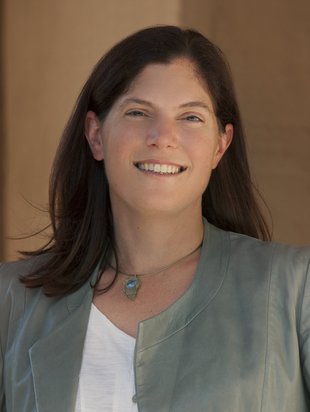
Tara Boroushaki is an incoming Assistant Professor in Electrical & Computer Engineering at Yale University. She completed her Ph.D. at MIT (expected May 2025), advised by Prof. Fadel Adib, with a focus on sensing and mobile technologies. Her research spans wireless networking, robotics, and human-computer interaction, emphasizing multi-modal sensing for environmental perception. Key achievements include the Microsoft Research PhD Fellowship (2022–2024) and the IEEE RFID '23 Best Paper Award. Her work on RF-based 'X-ray vision' has been featured in TEDxMIT and media outlets like the BBC and World Economic Forum. She co-founded Cartesian Systems, deploying sensing technologies in retail and supply chain. Research interests include non-line-of-sight perception, RFID localization, and robotic grasping. She has developed systems like FuseBot and RFusion, highlighted as transformative in MIT's '103 Ways to Make the World Better' initiative.
Jian Peng is an Assistant Professor in the Department of Computer Science at the University of Illinois at Urbana-Champaign. His research focuses on computational biology, machine learning, and their applications to protein structure prediction, drug design, and molecular modeling. He has contributed to advancements in antibody engineering, protein-ligand docking, and generative models for biological systems. Key research areas include: Machine Learning for Molecular Modeling Protein Structure Prediction Antibody and Peptide Design Genomics and Single-Cell Analysis Structure-Based Drug Discovery His work emphasizes integrating deep learning techniques with biological datasets to address challenges in precision medicine, drug development, and systems biology. Notable achievements include developing the FastFold system to accelerate AlphaFold training and pioneering flow-based methods for antibody design. Awards include the Overton Prize (2020), recognizing contributions to computational biology. His research has been published in top journals and conferences, spanning topics from protein mutation prediction to geodesic-based immune complex modeling.
Liu Lili is a Lecturer (Educator Track) in the Department of Computer Science at the School of Computing, National University of Singapore. She holds a Ph.D. from Nanyang Technological University and a Master's in Computer Science from Shanghai University. Prior to NUS, she served as a Senior Research Scientist at Singapore Polytechnic and a Scientist at A*STAR's Institute of High-Performance Computing. Her research focuses on Machine Learning, Computer Vision, and Multi-modal Learning, with applications in FinTech, Social Media Analysis, and Algorithms & Theory. Notable projects include AI-driven coating inspection systems for marine assets and behavioral competency assessment tools for navigational safety. She has contributed to robotics for construction quality assessment and interactive virtual environments for rehabilitation. Liu's publications span AI applications in finance, robotics, and material science, reflecting her expertise in bridging theoretical computer science with practical industrial solutions. Her work emphasizes automation, anomaly detection, and multi-modal data integration.
Suranga Chandima Nanayakkara is an Associate Professor in the Department of Computer Science at the National University of Singapore (NUS), leading the Centre for Holistic Inquiry into Lifelong Learning (CHILL) and the Smart Systems Institute (SSI). He holds roles such as AI+HCI Theme Lead at NUS+CNRS IPAL Lab and Residential Fellow at NUS College. His research focuses on assistive human-computer interfaces, emphasizing technologies that enhance perceptual and cognitive capabilities for individuals with sensory deficits. He earned his PhD and BEng from NUS, followed by postdoctoral work at MIT Media Lab. Notable projects include the Augmented Human Lab, iTILES for rehabilitation, and the FingerReader device for visually impaired shoppers. His work has garnered awards like the MIT TR35, TOYP, and INK Fellowship. Research interests include Intelligent Systems, Human Augmentation, and Design Science. He explores applications in assistive technologies, healthcare informatics, and educational tools. Over 15 publications highlight innovations in wearables, stress management, and multimodal interaction. Awards: 40+ accolades, including MIT TR35, TOYP, and multiple design awards for projects like Kiwrious and FingerReader. Grants: Led projects funded by institutions like NUS and Singapore’s innovation initiatives. Labs: Augmented Human Lab (founded 2011), focusing on humanizing technology through natural interfaces.
Aradhna Krishna is the Dwight F. Benton Professor of Marketing at the Stephen M. Ross School of Business, University of Michigan. She holds affiliations with the International Institute and the Center for South Asian Studies. Her research focuses on sensory marketing, health and nutrition, corporate social responsibility, and political decision-making. She has authored influential books like Customer Sense: How the 5 Senses Influence Buying Behavior and edited collections on sensory marketing. Education: PhD in Marketing, New York University (1989) MBA, Indian Institute of Management Ahmedabad (1984) B.A. in Economics, University of Delhi (1982) Research Interests: Her work explores how sensory cues (sight, sound, touch, smell, taste) shape consumer perceptions and behaviors. Key areas include food marketing, health decision-making, and the impact of political identity on risk perceptions. She has pioneered studies on sensory marketing’s role in persuasion and product design. Awards & Recognition: Fellow of the Society of Consumer Psychology (highest honor) Recognized by HBR as 'foremost expert in sensory marketing' Consulting & Expertise: Advised organizations like Procter & Gamble, General Mills, and the World Food Program. Served as expert witness for legal cases involving Hallmark Entertainment. Engages with policy boards for global health initiatives. Labs & Teams: Active in interdisciplinary collaborations at the Ross School, focusing on consumer behavior and sensory research.
Dr. Shahab Mehraeen is a Professor and holder of the Newton B Thomas Professorship in the Division of Electrical and Computer Engineering at Louisiana State University's College of Engineering. He directs the Renewable Energy and Smart Grid Laboratory, focusing on power systems stability, renewable energies integration, smart grid technologies, energy conversion, and nonlinear/adaptive/decentralized control systems. His research explores innovative solutions for modern power grids, including hybrid AC-DC systems, microgrid stability, and advanced protection mechanisms. He has developed experimental testbeds like the IEEE 14-bus power system and DC microgrid setups for validating control algorithms. Dr. Mehraeen's publications demonstrate consistent focus on renewable integration, grid protection, and smart grid innovations with recent emphasis on DC circuit breakers and co-simulation techniques. His work integrates theoretical development with practical implementation. Research Areas Power systems stability and control Renewable energy grid integration Smart grid technologies Microgrid design and optimization Advanced circuit protection systems Awards and Recognition National Science Foundation CAREER Award recipient Holder of a US patent for infrastructure inspection and rehabilitation Research Team Leads a team of 11 graduate students working on projects related to power systems, renewable energy integration, and smart grid technologies.
Sverre Steen is a Professor and Head of the Department of Marine Technology at the Norwegian University of Science and Technology (NTNU). He leads the Kongsberg Maritime University Technology Centre focused on 'Ship Performance and Cyber-physical Systems' and is a member of the standing committee for the Symposium of Marine Propulsors. His research emphasizes ship propulsion, hydrodynamics, and big data analysis of in-service vessel performance. Key interests include seakeeping, high-speed marine vehicles, and model testing techniques. Steen teaches TMR 4217 Hydrodynamics of High-Speed Marine Vehicles , covering cavitation, experimental hydrodynamics, and propulsion systems. He collaborates internationally on projects like the Norwegian Ocean Technology Centre. His recent work explores wave-energy extraction via hydrofoil vessels, resistance modeling for fast ferries, and propulsion efficiency in real sea states. He has contributed to global shipping emission models (MariTEAM) and reliability analysis of structural components under vibration. Steen's publications span propulsion in waves, engine-propeller dynamics, and data-driven methods for ship performance monitoring. His applied research bridges experimental testing and computational modeling to address challenges in sustainable maritime transport and operational safety.
Grégoire Allaire is a Professor of Applied Mathematics at École Polytechnique, where he leads research in shape optimization , homogenization , and multi-scale modeling . His work bridges theoretical and applied domains, focusing on partial differential equations (PDEs), composite materials, and computational methods.
Victoria J. Orphan is the James Irvine Professor of Environmental Science and Geobiology at Caltech, where she directs the Center for Environmental Microbial Interactions. Her research investigates microbial processes in anaerobic ecosystems including deep-sea methane seeps, hydrothermal vents, and coastal sediments using interdisciplinary approaches combining molecular biology, stable isotope techniques, and geochemistry. Her laboratory focuses on: Microbial partnerships in methane cycling Ecophysiology of uncultured archaea and bacteria Viral ecology in marine environments Biogeochemical impacts of microbial communities Blue carbon sequestration in seagrass ecosystems Professor Orphan has developed innovative methods including BONCAT-FISH and nanoSIMS for studying microbial activity in environmental samples. Her research group maintains active field programs in Monterey Canyon and hydrothermal vent systems, and develops high-pressure incubation systems for studying deep-sea microbes. She teaches courses on microbial ecology and evolution, and mentors graduate students through the Geobiology and Environmental Science programs.
Sheelagh Carpendale is a Professor and Canada Research Chair in Information Visualization at Simon Fraser University's School of Computing Science. Her research focuses on Information Visualization, Interaction Design, and Human-Computer Interaction, with a strong emphasis on large display interaction, visual analytics, and personal visualization. She leads the Innovations in Visualization Interactive Experiences (ixLab) and has contributed to over 200 publications. Education: PhD (Computing Science, Simon Fraser University, 1999); BSc (Computing Science, Simon Fraser University, 1992). Research Interests: Dr. Carpendale's work bridges theory and practice, emphasizing user-centered design and interdisciplinary collaboration. Key areas include data physicalization (e.g., Kirigami-inspired visualizations), interactive technologies for healthcare, and educational tools like TangiBooks for programming concepts. Her lab explores novel interaction paradigms for large displays and mobile devices. Recognition: Recipient of the 2018 IEEE Visualization Career Award, numerous best paper awards, and leadership roles in conferences like IEEE VIS. Her contributions span academic, industrial, and public engagement contexts, including projects on clinical decision support and public data literacy. Grants & Labs: Active in securing research grants for projects like the Arctic Movement visualization and Energy Data initiatives. The ixLab collaborates with artists, scientists, and healthcare professionals to create impactful visualizations.
Dario Vretenar is a Professor of Physics at the Department of Physics, Faculty of Sciences, University of Zagreb (since 2001). He has held academic roles including Associate Professor (1997-2001) and Assistant Professor (1993-1997). His research focuses on theoretical nuclear physics, particularly energy density functional theory, nuclear weak interactions, and computational physics. He has held visiting positions at institutions such as Technical University Munich (Visiting Professor, 1999-2000) and University of Tokyo (2010). Education: Ph.D. in Theoretical Nuclear Physics (University of Zagreb, 1988); M.Sc. in Physics (University of Zagreb, 1982). Postdoctoral fellowships included Yale University (1990) and Alexander von Humboldt Fellowships at Technical University Munich (1991-1993, 1997). Research Interests: Algebraic structure models for high-angular momentum states Low-energy nuclear effective field theory Nuclear astrophysical applications Development of relativistic energy density functionals Publications: Over 210 peer-reviewed articles (h-index 43, 7,000+ citations), 8 books, and 100+ conference contributions. Notable works include studies on nuclear clustering, quantum phase transitions, and neutron skin structure. Awards: Croatian Academy of Science and Arts Award for Science and Mathematics (2002) Croatian National Award for Science (2003) Fellow of the Croatian Academy of Sciences and Arts (2012) Service Roles: President of the Croatian Science Foundation (2013–present) Chair of the Physics Committee, Agency for Science and Higher Education, Croatia (2009–present) Board Member of Euroschool on Exotic Beams (2012–present) Teaching: Courses include Quantum Physics, Nuclear Structure, and Nuclear Astrophysics at undergraduate and graduate levels. Supervised numerous students in theoretical nuclear physics.
Özer Özkahraman is a postdoctoral researcher at the Division of Robotics, Perception and Learning (RPL) at KTH Royal Institute of Technology. He works under Ivan Stenius and John Folkesson, focusing on underwater mission planning, simulation, and integration of autonomous systems. His email is ozero@kth.se . He completed his PhD at KTH under Petter Ögren, researching large-scale multi-agent coverage planning for autonomous underwater vehicles (AUVs). Current projects include the SMaRCSim multi-domain simulation platform and development of underwater vehicles like LoLo, SAM, and Evolo. Research interests span autonomous underwater systems, multi-agent coordination, control systems, and simulation infrastructure. He emphasizes modular, accessible frameworks for vehicle testing and real-world deployment. His work bridges theoretical methods (e.g., control barrier functions) with practical applications in marine robotics. Publications focus on AUV navigation, environmental sensing, and adaptive control. Projects like Real2Sim aim to align simulation with real-world vehicle dynamics using motion capture data. He collaborates internationally on topics like data-driven damage detection and model compression for resource-constrained robots. No academic awards are explicitly mentioned. He actively seeks collaborators for projects in sonar simulation, flow field modeling, and cyber-physical system integration.
Richard Jardine is a Professor of Geomechanics in the Department of Civil and Environmental Engineering at Imperial College London's Faculty of Engineering. He also serves as a College Proconsul and co-chairs the College Artworks Group. His work spans advanced geotechnical research, offshore renewable energy foundations, and international collaboration. Research Interests: His expertise includes soil properties, advanced laboratory and field measurement techniques, soil characterization, offshore geotechnics, foundation analysis, slope stability, driven pile behavior, soft ground engineering, full-scale monitoring, geotechnical instrumentation, and cold region geotechnics. His research is central to climate change adaptation and renewable power systems. Publication Trends: Recent articles focus on the mechanical behavior of chalk, sand, and glacial tills under monotonic and cyclic loading, particularly in offshore contexts. Emphasis is placed on numerical modeling (FE, MPM), pile-soil interaction, aging effects, and design method validation for offshore wind foundations. Fellow of the Royal Society (2024) Fellow of the Royal Academy of Engineering (2002) RAEng Medal (1997) British Geotechnical Association Medal (1990, 2015, 2021, 2023) Canadian Geotechnical Society Quigley Award (2019) ISSMGE McClelland Honour Lecture (2023) BGA Rankine Lecture (2016) Advising and Grants: Richard has led major international Joint Industry Projects including ALPACA, PISA, PAGE, and Unified Pile Design Method JIP, involving partners such as Orsted, NGI, Fugro, Oxford, and Zhejiang University. He has advised UK government, contractors, and energy firms on offshore projects in the Baltic Sea, Taiwan Strait, and North Sea. He holds a Royal Society Newton Advanced Fellowship with ZJU. Labs and Teams: He leads research within Imperial’s Geotechnics group and the Imperial Centre for Geohazards. His team conducts advanced laboratory and field testing, collaborates with Deltares (Netherlands), and maintains strong ties with Zhejiang University, where he is a Visiting Professor and Distinguished International Scholar.
Geoffrey S.D. Beach is the Toyota Professor in Materials Processing and Professor of Materials Science and Engineering at MIT, and Co-director of the Materials Research Laboratory . His research focuses on spin dynamics, spintronics, and nanoscale magnetic materials, aiming to revolutionize data storage and computation through advanced instrumentation. Education: Bachelor of Science in Physics, California Institute of Technology (1997) PhD in Physics, University of California San Diego (2003) Research Interests: Professor Beach investigates the manipulation of magnetic properties using electric fields, voltage-controlled magnetic order, and the dynamics of skyrmions and domain walls. His work emphasizes materials like ferrimagnetic insulators and garnets, leveraging innovations in solid-state hydrogen gating and interfacial phenomena. Awards: Fellow, IEEE (2023) Junior Bose Award (2009) Labs & Teams: His lab, the Beach Group , develops cutting-edge optical and electrical tools to study magnetization dynamics at nanoscale. Key projects include voltage-gated optical devices and magneto-ionic control of magnetism. Grants & Collaborations: His work is supported by initiatives such as MIT’s Materials Research Laboratory and industry partnerships, though specific grants are not listed here.
Robert Kingham is a Reader in Plasma Physics at the Department of Physics, Faculty of Natural Sciences, Imperial College London. His research focuses on theoretical plasma physics, including Laser-Plasma Interaction (LPI), Inertial Confinement Fusion (ICF), and High Energy Density Physics (HEDP). He specializes in developing multi-dimensional kinetic and fluid simulation codes to study energy and particle transport, magnetic-field dynamics, and non-local transport phenomena in laser-plasmas. Over 20 years, he has contributed to understanding fundamental processes in high-power laser interactions with matter (10^12–10^15 W, 1 ps–10 ns durations). He has conducted research on magnetized transport in tokamak scrape-off layers during a 2016/17 sabbatical at Culham Centre for Fusion Energy (Oxfordshire). His affiliations include the Plasma Physics Group, Space, Plasma and Climate Community, and the Physics Department at Imperial College. Key research themes include fast-electron transport in fast-ignition scenarios (CTC, KALOS projects), non-local heat-flow modeling, and spontaneous B-field generation in plasmas. Teaching roles include undergraduate courses in Differential Equations (2019), Computational Physics (2013–2016), Plasma Physics (2009–2014), and Basic Mechanics, Vibrations & Waves (2006–2009). He also served as a lecturer at the Culham Summer School (2004–2010). His invited talks span topics like Vlasov-Fokker-Planck methods, non-local transport modeling, and magnetic confinement fusion. Research collaborations include projects on magnetized transport in laser-plasmas and advanced simulation techniques for fusion energy applications.