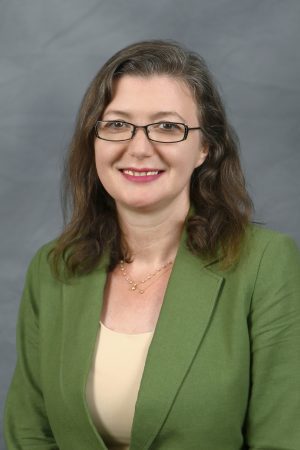
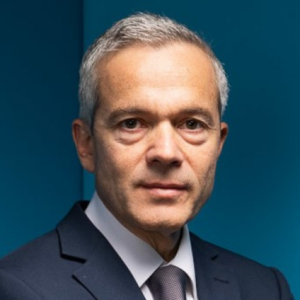
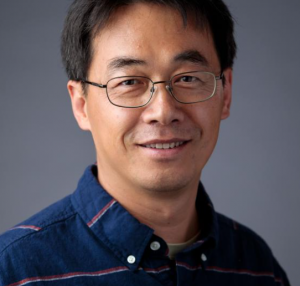
László Lengyel is a Professor at the Budapest University of Technology and Economics (BME), affiliated with the Department of Automation and Applied Informatics . His work bridges theoretical and applied computer science, focusing on industrial automation, IoT systems, and model-driven engineering. Research interests include Model transformations and domain-specific languages IoT device management and multi-domain integration Software obfuscation and cybersecurity Graph algorithms and distributed computing (MapReduce) Real-time data analysis in manufacturing Automotive sensor networks His recent publications reflect expertise in model-driven IoT architectures , granule manufacturing automation , and MapReduce-based graph analysis , with a focus on industrial and automotive applications. He contributes to open-source frameworks like SensorHUB and explores gamification in driver behavior systems.
Rrezarta Krasniqi is an Assistant Professor in the Department of Software and Information Systems at the University of North Carolina at Charlotte. She holds a Ph.D. in Computer Science and Engineering from the University of North Texas (2024) and has previously taught at multiple institutions while working as a senior Java developer in industry. Research Focus: Her work centers on improving software quality through automated detection of quality-related bugs, using AI-driven approaches and empirical methodologies to address challenges in code scattering, requirement vagueness, and system-wide reliability issues. She specializes in semantic analysis, classifier development, and 3D visualization tools for codebase monitoring. Key Contributions: Developed RetroRank for bug-fixing comment recommendation (2021-2023) Pioneered SoftQualDetector for semantic quality concern mapping (2023-2024) Co-authored surveys on quality concern management in open-source communities Publications: Her work spans leading venues like EMSE'23, ICSME'23, SANER'23, and SQJ'23, with earlier contributions at ICSE'2017 and FSE'2018 through the TraceLab reproducibility framework.
Bowen Xu is an Assistant Professor in the Department of Computer Science at North Carolina State University (NC State), College of Engineering. His research focuses on software engineering, machine learning, and program analysis, particularly in securing AI models and improving code quality. He holds a PhD from Singapore Management University (SMU), where he also conducted postdoctoral research. Education: PhD in Computer Science, Singapore Management University (SMU) Postdoctoral Researcher, SMU School of Computing and Information Systems Research Interests: AI for Code, Backdoor Attacks on Code Models, Vulnerability Detection Code Representation Learning, Model Compression, Safety of AI Systems Chatbot Development for Developers, Automatic Code Review Key Contributions: Developed PTM4Tag+, a Stack Overflow tag recommendation system using pre-trained models Explored stealthy backdoor attacks in code and reinforcement learning systems Pioneered work on automatic vulnerability repair using LLMs and broader input analysis Awards: 2022: Honorable Mention Award (ACSAC) 2018: Highly Commended Full Paper Award (ESEM) Service Roles: Editorial Board Member, Empirical Software Engineering Journal Program Committee Co-chair for ICSE/FSE Research Tracks Organized workshops like FORGE, MaLTeSQuE, and SEA4DQ Labs & Teams: Leads the Softmax Lab at NC State, advising 12+ students across PhD, Master's, and undergraduate levels. Alumni include industry professionals at Microsoft, Barclays, and Marvell Semiconductor.
Dr. Cruz Izu is a Lecturer in the School of Computer and Mathematical Sciences at the University of Adelaide. She holds a BSc (Hons) in Computer Science and a PhD in Computer Architecture from the University of the Basque Country, along with a Graduate Certificate in Online Learning from the University of Adelaide. Her research focuses on two primary areas: interconnection network design for parallel systems and computer science education methodologies. Research Interests: Interconnection networks in parallel systems and Network-on-Chip architectures Computer Science Education, including program comprehension, code quality assessment, and pedagogical strategies for novice programmers Computational thinking and problem-solving in early university education Teaching Contributions: Coordinator for Masters of Computing and Innovation program Lead developer of Systems, Programming, and Problem Solving courses Former coordinator of the Google-funded Educators PD program (2011-2020) Collaborations: International partnerships with institutions in Spain, Italy, and Australia Contributions to the design of the SACE Digital Technologies curriculum Professional Activities: Editor of Informatics in Education (2021 Special Issue on Abstraction) PC member for SIGCE and ITiCSE conferences
Wieland Konrad is a researcher affiliated with the Institut für Softwaretechnik und Interaktive Systeme at TU Wien. His work focuses on model-driven engineering, software versioning, and collaborative systems. He has extensively contributed to advancing model versioning techniques, conflict resolution in software models, and UML-based solutions. His research emphasizes practical applications in software development lifecycle management and educational methodologies for UML. Key research areas include: Model versioning systems and semantics Conflict detection and resolution algorithms Collaborative cross-organizational modeling EMF/UML profile-based extensions Software evolution analysis His publications highlight advancements in concurrent modeling tools like Colex, adaptable versioning frameworks, and educational strategies for large-scale UML teaching. While no awards are listed, his prolific output since 2009 demonstrates sustained academic contribution.
Félix García is a prominent professor at the University of Castilla-La Mancha in Ciudad Real, Spain, with extensive contributions to software engineering, sustainable computing, and business process management. His research spans over two decades with 187 publications indexed in dblp, demonstrating consistent scholarly productivity and leadership in multiple research areas. Dr. García's research interests focus on critical contemporary challenges in software development, particularly green software engineering, energy efficiency in computing systems, and sustainable software development practices. His work bridges theoretical foundations with practical applications, addressing how software design, implementation, and maintenance impact environmental sustainability. He has pioneered research connecting software quality attributes with energy consumption, examining how design patterns, code smells, and refactoring techniques affect resource usage. His recent publications (2023-2025) reveal a strong focus on cutting-edge topics including Green AI, quantum computing sustainability, and energy-aware programming language design. These works demonstrate his ability to anticipate and address emerging challenges at the intersection of software engineering and environmental sustainability. Dr. García has received significant recognition through numerous collaborations, particularly with Mario Piattini (133 co-authored papers), Francisco Ruiz (63 papers), and María Ángeles Moraga (30 papers), establishing him as a central figure in his research community. His work has appeared in prestigious venues including IEEE Transactions on Software Engineering, Journal of Systems and Software, and ACM Computing Surveys. He has mentored numerous researchers who have become established scholars in their own right, including Javier Mancebo, Laura Sánchez-González, and César Jesús Pardo Calvache. His contributions to gamification in software engineering education through serious games like GLOBAL-MANAGER demonstrate his commitment to innovative teaching approaches.
Zhi Jin is a Professor in the Department of Computer Science and Technology at Peking University, where he has been employed since 2009. Previously, he served as a professor at the Academy of Mathematics and System Sciences, Chinese Academy of Sciences from 1994-2009. He received his BS from Zhejiang University in 1984 and MS/PhD from National University of Defense Technology in 1984 and 1992 respectively. He progressed from assistant professor (1992) to associate professor (1995) to full professor (2001). His research focuses on knowledge engineering and software engineering, with special interests in knowledge graphs, self-adaptive systems, and deep learning applications. Current research directions include Self-Adaptive Software in Human-Cyber-Physical Systems, Crowd-based Requirements Engineering, and Learning from both Natural Language and Programming Language. His work bridges theoretical knowledge engineering with practical software development challenges. His recent publications demonstrate a strong trend toward applying large language models and AI techniques to traditional software engineering problems, particularly in requirements engineering, code generation, and vulnerability detection. The articles span multiple high-impact venues including ASE, ICSE, and RE, with significant focus on aerospace applications and multi-agent collaboration approaches. Scientific honors include: Winner of National Science Fund for Distinguished Young Scholars (2006) Project 973 project lead scientist (2014) Member of Discipline Appraisal Group of the Academic Degree Commission (2015) Multiple ACM Distinguished Paper Awards He serves in numerous editorial roles including Associate Editor for IEEE Transactions on Software Engineering (2018-present) and IEEE Transactions on Reliability (2019-present). He is also an Editorial Board Member for Empirical Software Engineering and Requirements Engineering Journal, and holds leadership positions in the China Computer Federation. His extensive conference service includes PC membership for ICSE, FSE, RE, and other major software engineering venues.
Professor Diomidis Spinellis is a renowned academic in Software Technology at Athens University of Economics and Business (AUEB). He specializes in software engineering practices, code quality, AI ethics, and system architecture. His work bridges theoretical advancements with practical applications in industry, emphasizing reproducibility and empirical methods. Recipient of the IEEE Computer Society's prestigious 'Distinguished Contributor Recognition,' Spinellis is the sole Greek scientist to achieve this honor. His research spans software evolution, security, and open-source ecosystems, with a focus on methodologies like refactoring, static analysis, and debugging strategies. Key research interests include AI-generated content detection, modular data analytics, and incident management systems. His studies often leverage large-scale datasets (e.g., Unix evolution, Linux supercomputing analysis) to uncover patterns in software behavior and development practices. Publications frequently address emerging technologies' societal impacts, such as energy-efficient computing and ethical AI deployment. He advocates for reproducible research through tools like the Alexandria3k framework and contributes to open-source initiatives.
Dr. Markus Borg is a Senior Researcher and Adjunct Lecturer at Lund University, Sweden, specializing in the intersection of software engineering and applied artificial intelligence. He is a Principal Researcher at CodeScene and contributes to editorial boards for Empirical Software Engineering and IEEE Software . His work bridges academic research with industrial practice through collaborations with Ericsson and contributions to open-source tools like SMIRK. Markus's research focuses on empirical software engineering , technical debt , safety engineering , and requirements engineering for AI-integrated systems. He explores two key directions: AI4SE (applying machine learning to software engineering challenges like defect management and technical debt remediation) and SE4AI (ensuring quality assurance for ML components in safety-critical domains such as automotive systems). His work aligns with regulatory frameworks like the EU AI Act and industry standards for automotive safety. 2025 Contributions : Gamify Track: Two papers on gamification in software maintainability ICSE Journal-First: Longitudinal study on automated bug assignment at Ericsson IDE Track: Trust calibration in AI-assisted refactoring TechDebt Technical Papers: ACE tool for LLM-based technical debt remediation 2024 Contributions : PROFES: AI Act compliance in requirements engineering MO2RE: Code quality specifications TechDebt: Maintainable code ROI analysis Programming with AI: CodeScene platform demonstration 2023 Contributions : CAIN: ML testing in automotive perception systems EASE: Code ownership and defect resolution Mutation Track: Safety-critical mutation testing validation His recent publications emphasize automated defect management , LLM-driven refactoring , and safety validation for ML components , particularly in automotive contexts. Tools like SMIRK and ACE demonstrate practical applications of his research. Markus actively participates in program committees for ICSE, TechDebt, and ICSME, with a focus on bridging academic research with industrial AI/SE challenges.
Michele Lanza is a Full Professor at the Faculty of Informatics, Università della Svizzera italiana (USI), Lugano, where he co-founded the faculty in 2004. He is the founder and director of the Software Institute (since 2017) and leads the REVEAL research group, focusing on software visualization, evolution, and analytics. He holds a PhD from the University of Bern (2003), where he also earned his MSc (1999), and was a postdoctoral researcher at the University of Zurich. Research Interests: Software Engineering Software Visualization (notably the 'City Metaphor') Mining Software Repositories (MSR) Software Evolution and Analytics Program Comprehension Reverse Engineering and Architecture Recovery His recent publications (2023–2025) emphasize immersive software visualization in virtual reality, automated documentation, code refactoring, and empirical studies on developer behavior and documentation. There is a strong trend toward human-centric, visual, and data-driven approaches, often leveraging VR and interactive tools for deeper software understanding. Scientific Awards: Ernst Denert Award (2003) Credit Suisse Teaching Award (2007, 2009) Best Paper Awards (SANER 2024, VISSOFT 2022, ICPC 2016) Most Influential Paper Award (MSR 2010) Advising and Grants: Prof. Lanza has supervised over 13 PhD students and numerous MSc and BSc theses, fostering a vibrant research group. He leads multiple funded projects, including SNF grants (FORCE, TUML, INSTINCT, PROBE, ESSENTIALS, BIGDATA), FFL (CSRD), and industry R&D initiatives. Funding supports travel, hardware, software, and PhD positions, enabling cutting-edge research in software engineering. Labs and Teams: He leads the REVEAL research group and the Software Institute at USI, which serve as hubs for innovation in software visualization, mining, and evolution. These teams are highly collaborative, interdisciplinary, and active in top-tier conferences (ICSE, FSE, ICSME, MSR, VISSOFT).
Ioannis Stamelos is a Professor of Software Engineering at the School of Informatics, Aristotle University of Thessaloniki (since 2015, research/teaching staff since 1997). He serves as Director of the Postgraduate Master Course in Interactive Hardware & Software Technologies. Major Research Areas: Open Source Software, Software Effort/Quality Estimation, Agile Methods, Enterprise Information Systems Key Projects: Deep Blue/AUTH Research Hub (2018-2022), BlockAdemic (blockchain-based micro-credentials), European Commission Open Source Policy Studies Research Trends from recent publications include: Process mining in library information systems Reusability metrics for software assets Bayesian networks in software project management Impact of design patterns on gaming software defects Technical debt assessment via structural metrics Blockchain applications in supply chain management Scientific Awards: Best Paper Award at IEEE DEST’09 Best Student Paper Award at ICSR 2012 Best Paper Award at QUATIC2012 Education & Leadership: PhD in Computer Science (1988), Diploma in Electrical Engineering (1983). Led numerous EU-funded projects (IST, ERASMUS, FP7) and national initiatives (ΓΓΕΤ, ΕΠΕΑΕΚ). Supervised PhD/MSc students in software reuse, OSS quality, and agile practices.
Jun Yang is a Senior Lecturer in Chinese Language at the Department of East Asian Languages and Civilizations, University of Chicago. He serves as Director of the Chinese Language Program and focuses on pedagogy, linguistics, and language evaluation. His work bridges theoretical and applied research in language acquisition and teaching methodologies. University: University of Chicago School: East Asian Languages and Civilizations Role: Director of Chinese Language Program His research interests span Chinese linguistics , second language acquisition , discourse analysis , and Chinese language pedagogy . These areas are reflected in his leadership and instructional strategies within the Chinese language curriculum. Jun Yang’s publication record includes 14 recent articles (2017–2022) focused on optimizing database-backed web applications. Key themes involve automated code refactoring , schema management , reinforcement learning for data pipelines , and performance bug detection . These works emphasize tools for improving software reliability and efficiency in distributed systems and IDE environments. Jun Yang holds a Ph.D. in Second Language Acquisition and Teaching, underscoring his expertise in language education. His email address is yangj@uchicago.edu , and he is based at Classics 416, 1010 E 59th St, Chicago, IL 60637.
Peter Rigby is an Associate Professor at Concordia University's Department of Computer Science and Software Engineering. His research focuses on software engineering practices, AI-driven development tools, test automation, and developer productivity. He has contributed to industry-scale studies at Meta, Chrome, and Ericsson, addressing challenges in code reviews, flaky tests, and release management. Rigby's work emphasizes empirical software engineering and organizational dynamics in large-scale systems. His research interests span AI-assisted coding, test prioritization, code quality, and developer collaboration. He has explored the integration of large language models (LLMs) into release deployment and SQL authoring, aiming to enhance productivity and reduce risks. His studies also address practical challenges like dead code removal and batch testing optimization. Rigby's articles highlight trends in leveraging statistical models and empirical data to improve software development workflows. His work at Meta and Chrome includes analyzing developer focus, workload management, and knowledge retention amid high turnover. The research consistently bridges theory with industrial applications, emphasizing real-world impact.
Wilhelm Hasselbring is Professor of Software Engineering at the School of Electronics and Computer Science, University of Southampton. His research focuses on software system quality, architecture design, and distributed systems with emphasis on fault-tolerance and monitoring. Software System Quality Architecture Design and Evaluation Microservices and DevOps Digital Twins and Prototyping Open Science Practices Current research explores digital twin prototypes for smart farming applications, metamorphic testing methodologies, and scalable microservice architectures. His work bridges theoretical frameworks with industrial applications in middleware and cloud systems. Recent awards include the Ernst Denert Award for Software Engineering (2019-2020). Publications span topics from JavaBERT language models to MQTT bridge evaluations, emphasizing software visualization and reverse engineering techniques. Contact: W.Hasselbring@soton.ac.uk
Anya Helene Bagge is an Associate Professor in the Department of Informatics at the University of Bergen, where she is a researcher at the Bergen Language Design Laboratory. Her work focuses on programming languages and software language engineering, with strong ties to education and tool development. Research Interests: Programming language design and implementation Software language engineering Semantics of programming languages Domain-specific languages and language extensions Program transformation using Rascal, MPL, and Stratego/XT Aspect-oriented programming, especially Domain-Specific Aspect Languages Her recent publications reflect a consistent focus on software language engineering, refactoring, microservice security, and programming education. Themes across her work include language design, program analysis, and the development of educational tools and methodologies. Scientific Awards: The Realist Committee's Teaching Award 2016/17 Lecturer of the Year in Computer Science (Spring 2015) Anya Bagge actively supervises students, including PhD and Master’s candidates such as Tero Hasu, Kristoffer Haugsbakk, and Nina Andersen. She has been involved in numerous academic activities, including organizing the OOPSLE workshop and serving on program committees for conferences like SLE, HILT, and WCRE. She has also taught core courses including INF101, INF225, and INF328, demonstrating a strong commitment to both research and teaching. Labs and Teams: She is affiliated with the Bergen Language Design Laboratory , collaborating with researchers such as Magne Haveraaen, Eva Burrows, and Tero Hasu.