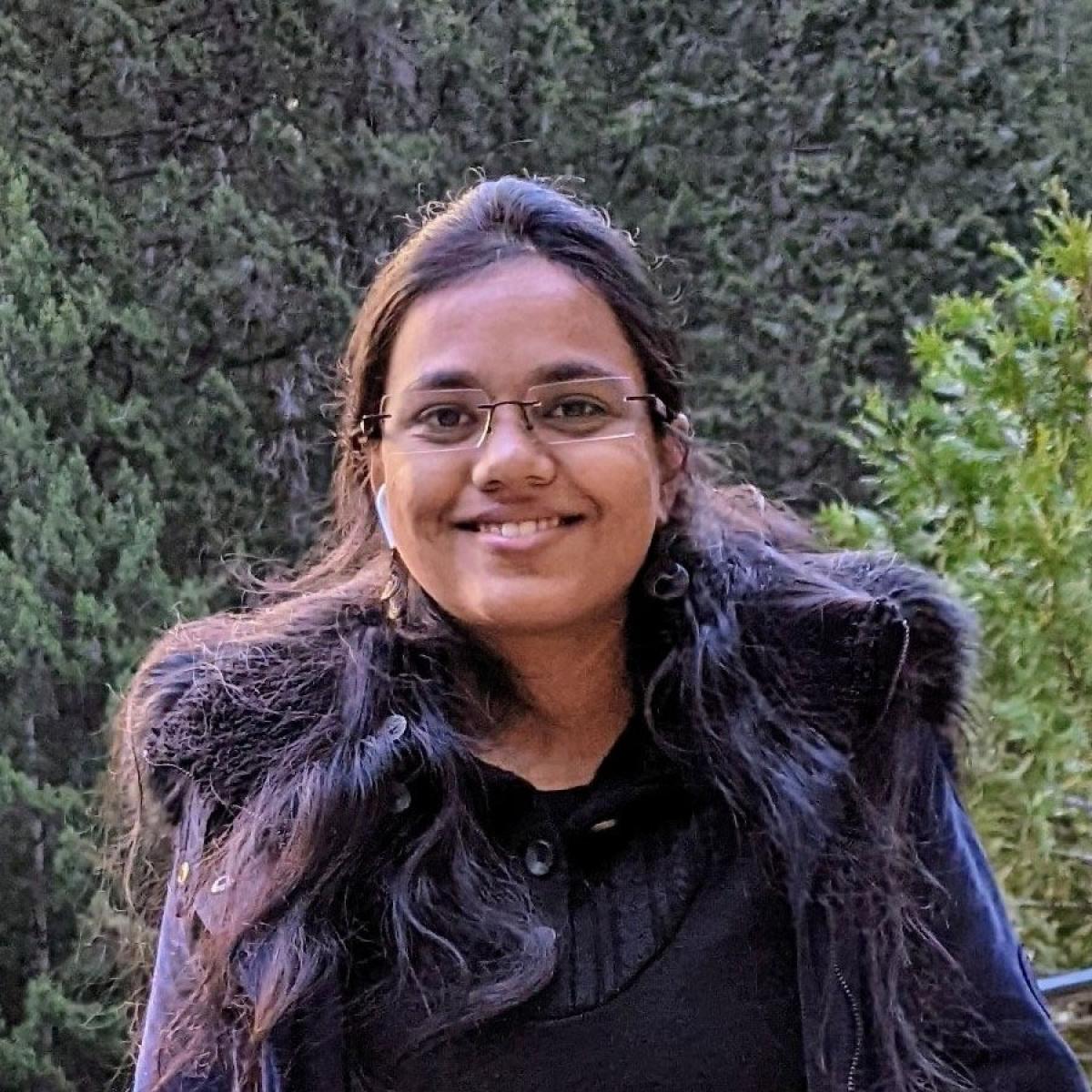
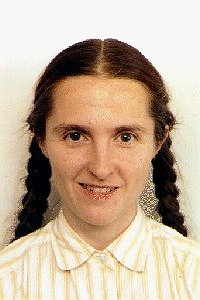
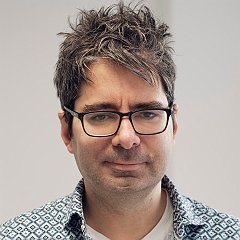
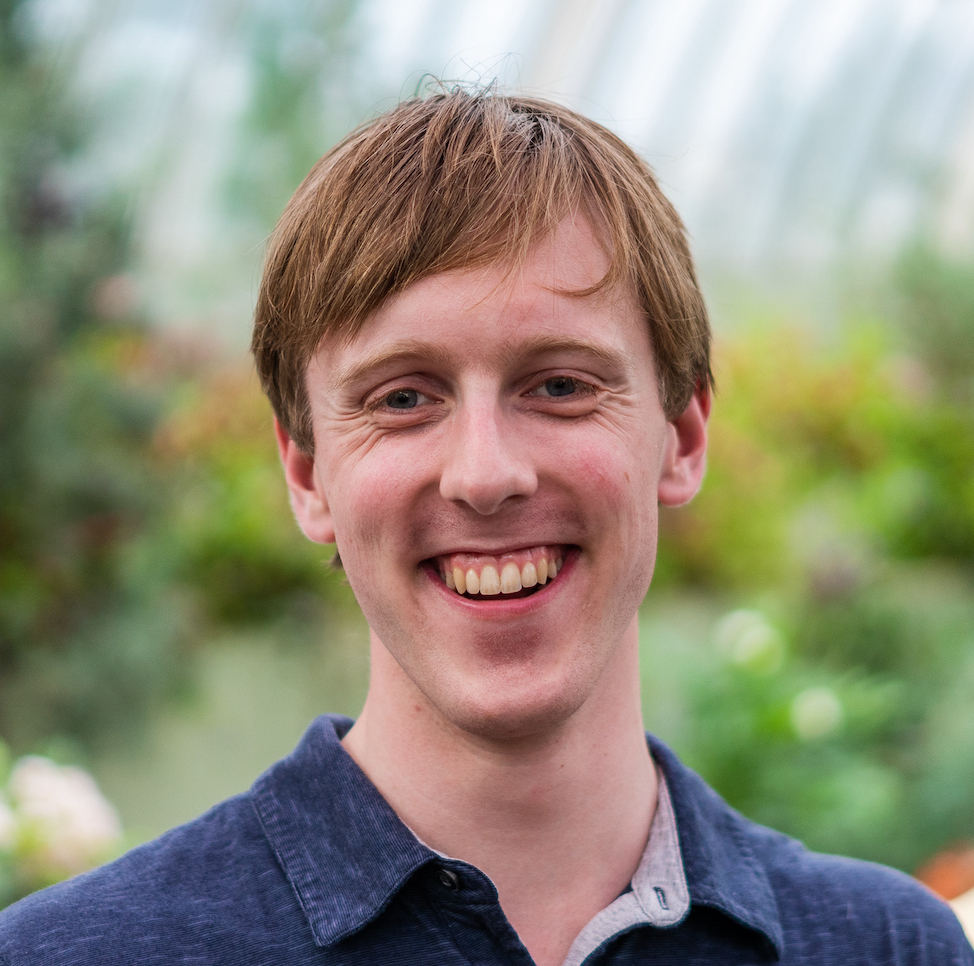
Aarushi Goel is an Assistant Professor in the Computer Science department at Purdue University , specializing in cryptography. She previously held a postdoctoral position at NTT Research's CIS Lab under Sanjam Garg and earned her PhD from Johns Hopkins University in 2022, advised by Abhishek Jain. Research Focus: Designing efficient techniques for secure multiparty computation (MPC) and zero-knowledge proofs (ZKPs), with applications in privacy-preserving systems, blockchain, and cloud security. Teaching: Courses include Advanced Cryptography (CS65500) and Special Topics in Cryptography (CS59200-STC), emphasizing state-of-the-art ZKP methods and MPC protocols. Scientific Awards: Simons-Berkeley Research Fellow (2025), participating in the program "Cryptography 10 Years Later".
Talia Ringer is an Assistant Professor at the University of Illinois Urbana-Champaign, affiliated with the Grainger College of Engineering and the Siebel School of Computing and Data Science. Her research focuses on proof engineering, formal verification, and bridging neural and symbolic proof automation. She holds a PhD in Computer Science from the University of Washington and a BS in Mathematics and Computer Science from the University of Maryland. Prior to academia, she worked at Amazon as a software engineer. Ringer is known for founding initiatives like SIGPLAN-M and the Computing Connections Fellowship, fostering inclusivity in computer science research. She has received prestigious awards including the 2023 ACM SIGPLAN Distinguished Service Award and the DARPA Young Faculty Award. Education: PhD, University of Washington (2021); BS, University of Maryland (2012) Research Areas: Dependent Type Theory, Verification, Interactive Theorem Proving, Proof Automation, Formal Methods Awards: ACM SIGPLAN Distinguished Service Award (2023), ESEC/FSE Distinguished Paper Award (2023), DARPA Young Faculty Award (2023) Her work emphasizes making formal verification accessible to programmers through tools like Proof Repair and Baldur , while advocating for ethical AI research and LGBTQ+ inclusivity. She advises a diverse team of graduate and undergraduate students in the Illinois Theorem Provers (ITP) lab, exploring topics including proof repair, reinforcement learning for proofs, and quotient type equivalences.
Chen-Wei Wang is an Associate Professor (Teaching Stream) in the Electrical Engineering & Computer Science (EECS) department at York University's Lassonde School of Engineering. He holds a DPhil in Computer Science from the University of Oxford, specializing in Software Engineering. His career includes post-doctoral research at McMaster Centre for Software Certification and York University Software Engineering Lab, focusing on certification of safety-critical systems. He previously taught at SUNY Korea and joined York University in 2017, where he coordinates experiential labs and emphasizes pedagogical innovation. He became an Eng. L. (Engineering Licensee) in 2020 and received tenure in 2022. Education: B.A. (summa cum laude) in Computer Science from York University (2006); DPhil in Computer Science from Oxford (2011). Research interests span formal verification of software systems, model-driven engineering, and computing education. Notable collaborations include work with Ontario Power Generations and Systemware Innovation. Research focuses on automated verification, real-time systems, and pedagogical tools. His publications emphasize educational technology integration and formal methods in software engineering. He actively participates in tennis and has a passion for music, having played violin and recently resumed piano lessons. Teaching contributions include foundational courses in programming, software design, and mission-critical systems. Students praise his clear explanations and high standards, despite rigorous assessments. He advocates for quality learning environments and has developed innovative teaching materials using drawing tablets and video capture.
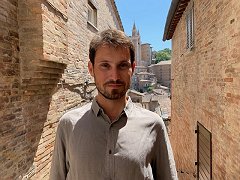
Patrick Massot is a Professor in the Department of Mathematics at the Faculty of Sciences of Orsay, University of Paris-Saclay, France. His work bridges pure mathematics and formal verification, with a focus on symplectic and contact geometry, and the formalization of advanced mathematical theories using the Lean proof assistant. His research interests include symplectic geometry , contact geometry , formalized mathematics , and differential topology . He has contributed significantly to the formalization of perfectoid spaces, the h-principle, and sphere eversion. His recent work emphasizes the educational use of proof assistants in teaching undergraduate mathematics. The most recent publications reflect a strong trend toward formal verification in mathematics, combining geometric intuition with rigorous computational proof. These works span topics such as convex integration, holonomic approximation, and the use of Lean for pedagogy. The underlying themes include flexibility in geometry, foundational rigor, and interdisciplinary collaboration between mathematics and computer science. Program Committee Member, CPP 2025 Author, Formalising the h-principle and sphere eversion (CPP 2023) Patrick Massot has advised no publicly listed students, and no specific grants are mentioned. However, his collaborative work with prominent mathematicians (e.g., Buzzard, Commelin, Giroux, Etnyre) suggests active research funding and participation in major projects such as the Liquid Tensor Experiment. He leads a formalized mathematics working group and was involved in a 2015–2016 working group on sheaf theory applied to Lagrangian submanifolds. These groups serve as hubs for collaborative research in formalization and geometric topology.
Filippo Alberto Edoardo Nuccio Mortarino Majno di Capriglio is a Lecturer (Maître de Conférences) in Pure Mathematics at Université Jean Monnet Saint-Étienne, France. He is actively engaged in research at the intersection of formal mathematics and algebraic number theory, particularly through the Lean theorem prover. His research interests include: Formalized Mathematics Algebraic Number Theory Proof Assistants Lean Theorem Prover Number Theory Functional Analysis The recent publication in CPP 2024 on the formalization of complete discrete valuation rings and local fields reflects a strong trend in using interactive theorem proving to rigorously verify foundational results in algebraic number theory. His work contributes to the growing mathlib4 library, emphasizing correctness and formal verification in advanced mathematics. He has no listed scientific awards in the provided sources. Filippo is actively involved in academic service and education, notably organizing and teaching in the Lean Master’s program in Lyon (2024–2025), as shown by his public teaching repository. He contributes regularly to the Lean 4 and mathlib4 projects on GitHub, demonstrating strong engagement with the formal methods community. There is no mention of research grants in the provided texts. He is associated with the formal mathematics community through GitHub and conference participation (CPP, POPL), contributing to open-source developments in theorem proving and formalized algebra.
Delphine Demange is an Associate Professor in Computer Science at the University of Rennes, affiliated with Inria, CNRS, and IRISA. She works in the Epicure research group (formerly Celtique) and focuses on formal semantics, compiler verification, program transformations, static analysis, computer-aided verification, and language-based security. Her career spans roles at the University of Pennsylvania as a postdoctoral researcher and a PhD at ENS Cachan-Brittany Extension under Thomas Jensen and David Pichardie. Her research interests center on formal methods for programming languages , particularly through compiler verification , static analysis , and language-based security . She has mechanized semantics for dataflow circuits and SSA-based optimizations, bridging theoretical rigor with practical compiler correctness. Her work often leverages interactive theorem provers like Coq to ensure robustness. Delphine’s recent publications (2025–2010) highlight her expertise in formal verification of compilers, dataflow analysis , and concurrent systems . Notable trends include mechanized semantics for gated SSA and dataflow circuits , verified intermittent computing models, and concurrent garbage collectors using rely-guarantee methodologies. Scientific Awards: EAPLS Best PhD Dissertation Award (2012) Gilles Kahn PhD Thesis Award (2013) Teaching: She has taught undergraduate and master’s courses including Java programming, algorithmics, deductive verification with Why3, compilation, and software security. Her pedagogical contributions span functional programming, semantics, and logic. Professional Service: Delphine has served on steering committees for CC (2021–2024), co-chaired JFLA 2024 and 2023, and participated in program committees for conferences like CGO, OOPSLA, and POPL.
Roberto Zunino is an Associate Professor in the Department of Mathematics at the University of Trento, specializing in blockchain technologies, formal methods, and distributed systems. His research bridges theoretical computer science with practical cryptographic applications, particularly in Bitcoin and smart contract ecosystems. His research interests focus on blockchain security , smart contract formalization , and probabilistic verification . Key areas include MEV (Maximal Extractable Value) theory, UTXO-based smart contracts, and computationally sound tokenization. His work combines rigorous mathematical modeling with real-world protocol analysis, emphasizing security guarantees through formal methods. Recent publications demonstrate a strong trend toward theoretical foundations of blockchain economics and security. His 15 most recent papers (2020-2025) analyze MEV formalization, Bitcoin contract liquidity, UTXO scalability, and smart contract language design, revealing deep integration of type theory, game theory, and cryptographic primitives. Zunino actively teaches courses including Informatics , Interactive Theorem Proving (using Lean 4), and Computer Tools for Mathematics . His educational focus emphasizes formal verification, imperative programming foundations, and mathematical logic applications in computer science.
Alejandro Sánchez is a Post-doctoral Researcher at the IMDEA Software Institute in Madrid, Spain. His research focuses on formal methods, decision procedures, and the verification of parametrized concurrent systems and data structures. He holds a PhD in Computer Science from the Universidad Politécnica de Madrid (2015), a Master's in Programming and Software Technology from Universidad Complutense de Madrid (2011), and a Bachelor's in Computer Science from Universidad Nacional de Córdoba (2007). Education Background: PhD in Computer Science, Universidad Politécnica de Madrid (2012–2015) Master in Programming and Software Technology, Universidad Complutense de Madrid (2010–2011) Bachelor of Science in Computer Science, Universidad Nacional de Córdoba (2002–2007) Research Interests: His work emphasizes formal verification techniques for concurrent systems, including parametrized systems, dynamic memory analysis, and specialized decision procedures. Key areas include temporal logics, deductive reasoning, and the verification of complex data structures like skiplists and concurrent lists. He has developed tools like LEAP for parametrized verification and contributed decision procedures integrated with SMT solvers (Yices, Z3). Professional Contributions: He has published extensively on formal methods and concurrency, including work on invariant generation, parametrized verification diagrams, and skiplist theory. His research bridges theoretical foundations with practical tool development, addressing challenges in verifying safety and liveness properties in complex concurrent systems. Tool Development: LEAP, an interactive theorem prover he maintains, enables deductive verification of concurrent systems. He has also implemented decision procedures for pointer-based data structures, demonstrating practical applications of formal methods in real-world systems.
Elsa Gunter is a Research Professor at the Department of Computer Science , University of Illinois at Urbana-Champaign . Her work bridges formal methods , programming languages , and human-computer interaction with a focus on verification and security. Education: Ph.D. in Mathematics, University of Wisconsin-Madison (1987) M.A. in Mathematics, University of Wisconsin-Madison (1981) B.A. in Mathematics, University of Chicago (1979) Her research interests include formal verification , type theory , and secure system design . She has developed tools like VeriF-OPT for parallel program optimization and Tutela for modeling human-computer protection envelopes. Her recent publications focus on concurrent systems , compiler verification , and security protocols . Notable awards include the Most Influential 10-Year Paper Award at RE 2010 and the EASST Best Paper at ETAPS 2001 . She has advised students like Dennis Griffith and Liyi Li , while collaborating on projects such as DSILL (distributed functional language) and PTRANS (program transformation semantics).
Prof. Dr. Jasmin Blanchette is a faculty member at the Ludwig Maximilian University of Munich, holding the chair in Theoretical Computer Science and Theorem Proving . She serves as Dean of Studies for Computer Science and collaborates with the VeriDis group at Loria, Nancy. Her research focuses on combining automatic and interactive theorem proving to enhance proof automation for critical systems and mathematical research. Key Research Areas: Higher-order logic, formal verification, superposition calculus, proof assistants (Isabelle/HOL, Lean), definitional mechanisms for (co)datatypes. Recent Articles address advanced topics in higher-order reasoning, SMT integration, and algorithm verification. Scientific Recognition: Co-awarded best papers at FroCoS 2023 and CADE 2023. Supervises a team of postdocs and PhD students working on projects like Matryoshka and Nekoka. Her tools (Sledgehammer, Nitpick) are widely used in formal methods.
Roles and Affiliations: Jørgen Villadsen is an Associate Professor at the Technical University of Denmark (DTU), affiliated with the Department of Applied Mathematics and Computer Science and the Algorithms, Logic and Graphs Section. He serves as Head of Study and focuses on formal logic, multi-agent systems, and computer science education. Education: MSc in Computer Science and Engineering (1989, DTU) and PhD in Computer Science (1995, DTU). Research Interests: Villadsen’s work centers on logic and its applications in computer science and artificial intelligence, including formal methods, multi-agent systems, type theory, and non-classical logics. He emphasizes the development of proof assistants like Isabelle and tools for teaching logic and formal reasoning. Recent Research Trends: His publications from 2020–2017 highlight contributions to logic education, automated reasoning, and multi-agent system design. Key areas include Isabelle-based proof systems, hybrid logic formalization, and competitive agent development in programming contests. Scientific Contributions: He has led teams in the Multi-Agent Programming Contest, published extensively in journals like Annals of Mathematics and Artificial Intelligence , and contributed to open-source tools like NaDeA and SPA. Grants and Projects: Involved in projects such as CONTROL (constraint-based language processing) and HyLoMOL (hybrid logic integration). Supervised numerous MSc and PhD students in multi-agent systems and formal methods. Labs/Teams: Active in the Multi-Agent Systems Lab, leading development of agents for competitions and educational tools. Collaborates internationally on logic, AI, and formal verification.
Jennifer Paykin is a researcher affiliated with Intel and previously with Galois, Inc., actively contributing to programming languages and quantum computing since at least 2016. Her work bridges formal verification, quantum circuit design, and type theory, with notable papers on QWIRE, modal types, and higher-inductive quantum lambda calculus. Key affiliations: Intel (current), Galois, Inc. (past) Active in conference committees: PriSC , PLanQC , CoqPL , and TyDe Research interests span programming languages, quantum computing, formal verification, linear logic, and type systems. Her contributions include: Quantum circuit languages (QWIRE) Phantom type applications for quantum programs Modal types in quantum SDKs Formalizing quantum lambda calculus Secure compilation models Higher-inductive type frameworks Trends in publications show increasing focus on quantum software infrastructure (2016–2025), with recurring themes of type-driven quantum verification, circuit compilation, and logical foundations. Key collaborations include work on the SAW scripting language and flow equivalence models.
Cayden Codel is a Researcher at Carnegie Mellon University's Computer Science Department , focusing on programming languages and formal verification. His work bridges theoretical logic with practical applications in automated reasoning and constraint solving. Research Interests: Programming Languages, Formal Verification, Satisfiability (SAT) Solvers, Satisfiability Modulo Theories (SMT), Automated Theorem Proving, Machine Learning Institution: Carnegie Mellon University (CMU) His publications emphasize formal verification for logical systems, SMT/SAT solvers , and reinforcement learning applications. Articles from 2024-2019 reveal a trajectory from foundational logic to real-world dataset design (e.g., Minecraft-based AI research). Thesis Advisors: Marijn Heule, Jeremy Avigad Contact: ccodel@andrew.cmu.edu
Christopher Monroe is a Professor at the University of Maryland and a Fellow of the Joint Quantum Institute, with affiliations at the Duke Quantum Center (Duke University). His research focuses on trapped atomic ions for quantum information science, including quantum computing, quantum simulation, and quantum networks. He pioneered techniques for quantum logic gates, scalable ion traps, and remote entanglement protocols. Monroe has held leadership roles in national quantum initiatives and testified before U.S. Congress on quantum technology policy. Education: PhD in Physics, University of Colorado (1992), under Carl Wieman and Eric Cornell Research Interests: His work spans experimental and theoretical advances in trapped ion systems, including quantum error correction, photonic interconnects, and many-body quantum simulations. Recent breakthroughs include mid-circuit qubit measurement, high-fidelity entanglement over long distances, and N-body quantum gates. Key Contributions: Monroe's lab demonstrated the first quantum logic gate (1995), teleported quantum information between atoms (2008), and achieved quantum entanglement across 53 qubits (2017). Recent work emphasizes scalability and fault tolerance in quantum systems. Awards & Affiliations: 2025: Pioneering mid-circuit measurement/reset schemes 2021: Fault-tolerant quantum error correction 2016: Elected to National Academy of Sciences Fellowships: American Physical Society, AAAS, Institute of Physics Funding & Impact: Leads projects funded by DoE, NSF, and DARPA, including the Quantum Systems Accelerator and MeasQuIT initiatives. Co-founded IonQ, a quantum computing startup. Labs & Teams: Directs the Duke Quantum Center and collaborates across institutions on trapped ion systems, quantum networking, and quantum gravity analog experiments.
Jasmin Christian Blanchette is an Associate Professor in the Theoretical Computer Science section at Vrije Universiteit Amsterdam, Netherlands. He holds visiting researcher positions at Loria (VeriDis group, Nancy, France) and the Max-Planck-Institut für Informatik (Automation of Logic group, Saarbrücken, Germany). Previously, he was a postdoc and PhD student at Technische Universität München (Germany) and worked as a software engineer and documentation manager for Trolltech (now The Qt Company) in Oslo, Norway. Education & Career : PhD in Computer Science, Technische Universität München (2008–2012) Postdoc at TU München (2012–2016) Software Engineering Experience: Trolltech (2000–2008) Research Focus : His work centers on automated theorem proving in higher-order logic, including tools like Sledgehammer, Nitpick, and Nunchaku. He develops definitional mechanisms for (co)datatypes and formalizes results in automated reasoning (IsaFoL) and number theory (Lean Forward). Key areas include superposition calculus, formal verification, and foundational logic frameworks. Grants : NWO Vidi 2017: "Lean Forward: Usable Computer-Checked Proofs for Number Theorists" ERC Starting Grant 2016: "Matryoshka: Fast Interactive Verification through Strong Higher-Order Automation" Advising & Collaborations : Supervised 3 PhD theses (names not listed). Collaborates with international groups and contributes to open-source theorem proving tools. Active in projects like Matryoshka and Lean Forward. Labs/Teams : Member of VeriDis (Loria) and Automation of Logic (MPI-INF) groups, focusing on interdisciplinary automated reasoning and formal methods.