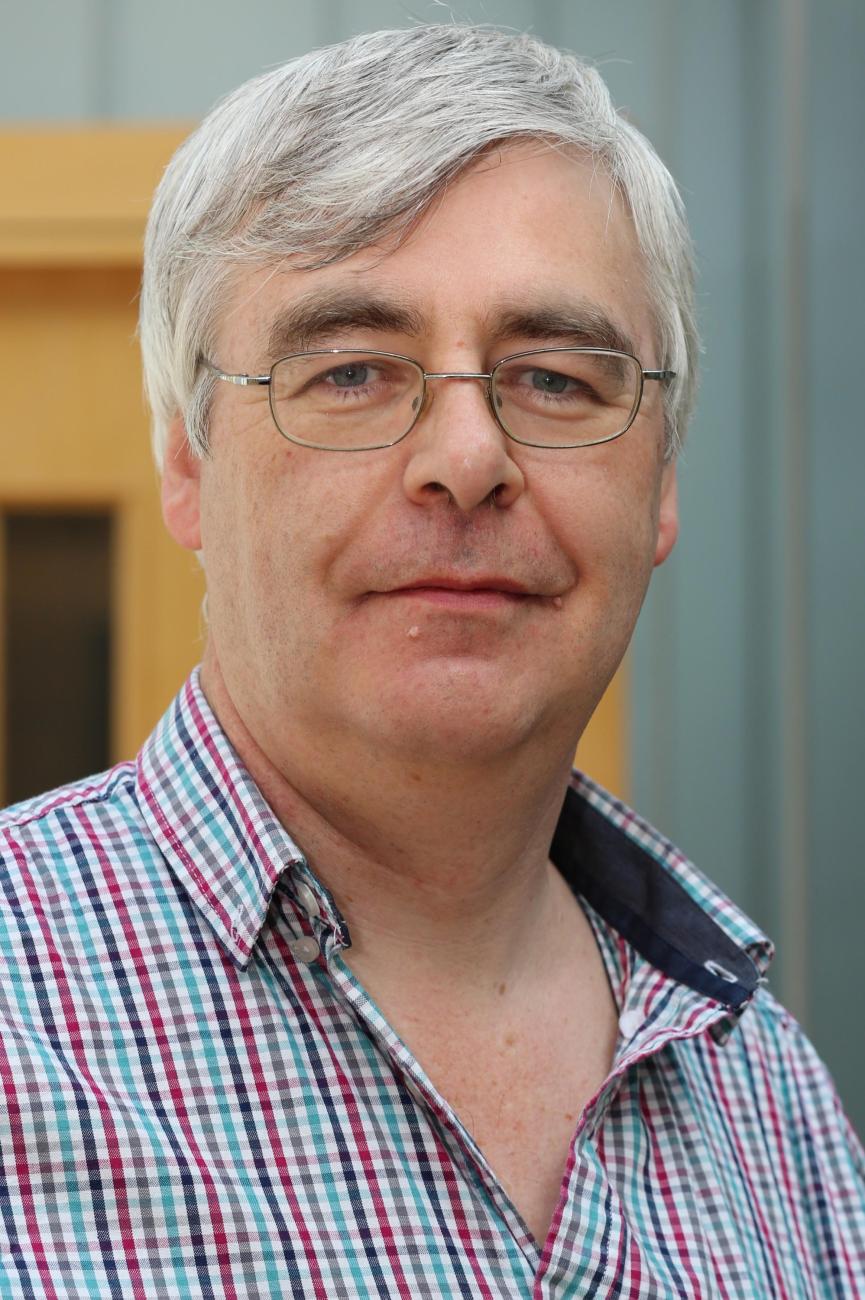
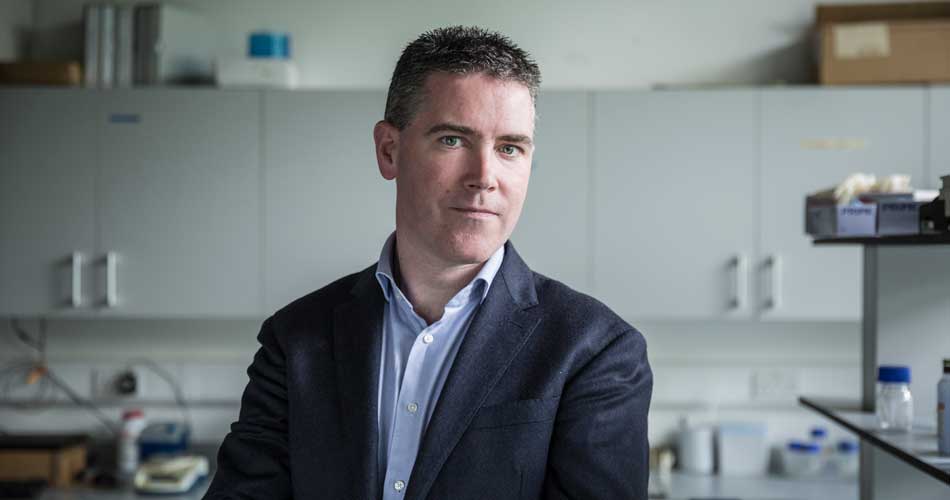
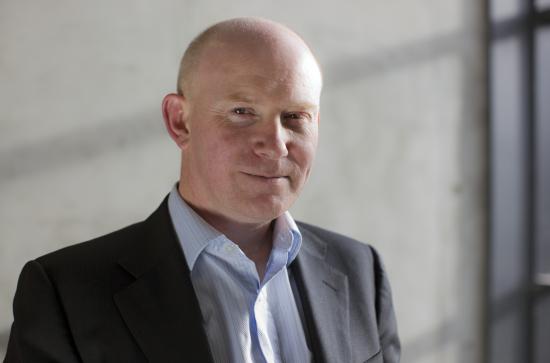
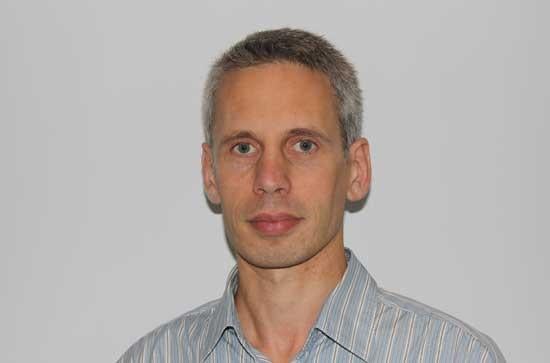
Dr. David Sinclair is an Associate Professor and Year Head in the School of Computing at Dublin City University, affiliated with the Dependable Systems, Software Engineering, and Security research groups. His research spans formal methods, distributed systems, real-time systems, and AI applications in strategic games. Teaching responsibilities include foundational and advanced courses: CSC1018 Logic CSC1048 Computability & Complexity CSC1098 Compiler Construction CSC1141 Concurrent Programming CSC1049 Third Year Project supervision His publications demonstrate strong focus on real-time systems, motion prediction, and immersive technologies, with recent work exploring AI-driven virtual environments and light field processing. Research consistently addresses computational efficiency and formal verification challenges.
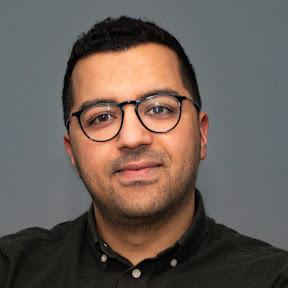
Mohammed Amine Togou is an Assistant Professor in the School of Computing within Dublin City University's Faculty of Engineering and Computing. His research specializes in performance optimization and protocol design for next-generation networks including 5G/6G systems, SDN/NFV architectures, and blockchain-enabled solutions. With PhD in Computer Science from University of Montreal and MSc in Computer Networks from Al Akhawayn University, he has published over 40 peer-reviewed papers. Current research develops machine learning solutions for network management challenges including: interference mitigation in O-RAN architectures, adaptive streaming for immersive media, and blockchain-based network slicing. He serves as guest editor for Electronics journal's special issue on 5G Technology and IoT, and supervises PhD students in network optimization and distributed computing. Teaching responsibilities include distributed systems and network security courses, with pedagogical research on technology-enhanced learning methods in computing education.
Dr. Tony Cafolla is an Emeritus Associate Professor at Dublin City University's School of Physical Sciences. He has held this position since 1992, with prior research roles at the University of Manchester and University of Wales, College of Cardiff. He is affiliated with the HEA-funded National Centre for Sensor Research since 1999. Education: B.Sc. in Experimental Physics, Trinity College Dublin (1975) M.Sc. in Nuclear Instrumentation Physics, Trinity College Dublin (1977) Ph.D. in Solid State Physics, University of Virginia (1985) Research Interests: Electronic and chemical properties of semiconductor surfaces Photoelectron spectroscopy using synchrotron radiation Surface structural studies via I-V Low Energy Electron Diffraction (LEED), Scanning Tunnelling Spectroscopy (STS), and optical probes Development of advanced materials for sensor applications (e.g., graphene, ceria thin films) Recent Research Trends: His work spans nanomaterial characterization (e.g., MoS₂ flakes, ZnO nanostructures), surface functionalization (e.g., bromine-functionalized molecules), and interdisciplinary applications in robotics and biomedical coatings. Publications emphasize experimental techniques like STM/STS and synchrotron-based spectroscopy. Awards: None explicitly listed. Grants/Advising: No specific grants or advisees mentioned, though his involvement with the National Centre for Sensor Research indicates collaborative research activity. Labs/Teams: Active in the National Centre for Sensor Research, focusing on sensor technology and material innovation.
Dr. Noel Murphy is an Associate Professor and Head of the School of Electronic Engineering at Dublin City University (DCU). He has held various leadership roles, including Associate Dean for Education in the Faculty of Engineering and Computing (2005-2007), Head of School (2007-2012, 2015-2018, and returning in 2021). He has been teaching at DCU since 1986 and has contributed extensively to academic governance, including roles on Academic Council and Governing Authority committees. Dr. Murphy holds a BA (Mod) in Theoretical Physics from Trinity College Dublin (TCD), a PhD from DCU (2003) on Information Theory models for Biological and Artificial Vision, and a part-time MA in Pure Mathematics from Maynooth University (2015). His research focuses on: Biological and Artificial Vision: Including Information Theoretic models and the work of Stephen Grossberg. Secure Data Analytics: Particularly leveraging SGX-enabled applications for data ownership control. Algebraic Number Theory: Exploring elliptic curves and Apéry's Constant. IoT and Edge Computing: Focusing on secure processing for IoT applications. Human Sensory Augmentation and Multimedia Information Retrieval. In addition to his teaching and leadership roles, Dr. Murphy has supervised numerous PhD and Master's students to completion. He has secured funding as Principal Investigator or co-Investigator on national and EU-funded research projects. He is affiliated with DCU's Entwine Research Centre. Outside academia, Dr. Murphy is Honorary Secretary of the Irish Light Aviation Society, holds a Private Pilot’s License, and is involved in aircraft restoration projects, including a 1940 Piper J5 and a Vans RV-8.
Meghana Kshirsagar serves as Assistant Professor in the Department of Computer Science & Information Systems at the University of Limerick, with dual appointments at Lero – the Irish Research Centre for Software and the Limerick Digital Cancer Research Centre. Her interdisciplinary work bridges computer science with healthcare innovation, focusing on real-world applications of advanced computational techniques. Her research spans Machine Learning, Artificial Intelligence, Evolutionary Computation, Blockchain, Digital Health, Large Language Models, and Digital Twins. She develops novel algorithms like grammatical evolution for hyperparameter optimization and blockchain frameworks for secure healthcare data sharing, with applications in cancer risk stratification, hip fracture pathway modeling, and financial portfolio optimization. Her work consistently addresses ethical AI implementation and sustainable computing practices. Analysis of her 52+ publications (2011-2025) reveals three dominant trends: (1) Evolutionary computation techniques for symbolic regression and digital circuit design, (2) Blockchain applications in healthcare data security and scientific collaboration, and (3) Responsible AI implementations in medical diagnostics and finance. Her recent focus emphasizes mitigating algorithmic bias in cancer diagnostics and sustainable hyperparameter optimization. As an active member of Lero and the Limerick Digital Cancer Research Centre, she collaborates with clinicians, data scientists, and industry partners to translate research into clinical tools. Her work contributes to UN Sustainable Development Goals through digital health innovations that improve healthcare accessibility and efficiency.
Dr. Vimal Kumar Kumar serves as a Research Fellow at the University of Limerick's Department of Computer Science and Information Systems, affiliated with Lero – the Irish Software Research Centre. His academic career includes prior faculty positions as Assistant Professor at Jaypee University of Information Technology (2009-2022) and Lecturer at SRM Institute of Science and Technology (2007-2009), followed by a Postdoctoral Researcher role at University College Dublin (2022-2023). His educational background includes: PhD in A Novel sense based Hindi to Tamil machine translation system from Jaypee Institute of Information Technology (2019) Masters from Anna University Chennai (2005-2007) Bachelor from PSG College of Technology (2000-2004) Dr. Kumar's research centers on Natural Language Processing with specialized focus on machine translation for Indian languages (Hindi, Tamil), text summarization, and sentiment analysis. He extends this work into computer vision applications for medical imaging and activity recognition, plus deep learning implementations for IoT-based agricultural monitoring. His methodology frequently addresses challenges in low-resource language processing and develops optimized neural network architectures for mobile deployment. Analysis of his publication trends reveals consistent interdisciplinary innovation, particularly in healthcare applications (retinal disease detection), agricultural technology (crop yield prediction), and social media analytics. His work demonstrates strong emphasis on practical AI solutions for resource-constrained environments and underrepresented linguistic communities, often leveraging generative models and contextual embeddings. Dr. Kumar actively contributes to Lero's research initiatives, aligning his technical work with UN Sustainable Development Goals through software solutions addressing global challenges in health, food security, and digital inclusion.
Davide Romelli is an Associate Professor of Economics at Trinity College Dublin, with affiliations to multiple research institutions including the IM-TCD (International Macro-TCD), SUERF, and the BAFFI-CAREFIN Centre. He serves as an Associate Editor for journals like the European Journal of Political Economy and participates in policy advisory groups such as the CBDC Academic Advisory Group (UK) and the European Parliament’s Monetary Policy Expert Panel. His research focuses on central banking institutions, monetary policy design, and their implications for fiscal stability. Key interests include central bank independence, climate change communication strategies, and the historical evolution of monetary frameworks. He has developed influential datasets, including the CBS Dataset (35k+ central bank speeches) and the CBI Data (central bank independence indices since 1923). Recent work explores how central banks address climate risks through communication, the persistence of inflation under independence reforms, and gender dynamics in central bank governance. His methodological contributions span natural language processing, machine learning approaches to policy analysis, and historical institutional comparisons. Education: PhD Economics (ESSEC Business School, 2015), MSc Banking and Finance (Catholic University of Milan, 2009) Labs/Teams: Principal investigator on central bank communication projects, collaborates with institutions like the Bank for International Settlements and the LSE Grantham Institute
Dr. Breiffni Fitzgerald is an Associate Professor in the Department of Civil, Structural and Environmental Engineering at Trinity College Dublin (TCD), where he also serves as a Fellow. He holds the senior role of Director of Postgraduate Teaching and Learning for TCD's School of Engineering, overseeing doctoral education strategy and postgraduate policy development. His research focuses on structural dynamics, wind energy systems, and machine learning applications to enhance wind turbine performance and resilience. He has authored over 50 peer-reviewed publications and serves as an editor for Wind Energy . Dr. Fitzgerald's engineering credentials include Chartered Engineer status from both the Institution of Engineers of Ireland and ASCE. He has received awards such as the 2023 TCD Teaching Excellence Award and the 2024 IStructE Research into Practice Award. His projects emphasize advanced control systems for wind farms, structural health monitoring, and offshore wind energy innovation. His recent work includes developing TMDI (Tuned Mass Damper Inerter) systems for vibration control, machine learning models for blade deformation prediction, and analyzing wind-wave misalignment impacts in Irish coastal zones. Collaborative initiatives like the MeLodiC project aim to optimize wind farm performance using AI-driven control algorithms. Key Projects: Machine Learning for Wind Farm Aerodynamics and Control (MeLodiC) - funded by SFI Data-Driven Digital Twin of Wind Farms (TwinFarm) - SEAI-funded REMOTE-WIND: Drone-Based Monitoring - SEAI-funded Dr. Fitzgerald's research bridges theoretical advancements with practical industry applications, addressing challenges in offshore wind energy reliability and operational efficiency.
Professor Louise Rainford is a leading academic in medical imaging and radiography education at the School of Medicine, University College Dublin . With a clinical background as a radiographer in Manchester and Dublin, she transitioned to academia in 1992 and has held key leadership roles including Head of Radiography & Diagnostic Imaging (2009-present) and Associate Dean for Radiography (2016-present). Her work focuses on clinical simulation integration , radiation protection education , and innovative teaching methodologies . Research Themes : Medical imaging optimization, virtual reality training, radiation dose management, and AI applications in diagnostic referrals. Grants : €300,000 Erasmus+ funding for the FORCE project; Royal Embassy of Saudi Arabia grant for CT dose optimization. Scientific Contributions span 15 recent publications addressing pandemic impacts on radiography education, VR simulation effectiveness, European radiation protection standards, and machine learning for MRI referrals vetting. Notably, she led the EFRS Research Hub at major international conferences and developed the FORCE web-based simulation framework. Awards : 2022 UCD College Teaching and Learning Award for VR curriculum innovation. Leadership : Chair of Irish Radiographers Registration Board (CORU), EFRS Research Hub Committee (2019-2025), and multiple European radiation protection initiatives.
Professor Eoin Casey is a distinguished academic at University College Dublin's College of Engineering and Architecture, where he serves in the School of Chemical and Bioprocess Engineering. His career has been dedicated to advancing sustainable wastewater treatment technologies, with a particular focus on energy efficiency and environmental impact reduction. Professor Casey leads groundbreaking research that bridges academic inquiry with practical industrial applications through collaborations with spin-out companies. Professor Casey's primary research interests center around Membrane Aerated Biofilm Reactor (MABR) technology, which represents a paradigm shift in wastewater treatment. His work explores biofilm dynamics, energy optimization in treatment processes, membrane technology applications, and sustainable engineering solutions for water management. His research group investigates how bacterial biofilms function within MABR systems, examining both the fundamental science and practical implementation challenges. This research spans environmental engineering, chemical engineering, and sustainable technology development, with significant implications for global water and energy conservation efforts. The articles published by Professor Casey and his research group demonstrate a consistent focus on optimizing wastewater treatment processes while reducing energy consumption. Recent publications reveal an expanding scope that now includes data-driven modeling, continuous biomanufacturing, and integration of water treatment facilities into broader energy systems. His work shows a clear trajectory from fundamental biofilm research toward practical implementation of energy-efficient systems that address climate change challenges. The research increasingly incorporates advanced modeling techniques, process optimization, and consideration of the energy-water nexus. Professor Casey's research has generated significant commercial and environmental impact through the spin-out company OxyMem, founded in 2013 with support from NovaUCD. While specific personal awards aren't detailed in the provided text, his work has contributed to OxyMem receiving notable recognition including the 2014 Irish Times Innovation Award, the US Imagine H2O 2015 Infrastructure Challenge award, and a Knowledge Transfer Ireland 2015 Impact Award. OxyMem was also named in the prestigious Global Cleantech 100 in 2016 and 2017. Professor Casey's research group has secured substantial funding from Science Foundation Ireland and Enterprise Ireland to develop and scale MABR technology. His work has progressed from laboratory experiments to full-scale implementation at wastewater treatment plants, demonstrating energy savings of up to 75% compared to conventional treatment methods. The commercial deployment of this technology in countries including the United States, Singapore, Brazil, Spain, and Japan represents significant international impact. His research group continues to collaborate with OxyMem on further development and optimization of the technology. The research led by Professor Casey operates through specialized laboratories focused on membrane technology, biofilm reactors, and sustainable water treatment. His team has successfully demonstrated the scalability of MABR technology from laboratory settings to full-scale wastewater treatment plants, most notably in a demonstration plant near Birmingham, UK. The research infrastructure supports both fundamental investigations of biofilm mechanics and practical engineering development of commercial systems.
Mark Southern is a Researcher affiliated with the School of Engineering and the Dairy Processing Technology Centre (DPTC) at the University of Limerick. He holds a PhD in Virtual Enterprise from Nottingham Trent University, focusing on mobile ICT technologies for collaborative engineering. His expertise spans SME manufacturing, process optimization, medical devices, and smart manufacturing systems. Southern has contributed to advancing knowledge in defect detection via deep learning, process innovation frameworks, and operational excellence in pharmaceuticals. His research interests include Manufacturing Engineering and Process Optimization Automation and Knowledge Management Smart Manufacturing Systems Medical Device Design Recent work emphasizes deep learning applications in remanufacturing, human-in-loop systems, and incremental learning for defect detection. Southern’s publications reflect a focus on bridging technology adoption gaps in SMEs and optimizing manufacturing processes through innovation. His involvement with the DPTC highlights engagement in dairy processing technology advancements. While no formal awards are listed, his peer-reviewed contributions demonstrate impactful research in industrial engineering and smart manufacturing trends.
Prof. Ray O'Neill is an experimental physicist at Maynooth University's Department of Experimental Physics, affiliated with the Faculty of Science & Engineering and Hamilton Institute. He holds the title of Associate Dean of Science and Engineering, with prior roles including Dean of the Faculty of Science, Dean of Research and Graduate Studies, and Vice President for Innovation (2013-2016). His research spans atomic and molecular physics, quantum entanglement, biomedical imaging, and innovation systems. O'Neill earned his BSc and PhD in Physics from Queen’s University Belfast, joining Maynooth in 1993. He contributed to Ireland’s first national research integrity policy (2011-2013) and led the Maynooth University Curriculum Commission (2014-2016). Education: BSc in Physics, Queen’s University Belfast PhD in Atomic and Molecular Physics, Queen’s University Belfast Research Interests: Combines foundational physics (electron impact excitation, quantum systems) with applied work in near-infrared biomedical imaging and innovation systems. Recent focus on data analytics and machine learning applications. Publications Overview: Over 30 peer-reviewed articles across atomic physics, optics, and biomedical engineering. Key topics include laser plasma dynamics, multiphoton ionization, and brain-computer interface technologies. Administrative Contributions: Chaired national research integrity working group (2011-2013) Member of European Universities Association Research Policy Group Developed university-wide curriculum reforms as Curriculum Commission Chair Labs/Teams: Active in Hamilton Institute collaborations, focusing on interdisciplinary innovation and applied physics research.
Dr. Abdul Razzaq is an Assistant Professor in the Department of Computer Science & Information Systems at the University of Limerick, affiliated with Lero – the Irish Software Research Centre. His research focuses on AI-driven software engineering, developer experience, empirical software analytics, and cloud computing, aiming to enhance developer productivity and bridge academic-industry gaps. He holds a PhD in Software Engineering from Lero, with prior degrees in Computer Science. His work has yielded 432 citations and led to industry-adopted tools like JITTAC licensed by Huawei. Education: PhD (2019, Lero), MSc & BSc in Computer Science. Research interests include AI applications in code parsing/refactoring, developer context modeling, and tool standardization. He actively supervises PhD/MSc students in AI, NLP, and software engineering, emphasizing research scaffolding and guided autonomy. Publications appear in ACM TOSEM, IEEE TSE, and EMSE. Industry collaborations include Huawei, ACI Worldwide, and GLOCC Group. He contributes to education through UDL principles in curriculum design and led QQI revalidation for Data Analytics programs. Engagements include COVIGILANT project and AI policy discussions. Member of ACM & IEEE, with reviewing roles at IEEE TSE and Wiley JSEP.
Sheila Fallon is Lecturer in Computer Science focusing on IoT systems and network management. Research develops explainable AI approaches for autonomic networks and accessible technologies for healthcare applications. Recent projects include WheelSimPhysio wheelchair simulator analytics and IoT systems for cardiac rehabilitation. Combines technical innovation with human-centered design principles.
Rudi Villing is an Associate Professor and Programme Director for Robotics & Intelligent Devices at Maynooth University's Department of Electronic Engineering, Faculty of Science & Engineering. He is actively affiliated with the Hamilton Institute and the Assisting Living and Learning (ALL) Institute at Maynooth University. Dr. Villing holds a first class honours B.Eng. in Electronic Engineering from Dublin City University and a PhD in Engineering from NUI Maynooth. Prior to his academic career, he spent 10 years working in the telecommunications software industry, specializing in Telecommunications Management Networks and software systems architecture. His primary research focuses on autonomous mobile robotics , systems for health and wellbeing , and applications of real-time intelligent systems . With expertise spanning system design, real-time embedded software, machine learning, autonomous behavior, signal processing, communications, and psychoperception, his work bridges theoretical research with practical applications. His recent publications demonstrate strong activity in robot vision, assistive robotics for elderly care, and computational healthcare applications, particularly in Parkinson's disease rehabilitation through the BeatHealth project. Dr. Villing's scientific contributions have been supported by funding from: Science Foundation Ireland Enterprise Ireland Irish Research Council European Commission As Programme Director, he plays a key leadership role in robotics education while maintaining an active research program. His work consistently translates theoretical concepts into practical implementations, particularly evident in his research on gait rehabilitation systems and quality control applications in food engineering. His recent publications show increasing interdisciplinary work at the intersection of robotics, healthcare, and food science. Dr. Villing is deeply involved with the Hamilton Institute and the ALL Institute, contributing to interdisciplinary research initiatives focused on intelligent systems with real-world impact. His laboratory work emphasizes practical robotics applications that address tangible human needs, especially in healthcare contexts where technology can improve quality of life for vulnerable populations.