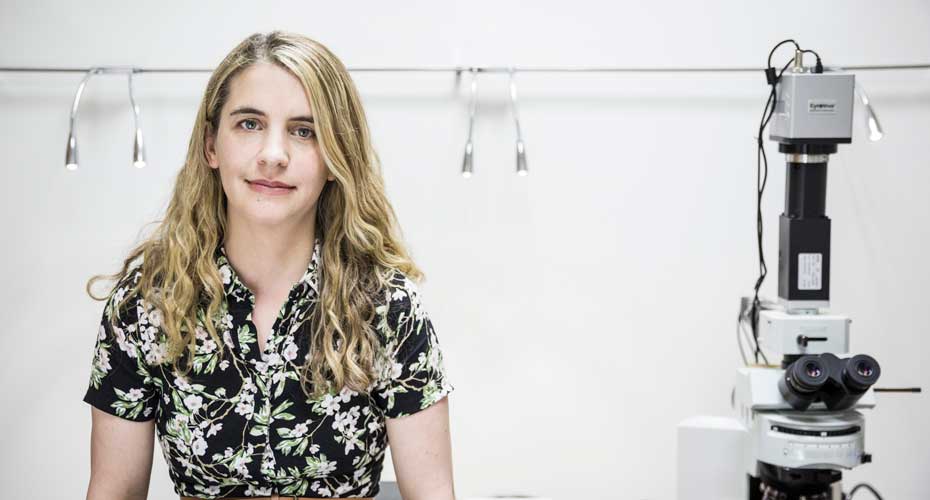
Keara Barrett is a Lecturer and researcher in the Department of Computing at South East Technological University (SETU). She holds a PhD in Information and Communications Systems Science from the Walton Institute (2009). Her research focuses on cybersecurity, network management, ontology-driven systems, and ambient assisted living technologies. She actively contributes to interdisciplinary collaborations and has authored over 20 peer-reviewed publications. Barrett is Chair of two COST Actions: CA20137 (Gender Equality) and CA19122, highlighting her leadership in academic networks. Her work spans cyberattack mitigation in industrial control systems, policy models for autonomic networking, and user interface design for healthcare caregivers. With an h-index of 162 and 7 citations, her research impacts both theoretical and applied domains, including Industry 4.0 and eldercare technologies. She is affiliated with the compuCORE research group at SETU and supervises PhD students.
Prof. Gregorio Iglesias is a Professor of Marine Renewable Energy at University College Cork (UCC) and Honorary Professor of Coastal Engineering at the University of Plymouth. His expertise lies in Marine Renewable Energy and Coastal Engineering, with a focus on wave and tidal energy systems, offshore wind integration, and coastal protection strategies. He has secured over €12M in research funding as Principal Investigator and authored/edited key texts such as Wave and Tidal Energy (Wiley) and Ocean Energy and Coastal Protection (Springer). Education: BEng (Civil Engineering, 1992), MEng (Civil Engineering, 1993), PhD (Engineering, 2001). Research Interests: Advanced modeling of wave energy converters, floating offshore wind turbines, coastal erosion mitigation, and climate change impacts on marine energy resources. His work bridges theoretical advancements and practical applications, including coasts like the Port of Gijón (Spain) and the Shannon Estuary. Recent publications highlight climate-driven renewable energy transitions, multi-hazard coastal resilience frameworks, and techno-economic assessments of offshore systems. He chairs the IEC Standards panel for wave energy device testing and serves as Subject Editor for Energy (Elsevier) . Professional Activities: Lead of Marine Renewable Energy research at MaREI (Ireland), former Head of the COAST Engineering Group at Plymouth (2012–2018), and member of PIANC’s Universities Consortium. His work has generated 5,459 citations with an h-index of 41. Teaching: Delivers modules on Ocean Energy (NE4003/NE6005) and Hydraulics (CE3007).
Professor Aoife Gowen is a leading academic at the UCD School of Biosystems & Food Engineering , specializing in hyperspectral imaging and its applications across medicine, food safety, and engineering. Her research, supported by prestigious European Research Council (ERC) funding, investigates water molecule interactions with surfaces to improve bone graft materials and develop innovative diagnostic tools for prostate cancer. She also leads Science Foundation Ireland (SFI)-funded projects on hyperspectral monitoring of bacterial growth for food safety. Beyond technical research, Professor Gowen has developed computational tools now integrated into commercial chemical analysis software. Her work spans interdisciplinary domains, including sustainable transport policy, critical thinking education, and promoting gender diversity in engineering. As a key figure in the Women on Walls initiative, she has enhanced visibility for women in STEM fields. Her recent publications focus on spectral technologies for food quality, microplastics characterization, and medical diagnostics, reflecting her commitment to addressing global challenges in health and sustainability. Scientific Awards: ERC Grant for water-surface interaction research Professor Gowen actively collaborates with European networks and industry partners, driving advancements in hyperspectral imaging applications. Her lab’s efforts to bridge computational science with real-world chemical analysis have positioned her as a pioneer in invisible chemistry visualization, impacting medicine, food, and environmental engineering.
Catherine Hurley is a Professor of Statistics at Maynooth University's Faculty of Science & Engineering, where she serves as Subject Head of Statistics in the Department of Mathematics and Statistics. She maintains strong affiliations with both the MU Hamilton Institute and the National Centre for Geocomputation, positioning her work at the intersection of statistics, data science, and computational methods. Dr. Hurley is a leading expert in data visualization with primary research interests in visualization techniques for data science and machine learning problems. Over her distinguished career, she has authored and contributed to numerous software packages, beginning with Data Viewer (1987), a predecessor to GGobi, Quail (1987-2000), and many R packages including condvis2, vivid (2021), and Bartvis (2022). Her work has significantly advanced the field of statistical graphics and model visualization. Her recent research has focused on conditional visualization for statistical models, with several publications on the condvis package and related tools that enable researchers to explore complex machine learning models through interactive visual interfaces. She has also made substantial contributions to dendrogram seriation, pairwise comparison visualization, and variable importance displays, creating numerous R packages that have become essential tools for statisticians and data scientists. Her 2023 publications include significant contributions to Bayesian additive regression trees and variable importance visualization for machine learning models. Dr. Hurley has held significant leadership roles in the statistical community, serving as Vice-President (2017-2019) and President (2019-2021) of the Irish Statistical Association. She also served as Editor-in-Chief and Editor of the R Journal from 2019 to 2023, playing a crucial role in advancing open-source statistical software development and dissemination. Her work demonstrates a consistent pattern of developing practical visualization tools that address real-world challenges in statistical analysis and machine learning interpretation. The progression from early work on statistical graphics infrastructure to recent innovations in model exploration reflects her sustained commitment to making complex statistical concepts accessible through visualization.
Dr. Mel Ó Cinnéide is an Associate Professor at the School of Computer Science, University College Dublin. He holds a PhD from Trinity College Dublin (2001) and has over three decades of experience in academia and industry. His research focuses on automated refactoring, search-based software engineering, design patterns, and energy-efficient software development. He leads the Masters in Advanced Software Engineering program at UCD and has received multiple research grants and best paper awards. Prior to academia, he worked as a software engineer at Philips (Netherlands) and Motorola (Cork). Education: BSc in Computer Science, University College Cork MSc in Computer Science, University College Cork PhD in Computer Science, Trinity College Dublin Diploma in Gaeilge Fheidhmeach (Computing Irish), UCD Research interests emphasize practical applications of refactoring techniques to improve software quality and energy efficiency. He pioneers tools like Code-Imp and RefDetect for automated refactoring, integrating multi-objective optimization and interactive systems. His work bridges theoretical software engineering principles with real-world industry challenges. Awards and Grants: - Best Paper Awards in peer-reviewed conferences - Competitive research grants supporting software engineering projects Advising & Leadership: - Director of UCD's Masters in Advanced Software Engineering - Supervisor of numerous academic and industrial projects Labs & Projects: - Co-lead of the CodeImp Project (automated search-based refactoring) - Involved in international workshops on refactoring and software engineering
Dr. Sinéad Smyth is an Associate Professor and Head of the School of Psychology at Dublin City University . She holds a BA and PhD in Psychology, a Postgraduate Diploma in Sleep Medicine, and a Postgraduate Certificate in Higher Education Practice, and is a Senior Fellow of the Higher Education Academy (SFHEA). As Chair of the MSc in Psychology and Wellbeing, she integrates behavioral science into educational frameworks. BA in Psychology PhD in Psychology Postgraduate Diploma in Sleep Medicine Postgraduate Certificate in Higher Education Practice Her research bridges health psychology , educational contexts , and neurodiversity , with a focus on: Sleep health in clinical and non-clinical populations Inclusive education for neurodivergent individuals (ADHD, Autism) Behavioral interventions using gamification and mindfulness Adverse Childhood Experiences (ACEs) and their mitigation Assistive technology for autistic communities Recent publications highlight her work in sleep science , neurodiverse support systems , and game-based behavior change . She has contributed to systematic reviews on group contingency interventions and psychological flexibility, while her applied work includes tools like the LifeSeeker retrieval system. Awards include being shortlisted for the Irish Software Association’s Outstanding Academic Achievement in 2015. She collaborates on grants involving autism resource development and educational technology , and her teaching portfolio includes modules on experimental behavior analysis and neurodivergent support .
Anthony Kelly serves as a Postdoctoral Research Fellow in the Department of Electronic and Computer Engineering within the Faculty of Science and Engineering at the University of Limerick, Ireland, with his office located in E2-006. His affiliation spans both engineering and healthcare domains through interdisciplinary research initiatives. His research demonstrates dual expertise in artificial intelligence applications for healthcare and advanced power electronics. In healthcare AI, he develops interpretable mental health models, diabetes management chatbots, and comorbid condition interventions with emphasis on clinician trust and safety evaluation. In power systems, he pioneers digital control techniques for DC-DC converters, FPGA power management, and machine learning-integrated circuit designs. This bifurcated focus reveals a strategic transition from hardware-centric research (2005-2019) toward AI-health convergence (2024-2025). Analysis of his 15 most recent publications shows a pronounced shift toward healthcare AI since 2024, with 80% of current work addressing mental health modeling, diabetes chatbots, and comorbid condition management. Earlier publications (2009-2019) consistently focused on power electronics innovations including current-sharing algorithms, adaptive controllers, and FPGA-based systems, establishing foundational expertise later applied to healthcare technology development.
John Herbert is a Senior Lecturer in Computer Science at University College Cork (UCC), Ireland. His research focuses on pervasive computing, wireless sensor networks, and healthcare informatics, with notable projects like the CARA framework for falls assessment in the elderly. He holds a PhD in Computer Science from Cambridge University and has held visiting roles at institutions including SRI International and the University of Cambridge. Education: BSc (Experimental Physics), MSc (Experimental Physics), Postgraduate Diploma (Computer Science) from UCC; PhD (Computer Science) from Cambridge University. Research Grants: Led projects funded by Science Foundation Ireland (163,726) and the Irish Research Council (71,250), focusing on cloud computing and healthcare applications. His work emphasizes context-aware systems, data quality in medical environments, and real-time analysis. Selected awards include an International Fellowship from Digital Systems Research Center (1989) and visiting fellowships at Cambridge (2008-2009). Teaching: Courses include Advanced Software Engineering, Formal Methods, and Model-Based Software Development. Outreach: Advisor to award-winning student teams (e.g., IEEE mobile app contest) and collaborator with industry partners in China and Europe.
Dr. Sandrine Peraldi is an Assistant Professor in Linguistics at the School of Languages, Cultures and Linguistics, University College Dublin (UCD). She currently serves as Head of Linguistics and Deputy Head of School, and coordinates the Graduate Diploma in Localisation. With a PhD from Paris Diderot University, her career includes over a decade as Research Director at ISIT in Paris, where she led interdisciplinary research and international collaborations. Her educational background includes: PhD in Theoretical, Descriptive and Automatic Linguistics, Paris Diderot University MLitt, Paris Diderot University Master’s in Language Industry and Specialised Translation Certification in University Teaching and Learning, UCD Dr. Peraldi's research focuses on Corpus Linguistics, Terminology, Discourse Analysis (especially in professional contexts), Intercultural Communication , and Translation Studies , with a strong emphasis on machine translation and post-editing. Her work bridges cognitive, technological, and professional dimensions of language use. Her recent publications reveal a clear trajectory toward the multimodal analysis of virtual workplace communication, particularly how engagement and non-verbal cues function in online meetings. She has also contributed significantly to metaphor analysis in political discourse and the integration of corpus tools in translation workflows. Her scientific contributions are recognized through active participation in peer review for journals such as Meta , TEANGA , and International Journal of Organisations , and editorial leadership as former Editor-in-Chief of the Bulletin du CRATIL . She has secured major funding from the European Commission (TransCert, QUALETRA, PICT, AGORA), UKRI-AHRC, and the National Forum for Teaching and Learning. She supervises PhD students and leads research projects such as the Interactional Variation Online project. She is also involved in professional service through the Human Research Ethics Committee and the EMT assessor network. Dr. Peraldi leads several research and teaching initiatives, including the ENEOLI Cost Action on lexical innovation and the development of scenario-based intercultural learning resources.
Hadi Tabatabaee is an Assistant Professor at the School of Computer Science, University College Dublin (UCD), leading the Sustainable Orchestration in Computing Continuum (SOC² Lab). His research focuses on sustainable orchestration of services across edge-cloud environments, emphasizing energy efficiency, carbon-aware systems, and AI-driven applications like large language models (LLMs). Key roles include Associate Editor for IEEE Access and Management Committee member of COST Action CA22151 (CYPHER). He holds a PhD in Computer Engineering from the University of Isfahan and has held academic positions at Maynooth University, Shahid Beheshti University, and Trinity College Dublin's CONNECT research program. Education: PhD (Computer Engineering, University of Isfahan), MSc (Computer Engineering), with a research visit at TU Delft (2010-2011). Certifications include Epigeum's Research Leadership and Research Integrity courses. Languages: Persian (fluent), Azerbaijani (spoken). Research Interests: Edge-cloud continuum, dynamic service placement, distributed AI workloads, LLM optimization, and sustainable resource management. Recent work includes zero-trust vehicular networks, parallel algorithms for recommender systems, and geospatial event processing. Awards: None explicitly listed, though his contributions include over 20 journal articles in IEEE/Elsevier/Springer venues. Professional Activities: IEEE Senior Member, TPC member for IEEE conferences, and reviewer for multiple journals. Teaching: Coordinates/teaches Cloud Computing, Computer Networks, and Principles of Computer Organization at UCD.
Rem Collier is an Associate Professor in the School of Computer Science at University College Dublin (UCD). He holds a PhD in Computer Science from UCD (2001) and has held academic roles including Assistant Lecturer (2004), College Lecturer (2005–2018), and his current position since 2018. His research focuses on Multi-Agent Systems (MAS), Agent-Oriented Software Engineering (AOSE), Hypermedia MAS, Digital Twins, and applications in smart agriculture and urban simulation. He leads the CONSUS project (2022–2024) and collaborates on CAMEO (2021–2024). Education: BSc (Pure/Applied Mathematics, University of Bristol, 1994), MSc (Computation, UMIST, 1995), MPhil (UMIST, 1996), PhD (UCD, 2001). Research interests include Agent Factory Framework, ASTRA programming language, and integrating MAS with microservices. Notable achievements include the CIA System Innovation Award 2003 (ACCESS architecture) and Best Paper Awards at EMAS2020 and Mobile Learning 2006. His work spans over 150 peer-reviewed publications and grants such as HOTAIR (2004–2005) and SIFT (2008–2011). Teaching includes modules on Multi-Agent Systems, Distributed Systems, and Security. He has coordinated courses at UCD and the Joint UCD-Fudan program in Beijing and Sri Lanka. Labs/Teams: Active in Hypermedia MAS Simulation, collaborating on projects like CONSUS and CAMEO, emphasizing smart agriculture and distributed knowledge graphs.
Dr. Rob Argent is a Lecturer in Digital & Connected Health at the Royal College of Surgeons in Ireland (RCSI), within the School of Pharmacy and Biomolecular Sciences. With a background as a Physiotherapist in the NHS, he transitioned to academic research through a PhD in Connected Health at University College Dublin (UCD). His work focuses on patient-facing digital health technologies, particularly wearables for musculoskeletal rehabilitation and chronic disease management. He is an editorial board member of npj Digital Medicine and holds certifications in health professions education. Education: BSc (Hons) Physiotherapy, Coventry University (2007–2010) PhD in Connected Health, University College Dublin (2016–2019) PGDip in Health Professions Education, RCSI (2021) Professional Certificate in University Teaching & Learning, UCD Research Interests: Rob's research bridges clinical practice and technology, emphasizing wearable sensor validation, digital biomarkers, and usability of health technologies. Key areas include gait analysis, fall detection algorithms, and the evaluation of consumer wearables. He advocates for stakeholder-driven digital health solutions aligned with UN Sustainable Development Goal 3 (Good Health). Grants & Projects: "Evaluation of novel digital biomarkers in Multiple Sclerosis" (Enterprise Ireland, 2023–2026) "CERBERUS: Certainty of Evidence Reports for Wearable Devices" (SFI, 2023–2024) "EPIVIEWS: Epilepsy Wearables Monitoring Study" (Irish Research Council, 2022–2025) Teaching Roles: Module Lead for Connected Healthcare and Internet of Medical Things in RCSI's MSc Technologies & Analytics in Precision Medicine program. Also contributes to leadership development, lifestyle medicine, and project management modules across multiple programs. Labs/Teams: Part of RCSI's Population Health research cluster and collaborates with UCD's Insight Centre for Data Analytics. His work aligns with interdisciplinary efforts to advance digital health innovation and clinical translation.
Thomas Chadefaux is a Professor of Political Science at Trinity College Dublin, The University of Dublin. He holds a Ph.D. in Political Science from the University of Michigan and an M.A. from the Graduate Institute of International Studies in Geneva. Prior to his current role, he served as a Visiting Assistant Professor at the University of Rochester and a Postdoctoral Researcher at ETH Zurich. His research focuses on the predictability of interstate conflict, leveraging advanced statistical methods, machine learning, and big data (e.g., satellite imagery, financial markets, news archives). He investigates decision-makers’ anticipation of war risks, the dynamics of conflict escalation, and the application of early warning systems. His work bridges empirical analysis with theoretical insights from game theory, contributing to top journals like the American Political Science Review and advising institutions such as the German Department of Foreign Affairs and the EU. Key achievements include awards for best paper (American Political Science Review, 2018), best conference paper (Oxford, 2012), and best visualization (Journal of Peace Research, 2014). His methodologies emphasize time-series clustering and pattern-based approaches to improve conflict forecasts. Chadefaux collaborates internationally on projects like the VIEWS Prediction Challenge and employs innovative tools such as dynamic synthetic controls for causal inference. His research underscores the interplay between public and private information in diplomatic crises, with implications for policy and international relations.
Professor Gil Lee holds the Stokes Full Professor of Physical Chemistry position at the University College Dublin, School of Chemistry . With a B.S. and Ph.D. in Chemical Engineering from Purdue University and University of Minnesota respectively, he transitioned to academia after postdoctoral research at the American Society of Engineering Education and a research engineer role at the Naval Research Laboratory. His career spans associate professorship at Purdue University (2000-2008) and adjunct roles, showcasing a trajectory marked by innovation in biomagnetic technologies . Education B.S. Chemical Engineering, Purdue University (1987) Ph.D. Chemical Engineering, University of Minnesota (1992) Postdoctoral Fellow, American Society of Engineering Education (1995) Executive Education Global EMBA, TRIUM (2016) His research is driven by three key areas : Bionanomaterials : Development of superparamagnetic microparticles for biological separations, drug delivery, and hyperthermia therapy. Techniques include iron-gold nanorods and self-assembled iron oxide nanoparticles with controlled surface chemistry. Single-Molecule Force Analysis : Pioneering work in atomic force microscopy (AFM) for quantitative force measurements, including streptavidin-biotin bond lifetime studies and magnetic tweezers for parallel ligand-receptor analysis. Biosensing & In Vitro Diagnostics : Innovations in immunomagnetic cell separation, magnetophoretic sensing, and microfluidic devices for rapid pathogen detection and cancer diagnostics. His scientific awards include the Stokes Chair (2008), E.T.S. Walton Fellowship (2006), and multiple Edison Patent Awards. He has received grants for projects in cancer diagnostics and microfluidic technologies . His teaching activities focus on advanced physical chemistry modules, emphasizing kinetics and thermodynamics, with roles as module coordinator since 2014.
Dr. Monica Ward is a Teaching Professor at Dublin City University, currently serving as the Dean of Teaching and Learning within the Office of the Vice-President for Academic Affairs. Her work bridges technology and pedagogy, focusing on innovative educational tools. Office of the Vice-President for Academic Affairs Glasnevin Campus, Room D114 Monica's research interests revolve around Computer-Assisted Language Learning (CALL) , educational technology , and game-based learning . She has contributed significantly to inclusive education, language revitalization (e.g., Irish and Nawat), and formative assessment in both language learning and introductory programming. Her projects often leverage Artificial Intelligence , Virtual Reality , and gamification to create engaging, accessible learning environments. Her recent publications highlight trends in adaptive learning technologies , socio-cultural immersion , and student-centered CALL design . Notable works include studies on educational robotics for dyslexic learners, AI-driven text analysis in game-based language learning, and the impact of interactive oral assessments. Monica has developed educational games like Cipher: Faoi Gheasa and Cipher VR , which integrate mythology and technology to enhance language reconnection. She also explores peer observation, collaborative modules, and green approaches in educational app development, reflecting her commitment to sustainable and culturally relevant teaching strategies.