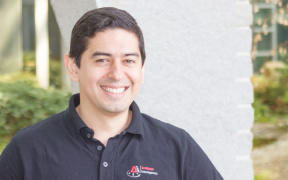
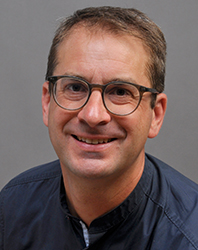
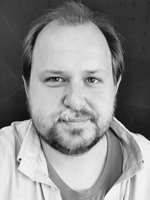
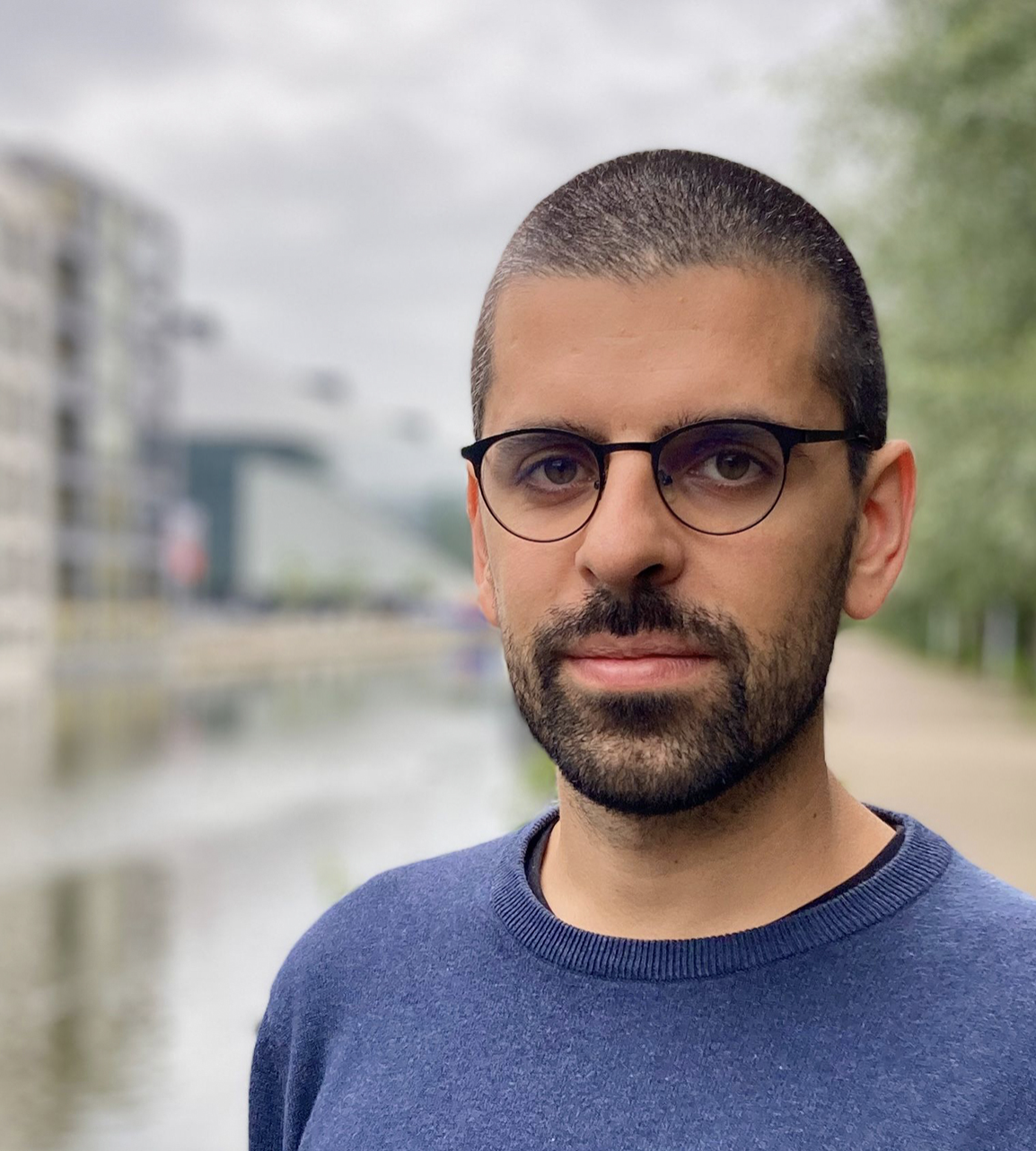
Alexis Maldonado serves as a Researcher and Manager of the robotics laboratory at the Institute for Artificial Intelligence (IAS), University of Bremen, where he oversees all hardware (robots, sensors) and software systems (ROS, drivers, calibration). Currently pursuing his PhD under Prof. Michael Beetz, he specializes in practical robotic implementations for real-world environments. His core research focuses on robotic grasping, manipulation, sensor integration for robot hands/arms, and end-to-end systems integration . Key projects include TUM-Rosie integration, the Boxy mobile manipulator, and REFILLS logistics robots. His work bridges theoretical robotics with deployable solutions in domains like warehouse automation and assistive kitchens. Analysis of his 15 most recent publications (2009-2025) reveals consistent emphasis on mobile manipulation dexterity , particularly tactile feedback for unmodeled objects, sim-to-real transfer for fluid handling, and perception-action loops in human-robot collaboration. His methodology prioritizes hardware-software co-design for robustness in unstructured environments. Maldonado actively contributes to the IAS research ecosystem through laboratory leadership and hands-on development of cognitive robotic platforms, supporting both academic research and industry applications in service robotics.
Anna-Carolina Haensch is a Lecturer at the University of Munich in the Chair of Statistics and Data Science in Social Sciences and the Humanities and an Assistant Professor at the University of Maryland in the International Program in Survey and Data Science. Her interdisciplinary work bridges statistics, computational social science, and natural language processing, with a focus on methodological innovation in social research. Education: PhD in Sociology, University of Mannheim (2017-2021) M.Sc. in Survey Statistics, University of Bamberg (2014-2017) B.A. in Political Science/Sociology, Ludwig-Maximilians-Universität München (2011-2014) Dr. Haensch's research centers on missing data, synthetic data, and big data applications in social sciences. She develops advanced statistical methods for survey data harmonization, multiple imputation techniques, and leverages natural language processing to analyze complex social phenomena. Her work consistently addresses methodological challenges in social research with practical applications for data collection and analysis. Her recent publications reveal a significant trend toward integrating large language models with traditional survey methodology, exploring how AI can enhance data collection, analysis, and interpretation in social science research. She has made substantial contributions to understanding missing data patterns, developing synthetic data approaches, and examining the societal implications of AI tools across multiple domains including mental health, political science, and housing policy. Scientific Awards: 2022 AAPOR Burns "Bud" Roper Fellow Award 2022 AAPOR Warren J. Mitofsky Innovators Award (as part of CTIS team) 2022 AAPOR Policy Impact Award (as part of CTIS team) 2011-2017 Max-Weber-Programm (undergraduate and graduate stipend) Dr. Haensch actively mentors the next generation of researchers, currently supervising 3 PhD theses on statistical education, machine learning applications in social sciences, and synthetic data generation with LLMs. She has guided approximately 6 master's theses and 15 bachelor's theses at the University of Munich since 2022, with topics primarily related to synthetic data, multiple imputation, and LLM applications. Her teaching spans statistical methods, data science techniques for survey researchers, and specialized topics in big data analysis. She has secured teaching grants including a €20,000 promotion for the RAINER project (R Assistant IN Error Resolution) for 2024-2025 and a €10,000 LMU-NYU Scholarship in 2023. She serves on several important boards including the Eurostat EMOS Board (2024-2026), the Ethics Commission of Faculty 16 at LMU (2023-2025), and as Women's Representative at the Institute for Statistics, LMU (2024-2026). Her collaborative work with the University of Maryland Social Data Science Center and involvement in the Global COVID-19 Trends and Impact Survey demonstrates her commitment to large-scale data collection initiatives and real-time social research.
Mark Müller-Linow is the Head of the Jülich Plant Phenotyping Center at Forschungszentrum Jülich's Institute of Bio- and Geosciences (IBG), Plant Sciences (IBG-2). His work focuses on sustainable agriculture and bioeconomy through plant phenotyping, integrating 2D/3D sensor platforms and machine learning for growth dynamics and stress response analysis. His research interests include quantitative plant phenotyping, sensor development, and image processing. Recent publications emphasize non-invasive imaging techniques, computational modeling, and cost-efficient phenotyping strategies across crops like cassava, wheat, and arnica. Scientific contributions highlight interdisciplinary approaches combining plant biology, engineering, and data science to address climate adaptation and resource efficiency. He leads projects on root architecture, leaf surface modeling, and microbial interactions in cereal crops.
Dr. Tobias Wojciechowski is a Senior Scientist and Crop Physiologist at Forschungszentrum Jülich's Institute of Bio- and Geosciences (IBG-2), Plant Sciences. He focuses on root system architecture, plant physiology, and sustainable agriculture approaches. His work contributes to the International Bioeconomy by exploring how root traits affect plant productivity and developing tools for field-based root analysis. Areas of Expertise: Plant Sciences, Root Dynamics, International Bioeconomy Research Focus: Root physiology, Plant-environment interactions, Alternative biomass sources Projects: CASSAVASTORE (cassava root genetics), PiñaFibre (pineapple leaf fibers), Rak Sam Sib (Asparagus racemosus) His recent publications examine root response to environmental stress, innovative phenotyping tools, and sustainable agricultural approaches. He collaborates internationally with institutions in Thailand, Colombia, and Germany, working with crops like cassava, sorghum, and pineapple. Key research areas include: root architecture, plant stress response, sustainable bioeconomy, plant physiology, field-based phenotyping, and agricultural innovation.
Joachim Rathmann is Adjunct Professor at Memorial University (Newfoundland, Canada) and Privatdozent at the University of Augsburg. He works at the Institute of Geography and Geology , Julius-Maximilians-Universität Würzburg, focusing on therapeutic landscapes , cultural ecosystem services , and environmental ethics . Current Projects : Leading DFG-funded research on urban forest health impacts (2022-2025), contributing to Environmental-Economic Landscape Assessment and Co-Environmental Virtue Ethics . Research Strengths : Integrates philosophy of nature with environmental psychology , exploring how deadwood perception and forest structures affect human well-being. Recent publications analyze 15 articles (2017-2024) covering climate change mitigation , AI in environmental protection , and therapeutic landscapes . The work combines empirical methods (GIS, physiological sensing) with theoretical frameworks (Heideggerian ethics, affordance theory). Key Collaborations : With Prof. Uwe Voigt (Philosophy), Prof. Elisabeth André (Human-Centered AI), and Dr. Christoph Beck (Climate Research). International Engagement : Participates in conferences across Canada , USA , France , and Belgium , fostering cross-disciplinary dialogue on anthropocene ethics .
Dr. Yulia Sandamirskaya is the Head of Research Center "Cognitive Computing in Life Sciences" at Zurich University of Applied Sciences (ZHAW), focusing on neuromorphic computing applications for embodied artificial intelligence. Her work bridges computational neuroscience and robotics, emphasizing neural-dynamic architectures for real-time decision-making, learning, and sensorimotor integration in autonomous agents. Key Research Areas: Neuromorphic hardware, dynamic neural fields, spiking neural networks, spatial language modeling, and autonomous sequence generation. Projects: Developed controllers for UAVs and robotic arms using event-based vision sensors, explored on-chip unsupervised learning, and designed models for spatial language interpretation in robots. Scientific Contributions: Her publications span robotics conferences and journals like Science Robotics and Frontiers in Neurorobotics , addressing topics such as path integration, obstacle avoidance, and cognitive architectures. Recent work (2024) includes visual odometry with resonator networks and hyperdimensional scene factorization on neuromorphic chips. Advising: Supervised multiple MSc theses at ETH Zurich and NSC/INI programs, mentoring students on neuromorphic navigation, spiking networks, and tactile learning. Collaborated with institutions like ETH Zurich, University of Queensland, and INI Bochum. Labs & Collaborations: Leads the "Neuromorphic Computing Applications: Embodied AI" group at ZHAW, partnering with INIvation (Zurich) and Jörg Conradt (KTH) on neuromorphic hardware implementations. Projects integrate cognitive models with robotic platforms, emphasizing energy efficiency and low-latency interaction.
Dr. Jan Tekülve is a researcher at the Institute of Neuroinformatics (INI), part of the Faculty of Computer Science at Ruhr University Bochum. Holding a Dr.-Ing. degree, he actively contributes to neural dynamics research and teaches Autonomous Robotics lab courses alongside preparatory mathematics and computer science courses for modeling. His research centers on neural dynamic process models for cognitive functions including visual search, scene memory, attentional mechanisms, and embodied agent behavior. Key interests span embodied cognition, autonomous robotics, scene grammar, and the neural basis of goal-directed actions, with a focus on translating biological principles into robotic implementations. Analysis of his 13 publications (2015-2024) reveals a consistent trajectory in neural dynamic modeling across cognitive domains. Early work examined developmental aspects of reaching and attentional shifts, evolving toward integrated models of intentional agents, active vision, and scene understanding. Recent contributions emphasize human-inspired architectures for naturalistic environments and foundational principles for embodied cognition. Within the INI's Theory of Cognitive Systems group, Tekülve collaborates extensively with Prof. Gregor Schöner and colleagues on interdisciplinary projects bridging experimental psychology, neurophysiology, and robotics. His teaching portfolio includes continuous instruction in Autonomous Robotics since 2016/2017 and preparatory courses supporting computational modeling education.
Professor Johannes Neugebauer serves as University Professor of Theoretical Organic Chemistry at the Institute of Organic Chemistry, University of Münster, where he leads a research group dedicated to developing quantum chemical methodologies for complex chemical environments including solvents, proteins, molecular crystals, and surfaces. His work bridges theoretical predictions with experimental validation through extensive collaborations across multiple disciplines. Neugebauer's research focuses on advanced computational approaches including subsystem-based Density Functional Theory (DFT) and density-based embedding methods for both ground and excited electronic states. His group has pioneered subsystem methods for excited states and linear-response properties, developed theoretical frameworks for light-driven processes, and created multi-level electron-correlation techniques. Key contributions include the Subsystem Quantum Chemistry Program SERENITY and insights into light-enabled deracemization of cyclopropanes through collaborations with experimental groups. The research spans applications in molecular spectroscopy, catalytic processes, and materials science, with emphasis on selective and efficient calculations for complex systems. Analysis of recent publications reveals a consistent trajectory toward increasingly sophisticated computational models for chemical reactivity, with growing emphasis on interdisciplinary applications in photochemistry, surface science, and catalytic reaction mechanisms. The work demonstrates strong integration between method development and practical applications across organic chemistry, materials science, and spectroscopy. Professor Neugebauer has mentored numerous doctoral students who have established careers at prestigious institutions worldwide, including ETH Zurich, University of Basel, Rutgers University, and University of Bristol. His research is supported by major collaborative initiatives including CRC 1459 "Intelligent Matter", IRTG 2678 Münster-Nagoya on Functional Pi-Systems, CMTC (Center for Multiscale Theory and Computation), SoN (Center for Soft Nanoscience), and BACCARA (International Graduate School of Battery Chemistry). The Neugebauer group operates within the University of Münster's Institute of Organic Chemistry while maintaining active participation in multiple interdisciplinary research centers. The group collaborates extensively with experimental chemistry teams both within Münster and internationally, particularly in the areas of photocatalysis, surface chemistry, and molecular modeling. Current research directions include advancing quantum chemical methods for machine learning integration and developing computational tools for next-generation materials design.
Markus Oeser is a full professor at the Chair and Institute of Highway Engineering, affiliated with the Federal Highway Research Institute (BASt). His research advances pavement technology, smart infrastructure, and sustainable materials through computational modeling and experimental characterization. Research Focus His work spans: Advanced asphalt materials (self-healing, inductive, nano-enhanced) Digital twins for real-time pavement monitoring Traffic flow modeling and AI-driven infrastructure management Sustainable recycling of construction waste Piezoresistive sensors for smart roads Publication Trends (2024-2025) Recent articles emphasize multi-scale modeling (atomic to structural levels), integration of AI/ML in pavement systems, and sustainability-driven material innovations. Dominant themes include nanomaterial-enhanced composites, digital twins for infrastructure, and traffic microsimulation. Affiliations & Infrastructure Leads research at BASt's highway engineering facilities, leveraging laboratories for materials testing, computational modeling, and full-scale pavement validation.
Jens Lemanski is an Associate Professor at the Philosophical Seminar of the University of Tübingen, with part-time roles as an Adjunct Professor at the University of Münster and a Researcher at Fernuniversität Hagen. His research spans Logic and Philosophy of Logic , Linguistic Communication , 19th Century German Philosophy , and Visualization in Mathematics . His work focuses on the historical and philosophical foundations of logic diagrams, including projects like Logic Diagrams in Kantianism (Fritz-Thyssen-Stiftung) and Gestures and Diagrams in Visual-Spatial Communications (DFG-priority programme). He has contributed extensively to understanding the evolution of logic from antiquity to modernity, emphasizing the role of diagrams in Euler-type systems , Byzantine logic , and Kantian thought . Lemanski co-edits Historia Logicae (College Publications) and serves as a Book Review Editor for History and Philosophy of Logic . His recent publications analyze the interplay between transcendental philosophy , formal logic , and AI-driven multimodal communication . He holds a PhD from Johannes Gutenberg University Mainz (2011) and contributes to conferences like Diagrammatic Representation and Inference (2024).
Professor Zhixiong Guo is a distinguished faculty member in the Department of Mechanical and Aerospace Engineering at Rutgers, The State University of New Jersey. He serves as Editor-in-Chief for the Journal of Enhanced Heat Transfer and Heat Transfer Research, and has made significant contributions to thermal sciences and engineering. His research spans multiple domains including radiative heat transfer, ultrafast laser-tissue interactions, and nanoscale thermal phenomena. Professor Guo received his educational foundation at Tsinghua University in Beijing, China, where he earned a B.S., M.S., and Dr. Eng. in Engineering Physics. His academic excellence was evident as he graduated first in his class (1/28) for his B.S. and completed his M.S. one year ahead of schedule. He then pursued and completed his Ph.D. in Mechanical Engineering from Polytechnic University (now Polytechnic School of Engineering, New York University) in just two years. Professor Guo's research interests center on advanced heat transfer phenomena, with particular expertise in radiative transfer in participating media, ultrafast laser-tissue interactions, and nanoscale thermal transport. His work bridges theoretical modeling with practical applications in energy systems, biomedical engineering, and materials science. He has pioneered computational methods for solving complex radiation transfer problems and developed innovative optical sensing techniques using whispering-gallery mode resonators. Analysis of Professor Guo's recent publications reveals a strong focus on emerging thermal technologies, including machine learning applications in heat transfer prediction, nanofluid thermal properties, and advanced materials for thermal management. His work demonstrates a clear trajectory from fundamental radiative transfer research toward practical applications in energy efficiency, biomedical diagnostics, and advanced manufacturing. Professor Guo has received numerous prestigious honors including: Fellow of the American Society of Mechanical Engineers (ASME), 2011 Fellow of the American Society of Thermal and Fluids Engineers (ASTFE), 2021 Rutgers, The Board of Trustees Award for Excellence in Research, 2018 As Editor-in-Chief of two leading journals in the field, Professor Guo has significantly shaped the direction of thermal sciences research. His laboratory at Rutgers focuses on cutting-edge research in optical thermal sensing, ultrafast radiation phenomena, and advanced computational methods for heat transfer analysis. Current research directions include machine learning applications in thermal systems and novel approaches to energy conversion and storage.
Tom Hanika is a Visiting Professor (W2) at the University of Hildesheim since April 2023, having previously been affiliated with the University of Kassel in the Department of Electrical Engineering/Computer Science. He also held a visiting professorship at Humboldt University of Berlin until February 2024 and has taught at the University of Würzburg. His academic journey includes interim professorships and lectureships across multiple German institutions. Dr. Hanika's research centers on the theoretical foundations of knowledge discovery in graph data structures with particular emphasis on formal concept analysis. He applies advanced mathematical techniques from algebra, geometric measure theory, topology, and logic to address fundamental challenges in artificial intelligence and machine learning. His work bridges pure mathematics with practical applications in data science, especially focusing on the 'curse of dimensionality' in high-dimensional data spaces. His publication record reveals a strong trajectory in intrinsic dimension analysis, conceptual measurement theory, and knowledge representation in formal contexts. The most recent works demonstrate increasing focus on large-scale geometric learning and the mathematical underpinnings of dimensionality effects in machine learning systems. His research consistently connects theoretical mathematics with practical data science applications. Dr. Hanika serves actively in the academic community as an Editorial Board Member and has chaired program committees for the International Conference on Formal Concept Analysis (ICFCA 2021) and the International Conference on Conceptual Structures (ICCS 2021). He regularly reviews for top journals including Discrete Applied Mathematics and Scientometrics. He leads the 'Dimension Curse Detector' project funded by the LOEWE Exploration program of the State of Hesse, and maintains significant open-source contributions including conexp-clj (a Formal Concept Analysis research tool) and BibSonomy (a scholarly social bookmarking system). These projects serve as both research platforms and community resources for the formal methods and data science communities.
Fernando P. Santos is an Associate Professor at the Informatics Institute, University of Amsterdam . He leads the Prosocial Dynamics Lab and serves as scientific lab manager for the Civic AI Lab , focusing on AI systems that promote prosocial behavior and fairness. Current affiliation: University of Amsterdam (2025) Previous roles: Postdoctoral Fellow at Princeton (2018-2025) Education: PhD in Computer Science, Instituto Superior Técnico (2018) His research lies at the intersection of AI and Complex Systems , with emphasis on behavioral dynamics in adaptive learning systems and algorithmic fairness. Key themes include: Indirect reciprocity in hybrid human-AI populations Reinforcement learning for fair cooperation Social norm modeling in multi-agent systems Polarization dynamics in LLM agents Transportation network interventions for societal equity Responsible AI governance frameworks Recent work (2024-2025) explores performative prediction in game theory, fairness guarantees in RL, and LLM-driven social dynamics. His 15 most recent publications span multi-agent cooperation , algorithmic fairness , and urban/social policy design . Scientific recognitions include: Victor Lesser Dissertation Award (2018) APPIA Best Thesis in AI (2017-2018) ELLIS Scholar (2025) He received a NWO-M grant (2024) for Cooperation and reputation in multi-agent reinforcement learning and an ERC Starting Grant (2023) for the RE-LINK project studying algorithmic recommendations' social impacts. Current PhD advisee: Roman.
Daniela Doneva, Ph.D., is a Lecturer at the Institute for Astronomy and Astrophysics (IAAT) , University of Tübingen. Her work spans theoretical and computational astrophysics, focusing on nonlinear gravitational phenomena in modified theories of gravity. Key affiliations: Institute for Astronomy and Astrophysics (IAAT), University of Tübingen Degree: Ph.D. in Physics Research interests include: Black Hole Scalarization : Spin-induced and curvature-induced scalarization mechanisms in black holes and neutron stars. Modified Gravity Theories : Einstein-Gauss-Bonnet, scalar-tensor theories, and teleparallel gravity extensions. Gravitational Wave Physics : Modeling waveforms, stability analysis, and LISA mission applications. Numerical Relativity : Simulations of compact object mergers and nonlinear evolutions. Her publications emphasize computational methods (e.g., neural network surrogates), stability analysis, and observational constraints from gravitational wave detectors like LISA. No scientific awards or student advisement details were found in the provided texts.
Prof. Dr. Martin Biewen is a Full Professor of Statistics, Econometrics and Quantitative Methods at the University of Tübingen 's Faculty of Economics and Social Sciences. Since 2023, he serves as Scientific Director of the Institute for Applied Economic Research (IAW Tübingen) and is a member of the Cluster of Excellence - Machine Learning for Science. His research spans income distribution , labor economics , education economics , and microeconometrics , with recent work applying machine learning to inequality analysis. PhD, University of Heidelberg (2000) Habilitation, University of Mannheim (2005) His methodological innovations include bootstrap inference for inequality measurement and Stata implementations of decomposition techniques. He has served on multiple advisory boards including the German Federal Ministry of Labour and Social Affairs and the German Economic Association 's standing committees. Current grants include DFG Priority Programme 1764 and leadership roles in the LEAD Graduate School. Articles demonstrate expertise in minimum wage impacts , wealth inequality , and gender gaps in economic literacy . He has developed statistical software packages for Stata and R used in inequality analysis across 20+ journals.