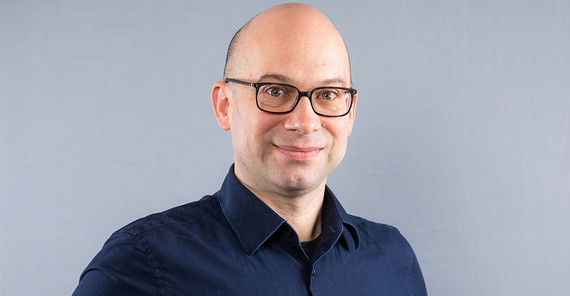
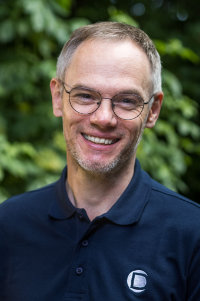
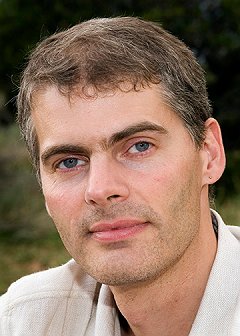
Prof. Dr. Jennifer Hannig is a leading researcher in Explainable Artificial Intelligence (XAI) and computational biology at the Technical University of Mittelhessen's KITE Competence Center. Her work bridges AI transparency with applications in cardiology, digital pathology, and smart home technologies, focusing on interpretable algorithms for safety-critical domains. Junior Research Group Leader, TimeXAI project (2024-2027, €1.09M) Collaborations with Kerckhoff Clinic, CRS medical GmbH, and Veli GmbH Member of good scientific practice committee Mentor at Mentoring Hessen and AI Grid initiative Research Focus : Developing human-understandable XAI methods for time series classification, particularly in cardiovascular diagnostics and smart home monitoring. Her approach combines mathematical modeling (Petri nets) with deep learning to ensure reliable AI decision-making. Scientific Contributions : Key publications in PLOS Computational Biology , Frontiers in Digital Health , and Bioinformatics , with h-index of 8. Developed AI models for myocardial scar detection, Hodgkin lymphoma analysis, and manufacturing predictions. Poster Award – 1st Place (German Conference on Bioinformatics, 2013) ECCB 2016 Travel Award Contact: jennifer.hannig@kite.thm.de
Prof. Dr. Ulrich Kortenkamp is a Professor for Mathematics Education at the University of Potsdam since October 2014, holding a position in the Institute of Mathematics within the Faculty of Mathematics and Natural Sciences. He also serves as an Adjunct Professor at Griffith University in Gold Coast, Australia since May 2020. His academic career spans multiple institutions across Germany including Martin Luther University Halle-Wittenberg, University of Applied Sciences Karlsruhe, and TU Berlin. Prof. Kortenkamp's research focuses on mathematics education, particularly in the areas of digital learning environments, computational thinking development, place value understanding, and teacher education. His work bridges theoretical frameworks with practical applications in classroom settings, with a strong emphasis on the integration of technology in mathematics instruction. He has extensively studied how digital tools, particularly the Fingu app, can enhance early mathematical understanding and how language affects place value comprehension across different cultural contexts. His recent publications reveal a strong focus on sustainable development in teacher education, cross-linguistic studies of place value understanding, the impact of digital tools on early mathematics development, geometry education, and the integration of subject knowledge with didactic approaches in teacher preparation. His research consistently addresses how digital environments can transform mathematics teaching while maintaining strong conceptual foundations. Ars legendi Faculty Prize in Mathematics category (2020) for outstanding achievements in teaching, advising, and mentoring, awarded by the Stifterverband (Donors' Association) along with major German scientific societies Prof. Kortenkamp leads several significant research projects including DigiProMIN (developing digitally supported continuing education modules for mathematics teachers), Mathematics Education in the Digital Age (fostering international exchange between University of Potsdam and Griffith University), and Place Value Understanding (investigating primary school children's mathematical development across institutions in Germany and Australia). He is also involved in the SPIES-M project focused on quality initiatives for teacher education and the QuaMath project aimed at promoting teaching quality in mathematics through teacher training courses. He directs a research group focused on mathematics didactics at the University of Potsdam, collaborating with colleagues including Prof. Dr. Birte Friedrich and Prof. Dr. Sebastian Geisler, and working with a team of researchers on various aspects of mathematics education research, including digital learning environments, teacher professional development, and early mathematics concepts.
Karin Mora is a postdoctoral researcher at Leipzig University , affiliated with the Faculty of Physics and Earth System Sciences . She leads the DeepFeatures project funded by the European Space Agency and contributes to the proposed Breathing Nature excellence cluster, combining biology, economics, meteorology, and physics to study biodiversity-climate-human interactions. Research Focus : Phenological Rhythms in Ecosystems AI & Mathematical Modeling of Climate Impacts Earth System Data from Satellites and Citizen Science Scientific Contributions : DeepExtremeCubes methodology for climate extremes SpectralIndices.Jl software for remote sensing Plant Trait Coordination and Forest Monitoring Innovations Awards : Forschungspreis (Paderborn University, 2015) Technion Postdoctoral Scholarship (2014-15) Funding for EWM Summer School Course (2013) Education : PhD in Applied Mathematics (University of Bath, 2014) Master of Mathematics (University of Reading, 2008) Outreach : MDR Wissen Radio Contributions Royal Society Summer Science Exhibition Co-organizer of EuropaBON Stakeholder Dashboard
Nicholas Tan Jerome is a Researcher at the Karlsruhe Institute of Technology (KIT), specifically working at the Institute for Process Data Processing and Electronics (IPE). His research focuses on scientific data management, real-time monitoring, low-latency computing, and scientific visualization for large-scale physics experiments and medical imaging applications. Dr. Jerome earned his PhD in Electrical Engineering from KIT in 2019, following an MSc (2010) and Dipl.-Ing. (2009) from University of Applied Science Mannheim. His educational background in electrical and automation engineering provides the foundation for his current research in scientific data systems. His research program addresses critical challenges in managing and visualizing data from large-scale scientific experiments. Dr. Jerome has developed innovative approaches for real-time data processing, low-latency visualization, and scientific data management systems. His work bridges computer science, electrical engineering, and domain-specific applications in physics and medical imaging, with particular focus on applying machine learning to time-series forecasting and causal inference in complex experimental setups. Analysis of his recent publications reveals a strong trajectory in neutrino physics data systems (KATRIN experiment) and advanced visualization frameworks (BORA). His work demonstrates consistent innovation in making scientific data more accessible and interpretable for researchers working with complex experimental setups. Dr. Jerome has received recognition through publications in high-impact journals including Science, Nature Communications, and Physical Review Letters. His collaborative approach is evident in his extensive co-authorship across physics, computer science, and biomedical domains. He has advised or collaborated with numerous researchers across disciplines, contributing to projects that integrate data acquisition, processing, and visualization for scientific discovery. His current work focuses on developing practical tools that help scientists make better, faster decisions from noisy and high-dimensional experimental data. Dr. Jerome leads development of the BORA framework for personalized data display in large-scale experiments and contributes to the KATRIN experiment's scientific data management infrastructure. His technical expertise spans real-time systems, scientific visualization, and machine learning applications for experimental physics.
Ying-Tung Lin is an Associate Professor at the Institute of Philosophy of Mind and Cognition , National Yang Ming Chiao Tung University (NYCU), Taipei, Taiwan. His research sits at the intersection of philosophy of mind, cognitive science, and AI ethics, with a focus on self-experience in mental simulation, algorithmic bias, and authenticity in memory interventions. Education: PhD in Philosophy from Johannes Gutenberg-Universität Mainz (2014). Research interests include: Philosophy of Mind & Consciousness Cognitive Enhancement via Neurotechnology Algorithmic Fairness in AI Episodic Memory & Bodily Self-Identification Observer Perspective in Mental Simulation Autobiographical Self-Modeling His publication trends show interdisciplinary engagement between 2014-2024, covering topics like dream epistemology , AI governance frameworks , and neuroethical policy . Key methodologies involve conceptual analysis combined with empirical data from cognitive studies. Advising information is not explicitly available in provided texts. Grants or funding sources aren't mentioned in the scraped content. Dr. Lin participates in cross-disciplinary initiatives like the Philosophy, Intelligence, Brain, and Mind Program at NYCU, and contributes to academic events including the International Society for the Philosophy of the Sciences of the Mind conference (2025).
Professor André Niemann at the University of Duisburg-Essen's Institute of Hydraulic Engineering and Water Management is a leading expert in water resources management, focusing on flood protection, dam control systems, and AI-driven hydrological forecasting. His work bridges practical engineering challenges with advanced data science applications. Academic Leadership: Coordinated projects like interSim (interactive simulation for vocational training) and PROWAVE (forecast-based dam control) Research Impact: Pioneered ensemble optimization methods for reservoirs and LSTM models for inflow forecasting Technological Innovation: Developed AI frameworks for sensor data quality control in water management His research addresses critical intersections between hydraulic engineering and climate resilience, with recent projects analyzing flood forecasting systems ( HÜProS ), urban drainage optimization, and sustainable hydropower solutions using legacy mining infrastructure. Collaborations span institutions like Harz Waterworks, Deltares, and international conferences (IAHR, ICOLD, EGU). Publications since 2012 cover topics from underground pumped storage feasibility to real-time control of urban reservoirs, with a growing emphasis on machine learning applications since 2023. He actively engages in fieldwork, including excursions to dams and control centers, and teaches modules ranging from hydromechanics to environmental monitoring.
Philipp Toussaint is a PhD student in Information Systems at the Karlsruhe Institute of Technology (KIT) and an affiliated researcher at the Chair of Information Infrastructures at the Technical University of Munich (TUM). He is part of the Helmholtz Information & Data Science School for Health (Heidelberg) and affiliated with the German Cancer Research Center (DKFZ). His research spans behavioral and design-oriented methods in information systems, integrating medical informatics and computer science. Education: Bachelor's and Master's in Information Systems from the University of Cologne (2016–2020). Work Experience: Research associate at KIT (2020–present), research assistant at KIT and University of Kassel (2017–2020). Research Interests include human-AI collaboration, explainable AI (XAI), healthcare IT, gamification in AI evaluation, and blockchain applications in genomics. His current project , 'XAI-Omics,' applies XAI to life science data analysis. Recent Publications focus on privacy trade-offs in genetic data sharing, gamification for AI evaluation, and blockchain in genomics. His work has appeared in top journals like Briefings in Bioinformatics and Journal of the American Medical Informatics Association . Scientific Awards: Best Paper Nomination (HICSS 2024), Dean's Award (University of Cologne, 2019). Academic Services include reviewing roles for journals/conferences (THCI, HPT, ECIS, etc.). He has delivered invited talks on XAI in clinical decision support systems (Nov. 2024).
Prof. Michael Hintermüller is the Director of the Weierstrass Institute (WIAS) and holds a professorship in Applied Mathematics at Humboldt-Universität zu Berlin. He serves as Founding Coordinator of BR50, Spokesperson of the Mathematical Research Data Initiative (MaRDI), and Board Member of the MATH+ Cluster of Excellence. His research focuses on nonsmooth optimization, PDE-constrained control, mathematical image processing, and quasi-variational inequalities. Leadership Roles: Director of WIAS; Founding Coordinator of BR50; Spokesperson of MaRDI; Board Member of MATH+ Key Research Areas: Mathematical image processing, optimization under uncertainty, PDE-constrained optimization, shape/topology optimization, learning-informed constraints Recent Applications: Image deblurring/denoising/demodulation, energy network modeling, gas dynamics on pipeline networks, thermoforming simulations, strained photonic device design. His work combines analytical rigor with numerical methods for inverse problems, including adaptive regularization and physics-informed neural networks. Scientific Leadership: Active in mathematical modeling for biomedical imaging (e.g., quantitative MRI) and industrial applications (e.g., semiconductor design, gas flow optimization). Develops novel algorithms for nonsmooth PDE systems and contributes to the theoretical foundations of quasi-variational inequalities and generalized Nash equilibrium problems.
Prof. Dr. Maximilian Altmeyer is a faculty member at Saarland University of Applied Sciences , where he serves as Professor of Web Development and Mobile Applications Engineering. His research focuses on Human-Computer Interaction, User Experience (UX), Player Experience (PX), Gamification, and Digital Health. Head of Interaction Experience Group Member of Faculty Council Deputy Head of Production Informatics His teaching includes courses on Web Development , Game Development , and Interactive Systems . He supervises B.Sc. and M.Sc. theses on gamification topics and collaborates with research institutions like centigrade. Research Trends : Recent publications examine personalized gamification in fitness applications, user-created gamification systems, and behavioral interventions through interactive technologies. Key areas include Hexad user type analysis, health behavior modification, and live-streaming UX. Special Recognition at CHI PLAY 2020 Special Recognition at CHI PLAY 2019 Special Recognition at CHI PLAY 2022 He advises on ongoing theses about gamified meditation and customization vs. personalization , while serving as committee member for conferences like CHI, MobileHCI, and IEEE VR.
Manuel Burghardt is a full-time Professor of Computational Humanities at the Institute of Computer Science , Leipzig University . He coordinates the Bachelor's and Master's programs in Digital Humanities and serves as a spokesperson for the GI's Computer Science and Digital Humanities Group and the Forum for Digital Humanities Leipzig . PhD in Information Science (summa cum laude) from University of Regensburg Magisterstudium in Information Science, English Linguistics, General Linguistics, and Corpus Linguistics at University of Regensburg Burghardt's research spans multiple Computational Humanities domains: Digital Environmental Humanities : Integrating Computational Literary Studies with Biodiversity Research via NLP and Information Retrieval Immersive Humanities : Applying AR/VR/XR, Eye Tracking, and Tangible Interfaces for Digital Humanities Text Mining & NLP : Focused on text reuse detection, similarity analysis, and sentiment modeling Video Analytics : Analyzing news videos and cinematic media through Distant Viewing techniques Theory of Digital Humanities : Investigating methodological foundations and scientometric trends Computational Game Studies : Multimodal empirical analysis of games Computational Spatial Humanities : Spatial data analysis in humanities contexts His recent publications demonstrate strong focus on: Improving OCR for historical documents (2015-2020) Computational drama analysis using sentiment and text mining techniques (2016-2019) Music information retrieval applications in folk song and manuscript analysis (2015-2019) Development of specialized tools for humanities data processing
Joachim Baumeister is a Professor at the Chair of Computer Science VI - Artificial Intelligence and Knowledge Systems within the Institute of Computer Science at the University of Würzburg's Faculty of Mathematics and Computer Science. While his primary employment since September 2010 has been at denkbares GmbH, a company specializing in knowledge-based systems, he continues to regularly give lectures at the university. His research focuses on Semantic Information Systems, Knowledge Graphs, Deep Learning applications, Natural Language Processing, and Knowledge-based Configuration for Industry 4.0. Professor Baumeister's work bridges theoretical AI research with practical industry applications, particularly in knowledge-based configuration systems and semantic technologies. His recent publications (2020-2024) reveal a strong emphasis on product configuration systems, semantic knowledge representation, regulatory document processing, and knowledge-based systems. His research has evolved from foundational work on semantic wikis and knowledge engineering to more recent applications involving deep learning and large language models, demonstrating adaptability to emerging technologies while maintaining focus on practical knowledge representation problems. Professor Baumeister's work demonstrates significant contributions to case-based reasoning, knowledge configuration, and semantic technologies, with applications spanning regulatory compliance, industrial configuration systems, and document processing. His current research areas include: Semantic Information Systems and Knowledge Graphs Deep Learning for Image Recognition and Language Understanding Knowledge-based Configuration for Industry 4.0 Natural Language Processing Intelligent Personal Assistants and Chat Bots Though specific students aren't listed in the provided information, Professor Baumeister actively invites students to contact him regarding projects, bachelor theses, and master theses in his areas of expertise. His work at denkbares GmbH focuses on the design, implementation, and evolution of knowledge-based systems and semantic information systems.
Prof. Dr. Alexander Schönhuth is a Professor at Bielefeld University, affiliated with the Faculty of Engineering, the Center for Biotechnology (CeBiTec), and the Institute for Bioinformatics Infrastructure (BIBI). He leads the Genome Data Science Group and serves as Head of Microbial Analyses and Services at BIBI. His academic roles include serving on the Faculty Conference as Personal Deputy for Prof. Dr. Helge Rhodin and as a Member of the Habilitation Committee. He provides academic student advisory services for the Master of Science in Computer Science program. Prof. Schönhuth's research focuses on the intersection of bioinformatics, computational biology, and data science, with particular emphasis on genome data analysis and precision medicine. His work spans multiple domains including metagenome assembly, viral haplotype reconstruction, single-cell sequencing analysis, and the application of machine learning techniques to complex genetic diseases. He has developed numerous computational methods and tools such as StrainXpress, Strainline, VeChat, and ProSolo that address specific challenges in genomic data analysis. His recent publications reveal a strong trend toward integrating advanced machine learning approaches, particularly deep learning and graph-based methods, with genomic data analysis. His work bridges the gap between theoretical computational methods and practical applications in healthcare, especially in precision medicine and oncology. The research demonstrates a consistent focus on developing scalable, accurate computational methods for analyzing complex genomic datasets, with increasing attention to clinical applications. Prof. Schönhuth has secured significant research funding, including ongoing European Union support for the "Smart pathology slide scanner for diagnosis and patient-specific treatment recommendation in oncology" project (2025-2027) and previously completed the "ALgorithms for PAngenome Computational Analysis" (ALPACA) project (2021-2024), which was funded by the European Union under the Marie Skłodowska-Curie program. His research collaborations span multiple institutions across Europe including Centre National de la Recherche Scientifique, Comenius University Bratislava, Dutch Research Council, and others. He leads the Genome Data Science Group within the Faculty of Engineering and is closely associated with the Bielefeld Center for Data Science (BiCDaS). His laboratory work focuses on developing computational methods for genomic data analysis, with particular attention to strain-aware metagenome assembly, viral quasispecies analysis, and precision medicine applications. The group maintains strong connections with both computational and biological research communities, facilitating interdisciplinary approaches to complex genomic challenges.
Benjamin C. Pierce is the Henry Salvatori Professor of Computer and Information Science in the School of Engineering and Applied Science at the University of Pennsylvania. As a Fellow of the ACM, he has made significant contributions to programming language theory and formal methods. His academic leadership includes previous editorial roles as co-Editor in Chief of the Journal of Functional Programming and Managing Editor for Logical Methods in Computer Science. His research spans multiple interconnected domains in programming language theory, with particular emphasis on type systems and their applications to security and verification. Pierce's work bridges theoretical foundations with practical implementations, most notably through his development of the Unison file synchronization tool and contributions to the Clowdr virtual conference platform. His research interests form a cohesive trajectory from foundational type theory to applied security and verification techniques. Pierce's scholarly output shows consistent focus on property-based testing, type systems, and formal verification methods. His recent publications demonstrate evolving interests in differential privacy verification, synchronization technologies, and the practical challenges of implementing formal methods in real-world systems. The progression of his work reflects both theoretical depth and practical relevance to software development challenges. Fellow of the ACM Author of influential textbooks Types and Programming Languages and Software Foundations Lead designer of the Unison file synchronizer Co-developer of the Clowdr virtual conference platform Former editorial leadership for multiple prominent programming languages journals As an educator and mentor, Pierce has contributed to the Programming Languages Mentoring Workshop (PLMW) and has served on numerous conference program committees. His academic service extends to SIGPLAN leadership roles including SIGPLAN Vice Chair and Steering Committee membership. His textbook Software Foundations has become a standard resource for teaching formal methods and proof assistants.
Aljaž Božič is a Research Scientist at Meta Reality Labs Research , focusing on neural rendering, 3D reconstruction, and AI-driven geometry modeling. He earned his Ph.D. in Computer Science from the Technical University of Munich (TUM) and holds a Master's in Computer Science from TUM and a Bachelor's in Mathematics from the University of Ljubljana . His research spans computer vision, graphics, and artificial intelligence , with a focus on neural rendering , generative AI , and 3D deformable object modeling , targeting applications in VR/AR and robotics. His work includes time-consistent dynamic scene reconstruction (SceNeRFlow), volumetric hair appearance modeling, and high-fidelity walkable VR spaces (VR-NeRF), alongside efficient NeRF distillation and calibration methods (Neural Lens Modeling). Key article trends include Transformer-based monocular reconstruction (TransformerFusion), neural parametric shape models (NPMs), and self-supervised non-rigid tracking (Neural Deformation Graphs). He has contributed to open-source projects like the TransformerFusion GitHub repository , emphasizing MIT-licensed tools for scene reconstruction. At TUM, he served as a Teaching Assistant for courses such as 3D Scanning and Spatial Learning and 3D Vision Seminar , bridging academic instruction with research innovation. His work integrates advanced neural networks with practical optimization techniques, advancing fields like RGB-D reconstruction (DeepDeform) and variational SLAM.
Leonardo Banh is a Researcher at the University of Duisburg-Essen within the Faculty of Computer Science and its Chair of Business Information Systems and Software Engineering . M.Sc. in Business Information Systems (University of Duisburg-Essen, 2022) B.Sc. in Business Information Systems (University of Duisburg-Essen, 2020) Semester abroad at Instituto Superior Técnico, Lisbon (2021) His research focuses on Generative AI and its socio-technical implications, particularly in Machine Learning and Deep Learning applications. He explores intersections with NeuroIS , Smart Tourism , and E-commerce Ecosystems , emphasizing sustainability and digital transformation. Recent publications analyze Generative AI in Software Engineering , AI in Music Sentiment Analysis , and AI-Based Sign Language Translation . His work often involves design science research and grounded theory frameworks. Best Paper in Track Award (ICIS 2024) Nominated for Best Paper Award (ICIS 2024) Outstanding Reviewer (ICIS 2024) As advisor, he supervises theses on topics including AI-Based Mental Health Chatbots , Generative AI in HR , and Smart Tourism Applications . He also contributes to the Institute of Computer Science and Information Systems and serves on appointment/habilitation committees.