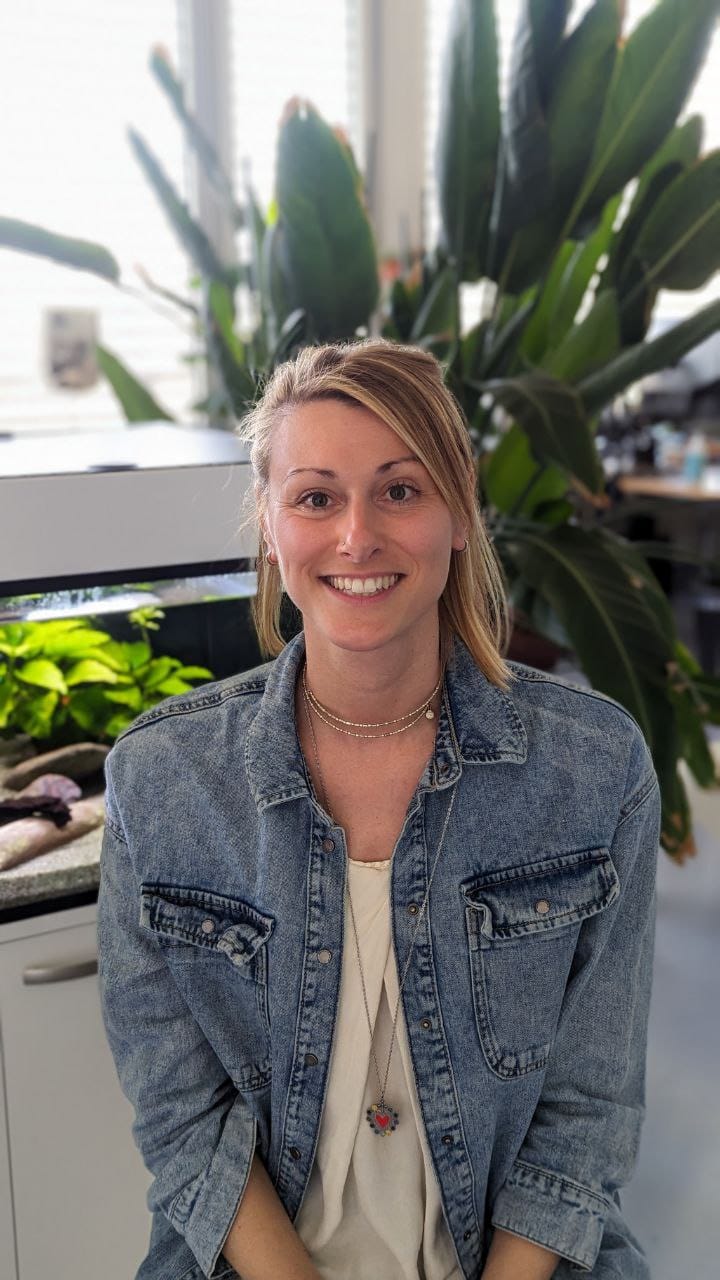
Dr. Elisa Donati is a researcher and independent group leader at the Institute of Neuroinformatics , affiliated with both the University of Zurich and the Swiss Federal Institute of Technology Zurich . Her work bridges neuromorphic engineering, biomedical signal processing, and wearable healthcare technologies, with a focus on creating brain-inspired systems for neuroprosthetics and rehabilitation. Affiliation: Institute of Neuroinformatics, University of Zurich & ETH Zurich Email: elisa@ini.uzh.ch Elisa’s research emphasizes developing neuromorphic signal processing strategies for wearable and embedded systems, enabling real-time closed-loop interactions with the nervous system. She specializes in translating neuroscience insights into energy-efficient technologies for digital health applications, including neuroprosthetics and personalized biomedical devices using neuromorphic hardware. Her recent publications (2024–2025) highlight advancements in gesture recognition via EMG and event-based systems, neuromorphic heart rate monitoring , and spiking neural network architectures . These works span biomedical signal processing, low-power computing, and adaptive algorithms, reflecting her commitment to robust, real-time, and brain-inspired solutions for healthcare. Elisa’s contributions to neuromorphic computing are evident in her exploration of heterogeneous population encoding , event-driven processing , and ultra-low-power microcontrollers . Her projects often integrate wearable systems with neuroscience, aiming to improve prosthetic control and rehabilitation technologies .
Dominique Chen is a Professor at Waseda University's School of Culture, Media and Society since 2022, previously serving as Associate Professor from 2017-2022. A French national born in 1981, he holds a Ph.D. in Interdisciplinary Informatics from the University of Tokyo (2013). His work bridges technology, art, and human experience with a focus on digital well-being and more-than-human relationships. Chen's research interests include human-microbe interaction, neo-cybernetics, and the design of systems that foster mutual care between humans and non-human entities. His work with the Nukabot project exemplifies this interdisciplinary approach, exploring how fermentation processes can serve as metaphors for communication and relationship building. He leads the Ferment Media Research group, investigating how fermentation principles apply to digital cultures and communication systems. His recent publications reveal a consistent focus on designing for well-being in digital societies, with particular attention to translation processes, human-microbe relationships, and the creation of systems that support co-adaptive interaction. The Nukabot research series demonstrates how traditional fermentation practices can inform novel interaction paradigms that acknowledge and incorporate more-than-human perspectives. Best Paper Honorable Mention (2024) - ACM Synlogue with Aizuchi-bot ACM SIGGRAPH Special Prize (2023) - Nukabot Best of AppStore 2015/2016 - Picsee/Syncle applications Good Design Award (2008) - Creative Commons Japan Super Creator certification (2009) - IPA Exploratory IT Program Chen has advised numerous projects through his leadership of Ferment Media Research and has served on various committees including the Good Design Award jury (2016-), Yomiuri Shimbun Reading Committee, and advisory boards for art and design institutions. His work extends beyond academia through his founding of Divideal Inc. (acquired by Smart News in 2018) and Creative Commons Japan (now Commonsphere). His laboratory, Ferment Media Research, explores interdisciplinary connections between fermentation processes, digital systems, and human relationships, creating installations like Nukabot that facilitate human-microbe interaction and Last Words/TypeTrace that examines writing processes and communication.
Georg Martius is a Full Professor in the Department of Computer Science at the University of Tübingen's Faculty of Science and a Max Planck Research Group Leader at the MPI for Intelligent Systems. Since April 2023, he has been a core member of the DFG-funded Cluster of Excellence 'Machine Learning: New Perspectives for Science,' which received extended funding through 2032 for its mission to integrate machine learning into fundamental scientific discovery processes. His academic foundation includes a PhD from the University of Göttingen and Bernstein Center for Computational Neuroscience (2005), a Diploma in Computer Science from the University of Leipzig (2003), and a visiting research period at the University of Edinburgh's Division of Informatics. Postdoctoral positions followed at the Max Planck Institutes for Dynamics and Self-Organization (Göttingen, 2009), Mathematics in the Sciences (Leipzig, 2010), and IST Austria (2015). Professor Martius's research pioneers the intersection of reinforcement learning, robotics, and tactile sensing, with emphasis on developing autonomous systems capable of natural locomotion, dexterous manipulation, and physical-world understanding. His work bridges theoretical machine learning with practical hardware applications, particularly in creating differentiable simulators, superresolution tactile sensors, and biologically plausible learning frameworks for robotic control. Analysis of his 2024-2025 publications reveals dominant trends in offline reinforcement learning (especially goal-conditioned and diversity-maximization techniques), object-centric representation learning for video understanding, and tactile sensing innovations. A strong thread connects foundation models to world model construction, while his work on differentiable physics engines enables precise collision handling and contact dynamics for real-world robotic control. His leadership roles include directing the Distributed Intelligence research team at Tübingen and contributing to major collaborative initiatives like the Real Robot Challenge and Myochallenge 2022. The Cluster of Excellence appointment represents recognition of his contributions to transforming scientific methodology through machine learning, particularly in automating hypothesis generation and experimental design. Current projects focus on integrating large-scale machine learning with embodied intelligence, advancing tactile perception systems like the Minsight vision-based sensor, and developing neuroplasticity-inspired approaches for robust out-of-distribution detection. His work directly impacts fields requiring physical interaction intelligence, from autonomous navigation to medical robotics, with emphasis on sample-efficient learning from limited real-world data.
Aura Istrate is a Lecturer/Assistant Professor in Urban Planning & Sustainable Urbanism at the School of Architecture, Planning and Environmental Policy at University College Dublin (UCD). With an international background spanning multiple continents, she conducts interdisciplinary research on sustainable urban development, focusing on active mobility, nature-based solutions, and climate-neutral cities. She teaches GIS and urban planning modules while coordinating several significant research projects across European and Asian contexts. University College Dublin, School of Architecture, Planning and Environmental Policy Primary Coordinator of C-NEWTRAL (Horizon MSCA-DN 2024-2028) Co-Leader of REALLOCATE (Horizon Europe project 2023-2027) Principal Investigator for BIODIVERSA+ projects (NatureScape and NBS4AQUAMISSION) Educated at the University of Architecture and Urban Planning 'Ion Mincu' in Bucharest (BA and MA) and the University of Liverpool (PhD), Dr. Istrate further enhanced her teaching credentials with a Professional Certificate in University Teaching & Learning from UCD. Her academic journey reflects a strong foundation in architectural and urban planning principles combined with specialized expertise in sustainable urbanism. Dr. Istrate's research focuses on smart and sustainable urbanism, particularly examining active mobility, livable streets, green public spaces, and nature-based solutions in urban planning. Her work employs participatory, geospatial, and mixed methods to inform smart communities and the transition to climate-neutral cities. She has practical international experience in urban design and planning, with ongoing collaborations spanning European and Asian countries, currently teaching and researching across cultures in UCD and UCD's International Colleges (CDIC). Her recent publications reveal a strong focus on street vitality, urban heat adaptation, and nature-based solutions. The research demonstrates methodological diversity combining quantitative spatial analysis with qualitative community engagement approaches. Her work spans multiple geographic contexts, with particular expertise in Chinese urban environments and European cities, showing how urban planning concepts need to be contextualized for different cultural settings. The articles consistently address climate adaptation challenges through innovative approaches like urban nature games and fine-grained street classification systems. Dr. Istrate serves as a PhD thesis supervisor and is actively involved in major research initiatives including C-NEWTRAL (as Primary Coordinator), REALLOCATE (as Co-Leader), and BIODIVERSA+ projects (as PI for NatureScape and NBS4AQUAMISSION). Her grant portfolio includes Horizon Europe projects and other significant funding that supports interdisciplinary research on climate-neutral urban development. She has coordinated multiple teaching modules including Planning Design & Development, GIS & Planning, Intro to Spatial Planning, and Local Planning Studio. She leads international research collaborations and maintains active partnerships across various European and Asian countries. Her work bridges academic research with practical urban planning applications, particularly through her focus on research-by-design approaches and participatory methods that engage communities in the planning process. She has served as a lecturer, tutor, or teaching assistant across departments of Architecture, Planning, Environmental Studies, Global Studies, and Human Geography in Ireland, the UK, Czechia, Sweden, China, and Romania since 2010.
Tuuli Toivonen is a Professor of Geoinformatics at the Department of Geosciences and Geography, University of Helsinki. She leads the transdisciplinary Digital Geography Lab , which addresses human-scale spatial analytics for sustainable societies. She serves as Vice-Director of Geography Degree Programs (post-2022) and previously held the Director role (2020-2022). After receiving the ERC Consolidator Grant in 2022, she continues advancing open science through active memberships in HELSUS and URBARIA . PhD in Geography (University of Turku, 2006) Specialist Vocational Qualification in Leadership (2023) Life Member, Clare Hall, University of Cambridge (since 2021) Her research focuses on Human-Place Interactions through accessibility/mobility lenses, combining Open Data , Machine Learning , and Spatial Analytics . Key application areas include Urban Geography , Conservation Science , and Governance Policy . Recent publications address Dynamic Cities (2018), Social Media for Conservation (2019), and Environmental Exposure During Travel (2021). Her lab produces datasets like the Helsinki Region Travel Time Matrix series (2014-2023). Scientific Awards: European Open Data Champion (2017) Open Science Price (2017) University of Helsinki Geography Award (2018) She supervises Master's thesis work and serves as Opponent for doctoral defenses across Europe. Her teaching portfolio includes Advanced Geoinformatics and Digital Geographies courses.
Cecilia O. Alm is a Professor in the Department of Psychology within the College of Liberal Arts at Rochester Institute of Technology (RIT), where she serves as the Artificial Intelligence Program Director. She holds multiple leadership roles including Director of the Center for Human-aware AI and Director of the Computational Linguistics and Speech Processing Lab (CLaSP). Her institutional affiliations span the School of Information, Ph.D. Programs in Cognitive Science and Computing and Information Sciences, Department of Computer Science, and MS in Data Science program. Dr. Alm earned her Ph.D. from the University of Illinois at Urbana-Champaign. Her research focuses on human-centered artificial intelligence with particular emphasis on linguistic and multimodal sensing, affective computing, and natural language processing. She investigates how AI systems can better understand and respond to human communication through multimodal dialogue processing, with applications in accessibility, education, and healthcare. Her recent publications demonstrate a strong trend toward developing inclusive AI systems, particularly through projects addressing Deaf community needs (MULTICOLLAB-ASL), subtle emotion recognition (FUSE corpus), and bias mitigation in NLP. The work consistently integrates multimodal data streams (speech, gaze, gesture) to create more responsive human-AI interaction frameworks. Current research directions emphasize diversity in AI education, visual prosody in sign languages, and human-in-the-loop AI development. Dr. Alm leads several significant NSF-funded initiatives including the AWARE-AI program, IRES AI-PROWIL international research experience, and collaborative projects with Gallaudet University focused on Deaf scientist-centered AI research. She has secured over $2.5 million in external funding for her work on human-aware AI systems. She directs the CLaSP lab which provides research opportunities for PhD, MS, and undergraduate students, with graduates employed at major technology companies including Amazon, Apple, Microsoft, and Facebook. The lab focuses on real-world AI applications in accessibility, human-robot interaction, and multimodal communication systems.
Dominik Schörkhuber is a PreDoc Researcher at the Vienna University of Technology (TU Wien) in the Computer Vision department. With a background in Informatics (BSc, Dipl.-Ing.), he focuses on computer vision applications for autonomous driving, robotics, and human-machine interaction. His work spans driver action recognition, pedestrian prediction, and adaptive lighting systems. Current projects: Empathic Vehicle (2024–2026), SyntheticCabin (2021–2025), SmartProtect (2020–2025) Research themes: Video transformers, synthetic data transfer learning, multi-task learning, and sensor-lighting integration Specializes in 3D sensing, nighttime driving analysis, and mobile video creation tools
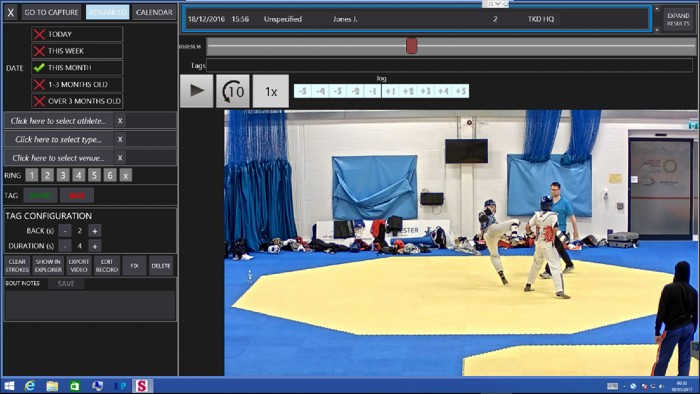
Dr. Simon Goodwill is the Head of Research in Sport and Physical Activity and Head of the Sports Engineering Research Group (SERG) at Sheffield Hallam University's Academy of Sport and Physical Activity. He holds a PhD focused on tennis ball-racket impact modeling and has collaborated with the International Tennis Federation. His expertise includes novel photogrammetry techniques, software development for athlete performance analysis, and camera calibration systems like check2d/check3d. He led projects supporting Team GB athletes in multiple Olympics, contributing to 42 medals at Rio 2016. Currently, he oversees the Advanced Wellbeing Research Centre (AWRC), applying sports performance methodologies to health research. His work integrates machine vision, data acquisition hardware, and elite athlete monitoring systems, with notable contributions to the EIS Innovation Partnership and sports tech exhibits like Le Tour Yorkshire's bike simulator. Education & Research: Simon’s PhD (modeling tennis impacts) and extensive software engineering background underpin his research. His projects span biomechanics, sports engineering, and health tech, with collaborations involving UK Sport, FIFA, and Adidas. He has developed systems used by athletes in London 2012, Rio 2016, and Glasgow 2014 Commonwealth Games. Research Themes: His work emphasizes performance analysis through photogrammetry, real-time athlete tracking, and health-related applications of sports tech. Key projects include court pace rating for the ITF, iBoxer2 boxing data tools, and the AWRC’s health innovations. Grants & Impact: The AWRC, funded by UK DoH and ESIF (£15.7M), reflects his role in translating elite athlete tech to public health. His work is cited in UK government reports on Olympic legacy and has received media attention, including BBC features on GB Boxing’s iBoxer software. Advising & Leadership: Supervised 17 PhD students on topics like machine learning in taekwondo, swimming analysis, and tennis racket dynamics. Served as External/External advisor and led 10+ Olympic cycle projects. Active in the International Sports Engineering Association as Director.
Lesley Gourlay is a Professor of Education at the IOE - Culture, Communication & Media , part of University College London . She has held leadership roles including Director of the Academic Writing Centre (2010-2020) and Head of the Department of Culture, Communication and Media (2014-2018). Research Focus: Science and Technology Studies in Education, Posthuman Theory, Sociomaterialism, Digital Engagement Awards: Leverhulme Major Research Fellowship (2021-2025) for 'The Datafied University' Her publications explore postdigital education, algorithmic governance, and digital performativity. Recent work includes the open-access monograph The University and the Algorithmic Gaze (2025) and co-editing the Palgrave Handbook of Science and Technology Studies in Education . She is currently working on two forthcoming monographs: The University and the Writing Machine and Weave: The Making of Meaning . Lesley's scientific contributions analyze digital education through postphenomenological, sociomaterial, and posthumanist lenses. Key themes include learning analytics, AI's role in education, and the materiality of digital practices. Her work challenges binary distinctions between online/campus education and human/nonhuman agency. Collaboration Network: Extensive co-authorships with scholars like Petar Jandrić, Clara O’Shea, and Martin Oliver. She co-organizes the UK-wide Digital University Network and contributes to journals such as Postdigital Science and Education and Educational Philosophy and Theory .
Dr. Kaitlyn Zhou is an incoming Assistant Professor in the Department of Information Science at Cornell University's Bowers College of Computing and Information Science, commencing August 2026. Her research focuses on human-language model interaction dynamics, with recognition at premier NLP and HCI conferences. Education: PhD in Computer Science, Stanford University (Advised by Dan Jurafsky) B.Sc., B.Se., M.S. in Computer Science and Human Centered Design and Engineering, University of Washington Research Focus: Her work investigates how language models shape human decision-making through three pillars: (1) identifying model overconfidence risks, (2) developing context-aware evaluation frameworks, and (3) reimagining interactions for marginalized user groups. This spans NLP, HCI, and AI ethics with emphasis on trust calibration and inclusive design. Publication Trends: Recent work examines human reliance on unreliable language models (NAACL 2025 Best Paper Runner-Up), uncertainty expression failures (ACL 2024), and evaluation metric limitations. Collectively, these advance responsible AI through human-centered methodologies across 12 major publications from 2017-2025. Scientific Awards: NAACL Best Paper Runner-Up (2025) MIT EECS Rising Star (2024) Stanford Graduate Fellowship College of Engineering Dean's Medal School of Engineering Dean's Medal of Excellence (UW) Advising & Grants: Supported by Stanford Graduate Fellowship and research internships at Microsoft Research FATE (hosted by Olteanu/Blodgett) and Allen Institute for AI (hosted by Sap/Hwang/Ren). Will recruit NLP/HCI students at Cornell starting 2026. Appointed by Washington Governor to UW Board of Regents, advocating for educational equity. Research Ecosystem: Collaborates with Stanford's NLP group, Microsoft's FATE team, and Allen Institute researchers. Features in NYT/WSJ for methods impacting real-world AI deployment.
Chuang Gan is an Assistant Professor at the University of Massachusetts Amherst, affiliated with the College of Information and Computer Sciences and the Department of Computer Science. His work focuses on advancing artificial intelligence, robotics, computer vision, and embodied agents through interdisciplinary research combining neural networks, physical simulations, and multimodal learning. Research interests include generative models, reinforcement learning, vision-language integration, and scalable autonomous systems. He explores topics like world modeling for robots, adaptive policy learning, and physics-driven AI. His projects often involve creating systems that learn from visual, auditory, and tactile inputs to perform complex tasks such as object manipulation, navigation, and decision-making in dynamic environments. Recent research trends emphasize embodied AI systems capable of long-horizon planning, compositional reasoning, and efficient learning from limited data. His work bridges theory and practice, with applications in robotics, simulation platforms, and multimodal generation. Key contributions include frameworks for 3D scene understanding, adaptive world models, and novel training paradigms for large language models. His research has been applied to robotics platforms like RoboDreamer and UBSoft, focusing on unbounded soft environments. Collaborations involve designing benchmarks for physical scene understanding (e.g., Physion++), and creating tools like DiffTactile for tactile simulation. His work often integrates principles from differential geometry, PDE dynamics, and game theory. Chuang Gan’s research group develops open-source tools and benchmarks, such as the SoftZoo robot co-design platform and the SOK-Bench situated reasoning benchmark. His team emphasizes scalable alignment methods beyond human supervision and explores ethical AI through principles like symmetry-enhanced training.
Mariana Resener is an Assistant Professor in the School of Sustainable Energy Engineering at Simon Fraser University (SFU). She holds a Ph.D. in Electrical Engineering (2016) from the Federal University of Rio Grande do Sul, Brazil, alongside M.Sc. (2011) and B.Sc. (2008) degrees in the same field. Her research focuses on optimizing power systems, particularly in distributed energy resources, energy storage, and volt/var control. She teaches courses like Power Electronics and Power Systems Analysis & Design. Her work emphasizes sustainable development in grid planning and energy infrastructure. As a Senior Member of IEEE and an Associate Editor for the Energy Systems Journal (Springer), she contributes to advancing smart grid technologies and renewable integration. Her research spans metaheuristic optimization, stochastic modeling, and grid resilience strategies for distributed systems. Recent projects include hybrid renewable energy systems for substations, EV charging station optimization, and fault analysis in unbalanced grids. She collaborates with industry on practical solutions for grid modernization and reliability enhancement.
Mikko Valkama is a Professor at the Department of Communications Engineering , part of the Faculty of Information Technology and Communication Sciences at Tampere University . His research focuses on advanced wireless communication systems, positioning technologies, and integrated sensing and communication (ISAC). He holds an Orcid ID ( 0000-0003-0361-0800 ) and can be reached at mikko.valkama@tuni.fi . Research interests span 5G/6G networks , RF antenna design , deep learning for signal processing , and millimeter-wave systems . He leads projects on positioning algorithms (e.g., mmWave SLAM, NLOS mitigation), ISAC architectures, and hardware-efficient transmitter linearization. Notable contributions include works on DECT-2020 NR standards, phase-based localization, and RIS-assisted systems. In 2025 alone, his group published over 30 articles on topics such as: Antenna array design for Ka-band and wideband applications Machine learning for power amplifier predistortion Bistatic radio SLAM and mmWave mapping Covert transmission and physical-layer security His work bridges theoretical advancements with practical implementations, often validated through experimental setups (e.g., TUJI1 dataset for indoor localization). No scientific awards were explicitly listed in the provided texts.
Gioele Zardini is the Rudge (1948) and Nancy Allen Assistant Professor at MIT's Department of Civil and Environmental Engineering (CEE), with affiliations to the Laboratory for Information and Decision Systems (LIDS) and the Institute for Data, Systems, and Society (IDSS). He holds a PhD from ETH Zurich and previously worked as a postdoctoral scholar at Stanford University. His research focuses on co-design of complex systems, autonomous systems, and game-theoretic modeling of transportation networks. Education: BSc and MSc in Mechanical Engineering and Robotics from ETH Zurich (2017–2019), PhD in 2023. He has held visiting roles at nuTonomy Singapore, Stanford, and MIT. Research interests include co-design methodologies, autonomous vehicle systems, compositionality in engineering, and strategic interactions in mobility networks. Recent work emphasizes scalable fleet coordination, safety-critical robotics, and user-centric transportation solutions. Notable awards include the 2024 ETH Doctoral Dissertation Award (Silver Medal), Best Paper at ITSC 2021, and federal grants for enhancing urban transit equity. He leads the Zardini Lab, fostering interdisciplinary collaboration in systems engineering and autonomy. Grants and advising: Received federal grants for transit accessibility projects. His work on Autonomy Talks has produced over 180 recorded lectures, promoting knowledge exchange in autonomous systems. Labs/Teams: Principal Investigator at LIDS, affiliate at IDSS, and founder of the Zardini Lab, focusing on systems co-design, mobility innovation, and game-theoretic frameworks.
James T. Enns is a Professor and Distinguished University Scholar in the Department of Psychology within the Faculty of Arts at the University of British Columbia. His research primarily focuses on the role of attention in human vision, with secondary interests in developmental psychology and human-machine interaction. Dr. Enns' research interests span perception, attention, vision, cognition, development, and human-machine interaction. His work explores how the human mind selects information, with particular emphasis on visual attention mechanisms. His laboratory research investigates the fundamental processes of visual perception and how attention modulates these processes across different contexts and developmental stages. Analysis of Dr. Enns' publication record reveals consistent engagement with visual perception, attentional mechanisms, and cognitive processing. His research demonstrates expertise in both theoretical frameworks and experimental methodologies related to visual attention, with applications spanning basic cognitive science to potential implementations in human-computer interaction systems. His work often bridges theoretical cognitive psychology with practical applications. Canadian Society for Brain, Behaviour and Cognitive Science Donald O. Hebb Distinguished Contribution Award (2013) Distinguished University Scholar, UBC (2004) Robert E. Knox Master Teaching Award (2004) Royal Society of Canada Fellow (2002) Killam Faculty Research Prize (1994) Killam Faculty Research Fellowship (1993) Society of Experimental Psychology Fellow Dr. Enns has served as Editor for the Journal of Experimental Psychology: Human Perception and Performance, and as Associate Editor for Psychological Science, Consciousness and Cognition, and Visual Cognition. His research has been supported by grants from NSERC, the Canadian Foundation for Innovation, the Australian Research Council, BC Health, and Nissan. He has authored textbooks on perception, edited research volumes on the Development of Attention, and published numerous scientific articles on vision, attention, and cognitive science. Dr. Enns is currently accepting graduate students and continues to mentor the next generation of cognitive scientists. Dr. Enns leads the UBC Vision Lab, which focuses on how the human mind selects information. The lab conducts research on visual attention, perception, and cognitive processes using a variety of experimental methodologies.