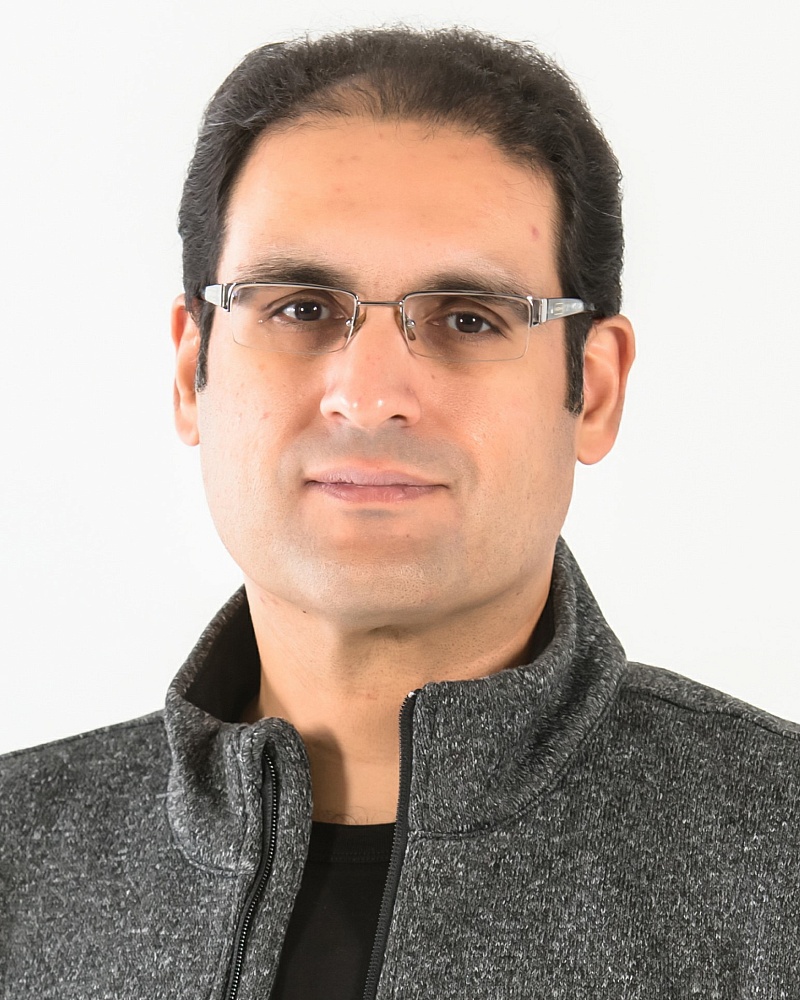
Claus Bossen is a Professor at the Department of Digital Design and Information Studies within Aarhus University's School of Communication and Culture. His research bridges participatory design, healthcare digitization, and data work. Primary Affiliation: School of Communication and Culture, Department of Digital Design and Information Studies Research Focus: Data-driven healthcare, information infrastructures, and participatory design Email: clausbossen@cc.au.dk Research Interests span critical areas in healthcare digitization, including: Emergence of data work professions Human-AI collaboration in clinical documentation Design of healthcare information systems Infrastructure governance and quality improvement Digitization's impact on non-clinical staff Participatory design scaling mechanisms Recent Publications (2024-2025) show a trajectory toward: Global-local data integration challenges Professional adaptation in data-intensive settings Digitization's soco-technical implications Empowerment through data work practices Emergency healthcare system analysis Human-AI collaboration frameworks Current Projects include: LIVSTEGN: Monitoring technologies for safe dementia care Making Data Work Visible: Professional changes in healthcare Acute healthcare treatment pathways
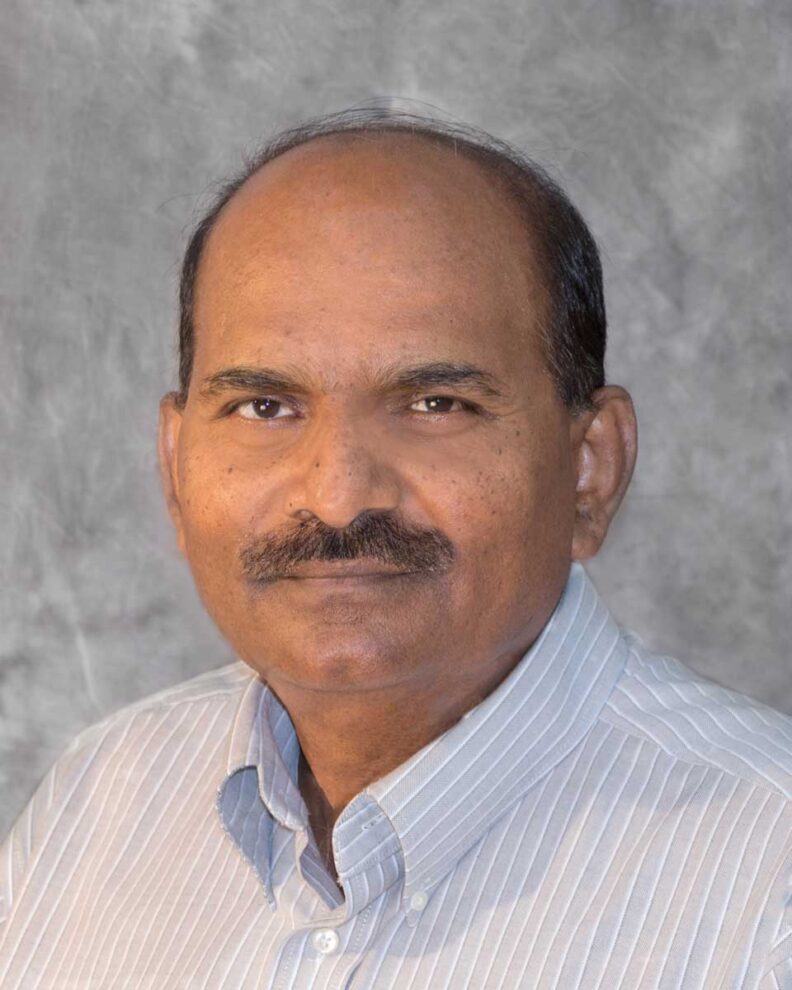
Dr. Naidu Rayapati is a Professor of Virology at Washington State University (WSU), where he serves as Director of the Prosser Irrigated Agriculture Research and Extension Center. He is affiliated with the Department of Plant Pathology within the College of Agricultural, Human, and Natural Resource Sciences. Dr. Rayapati leads the Grape Virology program at WSU-IAREC in Prosser, focusing on management strategies for virus diseases impacting fruit quality and vine health in Washington's wine grape industry. Dr. Rayapati's research focuses on virus diseases of horticultural, vegetable and food crops, with particular emphasis on virus characterization, diagnostics, plant-virus-vector interactions, and development of integrated crop improvement strategies. His current work centers on virus diseases of grapevines and vegetables, addressing critical challenges for Washington State's agricultural industry. He has established an integrated program of research, extension, and education through the Grape Virology program at WSU-IAREC. Analysis of Dr. Rayapati's recent publications reveals a strong focus on grapevine viruses, particularly Grapevine leafroll-associated viruses and Grapevine red blotch virus. His research spans molecular characterization of plant viruses, epidemiology of viral diseases, development of diagnostic tools, and management strategies for virus diseases in agricultural settings. There is also significant work on emerging viruses in legumes and other vegetable crops, reflecting his broader interest in plant virus diseases across multiple cropping systems. Scientific Awards: CAHNRS Land Grant Mission Award (2020) WSU's Top Industry Engaged Researchers (2017) International IPM Excellence Team Award, The 6th International IPM Symposium (2009) International Service Award, American Phytopathological Society (2007) Dr. Rayapati actively mentors graduate students and postdoctoral researchers, with current lab members including Sridhar Jarugula, Sudarsana Poojari, Tefera Mekuria, Linga Reddy Gutha, and Olufemi Alabi. His research program has received funding from various sources, supporting interdisciplinary collaborations that draw expertise from multiple institutions. Through his extension work, Dr. Rayapati translates scientific knowledge into practical applications for the grape and wine industry stakeholders and regulatory agencies. Dr. Rayapati leads the Grape Virology Program at WSU-IAREC, which employs a 3-D approach: Discovery of knowledge, Development of tools and techniques, and Deployment of knowledge-based strategies. The program works closely with the Washington State Grape and Wine Industry to address virus disease management as a key research priority for achieving the industry's goal of tripling economic value. His team conducts fundamental and applied research on wine grape virus diseases through interdisciplinary collaborations, creating experiential education opportunities for Viticulture and Enology students.
Dr. Maja Krzic is a Professor at the Department of Forest and Conservation Sciences within UBC's Faculty of Land and Food Systems. Her research bridges soil science with sustainability education through community engagement and digital innovation, focusing on human impacts on soil properties across agricultural, grassland, and forest ecosystems. She develops cutting-edge teaching tools like the Digging into Canadian Soils open textbook and SOILx interactive platform. PhD (University of British Columbia, 1997) MSc (University of Belgrade, 1990) BSc (University of Belgrade, 1986) Her publications (2010-2025) explore greenhouse gas dynamics in agricultural systems, soil carbon sequestration in elevation gradients, and innovative educational approaches including problem-based learning and augmented reality. Recent work addresses climate-resilient soil management in coastal British Columbia and gender parity in soil science academia. Major awards include: 3M National Teaching Fellow (2016) UBC Killam Teaching Prize (2006) Fellow, Soil Science Society of America (2023) Platinum AVA Digital Award for SOILx (2015) She has mentored 28 graduate students and postdocs, including Amy Wells (2024), Clara Roa-Garcia (PhD, 2018), and Preston Cumming (Postdoc, 2015). Current projects focus on climate change adaptation in Delta farmland and regenerative agricultural practices.
Yacine Atif is a Professor of Information Technology at the University of Skövde, affiliated with the School of Informatics and Department of Information Technology. He maintains an active research profile with numerous publications spanning from 2002 to the present, demonstrating sustained academic contribution in his field. His research interests focus on Internet of Things (IoT), Cybersecurity, Cyber-Physical Systems, Digital Transformation, Cloud Computing, and Educational Technologies. Professor Atif's work bridges theoretical research with practical applications, particularly in smart city technologies, critical infrastructure protection, and educational innovations. His research has evolved from early work in e-commerce trust (2002) to contemporary work on metaverse learning experiences (2023) and vehicle collision prediction (2025). Analysis of his recent publications (2018-2025) reveals a strong focus on cybersecurity applications for cyber-physical systems, particularly in critical infrastructure protection. His work demonstrates a progression from foundational IoT concepts toward sophisticated integration of machine learning and cognitive approaches in security analysis. The research portfolio shows consistent collaboration with both academic and industry partners across multiple countries. Professor Atif leads or contributes to significant research projects including the ongoing 'Intelligent Driver Support Systems and Safety Enhancement' (I2Connect) project (2023-2026) focused on developing next-generation Advanced Driver Assistance Systems for trucks, and previously led the 'Infrastructure Resilience – ELVIRA' project (2017-2020) which developed time-based infrastructure dependency analysis for power-grid risk assessment. His teaching responsibilities include multiple courses at both bachelor's and master's levels, with course credits ranging from 3 to 7.5 credits across various technology domains. His office is located in room PA420K at the University of Skövde, and he can be contacted at yacine.atif@his.se or by phone at 0500-448312.
Susan Land is a Professor of Education and the Associate Dean of Undergraduate and Graduate Education in the Learning, Design, and Technology Program at Penn State University's College of Education. She also serves as the Head of the Department of Learning & Performance Systems. Dr. Land earned her doctorate in Instructional Systems from The Florida State University under Dr. Michael Hannafin. Prior to Penn State, she was a postdoctoral fellow at the University of Georgia's Learning and Performance Support Laboratory and faculty at the University of Oklahoma's Instructional Psychology and Technology Program. Earlier, she worked on instructional design projects with the U.S. Air Force Academy, Citibank, and Hewlett Packard. Her research emphasizes frameworks for technology-enhanced learning environments, particularly focusing on how learners meaningfully engage with technology in student-centered contexts. She has published over 60 manuscripts and co-edited two editions of Theoretical Foundations of Learning Environments with Dr. David Jonassen, which has been reprinted repeatedly, translated into Korean, and achieved notable sales in the Instructional Technology field. Her recent publications demonstrate a clear trajectory toward mobile, context-sensitive learning in outdoor environments using proximity-based technologies like iBeacons. These studies examine children's scientific observations in arboretums, sense-making conversations in botanical gardens, and knowledge sharing in online affinity spaces, revealing patterns in how technology mediates learning experiences across different contexts. Young Scholar Award from Association for Educational Computing and Technology (AECT) Outstanding Article of the Year Award from AECT 2015 SIG-IT Best Paper Award from American Educational Research Association (AERA) Top 10 most-published/frequently-cited authors in Educational Technology Research & Development College of Education 2016 Outstanding Teaching Award Dr. Land advises graduate students and collaborates extensively with researchers including Heather Zimmerman, Priya Sharma, and Chris Millet. Her NSF-funded research with Zimmerman examines how proximity-based computing supports children's scientific sense-making in outdoor environments. She leads the Augmented and Mobile Learning Research Group, which investigates context-sensitive, place-based learning using mobile technologies and augmented reality. Her research has been supported by multiple grants from the National Science Foundation (NSF), Institute of Museum and Library Services (IMLS), and Penn State's Center for Online Innovation in Learning (COIL). Current projects include developing the Penn State Places platform for creating iBeacon-triggered content in public spaces, with applications in arboretums, children's gardens, and community engagement initiatives.
Lisa Hansson is a Professor of Community Planning at Molde University College, specializing in urban governance and transport policy. She is affiliated with the Logistics Department and actively contributes to sustainable mobility, socio-technical change, and multi-level governance research. PhD in Science and Technology Studies (2011), Linköping University MSc in Political Science/Public Administration (2005), Gothenburg University BA in Human Geography/Urban Planning (2003), Karlstad and Gothenburg Universities Her research focuses on sustainable transport systems, visual representation in planning, and policy adaptation. She leads externally funded projects like LEAD (Digital Twins for logistics) and SNAPSHOT (e-commerce transport), with partners including SINTEF and K2 Sweden. Her work bridges political science and transport governance, challenging economic-technical discourses. Recent articles analyze equity in 15-minute city planning, social justice in transport protests, and regulatory governance for autonomous vehicles. She chairs the WCTRS SIG G1 Transport Governance group and serves on the Thredbo Conference Committee. 2023: Co-authored Public Participation in Transport in Times of Change (Emerald) 2021: Chapter on Transport Policy and Governance (Elsevier) 2020: Editorial in Transportation Research Part A Lisa teaches MA/BA courses like Smart Mobility, European Transport Policy, and Future Cities. She supports Master’s and PhD research in sustainable urban development and transport policy.
Dr. Umar Ruhi is a Full Professor and Ian Telfer Teaching Fellow at the Telfer School of Management, University of Ottawa, where he also serves as Vice-Dean of Undergraduate Programs. He holds a B.Sc. in Computer Science from the University of Toronto, an MBA from McMaster University, and a Ph.D. in Information Systems and Management Science from McMaster's DeGroote School of Business. His teaching spans undergraduate and graduate programs, covering information systems, cybersecurity management, and interdisciplinary courses in digital transformation. Research Focus: Professor Ruhi's work intersects information systems and knowledge management, with current emphasis on: Consumer health informatics and personal health records Digital misinformation countermeasures and tool usability Human-AI collaboration frameworks and governance Learning analytics and adaptive gamification in education Social computing and enterprise applications His research has resulted in commercial patents and practical implementations across industries. Research Recognition & Funding: Professor Ruhi has secured significant research funding, including: Canadian Heritage grant ($68,160) for disinformation research Multiple MITACS grants ($30,000 each) for AI, blockchain, and health tech projects Telfer Education Excellence Fellowship ($45,000) for learning analytics Noteworthy recognitions include the 2012 Best Dissertation Award from the German Society for Online Research and conference best paper awards. Academic Leadership: Beyond research, Professor Ruhi leads pedagogical innovation through his Ian Telfer Teaching Fellowship, exploring generative AI applications in education. His extensive consulting portfolio includes e-government portals, UX design, and knowledge management systems. As Vice-Dean, he oversees undergraduate program development and strategic initiatives.
Lars Coenen is a Professor in Innovation and Sustainability Transitions at the Mohn Centre for Innovation and Regional Development, Western Norway University of Applied Sciences. Previously, he held positions at the TIK Centre (Professor II), CIRCLE at Lund University, and the Melbourne Sustainable Society Institute as the City of Melbourne Chair of Resilient Cities. Research focuses on regional and urban innovation, particularly environmental innovation and sustainability transitions. Author of over 65 papers in journals like Research Policy , Environment and Planning A , and Economic Geography . Research funded by JPI Urban Europe, EU Framework 7, Swedish Energy Agency, and Nordic Energy Research. His work addresses spatial concentrations of innovation, climate change mitigation, and the role of universities and cities in sustainability transitions. Publications highlight advancements in urban living labs, circular bioeconomy, and mission-oriented innovation districts. Coenen’s academic contributions include theoretical frameworks for regional diversification, transformative innovation policy, and socio-technical system changes in urban contexts.
Sebastian Gottschalk is a researcher at Paderborn University, Germany, specializing in business model development within software ecosystems, virtual reality applications, and model-driven software engineering. His research focuses on creating situation-specific approaches to business model development, with particular emphasis on tool support, method composition, and knowledge provision. His research interests span business model innovation, virtual reality applications for education and collaboration, model-driven development, and end-user programming. He has made significant contributions to understanding how business models can be developed in context-aware ways within software ecosystems, with practical applications in tool development and method engineering. His publication record shows a clear progression from foundational work on business model development to innovative applications in virtual reality and gamification. Recent work demonstrates increasing focus on practical implementations, particularly in educational contexts using VR technology to teach UML and software modeling concepts. Gottschalk has collaborated extensively with Gregor Engels (27 publications together), Enes Yigitbas (20 publications), and Alexander Nowosad (7 publications), indicating strong research partnerships that have driven much of his recent work in business model development and virtual reality applications.
Prof. Dr. Reinhold Decker is a full professor of business administration with a focus on marketing and market research at Bielefeld University's Faculty of Economics, where he has been affiliated since 1997. He currently serves as the Rector's Representative for Cooperation with Business, BRIC, and Research Transfer (since October 2023), following previous roles as Vice Rector for Information Infrastructure and Business (2019-2023), Vice Rector for Information Management (2015-2019), and Vice Rector for Financial Affairs and Resources (2012-2015). He is also the Scientific Director of BI2000plus - Research Projects on the Region since 2005 and a member of the Bielefeld Graduate School of Economics and Management (BiGSEM). Decker earned his degree in industrial engineering with a focus on OR/Computer Science in 1988, received his doctorate in 1993, and completed his habilitation in 1997, all from the University of Karlsruhe (KIT). His academic career includes visiting professorships at the University of Vienna, Moscow Academy of Economics, University of Veliko Turnovo, Universidade NOVA de Lisboa, Université Paris III – Sorbonne Nouvelle, and the University of Maryland. His research focuses on the development and empirical testing of methods and models for acquiring and analyzing consumer data, particularly from social media, and data-driven, consumer-centric development of intelligent products and services. His work spans social media analysis, buyer behavior modeling, brand image analysis, web mining in marketing, and internet-based preference measurement. Decker's interdisciplinary approach bridges marketing, data science, and consumer behavior, with increasing emphasis on intelligent systems and digital transformation in marketing contexts. Analysis of his 15 most recent publications reveals a strong focus on emerging technologies in marketing, including augmented reality, voice assistants, and social media analytics. His research increasingly examines privacy concerns in the digital age, sustainability communication, and the integration of AI in consumer decision-making processes. The interdisciplinary nature of his work is evident in publications spanning marketing journals, data science publications, and technology-focused outlets. Member of the Scientific Council of the journal Argumenta Oeconomica Cracoviensia (since 2013) Associate Editor of the journal Behaviormetrika (since 2012) Member of the Editorial Board of the Springer series Studies in Classification, Data Analysis, and Knowledge Organization (since 2004) Vice President of the European Association for Data Science – EuADS (2018-2022) Decker has served on numerous editorial boards and scientific program committees, including for the International Federation of Classification Societies. His extensive reviewing work spans prestigious journals such as Journal of Business Research, Journal of Product Innovation Management, and Review of Managerial Science. His leadership extends to project management, including BiLinked (2025), Bielefeld 2000plus (2024), and Bielefelder DatenNarrative (2022). Decker has also edited multiple volumes and special issues on data analysis and marketing, demonstrating his commitment to advancing methodological approaches in business research. As Scientific Director of BI2000plus, Decker leads interdisciplinary research projects focused on regional development. His work bridges academia and industry through initiatives like the Bielefeld Center for Data Science (BiCDaS) and the Bielefeld Graduate School in Theoretical Sciences. His recent projects emphasize data narrative techniques, linking data analysis with effective communication strategies for diverse audiences.
Ajitha Rajan is a Professor (Personal Chair of Software Testing and Verification) at the School of Informatics, University of Edinburgh. Previously, she was a post-doctoral researcher at Oxford University's Computer Science Department and Laboratoire d'Informatique de Grenoble (LIG) in France. She earned her PhD in Computer Science from the University of Minnesota in August 2009 under the supervision of Prof. Mats Heimdahl. Her research spans two main directions: Automated Software Testing Techniques covering test input generation, test oracles, and coverage metrics; and Biomedical Artificial Intelligence focusing on cancer survival models, interpretability for biological sequences, and medical images. Her work bridges software engineering and biomedical applications, particularly in the development of trustworthy AI systems for healthcare. Professor Rajan leads several significant research projects including a Royal Society Industry Fellowship (2022-2025) on AutoTest for autonomous vehicle perception safety, the H2020 European Project KATY (2021-2025) on AI for genomics and personalized medicine where she serves as Edinburgh Lead PI, and an EPSRC Trustworthy Autonomous Systems Node project (2020-2024). Her recent publications demonstrate strong activity across software testing, explainable AI, and biomedical applications, with numerous papers accepted to top conferences in 2025 including ML for Healthcare, IJCAI, and ESEM. Among her scientific recognitions, she received the Best Reviewer Award at ISSTA'25. Her work has been consistently published in leading venues including ICSE, ICASSP, and Communications Biology. Professor Rajan actively mentors PhD students working on diverse topics from automated testing of speech recognition systems to explainable AI for medical image analysis and cancer immunotherapy. She teaches undergraduate courses in Software Testing, Computer Programming, and Embedded Systems, and has been instrumental in establishing several fully funded PhD positions through Centres for Doctoral Training at the University of Edinburgh.
Filippo Ubertini is Professor of Civil and Environmental Engineering at the University of Perugia, Italy, where he coordinates the International Doctoral Programme in Civil & Environmental Engineering and represents the University inside the FABRE national bridge-research consortium. He leads the Structural Health Monitoring Laboratory ( SHM-Lab ) and is the primary contact for assignments linked to smart-infrastructure research. Education: While explicit degrees are not listed in the supplied text, his role as programme coordinator and full professor implies completion of a PhD and habilitation in Civil Engineering. Research focus: Ubertini’s work sits at the intersection of smart materials and data-driven infrastructure management . He develops self-sensing cementitious composites doped with carbon micro-fibers or graphene nano-platelets that can measure strain, cracking and moisture in real time, turning whole bridges and buildings into distributed sensors. Complementary research threads include low-cost acquisition electronics, UAV & InSAR remote sensing, Bayesian & adversarial machine-learning algorithms for damage detection, digital twins and life-cycle cost analysis of bridge networks. Publication trends (2024-2025): Roughly 30 peer-reviewed items per year concentrate on (i) AI-enhanced operational modal analysis and transfer-learning damage classification across bridge populations, (ii) experimental characterisation of 3D-printed and cast self-sensing concrete, (iii) full-scale validation on curved box-girder, masonry and railway bridges, and (iv) integration of satellite radar data with numerical collapse simulations to predict residual service life of landslide-affected viaducts. Scientific awards & recognition: No specific prizes or fellowships are mentioned in the provided text. Doctoral supervision & grants: The text does not enumerate individual students or funded projects; however, his coordination of an international PhD programme and numerous experimental campaigns imply sizeable supervisory and funding responsibilities. Laboratory & team: Ubertini heads the SHM-Lab at UniPg, maintaining facilities for material mixing, 3D concrete printing, electrical impedance tomography, UAV photogrammetry, and large-scale structural testing, while collaborating with the European FABRE consortium and multiple EU projects.
Gerald C. Kane is a Professor and the C. Herman and Mary Virginia Terry Distinguished Chair in Business Administration at the Terry College of Business, University of Georgia. He is a leading scholar in digital transformation, artificial intelligence ethics, and social media for knowledge management, with over 100 publications in top-tier journals including MIS Quarterly and Management Science. His educational background includes: PhD in Information Systems, Emory University, Goizueta Business School (2006) MBA in Computer Information Systems, Georgia State University, Robinson College of Business (2002) M. Div. in Theology, Emory University (1998) BA in Humanities, Furman University (1994) Professor Kane's research focuses on the social and ethical implications of artificial intelligence and machine learning, the success factors in digital transformation of legacy companies, and how organizations use digital tools to innovate through disruption (e.g., during the COVID-19 pandemic). He also explores social media for knowledge management across organizational boundaries and information systems in healthcare. His work provides critical insights for businesses navigating the digital era. His recent publications (2020-2025) demonstrate intense focus on AI ethics—particularly fairness and bias in machine learning algorithms—and the transformative impact of digital tools on organizational strategy and workplace design. Kane's research addresses digital strategy formulation challenges and post-pandemic workplace reinvention, reflecting his commitment to solving real-world organizational problems through technology-driven solutions. Professor Kane's contributions have been recognized with numerous prestigious awards: Davis-Dixon Impact Award, MIS Quarterly (2024) Axiom Business Book Awards Gold Medal (2021) Carroll School Coughlin Distinguished Teaching Award (2018) National Science Foundation CAREER Award ($500,000) (2009-2016) McKiernan Distinguished Fellow ($30,000), Boston College (2014-2016) Runner-up, Best Published Paper, Academy of Management (2015) U.S. Department of Defense Small Business Technology Transfer Award ($100,000) (2012) Professor Kane has secured significant research funding including a National Science Foundation CAREER Award and U.S. Department of Defense grant supporting his work on social media and knowledge management. His influential books 'The Technology Fallacy' and 'The Transformation Myth' have been translated into multiple languages and provide practical frameworks for digital transformation. While specific advisees are not documented, his role as former Senior Editor at MIS Quarterly and extensive publication record highlight his leadership in shaping information systems research.
Professor George Shinkle is a faculty member at the School of Management and Governance within the UNSW Business School . His academic background includes a B.S. in Mechanical Engineering from Purdue University, an MBA from Ball State University, and a Ph.D. in Strategic Management from the Krannert Graduate School of Management at Purdue University. Prior to academia, he held industry roles at Ball Corporation, General Motors, and co-founded a management consulting firm. Research Interests: Strategic goal setting, agility, implementation, and innovation in turbulent environments; international business strategy; organizational control theory. Awards: 2019 ANZAM Innovative Management Educator Award, 2018 UNSW Teaching Excellence Award, 2017 UNSW Arc PostGraduate Research Council Supervisor Award, 2013-2015 ARC DECRA award. Teaching: Facilitates Executive Strategy - Disruption and Transformation in AGSM Executive MBA and Executive Education programs. Supervision: Mentored Ph.D. candidates including Min-Huei Yang, Feifei Yang, Lingli Luo, Mirjam Goudsmit, Jingyi Wang, and Angel Sharma. Grants: Includes an ARC Industrial Transformation Training Centre (2023-2028) and multiple ARC Linkage/Discovery grants.
Alex 'Sandy' Pentland is a Professor of Media Arts and Sciences at the MIT Media Lab, where he helped create and direct both the MIT Media Lab and Media Lab Asia in India. He also serves as a HAI Fellow at Stanford University. Pentland is one of the most-cited computational scientists globally and was named by Forbes as one of the '7 most powerful data scientists in the world.' Pentland's educational background includes undergraduate studies at the University of Michigan and a Ph.D. in artificial intelligence and psychology from MIT. His research spans computational social science, organizational engineering, wearable computing (including Google Glass), image understanding, and modern biometrics. His recent publications reveal a strong focus on the intersection of AI and social systems, with emphasis on human-AI coevolution, data ethics, network science, and the societal implications of digital technologies. His work increasingly addresses critical issues in data privacy, tokenized asset networks, and the social contract in the age of big data, demonstrating his continued leadership in shaping how society understands and manages digital transformation. MIT's Toshiba endowed chair Election to the U.S. Academy of Engineering McKinsey Award from Harvard Business Review 40th Anniversary of the Internet from DARPA Brandeis Award for work in privacy Pentland has advised over 80 PhD students, with nearly half now tenured faculty at leading institutions, a quarter leading industry research groups, and the remainder founding their own companies. His research has attracted significant funding, evidenced by projects like the DARPA Network Challenge where his team won by applying data-driven approaches to crowd coordination. His work on 'reality mining' has led to practical applications in call centers, mental health services, and urban planning. As director of the Human Dynamics group at MIT, Pentland has pioneered sociometric sensors and reality mining techniques. His lab has incubated numerous companies including Ginger.io (mental health services), CogitoCorp.com (AI coaching), Wise Systems (delivery optimization), Sila Money (financial technology), and several others focused on data privacy and AI applications across various sectors.



.jpg)