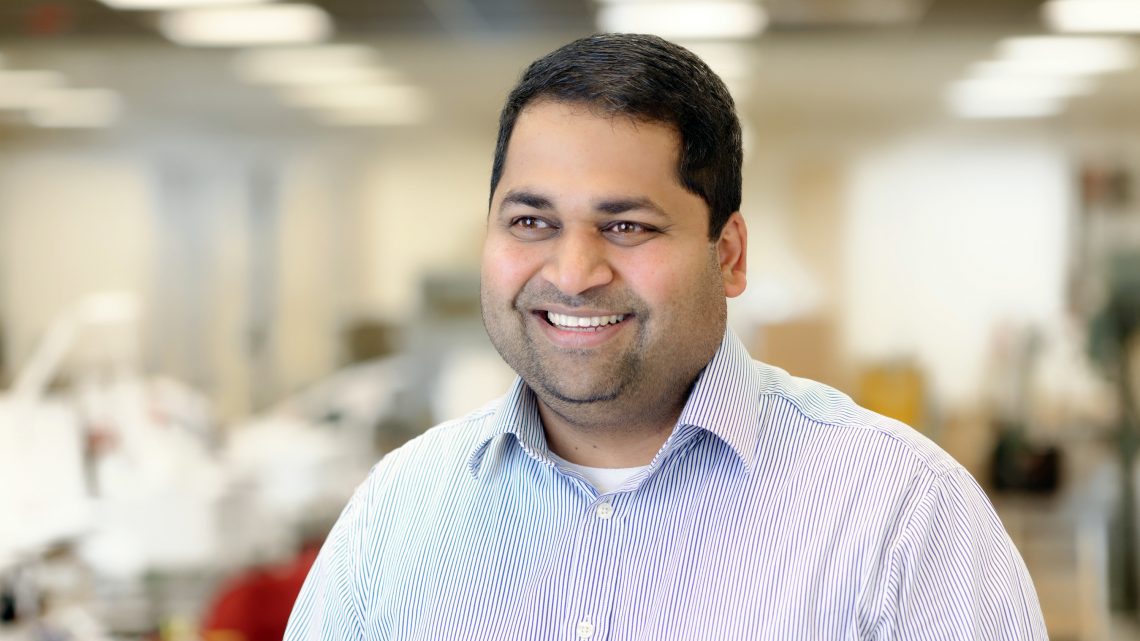
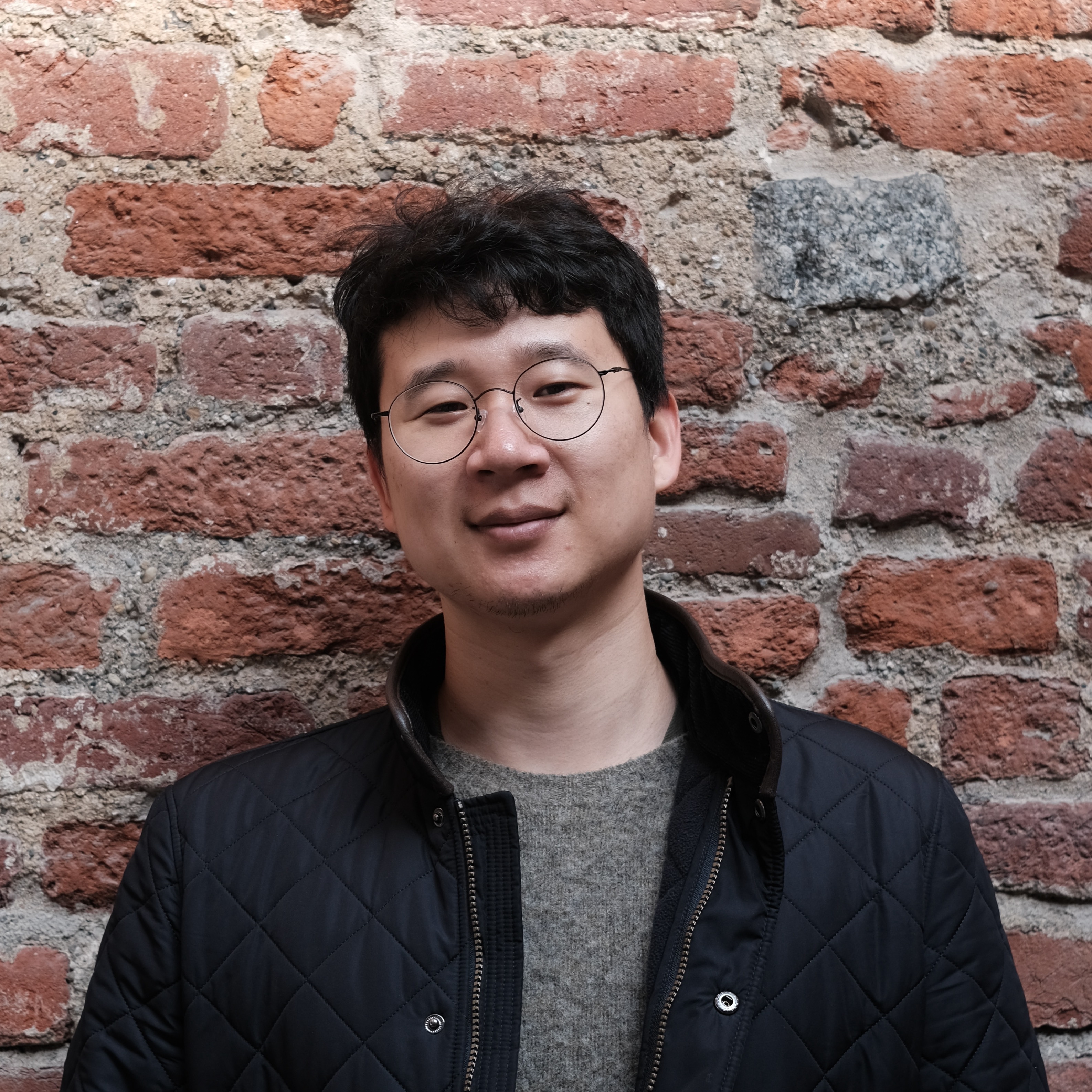
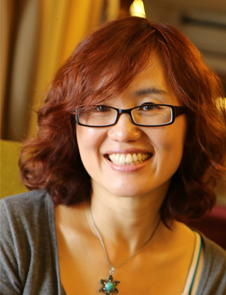
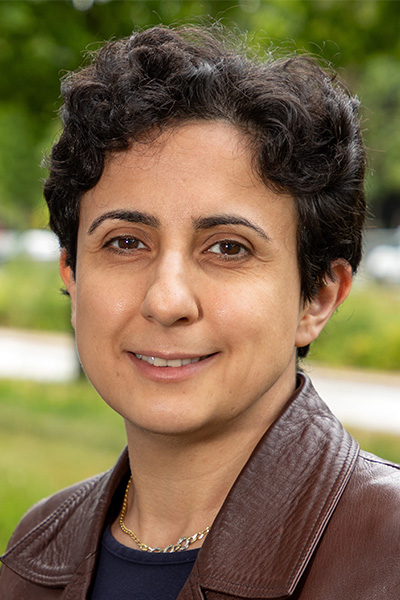
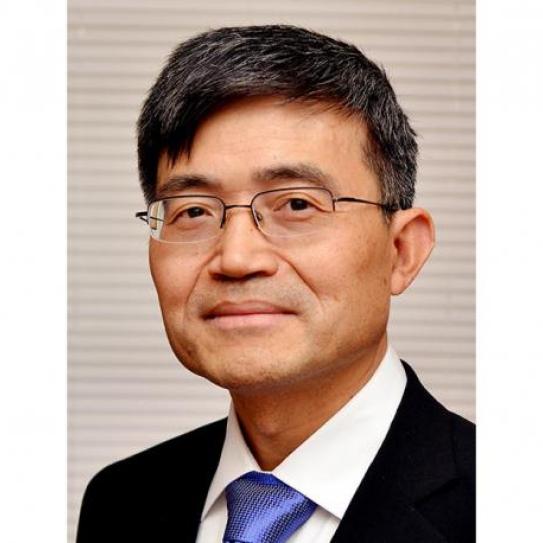
Dr. Amir Ghanbaripour is a Discipline Lead in Planning, Property, and Project Management at Bond University's Faculty of Society & Design, with a PhD in Construction Project Management (2020). He teaches postgraduate courses and leads the Project Management program. His expertise spans project management methodologies, systems thinking, organizational maturity, and gender equality in projects. He is an active member of the Project Management Institute (PMI) as Associate Director for Academic Outreach. Education: PhD in Construction Project Management (Bond University, 2020), MSc in Civil Engineering (Iran University of Science and Technology, 2012), BSc in Civil Engineering (Amirkabir University of Technology, 2009). Research focuses on project success models, agile methodologies, and technology integration in construction education. He leads research projects on megaprojects, sustainable practices, and gender diversity in the industry. Grants include the 2023 FSD Research Project Grant (focusing on construction project strategies) and the 2023 FSD Deans Award (exploring robotics in manufacturing). He supervises PhD candidates and collaborates with national/international organizations on project management innovation.
Santosh Basapur is an Assistant Professor in the Department of Family and Preventive Medicine at Rush Medical Center and Director of Design at Rush University. He also serves as an Adjunct Faculty Lecturer and planning coordinator for human factors and systems design at the Institute of Design (ID) at Illinois Institute of Technology. His expertise bridges human-centered design, healthcare systems, and user experience research, with a focus on applying methods from HCI, social sciences, and anthropology to complex healthcare challenges. Education: PhD in Design from the Institute of Design (ID), MS in Industrial and Systems Engineering (Human Factors) from SUNY Buffalo, and BS in Mechanical Engineering from Karnatak University. Research Interests: Santosh focuses on innovative systems design in healthcare, including UX research methodologies, smart technologies integration, and cross-disciplinary healthcare innovation. His work emphasizes human factors engineering and culturally sensitive design approaches to improve healthcare delivery and patient outcomes. Industry Roles: Director of Project Management at Rush University Medical Center, Founder/Principal of UX Yantra Inc., and former Chief Experience Architect at Vizlore. He has over 19 years of industry experience in UX design, including roles at Motorola Research Labs and Mobility (Google), where he led projects in Smart Media, Connected Home, and Wellness Experiences. Award Recognition: Notable contributions include patents in media-related systems (2016, 2017) and invited speaking engagements at global conferences like Human-Centered Design (Leuven, 2016) and Service Design Week (Chicago, 2019). His work has been published in venues such as the International Conference on Intelligent Human Systems Integration and BCS Human Computer Interaction Conference. Grants & Collaborations: Collaborated on an NIH-funded project to improve sickle cell care via design interventions. His cross-disciplinary approach integrates clinical, technical, and design expertise to address systemic healthcare challenges. Labs/Teams: Associated with the Center for Collaborative Healthcare Design at ID, focused on equitable healthcare solutions through design innovation.
Suvi Saarikallio is a Professor of Music Education at the University of Jyväskylä, Finland , affiliated with the Faculty of Humanities and Social Sciences and the Department of Music, Art and Culture Studies . She leads interdisciplinary research bridging music psychology, education, and therapy, with a focus on youth development, emotion regulation, and well-being. Research Groups: Centre of Excellence in Music, Mind, Body and Brain (2022-2029), Musiconnect (2022-2027) Key Projects: Music and You, Stress & music listening, MPACT (Music and Sports), Music and Cross-modal Associations, SOSUS (Social Sustainability for Children) Research Trends: Her recent publications explore music's role in emotional regulation, cross-modal perception, health outcomes, and educational applications. Themes include AI's impact on music evaluation, rhythm's connection to cognitive skills, and music's influence on stress and social-emotional development. Contact: suvi.saarikallio@jyu.fi
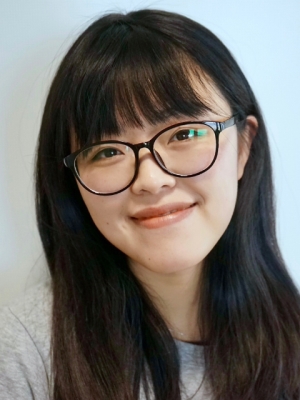
Siyu Tang is an Assistant Professor in the Department of Computer Science at ETH Zürich, where she leads the Computer Vision and Learning Group (VLG) at the Institute of Visual Computing. Her research focuses on computational models for human perception and digitalization through computer vision and machine learning. Her educational background includes: PhD in Computer Science, Max Planck Institute for Informatics (2017), supervised by Prof. Bernt Schiele Master of Science in Media Informatics, RWTH Aachen University Bachelor of Science in Computer Science, Zhejiang University, China Dr. Tang specializes in human-centric computer vision, developing statistical models for motion analysis, pose estimation, and digital human creation. Her work integrates machine learning with optimization techniques to enable machines to interpret human activities from visual data, with applications spanning virtual reality, healthcare, and human-computer interaction. Key research thrusts include generative models for content creation, egocentric vision, and human motion synthesis. Her recent publications (2024-2025) demonstrate intense focus on 3D human modeling and neural rendering, with Gaussian splatting emerging as a dominant technique for efficient avatar creation and scene reconstruction. Significant themes include text-driven motion synthesis using diffusion models, relightable avatars, surgical training applications, and egocentric multimodal pretraining. This work bridges computer vision, graphics, and machine learning to advance human digitalization. No scientific awards were mentioned in the provided text. Dr. Tang leads the VLG research group at ETH Zürich, mentoring PhD and Master's students in human-centric AI. She previously secured an early career research grant from the Max Planck Institute for Intelligent Systems to establish her independent research program. Her group actively pursues funding for projects in human motion analysis, 3D reconstruction, and generative modeling, with strong industry and clinical collaborations. The Computer Vision and Learning Group (VLG) operates within ETH's Institute of Visual Computing, maintaining dedicated facilities for motion capture, 3D scanning, and high-performance computing. The team collaborates internationally with institutions like the Max Planck Society and focuses on scalable solutions for real-world human digitalization challenges, including surgical training systems and immersive virtual environments.
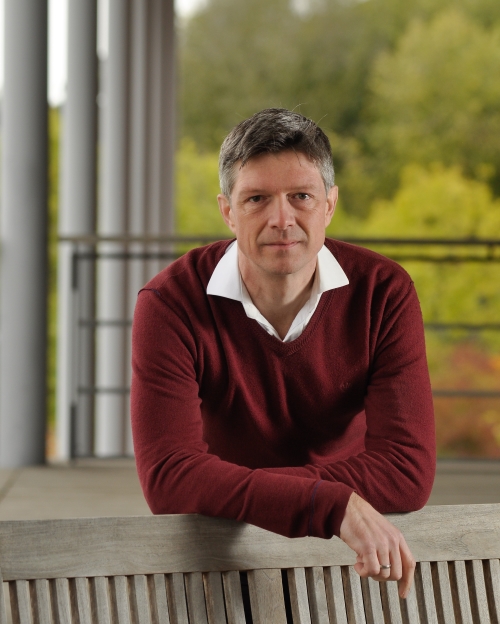
Alastair Beresford is Professor of Computer Security and Head of the Department of Computer Science and Technology (The Computer Laboratory) at the University of Cambridge. He is also the Robin Walker Fellow in Computer Science at Queens' College, Cambridge. His leadership spans both academic administration and research innovation within one of the world's leading computer science departments. Professor Beresford's research focuses on the security and privacy of large-scale distributed computer systems, with particular emphasis on networked mobile devices such as smartphones, tablets, and laptops. His work examines both device-level security and the privacy implications of interactions between mobile devices and cloud-based services. His methodological approach combines critical evaluation of existing products, development of novel prototype technologies, and empirical measurement of human behavior in security contexts. His recent publications reveal a strong focus on confidentiality computing, anonymity networks, mobile security, and secure group communication. Notable projects include Pudding (private user discovery in anonymity networks), CoverDrop (secure whistleblower-journalist communication), and research on the practical viability of anonymity networks on smartphones. His work consistently bridges theoretical security concepts with practical implementations that have led to real-world security improvements in iOS, Android, and OpenSSH. Scientific Awards: Andreas Pfitzmann Best Student Paper Award (PETS 2022) for work on secure initial contact between whistleblowers and journalists Professor Beresford leads several major collaborative research initiatives including the Centre for Mobile, Wearable Systems and Augmented Intelligence (co-directed with Prof Cecilia Mascolo), the Cambridge Cybercrime Centre, and the Raspberry Pi Computing Education Research Centre. He also serves as technical director for the Isaac Learning Platform, which has supported over 500,000 users making more than 120 million question attempts since 2015. His research has practical impact, with findings leading to security fixes in major commercial products including iOS 12.2 (CVE-2019-8541), watchOS 5.2, Android 11, and OpenSSH 9.8 (CVE-2024-39894).
Edwin Olson is an Associate Professor of Computer Science and Engineering at the University of Michigan, where he directs the APRIL Robotics Lab. He also serves as CEO of May Mobility Inc., a company focused on developing driverless shuttles. His research spans autonomy, perception, robotics, and learning, with notable contributions to technologies like AprilTags and the LCM middleware. Olson has led groundbreaking projects, including the 2010 MAGIC competition-winning robot team and the DARPA Urban Challenge. He has been recognized with awards such as Popular Science's 'Brilliant Ten' (2012), the DARPA Young Faculty Award (2013), and the College of Engineering Education Excellence Award (2015). His work emphasizes real-world applications of autonomous systems, including risk assessment, multi-policy decision making, and sensor fusion. Recent articles focus on autonomous agent behavior prediction, remote assistance systems, and infrastructure calibration. Olson's academic contributions are complemented by industry roles, including his tenure at Toyota Research Institute as Co-Director for Autonomous Driving Development. Education: PhD in Computer Science from MIT (2008) Key Projects: MAGIC 2010, DARPA Urban Challenge, Toyota Research Institute Labs: APRIL Robotics Lab Awards: DARPA Young Faculty Award, Brilliant Ten, Education Excellence Award
Jeong Joon (JJ) Park is an Assistant Professor in the Department of Computer Science and Engineering at the University of Michigan. His research focuses on computer vision, graphics, and artificial intelligence with applications in 3D/4D reconstruction, generative modeling, robotics, and medical imaging. He holds a position in the College of Engineering and actively seeks PhD students and postdoctoral researchers aligned with his research interests. Dr. Park’s work emphasizes interdisciplinary approaches, combining geometric deep learning with generative models to address challenges in scene understanding, novel view synthesis, and multi-modal perception. His lab explores both foundational techniques and applied systems, often collaborating with industry and academia on real-world problems. Key research directions include diffusion models for sparse data restoration, trajectory-conditioned 4D generation, and uncertainty-aware sensor fusion for autonomous systems. His publications span top-tier conferences like CVPR, ICCV, and NeurIPS, reflecting a strong publication record in computer vision and graphics. He teaches courses in computer vision and advises students on advanced projects requiring significant weekly commitments. Prospective applicants are encouraged to apply through the U-M CSE PhD program and contact him directly for collaboration opportunities.
WonSook Lee is a tenured Full Professor in the School of Electrical Engineering and Computer Science at the University of Ottawa’s Faculty of Engineering. Her expertise spans medical imaging, machine/deep learning, computer graphics, and computer vision. She earned her Ph.D. in Computer Science from the University of Geneva (Switzerland) and holds degrees from POSTECH (Korea) and NUS (Singapore). Before academia, she worked at Korea Telecom, Samsung Advanced Institute of Technology, and Eyematic Interfaces Inc. (USA). Her research focuses on applications such as virtual/augmented reality, MRI/CT/Ultrasound analysis, and 3D mesh modeling. She has authored over 130 publications, including 30+ journal papers, and serves on conference committees and editorial boards. Lee has secured major grants (NSERC, CFI, ORF) as Principal Investigator and contributed to global initiatives like South Korea’s National Research Foundation. Her lab explores cutting-edge techniques in medical imaging, AI-driven object detection, and multimodal systems. Notable projects include adversarial perturbation analysis for model robustness, cross-domain GANs for semantic segmentation, and real-time ultrasound-enhanced pronunciation training. She actively promotes interdisciplinary research in healthcare technology and autonomous systems.
Shiva Nejati is a Professor at the University of Ottawa 's School of Electrical Engineering and Computer Science . He holds a PhD in Computer Science from the University of Toronto and previously worked as a Senior Scientist (2012-2019) and Scientist (2009-2012) at the SnT Centre (University of Luxembourg) and Simula Research Laboratory. Research focus: Software engineering for cyber-physical systems (autonomous vehicles, IoT), blending formal verification, machine learning, and search-based testing Key tools developed: ARIsTEO, SOCRaTEs, SimCoTest, EPIcuRus Editorial roles: Associate Editor for EMSE Journal (2025–), ASE Journal (2025–), IEEE Transactions on Software Engineering (2020–2024) His work combines formal methods , empirical software engineering , and AI/ML to address verification challenges in complex systems, particularly through evolutionary algorithms and surrogate modeling . Notable collaborations include industry partners in telecommunications, automotive, and aerospace sectors. Recent publications emphasize large language models for requirements analysis, adversarial testing of vision systems, and multi-objective optimization for test generation. His Sedna Research Lab actively trains graduate students in these cutting-edge methodologies.
Lerrel Pinto is an Assistant Professor of Computer Science at New York University's Courant Institute, where he leads the General-purpose Robotics and AI Lab (GRAIL). His research focuses on enabling robots to generalize and adapt in unstructured environments through advancements in robot learning, decision making, and multimodal sensing. Before joining NYU, he completed a postdoc at UC Berkeley, a PhD in Robotics at Carnegie Mellon University, and an undergraduate degree in Mechanical Engineering at IIT Guwahati. Key research areas include large-scale robot learning, representation learning for sensory data, reinforcement learning for adaptability, and open-source robotics hardware. Notable achievements include the Sloan Fellowship (2025), NSF CAREER Award (2024), and Best Paper Awards at multiple robotics conferences. Pinto's lab has developed influential systems such as the AnySkin tactile sensing framework and the OPEN TEACH teleoperation system. Education highlights include a PhD from CMU (2019) under Abhinav Gupta, a postdoctoral stint with Alexei Efros and Pieter Abbeel at Berkeley, and undergraduate studies at IIT Guwahati. He has authored over 65 publications in top conferences like ICRA, NeurIPS, and CVPR. Pinto teaches courses on robotics, reinforcement learning, and AI at NYU. His service contributions include roles on program committees for ICML, NeurIPS, and IROS, as well as organizing workshops on topics like Dexterous Manipulation and Vision-Language Models for Robotics. His team actively collaborates through the GRAIL lab, with current projects exploring tactile sensing, zero-shot policy deployment, and multimodal robot learning systems. Ongoing research emphasizes bridging the gap between human and robotic dexterity through novel reward structures and adaptive control frameworks.
Zhong-Ping Jiang is an Institute Professor at New York University Tandon School of Engineering, affiliated with the Department of Electrical and Computer Engineering, and holds cross appointments in Civil and Urban Engineering. He leads the Control and Network (CAN) Lab and contributes to research centers like the Center for Advanced Technology in Telecommunications (CATT) and C2SMARTER. His work focuses on nonlinear control, adaptive dynamic programming, and learning-based control with applications to autonomous systems, urban mobility, and computational neuroscience. He serves as Deputy Editor-in-Chief of the IEEE/CAA Journal of Automatica Sinica and has held editorial roles in multiple journals. Research interests include model-based and learning-based control for network systems, with emphasis on robotics, connected vehicles, and urban infrastructure. His contributions to nonlinear small-gain theory and robust reinforcement learning have advanced control methodologies for complex systems. Recent publications highlight trends in resilient control under cyberattacks, data-driven optimal control, and reinforcement learning applications in traffic signal optimization and autonomous driving. His work bridges theoretical advancements with real-world challenges in transportation and cyber-physical systems. Awards: Elected to the European Academy of Sciences and Arts (2024). Grants/Projects: Includes RAPID-funded studies on high-resolution agent-based modeling of epidemic spread and NSF-supported research on urban traffic networks. Labs/Teams: CAN Lab (focusing on control theory and networked systems), CATT (telecommunications innovations), and C2SMARTER (urban mobility solutions).
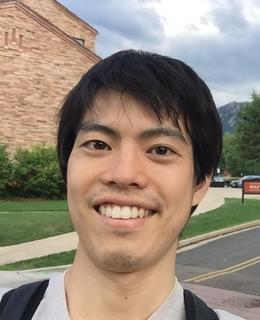
Ryo Suzuki is an Assistant Professor in the Department of Computer Science at the University of Calgary's Faculty of Science. His research focuses on Human-Computer Interaction (HCI) and robotics, particularly in tangible user interfaces, swarm robotics, and shape-changing interfaces. He holds a PhD in Computer Science from the University of Colorado Boulder (2020) and has conducted research internships at Stanford University, UC Berkeley, the University of Tokyo, and Adobe Research. His educational background includes advanced coursework in robotics and HCI, with a strong emphasis on interdisciplinary innovation. He teaches courses such as Human-Computer Interaction II, Human-Robot Interaction, and Special Topics in Mixed Reality Application Design. Research interests include designing novel interfaces for AR/VR/MR systems, haptic feedback mechanisms, and collaborative robotics. His work often bridges physical and digital spaces, such as through projects like LiftTiles (shape-changing building blocks) and RoomShift (room-scale haptic environments). Key awards include the UIST 2020 Honorable Mention Paper Award, DIS 2019 Best Paper Award, and the Ministry of Internal Affairs and Communications in Japan Innovation Award. His research has been featured in IEEE Computer Graphics and Applications, TechXplore, and Wired. He actively explores future work in symbiotic AI systems, AI-in-the-loop AR applications, and scalable shape-changing robotics. His lab emphasizes hands-on prototyping and user-centered design principles.
Cathryn Mitchell is a Professor of Radio Science and Royal Society Industry Fellow at the University of Bath, specializing in ionospheric physics, position, navigation, and timing (PNT). She leads research in the Space & Telecoms Research Group (STAR), focusing on radio propagation, data assimilation, and space weather impacts on communication systems. Her work bridges theoretical, computational, and experimental approaches, with applications in satellite navigation, climate monitoring, and defense sectors. Her research interests include ionospheric tomography, HF communications, and the development of robust PNT systems. Mitchell collaborates extensively with industry partners like Spirent Communications on future navigation technologies and space weather resilience. She has held roles such as Academic Director of the Doctoral College and contributes to interdisciplinary projects like the DRIIVE initiative exploring ionospheric variability with EISCAT-3D radar. Recent work emphasizes ionospheric effects during geomagnetic storms (e.g., the 2024 Gannon Storm) and cooperative autonomous systems under communication constraints. Her projects are funded by the Royal Society, Natural Environment Research Council (NERC), and ESA, addressing challenges in space weather forecasting and PNT system reliability. Awards: Royal Society Industry Fellow (2022–present) Key Projects: Royal Society Industry Fellowship on Future PNT Technologies DRIVERS (DRIIVE): Ionospheric Variability Studies EISCAT-3D FINESSE: Ionospheric Structuring Analysis Mitchell’s lab, STAR, integrates academic and industrial partnerships to advance space weather applications and sustainable navigation systems, contributing to UN Sustainable Development Goals related to climate action and innovation.
Rodrigo Ventura is an Associate Professor at the Department of Electrical and Computer Engineering, Instituto Superior Técnico (IST), University of Lisbon. He is also a senior researcher at the Institute for Systems and Robotics (ISR-Lisbon), leading the Space and Aeronautics thematic line. His research focuses on the intersection of Robotics and Artificial Intelligence, emphasizing human-robot interaction, space robotics, and cognitive architectures. He coordinates the Minor in Space Sciences and Technologies at IST and the MBE on Space Systems for Tecnico+. As Adjoint Faculty at the International Space University (ISU), he contributes to global academic initiatives. His work includes experiments on the International Space Station and participation in analog space missions. Research interests span biologically inspired systems, machine learning, and teleoperation interfaces. Recent publications address reinforcement learning for UAVs, microgravity experiments, and pseudo-haptic feedback for robotic control. He teaches subjects like Artificial Intelligence and Decision Systems, Satellite Engineering, and Autonomous Systems.
Steve Whittaker is Professor of Human-Computer Interaction at the University of California at Santa Cruz. He conducts interdisciplinary research at the intersection of social science and computer science, focusing on how technology affects human memory, communication, and personal information management. His current research explores human-centric AI systems, mental health technologies, and digital identity. His research interests center on designing interactive systems that support human needs in digital environments. He investigates how people manage digital information, remember personal experiences through lifelogging, and interact with conversational agents and social robots. His work emphasizes computational well-being, affective computing, and the social implications of technology use. He has made foundational contributions to the fields of personal information management (PIM), computer-mediated communication (CMC), and human-robot interaction. The recent publications reflect a strong trend toward mental health technology, human-AI interaction, and digital well-being. His work spans from theoretical models of emotion and memory to practical systems for mental health apps, chatbots, and immersive visualization. He frequently publishes in top-tier venues such as CHI, CSCW, and IUI, often in collaboration with researchers across disciplines. Lifetime Research Achievement Award from SIGCHI Fellow of the Association for Computational Machinery (ACM) Member of the CHI Academy Lasting Impact Award from ACM CSCW Best Paper Award at CSCW10 Best Paper Award at CHI07 Honourable Mention at ACM CHI 2020 Multiple best paper nominations at CHI, CSCW, and IUI MIT Siegel Prize Steve Whittaker has supervised numerous PhD and Master’s students, though specific names are not listed in the provided text. His research has been funded by major grants from NSF, NIH, and industry partners, enabling long-term studies on digital behavior and system development. He is Editor of the journal Human Computer Interaction and has authored over 200 peer-reviewed publications. His most recent book, The Science of Managing Our Digital Stuff (MIT Press), co-authored with Ofer Bergman, synthesizes decades of research on personal information management. He leads a vibrant research lab at UC Santa Cruz that focuses on human-centered computing, where students and collaborators work on projects involving AI, mental health, digital memory, and social interaction. The lab has produced influential work on lifelogging, email management, telepresence robots, and algorithmic transparency. The team employs mixed methods, combining qualitative studies with system design and evaluation.