Volodymyr Valentynovych Vasilevsky is a Senior Lecturer at Zaporizhzhia Polytechnic National University's Faculty of Electrical Engineering. Holding a Candidate of Technical Sciences degree, his career has focused on electromechanical systems and power transformer insulation analysis since joining the university in 2012. Education: Master's in Electrical Machines and Devices (Zaporizhia National Technical University, 2011) Research: Specializing in insulation resource modeling, neural network applications for transformer diagnostics, and lifecycle management of power equipment Key Contributions: Developed layered models for insulation resource consumption, automated evaluation systems for transformer diagnostics, and defect distribution dynamics models Contact: Email lisses@ukr.net , Office 520a, Zhukovsky St. 64
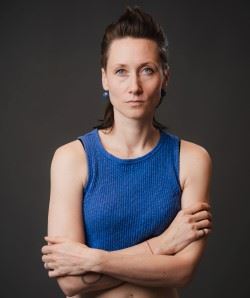
Anna Mlasowsky is a Professor in Glass and Ceramics at Konstfack University of Arts, Crafts and Design, where she serves as Area Coordinator and supervisor for Master's level students (Master 1 & 2) in the Department of Crafts. Based in Stockholm, Sweden, she maintains an active dual practice as both an academic and exhibiting artist. Her artistic research focuses on glass art, ceramics, and contemporary artistic expression, with numerous projects exploring perception, materiality, and spatial relationships. Notable works include Things that Talk , Book of Breath (Noon) , 4 Feet Apart , and Heimat , which demonstrate her interest in how objects communicate and how space shapes experience. Mlasowsky has initiated two significant art projects: Das Schaufenster , an experimental window space in Seattle's Ballard neighborhood created during the pandemic to provide exhibition opportunities for artists, and Das Fernglas , a digital subscription-based project featuring monthly glass art delivered via email. These initiatives reflect her commitment to creating platforms for artistic expression beyond traditional gallery settings. Her work has been presented internationally, with projects spanning topics from private geographies to wind resonance and metamorphosis, often exploring the intersection of material practice and conceptual inquiry. Mlasowsky actively supports emerging artists through her projects, particularly focusing on immigrant artists, activist artists, and recent MFA graduates who lost exhibition opportunities during the pandemic. She has received grants including a SmArt Venture Grant from the Office of Arts and Culture and a Mini Grant from the Awesome Foundation to support these initiatives.
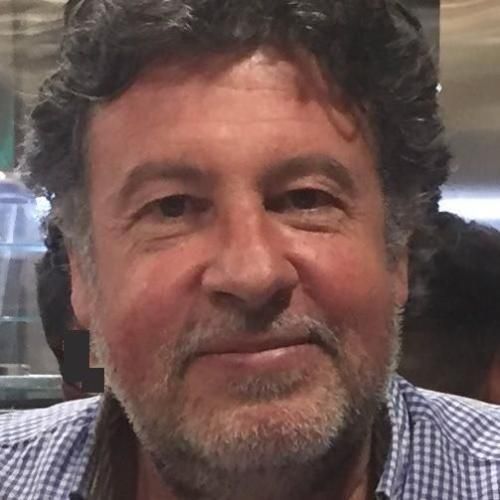
Leocadio Hontoria García serves as Full Professor in the Department of Electronic and Automatic Engineering at the Higher Polytechnic School of the University of Jaén, Spain, where he has maintained an active academic position since 2003. His career bridges advanced research in solar energy systems with innovative educational practices in engineering disciplines. Academic Background: PhD in Physical Sciences, University of Jaén (2002) Hontoria's research program focuses on applying artificial neural networks to solve critical challenges in solar energy utilization, particularly in photovoltaic system design, solar radiation modeling, and renewable energy integration. His work demonstrates exceptional continuity in merging computational intelligence with practical energy solutions, establishing him as a leading specialist in solar resource assessment methodologies. Analysis of his recent publications reveals a strategic evolution toward educational innovation and real-world implementation. While maintaining core expertise in neural network applications for solar radiation prediction, his current work emphasizes urban photovoltaic integration, entrepreneurship education for engineers, and open-access educational resources. This shift reflects growing institutional priorities around sustainable development and practical skill transfer. Research Leadership: Principal Investigator for approximately 50 funded research projects and contracts Director of the Laboratory of Electrical and Electronic Engineering Applied to Solar Energy Extensive collaboration with industry partners in renewable energy sector Hontoria maintains active leadership in the Laboratory of Electrical and Electronic Engineering Applied to Solar Energy, where his team develops practical solutions for solar energy monitoring, system optimization, and educational tool creation. Current initiatives include IoT-based photovoltaic monitoring systems and open-source simulation platforms for engineering education.
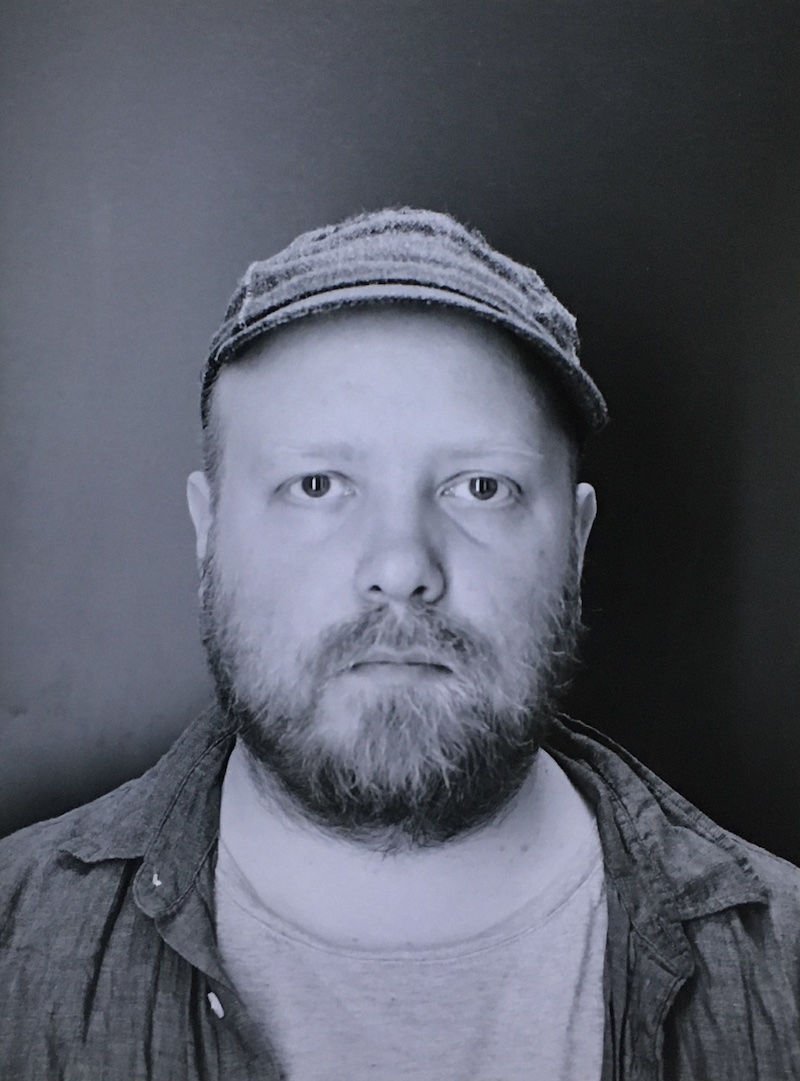
Mattias Rylander is an Artistic Senior Lecturer in Informatics at Kristianstad University's Faculty of Economics and Design Department, specializing in creative design. He actively explores the intersection of immersion, interaction, experience design, and game design through an artistic lens as a set designer, graphic designer, and concept developer. Specialization: Creative Design Research Focus: Immersive Technology, Interactive Media, Artificial Intelligence in Art Collaborations: Human-machine interaction, AI-based opera projects His recent publications (2023-2024) demonstrate strong connections between digital art and AI, particularly through interactive operas and game-based installations like "The Delphic Room" and "The Artificial Lyricist." These works combine theatrical elements with computational systems to create novel artistic experiences. Rylander's research fingerprint highlights key areas: Opera (100%), Interactive Media (100%), Artificial Intelligence (100%), Immersive Design (50%), Game Design (50%), and Ritualistic Spaces (50%). This reflects his focus on blending classical performing arts with cutting-edge technology. He participates in public lectures, symposiums, and collaborative events that examine the relationship between humans, technology, and creativity, often working with colleagues like Helen Jalhed and Kristina Åberg.
Roger Clarke is a Senior Lecturer in Fine Art at Bath Spa University's Bath School of Art, Film and Media, with over twenty years of professional experience as both a practicing artist and educator. His career spans significant exhibitions across the UK and internationally, including venues such as the Henry Moore Institute in Leeds and the Venice Biennale. His academic credentials include: BA(Hons) in Fine Art from the Slade School of Fine Art, University College London MA from London Metropolitan University Clarke's research centers on scientific visualisation and computerised fabrication processes , exploring intersections between art and science through sculptures based on molecular structures transformed into anthropomorphic forms inspired by Japanese anime. His fascination with scientific models for representing invisible phenomena culminated in works like A View of a Non-visible World (2005), which utilized Mount St Helens eruption data. His practice frequently incorporates kinetic elements, as demonstrated by the Record Player Orchestra series, merging sound, movement, and visual aesthetics through innovative use of industrial materials and analog technologies. Analysis of his 15 most recent exhibitions (2007-2021) reveals a consistent trajectory toward kinetic and sound-based sculptures, with increasing emphasis on public engagement and interdisciplinary collaboration. His work demonstrates technical evolution from geometric steel constructions to complex data-driven installations, maintaining a core focus on material transformation and viewer interaction while bridging traditional sculptural techniques with digital fabrication. His principal recognition includes: Henry Moore Sculpture Fellowship (1991) Clarke has held substantial external roles including External Examiner for Fine Art at De Montfort University (2007-2011) and advisory positions for degree validations at Thames Valley University, University of Chichester, and Central Saint Martins. His professional memberships encompass the Royal British Society of Sculptors and the National Association for Fine Art Education. His practice involves significant collaborations, as evidenced by co-curated exhibitions like DRIVE THRU and group shows engaging community contexts and public spaces.
Matti Niinimäki is a Senior University Lecturer at Aalto University's Department of Art and Media within the School of Arts, Design and Architecture. Based in Espoo, Finland, he actively contributes to the Media Lab's legacy through artistic innovation and curation, as evidenced by his recent 2025 award for the Media Lab 30th Anniversary Exhibition. His research centers on interactive and media art, exploring sonic interfaces, memory representation, and digital archaeology through immersive installations. Key themes include urban soundscapes, alternative realities, and the intersection of technology with human experience, often manifested in collaborative exhibitions that challenge conventional interaction paradigms. From 2017-2021, his artistic output reveals a trajectory of experimental projects like Sonic Microscope and Media Lab Timeline, blending media archaeology with contemporary digital tools to create thought-provoking experiences that examine memory, urban environments, and perception. Niinimäki's excellence has been recognized with: Artistic Activity Award: Media Lab 30th Anniversary Exhibition (March 2025) Teacher of the Year (December 2022) Teacher Award 2020 (February 2021) Vuoden käsityöläinen 2015 (Craftsman of the Year, January 2015) As an educator, he has received multiple teaching accolades reflecting his dedication to student development. His work with the Media Lab underscores his pivotal role in fostering digital art innovation through projects like Alt+Ctrl+Aalto and Äänimuseo 10, which engage public audiences with experimental interfaces and sound installations.
Jules Gimbrone is an Adjunct Assistant Professor in the Sonic Arts department at the School of Visual, Media and Performing Arts, Queens College . Their practice combines sound, sculpture, and conceptual frameworks to explore the intersections of sensory perception, gender, and ecological systems.
Morten Breinbjerg serves as Associate Professor at the Department of Digital Design and Information Studies within Aarhus University's School of Communication and Culture. His academic work bridges sound studies, digital design, and urban informatics with a focus on public space dynamics and sonic citizenship. His research centers on the ecological and political dimensions of sound in urban environments. He investigates how sonic practices shape citizenship through messy and fragile negotiations in public spaces, examining media architecture aesthetics, participatory sound art, and dynamic sound atmospheres. His methodological approach emphasizes ecological frameworks for understanding sound's role in civic engagement, combining fieldwork with theoretical analysis of sound's political potential. Analysis of his publication trends reveals consistent interdisciplinary work spanning sound studies, urban sociology, and digital design. Recent outputs focus on pandemic-era soundscapes and sonic citizenship frameworks, while earlier work established foundations in media architecture participation and ecological sound methods. His research demonstrates longitudinal commitment to understanding sound as a civic medium across evolving technological and social contexts. Breinbjerg has secured significant research funding through major projects including Sonic Citizenship (2021-present), Objects humans and the Rift (2014-2016), PIT: Participatory IT Center (2012-2017), Ekkomaten (2012-2014), Atmosphere (2009), DUL: Digital Urban Living (2008-2012), and Interface Aesthetics projects (2004-2007). These initiatives involved cross-institutional collaborations examining digital-physical urban interactions. He contributes to research collectives focused on sonic citizenship methodologies and media architecture evaluation, developing ecological approaches for sound art in public spaces and advancing theoretical frameworks for understanding sound's role in contemporary civic life.
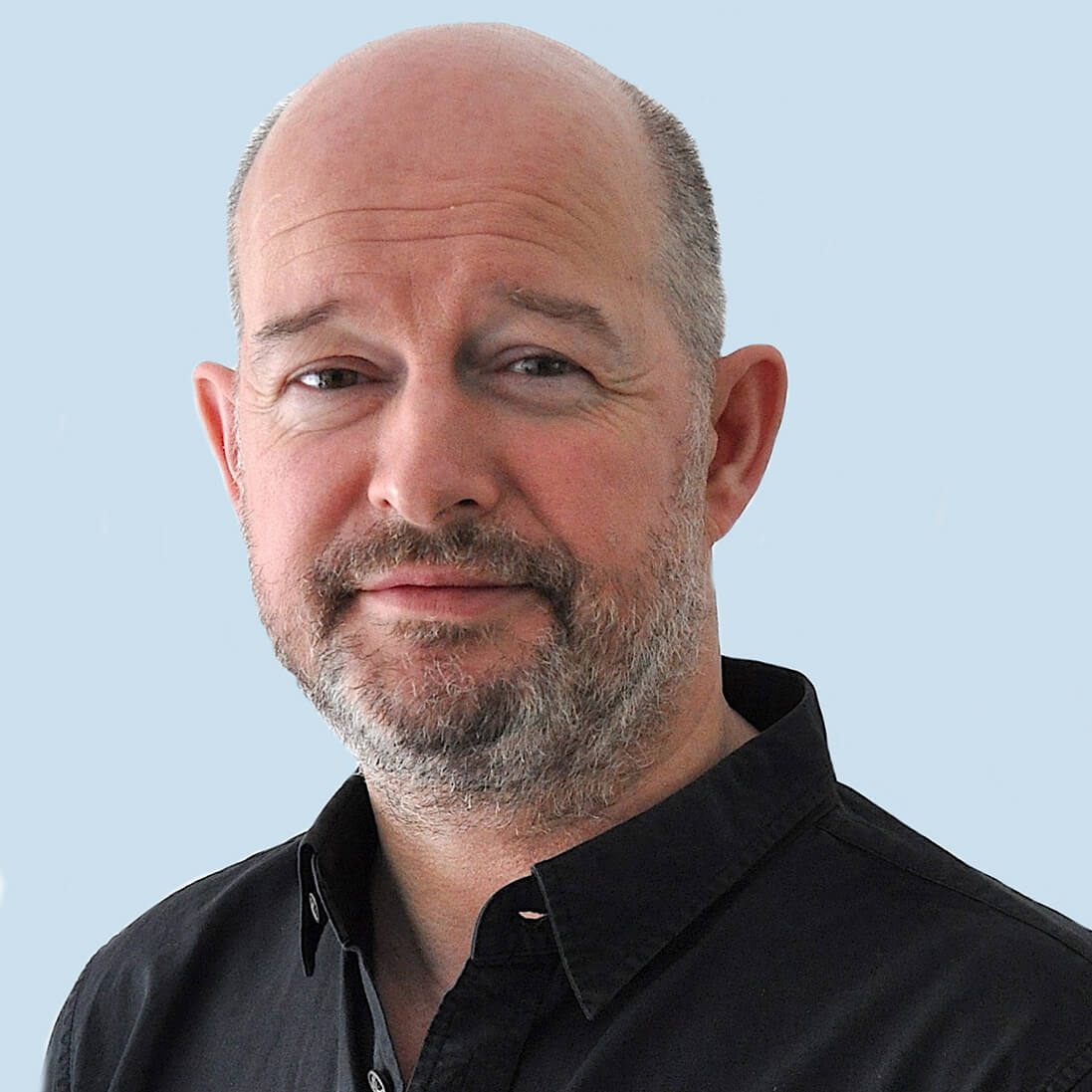
Georgios Anogiatis serves as Associate Professor at KU Leuven's Faculty of Engineering Technology, Department of Civil Engineering, based at the Bruges Campus. He heads the Hydraulics and Geotechnics subdivision and holds key committee roles including membership in the Council of the Faculty of Engineering Technology, Civil Engineering Department Council, and Faculty Council for International Policy. His research centers on soil-structure interaction dynamics, specializing in pile foundation behavior under seismic and cyclic loading. He develops continuum analytical models for geotechnical systems including retaining walls and embedded foundations, with emphasis on wave propagation in layered soils and p-y/t-z curve development. Current work integrates physics-informed neural networks and probabilistic methods to address offshore wind turbine foundation challenges. Recent publications (2023-2025) reveal a concentrated focus on offshore renewable energy infrastructure, particularly soil-pile interaction mechanisms in inhomogeneous soils, cyclic foundation response, and computational efficiency enhancements. Key themes include decommissioning strategies for wind turbine foundations, sediment bed system development for ocean basin testing, and probabilistic performance assessment under seabed variability. He leads multiple major research initiatives including the €2.1M ATHENA project (2022-2026) on analytical programming efficiency and the 2024-2029 decommissioning strategies project for offshore wind foundations. His grant portfolio demonstrates strong industry-academia collaboration in offshore renewable energy validation and coastal engineering applications. Anogiatis directs research activities at KU Leuven's Bruges Campus Hydraulics and Geotechnics group, leveraging the Coastal & Ocean Basin facility for experimental validation of offshore foundation systems. His team specializes in centrifuge testing, wave basin experiments, and computational modeling for dredging, coastal protection, and offshore renewable energy infrastructure.
Thomas Parker is an Associate Professor (Teaching) at The Bartlett School of Architecture, University College London, specializing in architectural design, 3D scanning, metrology, and computer vision systems. His research bridges academic inquiry with practical applications in digital architectural practices. Education: BA (Hons) Architecture (Part 1), University for the Creative Arts (2010-2013); MArch Architecture (Part 2), University College London (2015-2017); PhD in progress at UCL (2021-2026). His research focuses on integrating computer vision and artificial intelligence into architectural design, emphasizing adaptive media studies and the aesthetics of noise . Current projects explore 3D scanning applications in urban environments and dialogic design practices. Recent publications highlight advancements in neural radiance fields for architectural visualization, sustainable stone reuse in construction, and innovative drawing methodologies using digital tools. Scientific Awards include RIBA Serjeant Award (Part II), LAHP Image Competition Prize, multiple UCL and RIBA recognitions, and AHRC funding for his PhD research. Teaching roles encompass leading the 3D Scanning for Urban Environments module, directing Year 2 of the Architecture MSci program, and lecturing at the Architectural Association’s Hooke Park campus. He co-founded ScanLAB Projects and contributes to international exhibitions and conferences, aligning with Sustainable Development Goals 11 (Sustainable Cities) and 9 (Industry Innovation).
Jeppe Just Christensen is an Associate Professor at Royal Danish Academy of Music (DKDM) since 2011, serving as a Study Lecturer since 2019. He teaches composition and leads artistic initiatives like the Pulsar Festival. His practice integrates DIY instrument design with contemporary composition, often involving personal performance with ensembles like Jeppe Just Instituttet. Royal Danish Academy of Music (DKDM): Study Lecturer (2019-present) Royal Music Conservatory (RMC): Part-time teacher His research focuses on amateurism , folk music reinterpretation , and street music , using self-built or repurposed instruments. Works like Geteilten Saiten (2022) demonstrate advanced motorized string instrument integration, while Neko (2009) explores translational semiotics through flexatone inversion techniques. Notable awards include the Wilhelm Hansen Award and grants from the Danish Arts Foundation . His pedagogical work spans formal institutions (DKDM, RMC) and community workshops with children aged 3-6, emphasizing instrument-building and sound exploration. Collaborations with SCENATET and Klang Festival highlight his interdisciplinary approach.
Dr. Gregory Ferris is a Senior Lecturer in the Faculty of Design and Society at the University of Technology Sydney (UTS). His academic work bridges media art practice and research, with a focus on interactive and immersive media environments. He is affiliated with the Faculty Visualisation Institute (VI) Research Network and The Trustworthy Digital Society at UTS. Dr. Ferris completed his PhD at the College of Fine Arts, Sydney, Australia in 2013 with a thesis entitled "Every time I leave the room: image, time and metadata in off-screen space." His academic journey reflects a unique blend of artistic practice and scholarly research in contemporary media. Dr. Ferris's research interests span multiple domains of contemporary media practice. As a "media 'construct-ant'", he works across interactive media, installation art, virtual reality, and traditional moving image production. His creative practice has evolved from experimental films that screened on the ABC in the mid-eighties to pioneering work in panoramic interactive narratives and 360-degree virtual reality. His research focuses on microbudget feature filmmaking, immersive and interactive narrative structures, and emerging media technologies including virtual reality. His work explores the intersection of media production, post-production technologies, and experimental media making, with particular attention to aesthetic considerations in contemporary digital environments. Dr. Ferris's creative outputs demonstrate a consistent trajectory of innovation in media art. His work shows increasing sophistication in immersive technologies, with a focus on VR, 360-degree media, and interactive installations. His scholarly contributions connect media practice with educational applications, particularly in how immersive media can be integrated into teaching contexts. The themes across his work include explorations of narrative structures beyond traditional frames, spatial relationships in media, and the evolving relationship between creators, technologies, and audiences in digital environments. Dr. Ferris has received research funding from significant sources including the City of Sydney, UTS Chancellor's Research Fellowship, and Create NSW. His current projects include "Spirit of the Hoey" (2023-2024), "Envisaging and enacting just climate futures through immersive media" (2022-2027), and "Sympathetic Threads" (2017-2018). As an educator, Dr. Ferris teaches "Experimental Media" and is available for Masters Research and PhD student supervision. His teaching focuses on media arts exploration, production and post-production techniques, experimental media making, and aesthetics. He has organized academic conferences including microWAVE 2011 and microWAVE 2013, demonstrating leadership in his field.
Mary Pietrowicz is a Teaching Assistant Professor in the Department of Biomedical and Translational Sciences at the University of Illinois and a Senior Research Scientist at the Illinois Applied Research Institute. Her interdisciplinary research integrates computational methods with health sciences, focusing on acoustic and behavioral signal analysis for conditions like ALS, schizophrenia, and depression. She earned a Ph.D. in Computer Science from the University of Illinois, an M.S. in Computer Science from Florida Atlantic University, and a B.S. in Electrical Engineering from Purdue University. Her research explores computational modeling of human expression through speech, movement, and creativity to develop scalable health assessment tools. Key areas include: Machine learning for disease state detection via vocal and kinetic biomarkers Deployable telehealth systems using ubiquitous devices (phones, sensors) Cross-disciplinary applications in neurology, psychiatry, and addiction science Cultural computing through interactive art and sonic installations Her publications reveal a consistent focus on acoustic signal processing applied to neurodegenerative/psychiatric disorders, with innovations in laughter analysis, verbal fluency testing, and real-time health monitoring. Trends include machine learning refinement for clinical diagnostics and multimodal data fusion. She contributes to patented technologies in sensor security, geolocation systems, and speech characterization. At the Illinois Applied Research Institute, she develops deployable health-assessment frameworks and collaborates on interdisciplinary projects bridging engineering, medicine, and digital art.
Alastair Walker is an Adjunct Professor at the School of Earth and Oceans, The University of Western Australia. His research focuses on offshore pipeline mechanics, particularly lateral buckling control and structural design in marine environments. University: University of Western Australia School: School of Earth and Oceans Academic Rank: Adjunct Professor Email: alastair.walker@uwa.edu.au Research interests center on lateral buckling , pipeline stability , and mechanical design for subsea infrastructure. Key themes include: Thermo-mechanical behavior of pipelines on sloped seabeds Embedment trends and axial stiffness optimization Pipe-soil interaction variability Robust design methodologies for offshore environments
Kirsti Taiviola is a Lecturer at the Department of Design, Aalto University, specializing in glass art and light installations. She holds a Master of Arts and Bachelor of Arts from Aalto University School of Arts, Design and Architecture. Education: MA (2001), BA (1998) in Ceramics and Glass Art Her research focuses on artistic creation through coproduction, merging materials science with visual expression. She explores topics like optical quality in glass, light patterns, and surface science, often creating immersive public installations. Recent artistic outputs include Aaltojen alla (2024), a light installation interpreting wave dynamics, and 365 glasburkar i olika färgnyanser (2019), a colored glass altar artwork. Her 2023 activities extended UNESCO's recognition of Finnish glassmaking traditions. Scientific Awards Alttariteoksen suunnittelukilpailu (2019) Glass Art Society 2024 exhibition third place (2024) Her work bridges design pedagogy and practical glass art innovation, with notable collaborations in Scandinavian glass art deconstruction and reinvention projects (2023).