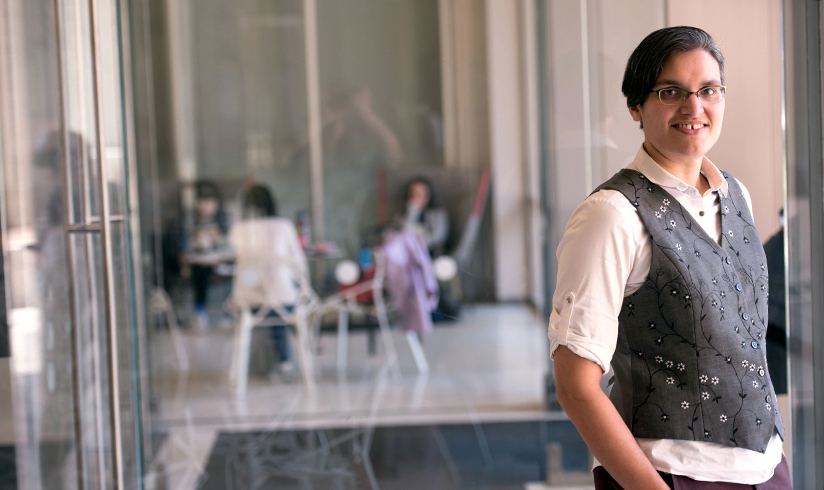
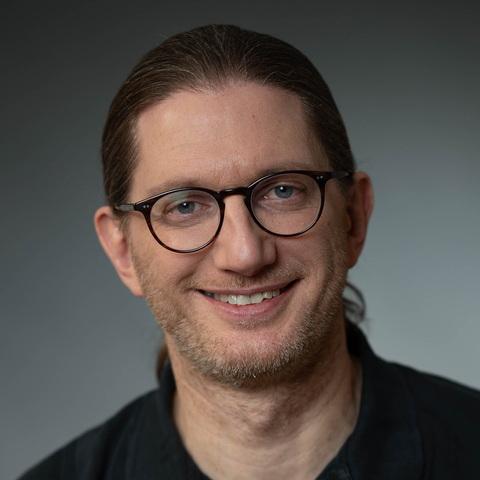
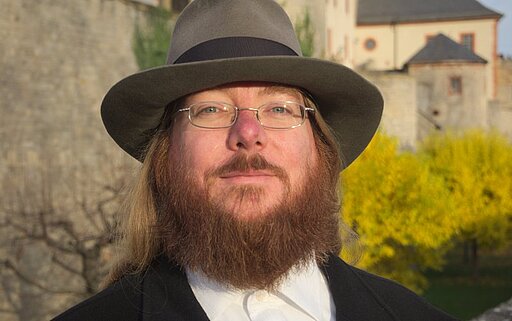
Yang Cao is a Professor at the University of Science and Technology of China , Department of Automation, Hefei, China. He holds a PhD from Northeastern University (2004, Shenyang, China) and has active affiliations with institutions like Virginia Tech and Huazhong University of Science and Technology. Research Focus: Spatiotemporal modeling, event-based vision, 3D human-object interaction, and industrial defect detection. Publications: 15 recent articles highlight his work in diffusion models, transformers, and state-space networks for tasks like traffic emission imputation, eye tracking, and PCB defect detection. Collaborative Work: Co-authored with Zheng-Jun Zha, Wei Zhai, Yu Kang, and others in journals like IEEE Transactions on Neural Networks and CVPR Workshops. Scientific Contributions: His research bridges computer vision, machine learning, and industrial applications, emphasizing real-world challenges such as low-light enhancement and sensor fusion.
Hugo Barbosa is an active faculty member in Informatics Engineering, affiliated with Lusófona University – Porto University Center and Porto Polytechnic (IPP). He teaches both theoretical and practical aspects of informatics and collaborates with the Social Innovation and Interactive Systems (SIIS) R&D unit at ISEP, focusing on applied research in interactive technologies for education and healthcare. Master’s in Informatics Engineering – Graphics and Multimedia Systems Bachelor’s in Informatics Engineering – Computers and Systems Professional Aptitude Certificate (CAP) PhD candidate in Informatics Engineering at FEUP (60 ECTS completed) Senior Member, Portuguese Engineers Association (OE) Hugo Barbosa's research lies at the intersection of technology and education, with a strong emphasis on serious games , virtual reality , and interactive simulation for training and rehabilitation. His work explores how adaptive digital environments can enhance learning, particularly in medical and engineering contexts, and investigates the integration of cybersecurity and network optimization in these systems. He focuses on user-centered design, aiming to create accessible and effective solutions for diverse populations, including the elderly and individuals with mobility or cognitive challenges. His publication record from 2009 to 2020 reveals a consistent trajectory in applied informatics, with a recent concentration on serious games for rehabilitation , cybersecurity in healthcare , and digital privacy . These works reflect a multidisciplinary approach, bridging computer science with health sciences and education. His research often addresses real-world challenges such as data protection in national health systems, adaptable therapeutic environments, and immersive training simulations. Hugo Barbosa has been recognized as a Senior Member of the Portuguese Engineers Association (OE), a professional distinction reflecting his contributions and expertise. While no additional awards are explicitly mentioned, his active participation in conferences and publications in research journals underscores his scholarly engagement. He is involved in research advising and project development through his work with SIIS at ISEP/IPP, though no named students are listed. His academic and professional activities suggest involvement in research grants and collaborative projects, particularly within R&D units focused on social innovation and interactive systems. His dual teaching role across institutions also indicates a broad educational impact. Hugo Barbosa is actively involved with the Social Innovation and Interactive Systems (SIIS) research unit at ISEP, Porto Polytechnic. This lab focuses on developing innovative interactive applications for social good, particularly in healthcare, education, and rehabilitation. His work there involves designing and evaluating multimedia and simulation-based tools that support learning and therapy, leveraging technologies like serious games and virtual environments.
Dr. Shuting Han leads a Junior Research Group at the University of Zurich under the Helmchen Lab, funded by the SNSF Ambizione Fellowship since 2024. She holds a Research Fellow position focusing on cortical dynamics underlying sensory processing and memory. Her research examines how distributed cortical areas interact during sensory processing and memory formation, utilizing multi-area two-photon calcium imaging, virtual reality behavior paradigms, electrophysiology, and advanced data analysis techniques. Key projects include investigating sensory representation in cortical areas, predictive processing in neural circuits, cortico-cortical interactions, memory consolidation across the neocortex, and developing high-throughput imaging methodologies. Her recent publications demonstrate expertise in cross-modal predictions, cortical microstates during consciousness alterations, and neural ensemble dynamics. She directs research on top-down predictive signals in neocortex and develops tools for volumetric neural imaging. SNSF Ambizione Fellowship Dr. Han mentors PhD students Maï Ly Leclair and Saidong Ma in the Helmchen Lab. Her group develops custom multi-area two-photon microscopes and applies machine learning for neural data analysis, bridging experimental neuroscience with computational approaches to decode cortical information processing.
Dr. Flora Roberts is an Assistant Professor in Cultural History at the Department of History and Art History , Utrecht University. Specializing in Environmental History and the Cultural History of Iran and the Persianate World , her work examines the intersection of nature and culture in Soviet Central Asia, particularly through water management and dam construction. Research Institutes: Member of the Humanities Research Institute for History and Art History Projects: Pathways to Sustainability (Water, Climate and Future Deltas), RedGold Legend Project , Biophilia Project (2024 USO-funded) Her research integrates archival documents in Russian, Persian/Tajik, and Uzbek with oral histories from Tajikistan and the Russian Federation. She explores how Soviet-era environmental transformations shaped social inequality and how post-Soviet societies negotiate ecological legacies. Recent works analyze transboundary rivers in Eurasia, environmental satire in USSR, and neopatrimonial governance in Central Asia. Roberts co-organizes the Network for Environmental Humanities at Utrecht and serves on the editorial board of the Journal of Central Asian History .
Professor Remco Veltkamp holds a faculty position at Utrecht University's Faculty of Science with a focus on Game and Media Technology . As Scientific Director of AI Labs and coordinator of the Utrecht Center for Game Research , his work bridges serious games, virtual reality, and human-centered AI applications. He leads the Dynamics of Youth Hub 'Healthy Play, Better Coping' exploring gaming's role in pediatric chronic illness management. Academic leadership in gaming technology Director of Utrecht's AI Labs Founder of Serious Game Society Editor of International Journal of Serious Games Research spans game design, AR/VR interaction, 3D object recognition, and multimedia systems with applications in: Healthcare gamification Energy conservation Bioinformatics Social behavior analysis Computer vision Recent work includes: 2025: Developing fatigue management therapy games 2024: Analyzing protest dynamics through social media 2023: Creating equine pain assessment systems 2022: Gamification in food sustainability As educator, he teaches Game Programming and Small Project Game and Media Technology , while pioneering applications of gaming in healthcare and education sectors.
Julia Hertel is a Researcher at the Department of Informatics, University of Hamburg, specializing in Human-Computer Interaction (HCI) and Augmented Reality (AR) systems for industrial applications. Her work bridges AR technology with practical solutions in maritime navigation, hydrographic surveys, and healthcare virtual agents. Bachelor's (2016) and Master's (2020) in Computer Science and HCI from University of Hamburg Her research interests focus on Augmented Reality for industrial contexts , including perception challenges in AR environments, interaction design for immersive systems, and AR tool development for gas station maintenance and maritime navigation. She has contributed to projects like WizARd (2020-2023) and HafenplanZen (since 2022). Julia's publications span AR perception studies, no-code AR authoring tools, and neural rendering for VR. Key collaborations include work on medical virtual agents and geospatial data visualization. She is actively involved in the XR Lab at the University of Hamburg, exploring spatial user interaction and industrial AR applications.
Sarah Abraham is an Assistant Professor in the Department of Computer Science at the University of Texas at Austin, affiliated with the Real-time Graphics and Parallel Systems research group. She holds a Ph.D. and M.S. from the University of Texas at Austin and a B.A. from Wellesley College. Research Interests: Dr. Abraham focuses on non-photorealistic rendering artistic tools for physical simulation video game mechanics that foster cooperation and empathy interactive narratives for prosocial engagement visualization techniques parallel computing in graphics Publications Trends: Her work bridges computer graphics, game design, and human-computer interaction, exploring innovative tools for artists and games that promote empathy through cooperative mechanics and narrative design. Scientific Awards: CNS Teaching Excellence Award Labs & Teams: She is a member of the Real-time Graphics and Parallel Systems research group at UT Austin.
Dr. Julie Andreyev is an Associate Professor in the Audain Faculty of Art at Emily Carr University of Art + Design. Her work bridges art and ecology, focusing on multispecies collaboration and biophilic ethics. She teaches courses in New Media + Sound Arts and Critical Studies. Education: PhD in Biophilic Ethics and Creativity with More-Than-Human Being from Simon Fraser University (2016). Research Interests: Interspecies creativity Eco-poetics and soundscapes Climate emergency adaptation Acoustic ecology Animal ethics in art Urban forest ecosystems Grants & Support: 2021 Art Apprenticeship Network Grant 2018 Emily Carr University Internal Research Grant Funded by Canada Council for the Arts and SSHRC Key Projects: Bird Park Survival Station (2015-ongoing) – climate emergency project with local birds Branching Songs (2024) – multispecies art project with old-growth trees Wild Empathy (2018) – VR project for ecological empathy EPIC_Tom (2014-16) – canine creativity performance Vegan Congress (2013) – activist art collective Publications: Lessons from a Multispecies Art Studio (2021 book), Responding to Dogs (2017 essay), and articles in BC Studies , Humanimalia , and Public Art Dialogue . Labs/Teams: Her Animal Lover studio and collaborations with researchers like Simon Lysander Overstall.
Michael Wimmer is a Full Professor at TU Wien, leading the Rendering and Modeling Group and directing the Center for Geometry and Computational Design. He holds a M.Sc. (1997) and Ph.D. (2001) from TU Wien. His research focuses on real-time rendering, procedural modeling, computational design, and point-based graphics. He has co-authored over 200 papers and the book *Real-Time Shadows*. He serves as Co-Editor-in-Chief of Computer Graphics Forum , chairs SIGGRAPH Asia 2025, and received the Eurographics Outstanding Technical Contributions Award (2023). Education: M.Sc. in Computer Science (1997), TU Wien Ph.D. in Computer Science (2001), TU Wien Research Interests: Real-time rendering and visualization Procedural modeling and computational design Point-based graphics and neural rendering Applications in computer games and urban environments Awards: Eurographics Outstanding Technical Contributions Award (2023) Wolfgang Straßer Award (Best Paper, 2022) Eurographics Fellow (2018) Outstanding Service Award (2012) Advising & Grants: Coordinator of the Special Research Programme Advanced Computational Design Key researcher at VRVis Research Center Labs & Teams: Rendering and Modeling Group Center for Geometry and Computational Design
Bruce H. Thomas is a Professor at the University of South Australia, specializing in Augmented Reality (AR), Virtual Reality (VR), and immersive systems. His research focuses on spatial computing, human-computer interaction, and the application of mixed reality in domains like collaborative analytics, architectural design, and healthcare. Key contributions include foundational work on ARQuake (the first outdoor AR game), spatial interaction techniques, and immersive analytics frameworks. He has authored over 280 publications across venues like IEEE Transactions on Visualization and Computer Graphics (TVCG), ISMAR, and CHI. His work spans theoretical studies on cognitive load and EEG responses to AR, as well as applied systems like GeoGate for geo-temporal data visualization. Dr. Thomas collaborates extensively with industry partners (e.g., automotive, energy sectors) and academic institutions globally. His projects emphasize real-world applications, including crime scene reconstruction for legal evidence presentation, VR-based architectural reviews, and haptic interfaces for surgical training. He co-edited the seminal book Emerging Technologies of Augmented Reality (2007) and serves on editorial boards for top journals. His lab's innovations include adaptive portals in VR, proxy-based situated visualizations, and systems for collaborative decision-making in high-stakes environments. Current research explores AI integration with immersive systems and AR-driven solutions for complex data analysis tasks.
Leif Kobbelt is a Full Professor of Computer Science and Head of the Visual Computing Institute at RWTH Aachen University . He previously held academic positions at the Max-Planck-Institute for Computer Science, University of Erlangen-Nürnberg, and University of Wisconsin-Madison. Diploma in Computer Science (1992), Karlsruhe Institute of Technology PhD in Computer Science (1994), Karlsruhe Institute of Technology His research focuses on computer graphics and geometry processing , with specific interests in 3D reconstruction, quad mesh generation, real-time rendering, and geometric modeling algorithms. He has pioneered techniques for efficient mesh processing, anisotropic geodesic computation, and procedural facade visualization. Recent publications analyze nonlinear constraints in geometric modeling, quad layout optimization, and real-time rendering techniques. Key themes include mesh parameterization, multiresolution analysis, and computational geometry for interactive applications. Scientific recognitions include: 2014 Gottfried Wilhelm Leibniz Prize (Germany's most prestigious research award) 2013 ERC Advanced Grant (ACROSS project) 2008 Eurographics Fellow 2004 Eurographics Outstanding Technical Contribution Award 2000 Heinz-Maier-Leibnitz Award He leads major research initiatives like the excellence clusters UMIC (€40M) and AICES (€15M), and the ERC-funded ACROSS project (€2.5M, 2014-2018). He serves as principal investigator and reviewer for international journals and organizations.
Professor Phillip Morgan is a leading academic in Human Factors and Cognitive Science at Cardiff University's School of Psychology, holding a Personal Chair since 2020. He directs the Human Factors Excellence (HuFEx) Research Group and serves as Director of Research for the Centre for Artificial Intelligence, Robotics & Human-Machine Systems (IROHMS) . Since March 2019, he has been seconded part-time to Airbus as Director of their Centre of Excellence in Human-Centric Cyber Security . BSc (Hons) Psychology, Cardiff University (2001) PGDip Research Methods, Cardiff University (2002, Distinction) PhD in Cognitive Psychology, Cardiff University (2005) PGCHE, University of Wales (2012, Distinction) His research merges Human Factors with Cognitive Science to address real-world challenges in: Human-machine interaction in autonomous systems Cyberpsychology and security behavior Transport human factors (connected/autonomous vehicles) Interruption/distraction effects on cognition Trust and blame dynamics in AI systems Industry 5.0 human-centric manufacturing Recent publications show AI and cybersecurity as dominant themes, with specific focus on autonomous vehicle interfaces, human fatigue analysis, and trust calibration in human-machine systems. His work integrates behavioral experiments, driving simulators, and human-state monitoring. Scientific Recognition: Associate Fellow of the British Psychological Society Best Paper Award at AHFE 2021 Member of Experimental Psychology Society Keynote speaker at multiple international conferences As supervisor, he leads projects on cybersecurity frameworks, fatigue detection, and human-AI interaction. His grants portfolio exceeds £37m from sources including EPSRC, ESRC, Airbus, and Wellcome Trust. Current supervisees include Victoria Marcinkiewicz, George Raywood-Burke, and Nicola Turner.
Professor Jang Yoon is a faculty member in the Department of Computer Engineering at Sejong University, South Korea. He currently holds the position of Daeyang Distinguished Professor and leads the Data Visualization Lab. His academic journey includes postdoctoral research at the Swiss National Supercomputing Center (2007-2009), ETH Zurich (2009-2011), and Purdue University (2011-2012). His educational background includes a Bachelor's degree from Seoul National University in Electrical Engineering (2000), and Master's and Doctoral degrees from Purdue University in Electrical and Computer Engineering (2002 and 2007). His academic progression at Sejong University shows his appointment as Assistant Professor (2012-2016), Associate Professor (2016-2022), and Professor (2022-present). Professor Jang's research spans multiple domains within data science and visualization, with primary focus on data visualization, visual analytics, and their applications in various domains. His work bridges theoretical computer science with practical applications in traffic analysis, healthcare, and smart city infrastructure. He has developed innovative techniques for spatiotemporal data visualization, volume rendering, and causal analysis in complex datasets. His recent publications (2023-2025) demonstrate a strong focus on integrating deep learning with visualization techniques, particularly in traffic analysis, volume rendering, and large language model interpretability. His work shows a clear trajectory toward combining causal inference with visual analytics, applying these methods to urban traffic systems, structural health monitoring, and public relations analysis. Professor Jang has served in numerous leadership roles in major visualization conferences including IEEE VIS, IEEE PacificVis (as General Chair in 2023), EuroVis, and HCI Korea conferences. His service contributions include program committee memberships and chair positions across multiple prestigious conferences in the visualization field. His laboratory work focuses on practical applications of visualization techniques with numerous patents registered in Korea. His research has resulted in multiple practical systems for traffic analysis, VR sickness detection, data quality improvement, and eye-tracking applications. The lab maintains strong industry connections through applied research projects addressing real-world problems.
Thorsten Vitt is a Researcher at the Chair of Computational Philology and Modern German Literary History within the Faculty of Philosophy at the University of Würzburg . His role includes academic advising for Digital Humanities degree programs, IT support for the Chair, and technical leadership in digital edition projects such as the Faust Edition and TextGrid . He is affiliated with the ZPD (Zentrum für Philologie) and works on computational methods for literary analysis. Current Projects : Faust Edition, ESF-ZDEX, TextGrid, DARIAH-DE Technical Expertise : Markup Languages, Linguistic Query Languages, Database Systems Research Interests : Digital Humanities, Computational Philology, Authorship Attribution, Topic Modeling, Digital Editions, Data Visualization, Software Development for Humanities. His work bridges computer science with literary studies, focusing on algorithmic analysis of historical texts and digital scholarly editions. Publications highlight his contributions to computational analysis of Goethe's Faust, topic modeling tools, and distance measures like Burrows' Delta. He has developed software libraries for stylometric analysis and collaborates on infrastructures like TextGrid and DARIAH-DE. Education : Completed a diploma thesis on "Queries to Complex Corpora" (2005) and a student research paper on "Storing Linguistic Corpora in Databases" (2004) at Humboldt University Berlin. Technical Leadership : Deputy IT support for the Chair, contributor to GitHub repositories including pydelta and faust-web , and developer of tools for topic modeling and digital editions.
Francisco Javier Oliver Bernal is a Lecturer at the University of Deusto in Bilbao, Spain, within the Faculty of Education and Sport and the Department of Physical Activity and Sports Sciences. He teaches across Computer Engineering, Physical Activity and Sports Sciences, and Primary Education bachelor's programs, as well as the Master's in Secondary Education. He earned his Doctor of Medicine and Surgery from the University of the Basque Country. His research spans Human-Computer Interaction, Educational Technology, and Science Education, with a strong emphasis on accessibility for visually impaired users. He has developed tools for e-learning, digital resource centers, and innovative teaching methodologies in computer science and natural sciences, aiming to enhance educational experiences through technology. His scholarly output, spanning from the 1990s to 2023, demonstrates a consistent focus on technology-enhanced learning, evolving from early work in 3D interfaces and computer graphics to recent applications in health, music, and interdisciplinary educational contexts. Key trends include the integration of accessibility features, the development of domain-specific educational tools (e.g., for biology and astronomy), and responses to contemporary challenges like the COVID-19 pandemic. He has supervised multiple theses on digital accessibility and cooperative systems, though student names were not listed. Details on research grants were not provided in the available text. As a member of the eVida research group (officially recognized by the Basque Government), he contributes to projects advancing accessible educational technologies, including the ACCE project for audiovisual accessibility and READIS digital resource centers for visually impaired users.