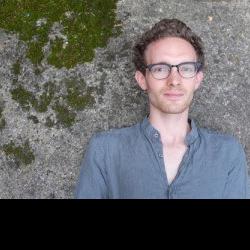
Dr Andrew Hoolachan is a Lecturer in Urban and Regional Planning at the University of Glasgow's School of Social and Political Sciences. He holds a PhD from the University of Cambridge, an MSc from UCL, and an MA from the University of St Andrews. His research focuses on urban governance, sustainability, and political ecology, particularly exploring localism, devolution, and scalar politics in UK cities. He has conducted fieldwork in East London examining the Localism Act's impact on sustainable urban development and the Olympic Legacy. His methodological expertise includes visual and digital methods, policy analysis, and urban political ecology frameworks. Theoretical interests span scale constructions, cultural geographies, and phenomenology. He is affiliated with the Socio-Environmental Action and Place & Built Environment research groups. Recent outputs include studies on urban flood resilience, housing retrofitting, and walking-based pedagogy. His work bridges academic research with policy practice, contributing to reports for institutions like the Royal Town Planning Institute and the UK Collaborative Centre for Housing Evidence. He teaches modules on spatial planning strategies and urban economics, emphasizing experiential learning approaches.
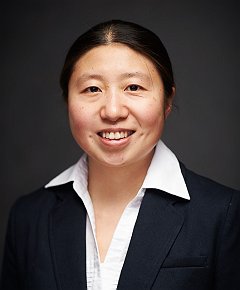
Shannon Johnson is an Associate Professor in the Department of Psychology and Neuroscience at Dalhousie University, concurrently affiliated with the Departments of Pediatrics and Psychiatry. She serves as Director of Clinical Training and Co-Director of the Dalhousie Centre for Psychological Health, which provides mental health services to underserved populations while training clinical psychology students. Dr. Johnson holds a BA from Kalamazoo College, MSc and PhD from the University of Victoria, and a Postdoctoral Fellowship from Indiana University. Her research focuses on enhancing well-being through nature connection interventions, understanding resilience mechanisms in pediatric populations, and improving diagnostic practices for neurodevelopmental disorders. She investigates the physical and cognitive benefits of nature exposure, barriers to nature connection, and behavioral change strategies. Her work bridges clinical and environmental psychology, with recent studies examining nature-based interventions for stress reduction, pain adaptation in youth with juvenile idiopathic arthritis, and moral foundations in autistic children. She has pioneered the concept of Indoor Nature Exposure (INE) as a health-promotion framework. Dr. Johnson’s lab collaborates with healthcare providers to develop scalable mental health interventions, particularly for underserved communities. Her training programs emphasize evidence-based practices and culturally responsive care. Key contributions include validating the role of nature in cognitive restoration and challenging clinical biases in autism assessment.
David Peeters is an Associate Professor at Tilburg University's Department of Communication and Cognition, part of the Tilburg School of Humanities and Digital Sciences. His research focuses on multimodal communication, multilingualism, and digital communication, leveraging immersive virtual reality (VR) technologies combined with EEG, eye-tracking, and fMRI. He explores neurobiological underpinnings of language, including neuropragmatics, non-verbal communication, and multilingualism. His work is supported by grants such as the NWO Veni and Tilburg University Fund. Peeters teaches courses on virtual reality, language psychology, and digital literature integration in education. He is a Research Fellow at the Donders Institute and President of the Tilburg Young Academy. Key research interests include the role of gesture and iconicity in second language acquisition, bilingual language switching in immersive environments, and the impact of dataism on academic publishing. He collaborates with libraries and schools to integrate digital literature into curricula and public collections. His scientific awards include the NWO Veni Grant and a Fellowship from the International Max Planck Research School for Language Sciences. His research bridges cognitive science, linguistics, and technology, emphasizing ecologically valid experimental paradigms.
Eleanor O'Rourke is an Associate Professor at Northwestern University with joint appointments in the Department of Computer Science and the Learning Sciences, part of the McCormick School of Engineering. She co-directs the Delta Lab, focusing on interdisciplinary research in Human-Computer Interaction, Artificial Intelligence, and Learning Sciences. Her work examines how learning environments can foster motivation and effective practices in computer science education, supported by grants from NSF and Google. Educated at the University of Washington (PhD, MS in Computer Science & Engineering) and Colby College (BS in Computer Science and Spanish), her research employs mixed methods, including design-based research and grounded theory, to study student motivation, affective responses during programming, and AI-driven interventions. Notable contributions include tools like Ply and Isopleth , which support novice web developers, and studies on student self-assessment biases and growth mindset incentives. Her work has been recognized with multiple Best Paper Awards at ACM conferences, including ICER 2024 and SIGCSE 2022. She teaches courses such as Transformative AI and the Learning Sciences and Design of Learning Environments , and advises a diverse cohort of PhD students and undergraduates. The Delta Lab’s collaborative approach emphasizes innovation in educational technology and human-centered design.
Jas Brooks is an incoming Assistant Professor at MIT's Department of Electrical Engineering and Computer Science (EECS) and the Computer Science and Artificial Intelligence Laboratory (CSAIL), starting Fall 2026. They completed a PhD in Computer Science at the University of Chicago under Prof. Pedro Lopes, focusing on perceptual engineering—designing interfaces to modulate human sensory perception. Their work addresses challenges in power efficiency and miniaturization for senses like taste, touch, and smell, enabling applications in health, safety, and immersive experiences. Research interests span HCI, olfactory interfaces, thermal feedback systems, and wearable technology. Notable publications include Best Paper Awards at CHI 2020 and CHI 2021, and Honorable Mentions at UIST 2023 and UIST 2021. Awards include the NSF Graduate Research Fellowship, Siebel Scholar, and Rising Star in EECS. Brooks has presented at MIT, UCSD, and international symposia, including a keynote at the 'New Metabolism' event. They co-organized workshops on smell/taste interfaces (STT21, STT23) and led projects like the Timeless Smell Archive and Smell & Paste prototyping toolkit. Teaching includes a graduate VR course at SAIC and contributions to sensory education via the CBORG initiative. Labs/teams include Pedro Lopes' research group at UChicago and collaborations with institutions like the Media Archaeology Lab. Current projects explore adaptive EMS systems, thermal feedback wearables, and historical scent technologies.
Steven Swanson is a Professor in the Department of Computer Science and Engineering at the University of California, San Diego, within the Jacobs School of Engineering. He is the Director of the Non-Volatile Systems Laboratory (NVSL), where he leads cutting-edge research in non-volatile memory, storage systems, and hardware-software co-design. His work bridges computer architecture, systems, and software to develop efficient, reliable, and secure computing platforms. Ph.D., University of Washington, 2006 B.S., University of Puget Sound, 1999 Dr. Swanson's research centers on non-volatile and persistent memory systems , exploring how next-generation storage technologies can transform computing. His lab develops full-stack solutions including file systems like NOVA and Orion , programming models such as NV-Heaps , and hardware prototypes like Moneta and Onyx . The team also works on low-power co-processors (e.g., GreenDroid ) and tools for debugging and verifying persistent memory programs. Research spans system reliability, security, energy efficiency, and performance optimization. His recent publications reveal a strong focus on persistent memory safety , zero-copy I/O , RDMA-based distributed file systems , and real-world characterization of Intel Optane . These works appear in top venues including ASPLOS, FAST, MICRO, and USENIX ATC, demonstrating sustained innovation in storage and systems research. Scientific honors include: NSF CAREER Award Google Faculty Award Facebook Faculty Award NetApp Faculty Fellow Dr. Swanson has advised 15 PhD students and 4 postdocs , many now faculty or senior engineers at Google, Microsoft, Intel, and other leading tech firms. He has secured significant research funding and leads major community initiatives such as the annual Non-Volatile Memories Workshop and Persistent Programming In Real Life (PIRL) . His educational efforts include innovative courses on robotic system design, quadcopter building, and modern storage systems, emphasizing hands-on learning and real-world implementation. The Non-Volatile Systems Laboratory (NVSL) under his leadership fosters a collaborative, international research environment, hosting visitors and postdocs from around the world. The lab is recognized globally as a pioneer in storage systems research and a key contributor to the adoption of persistent memory technologies in industry.
Oliver Shorttle is a Professor of Natural Philosophy at the University of Cambridge, holding a joint position between the Department of Earth Sciences and the Institute of Astronomy. His research focuses on planetary evolution, extrasolar planets, and geochemical cycling, integrating geological and astronomical perspectives. He explores topics such as exoplanet habitability, volcanic processes on distant worlds, and the role of volatiles in planetary systems. Education and Career: Shorttle earned his undergraduate degree in Natural Sciences from Cambridge, followed by a PhD in Earth Sciences. He held postdoctoral positions at Caltech and as a JSPS fellow in Japan before returning to Cambridge as faculty. Research Themes: His work spans planetary chemistry, magma dynamics, and the interplay between planetary interiors and atmospheres. Key projects include analyzing protoplanetary disks, simulating volcanic activity on exoplanets, and investigating phosphorus’s role in prebiotic chemistry. Collaborations: Leads the Planetary Chemistry group, collaborating across disciplines at Cambridge and internationally. Current projects involve modeling exoplanet atmospheres, studying mantle melting processes, and developing geochemical methods to probe planetary formation. Labs/Teams: Directs the Planetary Chemistry research group, fostering interdisciplinary research between geology and astronomy. Active in fieldwork, lab analysis, and computational modeling.
Philippe Christe is an Associate Professor in the Department of Ecology and Evolution at the University of Lausanne (UNIL), Faculty of Biology and Medicine. His research centers on host-parasite interactions, with a focus on bats, birds, and their ectoparasites, integrating behavioral, physiological, and genetic approaches. He leads the Christe Group, which investigates evolutionary and ecological dynamics in host-parasite systems, particularly avian malaria and bat-mite relationships. He is actively involved in conservation initiatives, including the Jorat Peri-Urban Nature Park, and collaborates with KORA on human-wildlife interactions. Bachelor's degree in biology, UNIL (1989) PhD in Zoology and Animal Ecology, UNIL (1994) Philippe Christe’s research interests lie at the intersection of parasitology, evolutionary ecology, and conservation biology. He investigates how host defenses evolve in response to parasitic pressures, examining trade-offs between immunity and life history traits such as reproduction and survival. His work often integrates field studies with experimental and molecular techniques. Key model systems include Parus major (great tit) and Culex pipiens in avian malaria, and bat species with their ectoparasitic mites. He also explores broader ecological interactions, including predator-prey dynamics and wildlife conservation in human-modified landscapes. His recent publications reflect a strong emphasis on disease ecology, wildlife conservation, and molecular methods. Articles span topics such as avian malaria transmission, lynx population dynamics, snow leopard behavior, and habitat fragmentation effects on insects. These works employ advanced techniques like DNA metabarcoding, spatial modeling, and long-term monitoring, demonstrating a trend toward interdisciplinary, data-driven ecological research with direct conservation applications. Dubois Foundation Prize for an educational CD-Rom on bats (2004) Communication Award from the Faculty of Biology and Medicine of UNIL (2017) Philippe Christe has supervised numerous PhD and Master’s students, contributing significantly to training the next generation of ecologists and evolutionary biologists. His group collaborates widely with institutions such as the Museum of Zoology in Lausanne and KORA, and participates in large-scale conservation projects involving snow leopards, lynx, and bats. He has been involved in research grants related to host-parasite coevolution, wildlife monitoring, and conservation strategies. His leadership in establishing the Jorat Peri-Urban Nature Park and involvement in the UNIL Interdisciplinary Center for Mountain Research highlight his commitment to applied science and environmental stewardship. He leads the Christe Group, which conducts research on host-parasite coevolution, with a focus on bats and their ectoparasites, and birds affected by avian malaria. The group combines fieldwork, laboratory experiments, and molecular analyses, and includes post-docs, PhD students, and technical staff. Collaborations extend to researchers in Bern, Paris, and Spain, fostering an international and interdisciplinary research environment.
Katrin Schollbach is an Assistant Professor in the Building Materials department at Eindhoven University of Technology's School of Built Environment . Her research focuses on sustainable utilization of industrial by-products in construction materials, particularly steel slags from fossil-free steelmaking processes. Expertise: BOF slag activation, carbonation resistance, heavy metal immobilization, eco-friendly binders Projects: Leading the SLAK project (2023-2029) on future slags from fossil-free steelmaking Collaborations: Active international collaborations in construction materials research Schollbach's work explores the chemical and mineralogical properties of industrial waste materials, optimizing their performance in building applications. Key research themes include chemical activation techniques, carbonation processes, and material characterization using scanning electron microscopy and X-ray diffraction. Recent publications highlight her innovative approaches to BOF slag activation, sewage sludge-based sealing materials, and marine infrastructure applications. Her research output demonstrates consistent growth with 89 total publications and collaborations across multiple disciplines. She contributes to education through courses like Climate-responsive Building Design and Masterproject BPS Research , and maintains active research partnerships with institutions worldwide.
Limin Jia is a Research Professor in the Electrical and Computer Engineering (ECE) department at Carnegie Mellon University, with a courtesy appointment in the Computer Science Department (CSD). Affiliated with CyLab, their work focuses on applying formal techniques to enhance software security through programming language design, formal verification, and information flow analysis. Research interests span Security Programming Languages Formal Verification Information Flow Control Intermittent Computing Rust Programming . Recent publications integrate formal methods with practical security challenges, including Node.js vulnerability detection Rust API testing Secure multi-execution Intermittent computing type systems IFTTT security analysis Browser security frameworks . Limin serves on program committees for conferences like POPL, PLDI, VMCAI, and is actively involved in teaching courses such as Browser Security (18-636) Introduction to Information Security (18-631) .
Professor Juliet Foster is Dean of Education at the Institute of Psychiatry, Psychology & Neuroscience (IoPPN), King's College London. Previously, she served as Deputy Dean of Education at the Psychology Department since 2018 and held academic roles at the University of Cambridge as Senior Tutor and Senior Lecturer. King's College London (2018–present) University of Cambridge (prior to 2018) Her research focuses on public understandings of mental health, student wellbeing, and sociocultural psychology. She employs qualitative and mixed-methods approaches, contributing to the development of the 'whole university' mental health strategy. Juliet collaborates with Student Minds, the UK student mental health charity, and serves as an Assessor for the University Mental Health Charter. Key projects include evaluating peer support systems, studying loneliness in students, and analyzing media representations of mental health and homelessness. Her work aligns with the UN Sustainable Development Goal of Quality Education. Scientific Awards: British Psychological Society Social Psychology Section Award for the Most Outstanding PhD She co-chairs King's College London's Steering Committee on Student Mental Health and Wellbeing and has served on the British Psychological Society's Education and Training Board. Her research has been funded by ESRC, AHRC, and NIHR.
Professor Ian Cousins is a leading researcher in the Department of Environmental Science at Stockholm University, specializing in the study of persistent organic pollutants, particularly per- and polyfluoroalkyl substances (PFAS). With over 200 peer-reviewed publications and recognition as a Highly Cited Researcher in 2018 and 2020, his work has significantly influenced environmental policy and scientific understanding of chemical pollution. BSc (Hons) in Chemistry, University of York (1989) Master's in Environmental Management, University of Surrey (1991) PhD in Environmental Science, Lancaster University (1998) Prof. Cousins' research focuses on the sources, transport, fate, and exposure pathways of contaminants in the environment, with particular emphasis on PFAS. His work combines experimental and modeling approaches to investigate how these persistent chemicals move through ecosystems, with recent studies examining sea spray aerosol transport of PFAS and their global distribution. His research has contributed to understanding PFAS as a planetary boundary issue, demonstrating that environmental contamination by these substances has exceeded safe operating limits. Prof. Cousins' extensive publication record shows a clear trend toward addressing the complex challenges of PFAS pollution, including their environmental behavior, risk assessment methodologies, regulatory frameworks, and the application of the essential-use concept for phasing out non-essential PFAS applications. His work spans fundamental environmental chemistry to policy-relevant research that has directly influenced European environmental decision-making. Highly Cited Researcher (2018, 2020) Listed among 30 EU politicians and professionals with greatest impact on European environmental policy (2023) Associate Editor of Environmental Science and Technology (2020-present) Associate Editor of Environmental Au (2021-present) Prof. Cousins actively supervises master's students focusing on organic pollutants and has coordinated major research projects including PERFORCE3, a Europe-wide doctoral training program on PFAS, and ZeroPM, targeting PFAS and persistent, mobile substances. His research has been supported by multiple European Union Horizon 2020 grants, reflecting the significance and impact of his work on global environmental challenges. He leads a research group that works closely with analytical chemists to better understand the behavior of PFAS and other contaminants, contributing to the development of evidence-based approaches for managing chemical pollution and protecting environmental and human health.
Stuart Hargreaves is an Associate Professor at the Faculty of Law , The Chinese University of Hong Kong . His research focuses on information and privacy law and constitutional law and legal theory , reflecting his prior legal practice and academic background. Education: SJD, University of Toronto (2013) BCL, Oxford University (2008) JD, Osgoode Hall Law School (2006) BA in Politics & Sociology, McGill University (2000) His work examines the intersection of artificial intelligence and legal education , with projects like “Teaching Avatars” using AI for educational content creation. He also investigates surveillance technologies , privacy law , and constitutional rights in the context of Hong Kong’s political and legal environment. Scientific Awards and Grants: CUHK Teaching Excellence Award (2017) CUHK Direct Grant for Research University Grants Committee Teaching Development Grant Research Grants Council General Research Fund Joseph-Armand Bombardier Canada Graduate Scholarship Google Policy Fellowship He has contributed to AI in legal pedagogy through multiple conference presentations (e.g., “Teaching Avatars” at the 2024 CUHK Teaching & Learning Innovation Expo) and serves on the Board of Advisors for Teach for Hong Kong . His external roles include journal reviewing and LAWASIA membership.
Søren Munch Kristiansen is an Associate Professor in the Department of Geoscience at Aarhus University, Faculty of Natural Sciences. His interdisciplinary research bridges geoscience and archaeology, focusing on the complex interactions between soil, water, and human societies across time. He is actively engaged in transdisciplinary projects involving geoarchaeology, groundwater, and public health. Research Interests: His work centers on how soil and groundwater have shaped human prehistory and continue to influence modern life. Key areas include safe drinking water from a lifelong perspective, geoarchaeological prospection, Viking Age settlements, and the application of geophysical and geochemical methods in archaeological contexts. He is particularly interested in novel, interdisciplinary methodologies. Recent Research Trends: His recent publications reveal a strong focus on integrating geophysical data (e.g., GPR, borehole databases) with archaeological interpretation, especially in 3D urban modeling and landscape change. Themes include Viking Age sites, interglacial deposits, and anthropogenic soil modifications. His work increasingly employs machine learning and large-scale data synthesis. Scientific Awards: No awards mentioned in the provided text. Advising and Grants: While specific students are not listed, he leads and participates in multiple funded research projects, indicating an active supervisory role. His grants span from 2016 to 2024, including projects like TITAN, SAGA, and 'Fingerprinting displaced molecular substances,' highlighting sustained funding and leadership in interdisciplinary geoscience-archaeology research. Labs and Teams: He is involved in collaborative networks such as the Soil Science & Archaeo-geophysics Alliance (SAGA), suggesting leadership in interdisciplinary research teams. His work often involves multi-proxy analyses and international collaborations, particularly in Scandinavian archaeological geophysics.
Børge Rokseth is an Associate Professor at the Department of Engineering Cybernetics, Norwegian University of Science and Technology (NTNU). His work focuses on maritime systems, autonomous vessel control, and safety verification. He actively supervises Master's students and contributes to research on risk-informed control systems, hybrid power systems, and systems-theoretic process analysis (STPA). Research Interests: Rokseth's research spans autonomous ship systems, dynamic risk assessment, and safety verification. He explores risk-based decision-making for maritime autonomy, hazard identification in hybrid propulsion systems, and control function allocation in dynamic positioning. His work integrates systems theory, machine learning, and regulatory compliance (e.g., COLREGS) to enhance safety and environmental performance in marine operations. Publications: His recent work includes probabilistic trajectory prediction frameworks for autonomous ships, STPA-based safety analyses, and studies on decarbonization barriers in the maritime industry. These publications emphasize risk modeling, systems-theoretic approaches, and simulation-based verification. Teaching: Rokseth teaches courses such as TTK4130 - Modelling and Simulation, contributing to the education of future engineers and researchers in cybernetics and maritime systems.