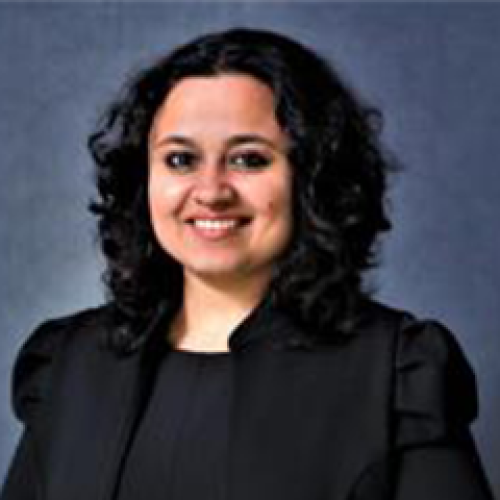
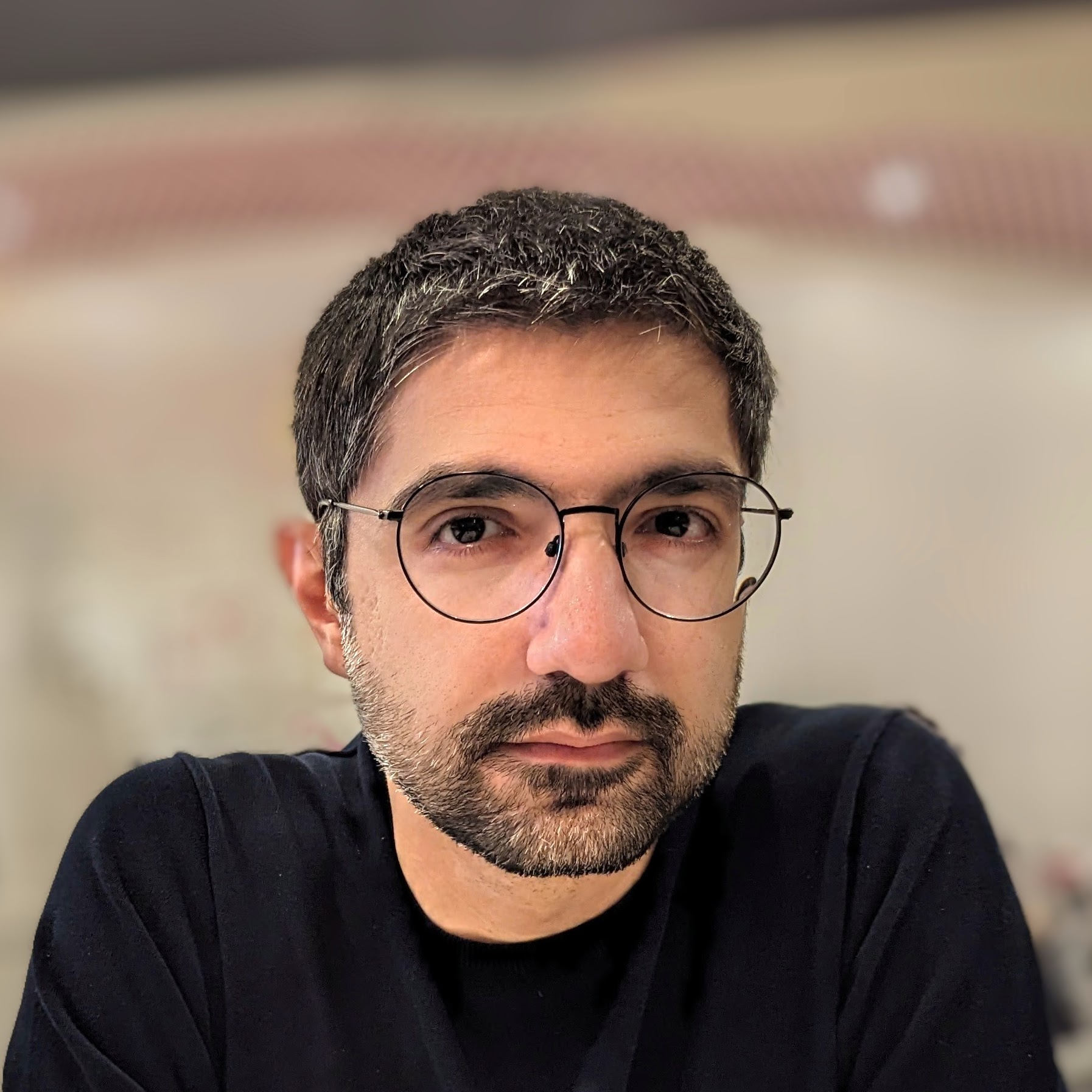
Sun-Jeong Kim is a Professor at the Department of Computer Science within the School of Computer Science at Korea University . Her research focuses on real-time rendering techniques, GPU programming, and game engine optimization. Specializes in procedural modeling and interactive visualization Develops efficient rendering algorithms for virtual reality Active in graphics hardware acceleration and collision detection Her research has produced 15+ publications on topics including tessellation strategies, skeletal animation systems, and particle effect optimizations. While specific awards and students aren't detailed in the current text, her work demonstrates consistent contributions to real-time graphics and game development.
Dr. Arne Schmitz is a researcher at the Department of Computer Science, RWTH Aachen University, specializing in computational methods for wireless communications and computer graphics. His work bridges radio wave propagation physics with advanced visualization techniques, focusing on practical applications for mobile network planning and mobile device interfaces. His primary research domains include: Radio wave propagation modeling in urban environments GPU-accelerated beam/ray tracing algorithms Antenna pattern compression using spherical harmonics Real-time 3D visualization for resource-constrained mobile devices Ad-hoc multi-display systems for collaborative mobile applications Analysis of his publication timeline reveals an evolution from foundational radio propagation models (2006) toward increasingly sophisticated urban simulation frameworks (2011-2012), with consistent emphasis on computational efficiency. His most impactful contributions integrate computer graphics rendering techniques with telecommunications engineering, particularly in adapting beam tracing for radio wave simulation and developing novel mobile visualization paradigms that overcome hardware limitations through client-server architectures. Dr. Schmitz maintains a strong collaborative relationship with Professor Leif Kobbelt and colleagues at RWTH Aachen, with co-authorship appearing in 9 of his 10 documented publications. His research demonstrates consistent funding support through participation in IEEE and ACM conferences, though specific grant details are not disclosed in the available materials.
Bonn-Rhein-Sieg University of Applied SciencesGermany
Prof. Dr. Rainer Herpers is a full Professor at the Department of Computer Science within the Graduate Institute at Hochschule Bonn-Rhein-Sieg University of Applied Sciences . He serves as Scientific Director of the Graduate Institute and Director of the Institute of Visual Computing (IVC), leading interdisciplinary projects that bridge Computer Vision , Human Perception , and Real-Time Systems . His research explores gravitational effects on spatial orientation, serious games for medical training, and FPGA-based computer vision solutions. Research Interests: Computer Vision and Machine Vision Face and Gesture Recognition Artificial Neural Networks Robotics and Real-Time Systems Medical Informatics Usability in Work Safety Article Trends: Recent work focuses on gravity perception (2023-2024), neural network applications in environmental monitoring, and machine learning for network traffic analysis. Collaborations with York University and DLR highlight his interdisciplinary approach. Scientific Awards: Best Paper Award, IBM Centre for Advanced Studies in Computer Science (2020) Labs: Leads the Computer Vision Lab (C065) and Immersive Visualization Lab (C061) , developing systems like the FIVIS Bicycle Simulator and SimuBridge platform for education and safety evaluation.
Professor Christopher Tyler is a visual neuroscientist specializing in visual and oculomotor function and disorders at City St George's, University of London. He joined the institution in 2013 after working at several universities in the United States and maintaining a long-standing affiliation with the Smith-Kettlewell Eye Research Institute in San Francisco, where he established its Brain Imaging Center. His research spans multiple disciplines including neuroscience, psychology, and vision science, with active international collaborations across France, Germany, United States, Taiwan, Israel and Australia. Professor Tyler received his training in Experimental Psychology at the Universities of Leicester, Aston and Keele before taking postdoctoral fellowships at Northeastern University, Boston, University of Bristol and Bell Laboratories. His educational background provides a strong foundation for his interdisciplinary research that bridges visual neuroscience, psychophysics, and computational modeling. His research interests focus on the neural processing of visual information, with particular emphasis on form, symmetry, flicker, motion, color, and stereoscopic depth perception. Professor Tyler has developed effective psychophysical and electrophysiological tests for diagnosing retinal, optic nerve, visual cortical and oculomotor disorders. His current work investigates the effects of traumatic brain damage on eye movements and their brainstem control mechanisms, with significant implications for understanding and treating traumatic brain injury. Professor Tyler's extensive publication record demonstrates consistent contributions to understanding visual perception across multiple dimensions. His recent work shows a strong focus on traumatic brain injury effects on vision, advanced computational modeling of visual processes, symmetry processing, and the intersection of visual science with art history. His research bridges fundamental neuroscience with clinical applications, particularly in understanding how brain trauma affects visual function. Smith-Kettlewell Eye Research Institute (1996) Kettlewell Chair Smith-Kettlewell Eye Research Institute (1985) Kettlewell Chair American Academy of Optometry (1982) Garland-Clay Award Professor Tyler has taught courses at numerous prestigious institutions including Northeastern, UCLA, UC Santa Barbara, UC Berkeley and the University of Paris. His research has been supported by significant grants from CDMRP (US) for studying human oculomotor functions in traumatic brain injury, AFOSR (US) for encoding 3D structure in visual scenes, and NSF (US) for investigating neural dynamics of conceptual learning. He maintains an active research laboratory focused on visual neuroscience and has collaborated with numerous researchers worldwide. His research center is focused on Optometry and Visual Neuroscience, where he leads investigations into visual perception mechanisms and their applications to clinical problems. Professor Tyler's work bridges fundamental neuroscience with practical applications in vision science and clinical optometry.
Athanasios Markou serves as a University Lecturer in the Department of Civil Engineering at Aalto University, Finland, affiliated with the Structures research group specializing in Structural Engineering, Mechanics, and Computation. His academic role integrates teaching with experimental and computational research on innovative structural systems, particularly focusing on geometrically nonlinear behavior validated through advanced techniques like high-speed imaging and photogrammetry. His research interests span Structural Engineering, Mechanics, and Computational Methods, with emphasis on bending-active and twisted structures, kinematic pavilions, and chain dynamics. He investigates material reuse in sustainable construction, elastic torsion systems, and base isolation for seismic protection, often blending architectural design with engineering principles to develop efficient structural forms. Analysis of his 2019-2024 publications reveals consistent exploration of nonlinear structural behavior through experimental-computational synergy. Key trends include bending-active beam elements, falling chain dynamics, and torsion-based systems like the 'Zero Gravity' series, frequently resulting in open datasets and physical prototypes. His interdisciplinary collaborations emphasize sustainable material use and kinematic innovation in architectural applications. Within Aalto University's Structures research group, Markou contributes to cutting-edge work on structural morphology and computational mechanics. The group pioneers bending-active elements and sustainable construction methodologies, utilizing photogrammetry and high-speed imaging for data-driven validation while advancing material-efficient design paradigms through physical prototyping.
Arijit Raychowdhury is a Professor and the Steve W. Chaddick School Chair at Georgia Tech's School of Electrical and Computer Engineering (ECE). He leads the Center for the Co-Design of Cognitive Systems (CoCoSys) and directs the DoD-sponsored SCALE Workforce Development Program in SoC Design. Current affiliations: Georgia Tech (ECE), Integrated Circuits and Systems Research Lab Prior affiliations: Intel Corporation (6 years), Texas Instruments (1.5 years) Research interests focus on low-power circuits, compute-in-memory (CIM) systems, cryogenic electronics, and neuro-symbolic AI. His work bridges circuit design with emerging device technologies and machine learning applications. Scientific contributions include: Over 250 publications and 27 patents Leadership in top conferences (ISSCC, VLSI Symposium, DAC, CICC) Pioneering 3D Gaussian Splatting acceleration, adaptive echo-cancellation networks, and CIM architectures Advancing GaN-based power converters and cryogenic CMOS Awards : IEEE Fellow (2022) SRC Technical Excellence Award (2021) Qualcomm Faculty Award (2021, 2020) IEEE/ACM Innovator under 40 (2018) Intel Young Faculty Award (2015) Dimitris N. Chorafas Award (2007) Leadership : • Director of CoCoSys Center • Site Director for SCALE Program • Distinguished Lecturer, IEEE Solid-State Circuits Society
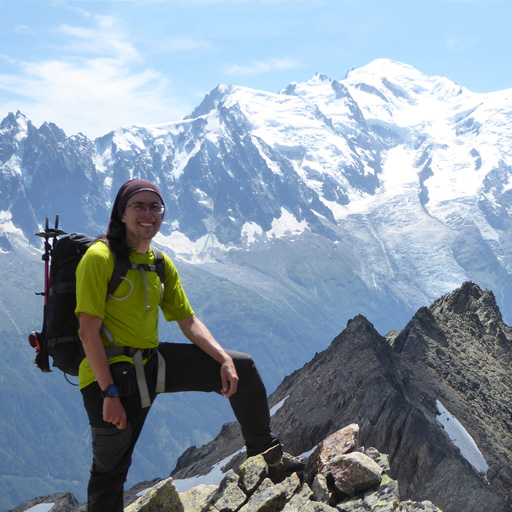
Oscar Argudo serves as Assistant Professor in the Department of Computer Science at the Barcelona School of Informatics, Universitat Politecnica de Catalunya (UPC), focusing on computer graphics and virtual reality applications for environmental simulation. His expertise bridges computational techniques with real-world ecological concerns, particularly human impact on natural landscapes through recreational activities like hiking. Education: PhD in Computer Science, Universitat Politecnica de Catalunya (2018). Thesis: "Realistic reconstruction and rendering of detailed 3D scenarios from multiple data sources". Advisors: Carlos Andujar and Antoni Chica. His research pioneers terrain modeling methodologies that simulate erosion, vegetation decay, and trail formation through procedural algorithms and crowd behavior modeling. Current work integrates pathfinding optimization for uneven terrains with anthropogenic degradation effects, creating immersive VR experiences that visualize environmental consequences of human activity. This approach uniquely combines his mountaineering passion with computational rigor to address ecological awareness through technology. Recent publications demonstrate consistent innovation in terrain analysis, digital nature rendering, and environmental simulation across top venues like SIGGRAPH and Eurographics, with emerging focus on open-sourcing tools for broader scientific impact. Scientific Awards: Maria Zambrano research fellowship (2022) R3 accreditation by Agencia Estatal de Investigación (2025) Accreditation of research by AQU (2025) He actively supervises students evidenced by the 2025 Eurographics Spanish Chapter Best BSc Thesis award for "Interactive viewer of natural scenes with hiking trails in Unity" and multiple master's theses converted to conference papers. As co-Principal Investigator of the SENDA project (funded by Ministerio de Ciencia e Innovación), he leads a team developing novel algorithms for virtual human simulation and terrain degradation modeling, with two postdoc positions recently advertised to expand this research. His work operates within UPC's Barcelona School of Informatics research ecosystem and the SENDA project team, which develops both VR applications for immersive environmental education and web-based tools for public engagement with terrain degradation phenomena.
Mario Montagud Climent is a researcher at Centrum Wiskunde & Informatica (CWI) , focusing on virtual reality (VR), extended reality (XR), and multimedia systems. His work bridges network protocols, human-computer interaction, and immersive technologies. Key contributions: Multi-party holographic meetings, Edge rendering architectures, and XR quality of experience (QoE) optimization Collaborations: Sergi Fernández, Pablo César, Gianluca Cernigliaro, and other international experts in VR/XR Research spans network programmability for adaptive XR, holographic communications , and explainable AI for spatial audio analysis. Publications highlight QoE assessment and low-cost immersive solutions . Recent articles address real-time multiuser systems, neural 3D reconstruction for UAVs, and 6G federation concepts. His work integrates 5G/6G technologies with applications in cultural heritage and social VR.
Arnav Jhala is an Associate Professor in the Department of Computer Science at North Carolina State University, where he joined in 2016 as part of the Chancellor’s Faculty Excellence Program. He co-directs the Digital Games Research Initiative and has held previous roles at UC Santa Cruz, USC Institute for Creative Technologies, Virtual Heroes Inc., and Indian Space Research Organization. Ph.D. and M.S. in Computer Science from NC State University B.Eng. in Computer Engineering from Gujarat University, India His research focuses on Artificial Intelligence , Computer Games , and Human-Computer Interaction , with emphasis on computational narrative modeling, VR camera control systems, and creativity formalization. Projects include transVRse for VR cinematography tools and Urban Panorama for urban change analysis via historical imagery. Recent publications span 2021–2025 , addressing topics like immersive biotechnology training, narrative reporting systems for communication datasets, and procedural content generation in games. Collaborations include institutions such as Saint-Cyr Military Academy (France) and Duke TIP.
Cyril Allignol is a Lecturer and Researcher in the OPTIM team at the National School of Civil Aviation (ENAC) research laboratory. His work focuses on two primary themes: (1) solving combinatorial optimization problems related to air traffic and airport operations using constraint programming , and (2) formalizing reactive languages to ensure guaranteed properties for air traffic control and piloting assistance tools. PhD in Computer Science and Telecommunications (2011) from the University of Toulouse ENAC Engineer (2006) Master's in Computer Science and Telecommunications (2006) from the University of Toulouse His research spans air traffic conflict resolution , detect-and-avoid algorithms for UAVs/UAS , and formal methods in reactive language compilation . He has contributed to constraint programming frameworks, robust gate allocation models, and 3D trajectory deconfliction systems. His work integrates metaheuristics , geometrical algorithms , and formal verification techniques. Publications reveal expertise in mathematical optimization , UAS integration , and bigraph-based modeling for avionics systems. He collaborates with institutions across France, Italy, Georgia, and the United States through conferences like ICRAT , ATM Seminar , and ROADEF . His team affiliation ( OPTIM ) and technical focus on conflict resolution , self-separation , and navigation accuracy highlight his contributions to air traffic safety and efficiency . Current projects include 4D-trajectory deconfliction and formal methods for avionics software .
Nandhini Giri is an Assistant Professor at the School of Applied and Creative Computing, Purdue University , specializing in Human Computer Interaction & Entertainment Graphics. With over 15 years of experience bridging academia and the entertainment industry, her work focuses on character design, player experience research, and mixed reality development. PhD in Media Arts and Sciences, Indiana University Bloomington MS in Digital Arts and Sciences, University of Florida BE in Computer Science and Engineering, Anna University Her research integrates game development with cognitive science , emphasizing empirically driven design and globalization practices in animation. Publications highlight trends in culturally diverse character design , designer experience , and virtual fashion styling . Nandhini has received multiple Purdue Polytechnic awards (2023-2025) for her contributions. Her industry portfolio includes work on major titles such as The Boss Baby and Rise of the Guardians , blending academic rigor with entertainment production expertise.
Kimmo Kartasalo is a Senior Research Specialist and Assistant Professor at the Department of Medical Epidemiology and Biostatistics , Karolinska Institutet , Sweden. His research focuses on the intersection of Artificial Intelligence , Bioinformatics , and Medical Imaging , particularly in cancer diagnostics. Current roles: Senior Research Specialist (2024-), Assistant Professor (2024-2030) Supervision: Sol Erika Boman (2023), Kelvin Szolnoky (2022) His work emphasizes deep learning for histopathology analysis, including prostate cancer grading, breast cancer spatial gene expression prediction, and multi-stain whole-slide imaging. He leads projects in 3D tissue reconstruction , virtual reality histology visualization , and AI-assisted diagnostic uncertainty estimation . Collaborations span international institutions and include algorithm benchmarking challenges like PANDA and ACROBAT. Key methodological contributions include physical color calibration for digital pathology scanners, conformal prediction frameworks for diagnostic reliability, and open-source tools like OpenPhi for whole-slide image processing. His publications appear in top journals including Nature Medicine , Cancer Research , and European Urology .
Bardia Doosti is a Researcher at Google AR/VR . He holds a PhD in Computer Science from Indiana University Bloomington (2021), where he worked under Prof. David Crandall at the IU Computer Vision Lab. His research focuses on applying Deep Learning to Computer Vision and Audio Signal Processing , with emphasis on 3D Reconstruction , Hand and Object Pose Estimation , and Graph Neural Networks . His publications span topics like Egocentric Vision , Material Design Analysis , and Sound Localization . Key contributions include the HOPE-Net and Spectral Graphormer models. He has collaborated with researchers at Google AI, Facebook Reality Labs, and Indiana University. His work leverages large datasets like Rico for UI pattern analysis and web design evolution studies using Hidden Markov Models and GANs.
Yiming Zhou is a researcher at Saarland University of Applied Sciences (htw saar) in Saarbrücken, Germany. Their work spans multiple engineering domains with emphasis on artificial intelligence integration, 3D scene reconstruction, and advanced imaging techniques. Contact: yiming.zhou@htwsaar.de Location: Goebenstraße 40, 66117 Saarbrücken Research Focus Zhou's research explores cutting-edge technologies in: AI applications for non-destructive evaluation Dynamic SLAM systems for robotics Next-generation 3D reconstruction methods Multimodal deception detection frameworks Novel Gaussian splatting techniques Semantic encoding for spatial data Recent Publications Trends Their scholarly output reveals a trajectory toward Real-time spatial mapping solutions Hybrid neural-implicit representations CAD-integrated building documentation AI-enhanced image translation pipelines Signal processing innovations Cross-modal data fusion Laboratory Affiliation Zhou contributes to the faculty laboratories at htw saar, focusing on engineering research through practical implementations and algorithm development.
Henrik Gustavsson is a Senior Lecturer at the University of Skövde within the School of Informatics . He actively contributes to research in software engineering, open source ecosystems, and sustainable digitalization, and teaches courses at both bachelor's and master's levels. Contact details include email henrik.gustavsson@his.se and phone +46 500-448323. Research Projects: 2019 study on GitHub-based assessment in software education, 2005-2007 work on XMI model interchange between proprietary and open-source tools, and the 2021-2023 OSSD project developing a master's program for sustainable digitalization through open systems. Conference Participation: Active since 2005 at venues like OpenSym, ICSM, SIGRAD, and EMMSAD. Collaborations: Frequent co-author with researchers like Björn Lundell, Brian Lings, and Anna Persson across software maintenance, open source adoption, and embedded systems modeling. Publications Trend: Focus on open source integration, model-driven development, and educational innovation in software engineering. Subfields highlight XMI standardization, GitHub data utilization, and toolchain interoperability challenges. Teaching Activities: Coordinates multiple 7.5-credit courses and delivers lectures on software engineering fundamentals, open systems, and digital transformation.