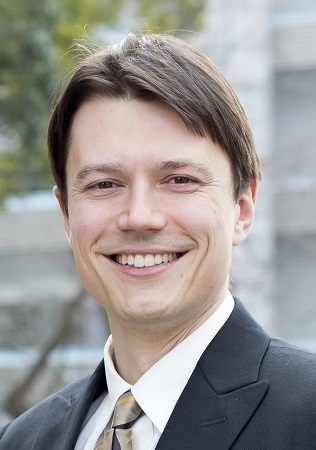
Eduardo Corral Abad is an Associate Professor in the Department of Mechanical Engineering at Carlos III University of Madrid, specializing in multibody dynamics, railway systems, and contact mechanics. His research spans industrial heritage, vibration analysis, and educational technology. Railway axle monitoring and crack detection using advanced signal processing Dynamic modeling of mechanical systems with nonlinear contact and friction forces Development of interactive teaching applications for engineering education Use of parallel computing and GPU acceleration in mechanical simulations His contact email is eduardo.corral@uc3m.es . Recent work includes publications on railway diagnostics, helical gear transmissions, and Android-based educational tools.
Dr. Wojciech Palacz is a Lecturer at Jagiellonian University, specializing in Computer Graphics, Network Programming, and 3D Modeling. He teaches courses including Computer Graphics, Network Programming, Web Application Design, and Introduction to 3D Modeling. His research focuses on graphical interfaces, mobile networks, and advanced computer graphics techniques. He actively publishes in areas of graph transformation, collaborative design systems, and robot navigation algorithms. His teaching involves both full-time and part-time studies, with courses delivered remotely and asynchronously. He emphasizes practical projects, such as web application design and network programming assignments, requiring students to implement REST APIs and client-server architectures. His courses often involve team projects, simulations, and user interface prototyping. Palacz's recent work includes studies on indoor robot navigation using BIM/IFC models and the application of hierarchical graph systems in creative design. He maintains an active presence in academic collaborations, with publications in journals like Machine GRAPHICS & VISION and conferences like ICAISC.
Susanne Weitz is a Researcher at the Chair of Computer Graphics and Visualization, Technical University of Munich, working under Prof. Westermann. Her office is located in room 02.13.052 at Boltzmannstr. 3, 85748 Garching b. München, with contact email susanne.weitz@tum.de and office hours Monday–Thursday 9:00–15:00. Her research focuses on advancing computer graphics through 3D Gaussian Splatting, topology optimization, and neural rendering techniques. Key interests include efficient novel view synthesis for consumer devices, scientific visualization of meteorological data, and geometry processing for cinematic applications. She bridges theoretical innovation with practical implementation, emphasizing real-time performance and accessibility. Analysis of her 2022–2025 publications reveals a strong trajectory in deep learning-enhanced graphics, particularly for 3D reconstruction and visualization. Work spans Gaussian Splatting optimizations, turbulence analysis in fluid dynamics, and lattice structure design, demonstrating interdisciplinary applications from medical visualization to climate science. At TUM, she teaches core courses including Game Physics, Visual Data Analytics, Deep Learning in Computer Graphics, and Machine Learning for 3D Geometry across winter and summer terms. Her curriculum integrates cutting-edge research like neural rendering and topology optimization into practical student projects.
Biljana Jović is an Associate Professor at the Department of Landscape Architecture and Horticulture, University of Belgrade’s Faculty of Forestry. She holds a PhD in Technical Sciences (2012) from the Faculty of Architecture, specializing in geometric education and visualization. As department president since 2022, she leads academic and research initiatives in landscape architecture and horticulture. Her education includes a master’s degree in geometry and architectural form from the Faculty of Architecture, with postgraduate studies in Serbia and specialization at TU Vienna and TU Dresden. Her research focuses on biomimetics, geometric modeling, and digital visualization in design. She founded the Geometry Workshop, a creative platform fostering interdisciplinary design exploration. Jović’s work bridges art and engineering through projects like bio-inspired installations and sustainable urban designs. Notable contributions include light art installations based on endemic plants and solar lamps modeled after flowers. She actively participates in international conferences (e.g., AFGS, ICGG) and collaborates with institutions like the Museum of Science and Technology. Awards include being a finalist in the Asian Design Modeling Contest and a Cumulus+ grantee. Her teaching spans undergraduate and graduate courses in descriptive geometry, digital visualization, and parametric modeling. She advises on EU projects (e.g., Worth Partnership) and contributes to global design networks via Cumulus Association. Research collaborations include biomimetic studies with international teams, emphasizing sustainable and innovative design solutions.
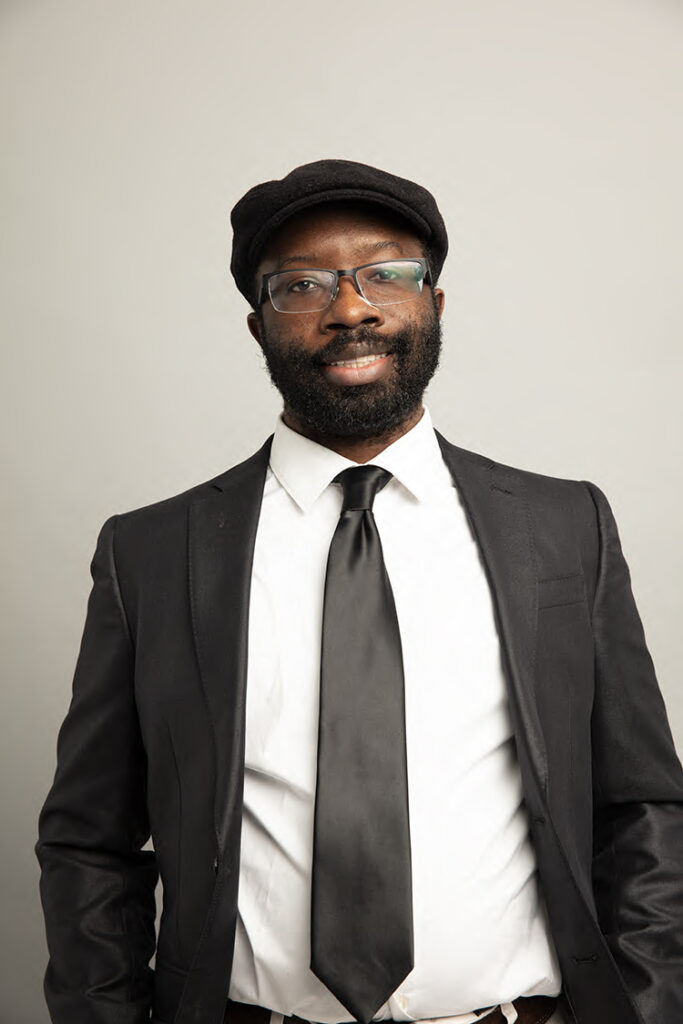
Collin Byrd is an Assistant Professor in the Department of Fine Arts at the University of Maryland Eastern Shore (UMES), part of the School of Education, Science, and Arts (SESA). He is actively shaping the future of the arts program by developing the animation concentration, integrating digital innovation into visual storytelling. His educational background includes: Bachelor’s studies at the Art Institute of Washington (2006–2010) Master of Fine Arts in Animation from Savannah College of Art and Design (2010–2013) Mr. Byrd specializes in digital artistic creation, with core expertise in 2D animation, sequential art, and 3D sculpting and printing. He is passionate about pushing the boundaries of digital tools, exploring interactive moving comics and affordable access to artistic technology. His creative work includes the animated webcomic The Crimson Fly , an experimental coming-of-age superhero narrative that reflects both character and artistic growth. Throughout his career, he has taught animation at multiple institutions, including the Art Institute of Washington, Buena Vista University, and Savannah College of Art and Design, before joining UMES. His teaching philosophy centers on inclusivity, innovation, and empowering others to engage in artistic creation through creative use of tools and techniques. No scientific awards or honors were mentioned in the provided text. Mr. Byrd advises students in animation and graphic illustration, though specific advisees are not listed. He has been involved in curriculum development, particularly in establishing new animation pathways. His professional journey reflects a strong commitment to both pedagogy and experimental digital art practice. He maintains an active creative practice, constantly experimenting with emerging digital creation tools—from tablet-based 3D sculpting to interactive comics—demonstrating a lab-like exploratory approach to digital art, though no formal lab or research team is explicitly named.
Anders Nymark Christensen is an Associate Professor in the Department of Applied Mathematics and Computer Science at the Technical University of Denmark (DTU), specializing in Visual Computing. His work bridges computer vision, medical imaging, and materials science, with a strong focus on explainable AI in clinical applications and structural analysis of complex materials. Institution: Technical University of Denmark (DTU) School: Department of Applied Mathematics and Computer Science Department: Visual Computing Role: Associate Professor Christensen’s research interests include image analysis, computer vision, explainable AI, ultrasound imaging, fetal medicine, and fiber orientation in composites. He applies advanced computational techniques to solve real-world problems in healthcare and materials engineering, particularly through structure tensor analysis and deep learning. His recent publications highlight a strong trend in developing AI tools for clinical decision support in fetal medicine, structural analysis of food and composite materials, and ultrasound imaging. These works span journals such as Scientific Reports , Food Structure , and IEEE Access , reflecting interdisciplinary innovation. Clinical validation of explainable AI for fetal growth scans Characterization of anisotropy in mozzarella cheese Determining fetal orientations from ultrasound video Structure tensor analysis in composites He supervises several PhD students in projects related to AI in skin lesion analysis, cancer detection, and ultrasound imaging. His collaborative network includes key researchers at DTU such as Anders Bjorholm Dahl, Vedrana Andersen Dahl, and Mads Nielsen. He has been involved in significant research grants and is active in both medical and engineering domains, contributing to open datasets and reproducible research. Christensen leads and contributes to numerous active projects, including: Decision Support AI for Skin Lesions (2024–2027) Fighting Cancer with Generative AI (2024–2027) SONAI: Explainable AI in the Clinic (2022–2026) Deep learning for identifying biomarkers in medical images (2022–2025) His work supports UN Sustainable Development Goals related to health, innovation, and responsible consumption, particularly through advancements in medical diagnostics and sustainable materials.
Joman Hayajneh is a researcher at Bournemouth University's National Centre for Computer Animation (NCCA), focusing on interdisciplinary applications of 3D animation technology in education. He presented research on "3D Character Representations for Educational Purposes in Jordan" at the 15th Annual Postgraduate Research Conference (29 Nov 2023). His work bridges computer science and educational technology, with specific interests in creating culturally relevant digital learning tools through advanced computer graphics and virtual environments. Contact: jhayajneh@bournemouth.ac.uk
Jason Orlosky is an Associate Professor at Augusta University, with academic appointments in both the College of Allied Health Sciences and the School of Computer and Cyber Sciences. He is affiliated with the Department of Computer & Cyber Sciences and leads the ARVR Lab, a research group focused on augmented and virtual reality, eye tracking, and intelligent interaction systems. His work bridges computer science, health education, and human-computer interaction, with strong international collaboration with Osaka University. Research Interests: His research spans augmented and virtual reality (AR/VR) , gaze-based interaction , intelligent agents , vision augmentation , and educational technology . He explores how biometrics like eye tracking and pupillometry can detect cognitive states and enhance user experience in XR environments. His lab develops novel interfaces for remote collaboration, teleoperation, and immersive learning, particularly in healthcare and training contexts. His recent publications (2021–2024) reflect a strong focus on practical and theoretical advances in XR, including gaze-driven interaction techniques, VR sickness mitigation, display prototyping, and educational applications. Themes include user comfort , ergonomic design , cognitive load assessment , and safety in mobile AR . His work appears in top venues such as IEEE VR, IEEE Transactions on Visualization and Computer Graphics, and ACM conferences. Scientific Awards: Outstanding Faculty Award, Augusta University (2023) Best Paper, Augmented Human International Conference (2016) Best Paper, International Conference on Intelligent User Interfaces (2013) Best Presentation Honorable Mention, IEEE VR (2024) Best Paper Nominee, ISMAR (2024) Advising and Grants: Dr. Orlosky mentors graduate students in the MS and PhD programs in Computer Science through the ARVR Lab. He offers full funding and tuition waivers for PhD students on a competitive basis. He serves as faculty advisor for the Game Design Club and Girls Who Code College Loop, and has organized international programs such as the Augusta University–Osaka University Summer Study Abroad. While specific grants are not listed, his lab's sustained activity and funding availability suggest active grant support. Labs and Teams: He leads the ARVR Lab at Augusta University, part of the Cyber-Physical Systems group, which collaborates with the Cybermedia Center at Osaka University. The lab focuses on building hardware and software for immersive interaction, with projects in outdoor AR, remote collaboration, and educational simulations.
Ales Leonardis is a Professor at the University of Birmingham with significant contributions to computer vision, robotics, and artificial intelligence research. His work focuses on understanding complex visual scenes through physics-based and generative deep learning approaches. His research interests span computer vision, robotics, machine learning, and 3D generative models. Professor Leonardis explores how physical principles can be integrated with deep learning to create more robust and interpretable visual understanding systems. His work bridges the gap between theoretical computer vision and practical applications in robotics and scene understanding. His most notable publications demonstrate a consistent trajectory toward physically plausible 3D scene understanding and generation. The research shows increasing sophistication in modeling physical constraints within generative frameworks, with applications ranging from robotics to virtual environments. His work often combines classical computer vision techniques with modern deep learning approaches. His scientific achievements have been recognized through prestigious awards including the 2018 and 2023 Amazon Research Awards. These awards highlight his innovative work in understanding complex scenes in contained spaces and developing physically plausible controllable 3D generative models. Professor Leonardis has made significant contributions to advancing the field of computer vision through his research on scene understanding, 3D reconstruction, and physically grounded generative models. His work continues to influence both academic research and practical applications in robotics and artificial intelligence.
Saleh Abdel-Afou Alaliyat is an Associate Professor in Computer Science at the Department of ICT and Natural Sciences, Norwegian University of Science and Technology (NTNU), Faculty of Information Technology and Electrical Engineering. He leads the Sustainable Digital Transformation (SDT) R&D Lab. Research Interests: Dr. Alaliyat's work focuses on Digital twin architecture, simulation, and visualization in offshore energy and urban sustainability Artificial intelligence, particularly deep learning, swarm intelligence, and optimization algorithms Virtual worlds, 3D environments, and human-computer interaction Agent-based modeling for environmental and aquaculture systems Computer vision and information security applications Publications: His recent work (2022-2024) emphasizes predictive digital twins for wind energy, smart city applications, computer vision for litter detection, and AI-driven curriculum development. Earlier works (2013-2019) explore agent-based modeling for disease dynamics in aquaculture and swarm optimization algorithms. Teaching: He teaches courses in Game Development, Information Security, Computer Graphics, and Swarm Intelligence at both bachelor's and master's levels. Outreach: He has delivered lectures at international conferences like ECMS 2022 and IEEE ICMSAO 2019.
Deniz Kürşad is an Associate Professor and current Head of Department in the Department of Graphic Design at Canakkale Onsekiz Mart University's Faculty of Fine Arts, where she has served since 2010. Promoted from Research Assistant (2010-2017) to Assistant Professor (2017-2021) and finally Associate Professor in 2021, she also holds multiple leadership roles including Faculty Management Board Member and Ethics Committee Member. Her educational background includes: PhD in Competence in Art, Hacettepe University, Faculty of Fine Arts, Department of Graphics (2016) MA in Postgraduate Studies, Suleyman Demirel University, Faculty of Fine Arts, Department of Graphics (2008) Bachelor's Degree, Mersin University, Faculty of Fine Arts, Department of Graphics (2003) Kürşad's research spans Graphic Design, Art and Design, Accessibility, and Branding with focus on visual identity systems and interdisciplinary applications. Her work bridges architectural visualization, typography in public spaces, and universal design principles, emphasizing practical implementation in educational and professional contexts. Analysis of her 14 recent publications (2014-2024) reveals consistent focus on three-dimensional visual communication, accessibility in branding, and environmental graphic design. Her work demonstrates strong integration of theoretical frameworks with practical applications, particularly in public space branding, responsive web design, and cross-disciplinary design methodologies. She has secured significant research funding including the 2022-2024 project 'Symbolization of Çanakkale's Historical and Cultural Values for Application on Textile Surfaces' as Principal Investigator, alongside editorial roles for the International Journal of Troy Art and Design since 2020. Her academic supervision extends through curriculum development in courses like Packaging Design and Web Design. Kürşad maintains active artistic engagement through international exhibitions including the 9th Çanakkale Biennial and interdisciplinary projects addressing cultural heritage and social issues like violence against women, demonstrating the practical application of her theoretical research.
Tian Hao is a Lecturer at the School of Big Data and Computer Science , Guizhou Normal University . He received his B.Eng. and Ph.D. in Engineering from the School of Software Engineering at East China Normal University in 2014 and 2020, respectively. During his doctoral studies, he was jointly trained at the University of Maryland under the China Scholarship Council program. From 2020 to 2022, he was a postdoctoral fellow in the Department of Computer Science and Technology at the University of Hong Kong . Prior to joining Guizhou Normal University in June 2024, he served as a Senior Engineer and Team Leader at Huawei HiSilicon's Turing Robotics division. Education: 2010–2014: B.Eng., School of Software Engineering, East China Normal University 2014–2020: Ph.D. in Engineering, School of Software Engineering, East China Normal University 2018–2019: Joint Doctoral Training, University of Maryland, USA 2020–2022: Postdoctoral Fellow, Department of Computer Science and Technology, University of Hong Kong Research Interests: Tian Hao's research spans embodied intelligent learning in robots , dexterous grasping simulation and planning , human-robot interaction , and virtual/augmented reality (VR/AR) . His work integrates machine learning, computer graphics, and robotics to enable robots to manipulate complex objects in cluttered or virtual environments. Publications & Trends: His publications (2016-2023) consistently focus on robotic grasping and manipulation , virtual hand interaction , and real-time simulation . Notable venues include IEEE Transactions on Robotics , IEEE VR , and ICRA , reflecting an emphasis on high-impact robotics and graphics venues. Scientific Awards: No specific awards are listed in the provided text. Grants & Projects: Research on 3D Design and Dexterous Robot Sewing Technology for Personalized Garment Manufacturing (NSFC-RGC, 2017-2020) Visual model and environment construction based on multi-source data and its dynamic simulation (NSFC, 2016-2020) Quadruped robot dog autonomous inspection solution based on Ascend AI platform (Huawei HiSilicon) Ascend-based balloon robot platform (Huawei HiSilicon) Labs & Teams: He lectures at the Robot Operating System (ROS) Summer School in China and serves as a reviewer for premier IEEE journals and conferences, indicating active engagement in the robotics and VR communities.
Dr. Szilvia Szeghalmy is a Lecturer at the University of Debrecen, Faculty of Informatics, Department of Computer Science. She can be contacted at +36 52 512 900 75116 or via email at szeghalmy.szilvia@inf.unideb.hu, located in room I116, floor 1 of the Faculty of Informatics building. Her research focuses on: Digital Image Processing Imbalanced Learning Recent publications highlight trends in: Imbalanced data handling and noise filtering techniques (2024) Medical imaging applications (2024) Driver-assistance systems and traffic sign recognition (2018-2019) Human-computer interaction using sensors (2013-2014)
Dr. Reid Townson is an Adjunct Professor at the Department of Physics, Carleton University , and a Research Officer in Metrology at the National Research Council Canada . His research focuses on the development and application of the EGSnrc Monte Carlo radiation transport software toolkit , enabling high-precision simulations of electron, positron, and photon transport for medical and metrological applications. Primary Role: Research Officer, Metrology at National Research Council Canada Academic Role: Adjunct Professor at Carleton University Key Affiliation: National Research Council Canada Research Interests span radiation transport modeling, radiation dosimetry, Monte Carlo simulation software development, and the application of computational physics to emerging medical technologies. His work involves simulating ionization chambers, radiotherapy devices, and complex radiation scenarios to advance dose calculation accuracy and detector calibration. Publications emphasize Monte Carlo simulation techniques for radiation therapy (e.g., VMAT, IMRT, RapidArc), gamma-ray spectrometry benchmarks, and EGSnrc toolkit enhancements. His contributions include detector modeling, dose verification algorithms, and GPU-accelerated computation frameworks. Student Opportunities are highlighted through research projects involving EGSnrc, though specific student names are not listed. He utilizes platforms like GitHub for collaborative development.
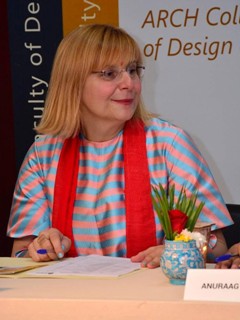
Anna Ursyn is a Professor and Computer Graphics/Digital Media Area Head at the School of Art & Design , University of Northern Colorado, within the College of Performing and Visual Arts . Her work bridges academic research, artistic practice, and technological innovation. PhD, MFA in Computer Graphics/Digital Media Active in international IEEE, ACM SIGGRAPH, and educational committees Recipient of numerous grants and awards for digital media contributions Her research focuses on knowledge visualization , visual storytelling , and interdisciplinary education . She explores how computer graphics can enhance communication across science, art, and education through projects like NASA's MoonArc and exhibitions at Louvre and NTT Tokyo. Recent publications address data visualization , visual literacy , and creative interface design . Her advising includes students in digital media and computer graphics programs. Awards include ACM SIGGRAPH grants , multiple Who’s Who listings, and international art competition recognitions. Editor's Choice Award , International Library of Poetry Artistic Merit Award , Eurographics 1996 Animal Image Award , Argentina Ursyn leads the Digital Art Gallery D-ART iV and SpaceTime competition , while maintaining an active studio practice that combines 3D programming , mixed-media sculpture , and scientific illustration .