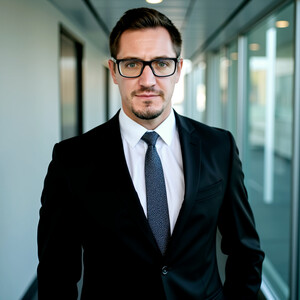
Ramana Vinjamuri is an Associate Professor in the Department of Computer Science and Electrical Engineering at the University of Maryland, Baltimore County (UMBC). He holds a secondary appointment as Visiting Professor at the Indian Institute of Technology, Hyderabad, India. His academic journey includes a Ph.D. in Electrical Engineering from the University of Pittsburgh (2008), M.S. in Bioinstrumentation from Villanova University (2004), and B.Tech. in Electrical and Electronics Engineering from Kakatiya University (2002). Dr. Vinjamuri's research focuses on Brain-Machine Interfaces (BMIs) for upper-limb prostheses control , neuroprosthetics and exoskeletons , machine learning in motor control , and neurophysiological signal processing . His work extends synergy-based models to control 37-dimensional hand movements, addresses human-robot interaction through emotionally intelligent systems, and develops neurotechnologies for substance use disorder using wearable sensors and AI. NSF CAREER Award (2019) NSF IUCRC BRAIN Center Planning Grant (2020) Harvey N Davis Distinguished Teaching Assistant Professor Award (2018) His publications demonstrate expertise in EEG and EMG signal analysis , deep learning for motor decoding , synergy modeling , and humanoid robot control . The Vinjamuri Lab at UMBC involves graduate, undergraduate, and high school researchers, with international collaborations in India and the US.
Margherita Pagani is a Full Professor and Director of the SKEMA Centre for Artificial Intelligence at SKEMA Business School in Paris. She holds a Ph.D. in Management and an HDR (Habilitation à Diriger des Recherches). Her roles include Research Affiliate at UC Berkeley’s APEC Study Center and Advisor to the European Economic Social Committee (EESC) on virtual worlds and the Metaverse. Previously, she founded and led the MSc in Digital Marketing & Data Science and the AIM Research Center at emlyon business school. She has held visiting roles at MIT, UCLA, Georgetown, NUS, and Redlands University. Education: Ph.D. (2015, Lyon), HDR (2016, Évry), MSc (1995, Bocconi), MIT Certifications (2005-2006). Research: Focuses on AI in consumer engagement, digital ecosystems, robotics in services, and metaverse applications. Over 130 publications in journals like MIS Quarterly, MIT Sloan Management Review, and Harvard Business Review. Awards: 2023 International Marketing Trends Award, 2022/2023 Top 2% Cited Scientist (Elsevier), 2009 Mobile Marketing Academic of the Year. Her work bridges AI and marketing creativity, emphasizing human-centric systems. She leads initiatives like the SKEMA AI School and organizes conferences on ethics, AI in education, and service recovery. Active in editorial roles for journals like Micro & Macro Marketing and Industrial Marketing Management . Key affiliations include the Association Française de Marketing and involvement in policy initiatives. Supervised over a dozen PhD students, focusing on AI applications in marketing and entrepreneurship.
Simon Colreavy Donnelly is an Associate Professor in the Department of Computer Science & Information Systems at the University of Limerick. He is a member of the Interaction Design Centre and focuses on interdisciplinary research at the intersection of artificial intelligence, educational technology, and healthcare informatics. His work spans machine learning applications in medical data analysis, virtual reality (VR) and extended reality (XR) for inclusive education, and deep learning techniques in chemical analysis and spectroscopy. Research Interests: His primary areas of investigation include generative AI for education equity, semisupervised learning algorithms, virtual learning environments design, and the ethical deployment of immersive technologies in healthcare and palliative care. He also explores NMR spectroscopy analysis using deep learning and develops tools for nutritional content estimation through image processing. Collaborations: His recent collaborations span international teams addressing challenges in toxicity-free online discourse (PAN 2024), semisupervised learning distribution mismatches, and VR applications for post-pandemic blended learning. His work integrates computational methods with real-world applications in education, healthcare, and chemical analysis. Labs/Teams: Active within the Interaction Design Centre at UL, his research group develops practical solutions for accessibility in digital education and healthcare systems, emphasizing user-centered design principles for extended reality applications.
Robert S. Laramee is a Professor at the University of Nottingham (previously at Swansea University), specializing in visualization research. His work focuses on data visualization, scientific visualization, and computational fluid dynamics. He has authored over 170 publications in top journals like IEEE Transactions on Visualization and Computer Graphics, Computer Graphics Forum, and IEEE Computer Graphics and Applications. Research Interests: His research spans information visualization, flow visualization, visual literacy, and educational aspects of visualization. He emphasizes practical applications in fields like healthcare, digital humanities, and computational science. Recent Trends: Recent work includes studies on treemap literacy, educational frameworks for visualization, and interactive systems for clinical data. He has also contributed to visualization resources and surveys, aiming to bridge academic and industry needs. Grants & Collaborations: Collaborations include projects on visualization for smart cities, protein-lipid interactions, and quantum chromodynamics data analysis. No specific grant details are provided in the text. Labs & Teams: Affiliated with visualization research groups at Nottingham and Swansea, though specific lab names are not mentioned.
Prof. Sarthak Misra is a Full Professor in Medical Robotics at the University of Groningen’s Faculty of Medical Sciences, affiliated with the University Medical Center Groningen (UMCG). He leads research in the Robotics and image-guided minimally-invasive surgery (ROBOTICS) group and the Basic and Translational Research and Imaging Methodology Development in Groningen (BRIDGE) team. His work focuses on advancing medical robotics, microrobotics, and magnetic actuation technologies for surgical and biomedical applications. He holds an ORCID identifier and has published over 127 research outputs, including high-impact articles in journals like Advanced Materials Technologies and European Heart Journal . His research addresses challenges in minimally invasive surgery, soft robotics, and smart materials. Media engagements highlight his contributions to robotic surgery and addressing healthcare workforce shortages through automation. Research interests include: Microrobotics and fluidic systems Magnetic and acoustic actuation for medical devices Soft robotic systems for surgical applications Image-guided interventions 3D printing for biomedical robotics His recent articles emphasize innovations like MagNoFE3D printing and magnetic probes for endovascular interventions. Collaborations span global institutions, reflecting his interdisciplinary approach. No explicit awards are listed, but his extensive media coverage and 127+ publications underscore his impact. He is involved in grants, including OTP-funded projects, and mentors students in advanced robotics and medical engineering.
Dr. Farzan Sasangohar is an Associate Professor in the Department of Industrial & Systems Engineering at Texas A&M University, holding the Mike and Sugar Barnes Faculty Fellowship. He also serves as an Assistant Professor at Houston Methodist Hospital's Center for Outcomes Research and Department of Surgery. His academic roles include affiliations with the Environmental and Occupational Health, Biomedical Engineering, and multiple centers focused on health technologies and systems design. Education: PhD in Industrial Engineering (Human Factors Engineering), University of Toronto (2015) Research Interests: Human factors in healthcare delivery and telehealth systems Wearable technology for stress/health monitoring Crisis management team cognition and decision-making Remote patient monitoring systems Mental health self-management interventions Awards: Jack A. Kraft Innovator Award (HFES, 2023) Dr. Hamed K. Eldin Early Career Award (2022) William C. Howell Young Investigator Award (2021) TEES Young Faculty Fellow (2021) Nominated for Ergonomics Journal Best Paper (2021) Advising & Grants: Mentored over 15 graduate students including Dr. Mahnoosh Sadeghi (PhD 2023) Recipient of NSF PATHS-UP Engineering Research Center funding Active grants in offshore worker fatigue management and telehealth integration Labs/Teams: Director of the Applied Cognitive Ergonomics Lab (ACE-lab) , focusing on human-system interactions in healthcare, aviation, and disaster management. Current projects include: - Wearable stress monitoring systems - Telehealth integration frameworks - Crisis team cognition analysis
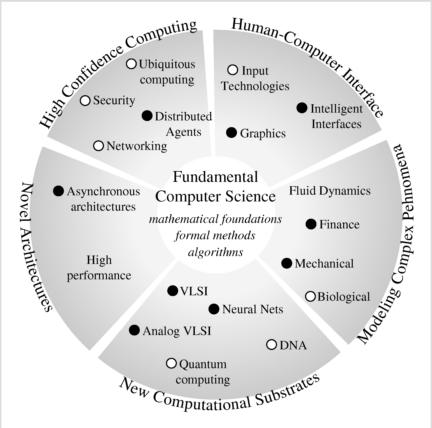
Alan H. Barr is a Professor of Computer Science at the California Institute of Technology (Caltech), affiliated with the Division of Engineering and Applied Science and the Computation & Neural Systems (CNS) department. He is a founding member of the Caltech Computer Graphics Group and a leader in developing mathematically rigorous methods for computer graphics and predictive modeling. His research focuses on enhancing computational modeling accuracy through approaches like interval analysis and constraint-based systems. Notable contributions include deformable models, quaternion interpolation, and cellular simulation frameworks. He has advised over 20 graduate students, many of whom became industry leaders at Pixar, Microsoft Research, and academic institutions like NYU and Brown University. Awards include the ACM SIGGRAPH Achievement Award (1988) and ACM Fellow (1995). Research Interests: Predictive modeling with error bounds Scientific visualization and MRI data analysis Biophysical systems simulation (e.g., cellular organelles) Self-assembling robotic structures for space colonization Mathematically robust computer graphics techniques Key Collaborations: Caltech Biological Imaging Center (Beckman Institute) JPL (Jet Propulsion Laboratory) New computational substrates research (quantum/DNA computing) Recent Work: Expanding into computational biology, medical imaging optimization, and high-confidence systems for managing complex computational interactions. Active in interdisciplinary projects across Caltech divisions.
Afshin Ashari is an Assistant Professor in Landscape Architecture at the School of Environmental Design and Rural Development , University of Guelph. Prior to academia, he worked at BrookMcIlroy Inc., an interdisciplinary firm in Toronto, on architectural and landscape projects in public and private sectors. Education : Masters in Landscape Architecture, University of Toronto Bachelor of Computer Engineering, Azad University of Tehran Research Interests : Afshin explores the intersection of computational design and mixed-reality environments, focusing on: Art-Technology Unity in Public Spaces Algorithmic and Parametric Modeling Data-Driven Design Approaches Interactive Immersive Environments Biophilic Design Agricultural Urbanism Article Trends : His publications emphasize: AI tools for design processes Parametric modeling in urban rehabilitation Climate change communication via social media Drones for visual impact assessments Augmented reality in public spaces Historical and future-oriented design frameworks
Nicola Ballhausen is an Assistant Professor in the Department of Developmental Psychology at the Tilburg School of Social and Behavioral Sciences, Tilburg University, Netherlands. Her research focuses on cognitive and psychological aspects of aging, particularly prospective memory, executive function, and social influences on cognitive health in older adults. Her research interests include prospective memory , cognitive aging , metacognition , problem-solving in older adults , social cognition , and longitudinal studies of aging . She investigates how factors such as intergenerational contact, sense of purpose, and technology use impact cognitive performance and well-being in later life. Her work integrates experimental, survey-based, and qualitative methods, often in cross-national datasets like the Health and Retirement Study (HRS) and the English Longitudinal Study of Ageing (ELSA). The most recent articles highlight a strong focus on prospective memory across the lifespan , the role of social engagement in cognitive functioning , and designing accessible cognitive interventions for older adults. Her publications span top journals in gerontology, psychology, and cognitive science, reflecting interdisciplinary collaboration and methodological rigor. Dr. Ballhausen contributes to research aligned with the UN Sustainable Development Goals, particularly those related to healthy aging and well-being. She collaborates extensively with researchers across Europe and has contributed to major reference works such as The Oxford Handbook of Human Memory . Her work includes both empirical studies and methodological advancements, such as exploratory structural equation modeling. While no formal students or awards are listed, her role in supervising research and contributing to academic training is implied through her position and course involvement. Dr. Ballhausen is involved in the design and evaluation of web-based cognitive tools, such as the Shared, Web-based, Intelligent Flexible Thinking Training (SWIFT), emphasizing user-centered design and ecological validity. Her work bridges fundamental cognitive research with practical applications for aging populations.
Adrien Depeursinge is a Professor at HES-SO Valais-Wallis - Haute Ecole de Gestion, affiliated with the School of Economics and Services and the Management Information Systems department. His research focuses on radiomics, personalized medicine via image-based analysis, and clinical workflow optimization. He leads the development of the QuantImage platform, a physician-centered web-based tool for radiomics research, and contributes to radiomics standardization efforts through initiatives like the Image Biomarker Standardization Initiative (IBSI). His work emphasizes machine learning applications in healthcare, including tumor segmentation, biomarker extraction, and improving diagnostic accuracy through computational models. Key research themes include: 1) Radiomics – developing quantitative imaging features for cancer diagnosis/prognosis; 2) Medical Imaging Analysis – advancing texture-based models, multi-modal fusion, and automated lesion detection; 3) Physician-AI Collaboration – designing user-centric tools for clinical integration. His contributions span neuro-oncology (brain metastases), head-and-neck cancer, and multiple sclerosis imaging. Publications emphasize methodological advancements (e.g., kernel optimization in CNNs, steerable detectors) and clinical validation (e.g., reproducibility of radiomics features across imaging protocols). He collaborates with institutions like the University Hospital of Lausanne (CHUV) and international teams on projects like the HECKTOR challenge for PET/CT tumor segmentation. His work bridges technical innovation with clinical impact, aiming to translate radiomics into actionable clinical tools. QuantImage v2, his flagship tool, enables no-code development of machine learning models using clinical imaging data. Research also includes phantom-based validation of radiomics features and addressing challenges in feature stability across imaging modalities. Current projects explore improving contour quality for radiomics studies and optimizing AI explainability in medical decision-making.
Monica Tatasciore serves as an Honorary Research Fellow, Casual Teaching staff member, and Multi-Discipline Research Fellow at the School of Psychological Science, University of Western Australia. As an Early Career Researcher in the Human Factors and Applied Cognition laboratory, she focuses on optimizing human-automation systems in high-stakes environments like air traffic control and uninhabited vehicle operations. Her academic credentials include: Doctor of Philosophy from The University of Western Australia (2018-2021) Master of Industrial and Organisational Psychology from The University of Western Australia (2018-2020) Bachelor of Science (First Class Honours) in Psychology (2015) Dr. Tatasciore's research examines critical intersections of human cognition and automation, specifically investigating how transparency in decision aids affects operator trust, situation awareness, and workload under time pressure. Her work addresses fundamental questions about automation failure recovery and individual differences in attention control during human-machine collaboration. Analysis of her 2024-2025 publications reveals a cohesive research trajectory centered on human-automation interaction, with strong methodological emphasis on experimental paradigms from cognitive psychology and applied ergonomics. These works consistently address defense-relevant applications while advancing theoretical understanding of trust calibration mechanisms. She has supervised one graduate student and actively contributes to defense-related research through the Human Factors and Applied Cognition lab, where her team develops evidence-based frameworks for automation design in safety-critical systems.
Keith Decker is an Associate Professor and JPMorgan Chase Fellow in the Department of Computer and Information Sciences at the University of Delaware's College of Engineering. He holds multiple affiliated faculty positions at the Artificial Intelligence Center of Excellence, Data Science Institute, Center for Bioinformatics and Computational Biology, and Institute for Financial Service Analytics. His research spans several key areas of computer science with a focus on Multi-Agent Systems , Distributed Artificial Intelligence , Computational Organization Design , and Bioinformatics . His work bridges theoretical foundations with practical applications in finance, healthcare, and information systems. Dr. Decker's publications reflect trends in distributed AI with emphasis on coordination technologies, agent communication, and information gathering systems. His work has evolved from foundational multi-agent coordination theory to applications in bioinformatics, financial services, and health informatics. DARPA special recognition award for foundational research in coordination technologies Dr. Decker has advised numerous graduate students and led significant research projects including automated genetic annotation, coalition management for electric vehicle-to-grid power systems, and machine learning for automated health coaching. His interdisciplinary work demonstrates strong connections between theoretical AI research and practical applications across multiple domains. He maintains active leadership roles in the academic community, having served as program co-chair for the International Conference on Autonomous Agents and Multi-Agent Systems and other major AI workshops.
Dr. Marc Schmitt serves as a Research Associate in the Department of Computer Science at the University of Oxford while concurrently leading as Managing Director of the DEIM Research Institute in Germany. His interdisciplinary work bridges academic research and industry applications across artificial intelligence, cybersecurity, and financial systems. Academic Background: PhD in Computer and Information Sciences (AI in Finance), University of Strathclyde MSc in Quantitative Finance, University of Strathclyde MSc in Software Engineering, University of Oxford BA in Business Administration, Technische Hochschule Nürnberg Georg Simon Ohm Dr. Schmitt's research focuses on AI-driven decision-making at the intersection of finance, business analytics, and cybersecurity. His work examines how intelligent systems integrate into organizational structures while addressing systemic risks in digital ecosystems. Recent investigations include generative AI threats in social engineering, no-code AutoML applications, and policy frameworks for AI-enhanced security systems. His publications demonstrate consistent methodological innovation across theoretical and applied domains. Analysis of his publication trajectory reveals growing emphasis on generative AI security implications (2024-2025), with foundational work in business analytics applications (2023). The research shows strong interdisciplinary connections between computer science, financial economics, and human-centered design principles, reflecting his unique background spanning technical and business domains. Prior to academia, Dr. Schmitt held strategic positions including Senior IT Partner for Equity Finance at Siemens Financial Services and management consulting roles at d-fine and Deloitte, where he advised Fortune 500 companies on digital transformation and risk management. His industry experience directly informs his research approach, emphasizing practical implementation challenges alongside theoretical innovation.
Anthony Hornof is a Professor in the Department of Computer Science at the University of Oregon, part of the College of Arts and Sciences. He has been a faculty member since 1999 and was granted tenure in 2005. His research is centered on human-computer interaction, with strong emphases on cognitive modeling, eye tracking, and assistive technology. He leads an active research laboratory and has secured substantial funding from the National Science Foundation and the Office of Naval Research. University: University of Oregon School: College of Arts and Sciences Department: Department of Computer Science Position: Professor Email: hornof@uoregon.edu, hornof@cs.uoregon.edu Office: 356 Deschutes Hall Phone: (541) 346-1372 Education: B.A. in Computer Science, Columbia University, 1988 M.S. in Computer Science and Engineering, University of Michigan, 1996 Ph.D. in Computer Science and Engineering, University of Michigan, 1999 Research Interests: Dr. Hornof's research lies at the intersection of human cognition and computing. He is particularly interested in understanding and modeling the perceptual, cognitive, and motor processes involved in human-computer interaction. His work uses eye tracking both as an evaluation tool for cognitive models and as a real-time input method for creative expression and accessibility. A major focus is assistive technology, especially developing tools like EyeDraw that enable children with severe motor impairments to create art using only eye movements. He also explores eye-controlled musical compositions, bridging technology and artistic expression. His research is grounded in participatory design, involving end-users directly in the development process. Publication Trends: His recent publications demonstrate a consistent focus on modeling human behavior in complex interactive tasks. Key themes include visual search strategies, dual-task performance, cognitive modeling using eye-tracking data, and accessibility. His work spans top venues in HCI (CHI, TOCHI), cognitive science (CogSci, ICCM), and specialized conferences like ETRA and NIME. There is a strong methodological thread involving data calibration, model validation, and the development of predictive tools for interface design. Scientific Awards: Best Paper Award (Top 1%) at CHI 2014 (two papers) Honorable Mention Paper (Top 5%) at CHI 2010 Siegel-Wolf Award for Best Applied Paper at ICCM 2010 Advising and Grants: Dr. Hornof actively seeks to mentor exceptional undergraduate students, graduate students, and postdoctoral researchers in his lab. He emphasizes rigorous and creative scientific research. He has been awarded over $2.9 million in single-investigator research grants from prestigious agencies including the National Science Foundation (NSF) and the Office of Naval Research (ONR). Notably, he served as an NSF Program Director from 2012 to 2014, contributing to funding decisions for approximately $65 million in research. Labs and Teams: He leads the Human-Computer Interaction Laboratory at the University of Oregon, where interdisciplinary research is conducted on cognitive modeling, eye tracking, and assistive technologies. His team has developed software such as VizFix for visualizing eye-tracking data and has ported the Eyegaze system to Macintosh. The lab fosters collaborations with new media artists and musicians, and engages in participatory design with children who have disabilities.
Dr. Yen-Ting (Allen) Yeh is an Assistant Professor in the Department of Computer Science at the University of Saskatchewan, where he leads research in Human-Computer Interaction focusing on mobile interaction techniques, collaborative tools, and creative technologies. PhD, Cheriton School of Computer Science, University of Waterloo MS, Graduate Institute of Networking and Multimedia, National Taiwan University His research explores physical and cognitive human capabilities through: Innovative phone interaction methods (folding, dexterous gestures, side-touch expansion) Collaborative writing environments with privacy controls Creativity augmentation systems for 3D modeling Augmented reality and interactive fabrication tools Recent publications demonstrate strong focus on: Acoustic input techniques using finger snapping Motion-based creative reflection tools Dynamic gesture recognition systems Collaborative editing comfort optimization Scientific recognition includes: ACM Creativity and Cognition 2021 Honorable Mention The research group at the University of Saskatchewan's HCI Lab actively seeks students interested in phone interactions, human factors, AR/VR, collaborative tools, and creative arts applications.