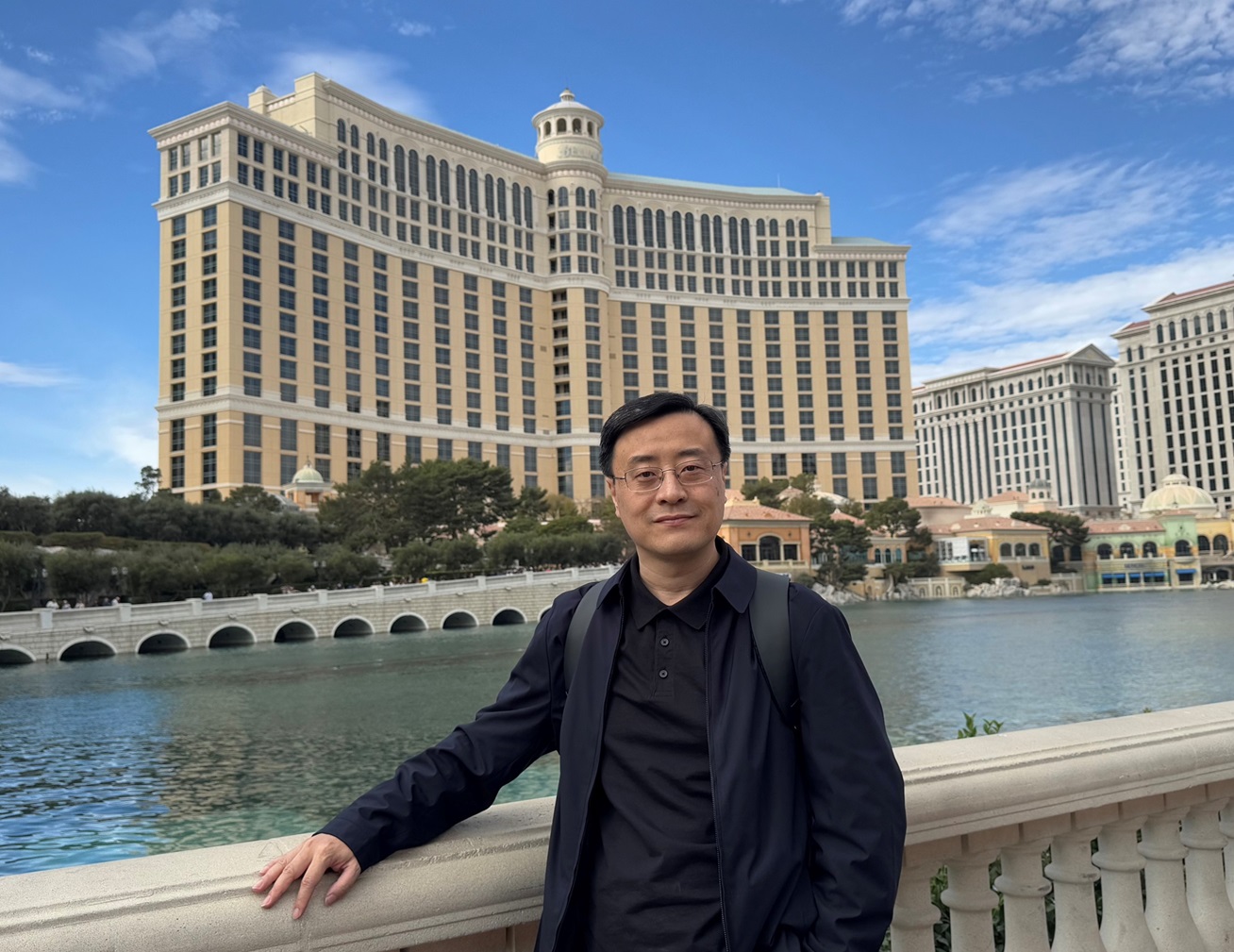
Daanika Gordon is an Associate Professor of Sociology at Tufts University, with a secondary appointment in Studies in Race, Colonialism, and Diaspora. Her research explores the intersection of racial inequality, urban governance, and policing through organizational and interactional lenses. PhD, University of Wisconsin–Madison (2018) MS, University of Wisconsin–Madison (2013) BA, Development Studies & Sociology, UC Berkeley (2009) Her work connects theories of race and racism with urban political economy and organizational behavior, focusing on how: Policing functions as a tool for urban governance Racial inequalities emerge from race-neutral policies Segregation is dynamically produced through relational processes Recent publications analyze police funding debates, data science applications in policing, and the bureaucratic dissociation of race. Her groundbreaking 2022 book Policing the Racial Divide won the 2023 Edwin H. Sutherland Book Award. She teaches sociology of race, criminal legal systems, and research design while serving on the advisory committee for the Tufts University Prison Initiative. Her research has been funded by: Institute for Citizens & Scholars Bernstein Faculty Fellowship Neubauer Faculty Fellowship National Science Foundation
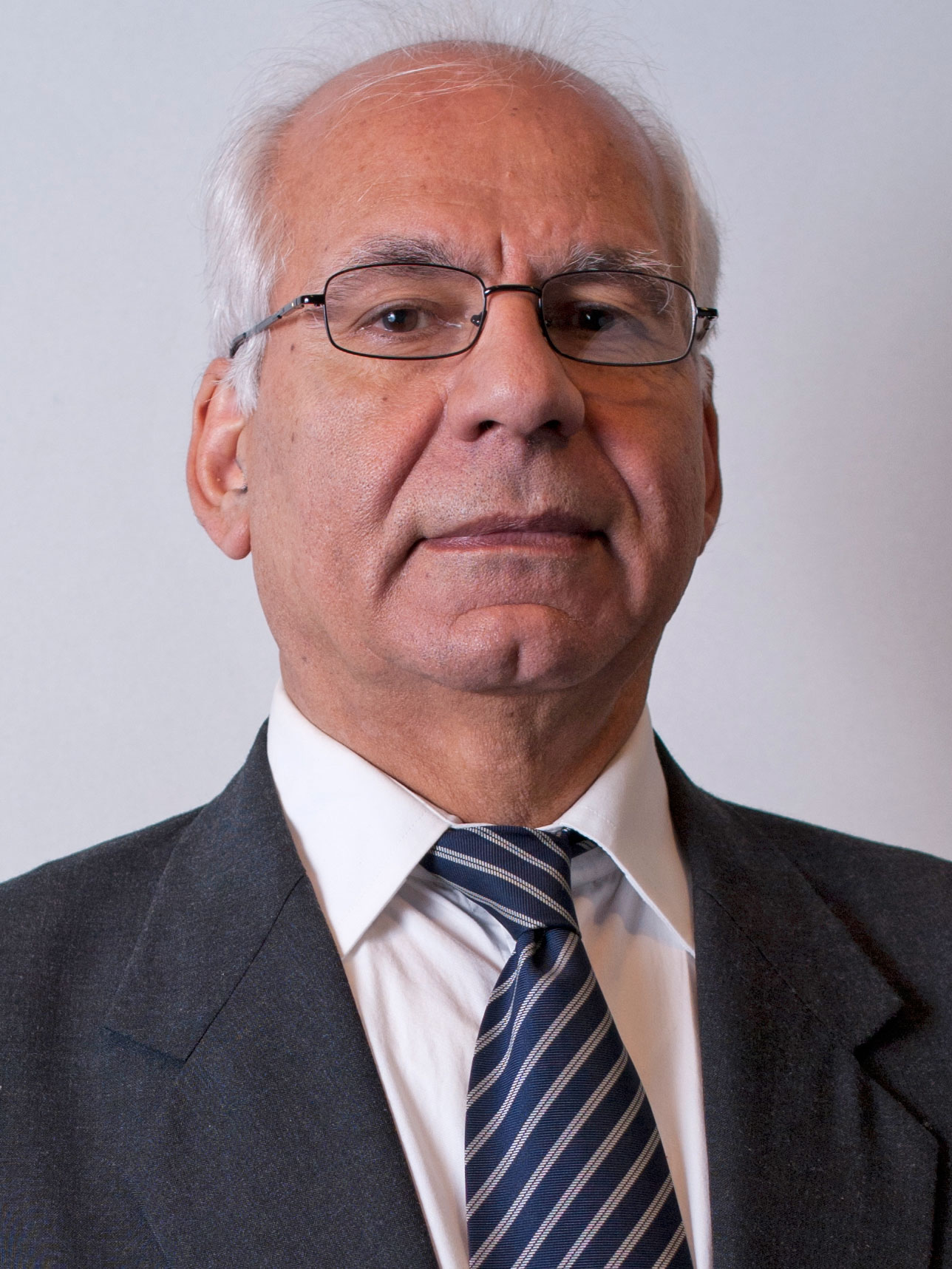
Dr. Kidambi Sreenivas is an Associate Professor in Mechanical Engineering at the University of Tennessee at Chattanooga (UTC), affiliated with the College of Engineering and Computer Science. He holds a PhD in Mechanical Engineering and specializes in computational fluid dynamics (CFD), with a focus on unstructured multi-physics flow solvers and applications in aerospace, environmental systems, and biomedical engineering. His research bridges academia and industry, collaborating with NASA, the U.S. Navy, Department of Energy, and private companies. Dr. Sreenivas' research interests include rotating machinery simulations, pre-conditioners for non-ideal fluids, and real-world applications such as submarine hydrodynamics, wind farm optimization, aerodynamic efficiency of vehicles, and contaminant dispersal modeling. He has pioneered methods for simulating complex geometries and physics, including high-fidelity simulations of hypersonic vehicles, weapons bay cavities, and shock-wave interactions. Recent work emphasizes advanced CFD methodologies for high-speed flows, thermal effects on turbulence, and aerothermal characteristics of hypersonic test articles. His collaborations have led to practical solutions for drag reduction on Class 8 trucks and improved accuracy in wind turbine modeling. Dr. Sreenivas also contributes to educational initiatives, such as developing PIV systems for undergraduate fluid mechanics labs. His advising and grants reflect partnerships with federal agencies and private sectors, focusing on projects like microplastic sampling devices for stormwater management. These projects highlight his interdisciplinary approach to solving real-world engineering challenges through cutting-edge computational methods.
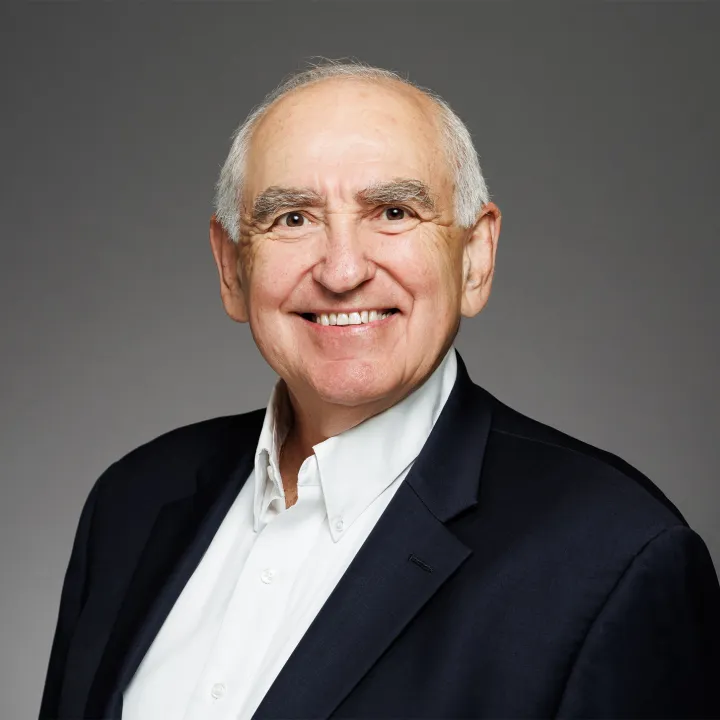
Ingrid E.J. Heynderickx is a Professor in Applied Visual Perception at the Human-Technology Interaction group within the Faculty of Industrial Engineering and Innovation Sciences at Eindhoven University of Technology (TU/e), where she also serves as Dean of the Department. She holds a part-time Visiting Research Professor role at Southeast University (China) since 2005. Her research focuses on optimizing display and lighting systems through understanding human visual perception, emphasizing both fidelity and preference in design, with attention to age and cultural variability. Academically, she earned her PhD in Physics from the University of Antwerp (1986) and spent 18 years at Philips Research, leading visual perception research. She became a Philips Research Fellow in 2005 before joining TU/e as Full Professor in 2013. She holds Fellow status with the Society for Information Displays (SID) and received the Otto Shade Prize (2015). Her recent work explores lighting solutions for office environments, roadway safety systems, and LED artifact mitigation. Notable projects include the Brainbridge initiative (2015–2016) on spectral lighting effects. Over 236 publications and 4 datasets reflect her contributions to lighting science and human-centric design. She advises on sustainable lighting technologies and collaborates globally, with recent media engagements discussing departmental leadership and smart lighting trends. Key research themes include visual attention modeling, illuminance preferences, and dynamic viewing behavior—issues critical for next-generation human-technology interfaces.
Dr. Joshua Jeong is an Assistant Professor in the Hubert Department of Global Health at Emory University's Rollins School of Public Health. He serves as the principal investigator for three cluster randomized controlled trials assessing community-based parenting interventions in Tanzania and Kenya. His work focuses on father-inclusive strategies to improve early childhood development (ECD) in resource-limited settings. Dr. Jeong holds affiliate editorship at the Journal of Child Psychology and Psychiatry and collaborates with NGOs, governments, and international agencies to inform scalable ECD programs. His research integrates mixed-methods approaches for intervention development and evaluation, emphasizing gender equality and couples' relationships. Dr. Jeong earned his ScD and ScM in Global Health and Population from Harvard University (with FLAS Swahili fellowship and Harvard Center on the Developing Child award), and a BS in Human Development from Cornell University. His educational background includes advanced training in implementation science and intervention design. Research interests center on parent-child relationships , particularly father engagement in low-resource contexts. He explores how caregiver mental health, economic empowerment, and family dynamics impact ECD outcomes. Current projects address parenting program scalability through existing community networks and faith-based organizations. Findings aim to improve program fidelity, gender equity, and holistic child development support. His team's work has been recognized with awards from NIH, Society for Research in Child Development, and the Jacobs Foundation. Ongoing projects include evaluations of father-inclusive parenting programs and studies on maternal decision-making power's influence on child care-seeking behaviors. Lab activities involve graduate and undergraduate research assistants analyzing qualitative and quantitative data from fieldwork in Tanzania and Kenya. Weekly lab meetings are project-specific, with Spring 2025 sessions held at the Rollins Building. Collaborations with local implementing partners like Anglican Development Services and ChildFund Kenya drive applied research initiatives.
Lu Su is an Associate Professor at the School of Electrical and Computer Engineering , Purdue University , with prior appointments at SUNY Buffalo . His research spans Internet of Things , cyber-physical systems , mmWave sensing , and crowd-sourced data validation , focusing on quality-of-information aware distributed sensing and security in autonomous systems . Ph.D. in Computer Science (2013) and M.S. in Statistics (2012) from University of Illinois at Urbana-Champaign M.E. and B.E. from Harbin Institute of Technology Research Interests: IoT , cyber-physical systems , crowd sensing , security and privacy , and machine learning for sensor networks. His work addresses quality-aware information integration , adversarial attacks in autonomous vehicles , and privacy-preserving crowd-sourced systems . Recent publications focus on mmWave-based sensing (e.g., 3D pose reconstruction), federated learning (driver monitoring), and data poisoning attacks in crowd-sourced systems. His research also extends to traffic optimization and human activity recognition using wireless networks. Professional Roles: Workshop Chair (INFOCOM 2023, 2022) TPC Vice Chair (INFOCOM 2021) Program Committee Member for top conferences Editorial Board, ACM Transactions on Sensor Networks Teaching: Courses on Embedded Systems , Internet of Things , and Network Concepts at both undergraduate and graduate levels.
Andrew F. Read is the Senior Vice President for Research and Evan Pugh University Professor of Biology and Entomology at Pennsylvania State University. He holds affiliations with the Huck Institutes of the Life Sciences and the Department of Entomology. His research focuses on the ecology and evolutionary genetics of infectious diseases, particularly vaccine and drug resistance in pathogens like malaria and Marek’s disease. Read has been recognized with prestigious awards, including membership in the American Academy of Arts and Sciences and The Royal Society. Education: Ph.D., University of Oxford (1989); B.S., University of Otago (1984). Research Interests: Investigates how pathogens evolve to evade control measures, including drug and vaccine resistance. Current projects include studying drug resistance in hospital pathogens, vaccine-driven virulence evolution in malaria, and ecological factors influencing infectious disease dynamics. His work integrates experimental and computational methods across disciplines like evolutionary biology, microbiology, and genomics. Recent Contributions: His lab explores strategies to slow resistance evolution, such as adjunctive therapies and optimized drug regimens. Key findings include demonstrating how antibiotic use patterns influence resistance emergence and identifying mechanisms of pathogen transmission. Awards and Honors: Fellow, American Academy of Arts and Sciences (2018) Penn State President’s Award (2018) Fellow, The Royal Society (2015) Fellow, American Academy of Microbiology (2014) Advising and Grants: Supervises a dynamic research group, including undergraduate students and postdoctoral researchers. Active in securing funding for studies on malaria, myxomatosis, and antibiotic resistance. Collaborates with institutions globally on projects spanning ecology, virology, and public health. Labs and Teams: Leads the Read Lab at Penn State, focusing on interdisciplinary approaches to infectious disease control. Collaborates with the Center for Infectious Disease Dynamics and the Huck Institutes of the Life Sciences.
Olga Vitek is a Professor at Northeastern University's Khoury College of Computer Sciences, with affiliated faculty status in the Department of Chemistry and Chemical Biology. Her research bridges statistical science and machine learning with mass spectrometry-based proteomics and systems biology, focusing on developing open-source software tools like MSstats and Cardinal for quantitative proteomic analyses and imaging. Education: PhD in Statistics (Purdue University), Postdoc at the Ruedi Aebersold Lab (Institute for Systems Biology) Leadership: Director of the Barnett Institute for Chemical and Biological Analysis Her work emphasizes: Statistical experimental design Signal detection in complex mass spectrometry data Causal inference in biomolecular networks Reproducible computational infrastructure Recent publications highlight advancements in quantitative proteomics , mass spectrometry imaging , and causal modeling , with applications spanning cancer research, immunology, and clinical diagnostics. Notable trends include deep learning integration for image analysis and open-source tool development for scalable, transparent workflows. Scientific accolades: Elected Fellow of the American Statistical Association 2021 Gilbert S. Omenn Computational Proteomics Award NSF CAREER award Chan-Zuckerberg Essential Open-source Software award Senior Member, International Society for Computational Biology
Jonathan Roberts is a researcher at Bangor University, UK, with a focus on data visualization, visual analytics, and educational technology. His work bridges computer science and creative design, particularly in data art exhibitions and authentic learning. Key research areas: Data Visualization, Visual Analytics, Educational Technology, Digital Art Recent publications explore generative AI in visualization design, multiple-view patterns for time series data, and frameworks for creative learning. His collaborations span institutions like QUT, University of Manchester, and University of Cambridge. Notable awards include VAST 2012 Honorable Mention and VAST 2010 Analytic Process Recognition. He contributes to visualization pedagogy and has co-authored works on haptic interfaces, immersive analytics, and coastal data modeling.
Professor Mohammad E. Taslim is a faculty member in the Department of Mechanical and Industrial Engineering at Northeastern University's College of Engineering. He holds the role of Program Director for the Master of Science in Energy Systems program. His academic expertise spans experimental and numerical research in gas turbine cooling technology, renewable energy systems (solar/wind), non-Newtonian fluid dynamics, and nano-sensor development. Education: PhD in Mechanical Engineering from the University of Arizona (1981). Research focuses on heat transfer optimization in turbine blades, multiphase flow analysis, and energy sustainability. He leads projects funded by organizations like General Electric Aviation and the American Chemical Society. Key research areas include: 1) Advanced gas turbine cooling strategies, 2) Sand separation systems for helicopter engines, 3) Non-rotating wind energy generation. Notable publications include studies on droplet dynamics, film cooling effectiveness, and rib-roughened channel heat transfer. Awards include the 2022 Faculty Research Team Award, Fellowships from ASME and AIAA, and multiple patents (e.g., non-rotating wind turbine and carbon nanotube ladder technology). Active in academic leadership, he advises students on study abroad programs like the Vietnam Dialogue, integrating field visits with engineering coursework.
Prof. George Magoulas is a Professor of Computer Science at the University of London's School of Computing and Mathematical Sciences and Director of the Birkbeck Knowledge Lab. He specializes in machine intelligence, machine learning algorithms, and AI system architectures, with applications in healthcare (e.g., neurodegenerative disease diagnosis) and educational technologies. His research has received awards from IEEE, ACM, and others. He holds a PhD in Nonlinear Optimization for Neural Networks and a PGCE in Higher Education. Education: BEng/MEng (Integrated Master's in Systems & Control Engineering), University of Patras, Greece PhD in Nonlinear Optimization for Neural Networks Learning, University of Patras, Greece PGCE in Teaching and Learning (Higher Education) Research & Leadership: He leads the Birkbeck Knowledge Lab, focusing on AI's impact on learning and communication. His work includes designing learning algorithms for psychophysiological data modeling and developing the cloudUPDRS app for Parkinson's disease assessment. He has supervised over 12 PhD students and contributed to 200+ publications. Awards & Recognition: Stanford’s “World’s top 2% of Scientists” (2024) Best Paper Awards at IEEE, ACM, and EUNITE Keynote speaker at major AI and e-learning conferences Honorary membership in the Hellenic Artificial Intelligence Society Administrative Roles: Director of Teaching & Learning Quality (2016–2023) Chair of Postgraduate Programmes Exam Board (2010–2022) Editor-in-Chief, International Journal on Artificial Intelligence Tools Teaching: He teaches courses on Artificial Intelligence, Neural Networks, and Project Management at both undergraduate and postgraduate levels. Labs & Collaborations: He directs the Birkbeck Knowledge Lab and is a member of the Data Science and AI Research Group. His projects include analyzing violent cycles using AI and collaborating on EU-funded initiatives.
José Luiz Fiadeiro is a Professor at Royal Holloway, University of London , affiliated with the Centre for Distributed and Global Computing. He previously held positions at the University of Leicester (including Head of Department), University of Lisbon, and Technical University of Lisbon. He has conducted visiting research at Imperial College London, King’s College London, PUC-Rio, University of Pisa, SRI International, UPC Barcelona, and NASA Ames. Research Interests: Formal aspects of software system modeling and analysis in global ubiquitous computing, with emphasis on distributed systems, formal verification methods, and service-oriented architectures. His work integrates theoretical computer science with practical software engineering challenges. Editorial & Leadership: Associate Editor: SN Computer Science Board Member: Information Processing Letters, EPTCS Steering Committee: CALCO (co-founder), ETAPS, FASE, WADT, WS-FM Scientific Board: INESC-TEC (Portugal) Awards & Honors: Elected Member, Academia Europaea Fellow, British Computer Society Grants & Projects: Leverhulme Trust Visiting Professorship (2018) Semantic Completions: Unifying Wave/Particle Information Views (AFOSR, 2016) Modeling and Analysis of Dynamic Interaction Networks (Royal Society, 2013–2015) Verification of Service-Oriented Systems (EPSRC, 2012) Professional Service: Extensive panel membership for research assessment in Portugal, Romania, Belgium (AEQES), France (AERES), and Lithuania (SKVC).
Professor Hannah Buchanan-Smith is a Professor of Psychology at the University of Stirling, Faculty of Natural Sciences. She holds multiple external roles including Member of the UK Zoos Expert Committee advising DEFRA and devolved governments, Leader of the 'Welfare and mixed-species living' project at the Living Links Executive Board, and Corresponding member of the Primate Society of Great Britain's Captive Care Working Party. Her research focuses on animal behavior, welfare, and ecology with a particular emphasis on non-human primates. Education: PhD from University of Reading, postdoctoral work at St Andrews University Research interests include comparative color vision evolution, refinement of laboratory animal care (3Rs principles), and welfare assessment in zoos. She promotes welfare through open-access resources like the Marmoset Care website and the NC3Rs Macaque Website. Collaborations include RZSS Edinburgh Zoo and Blair Drummond Safari Park. Recent articles explore cultural differences in zoo visitor attitudes, social dynamics in mixed-species exhibits, and welfare implications of circadian rhythms in captive pandas. Her work bridges theoretical research with applied welfare practices, emphasizing translational science between field observations and captive environments. Awards: Extensive professional recognitions through committee memberships but no specific named awards listed Advising: Supervised Dr. Lou Tasker (PhD) and others through BBSRC CASE studentships. Active in grant-funded projects including EU, BBSRC, and NC3Rs initiatives. Leads the 24/7 welfare approach framework for captive animals. Labs/Teams: Core member of Scottish Primate Research Group, affiliated with the Behaviour and Evolution Research Group at Stirling. Collaborates internationally through IUCN Species Survival Commission.
Roman Kuc is a Professor of Electrical Engineering at Yale University, affiliated with the School of Engineering & Applied Science. He directs the Intelligent Sensors Laboratory, focusing on biomimetic sensors for robotics and bioengineering. His research explores brain-based devices (BBDs), sonar sensing, and neuromorphic processing inspired by biological systems. He holds a BSEE from Illinois Institute of Technology and a PhD from Columbia University. Dr. Kuc’s work bridges signal processing, robotics, and bioengineering, with applications in autonomous systems and clinical diagnostics. He has published over 200 papers and authored textbooks like Electrical Engineering in Context and The Digital Information Age . Notable honors include an honorary doctorate from the Glushkov Institute of Cybernetics and the Yale Sheffield Distinguished Teaching Award. His research themes include cognitive mapping via sonar echoes, neural network-based classification of environmental features, and biomimetic approaches to echolocation. Recent work emphasizes sensorimotor integration and robust performance in uncertain environments. Scientific awards highlight his contributions to robotics, signal processing, and education. His lab develops systems that emulate biological sensory mechanisms, aiming to advance robotics, medical applications, and assistive technologies.
Chun Ouyang is a Professor at Queensland University of Technology (QUT) in the School of Computer Science within the Faculty of Science. With an extensive publication record spanning over two decades from 2002 to 2025, Professor Ouyang has established themselves as a leading researcher in Business Process Management, Process Mining, and Explainable AI. Their work bridges theoretical foundations with practical applications across healthcare, finance, and industrial sectors. Professor Ouyang's research interests primarily focus on Business Process Management systems, Process Mining techniques, Explainable Artificial Intelligence, and Healthcare Process Analysis. Their work has evolved from foundational BPMN/BPEL translation research in the early 2000s to sophisticated process mining approaches in the 2010s, and most recently to cutting-edge Explainable AI applications in clinical and business contexts. They have developed novel methodologies for process querying, predictive process analytics, and XAI evaluation frameworks that have significantly advanced the field. Their research consistently emphasizes practical applicability while maintaining strong theoretical foundations, with publications in top-tier journals and conferences including IEEE Transactions, Springer journals, and major BPM conferences. Analysis of Professor Ouyang's recent publications (2023-2025) reveals a strategic research trajectory that integrates traditional process mining with modern AI techniques, particularly focusing on explainability and trustworthiness. Their work demonstrates a consistent pattern of addressing real-world challenges through rigorous methodological development, with increasing emphasis on healthcare applications, clinical decision support systems, and the ethical implications of AI deployment. The publications show strong interdisciplinary collaboration patterns, particularly with medical researchers and industry partners. Professor Ouyang has mentored numerous PhD students and early-career researchers who have gone on to establish themselves in the BPM and AI communities. Their research group at QUT has secured multiple competitive grants supporting innovative work in process analytics and AI. They maintain active collaborations with leading researchers globally, including Catarina Pinto Moreira, Arthur ter Hofstede, and Moe Wynn. Professor Ouyang leads the Process Analytics Research Group at QUT, which focuses on developing advanced techniques for business process analysis, prediction, and optimization. The group maintains strong industry connections with healthcare providers, financial institutions, and government agencies, ensuring their research has practical impact. Current projects include developing trustworthy AI systems for clinical decision support, cross-organizational process analysis frameworks, and next-generation process mining techniques for complex, distributed systems.
Dorota Kawa is an Assistant Professor at the Faculty of Science, Utrecht University , specializing in Plant Stress Resilience and Experimental and Computational Plant Development . Her research focuses on plant-microbiome interactions, root development under stress, and bioinformatics approaches to enhance crop sustainability. Education : PhD in Plant Physiology and Cell Biology (2017, University of Amsterdam) MSc in Plant Biotechnology (2011, Warsaw University of Life Sciences) BSc in Biotechnology (2010, Warsaw University of Life Sciences) Research Interests span plant adaptation to abiotic stresses, microbiome-driven root cell modifications, and computational modeling of development. She investigates how microbial communities and genetic pathways regulate root metabolomes and cellular traits, particularly under salt and drought stress. Publication Trends show her work centers on Striga resistance in cereal crops, stress-induced root architecture changes , and microbiome-root interactions . She explores auxin-independent signaling and mRNA decay mechanisms to improve multi-stress resilience. Teaching includes courses on plant development and research design at Utrecht University. Her work contributes to Pathways to Sustainability and Future Food initiatives.