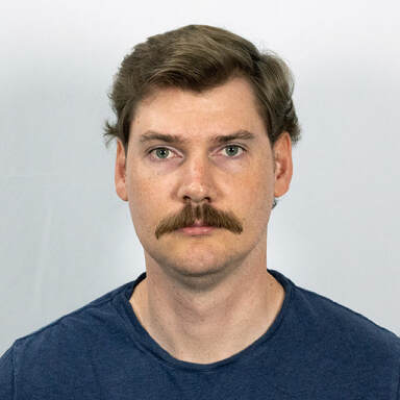
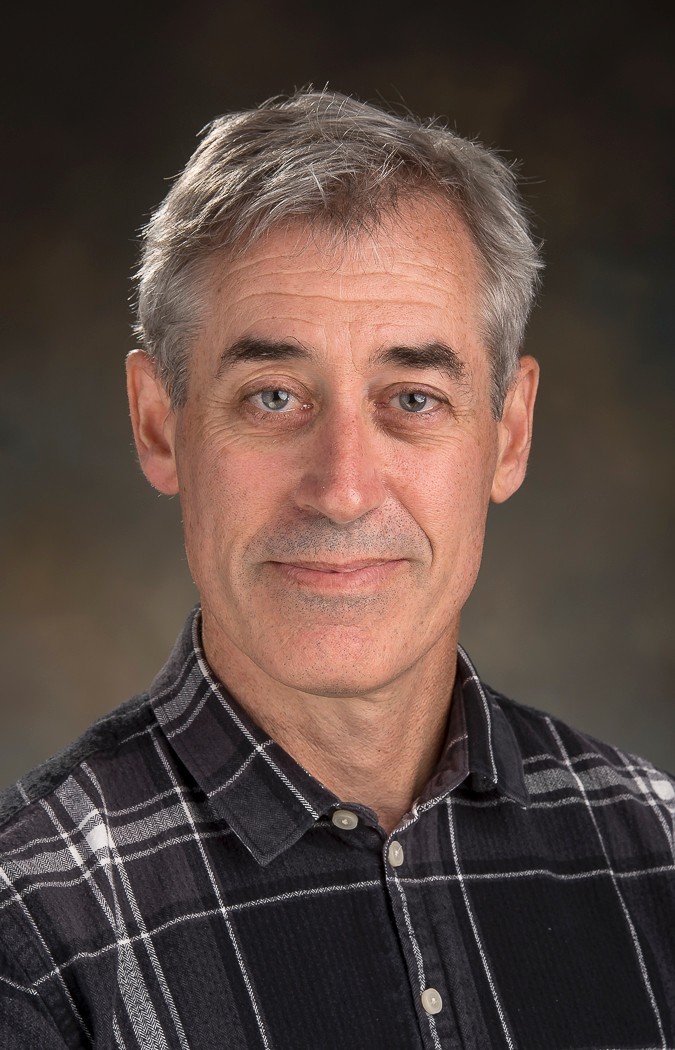
Alexander Weiße is a tenured researcher at the Max Planck Institute for Mathematics in Bonn, Germany, where he also serves as Head of IT. Previously, he was a junior professor for computational physics at the University of Greifswald (until 2009). He holds a PhD in physics from the University of Bayreuth (2002) and completed postdoctoral research at the Max Planck Institute for the Physics of Complex Systems, University of New South Wales (Sydney), and University of Greifswald. Research Interests : His work spans condensed matter physics, mathematical physics, and integrable systems. Recent focuses include spin systems (e.g., XXZ Heisenberg chain), disorder/randomness in quantum systems, and computational methods (e.g., Chebyshev expansion, kernel polynomial method). He also contributes to high-performance computing and programming tools (C, Form, Julia). Teaching & Leadership : He has taught courses on computational physics, group theory, numerical many-particle physics, and computer algebra. Notable collaborations involve the Bergische Universität Wuppertal group on spin model correlation functions. He co-edited the textbook Computational Many-Particle Physics (Springer, 2008). IT Responsibilities : As Head of IT, he manages IT infrastructure security and strategy, with interests in cybersecurity and computational resource optimization.
Walter Lambrecht is a Perkins Professor of Physics at Case Western Reserve University. His research focuses on first-principles computational methods in condensed matter theory, particularly density functional theory (DFT) and many-body perturbation theory (GW method), applied to novel materials such as semiconductor nitrides, halide perovskites, and layered ultra-thin materials. Education: Lic. Sc., University of Gent (1977) Dr. Sc., University of Gent (1980) Research Interests: Theoretical modeling of electronic and vibrational properties in complex materials. Defects and doping effects in semiconductors. Development of computational tools for band structure and optical property analysis. Collaborations: Works closely with experimental groups, including a team at Victoria University in Wellington, New Zealand, on rare-earth nitrides. Collaborates with Mark van Schilgaarde at Arizona State University on computational method development. Key Projects: Investigation of II-IV-N2 semiconductors and their defect physics. Stability and electronic behavior of halide perovskites for solar cells. Spin-orbit effects in layered materials like MoS2 and V2O5. Magnetic exchange interactions in Mn-doped ScN and gadolinium pnictides.
Rafael Fernandes is a Professor in the Department of Physics at the University of Illinois Urbana-Champaign, where he joined in 2024 after serving as a Distinguished McKnight University Professor at the University of Minnesota (2023-2024). His academic journey includes positions as Professor (2021-2024), Associate Professor (2017-2021), and Assistant Professor (2012-2017) at the University of Minnesota, following postdoctoral appointments at Columbia University/Los Alamos National Lab (2011-2012) and Ames Laboratory/Iowa State University (2008-2011). His educational background includes: B.S. in Physics from the University of Campinas, Brazil (2003) M.Sc. in Physics from the University of Campinas, Brazil (2005) Ph.D. in Physics from the University of Campinas, Brazil (2008) Professor Fernandes is a leading condensed matter physics theorist renowned for his work on electronic nematicity and vestigial electronic order in quantum materials. His research focuses on establishing clear relationships between microscopic electron behavior and macroscopic material properties through theoretical modeling of quantum many-body systems. He investigates model quantum materials to develop frameworks applicable to broader problems in interacting quantum matter, with notable contributions to understanding nematicity in iron pnictides and its extension to vestigial phases in diverse systems. His current research interests span electronic nematicity, altermagnetism, intertwined electronic phases, unconventional charge-order in kagome materials, electron-phason coupling in moiré systems, and multi-component superconductivity. His publication record reveals a strategic evolution from foundational work on iron-based superconductors toward cutting-edge research on altermagnetism, moiré systems, and kagome metals. The articles demonstrate a consistent methodological approach combining analytical field-theory techniques with numerical quantum Monte Carlo simulations to address phase transitions, electronic order parameters, and competing electronic orders in quantum materials. His scientific achievements have been recognized with prestigious awards: Mercator Fellow, DFG, Germany (2020-present) Fellow, American Physical Society (2017) Cottrell Scholar Award (2016-2019) DOE Early Career Award (2014-2019) Professor Fernandes teaches courses including PHYS 211 - University Physics: Mechanics and maintains extensive collaborations with experimental groups utilizing scanning tunneling microscopy, angle-resolved photoemission spectroscopy, nuclear magnetic resonance, and various scattering techniques. His theoretical work bridges fundamental quantum mechanics with practical material properties, incorporating realistic crystal elastic properties into models of quantum materials. His research group at UIUC investigates the fundamental physics of quantum materials through theoretical frameworks that connect microscopic quantum behavior to observable macroscopic phenomena, with particular emphasis on developing predictive models for novel electronic phases and phase transitions.
Qi-Yu (Grace) Liang is an Assistant Professor in the Department of Physics and Astronomy at Purdue University. Her research focuses on quantum information transfer, quantum optics, and sensing using Rydberg atoms. She holds a Ph.D. from MIT (2017) and a B.S. from Peking University (2009). Her group explores programmable quantum transport in Rydberg atom arrays, electric field control for precision experiments, and applications of Rydberg interactions in quantum sensing. Education: Ph.D. in Physics, Massachusetts Institute of Technology, 2017 B.S. in Physics, Peking University, 2009 Research Interests: Quantum hardware development for scalable information processing Rydberg atom arrays for entanglement distribution and sensing Electric field control techniques for sub-wavelength atomic systems Topological features in spin-orbit coupled quantum gases Quantum nonlinear optics at the single-photon level Lab Activities: The Liang group operates in PHYS B76 laboratory, focusing on experiments involving cold atoms and Rydberg physics. They collaborate on initiatives like the Midwest Cold Atom Workshop and organize annual Quantum Open Houses. Recent projects include developing ultra-low noise current sources for precision measurements and exploring antiblockade effects in Rydberg excitations. Advising & Collaboration: Supervises graduate and undergraduate researchers including Yupeng Wang, Junjie Wang, and Aishik Panja. Engages in outreach activities such as hosting high school students and organizing seminars. Active in Purdue's AMO-QIS (Atomic, Molecular, and Optical - Quantum Information Science) community.
Shubhayu Chatterjee is an Assistant Professor in the Department of Physics at Carnegie Mellon University 's Mellon College of Science. He earned his PhD in Physics from Harvard University (2018) and Integrated MSc in Physics from IIT Kanpur (2012). Prior to CMU, he served as a Postdoctoral Fellow at UC Berkeley (2018-2022). Research Focus : Quantum many-body physics, topological materials, quantum sensing, and correlated electronic systems Awards : PQI Community Collaboration Award (2023), Harvard GSAS Merit Fellowship (2016-17), President's Gold Medal at IIT Kanpur (2012) His recent work explores quantum critical phenomena, superconductivity mechanisms, and spin dynamics in 2D materials through quantum simulations and noise spectroscopy. Key collaborations include studies on rhomboidal trilayer graphene , twisted transition metal dichalcogenides , and quantum sensors for superconductivity imaging .
Rukmani Bai is a Researcher at the Institute for Theoretische Physik III (Institute for Theoretical Physics III), specializing in quantum simulation with ultracold atomic systems. Her work bridges theoretical modeling and experimental quantum physics, focusing on complex quantum phases in engineered lattice systems. Her research centers on quantum many-body phenomena in optical lattices, particularly dipolar bosonic mixtures and Rydberg atom arrays. Key interests include topological phases (fractional Chern insulators, quantum Hall states), supersolids, Bose glass transitions, and artificial gauge field effects. She employs advanced theoretical frameworks to predict experimentally accessible quantum states, with strong emphasis on connections to cold atom experiments. Article analysis reveals evolving expertise: early work (2018-2020) established foundational understanding of dipolar quantum gases and gauge field effects, while recent publications (2022-2024) target topological matter and multi-component phase transitions. This trajectory shows increasing focus on experimentally viable quantum simulation schemes for exotic topological states. Bai actively contributes to the Institute's research ecosystem through collaborations with experimental groups led by H.P. Büchler, T. Lahaye, and A. Browaeys. She has taught core theoretical physics tutorials including Quantum Mechanics, Electrodynamics, and Statistical Mechanics across multiple academic years (2019-2024), demonstrating consistent institutional engagement.
Wave Ngampruetikorn is a Senior Lecturer in the School of Physics at the University of Sydney. He holds a PhD in Physics from the University of Cambridge, where he specialized in ultracold quantum gases as part of the Theory of Condensed Matter Group in the Cavendish Laboratory. His postdoctoral research spanned positions at the Okinawa Institute of Science and Technology (Japan), Northwestern University (USA), and the CUNY Graduate Center (USA), with affiliations to Fermi National Accelerator Laboratory and the Center for the Physics of Biological Function (CPBF), a collaboration between Princeton University and CUNY. His research focuses on theoretical physics with emphasis on quantum many-body systems, superconductivity, statistical mechanics, and interdisciplinary applications of information theory to biological and machine learning systems. Notable work includes studies on chiral superconductors, phase transitions in disordered systems, and the development of energy-based models for protein sequence analysis. Ngampruetikorn’s publications explore topics ranging from anomalous Hall effects in novel materials to foundational aspects of high-dimensional regression and neural network learning dynamics. His work bridges condensed matter physics, biophysics, and computational theory, often employing renormalization group techniques and information bottleneck methods. He has no listed academic awards but maintains active collaborations through institutions like CPBF and Fermilab. While no current advisees are listed, his research themes suggest involvement in graduate training within theoretical physics and interdisciplinary computational projects.
David Logan is the Coulson Professor of Theoretical Chemistry at the University of Oxford, a position he has held since 2005 after joining the faculty in 1986. He co-founded and directed the EPSRC Centre for Doctoral Training in Theory and Modelling in Chemical Sciences (TMCS) and maintains strong collaborative ties with Oxford's Condensed Matter Theory Group. Internationally, he holds an Infosys Visiting Chair at the Indian Institute of Science, Bengaluru, and is a Foreign Fellow of the National Academy of Sciences, India. Logan's research centers on quantum many-body theory and statistical mechanics, specifically addressing strongly correlated electron systems and disordered interacting systems. His work explores metal-insulator transitions, quantum magnetism, high-temperature superconductivity, and many-body localization—where disorder and interactions drive quantum systems into non-ergodic phases. He develops minimal theoretical models to uncover fundamental mechanisms in condensed matter, spanning crystalline/amorphous solids and nanoscale devices like quantum dots and molecular electronics. This inherently interdisciplinary approach bridges chemistry and physics to explain emergent phenomena in complex quantum systems. His recent publications reveal a dominant focus on many-body localization using Fock-space methodologies, analyzing quantum transport, multifractality, and phase transitions in disordered chains and graphs. This work connects condensed matter physics with quantum information science, emphasizing non-equilibrium dynamics and the breakdown of statistical mechanics in isolated quantum systems. Logan's scientific contributions have earned significant recognition: Marlow Medal from the Royal Society of Chemistry Corday-Morgan Medal from the Royal Society of Chemistry Tilden Medal from the Royal Society of Chemistry Foreign Fellowship in the National Academy of Sciences, India As an educator, Logan actively recruits graduate students from chemistry and physics backgrounds into the Oxford Theoretical Chemistry Group, fostering cross-disciplinary training in quantum many-body methods. His leadership in the TMCS Centre for Doctoral Training demonstrates commitment to large-scale research education, while his Infosys Visiting Chair reflects deep engagement with Indian scientific institutions. Collaborative projects with Oxford's Physics Department and international partners drive innovation in theoretical frameworks for condensed matter. The Oxford Theoretical Chemistry Group operates as a dynamic hub for quantum theory, closely integrated with the Condensed Matter Theory group in Physics. This synergy enables comprehensive studies of electronic and magnetic phenomena across scales—from bulk materials to nanodevices—using advanced computational and analytical techniques developed within Logan's team.
Tigran Sedrakyan is an Associate Professor in the Department of Physics at the University of Massachusetts Amherst, affiliated with the College of Natural Sciences. His research focuses on theoretical condensed matter physics, particularly the effects of correlations in many-body systems. He explores exotic quantum phases such as quantum spin liquids, topological paramagnets, and chiral states in systems like quantum magnets, superconductors, and cold atomic gases. His work emphasizes understanding topological order, fractionalization, and unconventional quantum phase transitions beyond conventional symmetry-breaking paradigms. Research interests include: Quantum spin liquids and fractionalized excitations Topological order in 2D and 3D systems Interacting bosons in moat and flat-band lattices Chiral vortex states and Bose-Einstein condensates Disordered systems like magic-angle twisted bilayer graphene He develops theoretical frameworks such as Chern-Simons fermionization and finite-size scaling to probe symmetry-enriched topological phases and quantum criticality. His recent work bridges topological materials with quantum computing applications, including photonic quantum circuits and error-mitigation techniques. Research positions are available for graduate/undergraduate students interested in these topics.
Dr. Hamid Ohadi is a Reader and Researcher at the School of Physics and Astronomy, University of St Andrews. He leads the Quantum Light-Matter Lab, focusing on photonics and quantum science, particularly exploring emergent phenomena in non-equilibrium light-matter systems and single-particle nonlinearities. His research aims to advance quantum technologies through studies of Rydberg excitons and polaritons in microcavities. Dr. Ohadi has supervised multiple PhD students, including Anindya Sundar Paul, who graduated in 2025 and now works at Quandela. Research Interests: His work spans quantum optics, polariton condensates, nonlinear optics, and topological photonic states. He investigates light-matter interactions in semiconductors, with recent breakthroughs in Cu2O microcavities and 2D perovskites. Key areas include Rydberg polaritons, topological states, and room-temperature quantum systems. Publications: Recent work includes studies on asymmetric topological photonic states in perovskite microcavities and nonlinear Rydberg exciton-polaritons in Cu2O. These contributions highlight advancements in quantum materials and optoelectronic applications. Awards and Grants: While no specific awards are mentioned, his high-impact publications reflect ongoing success in securing research grants. Collaborations span institutions like Hitachi Cambridge and Macquarie University. Labs and Teams: The Quantum Light-Matter Lab at St Andrews is central to his work. Projects include 'Giant Rydberg Polaritons' and 'Room-Temperature Polaritons', aiming to develop scalable quantum systems.
Jainendra K. Jain is the Evan Pugh University Professor and Erwin W. Müller Professor of Physics at the Pennsylvania State University, holding the Eberly Family Chair. He specializes in condensed matter physics, particularly the fractional quantum Hall effect, composite fermions, and topological phases of matter. His research bridges theoretical and experimental insights, explaining phenomena like the intricate sequence of fractional quantum Hall states through composite fermion theory. Education: Ph.D., Physics (1985), Stony Brook University M.Sc., Physics (1981), Indian Institute of Technology, Kanpur B.Sc. (Honors), Physics (1979), Maharaja College, Jaipur Research Interests: Dr. Jain’s work focuses on strongly correlated electron systems, topological phases, and exotic particles like composite fermions. His composite fermion theory revolutionized understanding of fractional quantum Hall effects, unifying them with integer quantum Hall phenomena. He explores applications in quantum computing and topological materials. Key Contributions and Awards: Recipient of the 2025 Wolf Prize in Physics for advancing understanding of 2D electron systems in magnetic fields. Member of the National Academy of Sciences (2021) and Fellow of the American Academy of Arts and Sciences (2008). Recipient of the Oliver E. Buckley Prize (2002), recognizing his composite fermion model. Grants and Advising: Dr. Jain has led numerous research grants and advised students and postdocs in theoretical condensed matter physics. His work is supported by institutions like the National Science Foundation and international collaborations. Publications: Authored over 200 papers, including monographs like Composite Fermions (2007) and co-edited Fractional Quantum Hall Effects: New Developments (2020). Recent work explores topological superconductivity, graphene-based systems, and novel quantum phases.
W. Vincent Liu is a Professor of Physics & Astronomy at the University of Pittsburgh, affiliated with the Dietrich School of Arts and Sciences. His research focuses on quantum many-body systems, ultra-cold atomic gases, and topological phases of matter. He explores emergent phenomena such as superfluidity, topological insulators, and time crystals, leveraging quantum field theory to model interacting quantum matter. Key research areas include orbital physics, strongly correlated electron systems, and applications to dense light and high-density QCD matter. His work bridges theoretical physics with experimental platforms like optical lattices and cold atoms. Awards: American Physical Society Fellowship (2017), Outstanding Young Researcher Award (2007) Advising: Current advisees include Malcolm Jardine, Zehan Li, and Jingchen Zhang. Labs/Teams: Active in theoretical condensed matter physics and quantum information collaborations. Publications highlight pioneering studies on chiral superfluids, Floquet topological insulators, and time crystals, often published in Nature , Science Bulletin , and Phys. Rev. Lett.
Guillaume WEICK serves as an Associate Professor at the University of Strasbourg within the Physics and Engineering Department, conducting research at the Institut de Physique et Chimie des Matériaux de Strasbourg (IPCMS). His academic journey began with a PhD in Condensed Matter Theory from Universität Augsburg and Louis Pasteur University (2003-2006), followed by postdoctoral positions at Freie Universität Berlin (2006-2009) and CNRS-IPCMS (2009-2012) before joining the faculty in 2012. Dr. WEICK's research program centers on theoretical investigations of quantum phenomena at the nanoscale. His work spans several interconnected domains: Mesoscopic quantum systems and transport phenomena Topological aspects of light-matter interactions Collective excitations in nanostructured materials Orbital magnetism in confined quantum systems Quantum effects in artificial materials mimicking graphene properties His theoretical approach combines quantum mechanics, electromagnetism, and statistical physics to model complex behaviors in engineered nanostructures. Analysis of his recent publications (2018-2025) reveals a strong focus on topological aspects of polaritonic and plasmonic systems, quantum transport in disordered environments, and magnetic properties of nanoscale objects. His work demonstrates increasing sophistication in handling complex light-matter interactions, particularly in systems exhibiting topological protection and edge states. The research shows clear progression from fundamental plasmonic phenomena toward more complex topological and many-body quantum effects. As an educator, Dr. WEICK teaches across the physics curriculum from undergraduate to master's level, covering foundational topics like electrostatics and fluid mechanics alongside advanced subjects including quantum mechanics, nonlinear physics, and statistical physics. His teaching portfolio reflects deep expertise in both classical and quantum theoretical physics. He actively participates in the GDR 2426 Mesoscopic Quantum Physics research network and contributes to the Interdisciplinary Thematic Institute QMat focused on quantum science and nanomaterials. His laboratory work is primarily theoretical, developing models to explain and predict quantum phenomena in nanoscale systems without experimental apparatus requirements.
Robert Lewis-Swan is the Tedd S. Webb Presidential Professor in the Homer L. Dodge Department of Physics and Astronomy at the University of Oklahoma. His research focuses on non-equilibrium many-body physics in atomic, molecular, and optical (AMO) systems, with applications to quantum technologies. He explores quantum phenomena like entanglement and coherence in diverse systems including neutral atoms, polar molecules, and trapped-ion crystals. His work combines analytical and numerical methods to study complex interactions and quantum control. Education: B.Sc., University of Queensland, 2011 Ph.D., University of Queensland, 2015 Research interests include quantum simulation, cavity QED, spinor Bose-Einstein condensates, and quantum-enhanced sensing. Recent work highlights include studies on dynamical phase transitions, quantum chaos, and precision metrology using trapped ions and Rydberg systems. Selected Awards: Tedd S. Webb Presidential Professorship (2025) His lab develops tools for quantum state preparation, noise mitigation, and quantum control, with applications in next-generation quantum devices. Collaborative efforts span theoretical modeling and experimental implementations in AMO systems.
J. Steven Dodge is an Associate Professor in the Department of Physics at Simon Fraser University (SFU). His research focuses on the quantum properties of materials using ultrafast optical spectroscopy techniques, including terahertz time-domain spectroscopy and pump-probe spectroscopy. He leads the Dodge Lab, which investigates quantum materials such as superconductors, magnetic materials, and topological electronic systems. Dodge holds an A.B. from Harvard University and M.A./Ph.D. degrees from Stanford University. Education: A.B. (Harvard), M.A./Ph.D. (Stanford) Research Group: The Dodge Group includes Ph.D. candidates Leya Lopez and Alireza Noori. Teaching: Fall 2025 courses include PHYS 132 LA01 (Physics Laboratory I) and PHYS 822 G100 (Advanced Electromagnetism II). His research explores phenomena such as interacting electrons, superconductivity, and magnetism. Techniques like time-resolved terahertz spectroscopy enable studies of ultrafast electronic dynamics and material responses to photoexcitation. Recent work addresses nonlinear photoconductivity effects and spurious evidence in photoinduced superconductivity studies. Labs and Facilities: The Dodge Lab uses advanced equipment including femtosecond laser systems and terahertz spectroscopy setups. Collaborations involve material characterization and theoretical modeling of quantum material behavior.