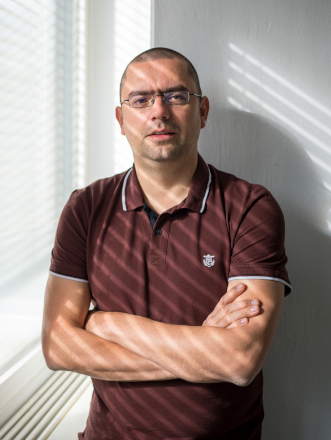
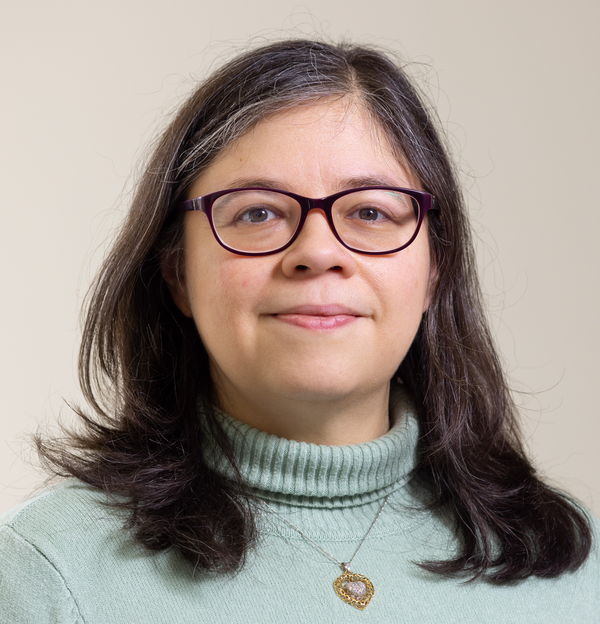
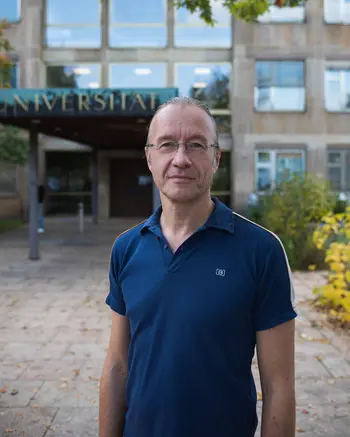
Dr. rer. nat. Christopher M. Jones is a Senior Scientist in the Department of Cardiovascular and Metabolic Disease Prevention at the Medical Faculty Mannheim of Heidelberg University . Holding a PhD in Clinical Psychology from the University of Bremen, his work bridges behavioral science, digital health, and social determinants of health behavior. Current focus areas include intensive longitudinal methodology for real-time behavioral analysis. Investigates social and contextual factors influencing intention-behavior translation. Examines socioeconomic drivers of health disparities and misinformation dissemination on social media. Recently expanded into climate and health research, particularly air pollution protective behaviors. His methodological expertise spans experimental designs and smartphone-based ecological momentary assessments. Publications include studies on: COVID-19 nonpharmaceutical adherence dynamics. Smoking behavior regulation over time. Misinformation sharing in digital health contexts. Behavioral determinants of antibiotic prescribing patterns. Contact: christopher.jones@medma.uni-heidelberg.de | Phone: +49 621 383-71792
Sven Apel is Professor of Computer Science at Saarland University, where he holds the Chair of Software Engineering and directs the Saarbrücken Graduate School of Computer Science within the Saarland Informatics Campus. His research aims to advance software engineering into an era of intensive automation by developing methods, tools, and theories for building efficient, reliable, and maintainable software systems, with a strong emphasis on the human factor and interdisciplinary inquiry. His primary research interests include software variability and configuration, AI-based program generation and optimization, socio-technical software analysis, and the application of empirical and neurophysiological methods to study program comprehension. He actively collaborates with industry partners such as Siemens AG, Bosch Engineering, and Airbus Helicopters to apply his research in real-world contexts. His recent publications demonstrate a strong trend towards integrating artificial intelligence and neurocognitive methods into software engineering, focusing on configurable systems, performance modeling, debugging processes, and the scientific validity of empirical studies. His work spans top venues like ICSE, FSE, ASE, and IEEE TSE. ERC Advanced Grant “Brains On Code” ASE Fellow ACM Distinguished Member Hugo Junkers Award for Research and Innovation Heisenberg Professorship (DFG) Emmy-Noether Fellowship (DFG) Best Doctoral Dissertation Awards (University of Magdeburg, Ernst-Denert Foundation, 2007) Most Influential Paper Awards (SPLC'19, ICPC'22, GPCE'23) ACM SIGSOFT Distinguished Paper Awards (ICSE'15, ICSE'21) Best Paper Awards (SPLC'11, Modularity'15, Academy of Management'18) Distinguished Reviewer Awards (ASE'18, ICSE'24, FSE'24) Sven Apel has secured significant research funding, including an ERC Advanced Grant (€2.5M) and multiple DFG grants as Principal Investigator and Project Leader. He has advised numerous PhD and Master’s students and is actively involved in the academic community through program committees for major conferences like ICSE, FSE, and ASE. His work is conducted within a collaborative environment that includes close partnerships with researchers at the Max Planck Institute for Informatics and other institutions within the Saarland Informatics Campus.
Hannover University of Applied Sciences and ArtsGermany
Andreas C. Lehmann is a Professor of Systematic Musicology and Music Psychology whose research bridges cognitive science, performance studies, and psychological mechanisms of musical experience. While his institutional affiliation remains unspecified in the provided text, his collaborative network includes prominent researchers from the University of Hamburg, Hanover University of Music, Drama and Media, and State University of Music and Performing Arts Stuttgart. Lehmann's scholarly focus centers on empirical investigations of music's cognitive and physiological impacts, with particular emphasis on deliberate practice efficacy, neurocognitive aspects of musical training, and music-induced emotional modulation of pain perception. His methodological approach integrates meta-analytic techniques, psychophysiological measurements, and longitudinal observational studies to dissect performance science and music cognition phenomena. Analysis of his publication record reveals a consistent trajectory examining how structured musical engagement shapes human cognition and physiological responses. His work demonstrates specialized attention to gender-differentiated effects in music-induced arousal, neural adaptations from early musical specialization, and quantifiable relationships between practice intensity and achievement metrics—contributing foundational insights for evidence-based music education and therapeutic applications.
Dr. Sandra Diaz Pier is a Scientific Lead at the Jülich Supercomputing Centre (JSC) within the Jülich Research Centre , Germany. Specializing in computational neuroscience , high performance computing (HPC) , and machine learning , she bridges neuroscience and advanced computational methods through her research. Education: B.Sc. in Electronic Systems Engineering, Mexico M.Sc. in Computer Science (focus: machine learning, quantum computing), Mexico Second M.Sc. in Electrical Engineering, Ontario, Canada Ph.D. in Computer Science, Germany (2021) Her research focuses on modeling and simulating brain dynamics and plasticity at multiple scales, leveraging HPC to accelerate large-scale neural network simulations. She actively contributes to EU projects like the Human Brain Project (HBP) , Virtual Brain Cloud , and EBRAINS 2.0 , emphasizing infrastructure development and educational training. Her work includes open-source tools such as the NEST simulator , The Virtual Brain , and L2L , enabling efficient parameter exploration and multiscale co-simulation frameworks. The 15 most recent publications highlight her interdisciplinary approach, spanning topics from quantum computing in biomolecular simulations to neural plasticity algorithms and cloud-based brain modeling . These articles reflect her expertise in integrating machine learning , multi-scale simulation , and HPC infrastructure for neuroscience challenges, including seizure propagation, Parkinson’s disease progression, and swarm intelligence in spiking networks. She leads technical coordination in projects like EBRAINS and serves as a task leader in the HBP infrastructure work package , while also organizing workshops and hackathons for open-source tools. Her role involves supporting domain scientists through methodological research and workflow optimization for brain simulations.
Rasmus Hoffmann is Professor and Chairholder of Sociology, especially Social Inequality, at the Faculty of Social Sciences, Economics, and Business Administration of Otto-Friedrich University of Bamberg, Germany. His office (Room: F21/00.17a) and consultation hours (by appointment via email) confirm active faculty status within the university structure, with no indication of emeritus or former staff designation. His research focuses on: Social inequality in health and mortality Life course analysis of socioeconomic determinants Causal pathways (social causation vs. health selection) European cross-national health disparities Impact of risk factors (obesity, smoking) on mortality gradients Policy implications for reducing health inequities Recent publications (2021-2025) show intensive analysis of pandemic impacts on health behaviors, mental health, and medical attitudes, alongside sustainable consumption studies. Work consistently employs advanced statistical methods on European population data, with strong emphasis on socioeconomic dimensions of dietary transitions and complementary medicine. Scientific awards: No awards documented in source materials Advising and grants: No student advising details listed No grant funding information provided Research teams and affiliations: Core team: Dr. Alexander Patzina, Tillman Claus, Felix Rahberger KLUG - German Alliance for Climate Change and Health membership Collaboration with Emeritus Professor Hans-Peter Blossfeld
PD Dr. Fabian Scheipl is the Head of the Department of Statistics at Ludwig-Maximilians-Universität München (LMU). His work focuses on cutting-edge statistical methodologies, particularly in Functional Data Analysis, and he leads the Functional Data Analysis research group. He specializes in developing advanced statistical models and open-source software tools for data science applications. His research bridges theoretical statistics with practical implementations, emphasizing reproducible research and educational resources. Dr. Scheipl’s research interests include functional additive mixed models, cluster analysis, and high-dimensional data techniques. He has contributed significantly to R package development, including refund , gamm4 , and lme4 , which are widely used in statistical computing. His work spans diverse fields such as healthcare (e.g., analyzing critical care outcomes), environmental science (e.g., earthquake dynamics), and computational biology (e.g., epigenetic studies). His publications highlight innovations in statistical methodology, such as improving cluster validation metrics and advancing topological approaches to outlier detection. While no awards are explicitly listed, his impactful contributions to statistical software and theory are widely recognized in academic circles. He actively engages in advising doctoral candidates and contributes to teaching and mentorship in statistical education. Labs/Teams: Leads the Functional Data Analysis group within LMU’s Department of Statistics, fostering interdisciplinary collaborations across computational, biomedical, and environmental research domains.
Lena Hipp is a Professor of Social Inequality and Social Policy at the University of Potsdam and a Research Professor in 'Work, Family and Social Inequality' at the Berlin Social Science Center (WZB). She has held these positions since May 2023, following her prior role as an S-/W2 Professor in Social Structure, Work, and Organizations at the same university from 2017 to 2022. She led the WZB research group 'Work and Care' from 2012 until April 2023. Education: PhD in Organizational Behavior, Cornell University, 2011 Undergraduate studies at Albert-Ludwigs-Universität Freiburg, Institut d’Etudes Politiques Paris, and Freie Universität Berlin, 1997–2003 Policy advisor, German Bundestag, 2003–2005 Her research focuses on social inequality, sociology of work, gender, family, welfare states, and organizational sociology . She employs advanced research methods and comparative analysis to study labor markets, care work, and policy impacts. Her recent publications address gendered work patterns, remote work, migrant care labor, and attitudes toward maternal employment, often using survey experiments and panel data. The trends in her recent articles show a strong emphasis on gender disparities in labor markets , particularly during and after the pandemic, the role of organizational and welfare policies in shaping equality, and the transformation of work through digitalization and platform economies. Her work bridges theoretical sociology with empirical policy-relevant research. Scientific Awards: No awards explicitly mentioned in the provided text. Advising and Grants: Lena Hipp supervises students and leads multiple externally funded research projects. Her current projects include analyses of working hours (Hans Böckler Foundation), sorting on online care platforms (DFG), youth views on solidarity (Stiftung Mercator), and gendered labor market inequalities during the pandemic (BMBF). She has completed significant projects on care work, good work, and the impact of COVID-19 on women in Berlin. She is also involved in public engagement, including co-producing short films on 'good work' and career choices in relation to dating. Labs and Teams: She leads or has led the 'Work and Care' research group at WZB and is affiliated with the doctoral program 'Good Work' at the Berlin Social Science Center. Her collaborative network includes researchers across Germany and internationally, particularly in comparative social science and policy analysis.
Dr. Ronja Runge is a Researcher and Lecturer at the Institute of Psychology, University of Hildesheim, specializing in cross-cultural measurement bias, acculturation, and cultural influences on mental health. Her work focuses on improving comparability of psychological assessments across diverse populations, particularly in parent-child reporting on emotional/behavioral problems. Education: Master’s in Psychology (University of Leipzig, 2017), Bachelor’s in Psychology (University of Göttingen, 2013) Current Roles: Researcher in the Communities That Care project (since 2019), Lecturer in Research Methods and Evaluation (since 2017) Runge’s research spans cultural bias in psychological measurement , identity development in migrants , and mental health disparities . Her recent publications address intensive parenting behaviors across 11 countries, anchoring vignettes for bias correction, and cross-cultural invariance in parental socialization goals. She teaches graduate courses in multivariate analysis, evaluation research, and health psychology. Active in international conferences (e.g., SPSP, IACCP), her work emphasizes methodological rigor in cross-cultural studies and public health implications of acculturation processes.
Prof. Dr. Oliver Christ is a Professor for Psychological Methods and Evaluation at the Faculty of Psychology, FernUniversität in Hagen, Germany. He has held this position since March 2015, following roles as Acting Chair for Psychological Methods at the same university (2013-2015) and Senior Lecturer/Lecturer at the University of Marburg (2001-2015). His academic trajectory includes visiting research positions at the University of Oxford and St Andrews in 2011-2012. Christ's research specializes in intergroup dynamics, prejudice reduction, and advanced statistical methodologies. Key interests include: Longitudinal effects of positive/negative intergroup contact on societal attitudes Contextual influences on prejudice and group relations Development of multilevel modeling techniques for social science data Innovations in psychological assessment and educational tools His recent publications (2023-2025) demonstrate a strong focus on: Mechanisms of polarization and social cohesion Validation of contact theory across diverse cultural contexts Applications of statistical software in distance education Intersections of political behavior and intergroup relations Christ maintains significant editorial involvement, having served as Associate Editor for European Journal of Social Psychology (2015-2017) and British Journal of Social Psychology (2017-2019), and reviews for over 40 academic journals and funding bodies including DFG and ERC.
Judith Glaesser is a Research Fellow at the Methods Center, Department of Social Sciences, Faculty of Economics and Social Sciences, University of Tübingen. She has held academic positions at Durham University and the University of Konstanz, with a sustained focus on research methods, sociology of education, and educational inequality. Research Interests: Her work centers on qualitative comparative analysis (QCA), mixed-methods integration, educational decision-making, and competence modeling. She investigates how social background, ability, and institutional structures interact to shape educational outcomes in Germany and England. Her methodological contributions emphasize causal asymmetry, limited diversity in QCA, and the integration of survey and interview data. The most recent articles reflect a strong trend in methodological innovation, particularly in refining QCA techniques, exploring causal complexity, and analyzing longitudinal data on student affect and dropout. Her work spans sociology, education, and psychometrics, often in interdisciplinary collaboration. She also contributes critical book reviews on topics ranging from social theory to mental health in youth. Book Review: JH Goldthorpe, The Making of a Sociologist (2025) Book Review: The Anxious Generation (2025) Case-to-Condition Ratios in QCA (2025) Analysing causal asymmetry (2024) Chance and the limits of social science (2024) Advising and Grants: While specific students are not listed, her roles as Senior Lecturer and Research Fellow imply mentoring of graduate students. She has led and contributed to significant research projects, including the 'Kompetenzmodellierung' initiative at Tübingen School of Education. Her collaborative work with Kelava, Kilian, and Cooper suggests involvement in funded interdisciplinary teams focused on educational measurement and dropout prevention. Labs and Teams: She is affiliated with the Methods Center at the University of Tübingen, which supports advanced research methodology across social sciences. She has also been associated with the Tübingen School of Education (TüSE) and the Graduate College 'Early Concepts of Man and Nature' at Mainz, indicating participation in interdisciplinary research networks focused on education and epistemology.
Dr. Maud Daemen is a Visiting researcher at the Central Institute of Mental Health, Mannheim (ZI) within the Department of Public Mental Health . Her work is affiliated with the Ecological Translation in Public Mental Health Provision (E.T.) research group. Current affiliation: ZI Mannheim Department: Public Mental Health Research focus: Ecological interventions, childhood trauma, and psychosis Maud Daemen's research explores the intersection of self-esteem dynamics , childhood adversity , and psychosis using ecological momentary assessment and digital methodologies . She investigates transdiagnostic interventions for youth at risk and develops novel approaches for real-time mental health monitoring. Her recent publications focus on experience sampling techniques, digital data collection , and the SELFIE randomized clinical trial for self-esteem improvement. Key trends include: childhood trauma pathways to psychosis, digital mental health innovations, and intensive longitudinal research methods. The Ecological Translation research group (E.T.) at ZI Mannheim drives her work, emphasizing ecological validity and translational approaches in public mental health provision.
Max Planck Institute for the Study of Religious and Ethnic DiversityGermany
Dr. Katharina Schmid serves as Associate Professor of Organizational Behaviour in the Department of People Management and Organisation at ESADE Business School, Ramon Llull University, Spain. Previously, she held research fellowships at the Max Planck Institute for the Study of Religious and Social Diversity and the University of Oxford. Her academic credentials include: PhD in Social Psychology from Queen's University Belfast BSc in Applied Psychology from University of Ulster Dr. Schmid's research centers on ethnic/religious diversity, intergroup contact, and social identity processes—particularly social identity complexity—with extensions into organizational behaviour, conflict management, and negotiation. She examines how neighborhood and workplace diversity shapes social cohesion, recently expanding into climate psychology and political phenomena like Brexit. Her work employs multi-method approaches across diverse international contexts. Recent publications (2022-2025) reveal consistent high-impact contributions across social psychology and interdisciplinary journals including Proceedings of the National Academy of Sciences , Nature , and American Psychologist . Key trends include nuanced analyses of contact valence/intensity, personality moderators in diversity attitudes, and large-scale behavioral interventions for climate action. As an active investigator at GLEAD - Leadership Development Research Centre, Dr. Schmid leads significant projects including 'DivCon' on diversity/contact dynamics and the International Climate Psychology Collaboration spanning 63 countries. Her research often involves cross-cultural teams and multi-method designs to address complex societal challenges.
Jens Kleinert is a full Professor of Sport and Health Psychology at the German Sport University Cologne, where he serves as head of the Psychological Institute and the Department of Health and Social Psychology. He has held this position since 2006, following a professorship at the University of Würzburg (2004–2006). His academic and leadership roles confirm his status as a senior faculty member in sport psychology. Graduate sports teacher Licensed physician Coaching licenses in indoor handball and swimming His research focuses on motivation and emotion psychology , team and group dynamics in sports , sports and mental disorders , and the psychology of sports injuries . He explores how physical activity influences mental health, including burnout, depression, loneliness, and aggression. His work often integrates self-determination theory and examines behavioral regulation in exercise contexts. He has a strong interest in digital media's role in enhancing motivation in physical education. The recent publications highlight a consistent focus on the psychological aspects of exercise, group dynamics, mental health in athletes, and the use of digital tools in education. Trends include longitudinal studies in youth sports, psychophysiological experiments, systematic reviews on exercise and emotion, and applied research in rehabilitation and school settings. Scientific Awards: Posterpreis bei der 55. asp-Jahrestagung (2023) Prof. Kleinert leads multiple funded research projects, including mentaltalent (sport psychological support for youth elite athletes in NRW) and ComeSport (digitalization in teacher education). He collaborates widely with researchers such as Fabian Pels, Johanna Belz, and Anna Wasserkampf. He has supervised numerous co-authored studies, indicating active mentoring. His team includes scientific staff and doctoral researchers working on group dynamics, motivation, and health behavior. He is actively involved in academic and public discourse, delivering guest lectures and organizing conferences such as the NRW-Kongress Nachwuchsförderung. His lab and research group focus on health and social psychology in sports, with ongoing work in digital interventions, team cohesion, and mental health promotion in athletic populations.
Emanuela Struffolino is a Research Fellow at the WZB - Berlin Social Science Center and an Associate Researcher at Humboldt University Berlin's Institute for Social Sciences - Chair of Microsociology. Her work focuses on demography, labor markets, gender inequality, and welfare states, utilizing life course and mixed-method approaches. PhD in Sociology, University of Milan Bicocca (2014) M.A. in Sociology, University of Turin (2009) B.A. in Intercultural Communication, University of Turin (2006) Her research explores: Family demographic processes and in-work poverty Lone motherhood and employment trajectories Early school leaving in Italy Life course impacts on health and retirement Contraceptive practices and gender norms Sequence analysis methodology Recent publications analyze longitudinal employment patterns, gender disparities in labor markets, and policy responses to poverty across Europe and the U.S. She collaborates with institutions including Oxford University and Nuffield College. Her roles include: Research Fellow, WZB Demography and Inequality Department (2015–present) Associate Researcher, Humboldt University Berlin (2015–present) Former Research Fellow, NCCR LIVES, University of Lausanne (2014–2015)
Dr. Claudia Lazarides is a postdoctoral researcher at the Professorship for Psychological Methodology , Institute of Psychology, Humboldt University of Berlin since 2023. She earned her PhD in 2021 with a thesis on maternal stress during pregnancy and its biological impacts, supervised by Prof. Voelkle and Prof. Entringer. Her research focuses on Multivariate analysis of intensive longitudinal data Ecological Momentary Assessment (EMA) methods Early stress and child abuse experiences Developmental psychobiology Previously, she worked as a postdoctoral fellow (2020-2022) and research associate (2016-2020) at Charité – Universitätsmedizin Berlin. She completed a master’s degree in Clinical Psychology and Psychotherapy (2016) and bachelor’s in Psychology (2013).