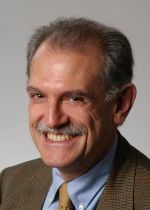
Mitra Nasri is an Assistant Professor at the Eindhoven University of Technology, affiliated with the College of Engineering's Department of Electrical Engineering. She contributes to the High Tech Systems Center and EAISI Foundational, focusing on interconnected resource-aware intelligent systems. Research Focus: Real-Time Systems, Scheduling Algorithms, Embedded Systems, Fault-Tolerant Computing, and Cyber-Physical Systems. Key Contributions: Development of scheduling frameworks for multi-rate task chains, response-time analysis techniques, and containerization strategies for real-time distributed applications. Her recent work includes advancements in weakly-hard timing constraints, parallel global scheduling, and cloud integration for embedded systems. She actively collaborates on projects like SAM-FMS and COMP4DRONES. Scientific Awards: Best Paper Award - RTAS 2022 Best Paper Award - RTNS 2016 Outstanding Paper Awards at RTAS 2017, 2022 and RTSS 2020 She teaches courses in Real-Time Systems, Operating Systems, and Automotive Software, and participates in organizing conferences like Embedded Systems Week and CompSys.
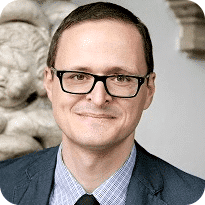
Ole Goethe is an Associate Professor at Kristiania University of Applied Sciences within the School of Arts, Design and Media's Westerdals Department of Film and Media. He holds concurrent roles at NTNU and Nord University. His work bridges academia and industry through research in human-technology interaction, gamification, and inclusive design. Education: Executive Program in Project Management, BI Norwegian Business School (2010-2011) Master's in Motion Picture, Academy of Art University (2004-2008) Bachelor of Arts in Computer Graphics & Minor in Computer Science, Academy of Art University (1997-2002) Research Interests: Focuses on synergized human-technology interactions, inclusive design principles, and gamification applications. Specializes in creating engaging systems that promote diversity, longevity of user engagement, and accessibility. Active in HCI, service design, and AI-driven systems. His work emphasizes ethical UX practices, adaptive game mechanics, and accessibility frameworks to address societal challenges through technology. Article Trends: Recent publications explore 'Attainable Game Experiences' - a framework ensuring inclusive gaming accessibility. Explores universal design principles in XR, exergames, and gamified civic systems. Earlier work covers e-learning gamification challenges and VR embodiment theories. Awards & Recognition: Not explicitly stated in provided texts, but recognized as a Toptal verified expert in design with industry collaborations at Harvard and LucasFilm. Grants & Advising: No specific grants listed. Advised over 15 years across academia and industry, mentoring teams in SaaS, edtech, and game development. Involved in design sprints, user research, and agile methodologies. Labs & Teams: Core contributor to Kristiania's Game Development program and Excited Centre for Excellence in IT Education. Collaborates with industry on projects like Correlate (productivity app) and Picturemarks (digital humanities platform).
Federico Ciccozzi is an Associate Professor in Computer Science at Mälardalen University's School of Innovation, Design and Engineering, where he leads the ASSO research group and the VR ORPHEUS project. He also serves as Head of Research Education in Computer Science and Electronics at the university. His academic journey includes a M.Sc. in Global Software Engineering (via the GSEEM program) and a Ph.D. in Computer Science and Engineering from Mälardalen University (2014), followed by promotion to Docent (Associate Professor) in 2017. Education: M.Sc. in Global Software Engineering (GSEEM program, joint between Mälardalen, L'Aquila, and Amsterdam) Ph.D. in Computer Science and Engineering (Mälardalen University, 2014) Docent (Associate Professor) in Computer Science (Mälardalen University, 2017) His research focuses on model-driven engineering, robotics software engineering, and software architecture. He has pioneered work in blended modeling approaches, EAST-ADL extensions, and formal verification of complex systems, particularly in robotics and automotive domains. Recent projects emphasize industrial collaborations, such as optimizing ROS2 multi-robot systems and enhancing safety-critical software through model-based methodologies. Research Contributions: Developed frameworks for transforming surface languages into augmented EAST-ADL models Advanced blended modeling techniques across JetBrains MPS and Eclipse tools Examined consistency management in industrial model-driven development Edited special issues on model-driven engineering and low-code development His work bridges academic innovation and industrial practice, with notable projects like the Rubus Component Model for vehicular systems. He actively organizes workshops (e.g., RoSE, ASYDE) and contributes to standardization efforts like the Portable Test and Stimulus Standard. Labs/Teams: Leads the ASSO research group, focusing on advanced software engineering methodologies and robotics systems development.
Prof. Dietmar Winkler is a Lecturer at TU Wien's Department of Information Systems Engineering, specializing in Cyber-Physical Production Systems (CPPS) and Software Engineering. His work focuses on integrating safety, security, and quality aspects into production systems through model-driven engineering and agile practices. He contributes to Industry 4.0 initiatives, particularly in asset-based risk mitigation and knowledge graph frameworks for security analysis. Research interests include: production systems engineering, cyber-physical systems, test-driven validation, model integration, and software quality intelligence. His publications emphasize multi-view modeling, traceability pipelines, and empirical studies on test code readability. Recent work explores security-log analysis via knowledge graphs (VloGraph), test scenario validation using design models, and efficient FMEA re-validation in agile environments. He co-leads projects on digital production system safety and coordinates multi-disciplinary engineering artifacts. Active in academic communities, he organizes conferences like Software Quality: The Next Big Thing. His contributions bridge theory and practice in systems engineering, with a focus on improving software development processes in complex industrial settings.
Dr. Sergio Maffeis is an Associate Professor and Senior Lecturer in Computer Security at the Department of Computing, Imperial College London, within the Faculty of Engineering. He leads the Security & Machine Learning Lab and holds affiliations with the Engineering Secure Software Systems and Programming Languages research groups. His research focuses on cyber security, machine learning, formal methods, and programming languages. Maffeis earned his Ph.D. from Imperial College London and an MSc from the University of Pisa, Italy. Research interests include adversarial machine learning, intrusion detection systems, and secure software development. His work bridges theoretical foundations with practical applications, such as detecting Advanced Persistent Threats (APTs) and improving ML model robustness against adversarial attacks. Recent publications highlight advancements in combining machine learning with security, including KnowML for knowledge graph-enhanced ML-NIDS and APIRL for REST API fuzzing. He has supervised numerous PhD students, including Abdullah Aldaihan (Large Language Models for Cyber Threat Detection) and Fahad Alotaibi (Concept Drift in ML-based Security). Grants include EPSRC/GCHQ funding for certified verification of client-side web programs and GCHQ grants for web security and lab infrastructure. His lab collaborates on projects like the Security & Machine Learning Lab, exploring cutting-edge topics in secure AI and network defense.
Alberto L. Sangiovanni-Vincentelli holds the Edgar L. and Harold H. Buttner Chair of Electrical Engineering and Computer Sciences at the University of California, Berkeley. He is a pioneer in Electronic Design Automation (EDA) and co-founder of Cadence and Synopsys. His research focuses on Cyber-Physical Systems (CPS), embedded systems, hybrid systems, and formal methods for AI. He has authored over 800 papers and 17 books, with major contributions to design automation and methodologies. Education: Dr. Ing., EECS, Politecnico di Milano (1971) Research interests include design methodologies, CPS, and AI integration. He has received numerous awards, including the IEEE James Clerk Maxwell Medal (2008) and ACM/IEEE A. Richard Newton Technical Impact Award (2009). He serves on multiple corporate boards and advisory councils, including the Strategic Committee of the Italian Strategic Fund and the Executive Committee of the Italian Institute of Technology. His work spans academia, industry, and policy, with a focus on innovation ecosystems and CPS design automation. Awards: Over 20 major honors, including Fellowships from IEEE and ACM.
Jürgen Schönwälder is a Professor at Jacobs University Bremen, Germany, with affiliations at the University of Osnabrück and TU Braunschweig's Department of Computer Science. His research focuses on network management, protocol design, and internet infrastructure. Key research areas include network management protocols (NETCONF, RESTCONF, YANG), IPv6 performance analysis, cybersecurity, and network configuration. He has contributed extensively to standardization efforts through RFCs and collaborations with institutions like the IETF and Dagstuhl Seminars. Recent publications highlight trends in RESTCONF implementation for constrained devices, active malware analysis using Bayesian models, and metamorphic testing for cryptographic protocols. His work intersects network management, internet infrastructure, and security evaluation. Co-authors like Vaibhav Bajpai, Anuj Sehgal, and Abhilash Hota appear frequently in his research, indicating long-term collaborations. He has participated in editorial roles for journals like IEEE Communications Magazine.
Jan Peleska is a Professor at the Department of Computer Science, Faculty of Mathematics and Computer Science, University of Bremen. He is a member of the Bremen Institute of Safe Systems (BISS) and co-editor of the BISS Monographs series. His research focuses on the application of formal methods and model-based testing to safety-critical embedded systems in domains such as avionics, railways, and automotive engineering. Affiliation: University of Bremen, TZI (Center for Computing Technology), BISS (Bremen Institute of Safe Systems) Academic Role: Professor of Computer Science Research Interests Peleska’s work emphasizes formal methods for dependable systems, particularly distributed and reactive real-time systems. Key areas include: Formal methods (safety, reliability, availability, security) Development of fault-tolerant systems Test automation for reactive systems Tools development for formal methods Integration with software development standards His research is applied to industrial projects involving safety-critical embedded systems, such as avionic systems and railway control systems. A comprehensive overview is provided in his Habilitation Thesis: Formal Methods and the Development of Dependable Systems . Publication Trends Peleska’s recent publications (2012–2022) focus on model-based testing (e.g., symbolic finite state machines, CSP refinement), standardisation of autonomous train control, and tools for automated testing. His work addresses challenges in railway interlocking systems, avionic software verification, and hybrid system validation, often combining formal methods with practical industrial applications. Scientific Awards Best Paper Award at FORMS/FORMAT 2014 Best Paper Award at QA+Test 2007 Other Responsibilities Peleska co-manages the Post Graduate Programme Embedded Systems GESy and serves as a shareholder/consultant for Verified Systems International GmbH. He has delivered invited lectures on industrial verification, model-based testing, and formal methods at institutions like the University of Tunghai (2016) and workshops including CyPhyAssure Spring School (2019).
Toby Murray is a Professor in the School of Computing and Information Systems at the University of Melbourne, where he serves as Director of the Defence Science Institute and Co-Lead of the Computer Science Research Group. His work bridges formal methods, cybersecurity, and practical system security, with significant contributions to verified security and vulnerability detection. Murray's research focuses on building highly secure computing systems cost-effectively, with expertise in formal verification, information flow security, and vulnerability detection. His current research projects include Verisimilar (Verified, Secure Machine Learning), EDEFuzz (Detecting excessive data exposure in web applications), COVERN (Proving information flow security of concurrent programs), and Time Protection (Proving timing channel freedom for seL4). His work combines theoretical rigor with practical implementation, resulting in multiple open-source tools including SecC, Legion, and Underflow. Murray's recent publications demonstrate a consistent focus on verified security properties across diverse domains, from neural networks to concurrent systems. His work often bridges the gap between formal methods and practical security concerns, with increasing attention to machine learning security and policy implications of technical security measures. His publications span top venues in security, formal methods, and software engineering. Distinguished Paper Award at ICSE 2024 for EDEFuzz work on detecting excessive data exposure in web applications Extensive media commentary on cybersecurity issues including CrowdStrike outage analysis and social media regulation Regular contributions to The Conversation and Pursuit on cybersecurity policy matters Murray has advised numerous PhD students to completion, including Lianglu Pan (EDEFuzz), Zhiyuan Zhang, Mo Zhang, and Renlord Yang. He currently supervises multiple PhD students working on security verification, machine learning security, and web application security. His service includes being Program Chair for CSF'25, Associate Editor for IEEE Security & Privacy and ACM TOPS, and membership in IFIP's WG 1.7 and WG 2.3. His research group has developed multiple significant software tools including SecC (Verified Security for Concurrent C Programs), Legion (Principled Automatic Test Case Generation), and Underflow (Compositional Vulnerability Detection for C Programs), all available under open source licenses. Murray's work often involves discovering and reporting bugs in security analysis tools during his research, demonstrating the practical impact of his verification approaches.
Dr. Bhargavi Goswami is a lecturer at the School of Computer Science, Queensland University of Technology (QUT), with over 14 years of teaching experience in higher education. Her expertise spans communication networks, network security, and software-defined networks (SDN), where she integrates cutting-edge research into postgraduate teaching. Previously, she served as Assistant Professor and Head of Department (HOD) at CHRIST University and Garden City College in India. Education: PhD in Computer Science from QUT; professional certifications including CCNA and CCNP from Cisco. Dr. Goswami's research focuses on communication networks and network security, with a particular emphasis on Smart Grid Communication Networks, Software Defined Networks (SDN), Cryptography, Cybersecurity, Mathematical Modeling, and Congestion Control in Data Networks. Her current work explores the intersection of Quantum Computing, Machine Learning, and Network Programming to enhance communication security and efficiency. Her 15 most recent publications highlight trends in Smart Grid , SDN , and network security . Key subfields include latency optimization , load balancing , handoff methods , Wi-Fi Mininet , and Beacon controller scalability . Dr. Goswami has led multiple funded research projects, including work on low-latency communication for Smart Grids and P4-based network policies in SDN. She holds two patents and has authored monographs in her field. Her technical certifications and industry engagement underscore her practical contributions to communication systems and network security. She emphasizes ethical technology development and societal impact in her research and teaching.
Dilum Bandara is a Principal Research Scientist at CSIRO's Data61 in Australia and an Adjunct Senior Lecturer at the School of Computer Science and Engineering, Faculty of Engineering, University of New South Wales (UNSW). He has previously served as a Senior Lecturer at the University of Moratuwa, Sri Lanka, and has over two decades of experience in research, teaching, and consultancy in distributed systems, security, and software engineering. His academic qualifications include: PhD in Computer Science, Colorado State University, USA (2012) MS in Computer Science, Colorado State University, USA (2008) BSc Eng. (Hons) in Computer Science and Engineering, University of Moratuwa, Sri Lanka (2004) Dilum's research interests are centered on Distributed Systems (Blockchain, Cloud, P2P), Computer Security , Software Architecture , Data Engineering , Performance Engineering , and the Internet of Things (IoT) . He applies these technologies in multidisciplinary domains such as Supply Chains , Digital Finance , Environmental, Social, and Governance (ESG) , Fleet Management , and Weather Monitoring . His work emphasizes real-world impact through trusted data management in multi-party ecosystems. The analysis of his recent publications reveals a strong focus on blockchain for transparency and security, cloud-native performance engineering, IoT integration with edge and cloud, and data-driven solutions for smart cities and sustainability. His work consistently bridges theoretical innovation with practical deployment, particularly in national and international infrastructure projects. His scientific awards include: Best Paper Award at BPM 2024 Multiple CSIRO internal awards (Customer First, Engineering and Technology, Collaboration) from 2021–2023 Student Paper Award (Merit) at IEEE SOLI 2018 Award of Excellence for Outstanding Research at University of Moratuwa (2015–2018) Dilum has led and contributed to several research grants, particularly during his time at the University of Moratuwa, including projects on smart city integration, real-time data forecasting, and cloud platforms for scientific computing. He has also held leadership roles such as Director of the Engineering Research Unit and co-founder of VaticHub. He is actively involved in professional communities as a Senior Member of IEEE and a Chartered Engineer with IESL. At CSIRO, he serves as a Health and Safety Representative, reflecting his commitment to corporate citizenship. He has advised students and early-career researchers, though specific names are not listed in the provided text. His labs and research teams include the Architecture and Analytics Platforms (AAP) team at CSIRO Data61 and collaborations with academic institutions like UNSW and University of Moratuwa.
Maria Paz Linares Herreros is a Senior Lecturer at the Universitat Politècnica de Catalunya (UPC) in the Department of Statistics and Operations Research within the Faculty of Mathematics and Statistics (FME). She is affiliated with the IMP - Information Modeling and Processing research group and inLab FIB. Her educational background includes a Licenciada en Matemáticas, a Doctorate from UPC, and a Master's in Logistics, Transportation, and Mobility. Licenciada en Matemáticas Doctorat from Universitat Politècnica de Catalunya Máster en Logística, Transporte y Movilidad Her research focuses on urban mobility , traffic simulation , and smart city technologies . She develops data-driven models for transportation systems and parking management, integrating deep learning techniques for real-time predictions. Her work addresses environmental impact assessment of traffic policies and inclusive mobility solutions . Recent publications analyze urban mobility trends through macroscopic and microscopic traffic models , deep learning applications for parking predictions, and dynamic ride-sharing systems . She explores IoT interoperability and data integration in transportation. Scientific awards include the IV International Award on Transport Infrastructure Management Research (2014). She participates in competitive R+D+I projects like ALGORAE and Virtual Mobility Lab, focusing on transportation innovation and smart city policy evaluation . She contributes to multimodal transport simulation frameworks such as CitScale and Barcelona Virtual Mobility Lab, which evaluate emerging mobility concepts and city policies using integrated modeling approaches .
Markus Strohmaier is Professor and Chair of Data Science in the Economic and Social Sciences at the University of Mannheim, with affiliations as Scientific Coordinator at GESIS – Leibniz Institute for the Social Sciences and External Faculty Member at the Complexity Science Hub Vienna. His interdisciplinary work bridges computer science, economics, and the social sciences. University of Mannheim – Chair for Data Science in the Economic and Social Sciences GESIS – Scientific Coordinator for Digital Behavioral Data Complexity Science Hub Vienna – External Faculty Former Professor at RWTH Aachen University and University of Koblenz-Landau Previous Post-Doc and Visiting Roles at Stanford University, Xerox PARC, University of Toronto, and Graz University of Technology His research focuses on computational social science , algorithmic fairness , network science , and the modeling of human behavior using machine learning and large-scale data. He develops methods to analyze textual, relational, and emerging data types to understand socioeconomic systems and digital societies. The recent articles reflect a strong trend in studying inequality in algorithmic systems , governance in decentralized organizations (DAOs) , and psychological profiling of AI . His work spans high-impact journals like Nature and Scientific Reports , emphasizing fairness, transparency, and societal impact of data-driven technologies. Notable scientific contributions include: Editor-in-Chief of EPJ Data Science (2018–2022) Founding co-chair of the Computational Social Science section of the German Informatics Society He advises students and leads research projects on algorithmic fairness, digital governance, and behavioral modeling. His team engages in both fundamental methodological development and applied studies in real-world digital platforms. He has been involved in significant grants and collaborative initiatives around digital behavioral data and computational social science infrastructure. His lab and projects include the Algorithmic Fairness initiative and the interactive visualization tool Planets of Disparity , which explores how algorithms behave on different network structures. These efforts aim to enhance public understanding and technical scrutiny of algorithmic systems.
Dr. Markus Borg is a Senior Researcher and Adjunct Lecturer at Lund University, Sweden, specializing in the intersection of software engineering and applied artificial intelligence. He is a Principal Researcher at CodeScene and contributes to editorial boards for Empirical Software Engineering and IEEE Software . His work bridges academic research with industrial practice through collaborations with Ericsson and contributions to open-source tools like SMIRK. Markus's research focuses on empirical software engineering , technical debt , safety engineering , and requirements engineering for AI-integrated systems. He explores two key directions: AI4SE (applying machine learning to software engineering challenges like defect management and technical debt remediation) and SE4AI (ensuring quality assurance for ML components in safety-critical domains such as automotive systems). His work aligns with regulatory frameworks like the EU AI Act and industry standards for automotive safety. 2025 Contributions : Gamify Track: Two papers on gamification in software maintainability ICSE Journal-First: Longitudinal study on automated bug assignment at Ericsson IDE Track: Trust calibration in AI-assisted refactoring TechDebt Technical Papers: ACE tool for LLM-based technical debt remediation 2024 Contributions : PROFES: AI Act compliance in requirements engineering MO2RE: Code quality specifications TechDebt: Maintainable code ROI analysis Programming with AI: CodeScene platform demonstration 2023 Contributions : CAIN: ML testing in automotive perception systems EASE: Code ownership and defect resolution Mutation Track: Safety-critical mutation testing validation His recent publications emphasize automated defect management , LLM-driven refactoring , and safety validation for ML components , particularly in automotive contexts. Tools like SMIRK and ACE demonstrate practical applications of his research. Markus actively participates in program committees for ICSE, TechDebt, and ICSME, with a focus on bridging academic research with industrial AI/SE challenges.
Lim Mei Kuan is a Senior Lecturer at the School of Information Technology, Monash University Malaysia. She holds a PhD in Computer Vision from Universiti Malaya and has conducted post-doctoral research in Artificial Intelligence. Her career includes roles as a researcher at MIMOS Berhad (2004-2007) and visiting researcher at Kingston University (2012-2013). Education: BSc (First Class Honours) in Computer Science, Universiti Malaysia Sarawak (2007) PhD in Computer Vision, Universiti Malaya (2015) Research Interests: Her work spans computer vision, machine learning, and their applications in smart manufacturing and digital health. Current projects include social media analytics for mental health monitoring, anomaly detection in manufacturing, and collaboration on clinical teletherapy systems. She actively explores swarm intelligence and deepfake detection technologies. Grants & Collaborations: DELTA: Inclusive Teletherapy (2022-2024) ADSM: Anomaly Detection for Smart Manufacturing (2022-2023) Sense-ED: Eating Disorder Relapse Detection (2021-2022) Awards: ITEX 2022 Silver Award for Self-Mind mental health app Labs & Teams: Active contributor to interdisciplinary projects with industry partners, focusing on AI-driven solutions for healthcare and manufacturing sectors.