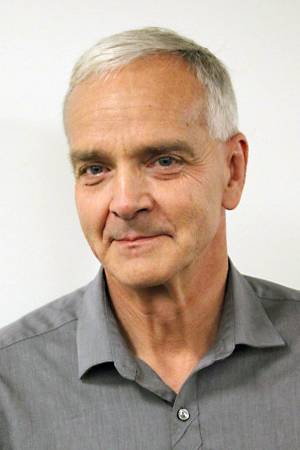
Monika Akbar is an Associate Professor in the Department of Computer Science at the University of Texas at El Paso (UTEP), where she has served since 2017. Previously, she was a Research Assistant Professor and Assistant Director of the CyberShare Center of Excellence at UTEP. She holds a Master's from Montana State University and a Ph.D. from Virginia Tech. Education: Ph.D. in Computer Science, Virginia Tech M.S. in Computer Science, Montana State University Her research focuses on AI/ML-driven solutions for cybersecurity, public health analytics, and educational technology. Key areas include threat modeling in industrial control systems (ICS), malware detection, disease outbreak prediction using mobility data, and culturally responsive computational thinking education. Her recent work emphasizes integrating heterogeneous data sources for risk assessment, with applications in cybersecurity (e.g., CyManII collaborations) and public health informatics. Over 50 publications span conferences like IEEE Big Data, CIKM, and journals like IEEE Security & Privacy. Notable collaborations include the Sol y Agua project, a game-based STEM education initiative, and partnerships with the National Science Foundation (NSF) for CS education studies in El Paso schools. Her lab develops tools like AWEB for cybersecurity threat analysis and mobile platforms (e.g., Dysgu) to enhance out-of-class learning engagement.
Michael W. Carroll is a Professor of Law and Faculty Co-Director of the Program on Information Justice and Intellectual Property at American University's Washington College of Law. He specializes in intellectual property law, cyberlaw, and copyright law, with a focus on balancing IP rights against technological advancements and open access advocacy. His research explores the historical evolution of copyright (particularly in music), challenges of uniformity in IP systems, and the legal implications of generative AI. Recent publications highlight generative AI, fair use jurisprudence, and text/data mining reforms. Carroll is a founding member of Creative Commons, served on the Board of the Public Library of Science (2012-2022), and contributed to national research councils. He has presented extensively on open access, digital preservation, and IP licensing. Prior to joining American University in 2009, he taught at Villanova University School of Law and clerked for federal judges. Education: J.D. from Georgetown University Law Center (1996), A.B. from University of Chicago (1986). Advocacy: Leading voice for open access and open educational resources. Organizations: Creative Commons (2001-2015), Public Library of Science (2012-2022), Center for Democracy and Technology (2009-2022). Professional Background: Law clerk, attorney at WilmerHale, journalist, teacher in Zimbabwe, and project assistant at Africa-America Institute.
Professor Nora El-Gohary is a faculty member in the Department of Civil and Environmental Engineering at the University of Illinois at Urbana-Champaign. She holds the title of CEE Excellence Faculty Fellow and has held academic positions including Assistant Professor (2009–2017), Associate Professor (2017–2023), and full Professor (2023–present). Her professional experience includes roles at the University of Manitoba and Hyundai Engineering & Construction Co. Ltd. Education: B.Sc. Construction Engineering, American University in Cairo (1999) M.Sc. Construction Engineering, American University in Cairo (2002) Ph.D. Civil Engineering, University of Toronto (2008) Research focuses on data analytics, AI, and BIM for sustainable infrastructure. Key areas include: Automated compliance checking using NLP Machine learning for energy consumption prediction Human-centered systems for construction management Awards include the NSF CAREER Award (2013), NCSA Fellow (2018), and 2025 ASCE Computing in Civil Engineering Award. She has led over 100 research projects funded by agencies like NSF and Illinois Department of Transportation. Editorial roles include Co-Editor-in-Chief of the ASCE Journal of Computing in Civil Engineering (2024–present) and Associate Editor (2012–2023). Active in professional societies such as TRB and ASCE.
Jan Bosch is a Full Professor in the Department of Software Engineering and Technology at Eindhoven University of Technology. His research focuses on artificial intelligence integration in engineering contexts, platform ecosystems, and data-driven practices. He has collaborated internationally on projects involving machine learning applications in industrial systems and strategic AI adoption strategies. Bosch has supervised four academic works and published extensively on topics such as Piping and Instrumentation Diagram (P&ID) automation, decision-making frameworks in engineering, and ecosystem experimentation. His recent work emphasizes the strategic implications of AI in engineering workflows and the analysis of software ecosystems through systematic reviews and interview studies. Education details are not explicitly provided in the text, but his academic position suggests advanced degrees in relevant fields. Research outputs include conference papers and journal articles addressing technical challenges in AI application, industrial software systems, and platform ecosystem management. His work has garnered attention with 226 Mendeley readers and social media shares, indicating impactful contributions to software engineering and AI fields.
Martial Hebert is the Dean and University Professor of Robotics at Carnegie Mellon University's School of Computer Science (SCS), leading since August 2019. His career spans decades at CMU's Robotics Institute (RI), where he served as Director (2014-2019) and Professor (1999-present). Broad research interests in computer vision, perception for autonomous systems, and 3D environment modeling. Current PhD advisees include Zhipeng Bao, with numerous past PhD and Master's students listed. Editor-in-Chief of the International Journal of Computer Vision and member of IEEE Robotics and Automation Society. His research focuses on computer vision and robotics , emphasizing 3D data interpretation, object recognition, and machine learning applications. Recent articles highlight advancements in 3D vision , diffusion models , and disaster response robotics , reflecting a trajectory from foundational algorithms to applied autonomous systems. Notably, he pioneered the first master's program in computer vision in the U.S. Hebert's leadership in academic and research spheres includes directing the RI and securing an operating budget peak during his tenure. His work bridges perception, intelligence, and autonomous systems, with applications in disaster scenarios , LiDAR point cloud detection , and video forecasting .
Simon Smith is a Reader and Director of Discipline for Civil and Environmental Engineering at the University of Edinburgh's School of Engineering. A Fellow of the Institution of Civil Engineers and Chartered Engineer, his research focuses on construction safety, earthworks, and infrastructure management. Smith investigates safety management systems, risk perception, and cost-safety dynamics in construction. His recent work employs data analytics, NLP, and 3D modeling to improve operational safety and efficiency. Research spans forensic engineering, process optimization, and organizational learning from failures. Smith's publication trends show progression toward digital construction technologies, with increasing focus on machine learning applications for safety analysis and real-time operational systems.
Albert Qiaochu Jiang serves as a Visiting Research Fellow at the Department of Computer Science and Technology, University of Cambridge. His research integrates machine learning with formal theorem proving, focusing on neural theorem provers and mathematical reasoning systems. He leads the reasoning team at Mistral AI while maintaining academic supervision at Cambridge. His research interests center on machine learning for theorem proving , with specific expertise in neural-symbolic integration, autoformalization, and large language models for mathematical reasoning. His work bridges artificial intelligence with formal verification, developing systems that enhance automated reasoning capabilities through neural networks. Current projects involve improving premise selection for theorem provers, multilingual mathematical formalization, and creating efficient architectures for mathematical language models. Analysis of his recent publications reveals a strong focus on advancing neural theorem proving through innovative architectures like Target-Based Automated Conjecturing and Magistral. His research trajectory shows increasing sophistication in integrating language models with formal verification systems, with significant contributions to datasets like Numinamath and frameworks like Llemma. Key trends include optimizing compute efficiency in proof generation, enhancing multilingual mathematical reasoning, and developing interactive human-AI collaboration systems for formal mathematics. While no scientific awards are currently documented in available sources, his research output demonstrates significant impact in the intersection of AI and formal methods. As leader of Mistral AI's reasoning team, Jiang directs research on neural theorem proving systems while contributing to academic supervision at Cambridge. His work involves substantial industrial-academic collaboration, leveraging resources from both institutional contexts to advance mathematical AI. Current projects focus on creating practical systems for mathematical automation with real-world verification applications. His research operates at the intersection of academia and industry through Mistral AI's reasoning team, where he develops neural theorem proving systems with practical applications in formal verification. This dual affiliation enables rapid translation of theoretical advances into deployable tools for mathematical automation.
Smaranda Muresan is an Associate Professor in the Department of Computer Science at Barnard College, with affiliations at Columbia University. Her research focuses on artificial intelligence, natural language processing, and computational linguistics, emphasizing ethical AI applications, educational technology, and stylistic analysis. Academic Affiliation: Associate Professor at Barnard College Email: smuresan@barnard.edu Her work spans multiple subfields including fact-checking systems, argument mining, sentiment analysis, and figurative language processing. She explores abstract reasoning in LLMs through novel benchmarks like the New York Times Connections game and investigates AI's role in creativity, education, and social good initiatives. Recent publications highlight her contributions to global segmenting algorithms, explainable authorship attribution, and multimodal figurative language analysis. While no explicit student advisees are listed, her research intersects with interdisciplinary teams at Barnard and Columbia. She actively participates in academic workshops and conferences such as the ACL Annual Meeting and FigLang, shaping standards for computational analysis of nuanced language phenomena.
Zheng Chang is a Professor at the Institute of Computing Technology, School of Computer Science and Technology, University of Chinese Academy of Sciences in Beijing, China. With a PhD from the University of Jyväskylä (2013), Chang has established a prolific research career with over 240 publications spanning from 2011 to 2025. Chang maintains strong collaborative ties with researchers at the Chinese Academy of Sciences' Shenyang Institute of Automation and has developed significant international collaborations, particularly with Finnish researchers including Timo Hämäläinen. Chang's research focuses on cutting-edge areas at the intersection of wireless communications, artificial intelligence, and edge computing. Their work prominently features federated learning, UAV networks, resource allocation, and privacy-preserving techniques for IoT applications. Recent publications demonstrate a strong emphasis on vehicular edge intelligence, split learning architectures, and RIS-assisted communications. The research output shows consistent growth with 42 publications in 2024 alone, indicating an active and expanding research program. Chang's 15 most recent publications reveal a clear research trajectory toward addressing the challenges of resource-constrained edge environments through innovative learning architectures. The work spans theoretical frameworks for privacy preservation in federated learning to practical implementations for UAV networks and vehicular systems. A notable trend is the integration of AI-generated content techniques with traditional federated learning approaches to overcome data scarcity issues in edge environments. While specific awards aren't documented in the provided text, Chang's extensive publication record in top-tier IEEE journals including IEEE Transactions on Wireless Communications, IEEE Internet of Things Journal, and IEEE Transactions on Vehicular Technology demonstrates significant scholarly impact. The research has been widely cited, with multiple highly cited co-authors including Timo Hämäläinen (66 co-authored papers), Zhu Han (38 papers), and Geyong Min (31 papers). Chang's work shows strong practical applications across multiple domains including intelligent transportation systems, smart agriculture, healthcare IoT, and next-generation 6G networks. The research program appears well-funded through collaborations with major institutions and demonstrates clear translational potential for real-world deployment in edge computing environments.
Andreas Nüchter is a Professor and Chair of Robotics at Julius-Maximilians-University Würzburg (Germany), leading the Chair of Computer Science XVII. He holds additional roles including Visiting Chair at ENSTA - Institut Polytechnique de Paris, Dean of Studies at the Institute of Computer Science, and Vice President of Zentrum für Telematik e.V. His research focuses on robotics, 3D reconstruction, SLAM, and sensor systems for autonomous systems. He has authored influential papers in IEEE Transactions on Robotics, Acta Astronautica, and robotics conferences like ICRA and IROS. Education: Not explicitly detailed in text, but inferred through academic roles. Research Interests: Robotics, computer vision, sensor fusion, autonomous systems, 3D reconstruction, and space robotics applications. His work emphasizes real-time systems, planetary exploration, and open-source software frameworks like SceneFactory and libBICOS. Recent projects include CNN-based spacecraft pose estimation, spherical mobile mapping systems, and radar SLAM (RIV-SLAM). Advising & Grants: Mentors a team including MSc/BSc students (e.g., Luca Anteunis, Fabian Arzberger). Involved in grants related to robotics, mining automation (AMADEE-24), and space exploration. Collaborates with institutions like NASA (CADRE lunar rovers) and Fraunhofer IPM. Labs/Teams: Leads the Robotics Lab at JMU, develops spherical robots for planetary missions, and maintains open-source libraries (libBICOS, SceneFactory). Active in projects like AMADEE-24 Mars simulation for human-robot interaction.
Scott Burris is a Professor of Law at Temple Law School and Professor in Temple's School of Public Health, where he directs the Center for Public Health Law Research. He has been a faculty member at Temple since 1991 and is internationally recognized for his pioneering work in public health law, particularly in legal epidemiology, policy surveillance, and the intersection of law with HIV/AIDS policy and substance abuse. Professor Burris received his J.D. from Yale Law School and his B.A. from Washington University in St. Louis. His career began during the early days of the HIV/AIDS epidemic, where he served as an attorney at the American Civil Liberties Union, lobbying and litigating on behalf of people with HIV. He edited the first systematic legal analysis of HIV in the United States, "AIDS and the Law: A Guide for the Public" (Yale University Press, 1987). Burris's research focuses on how law influences public health and health behavior, with particular emphasis on developing theory and methods for effective local health governance. His work spans international public health law, legal epidemiology, policy surveillance, substance abuse policy, and housing law. He has made significant contributions to understanding the impact of law on HIV prevention, opioid overdose prevention, and pandemic response. His recent work increasingly examines methodological rigor in legal epidemiology, the application of artificial intelligence to legal analysis, and the relationship between housing law and health equity. His extensive publication record includes over 200 books, book chapters, articles, and reports. Recent publications demonstrate his continued leadership in advancing the science of legal epidemiology, with particular attention to methodology, policy surveillance systems, and innovative applications of technology to legal analysis. American Public Health Association Law Section Lifetime Achievement Award (2014) Jay Healey Health Law Professors award (2018) Professor Burris has served as a consultant to numerous international organizations including the United Nations Development Programme, the World Health Organization, and the United Nations Office on Drugs and Crime. He founded the Public Health Law Research Program for the Robert Wood Johnson Foundation in 2009, which has supported over 80 empirical studies of the impact of law on health. His research has been funded by major organizations including the Robert Wood Johnson Foundation, the Open Society Institute, the National Institutes of Health, the Bill and Melinda Gates Foundation, and the Centers for Disease Control and Prevention. He is the founder of Legal Science, LLC, a private company dedicated to improving access to legal information and supporting policy surveillance practice. He also serves as an advisor to several international institutions including the Tsinghua University AIDS Institute, the Shanghai Academy of Social Sciences Research Center for HIV/AIDS Public Policy, and the Program in Bioethics at Monash University. His work bridges academic research, practical application, and policy development in the field of public health law.
Kenny Joseph is an Associate Professor in the Department of Computer Science and Engineering at the University at Buffalo's School of Engineering and Applied Sciences. He serves as Associate Director of the AI and Society Institute for Artificial Intelligence and Data Science. PhD in Societal Computing from Carnegie Mellon University (2016) MS in Societal Computing from Carnegie Mellon University (2012) BS in Computer Science from Carnegie Mellon University (2010) His research focuses on computational social science , examining stereotypes and prejudice dynamics , social inequality through computational tools , and gender disparities in organizations . He develops machine learning frameworks for neighborhood change prediction and predictive models for child welfare systems , with work featured in the New York Times . Scientific contributions include: UB Exceptional Scholar—Young Investigator Award (2021) He advises students Yuhao Du (Meta data scientist), Jason Yan (Michigan Ph.D. student), Arjunil Pathak (Amazon researcher), and Navid Madani (former Ph.D. student). His Computation and Equity Lab (cubelab) produces interdisciplinary work spanning social media analysis, urban equity, and computational methods for marginalized communities.
David Doermann is a Professor and Department Chair of the Department of Computer Science and Engineering at the University at Buffalo's School of Engineering and Applied Sciences. His research focuses on document image understanding, video analysis, pattern recognition, computer vision, media forensics, and artificial intelligence. Education: PhD in Computer Science, University of Maryland, College Park (1993) MS in Computer Science, University of Maryland, College Park (1989) BS in Computer Science/Mathematics, Bloomsburg University of PA (1986) Research Interests: Dr. Doermann's work spans computer vision, document analysis, and AI, with recent emphasis on histopathology image synthesis, motion prediction, and personalized vision-language models. His publications highlight advancements in neural architecture search, federated learning, and binary neural networks. Scientific Awards: Award for Excellence from the Under Secretary of Defense (2017) DARPA Results Matter Award (2016) IEEE Fellow (2014) IAPR Fellow (2014) Royal Academy of Engineering Fellowship (2011-2013) Honorary Doctorate from University of Oulu (2002) Future Work: He is exploring the integration of generative AI in software development and advancing techniques for human-centric video-depth generation.
Stephan Alexander Weiss is a Researcher affiliated with the Department of Networked and Embedded Systems at the Faculty of Technical Sciences, Alpen-Adria-Universität Klagenfurt. His work focuses on robotics, computer vision, and sensor networks, with applications in agricultural technology and drone systems. He leads projects such as Heterogeneous multi-agent localization and multimodal object tracking in GPS-disturbed areas (FFG-funded) and Technology for Optimized Monitoring and Analysis of Tomato Outcomes . His research emphasizes real-world implementations in robotics, embedded systems, and environmental sensor networks. Education: Not explicitly stated in available texts. Research Interests: Includes swarm robotics, sensor fusion, autonomous systems, and interdisciplinary applications in agriculture and industry. Recent publications explore topics like swarmalator systems and noise-aware radar frameworks. He collaborates with institutions like Infineon Technologies and the Austrian Research Promotion Agency (FFG). No awards are listed, but his active project involvement highlights his contributions to applied research in embedded and networked systems.
Dr. Umar Raza serves as a Senior Lecturer in Networking, IoT and Smart Systems at Manchester Metropolitan University's Department of Engineering, where he concurrently manages the Cisco Network Academy. His academic career includes prior lecturing roles in Robotics and Computing at Staffordshire University, with research spanning industrial applications of emerging technologies. His educational credentials include a PhD in Wireless Sensor Networks from the University of Bradford (2014), Postgraduate Certificates in Research Methods and Professional Higher Education from Staffordshire University (2005, 2007), an MSc in Electronics and Computer Systems from Huddersfield University (1995), and a BSc in Engineering Electronics from DeMontfort University Leicester. Dr. Raza's research centers on Internet of Things applications integrated with Machine Learning across industrial, agricultural, and healthcare domains. Current projects address IoT/ML solutions for domicile care monitoring, cognitive impairment assistance, natural disaster early warning systems, and smart farming in Pakistan, with emphasis on practical implementations in real-world environments. His recent publications demonstrate a pronounced interdisciplinary trajectory, particularly at the IoT-Machine Learning nexus for healthcare innovation (cardiac diagnostics, autism support wearables) and agricultural technology. Significant contributions also appear in blockchain scalability, vehicular network security, and 5G propagation modeling, reflecting both theoretical rigor and industry-relevant problem solving. Professional recognition includes: Fellow of the Higher Education Academy (FHEA) Dr. Raza actively supervises two MSc and two PhD candidates while leading multiple funded projects: Principal Investigator for KTP projects with Kindus Solutions (completed) and Trumeter Ltd Project Advisor for KTP with RAIT Ltd Lead researcher on NATO Science for Peace Security grant for natural disaster warning systems Principal Investigator for Ignite National Technology Fund smart farming initiative in Pakistan As Cisco Network Academy Manager, he drives industry-academia collaboration in networking education, developing curricula that integrate cutting-edge IoT and cybersecurity concepts while maintaining strong professional engagement through IEEE, IET, and BCS memberships.