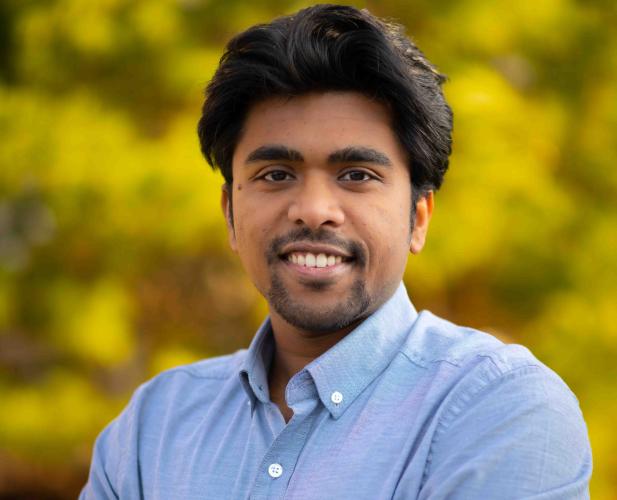
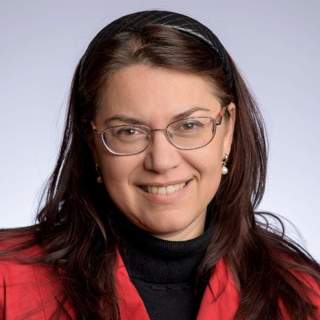
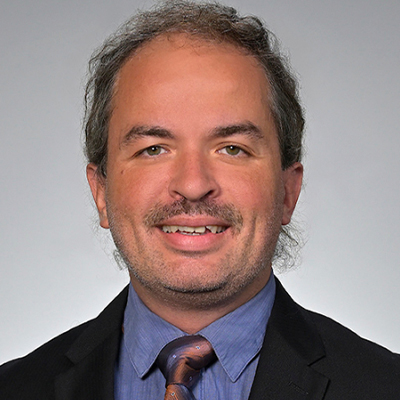
Magdalena Szymczyk is a Lecturer in the Department of Biocybernetics and Biomedical Engineering at AGH University of Science and Technology, Faculty of Electrical Engineering, Automatics, Computer Science and Biomedical Engineering. Her work bridges embedded systems, biomedical signal processing, and geophysical data analysis. Research focuses on energy-efficient sensor networks, neural networks for GPR data classification, and mathematical transforms in signal analysis Expertise in parallel computing, real-time systems, and biomedical engineering applications Her publications (2015–2025) demonstrate a trajectory from parallel neural networks and S-transform/GPR methodologies to recent work on MicroPython in embedded systems. Key themes include energy optimization in distributed architectures and AI-driven signal processing across biomedical and geophysical domains. She has authored works on deterministic chaos in simulations, GPU image processing, and cybersecurity in microcontroller systems. Her current research emphasizes embedded systems security, medical signal diagnostics, and computational methods for geological analysis. She utilizes tools like OpenCL for GPU acceleration and MATLAB for parallel computing implementations.
Soumaya Cherkaoui is a Full Professor in the Department of Computer Engineering and Software Engineering at Polytechnique Montréal. Previously, she served as a Full Professor at Université de Sherbrooke and held industrial roles as an aerospace project manager. Her research integrates artificial intelligence with telecommunications, focusing on quantum computing, frugal edge intelligence, and applications in connected vehicles and IoT. Current Position: Full Professor, Polytechnique Montréal Prior Academic Role: Full Professor, Université de Sherbrooke Industry Experience: Aerospace Project Manager Research Interests: Convergence of AI and communications, quantum computing for networking, frugal intelligence at the edge, and applications in autonomous vehicles, industrial IoT, and smart grids. She leads government and industry-funded projects, including a $6 million quantum initiative in 2025. Recent Publication Trends: Her 2025–2024 work emphasizes quantum-enhanced anomaly detection (via QGANs), Open RAN slicing with quantum optimization, and reinforcement learning for secure cognitive radio networks. Topics span 5G/6G, vehicular networks, and zero-trust architectures. Scientific Awards: IEEE Communication Society Distinguished Lecturer (2020) ACM Mirela Notare Award (2023) IEEE Bio-Inspired Computing STC Leadership Award (2023) N2Women: Stars in Networking and Communications (2023) Best Paper Awards at IEEE ICC 2017, IEEE LCN 2021, ICCSPA 2024 Advising and Grants: Supervised 3 Master's students in 2024, with research on quantum GANs and federated learning for vehicular networks. Secured grants like the $6 million quantum project (2025) and participated in CFI-QC government funding (2022). Editorial and Leadership: Served as Associate Editor for IEEE, Wiley, and Elsevier journals. Chaired conferences like IEEE LCN 2019 and IEEE ICC2025, and held leadership roles in IEEE Communications Society committees.
Pouya Bashivan is an Assistant Professor in the Department of Physiology at McGill University's Faculty of Medicine. His research focuses on developing computational models to explain and regulate neural responses during visual tasks requiring memory, combining machine learning, neuroscience, and cognitive science. Education : Ph.D. in Computer Engineering (2016), Postdocs in Machine Learning (2020) and Computational Neuroscience (2016-2020) His lab investigates: Topographical neural networks for visual cortex simulation Massively-multitask models for prefrontal cortex Saccade-driven visual exploration models Predictive hippocampus models for episodic memory Recent publications explore adversarial robustness, memory-augmented networks, and brain-state decoding. Current projects emphasize causal models, brain-AI alignment, and translating computational neuroscience into therapeutic applications. The lab is located in the McIntyre Medical Sciences Building, Room 1117, Montreal, Quebec.
Farinaz Koushanfar is a Professor in the Department of Electrical and Computer Engineering at the Jacobs School of Engineering, University of California San Diego (UCSD) . She holds the Siavouche Nemat-Nasser Endowed Chair and serves as Founding Co-Director of the Center for Machine-Intelligence, Computing and Security . Her affiliations include NSF Trust-Hub (Co-PI) and NSF TILOS AI Institute . She also serves on the Editorial Board of The Proceedings of the IEEE . Research Focus: Prof. Koushanfar leads research in secure and efficient computing , including robust/safe AI , hardware/system security , AI-based optimization , and cryptographically secure privacy-preserving computing . Her work pioneered logic obfuscation/locking for chip security, automated co-design of AI systems , watermarking/tracing of deep learning models , and physical proofs of provenance . She explores co-design with cryptographic constructs for privacy preservation and manages nonlinearities in ciphertext domains. Article Trends: Recent publications show expertise in neural watermarking (deepfakes, media authentication), zero-knowledge proof frameworks , Trojan attack defenses in ML models, secure federated learning , and hardware acceleration of cryptographic protocols . Her work combines machine learning , cryptography , and physical design security across 2022-2025 publications. Scientific Awards: Fellow of ACM Fellow of IEEE Fellow of National Academy of Inventors (NAI) Fellow of Kavli Foundation of NAS Inducted to NAI 2024 Fellows Advising & Leadership: She has advised multiple PhD students who became faculty at top universities (e.g., Stanford, Purdue). She chairs conferences like ACM WiSec 2024 and co-led the NSF SaTC decadal review. Her lab ( ACES Lab ) produces award-winning graduates like Bita Rouhani (DAC Under-40 Innovators) and Shehzeen Hussain (UCSD Best Dissertation Award).
Cynthia D. Rudin is the Gilbert, Louis, and Edward Lehrman Distinguished Professor of Computer Science at Duke University, with joint appointments in the Departments of Electrical and Computer Engineering, Statistical Science, Mathematics, and Biostatistics & Bioinformatics. She directs the Interpretable Machine Learning Lab and has held previous positions at MIT, Columbia, and NYU. Her educational background includes: Undergraduate degree from the University at Buffalo PhD from Princeton University (2004) Research Interests: Dr. Rudin's research focuses on interpretable machine learning and its applications across multiple domains. Her work emphasizes creating machine learning models whose reasoning processes people can understand, which includes algorithms for extremely sparse models, interpretable neural networks, interpretable matching methods for causal inference, and dimension reduction for data visualization. She applies these techniques to critical societal problems in healthcare, criminal justice, materials science, and other domains. Her lab has developed practical code for sparse models such as decision lists, decision trees, and additive models that provably optimize accuracy and sparsity. Dr. Rudin's recent publications (2024-2025) demonstrate a strong focus on interpretable AI applications across diverse fields including healthcare (mortality risk scores, breast cancer prediction), materials science (metamaterials design), and environmental justice (location-based health analysis). Her work consistently emphasizes practical implementations with real-world impact, particularly in high-stakes decision-making domains where model transparency is critical. Scientific Awards: Squirrel AI Award for Artificial Intelligence for the Benefit of Humanity (2022) - often described as the "Nobel Prize of AI" INFORMS Society on Data Mining Prize (2024) Guggenheim Fellowship (2022) Three-time winner of the INFORMS Innovative Applications in Analytics Award (2013, 2016, 2019) Winner of the 2023 John M. Chambers Statistical Software Award for PaCMAP Winner of the 2024 Award for Innovation in Statistical Programming and Analytics Dr. Rudin has advised numerous PhD students and postdocs who have co-authored significant publications with her. Her lab has received substantial funding for projects applying interpretable machine learning to healthcare (seizure prediction in ICU patients), criminal justice (crime series analysis), and energy infrastructure (underground electrical distribution networks). Her work on the Series Finder algorithm has been adapted by the NYPD and has been running live in NYC since 2016. She directs the Interpretable Machine Learning Lab at Duke, which includes the Almost-Matching-Exactly Lab focused on interpretable causal inference. Her team develops practical code implementations for all their research, emphasizing usability and real-world application in critical domains.
Paul A. Yushkevich is a Professor of Radiology at the Perelman School of Medicine, University of Pennsylvania , with affiliations in the Bioengineering Graduate Group . He leads the Penn Image Computing and Science Laboratory (PICSL) , focusing on advanced biomedical image analysis techniques. Developed first-of-its-kind computational atlas of the hippocampal formation Led NIH R01-funded research on MRI-derived biomarkers for Alzheimer's disease Created open-source software tools: ITK-SNAP and Convert3D Expert in statistical shape modeling and histology-MRI co-registration Research Focus: Specializes in hippocampal segmentation using high-resolution MRI, with applications in Alzheimer's disease research and cardiac imaging . His work combines differential equations and machine learning for accurate image analysis. Scientific Achievements: First-place MICCAI segmentation challenges (2012, 2013) Over 169 PubMed publications in neuroimaging and computational anatomy Developed DTI-TK toolkit for diffusion MRI analysis Collaborations: Works with Alzheimer's Disease Neuroimaging Initiative (ADNI) and multiple international institutions. Supervises graduate students in biomedical image analysis.
Seung Eock Kim is a Professor in the Department of Civil and Environmental Engineering at Sejong University, Korea, where he has served since 1997. Previously, he held executive leadership as Senior Vice President (2015-2018) and brings industry experience from Daewoo Engineering. His academic credentials include a Ph.D. from Purdue University (1996), M.S. from KAIST (1990), and B.S. from Yonsei University (1983). Kim leads research in structural systems optimization with emphases on: Nonlinear inelastic analysis of steel/composite structures AI-driven structural design methodologies LRFD (Load and Resistance Factor Design) frameworks Advanced computational mechanics for infrastructure His recent publications (2024-2025) demonstrate strong focus on machine learning applications for structural health monitoring, nano-scale material characterization of steels, and sensor-based corrosion detection. This represents a strategic expansion into intelligent infrastructure systems beyond traditional mechanics. Awards and honors: National Research Laboratory designation (Ministry of Science, 2000) Elected Full Member of Korean Academy of Science and Technology (2011) He directs the Steel Structure Laboratory , where he developed the specialized nonlinear analysis software 3D-PAAP. His research has generated 132 SCIE-indexed publications with 1,599+ citations, including the influential CRC Press book LRFD Steel Design Using Advanced Analysis (1997).
Saikat Dutta is an Assistant Professor in the Department of Computer Science at Cornell University. He is affiliated with the Software Engineering Group and focuses on the intersection of Software Engineering and Machine Learning . His work aims to enhance the reliability of ML-based systems while applying ML techniques to solve software engineering challenges. PhD in Computer Science from University of Illinois Urbana-Champaign (Summer 2023) Postdoctoral Researcher at University of Pennsylvania Bachelor's in Computer Science and Engineering from Jadavpur University Research Interests: Dr. Dutta's research spans several key areas: Automated test generation and debugging for ML/DL libraries Using AI/ML for automated software engineering tasks Improving performance of regression tests in ML libraries Static and dynamic analysis for probabilistic programming Article Trends: His recent publications emphasize: Automated testing of ML systems Security vulnerability detection using LLMs Probabilistic program analysis Neurosymbolic learning frameworks Flaky test management in stochastic environments Stochastic regression test optimization Scientific Awards: Meta AI LLM Evaluation Research Grant (2025) Mavis Future Faculty Fellowship (2022-23) Facebook PhD Fellowship (2020-22) 3M Foundation Fellowship (2019-2020) Advising & Grants: Dr. Dutta actively recruits PhD students and postdocs. He leads research projects supported by grants from Meta AI and participates in program committees for top conferences like ICSE and ISSTA. His lab focuses on neurosymbolic systems and ML-based software verification.
Goran Oreški is an Associate Professor and Head of the Laboratory at the Faculty of Informatics in Pula (University Jurja Dobrile, Croatia), where he has been employed since 2019. He teaches courses on databases, object-oriented programming, data warehousing, and artificial intelligence at both undergraduate and graduate levels. Education: Ph.D. in Informatics (2016), Faculty of Organization and Informatics Industry Experience: 9 years as software architect and programmer in banking sector Research Focus: Artificial Intelligence systems, classical machine learning algorithms, and deep learning architectures. His work bridges theoretical advancements with practical applications in autonomous vehicles, traffic monitoring, and financial risk assessment. Recent Publication Trends: 2023-2025 works emphasize generative AI for synthetic credit data, traffic object segmentation with monocular cameras, and context-aware detection models (YOLO*C). Earlier works focus on genetic algorithms and ensemble learning for imbalanced datasets. Awards: Google RFP Award for autonomous vehicle research Highly Cited Paper (Web of Science, top 1%) Best Paper at CECIIS conference Leadership: Director of FIPU Laboratory since 2022, leading projects like ai.Shuttle (autonomous mini-bus) and CenAI (industry collaboration with Cenosco).
Mila N. Koeva is a Vice Dean Research and senior Associate Professor at the University of Twente's Faculty of Geo-Information Science and Earth Observation (ITC), Department of Urban and Regional Planning and Geo-Information Management. Her research focuses on 3D modeling and Digital Twins for land management and urban planning, integrating geospatial technologies, UAV data, and AI/ML methods. PhD in architectural photogrammetry MSc in Engineering (Geodesy) Research Themes: Digital Twinning for urban ecosystems AI-driven cadastral boundary extraction 3D modeling with LiDAR and satellite data Global partnerships in Rwanda, Kenya, and Ethiopia Interoperability standards for local digital twins Scientific Contributions: Geospatial World Innovation Award 2021 Copernicus Masters Competition (3rd place 2016) Editorial roles in Photogrammetric Records and MDPI journals Keynote speaker at 3D GeoInfo, GI Forum, and FIG events Her educational impact includes developing courses, lecturing, and supervising students whose work has received top awards in The Netherlands and international competitions.
Lauri Väkevä is a Professor in the Department of Education at the University of Helsinki, specializing in educational sciences with a focus on performing arts, music education, and STEAM pedagogy. He actively supervises doctoral students in the Doctoral Programme in School, Education, Society, and Culture and leads the SKAPA project (2024–2026) on developing study paths in arts education. His research explores the intersection of artificial intelligence, creativity, and multimodal learning environments. Key Affiliations: Department of Education, Sibelius Academy collaboration, Gaudeamus publishing network Research Themes: AI in music education, safe spaces for artistic expression, responsible AI pedagogy, historical evolution of Finnish music institutions Recent Work Highlights : 2025: Generative AI as a Collaborator in Music Education (Action-Network Theory application) 2025: Voicing Responsible AI Pedagogy (Ethical frameworks for arts education) 2024: Changing Role of Sibelius Academy (Historical analysis of Finnish music education) Leadership & Engagement : Project Manager for SKAPA, organizing committee member for the 2024 Ainedidaktinen Symposium, and active participant in AI research events.
Christian Smith is an Associate Professor and Lecturer at the Department of Robotics, Perception and Learning at Kungliga Tekniska Högskolan (KTH Royal Institute of Technology). His research focuses on robotics and applications in human-centered environments like home environments, small workshops, and healthcare facilities, including the development of new robotic systems for research. Teaching Roles: Course Coordinator/Teacher/Examiner for courses such as Introduction to Robotics (DD2410), Research Project in Robotics (DD2411), and Java Programming for Python Programmers (DD1380) Research Themes: Human-Robot Interaction, Behavior Trees, Exoskeletons, Intent Recognition, and Multimodal Perception Awards: No specific scientific awards mentioned in the provided text His KTH profile highlights work on adaptive robotics systems and formalized control strategies. The research portfolio spans from theoretical studies on behavior tree programming to applied work in assistive technologies and teleoperation systems.
Christos Makris is an Associate Professor in the Department of Computer Engineering and Informatics at the University of Patras, Greece. His academic career spans over two decades with significant contributions to computer science, particularly in data structures, algorithms, and information systems. He maintains active research collaborations and supervises graduate students in his areas of expertise. Dr. Makris's research spans several key areas in computer science with a strong focus on efficient data organization and processing. His work encompasses Data Structures , Information Retrieval , Data Mining , String Management and Processing Algorithms , Computational Geometry , Internet Technologies , Bioinformatics , and Multimedia Databases . His interdisciplinary approach bridges theoretical computer science with practical applications across various domains including web technologies, bioinformatics, and emergency response systems. Analysis of Dr. Makris's publication record reveals a consistent research trajectory focused on efficient algorithms for information management. His work demonstrates evolution from foundational data structure research in the 1990s to more applied work in web technologies, social media analysis, and machine learning applications in recent years. A notable pattern is his ability to adapt core algorithmic techniques to emerging application domains while maintaining theoretical rigor. Dr. Makris maintains an impressive scholarly record with over 3,000 citations, an h-index of 29, and an i10-index of 71 according to Google Scholar metrics. These indicators reflect the significant impact of his research within the computer science community. As an active faculty member, Dr. Makris maintains regular office hours on Tuesdays from 18:00-20:00 and Thursdays from 12:00-14:00. He is accessible via email at makri@ceid.upatras.gr or makri@upatras.gr for academic inquiries and student supervision.
Giovanna Turvani is an Associate Professor at the Department of Electronics and Telecommunications (DET) at Politecnico di Torino, with affiliations in both the College of Electronic, Telecommunications and Physics Engineering and the College of Computer, Film, and Mechatronics Engineering. Scientific Branch: IINF-01/A - Electronics ERC Sectors: PE7_4, PE7_11, PE6_1, PE6_14, PE7_3 SDG Goals: Quality Education, Gender Equality, Affordable Energy, Industry Innovation Her research focuses on advanced electronics and quantum technologies, including: Logic-in-memory computing Quantum computing architectures Microwave imaging for medical and agricultural applications CAD tools for emerging nanotechnologies Embedded systems for bee health monitoring IoT solutions for bio-waste valorization Publications show strong expertise in quantum computing, nanocomputing, and microwave imaging, with recent trends emphasizing quantum optimization frameworks, in-memory architectures, and IoT-based agricultural technologies. She supervises PhD students in areas like quantum machine learning algorithms, predictive on-board systems, and quantum hardware design. Collaborations span multiple disciplines, including medical device development and agricultural electronics. Patents include innovations in microwave imaging, racetrack memory logic functions, and in-memory computing devices.
Pavel P. Kuksa is a Research Assistant Professor in the Department of Pathology and Laboratory Medicine, specializing in bioinformatics, computer science, and functional genomics. His work focuses on high-throughput sequencing analysis, chromatin interaction data, and developing scalable software platforms for genomics research.