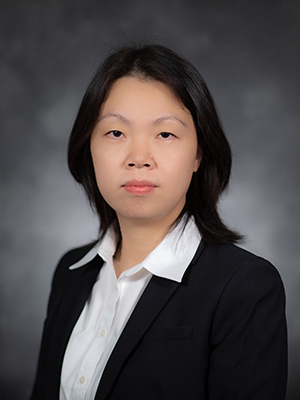
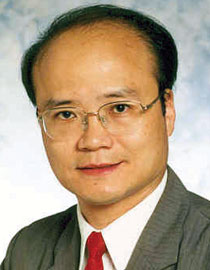
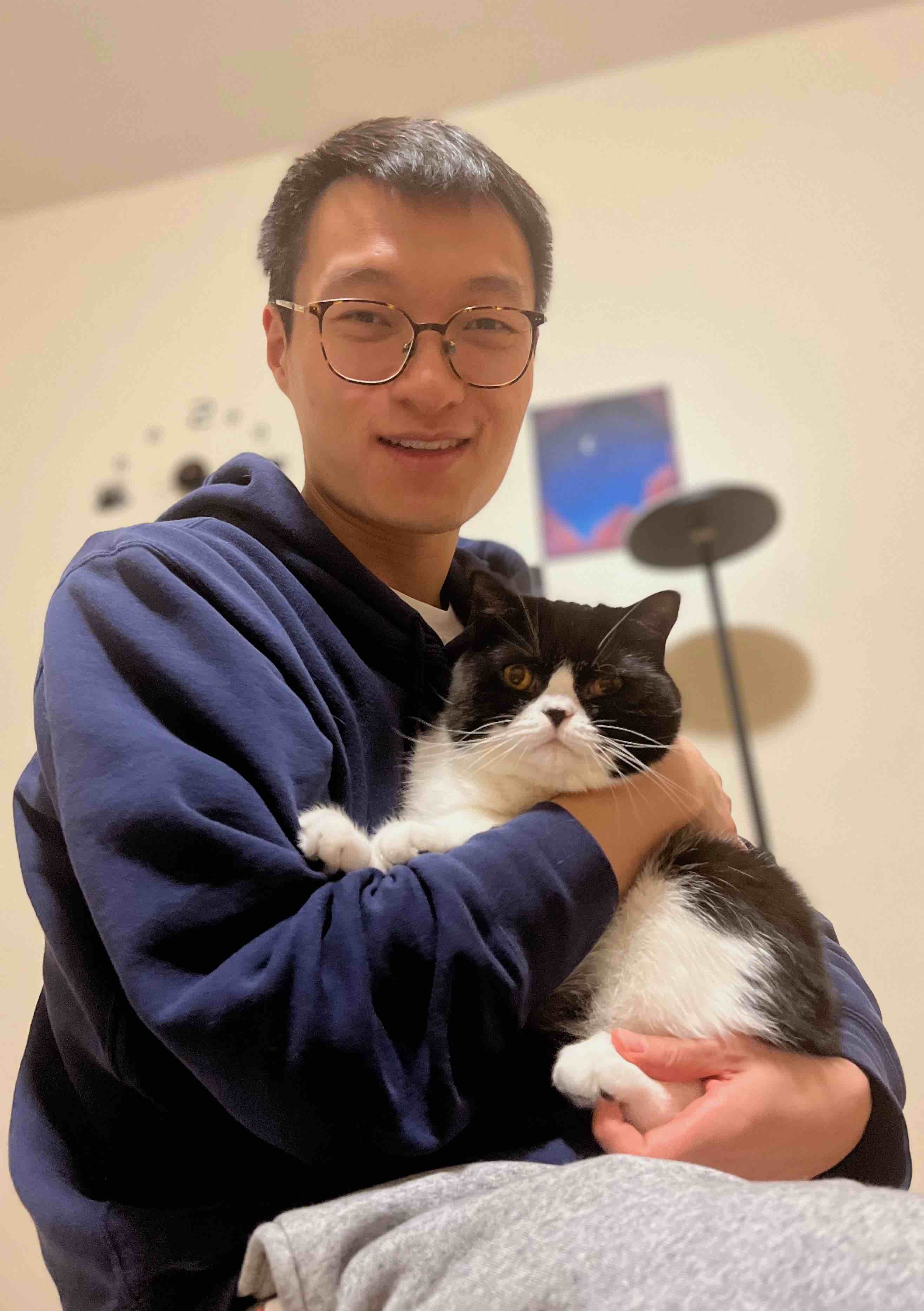
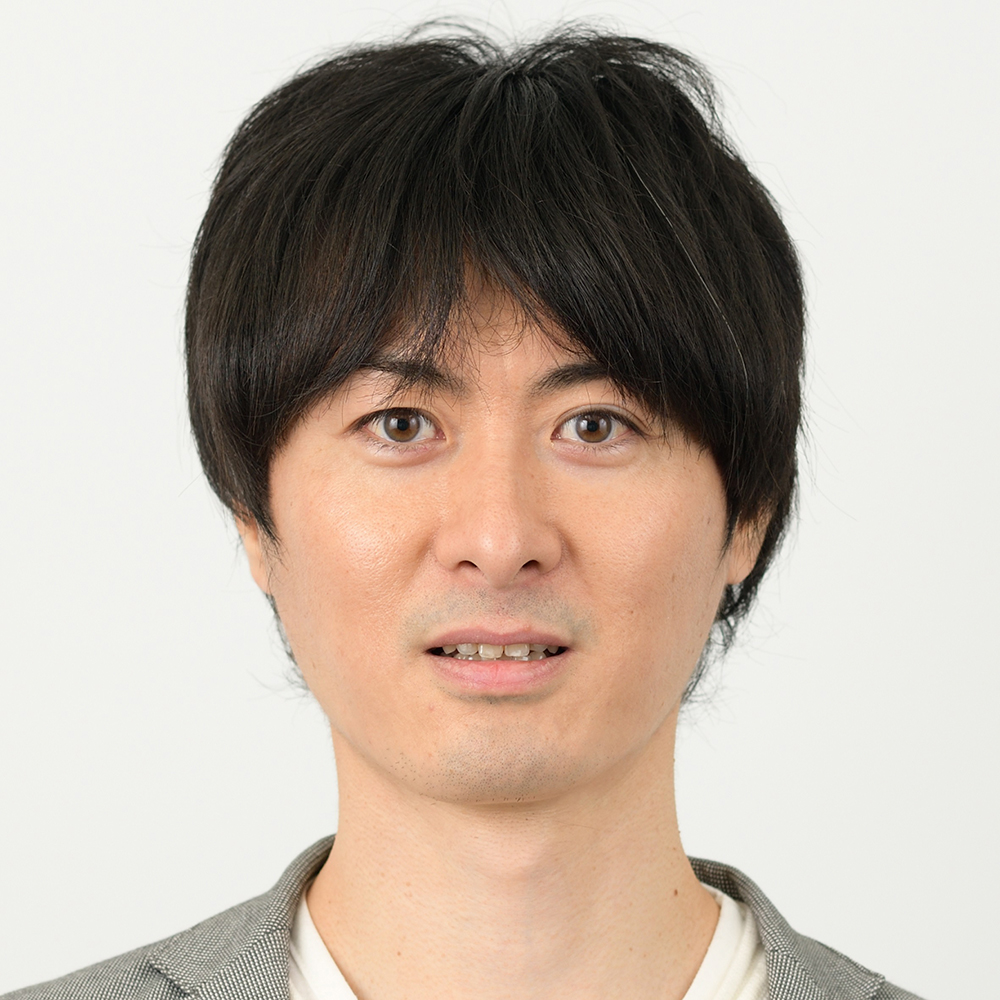
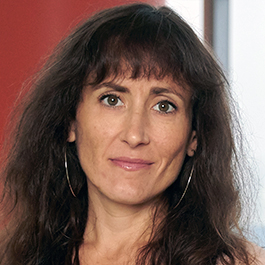
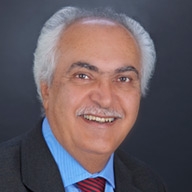
Dr. Richard Jiang is a Senior Lecturer (Associate Professor) at Lancaster University's School of Computing and Communications. His research focuses on Artificial Intelligence, Neurocomputing, Quantum AI, Privacy Computing, and Medical Computing. He has pioneered secure pattern recognition in encrypted domains and quantum neuromorphic computing. With over £1M in research grants from EPSRC and others, he has authored 100+ publications and supervised over 20 PhD students. Dr. Jiang's work includes the Face2Brain method for neurodegenerative assessment and explainable models for brain aging analysis. He contributes actively to academic committees, editorial boards, and conferences like the World Conference on eXplainable AI. His research spans ethical AI frameworks, quantum algorithms for medical imaging, and privacy-preserving biometric systems.
Dr. Jingjing Qiu is an Associate Professor in the Department of Mechanical Engineering at Texas A&M University (TAMU), leading the Advanced Materials & Manufacturing (AM²) Lab. Her research focuses on advanced manufacturing, nanomaterials, multifunctional composites, sustainable materials, energy harvesting, and healthcare applications. She holds a Ph.D. in Industrial & Manufacturing Engineering from Florida State University (2008), and M.S./B.S. degrees in Materials Science from Beihang University (2004/2001). Prior to academia, she gained 1 year of industrial experience as a Quality Engineer at SAIC Motor. Research interests include AI-driven nanomaterials synthesis, low-carbon manufacturing processes, and biomedical innovations such as drug delivery systems for brain tumors. The AM² Lab emphasizes interdisciplinary collaboration in materials science, data science, and sensor integration for energy and medical devices. Recent work highlights include AI-assisted microplastics removal, thermoelectric energy harvesting via graphene aerogels, and neuromorphic computing systems. Her team actively pursues postdoctoral and PhD candidates for research in energy/healthcare materials, requiring expertise in nanomaterials characterization (e.g., SEM, XPS, electrochemical techniques) and interdisciplinary problem-solving. Lab facilities support cutting-edge fabrication and testing of functional materials. Publications span over 15 years, with recent trends in sustainable manufacturing, soft robotics, and bio-inspired materials. Ongoing projects include DOE-funded initiatives on rare earth recycling and low-carbon ceramic production. No scientific awards are explicitly listed in the provided texts.
Xi Zhang is a Full Professor in the Department of Electrical and Computer Engineering at Texas A&M University . He is also the Founding Director of the Networking and Information Systems Laboratory. His academic career includes research fellowships at the University of Technology Sydney and James Cook University, as well as prior roles at AT&T Bell Laboratories and AT&T Laboratories Research. Education: B.S. and M.S. in Electrical Engineering & Computer Science, Xidian University, China M.S. in Electrical Engineering & Computer Science, Lehigh University, USA Ph.D. in Electrical Engineering-Systems, University of Michigan, USA Research Interests: His work focuses on Quality-of-Service (QoS) theory, 6G/Next-Generation Wireless Networks , Massive MIMO , Integrated Sensing and Communications (ISAC) , and Network Function Virtualization (NFV) . He has pioneered advancements in statistical delay/error-rate bounded QoS , AI-driven 6G architectures , and mURLLC (massive ultra-reliable low-latency communications) . Awards & Honors: IEEE Fellow (2014) for contributions to QoS theory in mobile wireless networks NSF Early Career Award (2004) Multiple Best Paper Awards (IEEE GLOBECOM, WCNC, ICC) Outstanding Faculty Award from Texas A&M (2020) Leadership Roles: He has held key positions as Technical Program Committee (TPC) Chair for major conferences (e.g., IEEE GLOBECOM 2011, IEEE ICDCS 2026) and serves as Editor for top-tier journals like IEEE Transactions on Communications and IEEE Transactions on Wireless Communications . Labs & Teams: He leads the Networking and Information Systems Laboratory , focusing on 6G mobile networks, ISAC systems, and AI-driven network architectures.
Dr. Jue (Grace) Xie is a Lecturer in the Department of Human Centred Computing at Monash University's Faculty of Information Technology. She is also a Senior Software Engineer and Research Fellow at Action Lab, with over 15 years of experience in applied research spanning software architectures, web systems, consumer health informatics, and conversational AI. Grace holds a PhD from Monash Faculty of Information Technology (2012) and has contributed to diverse interdisciplinary projects, including collaborations with Microsoft Research Asia and Monash research centers. Her teaching roles include Chief Examiner for units like FIT5183 Mobile and Distributed Computing Systems and Lecturer for Programming for Distributed Systems and Service-Oriented Computing . Research Interests Applied Conversational AI Human-Computer Interaction (HCI) Web Systems & Social Networks Knowledge Engineering Recent publications focus on AI-driven healthcare interventions, mental health support via chatbots, and stakeholder-inclusive design in aged care. Her work aligns with UN Sustainable Development Goals 3 (Good Health) and 9 (Innovation). Awards include the Future Women Leaders Conference 2019 . She is a Fellow of the Computer Society (IEEE) and the Association for Information Systems .
Zhu-Tian Chen is an Assistant Professor in the Department of Computer Science and Engineering at the University of Minnesota, Twin Cities, where he leads research in data visualization, human-computer interaction, and augmented reality. Prior to this, he held postdoctoral positions at Harvard University and UC San Diego, working with leading researchers in visual computing and interactive design. Ph.D. in Computer Science, Hong Kong University of Science and Technology B.Eng. in Software Engineering, South China University of Technology His research focuses on augmenting human intelligence through hybrid human-AI systems, particularly in everyday and outdoor environments. He specializes in designing intelligent AR interfaces, embedded visualizations, and language-oriented interactions for applications in sports analytics, education, and data analysis. His work integrates human-centered design with applied machine learning to create intuitive and effective visualization tools. The recent trend in his publications shows a strong emphasis on intelligent AR systems for dynamic scenes, LLM-based code generation interfaces, and real-time augmentation of sports videos using natural language and gaze-based interactions. His work frequently appears in top-tier venues such as IEEE VIS, ACM CHI, and UIST. Best Paper Award, ACM CHI'23 Best Short Paper Honorable Mention, EuroVis'23 Best Paper Honorable Mention, IEEE VIS'22 (twice) Certificate of Distinction and Excellence in Teaching, Harvard University Hong Kong Ph.D. Fellowship Dr. Chen actively mentors undergraduate, master’s, and PhD students, as well as visiting scholars and interns, and is building a new research lab focused on visualization for intelligent AR systems. He has served on program committees for major conferences including ACM CHI, IEEE VIS, and EuroVis, and has been invited to speak at institutions such as Apple, JP Morgan, and multiple universities worldwide. He also contributes to the academic community through grant reviewing for NSF and the Department of Energy. He leads research projects in intelligent AR systems for sports, language-oriented interactions with LLMs, and immersive data visualization, often in collaboration with institutions like Harvard, UC San Diego, and HKUST. His lab welcomes students and collaborators interested in visualization, HCI, and applied AI.
William W. Braham is the Andrew Gordon Professor of Architecture at the University of Pennsylvania’s Stuart Weitzman School of Design, where he also directs the Master of Science in Design – Environmental Building Design (MSD-EBD) program and the Center for Environmental Building + Design (CEBD). He previously served as Department Chair and Chair of the Faculty Senate, reflecting his longstanding leadership within the institution. His education includes a B.S.E. in civil and mechanical engineering from Princeton University, followed by a Master of Architecture and PhD in Architecture from the University of Pennsylvania. He also holds a Certificate in Traditional Chinese Architecture from Tsinghua University, underscoring his global perspective on sustainable design. Braham’s research lies at the intersection of architecture, energy, and ecological systems. His work applies systems ecology and building performance modeling to address climate change, energy efficiency, and urban sustainability. Key themes include responsive building envelopes, urban morphology, embodied carbon, and regenerative architecture. He has pioneered the use of emergy synthesis in architectural analysis and has led energy and carbon planning for institutions like the University of Pennsylvania Health System and the Chautauqua Institution. His recent publications reveal a strong focus on smart building technologies, thermal comfort modeling using AI, indoor air quality, and sustainable materials. Collaborations with the Thermal Architecture Lab and international partners highlight the interdisciplinary nature of his work. The articles span topics from blockchain-based environmental accounting to bioclimatic design pedagogy, indicating both scholarly depth and educational innovation. 2021 Best Paper Award, Building and Environment Fellow, American Institute of Architects (FAIA) Braham has advised numerous graduate students and researchers in environmental building design and urban sustainability. His research has been supported by collaborations with PennPraxis, DOE, and industry partners such as Daikin. He continues to lead high-impact research initiatives through the CEBD, including campus energy analysis and building energy modeling tools. He leads the Center for Environmental Building + Design, a hub for interdisciplinary research on energy, climate, and sustainable design. The center fosters collaborations across engineering, architecture, and environmental science, supporting innovative projects in urban metabolism, low-carbon materials, and smart building systems.
Haoyi Xiong is an active academic researcher in artificial intelligence, machine learning, and data science, with extensive publications in top-tier journals and conferences including IEEE TPAMI, NeurIPS, ICML, KDD, and AAAI. His work spans explainable AI, graph neural networks, diffusion models, remote sensing, and large language models. Research Interests: Explainable AI (XAI) and model interpretability Graph Neural Networks and contrastive learning Diffusion models and generative AI Medical and remote sensing image analysis Large language models and autonomous agents Learning to rank and web search His recent publications (2023–2025) show a strong trend toward self-supervised learning , model robustness , and integration of LLMs with structured data and knowledge graphs . He frequently collaborates with researchers from major tech and academic institutions. Scientific Awards: No explicit awards mentioned in the provided text. Advising and Grants: While no direct mention of students or grants, his role as a senior author on numerous papers suggests he advises graduate students and likely leads funded research projects in machine learning and AI. His work on frameworks like COLTR , GS2P , and MUSCLE indicates leadership in developing scalable AI systems. Labs and Teams: Though not explicitly stated, his frequent collaboration with Jiang Bian, Dejing Dou, and Dawei Yin suggests affiliation with a well-established AI research lab or industry-academia partnership focused on data mining, intelligent systems, and large-scale learning.
Nuno Miguel Fonseca Ferreira is a Full Professor at the Instituto Superior de Engenharia de Coimbra (ISEC), part of the Polytechnic of Coimbra, where he currently serves as President of the Scientific Council. His academic career spans over 25 years at ISEC, progressing from Assistant to Professor Coordenador Principal. He has held significant leadership positions including Vice-President of ISEC (2001-2005), Pro-President of the Polytechnic of Coimbra (2009-2010), President of ISEC (2010-2013), and Vice-President of the Polytechnic of Coimbra (2013-2017), where he was responsible for internationalization initiatives. His educational background includes a degree in Electrical Engineering from the University of Porto (1996), a Doctorate in Electrical Engineering from the University of Trás-os-Montes and Alto Douro (2006), and a Habilitation Title (Aggregation) from the same institution (2020). His research focuses on Robotic Systems, with specialization in cooperative robotic systems as evidenced by his Habilitation work. Professor Ferreira's research spans multiple domains of robotics and intelligent systems, with particular emphasis on multi-robot coordination, environmental applications, and medical robotics. His work bridges theoretical control systems with practical applications across diverse fields including forestry, healthcare, manufacturing, and education. He has developed innovative approaches to robotic manipulation, sensor integration, and human-robot interaction, often incorporating advanced techniques from artificial intelligence and machine learning. His recent publications demonstrate a strong trend toward practical applications of robotics in real-world environments, particularly in forestry maintenance, industrial automation, and medical applications. The research shows progression from theoretical control systems to applied robotics in challenging environments, with increasing integration of computer vision, deep learning, and collaborative systems. His work spans both fundamental robotics research and immediate industrial applications, reflecting a balance between academic inquiry and practical implementation. Professor Ferreira has supervised two doctoral theses and participated in numerous research projects with substantial funding. His leadership extends to coordinating 15 of the 33 national and international R&D projects he has participated in, demonstrating significant grant acquisition and management capabilities. His international collaborations through Erasmus+ and other European programs highlight his role in fostering global research partnerships. He is an integrated member of GECAD (Research Group in Engineering and Intelligent Computing for Innovation and Advanced Development), a Portuguese R&D unit classified as Excellent by the Portuguese Science and Technology Foundation. Additionally, he is a member of LASI (Associated Laboratory for Intelligent Systems), the Portuguese laboratory associated with Artificial Intelligence, connecting him to a broader national research ecosystem.
Kantaro Fujiwara serves as Associate Professor at the Graduate School of Medicine, The University of Tokyo, with concurrent appointments at the International Research Center for Neurointelligence (IRCN) and the Department of Mathematical Informatics, Graduate School of Information Science and Technology. He also manages the Data Science Core infrastructure for IRCN. His academic background includes a Ph.D. in Information Science and Technology from the University of Tokyo (2008), followed by postdoctoral research at the University of Tokyo (JSPS) and University of Cambridge, then assistant professorships at Saitama University and Tokyo University of Science before joining the University of Tokyo faculty. Dr. Fujiwara's research bridges computational neuroscience and neural data analysis through mathematical modeling of neural networks, development of neural data analysis methodologies, and exploration of brain-inspired machine learning. His work extends to biological information processing with specific applications in pancreatic beta cell modeling for diabetes research, establishing connections between theoretical frameworks and experimental neuroscience. His publication record (2017-2023) reveals consistent interdisciplinary contributions applying echo state networks, recurrence analysis, and nonlinear dynamics to neural data classification, physiological signal processing, and disease modeling. These works demonstrate strong integration of computer science, neuroscience, and biomedical engineering methodologies to solve complex neurobiological problems. As Data Science Core Manager at IRCN, he oversees computational infrastructure and software resources that enable advanced neurointelligence research across the University of Tokyo ecosystem, providing critical support for data-intensive neuroscience projects.
Ebru Turanoglu Bekar is a Senior Lecturer at the Department of Industrial and Materials Science, Chalmers University of Technology, specializing in Smart Maintenance and Production Systems. She contributes to the Production Service Systems & Maintenance research group. Research Interests: Total Productive Maintenance (TPM), Artificial Intelligence applications in manufacturing, Multi-Criteria Decision Making, Performance Measurement systems Recent Focus: Development of data-driven algorithms for predictive maintenance, integration of digital twins in industrial contexts Key Projects: Factory SensAI (2025–2028) - Data integration for AI in manufacturing Trustworthy Predictive Maintenance TPdM (2022–2025)
Brenna Argall is an Associate Professor at Northwestern University with joint appointments in the Departments of Computer Science, Mechanical Engineering, and Physical Medicine & Rehabilitation . She is also a Faculty Research Scientist at the Shirley Ryan AbilityLab , the nation’s premier rehabilitation hospital. Her research focuses on robotics autonomy, machine learning, and human rehabilitation , particularly in developing assistive and rehabilitation robotics that utilize shared control and interface-aware intelligence to enhance user autonomy. Education: Ph.D. in Robotics (2009), Carnegie Mellon University M.S. in Robotics (2006), Carnegie Mellon University B.S. in Mathematics (2002), Carnegie Mellon University Research Interests: Argall's work sits at the intersection of robotics, artificial intelligence, and rehabilitation . Key themes include trust-based control systems, dynamic autonomy allocation, and human-in-the-loop machine learning . Her lab, the Assistive & Rehabilitation Robotics Laboratory (argallab) , develops semi-autonomous wheelchairs, robotic arms, and adaptive control systems tailored to users’ physical and cognitive abilities. Projects emphasize customizable shared control, intent inference, and human-robot collaboration . Article Trends: Recent publications highlight advancements in shared autonomy, interface-aware robotics, and human-robot co-adaptation . Key areas include 7-DoF robot arm teleoperation, eye gaze tracking for control, high-dimensional body-machine interfaces, and trust-based dynamic control allocation , reflecting her lab’s focus on user-centric AI and rehabilitation technology . Scientific Awards: NSF CAREER Award (2016) Crain's Chicago Business 40 under 40 (2016) NSF Convergence Accelerator Phase 1 & 2 Awards (2022, 2024) AIMBE College of Fellows (2023) Office of Naval Research (ONR) Grant Advising & Grants: Argall advises students in the Masters of Science in Robotics program and has secured significant funding from NSF, NIH, and ONR for projects on self-driving wheelchairs, intent disambiguation, and trust-aware autonomy . Labs & Teams: As founder and director of the argallab , she leads a multidisciplinary team at the Shirley Ryan AbilityLab . The lab’s mission is to advance human ability through robotics autonomy , focusing on motor-impaired users and human-robot co-adaptation .
Chih-Chun Wang is a Professor at the Elmore Family School of Electrical and Computer Engineering , Purdue University, with additional leadership roles as Associate Head for Facilities, Planning, and Staff. He earned his Ph.D. in Information Sciences and Systems from Princeton University in 2005, following an M.S. (2002) and B.S. (1999) in Electrical Engineering from Princeton and National Taiwan University, respectively. Research Interests: His work spans Network coding (graph-theoretic capacity, wireless network coding, feedback mechanisms) Coding theory (LDPC codes, Reed-Solomon decoding, iterative algorithms) Information theory (multi-user detection, network information theory) Signal processing (turbo equalization, space-time codes) Control theory (optimal stopping theory) Scientific Contributions: He has published extensively on Age-of-Information (AoI) minimization, low-latency coding, and multi-hop relay optimization. His research trends include Integrating machine learning with network coding Wireless security for Beyond-5G systems Distributed storage networks with intelligent helper selection Delay-constrained communication protocols Awards: Recognized as an IEEE Fellow in 2024 for contributions to network coding and information theory. Teaching: He teaches undergraduate courses like ECE301: Signals and Systems and graduate courses such as ECE639: Error Control Coding , with a focus on iterative decoding, LDPC codes, and network information theory. Advising: Supervised 15+ Ph.D. students, including current advisees Pin-Wen Su (delay-oriented coding), Wonjun Lee (cyber-physical systems), and Giles Bischoff (low-latency systems). Former students hold prominent roles at institutions like Google, Meta, and Intel.
Guillaume Pierre is a Professor and research leader at Univ Rennes, affiliated with Inria, CNRS, and IRISA, where he leads the Magellan research team. He is based at the Institute of Science and Technology of Information and Communication (ISTIC), Department of Computer Science and Electronics. His research focuses on fog computing, cloud computing, and large-scale distributed systems, with applications in scalable web hosting and edge intelligence. Research Interests: Fog and Edge Computing Cloud Computing and Resource Management Scalable Web Application Hosting Peer-to-Peer and Decentralized Systems Stream Processing and Kubernetes Orchestration Elasticity and Energy Efficiency in Distributed Environments His recent publications highlight a strong trend in geo-distributed systems, particularly focusing on Kubernetes cluster federation, fog-based environmental monitoring, and elasticity in stream processing. His work bridges theoretical advances with practical implementations in real-world fog and cloud infrastructures. Scientific Awards: Best Paper Award, IEEE International Symposium on Applications and the Internet (2005) Best Paper Award, IEEE International Conference on Cloud Engineering (IC2E 2014) Guillaume Pierre has advised numerous PhD students, many of whom now hold positions at Google, Amazon, Ericsson, and Ansys. He has coordinated major research projects such as the H2020 FogGuru initiative and the DiPET project on distributed data stream processing. His work is supported by EU funding and institutional collaborations. Labs and Teams: He leads the Magellan research team at the INRIA/IRISA lab, which is at the forefront of innovation in fog and cloud computing technologies.
Hamidreza Marvi is an Associate Professor in the School for Engineering of Matter, Transport and Energy at Arizona State University , with additional affiliations as a Senior Global Futures Scientist . His work bridges bio-inspired robotics , soft robotics , and mechanics of animal locomotion . Education : Ph.D. in Mechanical Engineering (Georgia Tech, 2013), M.S. in Biomedical Engineering (Sharif University, 2007), M.S. in Mechanical Engineering (Clemson, 2009), B.S. in Mechanical Engineering (Iran University of Science and Technology, 2004). Marvi’s research focuses on biological systems interacting with solid, granular, and fluidic environments , translating these insights into bio-inspired robotic systems for search-and-rescue, medical, and planetary exploration. His work has been featured in Science , PNAS , and popular media like the New York Times and BBC . Recent publications highlight trends in magnetic microrobotics , soft robot control , and locomotion in granular media , with applications in medical devices, underwater inspection, and space exploration. His BIRTH Lab develops programmable interfacial structures and adaptive locomotion systems. Scientific Awards : KEEN Professorship (2017), Peebles Award (2015), Sigma Xi Best Ph.D. Thesis (2014), TechSTAR Award (2012), Emerald Publishing Literati Network Award (2011). Marvi has supervised teams for NASA competitions, co-organized robotics workshops, and served as a reviewer for journals like Nature-Scientific Reports and conferences including IEEE-IROS. His teaching portfolio includes courses in system dynamics, robotic control, and applied projects .
Soroosh Sorooshian is a Professor at the Samueli School of Engineering , University of California, Irvine, with joint appointments in Civil and Environmental Engineering and Earth System Science . He serves as Founding Director of the Center for Hydrometeorology and Remote Sensing (CHRS) and holds the Samueli Endowed Chair in Engineering . His expertise spans hydrometeorology, climate-water interactions, remote sensing applications, and water resource management in arid regions. Education : Ph.D. in Engineering (1978), Engineer Degree in Systems Engineering (1977), M.S. in Operations Research (1973), B.S. in Mechanical Engineering (1971). Leadership & Affiliations : Member of US National Academy of Engineering , International Academy of Astronautics , and multiple scientific bodies (AAAS, AGU, AMS, IWRA). Former advisor to NASA, NOAA, and UNESCO initiatives. Recent research focuses on machine learning integration for hydrological modeling , satellite precipitation product development , and climate change impact assessments . Key trends include deep learning for bias correction , multi-sensor precipitation fusion , and atmospheric river hydrology in California. Awards include the AGU Horton Medal , NASA Distinguished Public Service Medal , and Prince Sultan Bin Abdulaziz International Water Prize . He consults on urban flooding and surface hydrology challenges. Scientific Honors : Chinese Academy of Sciences Einstein Professorship (2014) UNESCO Great Man-Made River Water Prize (2007) AMS Walter Orr Roberts Lecturer (2009) Multiple Distinguished Educator Awards Advisory Roles : Served on committees for NASA, DOE, and World Climate Research Programme's Hydrology Commission.