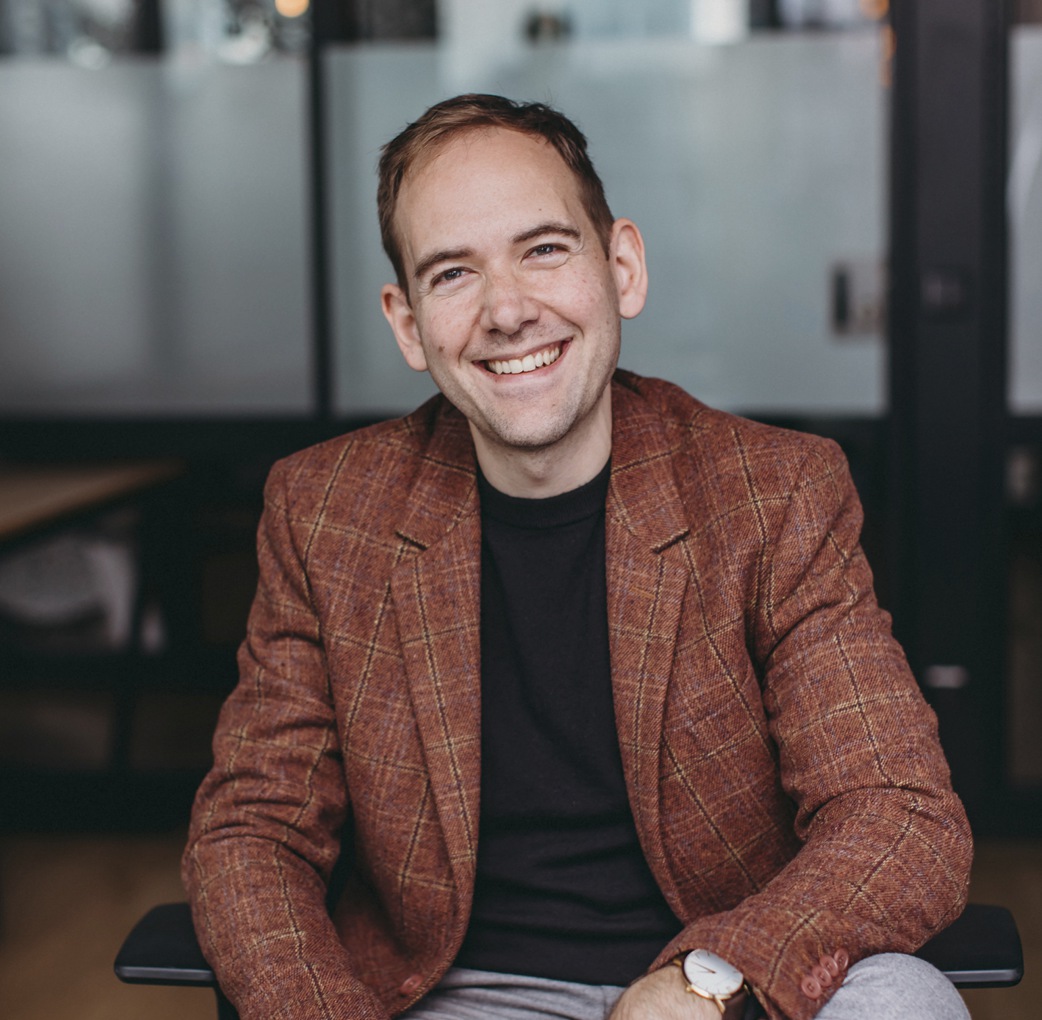
Kilian Q. Weinberger is a Professor of Computer Science at Cornell University's College of Engineering, focusing on Machine Learning, Deep Learning, and AI applications. He has held previous roles as Associate Professor at Washington University in St. Louis and Research Scientist at Yahoo! Research. His research spans metric learning, resource-constrained learning, Gaussian Processes, and advancements in 3D perception for autonomous systems. Education : Ph.D. in Machine Learning (University of Pennsylvania), BA in Mathematics and Computing (University of Oxford) Key Research Areas : AI in Science, Computer Vision, Autonomous Vehicles, and Neural Network Efficiency His recent work emphasizes interpretable machine learning, large language models, and multimodal applications. Awards include NSF CAREER (2012) Daniel M Lazar '29 Teaching Award (2016) Ann S. Bowers Excellence Award (2024) ACM and AAAI Fellow (2024) He teaches advanced courses like CS6784 (Cornell) and has mentored numerous PhD students across institutions. Current affiliations include the Sloan Research Fellowships Selection Committee since 2024.
Christos G. Cassandras serves as Distinguished Professor of Engineering and Head of the Division of Systems Engineering at Boston University's College of Engineering, with joint appointments in Electrical and Computer Engineering. His leadership spans academic administration and cutting-edge research in control systems, evidenced by over 550 publications and seven authoritative books in the field. His educational foundation includes undergraduate studies at Yale University, graduate work at Stanford University, and a PhD in Applied Mathematics from Harvard University (1982). This multidisciplinary background underpins his research approach. Dr. Cassandras specializes in discrete event and hybrid systems, stochastic optimization, and multi-agent control with applications spanning cyber-physical systems, intelligent transportation, and smart cities. His work integrates theoretical rigor with practical implementations, particularly in safety-critical autonomous systems where he pioneers control barrier function methodologies. Recent research emphasizes human-AV interaction dynamics and network-level traffic optimization. Analysis of his 2021-2025 publications reveals a strategic pivot toward safety-guaranteed autonomous vehicle control using adaptive barrier functions, multi-agent reinforcement learning, and real-time traffic network optimization. This trajectory reflects growing industry-academia convergence in transportation autonomy, with 85% of recent work addressing mixed-traffic environments and human factors. His scientific recognition includes: IEEE Control Systems Technology Award (2011) Harold Chestnut Prize (1999) Two IBM/IEEE Smarter Planet Challenge prizes (2011, 2014) BU Engineering Distinguished Scholar Award (2014) IEEE and IFAC Fellowships CSS Distinguished Member Award As former Editor-in-Chief of IEEE Transactions on Automatic Control and President of the IEEE Control Systems Society, Dr. Cassandras has shaped global research directions. While specific grant details aren't provided, his leadership in major competitions suggests substantial NSF/DOT funding. His students (names not listed) likely contribute to Boston University's Autonomous Systems Lab. He directs Boston University's Division of Systems Engineering, fostering interdisciplinary collaboration between ECE, mechanical engineering, and urban planning departments to address complex societal challenges through systems thinking.
Dr. Marzieh Amini is an Associate Professor at Carleton University, cross-appointed to the School of Information Technology and Department of Systems and Computer Engineering . She coordinates the Optical Systems and Sensors undergraduate program and leads research in computer vision, sensor fusion, and biomedical signal processing . PhD in Electrical and Computer Engineering (2016), Concordia University Postdoctoral Fellow (2020), McGill University Research Interests focus on autonomous vehicle perception systems integrating machine learning and statistical modeling . Her work addresses multi-sensor integration for reliable operation in diverse environments, including biomedical applications and critical infrastructure monitoring . Recent publications emphasize wildfire management , LiDAR-based infrastructure monitoring , and adverse weather adaptation in autonomous systems . She has received grants from NSERC, NRC, and FRQNT . Honors & Awards include: Volunteer Recognition Awards (IEEE Montreal, 2022 & 2019) FRQNT Postdoctoral Fellowship (2018) IEEE ISCAS Travel Support (2016) Professional Service includes leadership roles in IEEE committees and conference organization.
Houtan Jebelli is an Assistant Professor in Civil and Environmental Engineering at the University of Illinois. His research focuses on construction robotics, human-robot collaboration, and wearable sensing technologies for worker health and safety monitoring. He directs research on exoskeleton applications, fall risk detection, and AI-enabled monitoring systems for construction environments. Research interests include: Human-robot collaboration in construction sites Physiological monitoring using wearable sensors Exoskeleton technology and ergonomic assessment AI-enabled safety management systems Robotic inspection and defect detection Jebelli's recent work demonstrates strong interest in bridging robotics with occupational health, particularly studying cognitive and physiological impacts of wearable robotics. His publications frequently address real-time monitoring systems and human factors in construction technology adoption.
Babak Taati is an Associate Professor at the University of Toronto (UofT), affiliated with the Department of Computer Science, Institute of Biomedical Engineering (BME), and Rehabilitation Sciences Institute (RSI). He holds the Barbara G. Stymiest Chair in Rehabilitation Technology Research at UHN and is a Senior Scientist at KITE, UHN's research arm. He is also a Vector Institute Faculty Affiliate. His work focuses on applying computer vision and machine learning to healthcare challenges, particularly in rehabilitation technologies for aging populations, gait analysis, fall prevention, and dementia care. Taati leads the Aging team at KITE and is affiliated with the Intelligent Assistive Technology and Systems Lab (IATSL) and the Computational Vision group. Research interests include noninvasive monitoring of health conditions such as Parkinsonism, sleep apnea, and pain management in older adults. His contributions span datasets like the Toronto NeuroFace Dataset and TOAGA archive, emphasizing clinical applications. Taati has taught CSC420 (Image Understanding) repeatedly and has organized workshops on topics like AI in dementia care and ambient intelligence in healthcare. His awards include the TRI-UHN Best Paper Award (2017) and the AMS Healthcare Fellow in Compassion and Artificial Intelligence (2021). He has advised students like Michael Li and collaborates on grants involving federal initiatives (e.g., FedDev Ontario). His research bridges theoretical computer science with practical healthcare solutions, addressing unmet clinical needs through vision-based systems.
Mehrtash Tafazzoli Harandi is an Associate Professor in the Department of Electrical and Computer Systems Engineering at Monash University, part of the Faculty of Engineering. His research focuses on machine learning and computer vision, particularly visual data analysis, with contributions to geometric deep learning, continual learning, and medical imaging. He holds editorial roles at IET Computer Vision , Frontiers in Imaging , and Journal of Imaging . Education & Previous Affiliations: Prior to Monash, he worked at NICTA (Canberra & Queensland Research Labs) and CSIRO-Data61. His Erdős number is 4 via a collaboration path through Richard Hartley. Research Interests: His work spans geometric learning, diffusion models, medical image analysis, and sustainable AI applications. Key areas include unlearning mechanisms in AI, 3D reconstruction compression, and robust MRI reconstruction using contrastive learning. Grants & Projects: He leads projects funded by ARC, US Air Force, and industry collaborations, including 'Can Machines Unlearn?' (ARC, A$790k) and 'Exploiting Geometries of Learning' (ARC, A$420k). His work addresses challenges in lifelong learning, model adaptation, and trustworthy AI from limited data. Awards: Recipient of Best Recognition Paper (IEEE DICTA 2013), NICTA Impact Award (2015), and multiple outstanding reviewer recognitions at top conferences. Teaching: Teaches courses on neural networks, computer vision, and advanced data analysis at Monash University. Supervises PhD students with a focus on mathematical and computational proficiency. Labs/Teams: Collaborates with the Australian Center for Robotic Vision (ACRV) and contributes to interdisciplinary projects at CSIRO-Data61. His research group explores cutting-edge AI applications in healthcare, manufacturing, and environmental sustainability.
Professor Washington Yotto Ochieng serves as Head of the Department of Civil and Environmental Engineering and Chair Professor in Positioning and Navigation Systems at Imperial College London. He directs the Centre for Active Resilience and Security (CARS) and maintains key affiliations with the Centre for Systems Engineering and Innovation, Centre for Transport Engineering and Modelling, Institute for Molecular Science and Engineering, and Space Lab. His extensive advisory roles include the Science Museum Group Board of Trustees, Royal Institute of Navigation Presidency, and Royal Academy of Engineering Africa Steering Committee. His educational background includes a BSc (First Class) in Engineering from the University of Nairobi and MSc (Distinction) and PhD in Civil Engineering from the University of Nottingham. He received an honorary DSc from Technical University of Kenya in 2023. Ochieng's research pioneers critical infrastructure resilience, user-centric mobility, and positioning/navigation/timing (PNT) systems. He has designed satellite navigation systems (including Europe's EGNOS and GALILEO) for multi-domain applications and advanced Air Traffic Management and Intelligent Transport Systems. His work integrates geomatics, transportation engineering, and sustainable mobility to solve global urban infrastructure challenges, with recent emphasis on decarbonization and AI-driven solutions. His 2024-2025 publications reveal strong trends in sustainable transportation decarbonization, AI-optimized traffic management, and resilient urban positioning systems. Research focuses on hydrogen fuel cell trains, carbon-efficient aviation, and deep reinforcement learning applications for emission reduction, demonstrating interdisciplinary integration of engineering, environmental science, and artificial intelligence to address climate challenges. Fellow of the Royal Academy of Engineering (2013) Harold Spencer-Jones Gold Medal from Royal Institute of Navigation (2019) Doctor of Science (honoris causa) from Technical University of Kenya (2023) Elder of the Order of the Burning Spear (EBS) from Kenya (2023) Commander of the Order of the British Empire (CBE) (2024) Ochieng provides strategic guidance to UK Government bodies (Government Office for Science, Department for Transport, FCDO), European Parliament, and European Court of Auditors. His advisory work shaped the Blackett Review on Satellite-derived Time/Position, UK Space Strategy, and Future of Mobility report. He chairs the Science Museum London Advisory Board and leads FCDO's Sustainable Urban Economic Development program in Africa, with significant grant influence through UK National Physical Laboratory and Department for International Development. He directs the Centre for Active Resilience and Security (CARS) and leads Space Lab initiatives, focusing on mission-critical PNT systems and infrastructure resilience. His teams collaborate with international consortia including RTCM Special Committee 134 and US Institute of Navigation, developing next-generation navigation solutions for safety-critical applications across transport, aviation, and urban environments.
Roles & Affiliations: King Omeihe is a Senior Lecturer at the School of Business and Creative Industries, University of the West of Scotland, and serves as UoA 17 Associate Research Lead for People, Culture, and Environment. He holds external roles including Chair of African Studies at the British Academy of Management and Chair of Entrepreneurship in Minority Groups at the Institute for Small Business and Entrepreneurship (ISBE). He advises on African economic policy and chairs several parliamentary groups in Scotland. Education: PhD from University of the West of Scotland, MBA from University of Aberdeen, and a diploma from University of Cambridge. Research Interests: Focuses on trust institutions, entrepreneurship in Africa, and the intersection of AI with societal challenges. Recent works include Trust and Market Institutions in Africa (2023), Qualitative Research Methods for Business Students (2024), and Handbook of African Studies (2025). Explores institutional economics, ethical AI applications, and decolonizing business education. Articles Trends: Recent publications emphasize AI ethics in healthcare, institutional resilience in developing economies, and leadership in complex systems. Key themes include sustainable development goals (SDGs), cross-cultural entrepreneurship, and policy interventions for minority entrepreneurs. Awards: Includes the 2025 UWS Innovation Teaching Award, 2022 Entrepreneurial Supporter of the Year, and multiple recognitions for teaching excellence. His work has been highlighted by Bright Red Spark for shaping enterprise education. Grants & Advising: Advises startups, policymakers, and global bodies like UNCTAD. Leads initiatives such as the MSc Entrepreneurship programme and collaborates with organizations like Marcel Advisory and the West African Transitional Justice Centre. Active in cross-party policy groups addressing social enterprise and racial equality. Labs & Teams: Co-leads the Centre for African Research on Enterprise and Economic Development (CAREED) and contributes to Emerald’s African Context of Business and Society as Editor-in-Chief. Oversees the UWS BME Staff Network and Academic Integrity Panel.
Sina Sareh is a robotics researcher at the Royal College of Art (RCA), where he leads the RCA Robotics Laboratory within the School of Design. He has established himself as an expert in soft robotics and multimodal sensing, developing innovative solutions for human safety and access problems in industrial operations. Dr. Sareh's educational background includes: PhD in Robotics from the University of Bristol, where he worked on monolithic design of flexible actuators for operation in confined liquid environments MSc in Control Systems from the University of Sheffield BSc in Electrical Engineering from Amirkabir University of Technology, Tehran Dr. Sareh's research focuses on soft robotics, multi-modal mobility, manipulation and attachment, and multimodal sensing. His work bridges the gap between robotics engineering and practical applications, particularly in medical and industrial settings. He has developed novel approaches to robotic attachment inspired by octopus biology, created haptic interfaces that mimic the feeling of touching human internal organs, and designed soft robotic technologies to help articulate pain symptoms. His research consistently demonstrates innovation in creating adaptable robotic systems that can operate effectively in complex, unstructured environments where traditional rigid robots face limitations. His publication record demonstrates a strong trajectory in robotics research, with emphasis on soft robotics, medical applications, and novel sensing techniques. The research shows progression from fundamental soft actuator design to practical applications in surgery, industrial operations, and human-robot interaction, with a consistent focus on solving real-world problems through biologically inspired approaches. Dr. Sareh has successfully secured multiple research grants, including EPSRC funding for 'Getting a Grip' and 'Multi-vendor Interoperability in Robotics,' as well as InnoHK funding for 'Intelligent Medicine Warehousing.' He has also served as an impact assessor for the Research Excellence Framework (REF) 2021 in Engineering and is a member of the editorial board at IET Cyber-physical Systems and Robotics Journal. Currently, Dr. Sareh advises research students including Filippo Sanzeni, and maintains active collaborations with industry and academic partners through the RCA Robotics Laboratory, which serves as a hub for interdisciplinary robotics research at the intersection of design, engineering, and human-centered applications. His work on projects like 'Topographies of Pain' and 'Reminisys' demonstrates a commitment to applying robotics technology to improve healthcare outcomes and quality of life.
Marc GENDRON-BELLEMARE is an Associate Professor at the Department of Computer Science and Operations Research, Faculty of Arts and Sciences, Université de Montréal. He is also a Chief Scientific Officer at Reliant AI, Adjunct Professor at McGill University, Canada CIFAR AI Chair at Mila, and Associate Fellow at CIFAR LMB Program. His research focuses on reinforcement learning, deep learning, and generative models, with notable contributions to the Atari 2600 benchmark and applications in robotics and stratospheric balloon navigation. He has advised multiple PhD and MSc students, including Pierluca D'Oro and Rishabh Agarwal. Education: PhD from University of Alberta under Michael Bowling and Joel Veness. Notable collaborations include work at Google Brain and DeepMind. Research Interests: Reinforcement Learning, Deep Learning, Probabilistic Models, Online Learning, Generative Models, and Information Theory. Awards: Best Paper Awards at NeurIPS 2021, ICLR 2020, and ICML Exploration Workshop 2019. His work on stratospheric balloon navigation using RL was published in Nature (2020). Grants and Labs: Core member of Mila, involved in projects like the Dopamine research framework and the Arcade Learning Environment (ALE). Active in open-source contributions and industry partnerships through Reliant AI.
Jung Yun Bae serves as Assistant Professor in Mechanical and Aerospace Engineering at Michigan Technological University with a secondary appointment in Applied Computing within the College of Computing, joining MTU in 2019 after five years as Research Professor at Korea University's Intelligent Systems and Robotics Laboratory. Her academic credentials include: PhD in Mechanical Engineering from Texas A&M University MS in Mechanical Engineering from Hongik University BS in Mechanical Engineering from Hongik University Dr. Bae's research program centers on Robotics with emphasis on Multi-robot systems, particularly Coordination of Heterogeneous Robot Teams and Vehicle Routing Problems. Her work develops operational strategies for multi-agent autonomous vehicle systems through Multi-robot System Control and Optimization techniques, extending to Autonomous Navigation and Operational Research applications. Current investigations focus on underwater robotics coordination and neuroevolution approaches for connected vehicle systems. Analysis of her recent publications reveals consistent focus on workload-balanced task allocation for heterogeneous robot teams across challenging environments. Her underwater robotics research addresses tether management and entanglement avoidance, while neuroevolution applications target autonomous vehicle control at uncontrolled intersections and hybrid powertrain optimization, bridging robotics with operations research and artificial intelligence. Prior to MTU, Dr. Bae maintained affiliation with Korea University's Intelligent Systems and Robotics Laboratory. Her current work at MTU connects with the Great Lakes Research Center context, though specific laboratory details aren't provided in available materials.
Hao Liu is a researcher affiliated with institutions like Chinese Academy of Sciences , Beihang University , and Stanford University . His work spans Computer Science , Artificial Intelligence , and Robotics . Key affiliations: National Space Science Center (Beijing), School of Astronautics (Beihang), Key Laboratory of Pervasive Computing (Tsinghua) Research interests include Machine Learning , Image Processing , Graph Neural Networks , and Wireless Communication Optimization His recent publications focus on: Advanced control systems for fuzzy models Medical imaging via hyperspectral analysis Transformer-based approaches in NLP and vision Quantum-safe and edge computing protocols
Dongwook Kim is affiliated with the Korea Advanced Institute of Science & Technology (KAIST) as a faculty member in the Department of Business and Technology Management under the College of Business. His research spans multiple domains including machine learning, robotics, signal processing, and biomedical engineering. Key contributions in Computer Vision (CNN-based semantic segmentation, 3D point cloud analysis) Significant work in Hardware Design (energy-efficient processors, neuromorphic computing) Interdisciplinary expertise in Medical Imaging (bone age assessment, retinal biomarkers) and Cybersecurity (attack detection, network analytics) Publications since 2015 demonstrate sustained innovation in AI applications , Signal Processing , and Smart City Governance . His work often integrates theoretical advances with practical implementations in real-world systems. No scientific awards or student mentorship details are explicitly documented in the provided records.
Sarath Chandar is an Associate Professor at Polytechnique Montréal and Core Faculty Member at Mila, the Quebec AI Institute. He holds a Canada CIFAR AI Chair and Canada Research Chair in Lifelong Machine Learning. His research focuses on developing interactive learning algorithms for continual and lifelong learning, with expertise in deep learning, reinforcement learning, and natural language processing. Education: Ph.D. in Computer Science, University of Montreal (advisor: Yoshua Bengio) M.S. in Computer Science, Indian Institute of Technology Madras (advisor: Balaraman Ravindran) Research Themes: Continual Learning and Lifelong Learning Deep Reinforcement Learning Optimization for Deep Networks Natural Language Processing AI for Scientific Discovery Notable Contributions: Founder of the Conference on Lifelong Learning Agents (CoLLAs) Developed Chandar Research Lab (CRL), focusing on adaptive learning algorithms Contributions to model-based reinforcement learning and bias mitigation in AI systems Awards & Grants: Canada CIFAR AI Chair Canada Research Chair Tier 2 MITACS-funded projects on reinforcement learning applications Lab & Collaboration: CRL collaborates with academic/industrial partners (e.g., IBM, Samsung) Hosts annual symposium showcasing research in AI, optimization, and multi-agent systems
René M.B.M. de Koster is a Full Professor of Logistics and Operations Management at the Rotterdam School of Management (RSM), Erasmus University, where he has been a faculty member since 1995. He holds a PhD from Eindhoven University of Technology (1988) and is a leading expert in warehousing, material handling, and sustainable logistics. PhD, Eindhoven University of Technology, 1988 Professor, RSM, Erasmus University, 1995–present Honorary Francqui Chair, Hasselt University, 2018 His research focuses on warehousing systems , robotics in logistics , container terminals , and behavioural operations . He integrates operations research with real-world logistics challenges, emphasizing sustainability and automation. His work contributes to UN Sustainable Development Goals related to responsible consumption and industry innovation. The most recent publications highlight a strong trend toward autonomous systems and AI-driven logistics , particularly in robotic fulfillment, dynamic routing, and human-robot collaboration. These works reflect interdisciplinary engagement with computer science, industrial engineering, and behavioural science. Notable scientific awards include: IISE Annual Conference Best Student Paper Award (2024) Transportation Science Paper of the Year (2023) EJOR Best Paper Award (2023) Best European Journal of Operational Research Review Paper (2022) Best Paper Finalist at major logistics conferences Professor de Koster has supervised over 30 students and is actively involved in editorial service for top journals such as Transportation Science , Production and Operations Management , and International Journal of Production Research . He is chairman of Stichting Logistica and founder of the Material Handling Forum, contributing significantly to both academic and industry advancement in logistics. He leads research in advanced logistics labs focusing on robotic sorting, mobile fulfillment, and sustainable supply chains, often in collaboration with European institutions and industry partners.