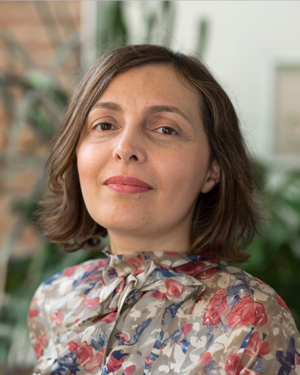
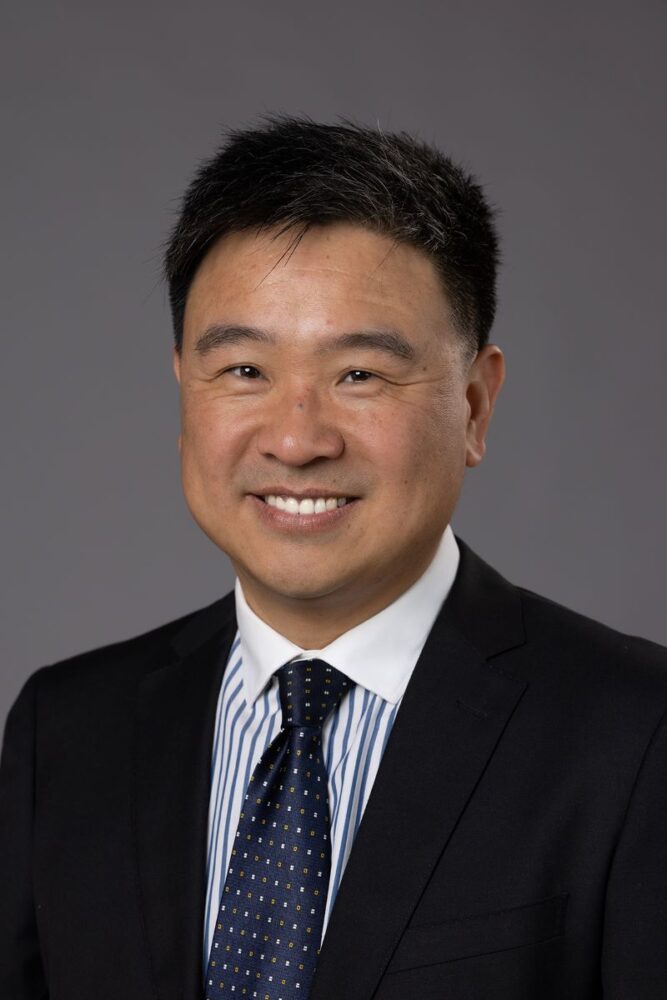
Dr. Juliana Kurniadi is a Research Fellow at the Karlsruhe Institute of Technology (KIT), specializing in functional fibers and textile cosmetics. She leads projects focusing on advanced material characterization, sustainable textile processing, and AI-driven solutions for material analysis. Key roles: Project Leader Institution: KIT Her research integrates machine learning with textile science, particularly in animal fiber identification and eco-friendly finishing techniques. Ongoing projects include: Artificial Intelligence for automated fiber identification Antifelting hydrogel coatings for wool Formaldehyde-free textile treatments Publications highlight innovative approaches to material science and environmental sustainability. She actively collaborates on interdisciplinary teams to develop next-generation textile technologies.
Prof. Wolfgang Wiechert is a Universitätsprofessor at Forschungszentrum Jülich GmbH, leading the Computational Systems Biotechnology group within the Institute of Bio- and Geosciences (IBG-1). His research focuses on integrating computational methods with experimental biotechnology to optimize bioprocesses, particularly in metabolic engineering and systems biology. Key areas include metabolic flux analysis, high-throughput screening, and Bayesian statistical methods for process optimization. Research interests span Bioprocess design and scale-up (e.g., itaconate production, fungal cultivation) Automated microbioreactor systems and robotic workflows Development of computational tools for metabolic modeling (e.g., hopsy, pyFOOMB) Application of machine learning in bioprocess analytics Recent publications emphasize Bayesian approaches for flux inference, strain characterization automation, and integration of omics data with process analytics. Collaborations span industries and academic partners, driving innovations in sustainable biomanufacturing and enzyme production systems.
Prof. Dr.-Ing. habil. Stefanie Reese is a Universitätsprofessorin at the Chair and Institute of Applied Mechanics (Lehrstuhl und Institut für Angewandte Mechanik) at RWTH Aachen University. Her research focuses on computational mechanics, material modeling, and multiscale analysis with applications in polymers, biomechanics, and metamaterials. She leads projects involving advanced numerical methods like FE-FFT-based homogenization, physics-informed machine learning, and constitutive modeling of complex materials. Her work integrates interdisciplinary approaches, combining continuum mechanics with data-driven strategies to address challenges in additive manufacturing, vascular tissue engineering, and smart material systems. Key areas include damage mechanics, viscoelasticity, and thermo-mechanical coupling in polymers and composites. She collaborates on experimental validation, particularly in polymer crystallization kinetics and biohybrid implant development. Recent studies explore in-silico models for in-stent restenosis, predictive frameworks for tissue maturation, and reduced-order modeling techniques for modular structures. Her lab emphasizes bio-inspired design principles and novel material characterization methods, with a focus on real-time simulation tools for engineering applications.
Assoc. Univ. Dr. Carmen BĂRBAT is an Associate Professor at the Department of Social Assistance within the Faculty of Sociology and Psychology at the West University of Timișoara. She has been teaching since 2003, coordinating distance learning programs and the Romanian-German double degree in social work with Brandenburg Technical University Cottbus-Senftenberg. Her academic background includes medicine from the University of Medicine and Pharmacy Timișoara (2009) and studies in social assistance and theology at the Albert-Ludwig University in Freiburg, Germany. Her research focuses on integrative community therapies, bioethics, socio-medical assistance, addiction theory, and palliative care. Notable contributions include work on palliative care psychosocial dynamics, environmental education in industrial pollution contexts, and drug abuse epidemiology among youth. She has authored/co-authored multiple books and articles across interdisciplinary fields including healthcare ethics and social work education. Dr. BĂRBAT actively participates in national/international research projects, organizes scientific events, and teaches courses like Substance Abuse Prevention, Hospital Social Assistance, and Specialized Practice. Her work bridges medical and social sciences through collaborative approaches to complex health challenges.
Professor Dr. Simonida Tomić is a Regular Professor at the Department of Organic Chemical Technology, Faculty of Technology and Metallurgy, University of Belgrade. Her research focuses on polymer engineering and biomaterials, with specializations in biodegradable polymers, antimicrobial materials, and smart hydrogels for biomedical applications. She leads and contributes to multiple international and national research projects, including 'Intelligent Scaffolds for Tissue Regeneration' (Switzerland-Serbia-Slovenia collaboration) and projects funded by the International Atomic Energy Agency (IAEA). Her academic work emphasizes the synthesis, characterization, and application of polymer-based materials for controlled drug delivery, tissue engineering, and environmental protection. Notable research interests include nanohybrid systems, pH- and temperature-responsive hydrogels, and bioactive materials for medical use. Professor Tomić has mentored numerous PhD, master's, and undergraduate students, guiding them in projects related to polymer synthesis, hydrogel properties, and antimicrobial applications. Her contributions extend to education, teaching courses such as 'Polymeric Biomaterials,' 'Biomaterials,' and 'Adhesives.' She actively collaborates on multidisciplinary projects, integrating polymer science with biomedical and environmental challenges. Key grants and projects highlight her role in advancing materials science with practical healthcare and industrial applications.
Dr. Joost Brancart is a postdoctoral researcher at Vrije Universiteit Brussel (VUB), affiliated with the Materials and Chemistry department and the Physical Chemistry and Polymer Science (FYSC) research group. He leads the 'Self-Healing Materials' subgroup and collaborates closely with the Robotics & Multibody Mechanics (R&MM) group. Brancart’s research focuses on stimuli-responsive polymer networks for soft robotics, self-healing materials, and sustainable applications. He has coordinated EU-funded projects like SHERO and SMART, and his work has led to innovations in additive manufacturing, biodegradable plastics, and material-embedded intelligence. Education: PhD in 2017 (VUB), Master’s degree with Solvay Award. Awards include the TAWN Young Researcher Award (2014) and Best Poster Award (2024). Key projects involve developing smart materials for soft robots, including EU grants FWOTM1096 and FWOSBO49. He has conducted research stays at Empa (Switzerland) and plans one at PCCL (Austria). Research interests span dynamic covalent networks, self-healing polymers, and circular economy applications. Over 139 publications and 15 projects highlight his contributions to materials science and robotics. Supervised students include work on multi-material actuators, lignin-based networks, and carbon black composites. Key Projects: SHERO (FET Open), SMART (MSCA ITN), SUBLIME (SBO), PRODYN (FWO) Awards: Solvay Awards (Master/PhD), TAWN, and Best Poster (2024)
Dr. MARIA JESUS LERMA GARCIA is a Professor at the Department of Analytical Chemistry in the Faculty of Chemistry at the University of Valencia. She holds a Doctorate from the University of Valencia (2011) with a thesis focused on methods for characterizing and authenticating olive and vegetable oils, supervised by Guillermo Ramis Ramos and Ernesto Francisco Simó-Alfonso. Her primary research interests include development and application of advanced analytical techniques such as liquid chromatography, capillary electrophoresis, mass spectrometry, and spectroscopic methods for food analysis, quality control, and botanical authentication. She also pioneers educational innovations, including AI-driven learning tools like ChatGPT integration, TikTok-based nanolearning, and student-generated instructional videos to enhance laboratory instruction and communication skills in chemistry education. Her work bridges analytical chemistry methodology with real-world applications in food safety and environmental monitoring, while simultaneously advancing pedagogical strategies using modern digital platforms. She leads the CLECEM research group and focuses on creating novel sample preparation approaches involving molecularly imprinted polymers, aptamer-based systems, and nanomaterials. Key contributions include methods for detecting allergens in foods, analyzing cocoa and olive oil authenticity, and developing smart materials for microextraction systems. She actively engages in curriculum development for master's programs in food safety, emphasizing effective oral communication competencies through structured self-learning itineraries and flipped classroom methodologies.
Giacomo Moretti is an Assistant Professor in the Department of Industrial Engineering at the University of Trento, where he also serves as Senior Assistant Professor in Mechanics of Machines and Director's Delegate for International Relations. His academic work is centered on smart materials and mechatronic systems. Education: MSc in Energy Engineering, University of Pisa, 2013 Engineering Diploma, Scuola Superiore Sant'Anna, Pisa, 2014 PhD in Mechanical Engineering, Scuola Superiore Sant'Anna, Pisa, 2017 His research spans the design and characterization of smart material systems , including dielectric elastomers and thermo-active polymers, and their integration into electro-mechanical and fluid-mechanical systems. He specializes in multi-physics modeling, nonlinear elasticity, and vibration control, with applications in energy harvesting and acoustic devices. His work bridges mechanical design, mechatronics, and advanced materials engineering. Dr. Moretti has secured competitive funding, including a prestigious ERC Starting Grant for the flEAP project, which aims to develop fluid gap electro-active-polymer machines for next-generation mechatronic systems. He was previously a Marie-Curie Research Fellow at Saarland University and a post-doctoral researcher at Scuola Superiore Sant'Anna. Scientific Awards & Recognitions: Marie-Curie Research Fellow (2020–2022) Principal Investigator, ERC Starting Grant 'flEAP' (2025–now) He actively supervises student dissertations and thesis projects and contributes to international academic collaboration through his leadership role in international relations at his department. His lab focuses on experimental and computational development of intelligent material systems.
Dr. Syed Fawad Hussain is an Associate Professor in the School of Computer Science at the University of Birmingham, Dubai campus. He is actively engaged in research and academic leadership, contributing significantly to the fields of artificial intelligence and machine learning. Education: PhD in Computer Science, Grenoble Alpes University, France (2010) MSc in Computer Science, Sorbonne University (Pierre and Marie Curie), Paris, France (2006) BS in Computer Science (2003) Dr. Hussain's research focuses on developing advanced machine learning algorithms for high-dimensional data, with specializations in multi-view learning, co-clustering, and semantic kernels. His work spans interdisciplinary domains including mobile healthcare, social media analysis, and cultural heritage preservation. He applies AI to classify ECG/EEG signals, detect diseases like schizophrenia and NAFLD, restore ancient manuscripts, and improve wireless communication systems. His recent publications reveal a strong trend in applying deep learning and ensemble methods to real-world problems across healthcare, defense, transportation, and digital humanities. He frequently collaborates on projects involving signal processing, image classification, and data fusion. Dr. Hussain has supervised numerous graduate students and co-authored with researchers across multiple disciplines. He has contributed to national-level academic development in Pakistan as co-chair of the Higher Education Commission's curriculum revision committee. Scientific Contributions: Published in high-impact journals such as Scientometrics , Information Fusion , Expert Systems with Applications , and Knowledge-Based Systems . Active in both theoretical and applied AI research. Contributor to national curriculum development in computer science. He is affiliated with the University of Birmingham’s Dubai campus and previously served as a faculty member and dean at GIK Institute, Pakistan. His work continues to bridge theory and application in artificial intelligence.
Dr. Jennifer Watson is an Instructor (mapped to Lecturer) in the Department of Computer Science at The University of Alabama's College of Engineering. She is affiliated with multiple research centers, including the Alabama Center for the Advancement of AI, Advanced Manufacturing, and Public Safety. Research Interests Artificial Intelligence Remote Sensing Advanced Manufacturing Materials Design Public Safety Vehicle Technologies Hydrology Polymer Science Sustainable Infrastructure Water Quality Transportation Planning
Taravat Ghafourian is an Associate Professor at the Department of Pharmaceutical Sciences within the Barry and Judy Silverman College of Pharmacy at Nova Southeastern University. She joined NSU in 2022 after holding academic positions at UK institutions like the University of Kent and the University of Sussex for over two decades. Ph.D. in Pharmaceutical Chemistry, Liverpool John Moores University Pharm.D. , Tabriz University of Medical Sciences Postgraduate Certificate in Higher Education, University of Kent Postdoctoral Research , University College London (UCL) and Liverpool John Moores University Her research focuses on integrating cheminformatics and machine learning with in vitro experiments to predict pharmacological and toxicological properties of drugs. Key areas include: Mitochondrial Bioenergetics : Modeling mitochondrial function and drug-induced dysfunction. ADME/Tox Prediction : Drug distribution, elimination routes, and pharmacokinetics. Drug Discovery : Virtual screening, rational drug design, and repurposing. Pharmaceutical Excipients : Impact on transdermal and oral delivery endpoints. Mental Health Drug Effects : Side effect prediction and biomarker detection for Alzheimer’s disease. Transporter Protein Interactions : ABC and SLC transporter studies. The 15 most recent articles highlight trends in: Mitochondrial Modeling : Bioenergetics, Complex IV dynamics, and oxidative stress. Drug Delivery Innovation : Nanocomposites, inhalation formulations, and 3D printing. Machine Learning Applications : Biomarker detection, toxicity prediction, and QSAR. Excipient Effects : Stability, solubility, and polymer interactions. Pharmaceutical Toxicology : Hepatotoxicity, phospholipidosis, and inflammasome activation. Scientific Awards : Fellow of the UK Higher Education Academy (FHEA) Dr. Ghafourian has supervised numerous Ph.D. and Pharm.D. students and led research projects on drug safety and delivery. She serves as Associate Editor of Molecular Diversity and editorial board member of multiple journals.
Roland Gong is an Associate Professor in the Department of Paper Science and Chemical Engineering at the University of Wisconsin-Stevens Point (UWSP), specializing in paper coating, recycling, and sustainable technologies. He has over a decade of industrial experience in the paper and packaging sectors. Education: Ph.D. and M.S. in Paper, Imaging Science and Engineering from Western Michigan University; B.E. in Printing Engineering from Xi'An University of Technology. His research focuses on enhancing paper recycling efficiency, developing nanocellulose-based materials, and optimizing industrial processes using AI. He has pioneered advancements in deinking evaluation through digital imaging and cellulose nanofibril integration into adhesives. Roland's recent work emphasizes sustainable packaging, nanocellulose applications, and energy-efficient processes in the paper industry, reflecting collaborations with organizations like TAPPI and the USDA. Scientific Awards: Douglas Stephens Undergraduate Research Fellowship (2016-2020), Clive David Award (2016-2020). He has co-authored publications on nanocellulose, deinking, and process optimization and consults for the Wisconsin Institute for Sustainable Technology.
Univ.-Prof. Dr.-Ing. Ingo Weidlich is a Professor of Technical Infrastructure Management at HafenCity University Hamburg's Department of Civil Engineering. His research focuses on district heating systems , infrastructure transformation , and predictive maintenance using artificial intelligence . He leads major research projects like SAM-FW (sustainable district heating asset management), EnEff-Netzregelung (AI-driven heat network control), and ZUVERSICHT (digital pipeline damage modeling). Teaching : Leads courses like Energy Infrastructure and Bauverfahren für Transformation , covering technical aspects of pipelines, thermal systems, and resource efficiency. Students : Supervises PhD researchers Stefan Dollhopf, Pakdad Pourbozorgi Langroudi, Violeta Madan, and Aaron Wieland. Research Interests span district heating network optimization , pipeline aging analysis , and sustainable construction materials . His work addresses climate change adaptation through low-temperature district heating and self-compacting backfill materials . Publications include studies on thermal stress in pipelines , polymer insulation degradation , and machine learning for predictive maintenance . Projects involve collaborations with institutions like AGFW, Fraunhofer IEE, and Stadtwerke München, focusing on European standardization and renewable energy integration . Teaching Materials include textbooks like Rohrleitungstechnik and Handbuch für den Rohrleitungsbau , emphasizing geotechnical interactions and pipeline mechanics .
Tijmen Bos is a researcher at the Van 't Hoff Institute for Molecular Sciences within the Faculty of Science , University of Amsterdam. His work focuses on advancing chromatographic techniques, chemometrics, and polymer characterization. Research Areas: Analytical Chemistry, Polymer Science, Mass Spectrometry, and AI-driven method development. Recent Innovations: Automated gradient optimization, realistic data generation for algorithm validation, and multi-dimensional chromatography platforms. Technical Expertise: Hydrodynamic chromatography, tandem mass spectrometry, trapped ion mobility, and Bayesian optimization.
Manuela Galati is an Associate Professor in the Department of Management and Production Engineering (DIGEP) at Politecnico di Torino. She is also a member of the Interdepartmental Center IAM@PoliTo - Integrated Additive Manufacturing. Her work focuses on additive manufacturing technologies, particularly electron beam melting and powder bed fusion processes for both metallic and polymeric materials. Dr. Galati's research spans several key areas of additive manufacturing: Additive manufacturing processes and systems Electron beam melting and powder bed fusion Metal and polymeric additive manufacturing Metrology for process engineering Process simulation and modeling Sustainable manufacturing practices Her publication record shows a strong technical focus on electron beam powder bed fusion processes. Recent work explores thermographic measurements for quality control, phase-field simulations of sintering processes, thermal conductivity modeling, and mechanical characterization of lattice structures. She has published extensively in high-impact journals including Additive Manufacturing, Materials, and Journal of Manufacturing Processes. Dr. Galati leads the INTACT research project (2023-2025), which develops innovative non-destructive inspection methods using thermography and computed tomography. Her work aligns with Sustainable Development Goal 12 for responsible consumption and production. She actively supervises doctoral research: Andrea Colucci: Advanced Additive Manufacturing techniques for ultra-performance components Danilo Bruson: Numerical analysis of polymeric lattice structures Paolo Antonioni: Various additive manufacturing topics Marco Viccica: Optimization of processes for Fractal geometries Giovanni Rizza: Modeling of powder sintering process in electron beam powder bed fusion