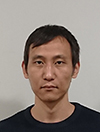
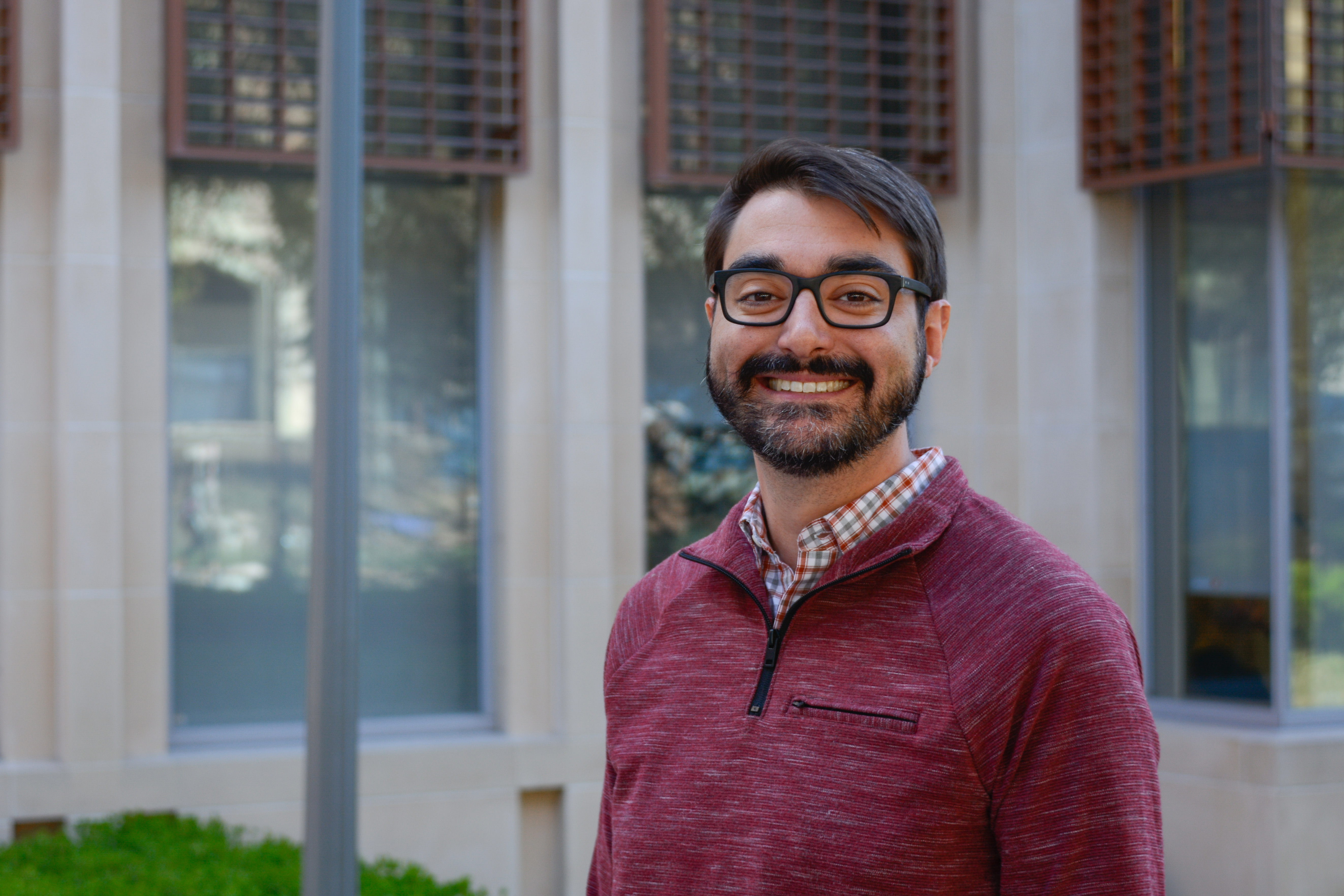
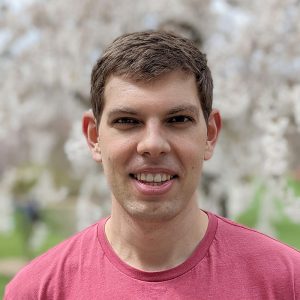
Patrick Skeba is a Teaching Assistant Professor at the University of Pittsburgh's Department of Computer Science within the School of Computing and Information. He holds a PhD in Computer Science from Lehigh University (2022) and bachelor's degrees in Cognitive Science and Computer Science from Johns Hopkins University (2017). His research focuses on internet privacy, AI ethics, and the responsible use of data. He teaches courses in machine learning and programming. Research Interests: Skeba's work bridges technology and societal impact, emphasizing privacy risks in data systems, algorithmic fairness, and user-centric privacy frameworks. His recent studies explore informational friction in data collection, community-based privacy strategies, and lay-expert disparities in understanding privacy-enhancing technologies (PETs). Publications: His articles analyze privacy dynamics in digital spaces, from pandemic-era discourse on r/privacy to methodological approaches for categorizing technology non-use. His earlier work includes breakthroughs in sleep disorder diagnostics, particularly periodic leg movement (PLM) analysis and telemedicine applications for neurological conditions. Awards: No scientific awards listed. Grants and advising details are currently unspecified. Labs/Teams: No specific lab affiliations mentioned in provided materials. His teaching and research emphasize collaboration across computational and social domains.
Lama Séoud is an Assistant Professor in the Department of Computer Engineering and Software Engineering at Polytechnique Montréal. She holds a Ph.D. in biomedical engineering from Polytechnique Montréal and has postdoctoral experience in industry and research at the National Research Council of Canada. Her research focuses on computer vision and computational medical imaging, with applications in healthcare, robotics, and industrial settings. She collaborates closely with clinicians, industrial partners, and artists to develop solutions for human motion analysis, medical image processing, and 3D imaging techniques. Educations: Ph.D. in Biomedical Engineering, Polytechnique Montréal (2012) M.Sc.A. in Biomedical Engineering, Polytechnique Montréal Diploma in Biomedical Engineering, École Supérieure d’Ingénieurs de Beyrouth (Lebanon) Research Interests: 3D imaging and analysis, human motion analysis, medical image computing, computer vision, machine learning. Her work integrates deep learning with 3D data acquisition and analysis, addressing challenges in healthcare (e.g., scoliosis, breast asymmetry) and industrial human-robot interaction. Key Collaborations: Centre de recherche du CHU Sainte Justine, Regroupement de recherche en intelligence artificielle appliquée aux enfants gravement malades, Institut Transmedtech, and Institut de génie biomédical. Teaching: INF8725 (Digital Signal and Image Processing), INF8801A (Multimedia Applications), GBM6700E (3D Reconstruction from Medical Images). Grants & Support: Received funding from the Quebec Research Fund for AI and health innovation projects. Labs & Teams: Active in multidisciplinary teams focusing on biomedical imaging, robotics, and AI for clinical applications.
Christopher Piech is an Assistant Professor (Teaching) in the Department of Computer Science at Stanford University, with a courtesy appointment in the Graduate School of Education. He serves as a Faculty Affiliate at the Institute for Human-Centered Artificial Intelligence (HAI) and is affiliated with the Symbolic Systems Program. Current courses: AI for Social Good (CS 21SI), Introduction to Probability for Computer Scientists (CS 109), Researching Presenting and Publishing Work in AI & Education (CS 220/EDUC 481) Advises 11 Master's students and co-advises 3 Doctoral students His research focuses on computational education, leveraging artificial intelligence to enhance learning analytics, student collaboration detection, and knowledge tracing in programming education. Publications span ACM Technical Symposium on Computer Science Education (SIGCSE) and NeurIPS conferences. Key article trends include: (1) AI-driven educational tools for code analysis, (2) collaboration monitoring in large classes, and (3) probabilistic models for student learning trajectories.
Professor Niki Trigoni is a faculty member at the University of Oxford's Department of Computer Science and a Governing Body Fellow at Kellogg College. She holds the rank of Professor of Computing Science. Her research focuses on intelligent and autonomous sensor systems, with applications in positioning, healthcare, environmental monitoring, and smart cities. Trigoni leads the Cyber Physical Systems Group and directs the EPSRC Centre for Doctoral Training on Autonomous Intelligent Machines and Systems (AIMS), which integrates robotics, machine learning, verification/control, and sensor networks. Education: DPhil from the University of Cambridge (2001), followed by postdoctoral research at Cornell University (2002–2004) and a Lectureship at Birkbeck College (2004–2007). Current roles include leadership in AIMS and the Cyber Physical Systems Group. Research Interests: Her work spans sensor networks, inertial navigation, mmWave radar applications, and deep learning for localization and mapping. Recent projects include indoor positioning systems for emergency responders and wildlife monitoring. She has open positions for PhD and postdoc researchers in areas like sensor fusion, human-robot interaction, and SLAM. Publications: Over 50+ peer-reviewed articles, including work on mmPoint, P2-Net, and RandLA-Net. Her research emphasizes real-world applications in robotics and autonomous systems. Grants and Leadership: Received a 3-year NIST grant (2017) for indoor positioning systems and leads initiatives in cyber-physical systems. Active in conference organization, e.g., TPC chair for Sensys 2017 and IPSN 2016. Labs/Teams: Cyber Physical Systems Group focuses on sensor systems, robotics, and autonomous systems. Collaborations span academia and industry, addressing challenges in smart cities and healthcare.
Iro Laina is a Departmental Lecturer in Computer Vision at the University of Oxford's Visual Geometry Group. She holds a PhD (Dr. rer. nat.) from the Technical University of Munich (TUM), where her dissertation earned the ECVA PhD Award. Her research focuses on unsupervised and language-supervised learning for 3D scene understanding, image/video perception systems, and geometric reconstruction. Education: PhD in Computer Science (TUM), MSc in Biomedical Computing (TUM), Diploma in Electrical & Computer Engineering (NTUA). Research Interests: 3D Reconstruction and Generation Unsupervised Learning Multi-View and Video Analysis Generative Diffusion Models Geometry-Aware Networks Her recent work emphasizes scalable 3D scene synthesis, training-free methods, and cross-modal fusion with LLMs. Over 15+ publications since 2021 reflect her leadership in geometric deep learning. Awards: ECVA PhD Award (2020), Recognized in multiple international conferences. Advising: Mentors DPhil students in creative AI applications (e.g., gameplay design). Active in Oxford's Robotics and Biomedical Engineering networks. Labs/Tech: Core member of the Visual Geometry Group, collaborating on projects like IMAD2025 with the ZERO Institute.
Maithilee Kunda is an Associate Professor in the Department of Computer Science and Computer Engineering at Vanderbilt University's School of Engineering. She leads the Laboratory for Artificial Intelligence and Visual Analogical Systems and co-leads the Vanderbilt Initiative for Autism, Innovation, and the Workforce. Her research focuses on AI-driven cognitive systems, particularly visual reasoning and technology applications for neurodiverse populations, including autism spectrum disorder. Dr. Kunda holds a B.S. in Mathematics with Computer Science from MIT (2007) and a Ph.D. in Computer Science from Georgia Tech (2013). She was honored as an MIT Technology Review Innovator Under 35 in 2016 for her groundbreaking work. Her research bridges computational models of visual thinking and real-world impact, emphasizing neurodiverse cognition. Notable projects include developing AI systems for autism-related social skills interventions, designing visual analogy problem-solving frameworks, and advancing nonverbal communication understanding in AI. Her work addresses challenges in abstract reasoning tasks (e.g., Raven's Matrices), visual imagery-based learning, and ethical AI integration. She advocates for inclusive technology design, leveraging both generative AI and cognitive principles to create human-centered solutions. Key awards: MIT Technology Review Innovator Under 35 (2016) Her labs focus on practical AI applications for education, healthcare, and workforce development, emphasizing interdisciplinary collaboration between engineering, psychology, and neuroscience.
Eleonora Vacca is a PhD student and Research Fellow in the Department of Automatic Control and Computer Science (DAUIN) at the Polytechnic University of Turin. She holds a B.S. in Electronic Engineering from the University of Palermo (2018) and an M.S. in Electronic Engineering-Embedded Systems from Politecnico di Torino (2021). Her research focuses on digital hardware design, reliability engineering, reconfigurable devices, and AI applications in aerospace and safety-critical systems. She is a member of the Aerospace and Safety Computing Lab and the CAD - Electronic CAD & Reliability Group (DAUIN). Her work addresses challenges such as radiation effects mitigation in space missions, fault-tolerant AI accelerators, and real-time anomaly detection in satellite telemetry. She has contributed to projects like the RAMSES CubeSat-1 Development (2025-2026), funded by commercial contracts. In 2024, she won the Best Student Paper Award at the NEWCAS Conference for her research on radiation effects in space missions. Vacca collaborates on teaching, including assisting in the course 'Electronic Calculators' for Computer Engineering students. Her recent publications explore AI resilience in RISC-V ecosystems, radiation environment analysis for space missions, and gesture recognition systems for smart cities. She actively contributes to conferences such as the ACM International Conference on Computing Frontiers and the IEEE International Smart Cities Conference.
Dr. Lin Wang is a Lecturer in Applied Data Science and Signal Processing at Queen Mary University of London (QMUL), affiliated with the School of Electronic Engineering and Computer Science. He leads the Machine Listening Lab and is a member of the Centre for Multimodal AI, Centre for Intelligent Sensing (CIS), and Institute of Coding (IoC). His research focuses on audio-visual signal processing, robotic perception, and machine learning, with applications in healthcare, drone-based sensing, and human activity recognition. Dr. Wang holds a PhD from Dalian University of Technology and has held postdoctoral positions at QMUL, the University of Sussex, and the Alexander von Humboldt Foundation in Germany. Education and Roles: PhD in Signal Processing, Dalian University of Technology (2010) Postdoc at Queen Mary University of London (2014–2017) Postdoc at University of Sussex (2017–2018) Alexander von Humboldt Fellow at University of Oldenburg (2011–2013) Fellow of the Higher Education Academy (UK) Research Interests: Audio-visual signal processing for drones and wearable devices Machine listening and robotic perception Machine learning for healthcare and environmental monitoring Human activity recognition using multimodal sensors Awards and Grants: Early Career Champion on AI&Data, UK Acoustics Network Outstanding Article Award, Frontiers in Computer Science (2022) EPSRC grant: Bioacoustic Monitoring Using Drones (£46,821, 2022–2023) Innovate UK grant: Music Source Separation (£48,144, 2024–2025) Teaching and Students: Dr. Wang teaches Applied Statistics , Website Design and Authoring , and Machine Learning for Visual Data Analysis . He supervises PhD students including Ashish Alex (speech separation), Michael Clayton (drone audition), and Dmitrii Mukhutdinov (audio-visual processing). Labs and Teams: He co-leads the Machine Listening Lab and is part of the Centre for Multimodal AI, focusing on interdisciplinary projects in robotics, acoustics, and AI.
Santiago Segarra is the W. M. Rice Trustee Associate Professor in the Department of Electrical and Computer Engineering at Rice University, with courtesy appointments in Computer Science and Statistics. He joined Rice in 2018 and collaborates with Microsoft Research since 2022. His expertise spans network theory, machine learning, graph signal processing, and optimization. Segarra earned his B.Sc. in Industrial Engineering from ITBA (2011), and M.S. and Ph.D. in Electrical and Systems Engineering from the University of Pennsylvania (2014-2016), followed by a postdoc at MIT (2016-2018). Research Focus: His work integrates algebraic topology, signal processing, and machine learning to analyze networked systems. Key areas include social/technological network clustering, graph-based data analysis, and applications in neuroscience and communication networks. Recent projects address fair graph learning, distributed GNN training, and network topology inference. Awards: Penn’s Wolf Award for Best Dissertation (2017), Argentine National Engineering Honors (2011), and ITBA’s Best Thesis Award (2011). Grants/Sponsors: Supported by NSF, ONR, and industry collaborations. Labs/Groups: Leads the Rice Wireless group and collaborates with Microsoft Research on applied network science. Advises students in interdisciplinary research combining theory and real-world applications.
Larry Heck is a Professor at the Georgia Institute of Technology with joint appointments in the School of Electrical and Computer Engineering and the School of Interactive Computing. He holds the Rhesa S. Farmer Advanced Computing Concepts Chair and is a Georgia Research Alliance Eminent Scholar. His research focuses on machine learning, deep learning, natural language processing, conversational systems, and speech/speaker recognition. He directs the AI Virtual Assistant (AVA) Lab, advancing next-generation AI assistants. Dr. Heck has held leadership roles in industry, including at Microsoft, Google, Samsung, and Viv Labs, and has over 50 U.S. patents. Education: BSEE from Texas Tech University (1986) MSEE and PhD in Electrical Engineering from Georgia Tech (1991) Research Interests: Dr. Heck’s work bridges machine learning and human-centric AI, with emphasis on conversational systems, multimodal interaction, and real-world applications. His AVA Lab develops AI assistants that integrate visual, auditory, and contextual cues for natural interaction. Recent projects include multimodal sensor integration, dialogue systems for caregiving networks, and embodied AI for avatar animation. Awards: IEEE Fellow (2020) Academy of Distinguished Engineering Alumni, Georgia Tech (2017) Distinguished Engineer Award, Texas Tech University (2017) Advising & Grants: While primarily focused on industry collaboration, Dr. Heck mentors students through Georgia Tech’s interdisciplinary programs. His research is funded by government agencies and corporate partnerships, including the NSA and DARPA. Labs & Teams: The AVA Lab collaborates with academia and industry to create AI systems that understand context, gestures, and environment. Current initiatives include multimodal dialogue datasets (e.g., OKCV, SensorQA) and reinforcement learning frameworks for real-time systems.
M.Sc. Maximilian Mühlbauer is a researcher at the Chair of Sensor-Based Robot Systems and Intelligent Assistance Systems at Technische Universität München (TUM), part of the Faculty of Computer Science. His work focuses on robotics, artificial intelligence, and space robotics, particularly in areas like in-orbit manufacturing, virtual fixtures, and human-robot interaction. He contributes to projects such as the ACOR initiative and the AI-In-Orbit-Factory, exploring fault-tolerant processes and adaptive robotic systems for space applications. Research Interests: Maximilian’s research emphasizes AI-driven robotics , space robotics , and control systems . He develops methodologies for virtual fixtures , reconfigurable robotic systems , and teleoperation with shared control . His work integrates probabilistic models and machine learning for resilient systems in challenging environments like space. Publications: His recent work spans topics from in-orbit manufacturing and force-sensitive space manipulators to multi-modal haptic teleoperation , reflecting a focus on practical robotic applications in aerospace and industry. Grants/Advising: Maximilian oversees available theses on topics like mixture of experts fixture learning and virtual fixture adaptation , inviting collaboration on AI-driven robotics projects. He collaborates with Prof. Alin Albu-Schäffer and contributes to TUM’s research initiatives in autonomous systems. Labs: He is part of the Sensor-Based Robot Systems lab, advancing robotics for human-centric and space-oriented applications.
Abhinav Shrivastava is an Associate Professor in the Department of Computer Science at University of Maryland, College Park, with a joint appointment in the Institute of Advanced Computer Studies (UMIACS). Previously, he served as an Assistant Professor at the same institution from August 2018 to June 2024, and spent one year as a Visiting Research Scientist at Google Research from September 2017 to August 2018. His educational background includes: PhD in Robotics and Artificial Intelligence from Carnegie Mellon University (2017), advised by Abhinav Gupta, with thesis titled 'Discovering and Leveraging Visual Structure for Large-scale Recognition' MS in Artificial Intelligence from Carnegie Mellon University (2011), supervised by Alyosha Efros and Martial Hebert BTech in Computer Science and Engineering from Jaypee Institute of Information Technology (2010) Professor Shrivastava's research focuses on computer vision and machine learning, with particular expertise in object detection, image recognition, and neural representations. His work bridges theoretical advances with practical applications, exploring how visual systems can discover and leverage structure in large-scale recognition problems. He has made significant contributions to understanding the role of supervision in vision transformers, developing novel approaches for object-state composition recognition, and creating efficient neural representations for videos and 3D scenes. His research often addresses fundamental challenges in visual recognition, including handling novelty in open-world environments and improving the efficiency of visual systems. An analysis of his recent publications reveals a strong emphasis on neural representations, particularly for dynamic content like videos and 3D scenes. His work demonstrates increasing sophistication in handling open-world vision problems, with research spanning object discovery, localization, and representation learning. The publications show a clear progression toward more efficient and scalable models, with recent work focusing on model compression, sparse representations, and addressing the challenges of working with limited annotations. His scientific contributions have been recognized with several prestigious awards: Best Paper Award (Applications) at IEEE Winter Conference on Applications of Computer Vision (2020) Microsoft Research PhD Fellowship (2014-2016) Best Student Paper Award at IEEE Winter Conference on Applications of Computer Vision (2014) Outstanding Reviewer Award at IEEE CVPR (2015) Professor Shrivastava has successfully mentored numerous graduate students, many of whom have become prominent researchers in computer vision. His Amazon Research Awards (2020 and 2023) have supported innovative projects including 'The pursuit of knowledge: discovering and localizing new concepts using dual memory' and 'Audio-conditioned Diffusion Models for Generating Lip-synchronized Videos.' He has served as Area Chair for major conferences including ICCV, CVPR, and AAAI, demonstrating his leadership in the computer vision community. His research has attracted significant funding from both academic and industry sources, supporting his exploration of fundamental questions in visual recognition and representation learning.
Garrett Warnell is a Visiting Researcher in the Department of Computer Science at The University of Texas at Austin, specializing in artificial intelligence, computer vision, and robotics with applications in autonomous navigation systems. Education: PhD in Electrical Engineering, University of Maryland Master's in Electrical Engineering, University of Maryland B.S. in Computer Engineering, Michigan State University Research Interests: Dr. Warnell's work focuses on machine learning for robotic control , computer vision for scene understanding , and autonomous navigation in challenging environments . His contributions span imitation learning with limited demonstrations, preference-aware path planning, and off-road mobility. Recent research integrates vision-language models and transformer architectures for social navigation and terrain adaptation, emphasizing human-robot collaboration and robustness in constrained spaces. Publication Trends: Analysis of Dr. Warnell's 2023-2025 publications reveals dominant themes in off-road navigation robustness, with emphasis on particle filtering, diffusion models, and transformer networks for geo-localization and terrain adaptation. A significant trend involves human preference alignment through extrapolation techniques and open-vocabulary models for costmap generation, reflecting growing integration of natural language understanding in robotic systems. Scientific Awards: No awards specified in available documentation. Advising and Grants: Public records indicate no listed advisees or grant funding details. Labs and Teams: Affiliated with UT Austin's Computer Science Department, though specific research group affiliations remain undocumented in provided materials.
Gedas Bertasius is an Assistant Professor in the Department of Computer Science at the University of North Carolina at Chapel Hill. Previously, he served as a postdoctoral researcher at Meta AI (Facebook AI) and earned his PhD in Computer Science from the University of Pennsylvania. His academic journey began with a bachelor’s degree in Computer Science from Dartmouth College. Dr. Bertasius specializes in computer vision and machine learning with specific interests in: Video understanding First-person vision (egocentric vision) Human behavior modeling Multimodal deep learning Transfer learning Computer vision for sports analytics Video+robotics integration His research produces practical frameworks like Video ReCap for hierarchical captioning of long videos, SiLVR for language-based video reasoning, and BASKET for fine-grained skill estimation. He focuses on developing models that can process videos across multiple temporal granularities while maintaining computational efficiency. Key research themes in his work include: Recursive video processing architectures Space-time attention mechanisms Generative video modeling LLM integration with vision systems 3D-aware representation learning Continual learning for video QA He has received notable recognition, including: CVPR 2024 Egocentric Vision (EgoVis) Distinguished Paper Award CVPR 2020 Best Paper Award Nomination First Place at CVPR 2025 Multi-Discipline Lecture Understanding Workshop Dr. Bertasius collaborates with prominent researchers like Mohit Bansal and Lorenzo Torresani . His recent publications demonstrate expertise in advancing video-language models, with applications in semantic alignment, temporal grounding, and cross-modal reasoning. For detailed information about his research, publications, and ongoing projects, please visit his official website .
Xiang Yin is a Research Associate at the Department of Computing in Imperial College London , affiliated with the Computational Logic and Argumentation group (CLArg) . His work bridges Explainable AI (XAI) and Computational Argumentation (CA) , focusing on the explainability of Quantitative Bipolar Argumentation Frameworks (QBAFs) through attribution and counterfactual explanations. Research Interests: Explainable AI (XAI) Computational Argumentation Quantitative Bipolar Argumentation Frameworks Model Interpretability Human-AI Interaction Logical Reasoning for AI Publication Trends reveal a focus on argumentation-based explainability, with 2025-2024 works addressing large language models for claim verification, truth-discovery frameworks, and counterfactual explanations. Earlier works (2023-2022) explore random forest explanations, faithfulness criteria, and QBAF analysis. His 2018 publications on aircraft prediction systems demonstrate applied machine learning expertise. Education PhD in Artificial Intelligence under Prof. Francesca Toni and Dr. Nico Potyka Pre-PhD: Machine Learning R&D Engineer at Baidu Labs & Teams Xiang is part of the CLArg group at Imperial College London, focusing on integrating computational argumentation with AI explainability and contestability.