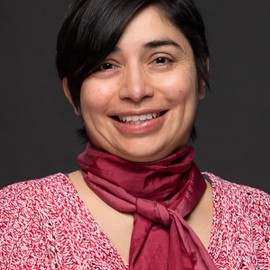
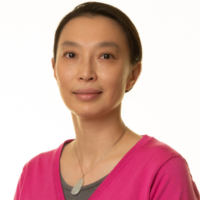
Dr. Hassan Qudrat-Ullah is a Professor at the School of Administrative Studies, York University, and Coordinator of the Certificate in Logistics Management. He holds a PhD in Decision Sciences from NUS Business School and completed a post-doctoral fellowship at Carnegie Mellon University. His research focuses on dynamic decision making, system dynamics modeling, energy planning, and interactive learning environments. He teaches courses on quantitative methods, logistics, and decision analysis, informed by global industry experience across 20+ countries. Research interests include sustainability, climate change, systems thinking, and educational applications of decision sciences. He serves as Editor-in-Chief of the International Journal of Complexity in Applied Science and Technology and is a member of IEEE, DSI, and the International System Dynamics Society. His work has been published in Energy , Decision Support Systems , and others. Key projects include studies on 'structured-debriefing in dynamic decision making' and renewable energy policies in Africa. His recent articles (2023–2025) address AI integration in energy governance, system dynamics for supply chain resilience, and education for sustainability. Hassan advocates for systems thinking in K-12 education and enjoys traveling (visited 129 countries) and bird-watching.
Alan Ritter is an Associate Professor at the School of Interactive Computing , Georgia Institute of Technology, with additional affiliation to the Machine Learning Center . His research focuses on Natural Language Processing , particularly robust models across domains/languages with fewer labels and efficient resource use, plus data-driven dialogue agents for open-topic conversations. Research Interests : Robust NLP models, cross-lingual transfer, resource-efficient learning, dialogue systems, cultural bias measurement, and privacy-aware language models Students : Mentors Ph.D. students in Georgia Tech's ML and CS programs, including Junmo Kang, Yang Chen, and Duong Minh Le. Alumni include Fan Bai (Ph.D. 2023), Yang Chen (Ph.D. 2024), and Andrew Li (M.S. 2024). Awards : NSF CAREER Award, Amazon Research Award, ACL 2024 Best Social Impact Paper, IUI 2009 Best Student Paper. Recent Work : Studies training budget allocation between supervised and preference-based finetuning, cross-lingual information extraction, cultural bias in LLMs, and privacy risk mitigation in social media disclosures. Service : Served as Program Chair for NAACL 2025, Area Chair for multiple top-tier conferences (COLM, EMNLP, ACL, EACL, AAAI). Email : alan.ritter@cc.gatech.edu
Robert Rohling is a Professor at the University of British Columbia's Faculty of Applied Science, affiliated with the Department of Mechanical Engineering and holding a joint appointment with the Department of Electrical and Computer Engineering. As Director of the Institute of Computing, Information and Cognitive Systems (ICICS), his research focuses on biomedical engineering, medical imaging, robotics, and computational methods. B.A.Sc. (UBC) M.Eng. (McGill) Ph.D. (Cambridge) Rohling's work spans three primary research areas: medical imaging (3D ultrasound, spatial compounding, elasticity reconstruction), medical information systems (radiologist navigation tools for large image datasets), and robotic calibration for surgical applications. His multidisciplinary approach integrates mechanical and electrical engineering principles with clinical needs. Rohling's publications (2020-2022) reveal trends in advanced ultrasound techniques (e.g., shear wave vibro-elastography), AI-driven image processing (cycleGAN translation), and computational optimization for diagnostic accuracy. Keywords across his work include Medical Imaging, Biomedical Engineering, Robotics, and Computational Modeling. As director of the Robotics and Control Laboratory , Rohling leads interdisciplinary collaborations with industry and clinical partners to address practical challenges in medical diagnostics and surgical robotics. His research emphasizes translating engineering innovations into clinical practice.
Maja J Matarić is the Chan Soon-Shiong Chaired and Distinguished Professor of Computer Science at the University of Southern California's Viterbi School of Engineering, with courtesy appointments in Neuroscience and Pediatrics. She serves as founding director of the USC Robotics and Autonomous Systems Center, co-director of the USC Robotics Research Lab, and Principal Scientist at Google DeepMind. Previously, she held leadership roles as USC's interim Vice President of Research (2020-2021) and Vice Dean for Research (2006-2019). Her educational background includes: PhD in Computer Science and Artificial Intelligence from MIT (1994) MS in Computer Science from MIT (1990) BS in Computer Science from University of Kansas (1987) Matarić pioneers Socially Assistive Robotics (SAR) , a field her lab named, focusing on human-robot interaction that provides assistance through social rather than physical support. Her research targets critical health and wellness challenges including post-stroke rehabilitation, autism spectrum disorder therapy, cognitive exercises for Alzheimer's patients, ADHD academic support, and mental health interventions. She develops systems modeling user engagement, personality, and motivation, with extensive real-world deployments in schools, rehabilitation centers, and homes. Analysis of her recent publications reveals dominant themes in cognitive health robotics (2025 CHI paper on LLM-powered elder care), pediatric assistive technology (2025 IDC speech therapy review), and adaptive preference modeling (2025 HRI contrastive learning work). Her research consistently bridges machine learning with human-centered design for vulnerable populations. Major scientific recognition includes: ACM Athena Lecturer Award (2024) ACM Eugene L. Lawler Humanitarian Award (2024) ACM Fellow (2020) Presidential Mentoring Award (2011) Multiple society fellowships (AAAS, IEEE, AAAI) As a dedicated mentor, Matarić has championed underrepresented groups through CRA-W, placing numerous women in faculty positions. She leads USC Viterbi's K-12 STEM Outreach Program serving low-income Los Angeles schools and authored The Robotics Prime for student education. Her research has secured significant funding enabling real-world technology transfer, with documented impact in rehabilitation centers and homes through deployable SAR systems. Her Robotics Research Lab at USC drives innovation in embodied AI, with current projects spanning LLM-integrated elder care robots, ADHD academic companions, and autism therapy systems. The lab emphasizes co-design with end-users and rigorous real-world validation across diverse populations.
Alexei A. Efros is a Professor in the Department of Electrical Engineering and Computer Sciences (EECS) at UC Berkeley, where he holds the Howard Friesen Professorship and is affiliated with the Berkeley Artificial Intelligence Research (BAIR) Lab. He previously served on the faculty at the Robotics Institute of Carnegie Mellon University (CMU) and completed a postdoctoral fellowship at the University of Oxford. His research spans data-driven computer vision, self-supervised learning, computational photography, and applications to computer graphics and robotics. His research interests include: Data-Driven Computer Vision Self-Supervised and Unsupervised Learning Generative Models and Image Synthesis Visual Representation Learning Applications in Robotics and Human-Computer Interaction Intersections with Human Vision and the Humanities The recent publications highlight a strong trend toward self-supervised learning, visual reasoning, and generative modeling, particularly diffusion models and 3D scene understanding. His work increasingly bridges computer vision with language, robotics, and cognitive science, emphasizing interpretability and real-world applicability. There is a clear focus on leveraging unlabeled data and developing methods for robust, generalizable AI systems. His scientific awards and recognitions include: Berkeley Fellowship Google Fellowship Soros Fellowship NSF Fellowship SIGGRAPH Outstanding Doctoral Dissertation Award Facebook Fellowship Adobe Fellowship CMU School of Computer Science Distinguished Dissertation Award ACM Doctoral Dissertation Honorable Mention Alexei Efros has advised numerous PhD students and postdocs, many of whom have gone on to faculty positions at top institutions including CMU, Stanford, MIT, Columbia, NYU, and Georgia Tech. His lab has received research funding from major tech companies and federal agencies, though specific grants are not detailed in the text. He teaches core computer vision and machine learning courses at both undergraduate and graduate levels at UC Berkeley. His research group is highly active, with ongoing projects in 3D perception, generative modeling, and vision-language systems. He leads a vibrant research lab at UC Berkeley, part of the BAIR consortium, collaborating with leading researchers such as Jitendra Malik, Trevor Darrell, Pieter Abbeel, and Angjoo Kanazawa. His lab fosters strong interdisciplinary connections with institutions worldwide, including Oxford, INRIA, and École Normale Supérieure.
Anamaria Crisan is an Assistant Professor at the University of Waterloo, affiliated with the Insight Lab. Her research focuses on interdisciplinary work at the intersection of Human-Computer Interaction (HCI), Data Visualization, and Applied AI/ML. She explores human-centered approaches to AI/ML systems, visualization design for decision-making, and healthcare data science applications. Dr. Crisan holds a PhD in Computer Science from the University of British Columbia (2019), an MSc in Bioinformatics (2010), and a BComp in Biomedical Computing from Queen’s University (2008). Her educational background bridges computer science, biology, and healthcare informatics. Her research interests include responsible AI/ML systems, interactive visualization for data-driven decisions, and leveraging visualization in healthcare to improve outcomes. She emphasizes transparency, trustworthiness, and human alignment in AI technologies. Her work spans diverse applications such as genomic epidemiology, dashboard design, and ethical AI evaluation. Notable contributions include studies on human-AI collaboration, visualization linters, and scalable dashboard census methodologies. She has published widely in top-tier venues like IEEE VIS and ACM CHI. Dr. Crisan’s lab (UW Insight Lab) focuses on human-centered approaches to automating data science and improving visualization practices in critical domains like healthcare and public health.
Aishwarya Agrawal is an Assistant Professor at Université de Montréal in the Department of Computer Science and Operations Research (DIRO), affiliated with Mila – Quebec Institute of Artificial Intelligence and a Canada CIFAR AI Chair. She also serves as a research scientist at Google DeepMind, spending one day weekly there. Education: B.E. in Electrical Engineering (IIT Gandhinagar, 2014), Ph.D. in Computer Science (Georgia Tech, 2019). Her research focuses on multimodal learning , deep learning , natural language processing , and computer vision , particularly in developing AI systems that 'see' and 'communicate' effectively. Grants & Awards: Canada CIFAR AI Chair, 2020 Sigma Xi Best PhD Thesis Award, NVIDIA Fellowship (2018–2019), and multiple fellowships from Google and Facebook. She leads projects like Advancing Multimodal Vision-Language Learning (CRSNG-funded) and StarDoc: Document Structure Extraction (MITACS). Research Contributions: Pioneered benchmarks like CulturalVQA and UI-Vision , and frameworks such as PROGRESS for efficient VLM training. Her work emphasizes cross-modal alignment, robust evaluation, and cultural understanding in AI systems. Labs/Teams: Active in Mila’s core academic group and collaborates with Google DeepMind on multimodal and vision-language research. Supervises a dynamic team of PhD and master’s students in Montreal.
Sheila McIlraith is a Professor in the Department of Computer Science at the University of Toronto, holding the Canada CIFAR AI Chair at the Vector Institute and serving as Associate Director and Research Lead at the Schwartz Reisman Institute for Technology and Society. Her research spans AI safety, ethics, reinforcement learning, and knowledge representation, with a focus on human-compatible AI and long-term societal impacts. Her career includes six years as a Research Scientist at Stanford University and a year at Xerox PARC. McIlraith’s work has been recognized through ACM and AAAI fellowships, as well as prestigious awards like the SWSA 10-Year Award (2011) and the CAIAC Lifetime Achievement Award (2024). Research Interests: AI Safety and Alignment Human-Compatible AI Reinforcement Learning with Ethical Constraints Semantic Web Services Cognitive Robotics and Diagnostic Systems Probabilistic and Logical Reasoning Recent Contributions: Her work emphasizes ethical AI integration, such as the Embedded Ethics Education Initiative (E3I), and addresses challenges in long-term AI risks, multi-agent systems, and interpretable decision-making frameworks. Awards and Honors: ACM Fellow AAAI Fellow 2023 IJCAI-JAIR Best Paper Prize 2024 CAIAC Lifetime Achievement Award Labs and Teams: McIlraith leads initiatives at the Schwartz Reisman Institute and contributes to the Vector Institute, focusing on societal and ethical dimensions of AI technology.
Qianwen Wang is a tenure-track Assistant Professor in the Computer Science department at the University of Minnesota, Twin Cities. Her research combines interactive visualization with interpretable machine learning to foster intuitive, efficient, and reliable Human-AI collaboration. She actively seeks motivated students, research assistants, and interns to join her dynamic research team at UMN CS. Dr. Wang's research focuses on three primary themes: Human-AI Collaboration, where she designs tools to facilitate Human-AI interaction; Automatic & Intelligent Visualization, where she develops techniques to make visualizations accurately interpreted and easily used; and VIS+(X)AI in Biomed/Healthcare, where she studies how visualization and explainable AI can promote scientific discoveries in biomedicine and healthcare. Her work has made significant contributions to visualization, human-computer interaction, and bioinformatics, with particular applications in biomedical knowledge graphs and single-cell omics analysis. Her recent publications demonstrate a strong trend toward integrating visualization with large language models and graph neural networks for biomedical applications. She has published extensively at top venues including IEEE VIS, ACM CHI, and Nature Medicine, with a focus on making AI systems more interpretable and useful for domain experts, particularly in healthcare contexts. Her work often bridges theoretical advances in visualization with practical applications in genomics and healthcare. Two IEEE VIS Honorable Mention Awards (2022, 2024) Best Paper Award from IMLH@ICML 2021 Two Best Abstract Awards from BioVis ISMB (2021, 2022) HDSI Postdoctoral Research Fund Award Research covered by MIT News and Nature Technology Features Dr. Wang actively contributes to the academic community through service roles including General Chair for ISMB BioVis, VisNotes and Poster Chair for IEEE PacificVis, and Program Committee member for IEEE VIS, ACM CHI, and ACM IUI. Her research has been supported by various grants that enable her team to develop innovative visualization techniques and explore their practical applications in biomedical domains. Her research group maintains an active presence in the visualization and HCI communities, with members participating in major conferences and workshops. The lab focuses on creating tools that bridge the gap between complex AI models and human understanding, with particular emphasis on making these technologies accessible and useful for domain experts in biomedical research.
Mark Crowley is an Associate Professor in the Department of Electrical and Computer Engineering at the University of Waterloo, with a cross-appointment in the Cheriton School of Computer Science. He is a member of the Waterloo Artificial Intelligence Institute (WAII) and the Waterloo Institute for Complexity and Innovation (WICI), and serves as National Secretary of the Canadian Artificial Intelligence Association (CAIAC). His educational background includes a Ph.D. and M.Sc. in Computer Science from the University of British Columbia, where he worked in the Laboratory for Computational Intelligence, and a B.A. in Computer Science from York University. He completed a postdoctoral fellowship at Oregon State University working with Tom Dietterich's machine learning group. Crowley's research focuses on developing dependable and transparent algorithms to augment human decision-making in complex domains with multiple agents, spatial structure, or uncertainty. His work spans Reinforcement Learning , Deep Learning , Ensemble Methods , and Manifold Learning . He frequently collaborates with researchers in applied fields including Computational Sustainability, Sustainable Forest Management, Autonomous Driving, Medical Imaging, and Material Design. His research is motivated by both theoretical opportunities and real-world challenges such as forest fire management, automotive applications, and medical imaging. His recent publications demonstrate a strong focus on addressing challenges in reinforcement learning, particularly around observation costs, multi-agent systems, and causal representation learning. His work on ChemGymRL provides a significant contribution to digital chemistry and material design through reinforcement learning frameworks. The textbook Elements of Dimensionality Reduction and Manifold Learning represents a major contribution to the theoretical foundations of machine learning. Crowley actively supervises graduate students, with recent thesis completions including Shayan Shirahmadi Gale Bagi (PhD, Feb 2025) and Oleksandra Nahorna (MASc, Dec 2024). His lab, UWECEML (Waterloo ECE Machine Learning Lab), focuses on developing new algorithms at the intersection of Machine Learning, Optimization, and Probabilistic Modeling. He teaches courses including ECE 457C (Reinforcement Learning), ECE 657A (Data & Knowledge Modelling & Analysis), and ECE 457B (Fundamentals of Computational Intelligence). His blog Computationally Thinking explores AI, machine learning, and the societal impact of these technologies.
Enamul Hoque Prince is an Associate Professor and Director of the School of Information Technology at York University. He leads the Intelligent Visualization Lab, funded by the Canada Foundation for Innovation (CFI) and Ontario Research Funds (ORF). He holds a PhD in Computer Science from the University of British Columbia and completed postdoctoral work at Stanford University. His research integrates information visualization, human-computer interaction (HCI), and natural language processing (NLP) to address information overload challenges. Dr. Prince's educational background includes a PhD from UBC, an MSc from Memorial University of Newfoundland, and a BSc from Chittagong University of Engineering & Technology. He has conducted research at institutions like Tableau Software and the Qatar Computing Research Institute and serves on committees for top conferences like ACL and IEEE Vis. His work is supported by grants from NSERC, CFI, and others. Research interests focus on NLP-driven visual analytics, user-adaptive visualization, and accessible interfaces. Notable projects include Evizeon (natural language interfaces for visual analytics), ConVisIT (topic modeling for online conversations), and CIDER (concept-based image search). Publications highlight trends in multimodal systems, chart comprehension, and accessibility. Key awards include the NSERC Discovery Grant (2019) and a Best Paper Honorable Mention at DIS 2021. He supervises graduate and undergraduate students in areas like visualization, NLP, and HCI. Labs and collaborations emphasize interdisciplinary approaches, with the Intelligent Visualization Lab advancing tools for data exploration and user-centered design. Teaching includes courses on design principles and information visualization.
Maher Elshakankiri is an Assistant Professor, Teaching Stream at the University of Toronto's Faculty of Information. He holds a Ph.D. in Computer Engineering from Ain Shams University (Egypt), followed by a postdoctoral fellowship at the University of Regina. His research focuses on IoT, Wireless Sensor Networks (WSN), and pedagogical integration of technology and gaming. He has supervised over 100 student projects and authored a book on WSNs. Education: Ph.D. in Computer Engineering, Ain Shams University, Egypt M.Eng., B.Eng. in Engineering, Ain Shams University, Egypt Postdoctoral Fellowship, University of Regina, Canada Research Interests: IoT in healthcare, agriculture, and sports Active learning classrooms and technology in education Wireless communication protocols (V2V, UAV, RFID) Leadership & Grants: Director, Bachelor of Information (BI) Program (2024–present) Coordinator, Information Systems and Design (ISD) Concentration (2023) SSHRC Grant: 'Gaming in teaching towards a more inclusive class' (2022–2023) Professional Activities: Member, SCC IoT & Digital Twins Standards Committee Reviewer for journals including Wireless Networks , Telematics and Informatics , and Computational Intelligence Technical Program Committee member at multiple conferences Teaching: Courses include INF1340 (Programming for Data Science), INF1005/1006 (IoT Workshops), and INF452 (Information Design Coding).
Dr. Lourdes Pena-Castillo is a Professor jointly appointed in the Departments of Computer Science and Biology at Memorial University of Newfoundland's Faculty of Science. Her research focuses on applying machine learning and bioinformatics to study bacterial gene regulation, with emphasis on transcriptomics, gene expression pathways, and microbiology. She leads the Bioinformatics Lab at MUN, developing computational tools like Promotech for promoter prediction and sRNARFTarget for sRNA target identification. Education: BSc in Information Systems Engineering, ITESM-Mexico MSc in Computer Science, University of Alberta PhD in Computer Science (Doktoringenieurin), Otto-von-Guericke Universität Magdeburg Postdoc in Bioinformatics, University of Toronto Research Interests: Bioinformatics, Genomics, Machine Learning, Artificial Intelligence, Transcriptomics, Gene Regulation, Microbiology Her work integrates computational methods with biological data to address challenges in molecular biology, including analyzing bacterial sRNA functions, promoter recognition, and disease diagnostics using machine learning. She has advised numerous graduate students, including PhD candidates Purvikalyan Pallegar and Bonita McCuaig, and MSc students like Ruben Chevez-Guardado and Kratika Naskulwar. Her lab focuses on translational research with applications in both basic science and clinical contexts. Publications span computational methods for bacterial gene regulation, bioinformatics tool development, and interdisciplinary projects in VR and healthcare informatics. Her research has contributed to understanding symbiotic relationships in marine organisms, inflammatory bowel disease diagnostics, and clavulanic acid production in Streptomyces. Grants & Collaborations: Works with interdisciplinary teams across computer science and biology, supported by grants enabling projects in bacterial genomics and computational tool development. Labs & Teams: Leads the Bioinformatics Lab at MUN, fostering collaborations with researchers in microbiology, computer science, and healthcare.
Rong Zheng is a Professor in the Department of Computing and Software and a member of the School of Biomedical Engineering at McMaster University, Canada. She holds a Tier-1 Canada Research Chair in Mobile Computing and serves as Acting Chair of the Computing and Software department from July to December 2025. She is also an Associate Member of the Electrical & Computer Engineering department. Education: Ph.D. in Computer Science, University of Illinois, Urbana-Champaign, USA Master of Engineering (thesis) in Electrical Engineering, Tsinghua University, Beijing, China Bachelor of Engineering in Electrical Engineering, Tsinghua University, Beijing, China Dr. Zheng's research lies at the intersection of mobile computing, wireless networking, and machine learning, with a strong focus on applications for aging populations. She directs the NSERC Smart Mobility for the Aging Population CREATE program. Her work encompasses sensor development, wireless network design, and mobile data analytics to address real-world challenges in healthcare, mobility, and data center monitoring. She has developed innovative solutions like the MacQuest campus navigation app and has captured first prize in indoor localization competitions. Her recent publications demonstrate a clear trajectory toward applying wireless sensing technologies (particularly acoustic, Wi-Fi, and mmWave) to health monitoring and mobility assessment for older adults. There's a strong emphasis on developing efficient edge computing solutions that can process data in real-time on resource-constrained devices, as exemplified by her TeamNet framework for collaborative inference on the edge. Her work bridges theoretical advances with practical applications that have social impact. Scientific Awards: Tier-1 Canada Research Chair in Mobile Computing US National Science Foundation CAREER Award (2006) Joseph Ip Distinguished Engineering Fellow (2015-2018) Dr. Zheng leads the Wireless System Research Group (WiSeR) at McMaster University, which has secured significant funding including a $1.65M NSERC CREATE grant for smart mobility research for older adults. Her research has been supported by multiple funding agencies including NSERC, NSF, UH GEAR, and DURIP. She actively mentors graduate students and has developed specialized courses including CAS 772 (Mobile Data Analytics) and CAS 781 (Mobility in the Aging Population). The WiSeR group conducts impactful research on communication, networking, and data analytics issues in Cyber Physical Systems, with applications spanning healthcare, smart infrastructure, and data center monitoring. Their work on data center infrastructure monitoring networks has been featured in EurekAlert and Data Center Dynamics, and they've made significant contributions to indoor localization technology.
Wenhu Chen is an Assistant Professor at the University of Waterloo's Computer Science Department and a CIFAR AI Chair at the Vector Institute. He also holds a part-time role as a Senior Research Scientist at Google DeepMind (20% allocation). His research focuses on natural language processing, deep learning, and multimodal reasoning, with contributions to models like MAmmoTH, OpenCoderInterpreter, and VISTA. He received awards including the Canada CIFAR AI Chair (2022) and the UCSB CS Outstanding Dissertation Award (2021). Education: PhD in Computer Science from the University of California, Santa Barbara (under William Wang and Xifeng Yan). Research interests include complex reasoning, controllable GenAI, and multimodal benchmarks like MEGABench and MMMU. Grants include CIFAR AI Chair Funding (2022-2027), NSERC Discovery Fund (2023-2028), and multiple NRC Canada grants. He directs the TIGER Lab, advancing generative models in text, images, videos, and music. Recent talks include presentations on multimodal reasoning at Apple and NeurIPS workshops.