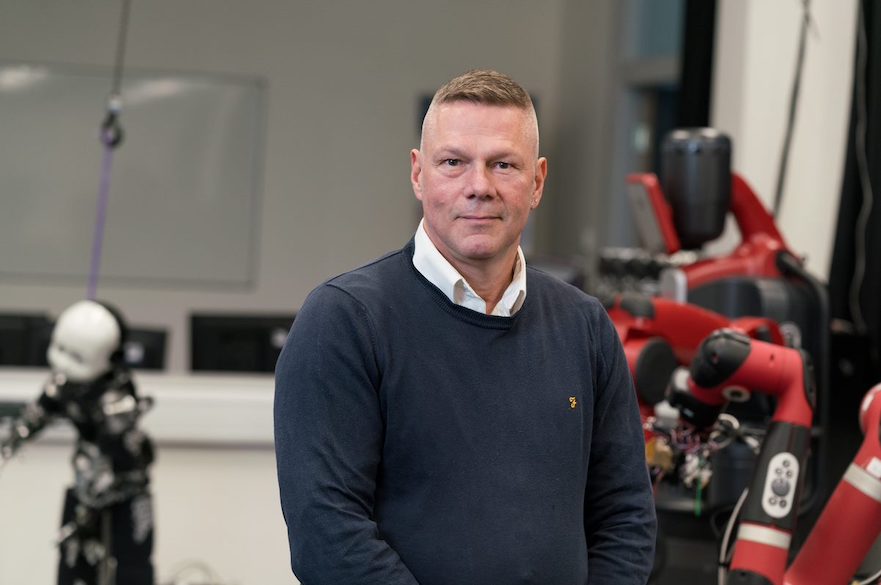
Shweta Yadav is an Assistant Professor in the Department of Computer Science at the University of Illinois Chicago (UIC). Prior to this, she was a Bridge to the Faculty (B2F) fellow at UIC and a postdoctoral research fellow at the U.S. National Library of Medicine, NIH. She holds a Ph.D. in Computer Science from the Indian Institute of Technology Patna, India. Education: Ph.D. in Computer Science, Indian Institute of Technology Patna, India Research Interests Her research focuses on the intersection of Natural Language Processing (NLP), Healthcare Informatics, Biomedical Text Mining, and Computational Social Science. She develops machine learning algorithms to advance AI applications in healthcare, particularly in medical document summarization , disease progression modeling , and health outcome prediction using electronic health records and social media data. Her work emphasizes interdisciplinary collaboration to address real-world healthcare challenges. Recent Publications Her recent publications highlight advancements in Multimodal Mental Health Analysis , Perspective-aware Healthcare Summarization , and Biomedical Relation Extraction . She employs techniques like Transformer models , Contrastive Learning , and Attention Frameworks to tackle low-resource settings and extract insights from complex data sources.
Gedas Adomavicius is a Professor at the University of Minnesota ’s Carlson School of Management , holding the Larson Endowed Chair for Excellence in Business Education. He obtained his PhD in Computer Science from New York University (2002) , with prior degrees in Mathematics (BS/MS, Vilnius University, 1995) and Computer Science (MS, NYU, 1998). Research Focus: Personalization technologies, recommender systems, and machine learning for decision-making in information-intensive environments. Key Contributions: Pioneered techniques for improving recommendation stability, reducing biases, and integrating contextual information into recommendation algorithms. Grants & Recognition: Recipient of the U.S. National Science Foundation CAREER award, INFORMS Information Systems Society Distinguished Fellow Award, and Association for Information Systems Fellow Award. Publications: His work spans leading journals across computer science, information systems, and biomedical informatics. Key trends include advancements in recommender systems (context-aware, multi-stakeholder, and bias-aware models), machine learning for health analytics , and e-market mechanism design . He has over 33,000 citations according to Google Scholar. Education: Diploma (BS/MS) in Mathematics from Vilnius University, 1995 MS in Computer Science from New York University, 1998 PhD in Computer Science from New York University, 2002 Awards & Grants: INFORMS Information Systems Society Distinguished Fellow Award Association for Information Systems Fellow Award National Science Foundation CAREER award Academic Leadership: Served as Senior Editor for Information Systems Research and MIS Quarterly , and as department chair and academic director of the MSBA program at the Carlson School.
Matti Minkkinen is a Docent at the Turku School of Economics (University of Turku) and a Postdoctoral Researcher in Information Systems Science at the Department of Management and Entrepreneurship. His work bridges futures studies with ethics, privacy, and socio-technical systems in digital transformation. Recent roles focus on responsible AI governance and foresight methodologies. University: University of Turku School: Turku School of Economics Department: Department of Management and Entrepreneurship His research explores how digital technologies reshape organizational practices, emphasizing Futures Consciousness as a human capacity. Key themes include responsible AI , privacy protection , and causal layered analysis in scenario planning. Publications highlight ethical governance frameworks and EU policy debates. Recent articles address generative AI ethics , ML system integration , and AI auditing across journals like Communications of the Association for Information Systems and Information and Management . Topics cluster around socio-technical systems, digital ethics, and institutional adaptation to AI. Teaching and editorial roles include co-curating student research collections at Finland Futures Research Centre. No explicit scientific awards are listed, but his work contributes to foresight theory and practice.
Professor Josip Car is a leading academic in population and digital health sciences, serving as Head of King’s School of Life Course & Population Sciences and holding the Chair in Population and Digital Health Sciences. He leads a multidisciplinary team of over 400 experts, focusing on global health systems, AI-driven health innovations, and personalized precision health. His prior leadership roles include Founding Director of the WHO Centre for Digital Health and Health Education, Director of Public Health at Imperial College Healthcare, and Director of the NIHR Primary Care Research Network. Current leadership: Head of King’s School of Life Course & Population Sciences Key institutions: King’s Population Health Institute (KPHI), WHO Centre for Digital Health Global initiatives: EMBRACE AI maternal/child health study, Harvard Health Systems Innovation Hackathon London Hub Digital health research spans medical informatics, AI implementation, and health systems transformation. His work integrates clinical practice, academic research, and executive leadership across multiple countries and health organizations.
Anastasija Arechvo is an Honorary Senior Lecturer at King's College London and Consultant in Fetal Medicine across King’s College Hospital NHS Foundation Trust, Queen’s Hospital (Barking, Havering and Redbridge University Hospitals NHS Trust), and Luton & Dunstable University Hospital (Bedfordshire Hospitals NHS Foundation Trust). She serves as School Lead for Academic Partnerships within King's School of Life Course & Population Sciences, driving global educational collaborations. Her educational background includes: Master’s degree in Genomic Medicine from Queen Mary University of London Currently pursuing Master’s in Global Health at King's College London Dr. Arechvo's research centers on fetal brain development and pregnancy complications, leading the Neurosonography clinic for comprehensive fetal brain assessment across three hospitals. Her work spans pre-eclampsia, gestational diabetes, stillbirth, and AI applications in maternal healthcare, conducted in close collaboration with Professor Kypros Nicolaides' team at the Harris Birthright Research Centre for Fetal Medicine. Recent publications reveal a strong focus on socioeconomic determinants of pregnancy outcomes and AI-driven predictive modeling, exemplified by the EMBRACE project—a global initiative revolutionizing maternal-child health through artificial intelligence interventions. Dr. Arechvo actively supervises PhD, MSc, and BSc students alongside research fellows through King's College London, St George’s University of London, and the Fetal Medicine Foundation. Her academic partnership initiatives strategically enhance educational delivery across institutional networks while advancing fetal medicine service development. She directs the Neurosonography clinic network and collaborates with the Harris Birthright Research Centre, focusing on clinical innovation in fetal brain assessment and pregnancy complication management across multiple NHS Trusts.
Tianming Liu serves as a Distinguished Research Professor in the School of Computing at the University of Georgia, with courtesy faculty appointments in the Department of Epidemiology and Biostatistics at the College of Public Health and the Institute of Bioinformatics. His academic career at UGA spans from Assistant Professor (2008-2013) to Associate Professor (2013-2015) to full Professor (2015-present), culminating in his recognition as a Distinguished Research Professor in 2017. He also serves as Graduate Program Faculty in the School of Computing. Education: Ph.D. in Computer Engineering, Shanghai Jiaotong University, China (2002) Master of Science in Computer Science, Northwestern Polytechnical University, China (1999) Bachelor of Arts in Computer Science, Northwestern Polytechnical University, China (1998) Dr. Liu's research focuses on the intersection of computer science and neuroscience, with particular expertise in biomedical image analysis, computational neuroscience, and biomedical informatics. His work centers on cortical architecture imaging and discovery, developing advanced computational methods for analyzing brain structure and function. His research spans multiple disciplines including neurosciences, cognitive sciences, biomedical engineering, and clinical sciences, with applications in understanding Alzheimer's disease progression, brain connectomics, and neural architecture. Analysis of Dr. Liu's recent publications reveals a strong trajectory in applying deep learning techniques to neuroimaging data. His work increasingly focuses on developing sophisticated neural network architectures specifically designed for brain connectome analysis, with particular attention to spatiotemporal dynamics and hierarchical organization of brain networks. Recent publications demonstrate his leadership in applying neural architecture search methods to optimize brain network analysis pipelines, with applications spanning from Alzheimer's disease research to fundamental neuroscience questions about cortical folding patterns. Scientific Recognition: Distinguished Research Professor at the University of Georgia (2017) Dr. Liu has secured substantial research funding through multiple competitive grants from NIH and NSF, demonstrating the significance and impact of his work. His most notable projects include the NIH R01 grant "Developing an Individualized Deep Connectome Framework for ADRD Analysis," the NIH R01 grant "Mapping Trajectories of Alzheimer's Progression via Personalized Brain Anchor-nodes," and the NSF CRCNS grant "Exploring the Mechanism of 3-Hinge Gyral Formation and its Role in Brain Networks." These projects highlight his leadership in applying computational methods to address critical challenges in neuroscience and medicine, particularly in the domain of Alzheimer's Disease and Related Dementias (ADRD). Dr. Liu collaborates extensively across disciplines, working with researchers at institutions including University of Virginia, Emory University, UNC Chapel Hill, and UT Arlington. His work has contributed to the development of BiomedGPT, an open-source visual-language foundation model for biomedical applications, demonstrating his commitment to creating accessible tools for the broader research community.
Christian Weber serves as a Senior Lecturer & Researcher at the Institute of Business Information Technology within the Zurich University of Applied Sciences (ZHAW) School of Management and Law. He directs the CAS Cyber Security program and contributes to the ZHAW Digital Health Lab, focusing on sustainable digital ecosystems and security frameworks. His educational background includes an Executive MBA in General and Entrepreneurial Management from Johannes Gutenberg-Universität Mainz/McCombs School of Business and a Dipl.-Ing in Industrial Electronics & Electrical Power Engineering from RheinMain University of Applied Sciences. His continuing education spans numerous certifications in AI, sustainability, and digital health from institutions including Hasso Plattner Institute. Weber's research centers on sustainable smart solutions for digital ecosystems, including digital health, ambient assisted living, and smart environments. His work explores computer-supported cooperative working scenarios, applications of open source systems in SMEs, and data protection, cybersecurity, compliance, and forensics as enablers for digital ecosystems. His teaching portfolio spans multiple modules in IT Security, Emerging Technologies, IoT-Data Streaming & Analytics, and Digital Transformation across BSc and MSc Business Informatics programs. His recent publications demonstrate strong interdisciplinary connections between cybersecurity, digital health, and organizational transformation, with particular emphasis on practical applications in real-world settings. His work bridges technical implementations with organizational and societal impacts of digital technologies. Best Paper Award at SMART 2018 for "Citizens as Sensors" research "Educate to lead" award from Soroptimist International Europe for STEM outreach Weber's professional experience combines academic leadership with industry expertise, having served as Managing Director of the Cisco Networking Academy since 2012 and holding previous positions as Administrative Professor and Lecturer at University of Applied Sciences Braunschweig/Wolfenbüttel. His industry background includes executive roles as CIO/CTO and IT management consulting. He contributes to the ZHAW Digital Health Lab and has led projects including the ZHAW Digital Culture Assessment and Digital Health Hackathon, focusing on practical implementations of digital health solutions and organizational transformation.
Kalle Lyytinen is the Iris S. Wolstein Professor of Management Design and Distinguished University Professor at Case Western Reserve University's Weatherhead School of Management, where he also serves as Faculty Director of the Doctor of Business Administration Program. He is a Professor in the Department of Design & Innovation. Lyytinen received his PhD in 1986 from the University of Jyvaskyla, Finland, following an Econ Lic (1982) and MS (1978) from the same institution. He was initially appointed to Case Western Reserve University in 2001. Lyytinen's research focuses on digital innovations and how they shape organizations and industries. His work helps organizations identify, absorb, manage, implement and transform through digital innovations. His specific research areas include the content and logic of digital innovation, digital innovation regimes and infrastructures, organizing processes of digital innovation, and how digital technology shapes engineering and design practices. He has also studied the adoption of new technologies, particularly mobile technologies, new collaboration forms enabled by technologies, and methods for determining large-scale system requirements. With over 450 publications in prestigious journals including Information Systems Research, Management Information Systems Quarterly, and Organization Science, he is among the top five scholars in the information system field by citations (51,000, h-index 100). Lyytinen's recent publications demonstrate his continued leadership in the digital innovation space, with research spanning digital platforms, technical debt, software complexity, and socio-technical systems. His work consistently bridges theoretical frameworks with practical applications across multiple industries and contexts. Distinguished University Professor 2017 Case Western Reserve University Honorary Doctorate 2017 Lappeenranta University of Technology, Finland Enduring Research Impact Award 2016 Weatherhead School of Management Honorary Doctorate 2016 Copenhagen Business School LEO Award 2013 Association for Information Systems Best Paper Awards from AIS (ICIS), HICSS and AoM (OCIS) Lyytinen has served as Vice President for the Association for Information Systems, Senior Editor for Information Systems Research, and Editor-in-Chief for the Journal of the Association for Information Systems. He has held editorial board positions in all major information systems and several organization theory and management journals. His global academic engagements include positions at London School of Economics, Erasmus University, University of Sorbonne, LUISS University, University of Cape Town, Copenhagen Business School, City University of Hong Kong, Auckland University School of Business, Umea University, Aalto University, and Oslo University.
Ioannis Iglezakis is an Associate Professor at the School of Law, Aristotle University of Thessaloniki (AUTH), specializing in the intersection of law and technology. His academic career spans over three decades with continuous contributions to informatics law, cyber law, data protection, and privacy law. At AUTH, he teaches courses including Law of Informatics, Computers and Law I (Cyberlaw I), Computers and Law II (Privacy and Security in the Information Society), Legal Aspects of Cybercrime, Internet-Law, and Law and Information Technology. Dr. Iglezakis earned his undergraduate degree in Law from AUTH in 1987, followed by a Magister Legum Europae from Hannover University in 1993. He completed his postgraduate studies in History, Philosophy and Sociology of Law at AUTH in 1990 and earned his PhD in Law from AUTH in 1999. His educational background combines Greek legal training with European legal perspectives. His research interests focus on the legal challenges posed by digital technologies, with particular emphasis on data protection, privacy law, cybercrime regulation, digital rights, and the application of GDPR in various contexts. He has published extensively on topics including the right to be forgotten, digital identity management, workplace surveillance in the digital age, hate speech online, and the legal implications of emerging technologies like blockchain and artificial intelligence. His work bridges theoretical legal analysis with practical applications in the rapidly evolving digital landscape. The trends in his publications reveal a consistent focus on the evolving relationship between law and technology, with increasing attention to GDPR implementation, health data protection, and the challenges of algorithmic decision-making. His work spans multiple disciplines including legal theory, privacy studies, cyber security, and digital governance, reflecting the interdisciplinary nature of modern informatics law. Dr. Iglezakis has supervised over 50 master's theses at AUTH, mentoring the next generation of legal scholars in areas including cloud computing contracts, personal data protection, social media law, intellectual property in digital environments, and cybercrime. His administrative roles have included membership on the European Educational Programs Committee (2011-2012) and the Legal Committee of AUTH (2013-2014). His research projects include the 2018-2019 study on 'Legal Issues of Mobile Applications Development, Distribution and Use,' the 2014 '6th International Conference on Informatics Law,' and the 2013-2015 Center of Excellence for Cybercrime for Education, Research and Training in Greece. These projects highlight his commitment to addressing practical legal challenges in the digital domain while contributing to academic discourse.
David Brown is a Professor in Interactive Systems for Social Inclusion at Nottingham Trent University's School of Science & Technology, Department of Computer Science. He serves as Director of the Computing and Informatics Research Centre (CIRC) and Research Group Leader for the Interactive Systems Research Group (ISRG). Director, Computing and Informatics Research Centre Research Group Leader, Interactive Systems Research Group Governor, Oak Field School for students with severe learning disabilities Conference Chair, International Conference on Disability, Virtual Reality and Associated Technology (ICDVRAT21) Associate Editor, Frontiers: Virtual Reality in Medicine Professor Brown's research focuses on developing inclusive technologies for people with disabilities. His work spans accessibility for students with learning, physical and sensory impairments; virtual reality applications for rehabilitation; multimodal affect recognition systems; social robotics for education; accessible visual programming toolkits; and serious games for developing physical and cognitive skills. His research is characterized by strong interdisciplinary collaboration and practical application in educational and healthcare settings. His recent publications demonstrate a consistent focus on applying emerging technologies like virtual reality, machine learning, and social robotics to address real-world challenges in accessibility and inclusion. The research shows a clear trajectory toward increasingly sophisticated multimodal systems that can detect user states and adapt accordingly, with applications ranging from autism support to mental health interventions. Extensive EU-funded research projects including Horizon 2020, Erasmus+, and EPSRC grants Notable projects: DIVERSIA, MaTHiSiS, Pathway, AI-TOP, EDUROB, No One Left Behind, Real Life, RISE Professor Brown has supervised numerous PhD students and collaborates extensively with international partners across Europe and Asia. His work bridges computer science, psychology, education, and healthcare to create technologies that promote social inclusion and improve quality of life for people with disabilities.
Dr. Shweta Singh serves as an Assistant Professor of Information Systems and Management at Warwick Business School, University of Warwick. She concurrently holds prestigious appointments as a Fellow at the Warwick Institute for Global Sustainability Development (IGSD) and a Behavioral Data Science researcher at The Alan Turing Institute in London. Her academic journey includes a Ph.D. in Information and Decision Sciences from the Carlson School of Management at the University of Minnesota, complemented by dual Master's degrees in Computer Science and Applied Economics from the same institution. Ph.D. in Information and Decision Sciences, University of Minnesota Master's in Computer Science, University of Minnesota Master's in Applied Economics, University of Minnesota Dr. Singh's research centers on developing ethical and responsible artificial intelligence systems that address societal challenges. Her work specifically targets mitigating AI bias, creating explainable AI frameworks, and leveraging technology to combat societal injustice. She investigates how digital platforms, sharing economy models, and IT outsourcing create business value while ensuring these technologies promote sustainability and reduce inequalities. Her innovative approach combines technical AI expertise with deep social awareness, particularly focusing on gender equality and child protection in digital spaces. Her publication record demonstrates consistent high-impact contributions to Information Systems Research, International Conference on Information Systems, and related venues. The trajectory of her work shows increasing focus on practical applications of responsible AI, with recent projects addressing online child safety and human trafficking prevention. Her research increasingly intersects with policy development, as evidenced by her contributions to UK Parliamentary Office of Science and Technology briefs. Doctoral Dissertation Fellowship, University of Minnesota McNamara Fellowship, University of Minnesota Social Impact Project of the Year shortlist (2023) Asian Women of Achievement Award finalist (2023) British Indian Awards finalist (2019) Top 5 Women in Tech for Good Award shortlist (2022) Inspiring 50 UK recognition (2025) Dr. Singh actively mentors students and has been recognized with the Staff Social Inclusion Award (2024) for her teaching excellence. Her advisory roles extend beyond academia to include the UN Women UK delegation for the Commission on the Status of Women and the Advisory Board of AI retail company 'Love the Sales'. She serves as an external collaborator for Boston Consulting Group's Henderson Institute, bridging academic research with industry applications. Through her leadership in the ISM-Analytics (ISMA) Group at Warwick, Dr. Singh fosters interdisciplinary collaboration focused on creating socially responsible technological solutions. Her work with the IGSD specifically targets UN sustainability goals related to reducing inequalities and promoting inclusive societies through responsible AI implementation.
Allen Hsiao MD, FAAP, FAMIA is Professor of Pediatrics, Biomedical Informatics and Data Science, and Emergency Medicine at Yale School of Medicine. He serves as Chief Health Information Officer (CHIO) for Yale School of Medicine and Yale New Haven Health System, and as Vice Chair of Clinical Systems in Biomedical Informatics & Data Science. BA in Biomedical Ethics and MD from Brown University Pediatrics residency at Yale-New Haven Children's Hospital Fellowships in Pediatric Emergency Medicine and Medical Informatics at Yale His research focuses on leveraging health information technology to improve care delivery, with emphasis on electronic health records, clinical decision support, natural language processing, and AI applications. He actively explores how informatics can optimize systems, improve transitions of care, and advance health equity through diverse clinical trial participation. His work spans pediatric emergency medicine, gastroenterology, child abuse detection, and opioid safety. Dr. Hsiao's recent publications demonstrate leadership in AI-augmented clinical decision support, EHR-based machine learning models, and pandemic response infrastructure. His team has developed innovative tools for child abuse identification, gastrointestinal bleeding risk prediction, and collaborative research data platforms. 56 Hospital and Health System CMIOs and CNIOs to Know (Becker's Healthcare, 2023) Healthcare Diversity Leader Award (National Diversity Council, 2023) 48 CMIOs and CNIOs to Know (Becker's Hospital Review, 2022) Norman J. Siegel Faculty Award (Yale School of Medicine, 2022) As principal investigator and co-investigator on NIH and AHRQ-funded grants, he examines health information technology's impact on healthcare quality. He co-directs Yale's CTSA Informatics Core, working with Yale Center for Clinical Investigations to equip researchers with EHR (Epic) and clinical trials management (OnCore) tools. His leadership extends to national committees including American Academy of Pediatrics, HIMSS, and Children's Hospitals Association.
Dr. Shabnam Sadeghi Esfahlani is an Associate Professor in Robotics at the School of Engineering and the Built Environment, Anglia Ruskin University , where she serves as Deputy Leader of the BORI research group and leads the Automation & Robotics MSc program. Her interdisciplinary expertise spans mechatronics, artificial intelligence, virtual reality, and serious games , with a focus on applications for rehabilitation, medical training, and autonomous systems . As a Chartered Engineer and Senior Fellow of the Higher Education Academy , she has secured significant funding from Innovate UK, Horizon 2020, and GCRF , with grants exceeding £3 million. Education PhD in Mechanical Engineering, Anglia Ruskin University BSc (First Class) in Statistics & Mathematical Science, Shahid Beheshty University Her research integrates AI with robotics for societal impact, exemplified by the open-source SROBO ground robot and projects like Rehabgame and the Assistive Feeding Robot . She has published over 45 peer-reviewed articles and contributes to academic communities as a journal guest editor and conference organizer . Key collaborations include IET, IMechE, and the Nuffield Foundation as a mentor for young students. Scientific Awards & Recognitions: Chartered Engineer (CEng), Engineering Council UK Senior Fellow (SFHEA), Higher Education Academy Student-Voted 'Made a Difference Award' (2018) Post-Graduate Certificate in Higher Education
Dr. Jun Hu is an Associate Professor in Design Research on Social Computing at the Department of Industrial Design, Eindhoven University of Technology (TU/e). He serves as the Scientific Director for the Engineering Doctorate program in Designing Human-System Interaction and is the chair of the working group "Aesthetics and empowerment" of IFIP TC14. Additionally, he holds positions as a Distinguished Adjunct Professor at Jiangnan University and a Guest Professor at Zhejiang University. Dr. Hu earned his Ph.D. degree in Interaction Design and an Engineering Doctorate degree in User-system Interaction, both from TU/e. He also holds a B.Sc degree in Mathematics and an M.Eng degree in Computer Science. He is a System Analyst and a Senior Programmer with qualifications from the Ministry of Human Resources and Social Security, and the Ministry of Industry and Information Technology of China. His research focuses on the intersection of Human-Computer Interaction, Social Computing, and Design Research, with particular interests in data physicalization, empowering systems, and health informatics. Dr. Hu's work explores how technology can be designed to support human needs in social contexts, with applications in health, stress management, and physical activity motivation. His approach often combines aesthetic considerations with functional design to create systems that empower users. Analysis of Dr. Hu's recent publications reveals a strong focus on data physicalization, social aspects of personal informatics, and health applications of interactive systems. His work spans from theoretical frameworks for understanding user interaction with physicalized data to practical applications in stress management for children and motivation for physical activity. There's a clear trend toward integrating AI capabilities into human-centered design approaches while maintaining a focus on user empowerment. Senior Member of ACM Distinguished Adjunct Professor at Jiangnan University Guest Professor at Zhejiang University Editor-in-chief for EAI Endorsed Transactions on Pervasive Health and Technology Associate editor for Behaviour & Information Technology and Entertainment Computing Editor for the International Journal of Arts and Technology Dr. Hu has supervised numerous students through the Engineering Doctorate program and has been involved in various research grants, particularly in the areas of health technology and human-system interaction. He has served in leadership roles including head of the Designed Intelligence group at ID TU/e from 2015-2017 and currently chairs the working group "Aesthetics and empowerment" of IFIP TC14. He coordinates the TU/e DESIS Lab in the DESIS Network and serves on multiple editorial boards. Dr. Hu is actively involved with the Design Of Empowering Systems research group and the EAISI Health initiative at TU/e. His work often involves interdisciplinary collaboration across computer science, design, and healthcare domains, focusing on creating systems that empower users through thoughtful integration of technology into everyday contexts. He also serves as Chairman of the Foundation for Design Promotion in Europe and China and is a board member of the International Chinese Association of Computer Human Interaction (ICACHI).
Fengqing Maggie Zhu is an Associate Professor at the Elmore Family School of Electrical and Computer Engineering within Purdue University , West Lafayette campus. Her research spans image processing , video compression , computer vision , and smart health , with notable contributions to learned image compression , 3D reconstruction , and nutrition analysis via computer vision . Educational background: BS in Electrical Engineering, Purdue University (2004) MS in Electrical and Computer Engineering, Purdue University (2006) PhD in Electrical and Computer Engineering, Purdue University (2011) Her work focuses on developing machine learning-based compression techniques for 2D/3D images and videos, with applications in food portion estimation , wearable dietary monitoring , and virtual reality facial expression tracking . She explores structured pruning , mixed precision quantization , and continual learning to create efficient, robust systems for edge-cloud collaboration. The 2025-2024 article collection reveals concentrated efforts in learned image compression (with 8 papers on quantization, pruning, hierarchical VAEs), food-related computer vision (12+ papers on portion estimation, databases, classification), and 3D reconstruction (MetaFood3D dataset, ICP-3DGS algorithm). Emerging themes include privacy-preserving AI for wearable cameras and class-incremental learning frameworks. Contact: zhu0@purdue.edu