Dr. Milos Hauskrecht is a Professor of Computer Science at the University of Pittsburgh's School of Computing and Information. He holds a PhD from MIT (1997) and an M.Sc. from Slovak Technical University (1988). His research focuses on AI, machine learning, and data mining, with applications in medicine and finance. He leads projects in real-time clinical monitoring, anomaly detection, and time-series analysis of EHR data. He has advised numerous PhD and MS students, including notable alumni now at Amazon, DeepMind, and Microsoft. Research interests include reasoning under uncertainty, optimization, and AI-driven medical decision support. Current grants include NIH funding for AI in renal therapy and clinical monitoring. He has published widely in top venues like ICML, NeurIPS, and journals such as Artificial Intelligence in Medicine. His work on conditional outlier detection earned the Homer Warner Award (AMIA 2010). He teaches machine learning and advises on interdisciplinary AI projects.
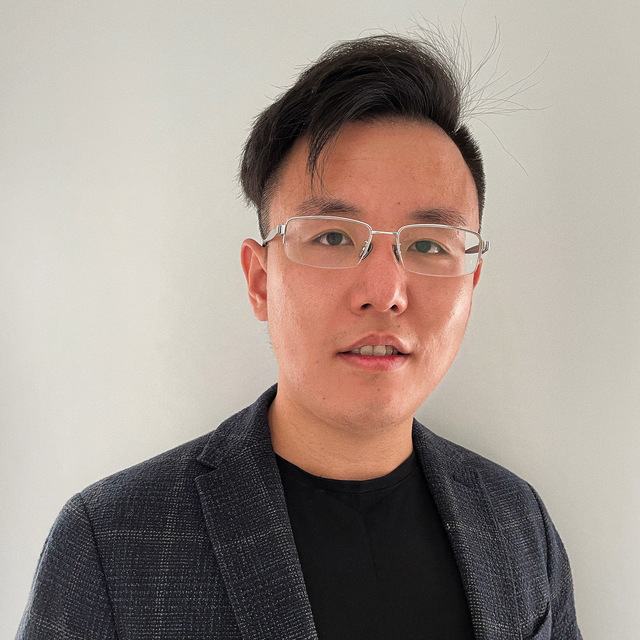
Di Zhu is an Assistant Professor of Geographic Information Science at the University of Minnesota's Department of Geography, Environment and Society. He directs the Geospatial Data Intelligence (GeoDI) Lab, focusing on GeoAI and social sensing to analyze human-environment interactions in urban systems, public health, and socioeconomic dynamics. His educational background includes a PhD in Cartology and GIScience from Peking University, complemented by a BSc in GIS and a BA in Economics from the same institution. Key research interests include spatial regression models, human mobility patterns, and GeoAI applications. He has collaborated on projects funded by NIH, NSF, and other agencies, exploring topics like spatiotemporal data imputation, urban flow analysis, and pandemic spatial dynamics. His work bridges traditional GIScience with modern machine learning techniques, emphasizing actionable insights from big geospatial data. Teaching focuses on advanced GIS, numerical spatial analysis, and urban sensing. He actively mentors students through the University of Minnesota's Master of GIS program and serves on academic boards including CPGIS. Current projects include analyzing Twin Cities mobility networks and developing intelligent spatial prediction frameworks.
Christos Nicolaides is an Assistant Professor at the Department of Business and Public Administration within the School of Economics and Management at the University of Cyprus (UCY), holding a secondary appointment as a Digital Fellow at MIT's Initiative on the Digital Economy. Previously, he spent three years as a James McDonnell Foundation-funded Postdoctoral Fellow at MIT Sloan School of Management. His educational background includes a PhD in Engineering from Massachusetts Institute of Technology (2014), SM from MIT (2011), MSc in Applied Mathematics from Imperial College London (2009), and BSc in Physics from University of Thessaloniki (2008). Nicolaides' research applies mathematical, statistical, and computational tools to large-scale empirical questions in social influence mediated by digital technologies. His work spans Data Science , Machine Learning , Social Networks , and Computational Social Science , with significant contributions to understanding human mobility patterns, disease transmission dynamics, and social contagion effects. His research has established novel methodologies for analyzing complex network structures in mobility data and social interactions. Analysis of his 15 most recent publications reveals a consistent focus on applying network science to real-world problems, particularly in pandemic response (12 publications), human mobility analytics (9 publications), and social contagion dynamics (7 publications). His work demonstrates increasing interdisciplinary integration, combining computer science, epidemiology, and organizational behavior since 2020. Marie S. Curie Fellow Two Highly Cited Papers by Web of Science (2017, 2020) Best Paper Award by Risk Analysis Society (2019) Professor of The Week by Poets & Quants (2020) As principal institutional investigator, Nicolaides has secured over €1 million in research funding from the European Commission, industry partners, Cyprus Innovation and Research Foundation, and Cyprus Ministry of Health. His current teaching includes Social Networks and Entrepreneurship, Introduction to Operations Management, and Quantitative Methods in Management. Media coverage of his work spans major outlets including The New York Times, CNN, Nature, and Science, with significant impact on public health policy discussions during the COVID-19 pandemic.
Professor Guy Brown is Chair of Computer Science at the University of Sheffield's School of Computer Science. He holds a BSc in Applied Science (1984), PhD in Computer Science (1992), and MEd in Teaching and Learning (1997). His research focuses on Computational Auditory Scene Analysis (CASA), noise-robust speech recognition, auditory modeling, and binaural processing. Research interests include: Machine hearing systems for sound source separation Reverberation-robust speech processing Auditory scene analysis models for normal/impaired hearing Applications in robotics and healthcare technologies Publication trends show recent focus on deep learning approaches for biomedical applications including sleep apnea detection, respiratory sound analysis, and multimodal health monitoring systems using neural networks. Honors include: University Senate Award for Excellence in Teaching (2014) Microsoft Software Engineering Innovation Award (2013) He leads doctoral supervision for 15+ students and has secured research funding from EPSRC, Innovate UK, EU FP7, and AHRC. Manages the Speech and Hearing research group and has held visiting positions at international institutions including LIMSI-CNRS and ATR Japan.
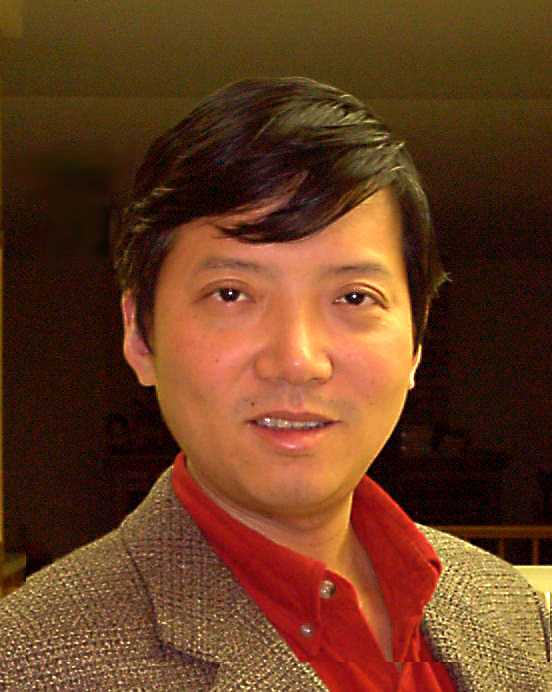
Charles Ling is a Professor of Computer Science at Western University, holding the title of Science Distinguished Research Professor. He also serves as Director of the Data Mining and Business Intelligence Lab and Associate Scientist at the Lawson Health Research Institute. His academic background includes a B.Eng. (CS and EE) from Shanghai Jiao Tong University and MSc/PhD from the University of Pennsylvania (UPenn). Research interests span machine learning, deep learning, AI, and healthcare informatics, with notable contributions to the GlucoGuide diabetes management system. He has authored over 220 peer-reviewed papers and a book titled Crafting Your Research Future , focusing on academic career development. Awarded Fellow of the Canadian Academy of Engineering (CAE) and recipient of the First Prize for Best Clinical Research Presentation (2011). Active in grants (NSERC, FedDev, Mitacs) and organizational roles in top conferences (KDD, ICDM). Supervises 5 PhD and 4 MSc students, with notable advisees including Harry Zhang and Victor Sheng. Leverages AI in education to enhance children's cognitive abilities through video-based programs like Power Thinking , approved by Curriculum Services Canada. His work integrates machine learning with healthcare, finance, and software engineering.
Dr. Rahat Masood is a Lecturer at the School of Computer Science & Engineering (CSE), UNSW Sydney. Her research focuses on cybersecurity, including privacy-preserving technologies, authentication mechanisms, critical infrastructure protection, and network security analysis. She holds a PhD in Information Security and Privacy from UNSW (Data61-CSIRO, Australia), an MS in Computer and Communication Security from NUST, Pakistan, and a B.Sc. in Software Engineering from the University of Engineering & Technology, Pakistan. Her academic contributions span theoretical and applied cybersecurity domains. Dr. Masood’s educational background includes: PhD: Information Security and Privacy (UNSW, Data61-CSIRO, Australia) MS: Computer and Communication Security (NUST, Pakistan) B.Sc.: Software Engineering (University of Engineering & Technology, Pakistan) Her research interests emphasize privacy technologies, authentication systems, and securing distributed energy resources. Recent work includes developing frameworks for quantifying privacy risks and analyzing social media manipulations. She employs data-driven methodologies and machine learning to address challenges such as WiFi device tracking and federated learning security. In her publications, she highlights trends in privacy controls usability, satirical news detection using multilingual models, and threat modeling for critical infrastructure. These studies underscore her commitment to bridging cybersecurity theory with real-world applications. No scientific awards are mentioned in the provided texts. Her teaching and supervision roles at UNSW are active, though specific student advisees or grant details are not listed. She is affiliated with Data61-CSIRO through her PhD and contributes to interdisciplinary cybersecurity efforts within CSE.
Thomas Tran is a Full Professor at the School of Electrical Engineering and Computer Science (EECS) at the University of Ottawa. He holds a Ph.D. in Computer Science from the University of Waterloo (2004) and a B.Sc. (Double Major in Mathematics and Computer Science) from Brandon University (1999). His research focuses on Artificial Intelligence, Electronic Commerce, Multi-Agent Systems, Trust and Reputation Modeling, and Recommender Systems. He has published over 80 refereed papers and supervised 27 graduate students (4 PhDs and 23 Masters). Education: Ph.D. in Computer Science, University of Waterloo (2004) B.Sc. (Double Major in Mathematics and Computer Science), Brandon University (1999) Research Interests: AI Applications in E-Commerce and Mobile Business Trust Establishment Models in Multi-Agent Systems Recommender Systems and Deep Learning Clinical Data Analysis for Hidradenitis Suppurativa Awards: Governor General's Gold Medal (2004) NSERC Postgraduate Scholarships (PGS A/B) AAAI Doctoral Consortium Participant (2002) Advising and Grants: Supervised 27 graduate students Recipient of multiple research grants (details unspecified) Labs/Teams: Active in AI and E-Commerce research groups within EECS.
Dr. Melissa McCradden is a THRF Clinical Research Fellow at the Australian Institute for Machine Learning (University of Adelaide), Deputy Research Director at the Women's and Children's Health Network, and an Adjunct Scientist at the SickKids Research Institute (Toronto). Her work focuses on ethical frameworks for integrating AI into healthcare, addressing algorithmic bias, and advancing clinical evaluation standards. She holds a PhD in Neuroscience and a Master’s in Bioethics, and has pioneered initiatives like the STANDING Together consensus for AI ethics. Education: PhD in Neuroscience (McMaster University, 202?), Master of Health Sciences in Bioethics (University of Toronto, 20?), inaugural Postdoctoral Fellow in AI Ethics at SickKids/Vector Institute. Research Interests: Ethical AI integration in healthcare, clinical trial methodologies (CONSORT-AI, SPIRIT-AI), bias mitigation in medical datasets, and pediatric AI ethics. Her projects include CANAIRI (AI trials collaboration) and promoting AI literacy among patients. Awards: Listed among the 100 Brilliant Women in AI Ethics. Grants: THRF Fellowship, WHO Clinical Evaluation Task Force involvement. Supervision: Co-supervisor for PhD candidate Lana Tikhomirov (2024). Grants include Centre for Augmented Reasoning funding and Canadian Institutes of Health Research. Labs/Teams: Deputy Director at Australian Institute for Machine Learning, member of WHO’s Clinical Evaluation Task Force for Healthcare AI, and co-chair of DECIDE-AI guidelines for first-in-human trials.
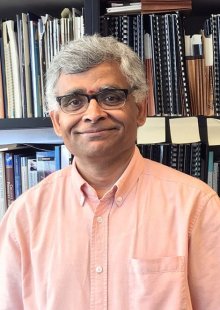
Dr. Sundaresan Jayaraman is a Professor at the School of Materials Science and Engineering, Georgia Institute of Technology, and Founding Director of the Kolon Center for Lifestyle Innovation. His research focuses on converging textiles with computing, notably pioneering the concept of 'Fabric is the Computer.' Key contributions include the Smart Shirt (Wearable Motherboard™), featured in LIFE Magazine and archived at the Smithsonian. He has secured $16M+ in research funding from NSF, DARPA, and industry. His work spans smart textiles, respiratory protection systems, and computer-aided manufacturing. Awards include the 1989 Presidential Young Investigator Award and the 2018 Textile Institute Research Publication Award. He holds ten U.S. patents and serves on editorial and advisory boards for journals like the Journal of the Textile Institute. Professional roles include leadership in National Academies committees on manufacturing and personal protective equipment. Education & Early Career: Dr. Jayaraman’s career began at Software Arts, Inc. (developers of VisiCalc) and Lotus Development Corporation, where he contributed to early spreadsheet and equation-solving software. His PhD research led to TK!Solver, a pioneering equation-solving program. Research Interests: His work bridges engineering and healthcare through smart textiles, wearable biomedical systems, and advanced manufacturing. Current projects address respiratory protection systems, wearable sensor networks, and personalized healthcare technologies. He emphasizes interdisciplinary collaboration to address societal challenges in health, security, and quality of life. Publications & Impact: Over 100 refereed papers and book chapters highlight his contributions to textile informatics, healthcare wearables, and manufacturing automation. Recent articles focus on next-generation respiratory protection devices and continuous fit monitoring systems. Past innovations include the Wearable Motherboard™ and sensor-integrated garments for vital signs monitoring. Awards & Recognition: In addition to his NSF and Textile Institute honors, he received the Georgia Technology Research Leader Award (2000) and Distinguished Alumni Award from A.C. College of Technology (2019). He is a Fellow of the Textile Institute and founding member of IEEE Technical Committees on Biomedical Wearables. Labs & Teams: Leads the Kolon Center for Lifestyle Innovation and collaborates with industry partners on textile-based computing solutions. His lab’s work on 3D-printed respiratory devices and smart garments exemplifies cutting-edge translational research.
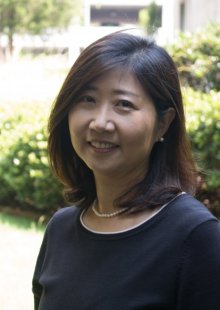
Sungmee Park is a Principal Research Scientist at the School of Materials Science and Engineering at Georgia Institute of Technology. Her work bridges academia and industry, with groundbreaking contributions to smart textiles and wearable technologies. She co-invented the world’s first Wearable Motherboard (Smart Shirt) in 1996, foundational to modern wearables. At Kolon Glotech in South Korea, she developed Printronix printing technology and heating textiles (HeaTex), applied in sports, military, and automotive sectors. She also served as Vice President and Head of Future Strategy at Kolon Corporation, driving innovation in strategic partnerships and new ventures. Her research focuses on electronic textiles, smart fabrics, and wearable biomedical systems, addressing health monitoring, security, and human welfare. With over 30 patents and numerous publications, her work emphasizes translating research into practical applications like low-cost reusable masks and respiratory protection devices. Key collaborations include ongoing projects with Professor Jayaraman on wearable data platforms and Big Data analysis. Dr. Park’s articles highlight advancements in textile-based electronics, wearable healthcare systems, and smart textile manufacturing. She has pioneered methodologies for integrating sensors and communication systems into fabrics, enabling applications from athlete monitoring to SIDS prevention. Her contributions reflect a vision of technology enhancing quality of life through interdisciplinary innovation at the intersection of art, science, and engineering. Notable projects include the Inspiring Journey Exhibit showcasing her work in art-science fusion and strategic leadership in identifying new growth areas for the Kolon Group. Her research continues to drive global impact through sustainable, human-centered technological solutions.
Dr. Svetlana Yanushkevich is a Professor in the Department of Electrical and Software Engineering at the Schulich School of Engineering, University of Calgary. She is also a Full Member of the Hotchkiss Brain Institute and the Mathison Centre for Mental Health Research and Education. Her research focuses on biometric technologies, decision support systems, biomedical applications, and computational intelligence. She leads the Biometric Technologies Laboratory, developing strategies for risk assessment in biometric systems and healthcare monitoring through machine reasoning and signal processing. Education : BSc/MSc in Electrical Engineering (1989), State University of Informatics and Radioelectronics, Minsk PhD in Electrical Engineering (1992), same institution Dr. Habilitated in Technical Sciences (1999), Warsaw University of Technology Research Interests : Dr. Yanushkevich’s work spans biometric system design (e.g., gait analysis, facial attributes), decision support via probabilistic models (Bayesian networks, causal inference), biomedical applications (stroke rehabilitation, wearable sensors), and computational intelligence for data science. She emphasizes fairness, bias mitigation, and trustworthiness in AI systems, particularly in healthcare and accessibility contexts. Recent Research Trends : Her recent publications address causal modeling for accessibility barriers, UAV operator cognitive workload, and medical device optimization in radiation therapy. She explores AI ethics, stress contagion in human-robot teams, and cross-spectral biometric systems. Awards & Recognition : 2024 FEIC Fellow (Engineering Institute of Canada) 2019 Research Excellence Award (Schulich School of Engineering) 2001 Senior IEEE Membership Advising & Grants : She coordinates courses like ENCM 509 (Biometric Systems Design) and ENEL 610 (Biometric Technologies). Her research is supported by grants focusing on healthcare AI, accessibility technologies, and computational epidemiology. Labs & Collaborations : Her Biometric Technologies Lab collaborates with institutions like Hokkaido University and the IEEE Computational Intelligence Society. Projects include wearable health monitoring, decision support platforms, and AI-driven epidemiological modeling.
Luis Espinosa-Anke is a Senior Lecturer at Cardiff University's School of Computer Science and Informatics. His academic journey includes working as a Natural Language Processing (NLP) scientist at Savana Médica, a Madrid-based healthcare AI company, prior to joining Cardiff. He completed his PhD at Pompeu Fabra University in Barcelona while working at Savana. Dr. Espinosa-Anke's research focuses on Artificial Intelligence and NLP, with particular emphasis on meaning representation, computational semantics, multilingual NLP, and computational lexicography. His work spans theoretical and applied aspects of language technology, with applications in healthcare, social media analysis, and multilingual systems. His recent publications reveal a strong trend toward analyzing language model behavior, bias detection in AI systems, and creating resources for semantic analysis. The publications show increasing focus on practical applications of NLP in healthcare, social media, and cross-lingual settings, with notable contributions to datasets like WIKITIDE and 3D-EX that support definition extraction and semantic understanding. laCaixa Fellow Fulbright scholarship recipient Erasmus Mundus program participant Dr. Espinosa-Anke has secured research funding including a Kaggle Open Research grant ($2,000 USD) as PI for the 'Don't Patronize Me!' project, a Snap Inc. grant ($10,000 USD) as CO-I for modeling meaning shift in social media, and a £90,000 Welsh Government grant for English-Welsh bilingual embeddings research. He currently supervises five PhD students working on meaning representations, contextual word embeddings, NLP for healthcare applications, and metaphor identification.
Dr. Kanika Goel is a Lecturer in the School of Information Systems at Queensland University of Technology (QUT), specializing in Business Process Management (BPM), Data Governance, and Process Analytics. She holds a PhD from QUT and has over 9 years of teaching experience, coordinating programs such as BIT Honours (IN10) and Masters of Philosophy (IN80). Her research focuses on process-oriented data analytics, data quality, and process mining, with industry collaborations spanning health, retail, and asset management sectors. She is a Lean Six Sigma Green Belt certified trainer and a Fellow of the Higher Education Academy (FHEA). Dr. Goel has led several industry-funded projects, emphasizing applied research in data governance, process mining, and process improvement. Notably, she received the Vice-Chancellor's Award for Excellence (2019) for innovative BPM integration in research management systems. Her work bridges academic research and real-world applications, contributing to journals like Business and Information Systems Engineering and IEEE Access . She teaches courses on Business Process Technologies, Modern Data Management, and BPM units in QUT's continuing professional education programs. Her articles explore topics like data imperfections in healthcare systems, process standardization strategies, and privacy risks in NoSQL databases. She advocates for digital literacy and has published on initiatives to build tech-savvy communities. Dr. Goel is also involved in supervising research topics such as prescriptive process analytics and process-data governance patterns.
Neil Maiden is Professor of Digital Creativity at Bayes Business School, City, University of London, where he also serves as Director of the Centre for Creativity enabled by AI (CebAI). He co-founded the Centre for Creativity in Professional Practice and leads interdisciplinary research at the intersection of software engineering, creativity science, and digital innovation. His expertise spans digital creativity support, requirements engineering, and AI-augmented systems for professional domains. PhD in Computer Science, 1992 Tenured at School of Informatics, City, University of London, 1995 Promoted to Professor of Systems Engineering, 2003 Visiting Professor at Ca' Foscari University of Venice, 2017–2019 and 2023–2024 Neil's research focuses on two primary domains: (1) Co-Creative AI for professional work, where he develops computational tools like Sport Sparks and Design Sparks to enhance creative thinking in journalism, design, and sports coaching; and (2) Specifying and designing complex digital systems using advanced requirements engineering methods applied in sectors such as air traffic, healthcare, and defence. His work is grounded in real-world applications, with collaborations involving Rolls-Royce, IBM, NATS, Sunderland AFC, and award-winning newsrooms. The 15 most recent publications reflect a strong trend toward integrating AI and computational models into creativity support and requirements engineering. Topics include automating journalism, enhancing dementia care, and modeling quality of life goals. Keywords span journalism, AI, software engineering, and digital health, with sub-fields such as generative AI, creative problem solving, assistive technology, and co-creative systems, demonstrating a consistent focus on human-centered innovation. Neil has been recognized through numerous invited keynotes and peer awards, though specific award names are not detailed in the text. He has supervised doctoral research and advised on multiple PhD projects, though student names are not listed. His research has been funded by major bodies including UKRI, EPSRC, EU (H2020), Innovate UK, and industry partners, with over £64 million in total project value and direct management of over £10 million at City. Notable grants include CebAI (£3.36M), SCAMPI (£943K), and QUEST (€1.14M). Neil leads the Centre for Creativity enabled by AI (CebAI) and previously co-founded the Centre for Creativity in Professional Practice. His research teams have developed tools such as BrightSparks, INJECT, and Care’N’Share, and he launched the JECT.AI startup to commercialize creativity support in news and content creation.
Carlos Castillo-Salgado is a Professor at the Johns Hopkins Bloomberg School of Public Health, jointly affiliated with the School of Medicine. He holds primary and joint appointments in the Department of Epidemiology, Population, Family and Reproductive Health, and Health Policy and Management. His work spans epidemiological methodology, public health surveillance, and global health policy. DrPH, Johns Hopkins Bloomberg School of Public Health, 1987 MPH, Johns Hopkins Bloomberg School of Public Health, 1981 MD, National Autonomous University of Mexico, 1978 JD, University of Guadalajara, 1972 His research focuses on epidemiological methods , geographic information systems in health , measuring health inequalities , urban health metrics , and public health intelligence . He is a pioneer in applying GIS to public health and has led major initiatives in health surveillance across Latin America. Recent publications (2023–2025) highlight his continued engagement in global public health challenges , including COVID-19 , vaccine hesitancy , AI in triage , and health inequities in urban settings . His work emphasizes data integration, equity, and policy-relevant research, particularly in Mexico and South America. The Latino Caucus’ Distinguished Nationally Known Health Professional Award 2019 Distinguished Alumnus Award, Johns Hopkins University, 2017 Golden Apple Award, 2017–2018 PAHO/WHO Director's Award for Outstanding Performance, 1996 OTHLI Award Medal from the Government of Mexico, 1999 Numerary Member, National Academy of Medicine of Mexico, 2017 Dr. Castillo-Salgado is a dedicated educator, recognized with multiple teaching and mentoring awards, including the AMTRA Award. He led impactful projects such as the NASA-funded integration of Earth science data into PAHO decision support systems and the "Brasilia Without Borders" executive leadership program. His career includes high-level service at PAHO/WHO, where he achieved the P6 professional rank—the highest in the UN system—demonstrating sustained leadership in global health. He is actively involved in collaborative research networks across Latin America and has contributed to major public health initiatives, including health impact assessments and strategic planning for national health systems.