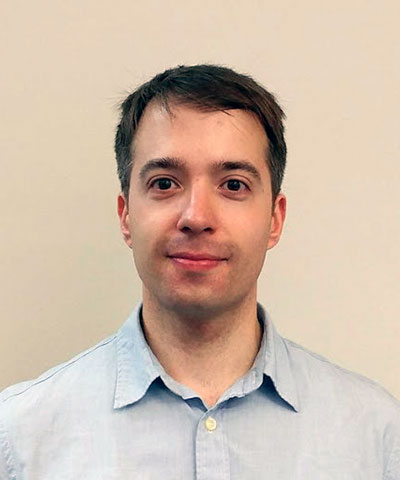
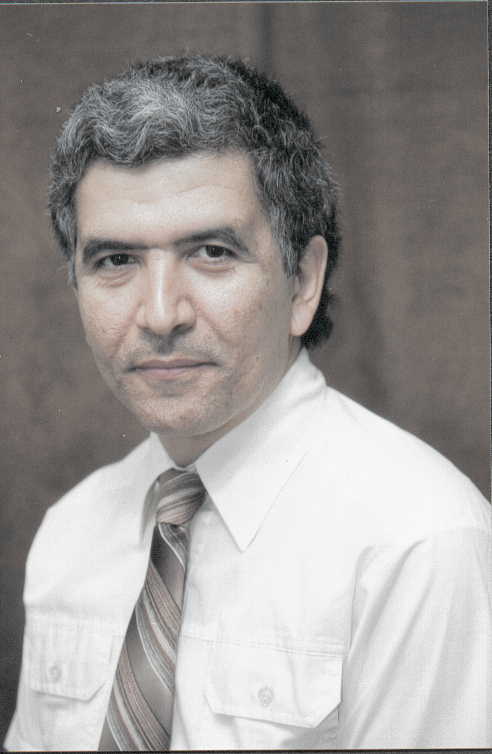
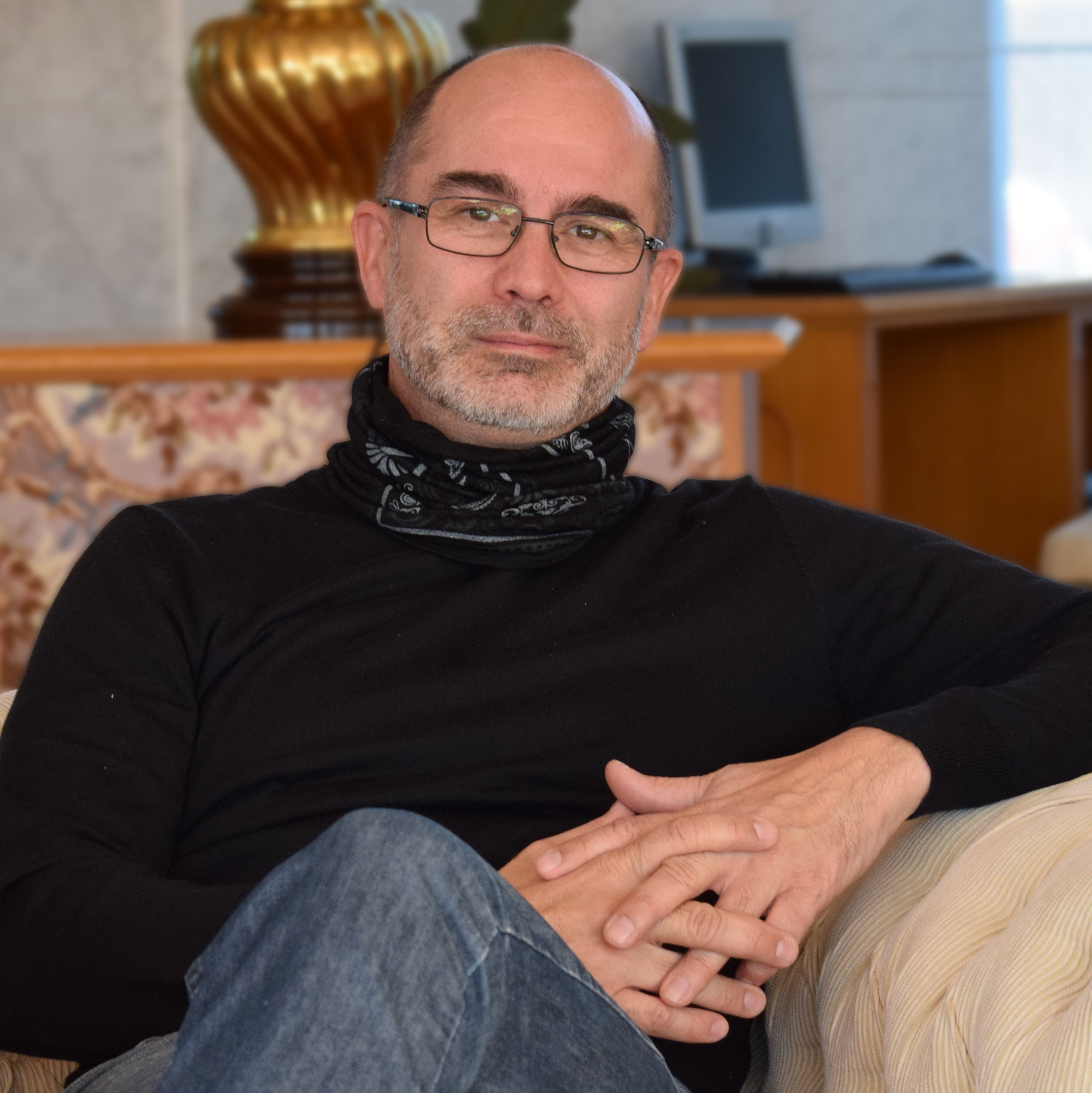
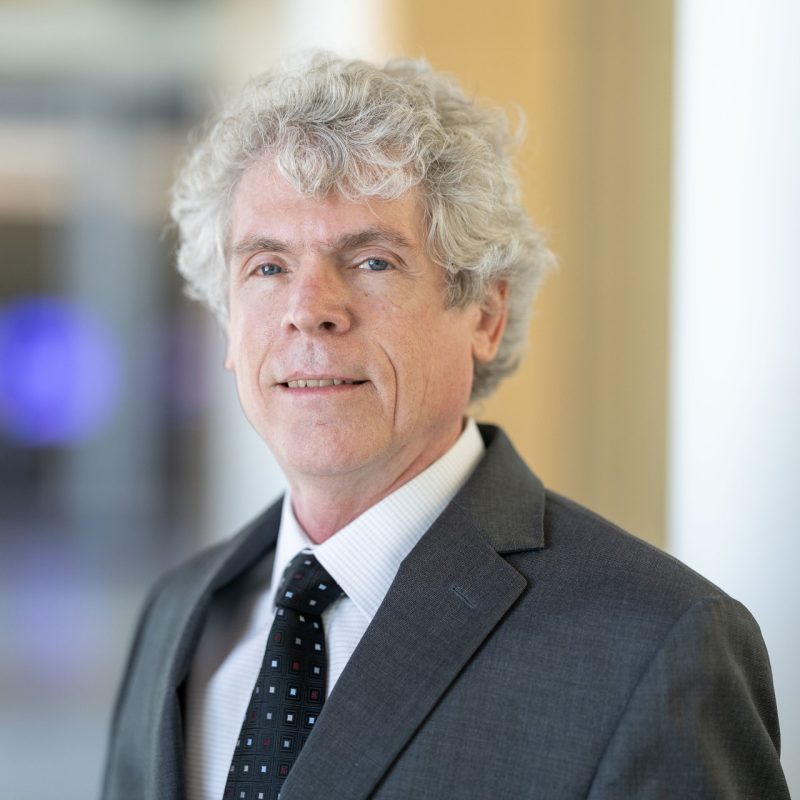
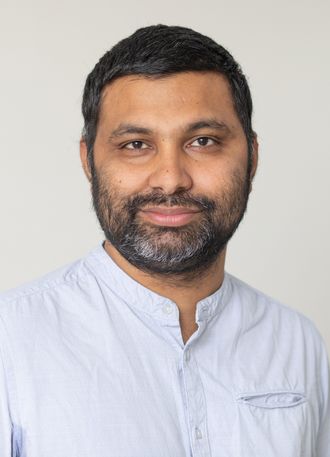
Cantay Caliskan is an Associate Professor at the Goergen Institute for Data Science, University of Rochester. He teaches Data Mining, Statistical Machine Learning, and the Data Science Capstone courses in the undergraduate and graduate data science curriculum. Bachelor of Arts, Brandeis University Master of Arts, Koç University PhD in Political Science, Computer Science, and Statistics, Boston University (2018) His research focuses on computational social science, computer vision, and generative AI, with applications in deep learning, network analysis, and AI ethics in social contexts. His recent publications span interdisciplinary topics including: Geo-cultural bias in AI-generated urban models (SimCityNet) Comparative religious text analysis using LLMs (HalalLLM vs. KosherLLM) Political polarization metrics through social media interactions Article trends highlight AI's role in addressing social science challenges, from electoral geography to disaster response optimization. His work integrates natural language processing, dynamic network modeling, and cross-cultural analysis. He contributes to advancing accessible AI systems (ACROSS) and understanding misinformation dynamics. No scientific awards listed in available data.
Professor Jan Černocký serves as Head of Department at the Department of Computer Graphics and Multimedia (DCGM) within the Faculty of Information Technology at Brno University of Technology (FIT VUT). With a professional email cernocky@fit.vut.cz and office L221.2, he maintains an active research profile with numerous publications spanning over 20 years in the field of speech processing and recognition. His work is well-documented through multiple research identifiers including ORCID iD 0000-0002-8800-0210, Scopus Author ID 6604040821, and Researcher ID M-7494-2019. Professor Černocký's research interests focus primarily on advanced speech processing technologies, with particular emphasis on speech recognition, speaker verification, language identification, and multimodal systems. His work demonstrates a strong trajectory from traditional speech processing techniques toward modern deep learning approaches, especially in self-supervised learning for speech applications. Recent publications show his leadership in developing benchmarks like TS-SUPERB for target speech processing and innovative methods for speaker verification using transformer models. His research group at BUT has made significant contributions to multi-channel speech processing, target speech extraction, and speaker diarization systems. The analysis of Professor Černocký's recent publications (2023-2025) reveals several key trends in his research direction. There's a clear shift toward self-supervised learning approaches for speech processing, with numerous papers exploring how pre-trained models can be adapted for speaker verification, target speech extraction, and multi-channel processing. His work increasingly incorporates transformer architectures and attention mechanisms, reflecting the broader trends in speech processing research. The 2024 publications particularly highlight work on multimodal analysis (BESST dataset for stress detection) and practical applications of speech technology for social inclusion. Throughout his career, Professor Černocký has maintained strong collaborative relationships with researchers across Europe and internationally, evidenced by his extensive publication record with co-authors from multiple institutions. His leadership role as Head of Department at DCGM places him at the center of speech processing research at Brno University of Technology, where his team continues to produce cutting-edge research in speech technology.
Guido Masera is a Full Professor at the Department of Electronics and Telecommunications (DET) at the Polytechnic University of Turin, where he has been actively involved in teaching and research for over two decades. He serves as a Member of the Board of Directors, Member of the GEDI Observatory for Gender Equality, Diversity and Inclusion, and Member of the Permanent University Observatory for monitoring the academic supply chain. His research interests span across channel decoders, circuits for communications, cryptography, deep learning, digital integrated circuits, field programmable gate arrays (FPGA), and hardware design. His work focuses on VLSI architectures for image and video coding, digital architectures for error correcting codes, application specific approximate computing, VLSI architectures for machine learning, digital architectures for bio-inspired processing, digital architectures for post-quantum cryptography, bio-inspired electronics for robotics and biomedical applications, RISC-V extensions and hardware accelerators, and circuit architectures for efficient machine learning and artificial intelligence. His recent publications (2025) demonstrate a strong focus on RISC-V architecture, particularly in the context of cryptographic implementations, hardware security, and post-quantum cryptography. His research group VLSILAB is actively engaged in cutting-edge research in hardware security, efficient processor design, and specialized computing architectures. Among his notable recognitions are the Premio Francesco Carassa awarded by the Telecommunications and Information Technologies Group Association (gtti) in 2010, and his recognition as a Fellow of the Institute of Electrical and Electronics Engineers (IEEE) since 2007. He also serves as an Associate Editor for several prestigious journals including ELECTRONICS (2019-present), IEEE TRANSACTIONS ON CIRCUITS AND SYSTEMS (2015-2019), and IET CIRCUITS, DEVICES & SYSTEMS (2013-2016). Professor Masera has advised numerous PhD students working on advanced topics in VLSI design, post-quantum cryptography, hardware accelerators, and machine learning implementations. His current research projects include ISOLDE (2023-2026) and TRISTAN (2022-2025), both EU-funded projects focused on RISC-V technology and domain-specific ecosystems. He leads the VLSILAB research group at the Department of Electronics and Telecommunications, which focuses on cutting-edge research in VLSI architectures, hardware security, and specialized computing systems. The group collaborates with industry partners and participates in major European research initiatives.
Mahdi Fazeli is an Associate Professor at the School of Information Technology, Halmstad University, Sweden, specializing in hardware security and trust, energy-efficient computing, and embedded and cyber-physical systems. His academic journey began with a Ph.D. in Computer Engineering from Sharif University of Technology, Iran, in 2011. His career progression includes positions as Associate Professor at Bogazici University (2019-2021) and Iran University of Science and Technology (2016-2019), and Assistant Professor at the same institution (2011-2016). His research interests focus on hardware security and trust, reliable VLSI circuits and systems, energy-efficient computing, and dependable embedded systems. His work bridges the gap between theoretical security concepts and practical implementations in real-world systems, particularly in IoT and embedded environments. He has established himself as a leading researcher in Physical Unclonable Functions (PUFs), hardware trojans detection, and energy-efficient security solutions for resource-constrained devices. His publication record shows a clear progression and deepening expertise in hardware security, with recent work focusing on cutting-edge applications in edge computing, vehicular networks, and IoT security. His 2023-2025 publications demonstrate significant contributions to magnetic memory-based security primitives, anomaly detection systems, and energy-efficient security mechanisms. Throughout his career, Fazeli has led multiple research initiatives including the Dependable Systems and Architecture Lab (DSA) and the Networked and Embedded Systems Lab at Iran University of Science and Technology. His leadership extends to heading the Hardware Group and serving as Vice Chair for Educational Affairs, demonstrating his commitment to both research excellence and academic administration.
Prof. P. (Paris) Avgeriou is a full professor of Software Engineering at the Faculty of Science and Engineering , University of Groningen (RUG). His research focuses on software architecture , technical debt management , and self-adaptive systems through empirical studies and industrial collaborations. His work explores architectural decision-making using financial investment models, machine learning for debt detection, and dependency analysis in software systems. Recent projects include SDK4ED for energy-efficient embedded systems and DebtViz for debt visualization. Key article trends include technical debt lifecycle analysis (2023-2025), self-adaptive systems (2025), and modular architecture challenges (2024). Keywords span Computer Science , Machine Learning , and Software Systems . As an ancillary academic activity , he serves as editor for the Journal of Systems and Software (Elsevier). His collaborations extend to institutions in the Netherlands, Brazil, and Italy, with research outputs appearing in IEEE and ACM venues.
Eric P. Xing is a Professor at the Language Technologies Institute of Carnegie Mellon University , and currently serves as President of the Mohamed bin Zayed University of Artificial Intelligence . His work bridges machine learning methodology with computational biology and large-scale AI systems . Research Focus: Developing machine learning theory for high-dimensional, dynamic data Building foundation models for biology (AIDO, scLong, ProteinAligner) Designing scalable AI architectures (Pollux, LLM360, PAN) Advancing interpretable and controllable NLP systems Scientific Leadership: Founded the SAILING Lab at CMU Co-chaired ICML 2014 and ICML 2019 Recipient of the Jay Lepreau Best Paper Award (OSDI 2021) Education & Mentorship: Advises PhD students across machine learning and computational biology Alumni include faculty at ETH Zurich, University of Chicago, and UC San Diego
Mustapha C.E. Yagoub is a Full Professor at the School of Electrical Engineering and Computer Science, University of Ottawa, with over 500 publications in RF/microwave CAD, RFID systems, neural networks, and applied electromagnetics. He leads research in the ELEMENT Laboratory and RFM Research Group , focusing on wireless communication systems and nonlinear device modeling. PhD in Electronics (Institut National Polytechnique de Toulouse, 1994) Magister in Telecommunications (École Nationale Polytechnique d'Alger, 1987) Dipl.-Ing. in Electronics (École Nationale Polytechnique d'Alger, 1979) His research bridges Microwave Circuit Design with Artificial Intelligence , including applications in Energy Conservation and Telecommunication Systems . Key trends in his publications include hybrid modeling techniques combining Neural Networks with Computational Electromagnetics for optimizing Antenna Design and RF Components . He is a Senior Member of IEEE and licensed with the Professional Engineers of Ontario and Ordre des Ingénieurs du Québec . His lab teams focus on High-Tc Superconducting Devices and Directional Antenna Optimization for RFID networks.
Prof. Dr.-Ing. Richard Membarth is a Research Professor for System-on-a-Chip and AI at the Edge Computing at Technische Hochschule Ingolstadt (THI). He is affiliated with the Hardware-Software Co-Design group and holds a secondary position at the German Research Center for Artificial Intelligence (DFKI) Saarbrücken. Co-creator of DSL frameworks like AnyDSL and Hipacc Key contributor to MetaDL (AI metaprogramming) and PRIME (predictive rendering) His research bridges GPU computing , domain-specific languages , and compiler technology , with recent work on Vulkan SPIR-V compilation and device-driven SpMV algorithms . Notable awards include the HiPEAC Paper Award (2018) and multiple Best Paper Awards for his compiler frameworks.
Xin Li is a Professor in the Department of Electrical and Computer Engineering at Duke University and serves as the Associate Vice Chancellor at Duke Kunshan University. He holds a Ph.D. from Carnegie Mellon University (2005) and has held leadership roles in research consortia like the FCRP Focus Research Center and the Center for Silicon System Implementation (CSSI). His research bridges integrated circuits , machine learning , and cyber-physical systems , with applications in autonomous driving, battery lifetime prediction, and smart buildings. Education : Ph.D., Carnegie Mellon University (2005); M.S., Fudan University (2001); B.S., Fudan University (1998) His work emphasizes robust design methodologies for analog/RF circuits, data-driven predictive modeling , and Bayesian inference for high-dimensional variation spaces. Recent publications focus on generative adversarial networks for circuit design, multi-view imputation for incomplete data, and knowledge-driven autonomous systems . He has received numerous accolades, including the NSF CAREER Award (2012) , IEEE Donald O. Pederson Best Paper Awards (2013, 2016) , and IEEE Fellow (2017) . He has served as Editor for journals like IEEE Transactions on Biomedical Engineering and as Chair for conferences including ISVLSI and CAD/Graphics.
Fengqing Maggie Zhu is an Associate Professor at the Elmore Family School of Electrical and Computer Engineering within Purdue University , West Lafayette campus. Her research spans image processing , video compression , computer vision , and smart health , with notable contributions to learned image compression , 3D reconstruction , and nutrition analysis via computer vision . Educational background: BS in Electrical Engineering, Purdue University (2004) MS in Electrical and Computer Engineering, Purdue University (2006) PhD in Electrical and Computer Engineering, Purdue University (2011) Her work focuses on developing machine learning-based compression techniques for 2D/3D images and videos, with applications in food portion estimation , wearable dietary monitoring , and virtual reality facial expression tracking . She explores structured pruning , mixed precision quantization , and continual learning to create efficient, robust systems for edge-cloud collaboration. The 2025-2024 article collection reveals concentrated efforts in learned image compression (with 8 papers on quantization, pruning, hierarchical VAEs), food-related computer vision (12+ papers on portion estimation, databases, classification), and 3D reconstruction (MetaFood3D dataset, ICP-3DGS algorithm). Emerging themes include privacy-preserving AI for wearable cameras and class-incremental learning frameworks. Contact: zhu0@purdue.edu
Gerardo Schneider is a Full Professor in Computer Science at the University of Gothenburg, Sweden, and holds a joint appointment at Chalmers University of Technology. He serves as Head of the Data Science and Artificial Intelligence (DSAI) Division and has previously led the Formal Methods Division and acted as Director of Graduate Studies. University of Gothenburg: 2009–present Chalmers University of Technology: 2009–present Uppsala University: 2002–2003 University of Oslo: 2005–2009 His research focuses on formal methods for software engineering, including contract specification and analysis , privacy policy formalization , model checking , and runtime verification . He works on verification of real-time systems, embedded systems (e.g., smart Java cards), and blockchain-based smart contracts. Key projects include: X-LEGAL (2020–2023): Smart Legal Contracts (Swedish Research Council) PolUser (2016–2019): User-Controlled Privacy Policies (Swedish Research Council) ARVI (2014–2018): Runtime Verification Beyond Monitoring (ICT COST Action) ReMU (2013–2017): Reliable Multilingual Digital Communication (Swedish Research Council) He has supervised numerous PhD and Master’s students in formal methods, blockchain security, and privacy compliance. His tools include SPeeDI (Polygonal Hybrid Systems Verification), CLAN (Contract Normative Conflict Detection), and AnaCon (Controlled Natural Language Analysis).
Luka Radic is a Researcher in the Machine Learning Section at the Department of Computer Science, University of Copenhagen. His work bridges theoretical and applied research in machine learning, with a focus on quantum machine learning , large language models , and fairness in AI systems.
Christoph Becker is a Full Professor at the University of Toronto, holding joint appointments in the Faculty of Information and the School of the Environment. He leads the Just Sustainability Design lab, focusing on transforming computing to align with sustainability and social justice. His research bridges critical theory, digital curation, and software engineering, emphasizing long-term societal impacts of technology. Education: PhD in Computer Science, Vienna University of Technology (2010) MSc in Economics & Computer Science, Vienna University of Technology (2007) MS and BSc in Computer Science, Vienna University of Technology (2006/2004) Research Interests: Sustainable computing, digital preservation, ethics in technology, and participatory design. His work critically examines the politics and values embedded in technology design, with projects addressing urban sustainability and equitable systems. His 2023 book Insolvent: How to Reorient Computing for Just Sustainability won multiple awards and is a seminal text in the field. Awards: Finalist, AAP PROSE Awards 2024 (Engineering and Technology) Best Paper Award, 6th International Conference on ICT for Sustainability (2019) Emerald Literati Network Award (2016) Connaught New Research Award (2015-2016) Grants & Leadership: Director of the Digital Curation Institute (2014-2024), funded by NSERC, CFI, and Ontario Research Fund. Supervises multiple PhD/Master’s students, including Eshta Bhardwaj and Han Qiao. Active in organizing workshops on ethics, requirements engineering, and sustainability. Labs & Initiatives: Leads the Just Sustainability Design lab, advocating for computing practices that prioritize environmental and social equity. Collaborates with global organizations on digital preservation tools and policies.
A. Lynn Abbott is a Professor in the Bradley Department of Electrical and Computer Engineering at Virginia Tech , specializing in computer vision, biometrics, and AI-driven sensing systems. His work bridges theoretical and applied domains, including autonomous vehicle perception, physiological signal analysis, and secure healthcare monitoring. Education: Ph.D., University of Illinois, 1990 M.S., Stanford University, 1981 B.S., Rutgers University, 1980 Research Interests focus on computer vision for autonomous systems, biometrics using physiological signals, and deep learning applications in transportation safety and healthcare. Recent projects include neural networks for intersection safety modeling and vision-based cardiovascular signal recovery. Publications highlight advancements in graph neural networks for traffic analysis, spatiotemporal filtering for 3D object detection, and privacy-preserving biometric authentication. His work spans disciplines like transportation safety, biomedical signal processing, and computer architecture. Labs & Teams: Affiliated with the Center for Embedded Systems for Critical Applications , contributing to real-time vision systems and hardware-software co-design for safety-critical domains.
Shah Nawaz is an Assistant Professor at the Institute of Computational Perception , Johannes Kepler University Linz. His research focuses on multimodal systems, deep learning applications in healthcare, and cross-modal learning frameworks. He leads projects addressing challenges like missing modalities in machine learning, face-voice association, and medical image analysis. Key research interests include machine learning for medical diagnostics (e.g., breast cancer detection, skin lesion segmentation), speech recognition, and adaptive neural network architectures. He has contributed to frameworks like Chameleon for robust multimodal learning and the FAME challenge for face-voice association in multilingual environments. Publications emphasize practical applications, such as bilingual healthcare chatbots for pregnant women and light-weight speech recognition models for resource-constrained systems. His work bridges theoretical advancements and real-world deployment in healthcare and security domains. Shaw Nawaz actively participates in academic communities through workshops like DaQuaMRec@RecSys2025 and has developed open-source frameworks for image restoration and multimodal fusion. His lab focuses on scalable solutions for multimodal data challenges in both technical and clinical contexts.