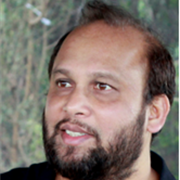
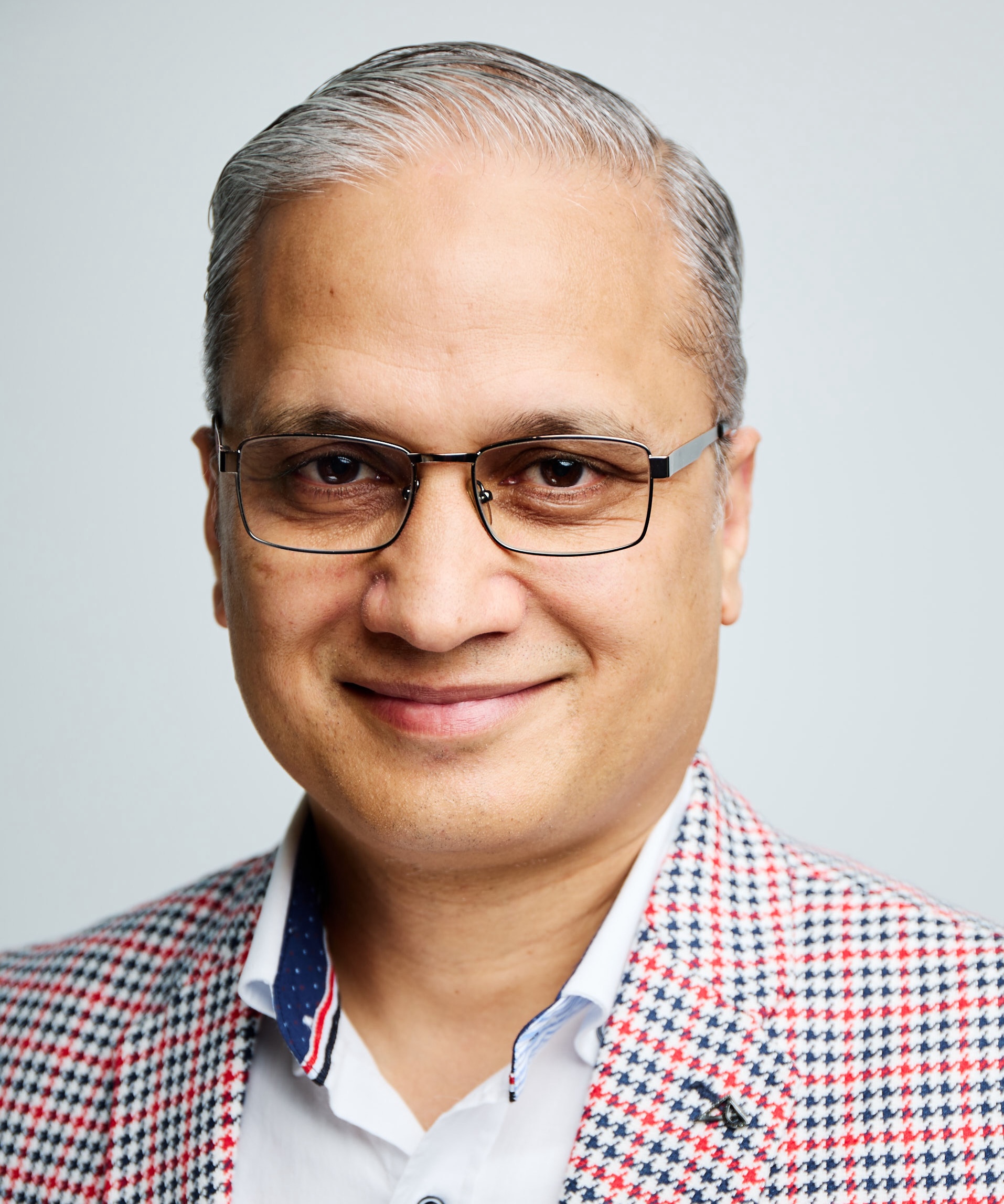
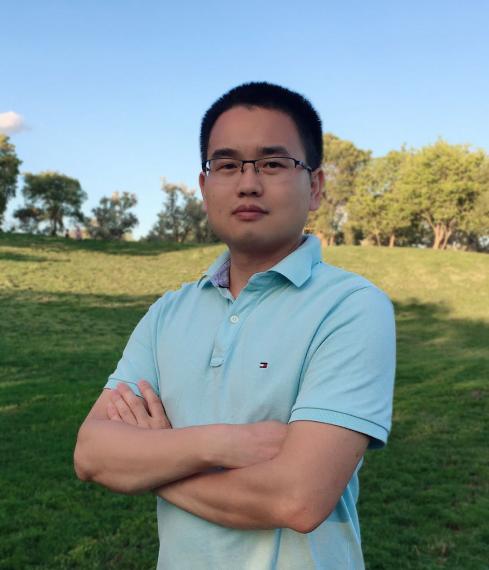
Maarten Renkema is an Assistant Professor at the University of Twente, specializing in Artificial Intelligence (AI) and its intersection with Human Resource Management (HRM) , Healthcare , and Organizational Innovation . His research explores how AI transforms work design, employee autonomy, and HRM practices in formalized contexts. Key Research Themes: Algorithmic HRM and Digitalization Human-AI Collaboration in Healthcare Self-Managing Teams and Organizational Structures AI Literacy in Education Scientific Awards: Best Dissertation Award (2019) from the Dutch HRM Network Research Trends: His recent work focuses on AI adoption in HRM, ethical implications of algorithmic management, and redefining professional roles in AI-integrated environments. Articles from 2024-2025 highlight practical applications of AI in healthcare workflows, employee-driven innovation, and the evolving responsibilities of HR professionals. Collaborations: Active in cross-sector partnerships, including projects on AI literacy frameworks and talent management in sports. Regularly contributes to professional discourse through invited talks and media commentary on AI's societal impact.
Dustin Scheinost is an Associate Professor at Yale School of Medicine, affiliated with the Department of Radiology & Biomedical Imaging, Yale Child Study Center, Department of Statistics, and Yale Biomedical Imaging Institute. His research focuses on connectomics , machine learning , and neuroinformatics through the Multi-modal Imaging, Neuroinformatics, & Data Science (MINDS) Lab. Radiology & Biomedical Imaging (Primary) Child Study Center (Secondary) Statistics (Secondary) Wu Tsai Institute Yale Stress Center Research Interests include developing novel statistical and machine learning methods for functional connectivity in big neuroscience data, leading the BioImage Suite Web (BISWeb) platform, and advancing early life neuroimaging through the Fetal, Infant, Toddler Neuroimaging Group (FIT’NG). His work is supported by grants from NIMH, NIAA, NIDA, and NHLBI. Selected Scientific Contributions span functional connectivity in laterality preferences, anti-racist AI governance in psychiatry, self-citation trends in neuroscience, and predictive modeling of mood disorders. He collaborates extensively with Todd Constable and others on multimodal neuroimaging studies.
Matteo Brunelli is Associate Professor of “Mathematical Methods of Economics and Actuarial and Financial Sciences” at the University of Trento , Department of Industrial Engineering, and Adjunct Professor (docent) at Lappeenranta University of Technology , Finland. He is nationally habilitated as Full Professor in Italy and has held long-term visiting positions at Berkeley, Turku, Auckland, JAIST and Binghamton. Education: Ph.D. (Doctor of Science) in Information Technologies, Åbo Akademi University, Finland, 2011 – graded Eximia cum laude approbatur M.Sc. in Economics, University of Trento, 2007 – grade 110/110 cum laude B.Sc. in Economics, University of Trento, 2005 Research focus: Brunelli’s work sits at the intersection of multi-criteria decision analysis , operations research and computational optimisation . He develops axiomatic foundations and algorithms for pairwise comparison matrices , consistency indices , the best-worst method and fuzzy preference relations , and applies them to energy planning, sustainable inventory, maintenance scheduling, 3-D printer selection, and blockchain governance. His 2023-2025 articles reveal intensified interest in uncertainty modelling (Dempster-Shafer theory), bi-objective optimisation of inventory and maintenance, and group decision protocols that integrate probabilistic or active-learning components, demonstrating both methodological depth and practical relevance. Scientific awards & grants: Academy of Finland Postdoctoral Researcher grant (€254 670, 2014-2017) Claudio Dematté Research Grant (€19 000, 2008) Teacher of the Year Award, Aalto University (2013 – both Spring & Autumn semesters) Bernard Roy Award 2021 for outstanding contribution to Multiple Criteria Decision Aiding (under-40 category) Supervision & funding: While specific doctoral students are not listed, Brunelli currently supervises graduate theses at Trento and has continuously held competitive national grants. His Academy of Finland project “Consistency of valued preference relations for decision analytics methods” financed three years of full-time research and international collaboration. Editorial & community roles: He serves on the editorial boards of International Journal of General Systems and Mathematical and Computational Applications , and acts as area editor for Journal of Multi-Criteria Decision Analysis , positioning him among the key gatekeepers of the MCDA community.
Professor Ibrahim Khalil is a faculty member in the School of Computing Technologies at RMIT University, Melbourne, Australia. He holds a PhD in Computer Science from the University of Bern (2003) and has extensive industry experience in Silicon Valley focusing on secure network protocols. His research spans Security, Privacy, Federated Learning, Blockchain, Quantum Computing, and Distributed Systems. He leads high-impact projects funded by ARC grants (DP250100582, DP220100215, etc.) and international initiatives like the EU’s SELFY project. His work addresses challenges in secure AI data analytics, privacy-preserving systems, and critical infrastructure protection. Khalil supervises PhD/Masters students on topics ranging from federated learning security to quantum-enhanced machine learning. Education: PhD in Computer Science (University of Bern, 2003); prior roles at EPFL, Osaka University, and industry tech hubs. Research Interests: Privacy-Preserving Technologies Blockchain Applications in Healthcare and Supply Chains Quantum Computing for Machine Learning Secure Edge Computing and Federated Learning IoT Security and Critical Infrastructure Protection Grants & Collaborations: Over 10 major grants since 2017, including ARC Discovery/Linkage Projects and international partnerships (QNRF, EU). Notable projects include Privacy-Aware Digital Twins for Critical Infrastructure and Federated Learning frameworks for GenAI models. Advising & Labs: Active supervisor of 25+ research projects since 2013, focusing on anomaly detection, secure data analytics, and blockchain-based systems. Collaborates with industry partners on defense and healthcare tech.
Jim Dowling is a distributed systems researcher at KTH Royal Institute of Technology, focusing on large-scale distributed systems, machine learning, and big data. His work emphasizes improving system dependability, performance, security, and scalability through middleware, peer-to-peer systems, and cloud-native solutions. He leads courses such as Advanced Course in Large Scale Machine Learning and Deep Learning and Scalable Machine Learning and Deep Learning , demonstrating his commitment to education in AI and distributed computing. His research spans topics like feature stores, Kubernetes integration, and AI-driven environmental analytics (e.g., ANIARA project for edge infrastructure automation and ExtremeEarth for Copernicus data analysis). He has contributed to scalable ML pipelines, cloud storage systems (HopsFS-S3), and hyperparameter optimization tools like Maggy. Key projects include the Hopsworks platform for machine learning operations and the development of cloud-native tools for big data analytics. His work bridges theoretical distributed systems research with practical applications in AI, healthcare, and environmental science. He has advised on numerous collaborative initiatives but no formal students are listed. His grants and lab activities are centered around Hopsworks and the ANIARA project, reflecting his focus on scalable, self-managing systems.
Senad Bećirović serves as a full Professor at the University of Education Lower Austria (Pädagogische Hochschule Niederösterreich), having progressed from assistant professor (2014) to associate professor (2017) before attaining his current rank in 2023. His academic career spans teaching research methodology, pedagogy, and advanced statistics across undergraduate, graduate, and doctoral programs at international institutions, delivered through both online and in-person formats. Bećirović's research focuses primarily on Artificial Intelligence and digital technologies in education , with significant contributions to intercultural education , gifted education , and foreign language pedagogy . His work demonstrates a consistent trajectory toward understanding how emerging technologies reshape educational practices and outcomes. Through four books published by Springer and Nova Science and over 60 articles in top-tier journals, he has established himself as a leading voice in digital educational transformation. His recent publications (2023-2025) reveal a pronounced emphasis on AI applications in education, with multiple studies examining AI literacy, policy frameworks, and implementation strategies across European higher education contexts. This research demonstrates both theoretical depth and practical relevance to current educational challenges. Bećirović actively contributes to the scholarly community as editor and reviewer for numerous Q1 journals including Smart Learning Environments (Springer), Education and Information Technologies (Springer), and TESOL Quarterly (Wiley). He participates in multiple European Commission-funded initiatives such as ENRICH (Enhancing Teaching and Research through Innovative Digital Technologies) and Erasmus+ projects focused on peace learning and English education. His professional activities extend to international collaboration through membership in the European Network Ethical Use of AI and the American Educational Research Association (AERA). He frequently delivers keynote addresses at international conferences, sharing expertise on AI in education, digital transformation, and intercultural competencies.
Shahid Raza is a Professor of Cybersecurity at the University of Glasgow's School of Computing Science. He previously led the RISE Cybersecurity Unit in Sweden, establishing it as a leading research group. His expertise spans IoT Security, PKI, AI-driven cybersecurity solutions, and hardware/data security. Raza holds a PhD and Docentship from Uppsala University, alongside a Bachelor's with a Gold Medal for academic excellence. Education: B.Sc. (Computer Science, 3.99/4.0 CGPA, Gold Medal), Licentiate, PhD, and Docentship in Cybersecurity from Sweden. He leads EU-funded projects like H2020 CONCORDIA and Horizon Europe CUSTODES, coordinating initiatives such as the Cyber Node and Cyber Range. Active in cybersecurity policy, he serves on the EU SCCG, ECSO, and EARTO Security & Defence Research working groups. Research Interests Public Key Infrastructure (PKI) for IoT AIAgent-Driven Cybersecurity Solutions IoT Certification Standards Hardware Security for Low-Power Devices Grants & Projects Coordinator: Horizon Europe CUSTODES Technical Leader: H2020 Arcadian-IoT Founder: RISE Cyber Range (Sweden's largest cybersecurity test facility) Awards & Memberships IEEE Senior Member Gold Medal for Academic Excellence (Bachelor's)
Overview Prof. Harris Kyriakou is an Associate Professor and Chair Holder of the Media & Digital Chair at ESSEC Business School. His research focuses on leveraging artificial and collective intelligence to enhance organizational value creation, digital strategy, and data-driven decision-making. He has advised multinational firms like Airbnb, Facebook, and Yelp, and his work is supported by grants from NSF and the Spanish government. Education Ph.D. in Management Sciences (Stevens Institute of Technology, 2016) M.S. in Engineering & Technology Innovation Management (Carnegie Mellon University, 2010) B.Sc. in Digital Systems (University of Piraeus, 2007) Research Focus His research explores intersections between AI/collective intelligence, blockchain, sharing economy regulations, and platform governance. Key themes include data network effects, algorithmic regulation, and digital transformation. Recent work on ChatGPT vs. Google examines AI-driven competitive dynamics in search markets. Recognition Awarded the 2024 Case Centre Triple Award, 2022 Early Career Award (AIS), and multiple best paper awards (AoM, INFORMS). Recognized as a 40-Under-40 MBA Professor by Poets & Quants. Teaching & Leadership Co-leads the 'Algorithmic Governance in Platform Economy' thesis Teaches courses on AI, digital strategy, and IT management at ESSEC and IESE Former Assistant Professor at IESE Business School (2016–2021) Professional Contributions Serves as a European Commission advisor on digitalization, reviewer for top journals (MIS Quarterly, Academy of Management Review), and mentor for doctoral candidates.
Giuseppe Santucci is an Associate Professor at the Department of Computer, Control and Management Engineering Antonio Ruberti at Sapienza University of Rome. He teaches courses on Fundamentals of Computer Science, Software Engineering, and Visual Analytics. His office is located in Room B218 at Via Ariosto 25, Rome, and his contact email is santucci@diag.uniroma1.it. Dr. Santucci's research focuses on Visual Analytics, Information Visualization, Human-Computer Interaction, and Information Retrieval. His work spans theoretical aspects of visual query languages for semantic models to practical applications in visual analytics for cybersecurity, cryptocurrencies, and deep learning explainability. He has published over 130 articles in international journals and conferences, demonstrating his significant contributions to these fields. His recent publications show a strong trend toward applying visual analytics to increasingly complex domains including cybersecurity, cryptocurrencies, and explainable AI. The work demonstrates an evolution from theoretical foundations of visual query systems to practical applications that help users understand complex data and systems. His research bridges the gap between theoretical computer science and practical user-centered solutions. Dr. Santucci has received notable recognition including: IEEE VizSec 2018 Best Paper Award Human-Computer Interaction Cybersecurity Awards 2018 He actively mentors students through thesis projects focused on information visualization and visual analytics. His PROMISE project provides a framework for students to engage in cutting-edge research in information retrieval and visual analytics. He has supervised work on topics including visual evaluation techniques, visual mappings optimization, and user studies for Infovis systems. Dr. Santucci leads the A.WA.RE (Advanced Visualization & Visual Analytics REsearch) group at Sapienza University. This group conducts research on visual analytics tools for information retrieval evaluation, cybersecurity analysis, and deep learning explainability. Their work includes developing frameworks like CryptoComparator for cryptocurrency analysis and BUCEPHALUS for cybersecurity platform analysis.
Carlos Enrique Palau is a prominent researcher in the field of Internet of Things (IoT), edge computing, and cyber-physical systems. His work focuses on interoperability, security, and scalability in distributed systems, particularly in industrial and smart city applications. He has contributed to frameworks for cloud-edge continuum integration, blockchain-based IoT solutions, and federated computing architectures. Key areas of research include: IoT interoperability and semantic frameworks Edge computing and distributed workload management Cybersecurity for IoT and critical infrastructure Smart port logistics and real-time data analytics Cognitive services in legacy port management systems His recent work explores: Data-as-a-Product frameworks for Industry 4.0/5.0 Autonomous workload scheduling in energy-efficient edge-cloud systems Deception mechanisms for IoT security Self-* capabilities in cloud-edge nodes Palau has collaborated extensively with institutions like Universitat Politècnica de València and international partners in projects funded by EU initiatives. His research addresses practical challenges in industrial IoT deployments, smart city infrastructure, and emergency management systems.
Edward Lank was a Professor at the Cheriton School of Computer Science, University of Waterloo, and held an Inria International Research Chair at Inria Lille-Nord Europe (2019–2023). His research focused on Human-Computer Interaction (HCI), including intelligent user interfaces, mobile/multi-touch interaction, gesture recognition, and mathematical software design. He earned a BSc from the University of Prince Edward Island and a PhD from Queen's University. Research Highlights: Pioneered work on gesture-based interaction, including MathBrush for mathematical expression recognition. Explored large-display interaction, powerwall design, and mass user engagement with public displays. Investigated kinematics of user input, endpoint prediction, and mode inference in interfaces. Collaborated on persuasive technology for energy demand management and health-related serious games. Awards & Recognition: National Science Foundation Career Award (2004) Best of CHI Nominee (2008) Inria International Research Chair (2019–2023) Grants & Funding: Supported by Google, NSERC, GRAND NCE, and the ORF Program. His research addressed challenges in wearable tech, VR/AR, and sustainable HCI practices. Legacy: Edward Lank passed away on March 21, 2022. His contributions to HCI, including foundational work on gesture recognition and user-centered design, continue to influence the field. His courses, such as CS 889 (HCI Seminar) and CS 449 (HCI Fundamentals), emphasized user-centered design and empirical methods.
Andrea Stevenson Won is a researcher at Cornell University in the Department of Communication , focusing on virtual reality (VR), human-computer interaction, and social dynamics in immersive environments. Her work explores avatar embodiment , nonverbal behavior , and accessibility in VR for users with disabilities. Research Themes : Virtual embodiment and its psychological effects Accessibility solutions for blind and low-vision users in social VR Nonverbal communication analysis in immersive environments Pro-social behavior through VR interventions Collaborative VR systems and AI integration Recent Article Trends : 2024: Investigated avatar behavior transformation in mixed reality ( MRTransformer ), AI-guided accessibility tools, and nonverbal cue adaptations 2023-2022: Focused on educational VR applications, 360° video narratives, and longitudinal team dynamics 2021-2014: Pioneered avatar embodiment studies, anxiety detection via movement tracking, and homuncular flexibility in VR
Dr. Sheng Yang is an Assistant Professor in the School of Engineering at the University of Guelph. He leads the Design Innovation and Intelligent Manufacturing (DIIM) lab, focusing on advancing additive manufacturing, generative design, and smart manufacturing technologies. His research integrates IoT, big data analytics, and bio-inspired design to address challenges in aerospace, green energy, and healthcare. Key areas include computational design for additive manufacturing, data-driven mass customization, and digital twin-based optimization. Education: Ph.D. in Mechanical Engineering from McGill University (2019), followed by a Postdoctoral Fellowship at McGill (2019–2020). Joined University of Guelph in 2020. Research interests span energy efficiency, complex system optimization, and personalized healthcare products. Recent work emphasizes digital twin synchronization in robotics, machine learning for quality prediction, and sustainable additive manufacturing processes. Notable awards include the 2019 Association of Commonwealth Universities Blue Charter Fellowship and 2018 ASME Best Paper Award. His lab actively seeks partnerships in personalized healthcare, product design, and smart manufacturing. Grants and collaborations focus on advancing manufacturing technologies and sustainability. No formal advisees listed, but active in graduate training through lab projects. The DIIM lab explores cutting-edge solutions for industrial and societal challenges through interdisciplinary approaches.
Hassan Foroosh is a Professor in the Department of Electrical Engineering and Computer Science at the University of Central Florida (UCF), directing the Computational Imaging Laboratory (CIL). He holds a Ph.D. in Computer Science from INRIA-UNSA, France (1996). Prior to UCF, he worked as a Senior Research Scientist at UC Berkeley (2000–2002) and an Assistant Research Professor at the University of Maryland, College Park (1997–2000). Research Interests: His work focuses on Computer Vision, Image Processing, Machine Learning, and Signal Processing. Notable contributions include LiDAR-based perception, adversarial attacks on detectors, medical imaging analysis, and dataset design for action recognition. His research is supported by NASA, NSF, ONR, and industry partners. Publications & Impact: Over 130 peer-reviewed papers, including influential work on super-resolution techniques, transformer networks for 3D object detection, and adversarial machine learning. His recent work explores analytical reasoning in LLMs and multimodal fusion in sports analytics. Awards: Pierro Zamperoni Award (2004), Best ICPR Paper (2004), Sun Microsystems Academic Excellence Award (2004). Labs/Teams: Director of the Computational Imaging Lab (CIL), UCF. Grants: Active funding from NASA, NSF, and industry collaborators.
Dr. Mohamed Khalifa is a Visiting Fellow at the Centre for Health Informatics, Australian Institute of Health Innovation, Macquarie University, Sydney. He holds a PhD in Health Innovation from Macquarie University (2020) and an MSc in Health Informatics from the University of Edinburgh (2012). His expertise spans health informatics, AI-driven healthcare solutions, and strategic healthcare management. He has led multidisciplinary teams in developing evidence-based frameworks like GRASP for clinical predictive tools. Affiliations: Visiting Fellow, Macquarie University Director of Studies, College of Health Sciences (Education Centre of Australia) Former Digital Health Officer, Australian Digital Health Agency (2020–2021) His research focuses on AI applications in healthcare, clinical decision support systems, and health analytics. Over 20 years, he has published 60+ peer-reviewed papers and holds an innovation patent (2018). He has received awards including the IMIA Best Paper (2020) and ICIMTH Best Paper (2015). Dr. Khalifa’s work emphasizes improving healthcare efficiency through technology, including projects on predictive tools, emergency room performance, and diabetes management. He is a Fellow of the Australasian Institute of Digital Health and certified in healthcare information systems (CPHIMS).