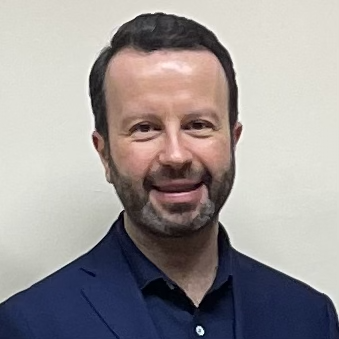
Margaritis Konstantinos serves as a Professor in the Department of Applied Informatics at the University of Macedonia, Thessaloniki, Greece. His contact details include office C5, 531, phone numbers +30 2310 891.891 and +30 2310 891.842, and email kmarg@uom.gr. His academic qualifications are: B.Sc. in Electrical Engineering, Aristotelian University of Thessaloniki, Greece M.Sc. in Theory & Applications of Computation, Loughborough University of Technology, UK (1985) Ph.D. in Computer Science, Loughborough University of Technology, UK (1988) Research focuses span: Parallel and Distributed Computing Intelligent Systems Computational Intelligence Computer Mathematics He teaches core courses including Introduction to Computer Science (CSC101) and Parallel and Distributed Computing (CSC603), reflecting his expertise in foundational and advanced computing domains. His scholarly output comprises 37 books, 85 scientific journal publications, and 139 conference papers, demonstrating sustained productivity in theoretical and applied informatics.
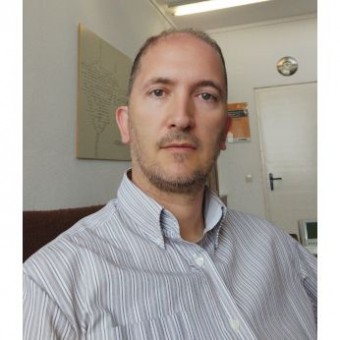
Evangelos Kalampokis serves as Assistant Professor of Information Systems and eGovernment at the Department of Business Administration, University of Macedonia, Greece. He maintains additional affiliations with the Hellenic Open University as an Adjunct Lecturer and with the Information Technologies Institute of the Centre for Research & Technology - Hellas (CERTH-ITI) in Thessaloniki. Dr. Kalampokis earned his Diploma (MEng) in Electrical and Computer Engineering from Aristotle University of Thessaloniki, followed by an MSc in Business Administration-MBA from the University of Macedonia, and completed his Ph.D. on "Linked Open Government Data Analytics" at the same institution. His academic foundation bridges engineering, business administration, and data science. His research spans Digital Government, Digital Health, Business Intelligence, Explainable Artificial Intelligence, Large Language Models, and Knowledge Graphs. With over fourteen years of experience, he has served as technical consultant and project initiator for numerous EU-funded initiatives including H2020 OpenGovIntelligence and FP7 OpenCube. His work consistently focuses on practical applications of advanced data technologies in public sector contexts, with particular emphasis on creating usable AI systems that government agencies can implement. Dr. Kalampokis' recent publications reveal a strategic shift toward healthcare applications of AI, particularly in oncology and cardiology, while maintaining his strong foundation in government data systems. His work demonstrates increasing sophistication in combining Large Language Models with structured government data to create practical decision support tools across multiple domains including healthcare, legal interpretation, and urban planning. He has published over 95 papers in high-impact journals including PLOS Digital Health (IF: 7.7), IEEE Intelligent Systems (IF: 6.1), and Journal of Web Semantics (IF: 3.1), establishing himself as a leading researcher at the intersection of AI and public sector applications. Dr. Kalampokis serves as proposal evaluator for the European Commission under Horizon Europe and has organized major conference tracks including the "AI, Data Analytics & Automated Decision Making" Track at EGOV-CeDEM-EPART 2023. His current research portfolio includes digiGOV-innoHUB (European Digital Innovation Hub for Digital Governance), TealHelix (Building Resilience Through Inclusive Food Labeling), and AI4Deliberation (Artificial Intelligence for Democratic Deliberations), reflecting his growing influence in shaping Europe's digital governance landscape.
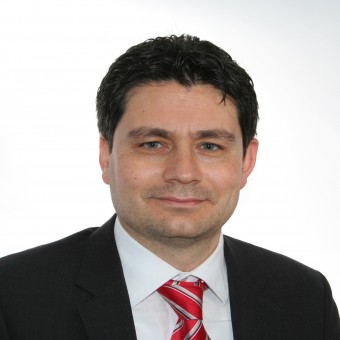
Angelo Sifaleras is a Full Professor at the Department of Applied Informatics, School of Information Sciences, University of Macedonia (Thessaloniki, Greece). He also serves as an Adjunct Professor of Quantitative Methods at the Hellenic Open University. His academic credentials include a Ph.D. in Applied Informatics (University of Macedonia, 2007) and a B.Sc. in Mathematics (Aristotle University of Thessaloniki, 1999). Research Focus: Professor Sifaleras specializes in Mathematical Programming , Network Optimization , and Heuristic Methods . His work integrates computational optimization with real-world logistics, supply chains, and sustainable systems. Key research themes include metaheuristic algorithms for vehicle routing, pollution-aware logistics, and parallel computing solutions for network analysis. Publication Trends: His 15 most recent articles emphasize hybrid metaheuristics (e.g., combining reinforcement learning with Variable Neighborhood Search), sustainable supply chain modeling, and high-performance computing applications. Dominant domains include operations research, environmental optimization, and educational algorithm visualization. Teaching & Service: He instructs courses in Combinatorial Optimization, Linear Algebra, and Heuristic Methods, employing tools like CPLEX, Gurobi, and SageMath. As an editor for Operations Research Forum and the Yugoslav Journal of Operations Research , he supports academic discourse in optimization. A Senior ACM member, he contributes to conferences like ICVNS and ITS.
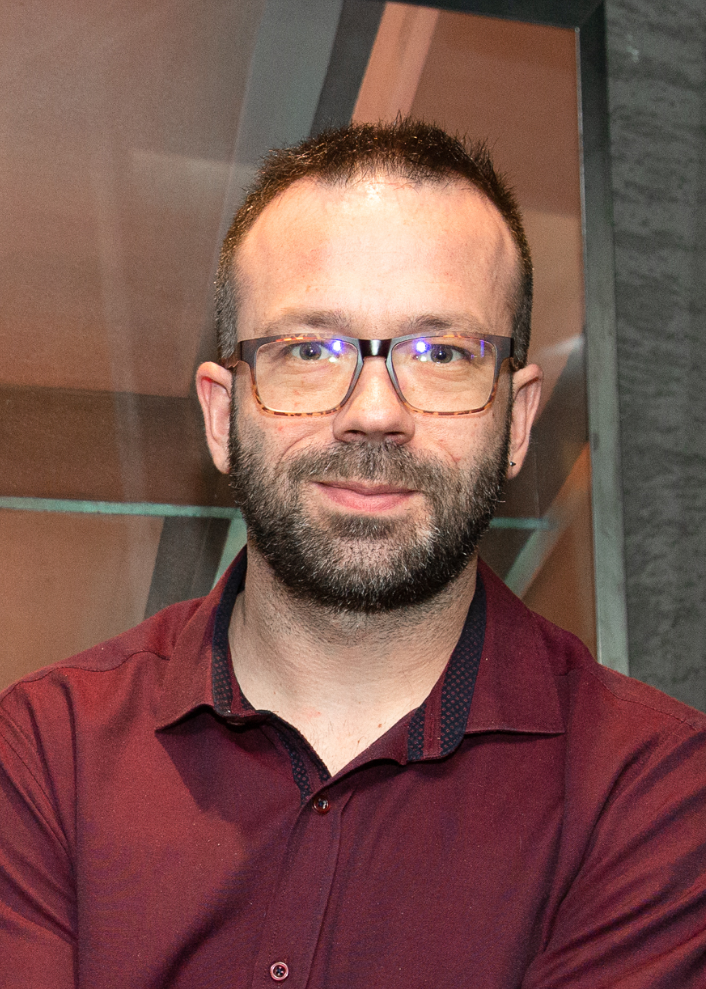
Apostolos Ampatzoglou serves as Associate Professor in the Department of Applied Informatics at the University of Macedonia, where he leads research in software engineering with particular emphasis on technical debt management and software quality. Previously, he held an Assistant Professor position at the University of Groningen (2013-2016) and maintains active collaborations across European research initiatives. His academic credentials include a PhD in Software Engineering from Aristotle University of Thessaloniki (2013), MSc in Computer Systems from the University of Macedonia (2005), and BSc in Informatics from the Technological Education Institute of Thessaloniki (2003). Dr. Ampatzoglou's research program centers on technical debt quantification, reverse engineering, and software maintainability. He pioneered financial models for technical debt management and developed metrics for assessing ripple effects in software systems. His work bridges theoretical foundations with industrial applications through projects like SDK4ED and SmartCLIDE, focusing on energy-efficient development and cloud service engineering. Current investigations explore machine learning applications for vulnerability prediction and technical debt prioritization. His extensive publication record reveals strong trends in applying AI to software quality assurance, with recent work emphasizing transformer models for vulnerability detection and explainable AI for technical debt identification. He actively investigates energy-aware development practices and service-oriented architecture patterns in cloud environments. Notable recognitions include: Top-7 reviewer for Journal of Systems and Software (2022) Best paper awards at IGSCC'21, ICSR'18, and EASE'17 18th most active Consolidated Researcher in Software Engineering (2013-2020) 3rd most active Early Stage Researcher (2010-2017) Multiple personal research grants from National Scholarships Association He has successfully supervised PhD candidates including Dr. Areti Ampatzoglou (Best PhD Thesis Award, University of Groningen) and Dr. Elvira-Maria Arvanitou (VERSEN Institute award). His research is funded through major European projects such as SDK4ED, SmartCLIDE, and SKILLAB, with recent grants exceeding €2M in total funding. Current work focuses on FAIR data implementation and skills gap analysis in European labor markets. As leader of the Software Engineering Lab at the University of Macedonia, he directs a 15+ member team working on technical debt management tools, cloud development environments, and XR applications for warehouse management. The lab maintains strong industry partnerships with technology clusters in Thessaloniki and participates in the Eclipse Foundation ecosystem.
Panagiotis Papadimitriou serves as an Associate Professor at the Department of Applied Informatics, University of Macedonia in Thessaloniki, where he leads the NetCloud research group. Previously, he held positions as Assistant Professor at Leibniz University Hanover's Institute of Communications Technology and as a Post-Doctoral Researcher at Lancaster University (UK) and Telecom SudParis (France), with additional research experience at the University of Cambridge. His research spans Internet architectures and technologies with emphasis on Network Function Virtualization (NFV), Software-Defined Networking (SDN), Time-Sensitive Networking (TSN), Internet-of-Things (IoT), and Edge Computing. His work includes ML-assisted NFV orchestration (SFC-graph embedding, transformation, and multi-domain partitioning), network slicing orchestration, programmable dataplanes with P4, deterministic networks, datacenter network fabrics, and edge computing. Notable research outcomes include distributed network processing architectures (MIDAS, DistNSE), multi-provider service mapping mechanisms (Nestor), open-source NFV orchestration platforms (TeNOR), and orchestration platforms for cross-slice communication (MESON). His recent publications show a strong focus on In-Band Network Telemetry, Service Function Chain optimization, Time-Sensitive Networking implementations, and cross-slice communication systems, demonstrating his leadership in network virtualization and edge computing research areas. His work consistently addresses practical implementation challenges while advancing theoretical foundations in network management. Scientific Recognition: Senior Member of IEEE Associate Editor of IEEE Transactions on Network and Service Management Counselor of the IEEE Student Branch at University of Macedonia As Principal Investigator of the Horizon Europe NEPHELE project and previous EU-funded projects (NECOS, T-NOVA, CONFINE), he has secured over 1M euro in research funding. He actively contributes to the academic community through conference organization roles including IEEE ICC NGNI 2025, IEEE ICIN 2024, and IFIP/IEEE CNSM 2022 as General Co-Chair. The NetCloud research group he leads maintains a dedicated edge computing facility used for both research and teaching, and is known for its commitment to open-source software and community service through academic network resources. His educational background includes a Ph.D. in Electrical and Computer Engineering from Democritus University of Thrace (2008), an M.Sc. in Information Technology from University of Nottingham (2001), and a B.Sc. in Computer Science from University of Crete (2000).
Dr. Venetis Kanakaris serves as Laboratory Professor at the Department of Economics, Democritus University of Thrace, and Adjunct Lecturer at the Department of Computer Science, International Hellenic University. He concurrently holds the position of Director of Studies at the Life Long Learning Center of Democritus University of Thrace since 2019, demonstrating dual expertise in technical engineering and educational administration. His academic credentials include: B.Eng. in Electronic Engineering (Lamia Technical University, Greece) B.Eng. in Electrical Engineering (Kavala Technical University, Greece, 2004) M.Sc. in Telecommunications and Technologies (Technical University of Gabrovo, Bulgaria, 2006) PhD (University of Portsmouth, UK, 2012) M.Ed. (Open University of Greece, 2013) Dr. Kanakaris' research uniquely bridges engineering and socioeconomic domains through: Advanced wireless communication protocols for energy-constrained environments Blockchain applications in agricultural supply chains OSINT methodologies for data intelligence LORA network infrastructure development Innovative lifelong learning frameworks for adult education His publication record spans peer-reviewed journals and international conferences, emphasizing practical implementations of technical solutions in real-world economic contexts. While specific grant details remain undisclosed, his leadership in the Life Long Learning Center indicates active program development funding. The department lists MaGBISE and EMEF Laboratories as research units, though direct lab affiliations aren't specified for Dr. Kanakaris. His work consistently connects engineering innovation with socioeconomic impact, particularly in agricultural technology and educational accessibility.
Dr. Georgios Drakakis serves as Professor of Information Technology at the American College of Greece (Deree) since 2018, concurrently holding the position of Chief Executive Officer at Purposeful, an in silico drug repurposing company. He is a Research Area Leader within the Research, Technology & Innovation Network (RTIN) focusing on cheminformatics and bioinformatics. His educational background includes: PhD in Cheminformatics from University of Cambridge (2011-2015) MSc in Advanced Biological Sciences (Bioinformatics) from University of Liverpool (2009-2010) MSc in Computer Science from Trinity College Dublin (2008-2009) BSc in Computer Science from Aristotle University of Thessaloniki (2003-2007) Dr. Drakakis' research centers on applying machine learning and artificial intelligence to drug discovery, repurposing, and computational toxicology. His work bridges cheminformatics, bioinformatics, and data science to develop predictive models for compound mechanism of action, cytotoxicity, and polypharmacological effects. Recent efforts include computational approaches for identifying drug candidates against emerging pathogens like SARS-CoV-2. His publication record features 13 journal articles and 2 book chapters in high-impact venues including ACS Chemical Biology and Journal of Chemical Information and Modeling, with consistent focus on translational computational methods. Notable recognition includes: Engineering and Physical Sciences Research Council Doctoral Prize As an educator, he teaches Machine Vision and Semantic Web for the MSc in Data Science program, and Data Mining for the BSc in Information Technology program. His leadership in RTIN's Cheminformatics & Bioinformatics Research Area demonstrates commitment to advancing computational approaches in pharmaceutical sciences. His dual role as academic and CEO reflects strong industry-academia integration in his career trajectory.
Dr. Georgios Kokosalakis serves as Assistant Professor at the School of Business and Economics, American College of Greece (ACG), and Executive Director of the Center of Excellence in Logistics, Shipping and Transportation (CoELST). He maintains dual academic roles as Senior Research Associate at University of Patras' Civil Engineering Department and Educational Counselor at MIT, while also directing industry ventures through Proteus Marine Ltd. His academic credentials include: Science Doctorate in Civil and Environmental Engineering, MIT (2006) Master of Science in Civil and Environmental Engineering, MIT (2000) Diploma in Civil Engineering (Structural Division), National Technical University of Athens (1998) Dr. Kokosalakis' research centers on Maritime Systems and Environmental Protection, with emphasis on operational efficiency, energy conservation, and emissions control in shipping logistics. His interdisciplinary approach integrates large data analytics, systems modeling, and sensor technology to develop practical solutions for sustainable maritime operations while addressing environmental pollution challenges. Recent publications (2019-2021) reveal dual research trajectories: maritime-focused work on energy efficiency impacts on container ship valuation, regulatory responses in shipping, and pandemic effects on second-hand markets; and civil engineering contributions to water distribution network optimization through probabilistic modeling of minimum night flow and real losses. This cross-disciplinary pattern demonstrates his ability to transfer methodologies between maritime and infrastructure domains. His scientific recognition includes: Schoettler Fellowship Award from MIT (2002-2003) Technical Chamber of Greece Best Thesis Award (1998) Exceptional Student Performance Awards (1995-1997) Active grant funding supports his research through projects with Athens Water Supply Company (2021), Greece's Center for Renewable Energy Sources (2020), and Hellenic Foundation for Research Innovation (2019). His industry experience as a shipowner and Proteus Marine Ltd Director provides practical grounding for academic work, though specific student supervision details aren't documented in available materials. The Center of Excellence in Logistics, Shipping and Transportation (CoELST) functions as his primary research ecosystem, facilitating collaborations between ACG, University of Patras, MIT, and maritime industry partners to advance sustainable transportation solutions through integrated engineering and business perspectives.
Dr. Konstantinos Vavousis serves as Associate Professor and Department Chair of the Department of Information Technology, Cybersecurity, and Computer Science at The American College of Greece's School of Liberal Arts and Sciences. He maintains dual research associate appointments at the University of Piraeus (Department of Business Administration) and European University of Cyprus (Department of Computer Science and Engineering). His research program centers on Artificial Intelligence applications in cybersecurity, machine learning for threat detection, and GDPR compliance frameworks. Current investigations include wireless network security for smart cities (LoRaWAN), social engineering countermeasures, and secure infrastructure development for national institutions like the National Library of Greece. This work directly informs his leadership of the MSc in Cybersecurity program and Cyber Club activities. Dr. Vavousis actively secures research funding through major projects: OCEANIDS (climate data harmonization), GRACE (law enforcement tools against child exploitation), and THEIA (EU crisis management systems). As Cyber Club advisor, he mentors students in Capture The Flag competitions while coordinating thesis projects that address real-world security challenges for Greek government entities and critical infrastructure. His professional impact extends through EthiHak - the pioneering ethical hacking contest he initiated (2016-2019) - and certifications as Ethical Hacker and ISO 27001 Lead Auditor. With 17+ years of industry experience spanning pharmaceuticals, energy, finance, and government sectors, he integrates practical case studies into courses like Ethical Hacking & Penetration Testing and Intrusion Detection.
Michael Kalogerakis serves as an Associate Professor in the Department of Electrical and Computer Engineering, School of Engineering, at the Hellenic Mediterranean University (HMU). He concurrently holds research positions at HMU's Laboratory of Artificial Intelligence and Systems Engineering and Institute of Energy, Environment and Climate Change, and collaborates with IACM/FORTH's Wave Propagation Group. His academic background includes: B.Sc. in Mathematics, University of Crete M.Sc. and Ph.D. in Mathematics and Computer Science, Clarkson University, USA (dissertation 'Linear Solvers on Multiprocessor Machines' archived by U.S. DOE) Research focuses on usability engineering , human-machine interaction , agile development , and wave propagation , with applied outcomes like the Hellenic Navy's underwater acoustic detection system for frigates/submarines. His work bridges theoretical computational methods and defense applications. Over 25 years, he participated in major programs (DAMOCLES-IP, ESPRIT, FP6, MAST, Archimedes), authored class notes for Patras/Crete/HMU courses, and supervised student projects in computational mathematics and software engineering. He actively contributes to HMU's Laboratory of Artificial Intelligence and Systems Engineering, the Institute of Energy/Environment/Climate Change, and IACM/FORTH's Wave Propagation Group, driving interdisciplinary research in energy systems and computational mathematics.
Yiannis Katsigiannis serves as an Assistant Professor in the Department of Electrical and Computer Engineering at the Hellenic Mediterranean University (HMU), specializing in renewable energy systems optimization and smart grid technologies. His academic credentials include: Diploma in Production Engineering and Management, Technical University of Crete (2000) M.Sc. in Production Systems, Technical University of Crete (2003) Diploma in Environmental Engineering, Technical University of Crete (2005) Ph.D., Technical University of Crete (2008) Dr. Katsigiannis' research centers on renewable energy integration, autonomous power systems, multi-scale energy storage solutions, and AI applications for grid optimization. His work bridges theoretical modeling with practical implementation in sustainable energy infrastructure through extensive European and National research projects. He maintains active scholarly output with 33 journal publications, 5 book chapters, and 44 conference presentations totaling over 1100 citations and an h-index of 15 (Google Scholar, December 2020). Dr. Katsigiannis contributes to academic governance as a member of both the Technical Chamber of Greece (TEE-TCG) and HMU's Energy, Environment and Climate Change Institute (IEECC).
Bosniakos Georgios Christopher serves as Professor at the National Technical University of Athens (NTUA) within the School of Mechanical Engineering, Department of Manufacturing Technology. His academic journey at NTUA shows progressive advancement from Assistant Professor (1999-2010) to Associate Professor (2010-2015) and finally to full Professor (2015-present). His research focuses on advanced manufacturing technologies including Computer-aided Manufacturing (CAM), Computer numerical control (CNC), machining systems design, Computer-aided process planning (CAPP), robotics applications, Additive Manufacturing, Artificial Intelligence, and Virtual Reality. These research areas position him at the intersection of traditional manufacturing and cutting-edge digital technologies. Professor Bosniakos holds significant administrative responsibilities as Deputy Dean of the School of Mechanical Engineering, member of the Internal Evaluation Team (OMEA), and member of the Innovation Committee. His expertise is recognized through editorial board memberships in six international journals and evaluation roles for major research funding bodies across multiple countries. Member of Sectoral Scientific Council (TES) of Engineering Sciences, National Council for Research and Innovation (NESI) Editorial board member for six international manufacturing journals Research proposal evaluator for EU H2020 and multiple national research foundations Member of Panhellenic Association of Electrical and Mechanical Engineers His teaching portfolio includes undergraduate courses in Machine Tools, Machining Systems I and II, Mechanical Design I and II Laboratory, and Innovative Design of Mechanical Products, plus postgraduate instruction in CAM and Automation Systems. His international experience includes positions at UMIST in England and research work in Germany, demonstrating global academic engagement.