Scott Staniewicz is a researcher at the University of Texas at Austin in the Department of Aerospace Engineering and Engineering Mechanics. His work focuses on geophysical applications of computer vision and remote sensing, particularly using Interferometric Synthetic Aperture Radar (InSAR) to detect surface deformation and tropospheric noise features. Academic Affiliation: University of Texas at Austin Research Focus: Surface deformation analysis, InSAR data processing, tropospheric noise mitigation Email: scott.stanie@utexas.edu Staniewicz's research employs computer vision techniques like Laplacian of Gaussian (LoG) filtering to identify spatially coherent deformation features (e.g., subsidence/uplift in oil-producing regions). His methods integrate noise spectrum estimation from real data and simulations to distinguish true deformation signals from atmospheric artifacts. Recent work includes software development for automated InSAR analysis and large-scale studies of anthropogenic deformation in the Permian Basin. He has contributed to open-source tools such as Blobsar (2025a) and Troposim (2025b) for deformation detection, and collaborated on studies analyzing seismic sequences (Skoumal et al., 2020), tropospheric delay corrections (Li et al., 2019; Yang et al., 2024), and statewide seismic networks (Savvaidis et al., 2019). His publications demonstrate expertise in combining computer vision with geophysical data analysis.
Dr. Matteo Fasiolo is a Senior Lecturer in the School of Mathematics at the University of Bristol, specializing in Statistical Science. His research focuses on advanced statistical modeling with significant applications in electricity demand forecasting and medical statistics, leveraging Generalized Additive Models (GAMs) as a core methodology. His primary research interests span: Generalized Additive Models and their extensions for complex data structures Covariance matrix modeling for high-dimensional energy forecasting Probabilistic forecasting techniques for uncertainty quantification Statistical machine learning including variational inference and contrastive learning Applications in electricity grid management and medical diagnostics Recent publications (2023-2025) reveal a dual focus: developing scalable statistical methods for electricity net-demand prediction in Great Britain using additive covariance models, and applying distributional regression to medical challenges like kidney function decline and cardiovascular risk prediction. His work on SoftCVI demonstrates innovation in variational inference, while extensions to GAMs address both mean modeling and full distributional forecasting. Dr. Fasiolo has supervised at least one student as indicated by university records. His research outputs include 16 publications and 2 publicly available datasets, reflecting active contributions to methodological statistics and domain-specific applications in energy systems.
Emma Spiro is an Associate Professor at the University of Washington Information School, with adjunct appointments in the Department of Sociology and Human Centered Design & Engineering. She co-founded the Center for an Informed Public (CIP) and directs the Social Media Lab (SoMeLab) and Data Science and Analytics Lab (DataLab). Her research focuses on online communication, misinformation dynamics, and network structures in both digital and physical contexts. Dr. Spiro’s work explores social networks and computational social science, analyzing how misinformation spreads during crises and elections. Her research has been funded by the National Science Foundation and Army Research Office, and published in top journals like PNAS, Social Networks, and Information, Communication & Society. She holds a Ph.D. in Sociology from UC Irvine and dual B.A.s in Applied Mathematics and Science, Technology & Society from Pomona College. As a Data Science Fellow at UW’s eScience Institute, she bridges technical and social science methodologies to study information integrity. Her affiliations include the UW Center for Statistics & the Social Sciences (CSSS) and the Center for Studies in Demography & Ecology (CSDE). She actively collaborates across disciplines to address strategic misinformation through labs, institutes, and multi-institutional initiatives like the Disinformation Summer Institute.
Eleni Stai is an Assistant Professor at the School of Electrical and Computer Engineering, National Technical University of Athens (NTUA), affiliated with the Division of Communication, Electronic and Information Engineering. She holds advanced degrees in Electrical Engineering, Mathematics, and Applied Mathematical Sciences from NTUA and the National and Kapodistrian University of Athens. Her academic credentials include: Diploma in Electrical and Computer Engineering, NTUA (2009) B.Sc. in Mathematics, National and Kapodistrian University of Athens (2013) M.Sc. in Applied Mathematical Sciences, NTUA (2014) Ph.D. in Electrical Engineering, NTUA (2015) Dr. Stai's research integrates advanced optimization techniques with communications networks and energy systems. She develops stochastic and deterministic optimization frameworks for network resource allocation, data analytics on complex topologies, and smart-grid control applications. Her work bridges theoretical foundations with practical implementations in energy-harvesting networks, network slicing, and reinforcement learning for distributed systems. Analysis of her recent publications reveals dominant research thrusts in AI-driven network management (particularly O-RAN and network slicing), energy-integrated communications, and optimization of energy communities. A significant portion of her work addresses the convergence of 5G/6G networking with power systems, emphasizing real-time control and sustainability. Her scientific contributions have been recognized through prestigious awards: Chorafas Foundation Best Ph.D. Thesis award Thomaidis Foundation Best M.Sc. Thesis award Best Paper Award at ICT 2016 Best Presenter Award at IEEE ENERGYCON 2022 Dr. Stai serves on technical program committees for major international conferences and has co-authored the book "Evolutionary Dynamics of Complex Communications Networks". She teaches undergraduate courses in Queuing Systems, Computer Networks, and Social Network Analysis, reflecting her expertise in network theory and applications. Her research trajectory demonstrates continuous evolution from fundamental network optimization to AI-enhanced solutions for next-generation communication-energy systems. Her work builds upon her postdoctoral experience at EPFL (2016-2020) and ETH Zurich (2020-2023), where she developed advanced frameworks for communications networks and energy systems.
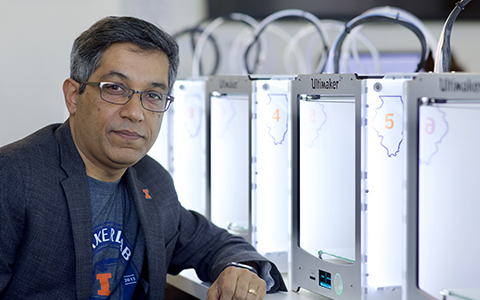
Vishal Sachdev is a Clinical Associate Professor of Business Administration at the University of Illinois at Urbana-Champaign's Gies College of Business. He serves as Director of the MS Analytics program, Director of Illinois MakerLab, and DPI Faculty in Residence. His academic roles span teaching, research, and leadership in educational technology and innovation. Education: B.A. in Mathematics, St. Stephen's College, New Delhi (1993) M.S. in International Business, Indian Institute of Foreign Trade (1996) Ph.D. in Information Systems, University of Texas at Arlington (2007) Research Interests: Dr. Sachdev focuses on technology's role in enabling collective action, cooperative production, and gamification in education. His work explores blockchain-based DAOs, 3D printing in educational settings, and the intersection of Web3 with decentralized business models. He emphasizes scalable peer-learning environments and online/blended education frameworks. Awards: Emerging Award for Excellence in Public Engagement (UIUC) List of Excellent Teachers (UIUC, multiple years) Research Excellence Award (Gies BADM, 2023) Grants & Labs: He leads Illinois MakerLab, a pioneering academic makerspace. Notable grants include Blockchain Analytics (Gies, 2023-2025), US Competitiveness in Web3 (Solana Foundation, 2022-2024), and Autodesk grants for Fusion 360 workshops. His work bridges technology, education, and innovation through applied research. Courses: Teaches courses like Blockchain Analytics, Database Design, and Digital Making Seminar, emphasizing hands-on, industry-relevant learning.
Christos Alexandros Psomas is an Assistant Professor in the Department of Computer Science at Purdue University, affiliated with the College of Science. He holds a PhD from UC Berkeley (2017) and previously worked as a postdoctoral researcher at Carnegie Mellon University and a Visiting Researcher at Google Research. His research focuses on algorithmic economics, fair division, and AI for social good, with notable collaborations with organizations like the Indy Hunger Network. Education: PhD in Computer Science, UC Berkeley (2017) MSc in Logic, Algorithms & Computation, University of Athens (2012) BSc in Computer Science, Athens University of Economics and Business (2011) Research Interests: His work bridges computer science and economics, emphasizing fair resource allocation, dynamic mechanisms, and applications of AI to societal challenges like food insecurity. Recent projects include automating food distribution systems using algorithms that balance fairness and efficiency. Awards: NSF CAREER Award, Google AI for Social Good Award, and Best Student Paper at EAAMO 2024. His research is funded by grants from the Herbert Simon Family Foundation, Algorand Foundation, and others. Grants & Advising: Leads projects funded by NSF, Google, and Algorand. Advises on AI-driven solutions for non-profits. Active in teaching, including courses on algorithmic governance and discrete mathematics. Labs & Teams: Collaborates with the Indy Hunger Network on FoodDrop automation and contributes to interdisciplinary AI initiatives at Purdue through the DSAI (Data Science and AI) facility.
Steven Watson is an Associate Professor at the Faculty of Education , University of Cambridge, with a Visiting Professor role at the Department of Sociology, Faculty of Croatian Studies, University of Zagreb. He co-founded the Cambridge Global Knowledge Nexus , is an Associate of the Digital Education Futures Initiative (DEFI), and a Fellow at Wolfson College. His research bridges engineering, social sciences, philosophy, and technology to address complex educational and societal challenges. Watson's work focuses on generative AI in education , using autopoietic ontology to develop frameworks for AI literacy, ethics, and integration. He advises UK policymakers on AI implementation and explores educational inclusion, cultural systems, and the sociology of technology. His presentations span global events, including the World Economic Forum and Tsinghua University. Recent publications emphasize AI's societal impact , transdisciplinary methodologies , and ethical frameworks for AI in education. His articles appear in journals like Systems Research and Behavioral Science and European Educational Research Journal , with a focus on autopoietic systems, educational equity, and technological evolution.
Evelyn Xiaoyue Gong is an Assistant Professor of Operations Management at the Tepper School of Business , Carnegie Mellon University . She holds a PhD in Operations Research from MIT (2023) and a BS in Honors Mathematics and Interactive Media Arts from New York University (2017) . Research Interests : Developing artificial intelligence solutions for supply chains and sustainability with provable performance guarantees. Online assortment optimization, pure exploration in reinforcement learning, and data-driven decision-making . Recent Work Trends : Her publications focus on applying reinforcement learning and optimization algorithms to supply chain sustainability, server deployment under uncertainty, and resource management. Key themes include AI-driven environmental impact reduction and theoretical advancements in online inventory models . Scientific Recognition : Best Dissertation Prize , Supply Chain Conference (2023) Accenture Fellowship (2022-2023) Bayer Women in Operations Research Scholarship (2021) Professional Service : Reviewer for Management Science , NeurIPS 2025 , and IPCO 2025 . Committee member for INFORMS Public Sector Operations Research Best Paper Award (2025).
Dr. Pamela Murray-Tuite is a Professor of Civil Engineering at Clemson University's College of Engineering, Computing and Applied Sciences. Her work bridges transportation systems, disaster resilience, and emergency response modeling. Education: B.S. (1998), M.S. (1999), and Ph.D. (2003) in Civil Engineering from the University of Texas at Austin and Duke University Teaching: Courses include CE 3110 Transportation Engineering and CE 8930 Mathematical Modeling for Civil Infrastructure Systems Analysis Her research focuses on transportation resilience , with emphasis on evacuation modeling, emergency response, and infrastructure interdependence. She explores the impact of disasters on mobility patterns, utilizing mathematical modeling and simulation tools to enhance urban systems' robustness. The 15 most recent articles span hurricane evacuation behavior, agent-based modeling, and infrastructure resilience under climate change. Keywords include transportation systems, disaster management, and behavioral modeling, while subfields cover evacuation routing, network analysis, and risk perception dynamics. Dr. Murray-Tuite's work integrates statistical methods with transportation policy, addressing challenges in both natural disasters and public sector disruptions. Her contact details include office location (210 Lowry Hall) and phone (864-656-3802).
Dr. M.Z. Naser is an Assistant Professor in the Glenn Department of Civil Engineering at Clemson University. His research focuses on causal and explainable machine learning methodologies applied to structural engineering, materials science, and fire safety. He holds a PhD from Michigan State University and an M.S. from the American University of Sharjah. Naser teaches courses such as Machine Learning for Civil Engineers and Structural Fire Engineering, emphasizing interdisciplinary innovation. His work bridges data-driven analysis with domain-specific knowledge to address challenges in resilient infrastructure design, including fire-resistant materials, structural retrofits, and AI-driven decision-making. Education: PhD, Michigan State University; M.S., American University of Sharjah Research Themes: Explainable AI, Fire Engineering, Structural Materials, Causal Inference Key Projects: Developing SPINEX framework, wildfire classification models, and cognitive infrastructure systems Recent publications analyze over 1000 fire tests to uncover spalling mechanisms, explore synthetic fire tests via GANs, and benchmark automated ML platforms. His work on causal diagrams for civil engineers and firefighter algorithms highlights contributions to both theory and practical applications. Naser also advocates for integrating AI into engineering education, emphasizing ethical and transparent model deployment.
Marco Valtorta is a Professor and Graduate Director in the Department of Computer Science and Engineering at the University of South Carolina’s Molinaroli College of Engineering and Computing. He specializes in Artificial Intelligence, with a focus on normative reasoning under uncertainty, Bayesian networks, causal models, and computational complexity. His work includes developing algorithms for structure learning in graphical models, causal inference, and applications in multiagent systems. Education: Ph.D., Computer Science, Duke University (1987) M.A., Computer Science, Duke University (1984) Laurea, Electrical Engineering, Politecnico di Milano (1980) Research Interests: Dr. Valtorta’s work integrates logical and probabilistic reasoning, with contributions to causal models, chain graphs, and adversarial machine learning. His funded projects include collaborations with the Office of Naval Research (ONR), IARPA, and the U.S. Department of Agriculture (USDA). Notable collaborations include applying Bayesian networks to healthcare and developing frameworks for trustworthiness assessment in AI systems. Grants & Collaborations: Multi-institution IARPA project on Wigmorean/Bayesian networks for argumentation ONR-funded research on Markov properties of directed hypergraphs with Dr. Linyuan Lu Causal analysis for performance modeling of configurable systems His recent publications emphasize causal inference in AI, automated evaluation of text and sentiment analysis systems, and robustness of foundation models. He has pioneered algorithms for learning chain graphs and addressing adversarial attacks in probabilistic models.
Hyunwoong "Woody" Chang is an Assistant Professor of Statistics in the Department of Mathematical Sciences at The University of Texas at Dallas. He holds a B.S. in Business/Mathematics from Seoul National University (2019) and a Ph.D. in Statistics from Texas A&M University (2024). His research focuses on structure learning of DAG models, convergence of Markov chains, and Bayesian learning methodologies. His work bridges statistical theory and computational methods, with applications in high-dimensional data analysis and model selection. Education: Ph.D. - Statistics, Texas A&M University (2024) B.S. - Business/Mathematics, Seoul National University (2019) Chang's research explores topics such as informed MCMC samplers, complexity analysis of Bayesian models, and Lipschitz continuous autoencoders for anomaly detection. His recent publications emphasize methodological advancements in DAG structure learning, regularization techniques, and rapid convergence algorithms. He currently holds no stated academic awards but actively contributes to statistical theory and computational efficiency in complex models. No advising or grant details are explicitly provided in the text. His affiliation with the School of Natural Sciences and Mathematics suggests involvement in interdisciplinary research teams, though specific lab affiliations are not mentioned.
Nick Heard is a Professor and Chair in Statistics at the Department of Mathematics, Faculty of Natural Sciences, Imperial College London. His research focuses on computational Bayesian inference, clustering, and changepoint analysis applied to dynamic networks (e.g., computer networks, social networks) and bioinformatics. He leads the EPSRC-funded NeST project on Network Stochastic Processes and Time Series, collaborating with universities including Bristol, Oxford, and LSE. His work bridges statistical theory with applied problems in cyber-security and neuroscience. Research Interests - Modelling large dynamic networks - Changepoint analysis and anomaly detection - Statistical methods for cyber-security - Bayesian computation and inference - Spectral clustering and graph embeddings Grants & Collaborations - Co-leads the NeST project on Dynamic graph embeddings: procedures and inference - EPSRC Programme Grant (EP/T004870/1) supporting Network Stochastic Processes and Time Series research Software & Tools - Developed open-source packages for Bayesian changepoint analysis (e.g., changepoints ) - Code for p-value combination methods ( standardised_partial_product )
Lexin Li is a Professor in the Department of Biostatistics and Epidemiology at the University of California, Berkeley School of Public Health, with additional affiliations at the Helen Wills Neuroscience Institute, the UC Berkeley-UCSF Joint Program on Computational Precision Health, and the Center for the Theoretical Foundations of Learning, Inference, Information, Intelligence, Mathematics and Microeconomics at Berkeley (CLIMB). He received his BE in Electrical Engineering from Zhejiang University (1998) and PhD in Statistics from the University of Minnesota (2003), followed by postdoctoral training at UC Davis School of Medicine. He joined North Carolina State University as Assistant Professor in 2005, was promoted to Associate Professor in 2011, and served as visiting faculty at Stanford University and Yahoo Research Labs (2011-2013) before joining UC Berkeley as Associate Professor in 2014, where he was promoted to Full Professor in 2018. Dr. Li's research spans statistical methodology development for neuroimaging data analysis, tensor statistics, and machine learning applications to biomedical problems. His work focuses on brain connectivity and network analysis, imaging causal inference, tensor regression, dimension reduction, and statistical machine learning with applications to Alzheimer's disease, Parkinson's disease, and other neurological disorders. His methodological innovations bridge theoretical statistics with practical neuroscience applications, particularly in multimodal neuroimaging analysis and brain network modeling. His recent publications demonstrate a strong trajectory in integrating deep learning with classical statistical inference, particularly in tensor analysis, functional data modeling, and causal inference. The research shows increasing sophistication in handling high-dimensional, complex neuroimaging data while developing rigorous statistical frameworks for inference. His work increasingly focuses on multimodal data integration and developing methods that can handle the complexity of real-world neurological data. Dr. Li has received numerous prestigious honors including being elected as a Fellow of the American Statistical Association (2017), Fellow of the Institute of Mathematical Statistics (2021), Elected Member of the International Statistical Institute, and Fellow of the American Association for the Advancement of Science (2024). Fellow, American Statistical Association (2017) Fellow, Institute of Mathematical Statistics (2021) Elected Member, International Statistical Institute Fellow, American Association for the Advancement of Science (2024) Editor-in-Chief, Annals of Applied Statistics (2025-2027) As an academic leader, Dr. Li serves as Co-Director of the Biostatistics Program (2019-) and Director of Graduate Admissions (2015-) at UC Berkeley. He is an active editor, currently serving as Editor-in-Chief of the Annals of Applied Statistics (2025-2027), and has held associate editor positions at multiple top statistical journals including the Journal of the American Statistical Association and Journal of Computational and Graphical Statistics. He also serves as a Standing Member of the NIH Emerging Imaging Technologies in Neuroscience Study Section (2023-2027). His research has been supported by various NIH grants focused on statistical methodology for neuroimaging analysis. Dr. Li leads a vibrant research group focused on statistical neuroimaging and machine learning methodology, with strong connections to the Helen Wills Neuroscience Institute and collaborations across multiple departments at UC Berkeley. His team develops innovative statistical methods that address real challenges in neuroscience research while maintaining rigorous theoretical foundations. The group maintains active collaborations with neuroscientists and clinicians working on Alzheimer's disease, Parkinson's disease, and other neurological conditions.
Zachary E. Ross is a Professor of Geophysics at the California Institute of Technology (Caltech) and holds the William H. Hurt Scholar distinction since 2021. His research integrates machine learning, computational mathematics, and seismology to analyze earthquakes and fault zones using large seismic datasets. Education B.S., University of California, Davis (2009) M.S., California Polytechnic State University, San Luis Obispo (2011) Ph.D., University of Southern California (2016) His research focuses on high-resolution imaging of fault zones, understanding earthquake sequences in space and time, and applying artificial intelligence to seismic data analysis. He develops scalable algorithms for waveform inversion, ground-motion synthesis, and real-time seismic monitoring. Recent publications highlight his work on neural operators for wave propagation, AI-driven seismicity analysis, and induced earthquake dynamics. He teaches advanced courses including Ge 264 – Machine Learning in Geophysics and Ge 271 – Dynamics of Seismicity . Scientific Awards William H. Hurt Scholar (2021–present)