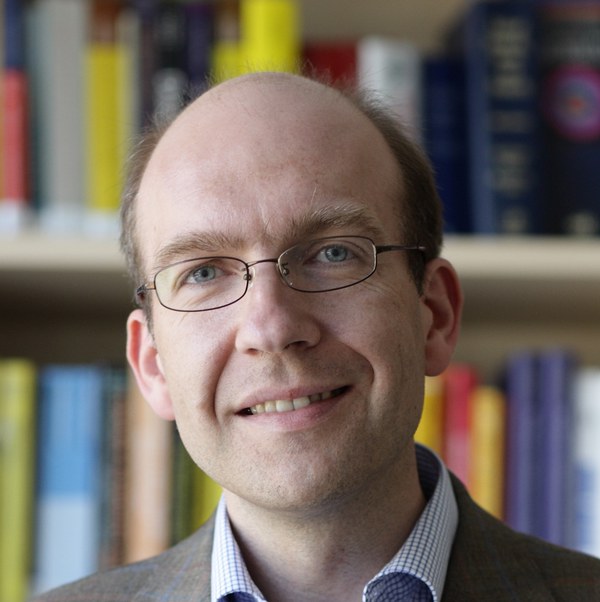
Lucia MelloniView profile
Research Professor
Prof. Lucia Melloni is a Research Professor at New York University (NYU) School of Medicine's Department of Neurology and a W2 Group Leader (Tenure) at the Max Planck Institute for Empirical Aesthetics, leading the Research Group Neural Circuits Consciousness and Cognition. She holds a PhD in Psychology from the Catholic University of Chile and the Max Planck Institute for Brain Research. Her work focuses on neural mechanisms underlying consciousness, predictive processing, and brain plasticity. She has held positions at Columbia University, the Max Planck Institute for Brain Research, and Goethe University. Key achievements include developing methods for analyzing neural correlates of consciousness and advancing theories on predictive coding in sensory and cognitive systems. Education : PhD, Psychology (2006); BA in Psychology (2000) and Social Sciences (1995) from Catholic University of Chile. Affiliations : NYU School of Medicine (since 2020), Max Planck Institute for Empirical Aesthetics (since 2017). Research Interests : Domain-general cortical computations, neural mechanisms of perception and language comprehension, consciousness theories, and neuroplasticity. Her lab investigates how the brain uses predictions to control sensory processing and cognition, with implications for understanding disorders like minimally conscious states. Recent Work : Recent articles explore perceptual biases, auditory predictive processing, and adversarial testing of consciousness theories. Her work bridges clinical neurology and cognitive neuroscience, emphasizing methodological rigor and interdisciplinary collaboration. Awards : Israel Institute for Advanced Studies Fellow (2019), AcademiaNet member (2018). Grants : Over €10M secured from Templeton World Charity Foundation, NIH, and ONR for projects on consciousness, neural correlates, and cognitive neuroscience. Labs/Teams : Leads the Neural Circuits, Consciousness, and Cognition group at Max Planck, collaborating with institutions globally on projects like the Consciousness Theories Studies (ConTraSt) database.