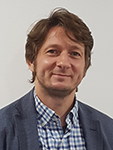
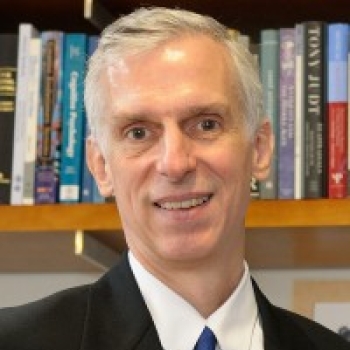
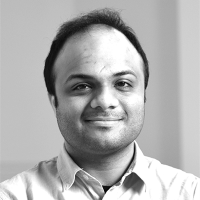
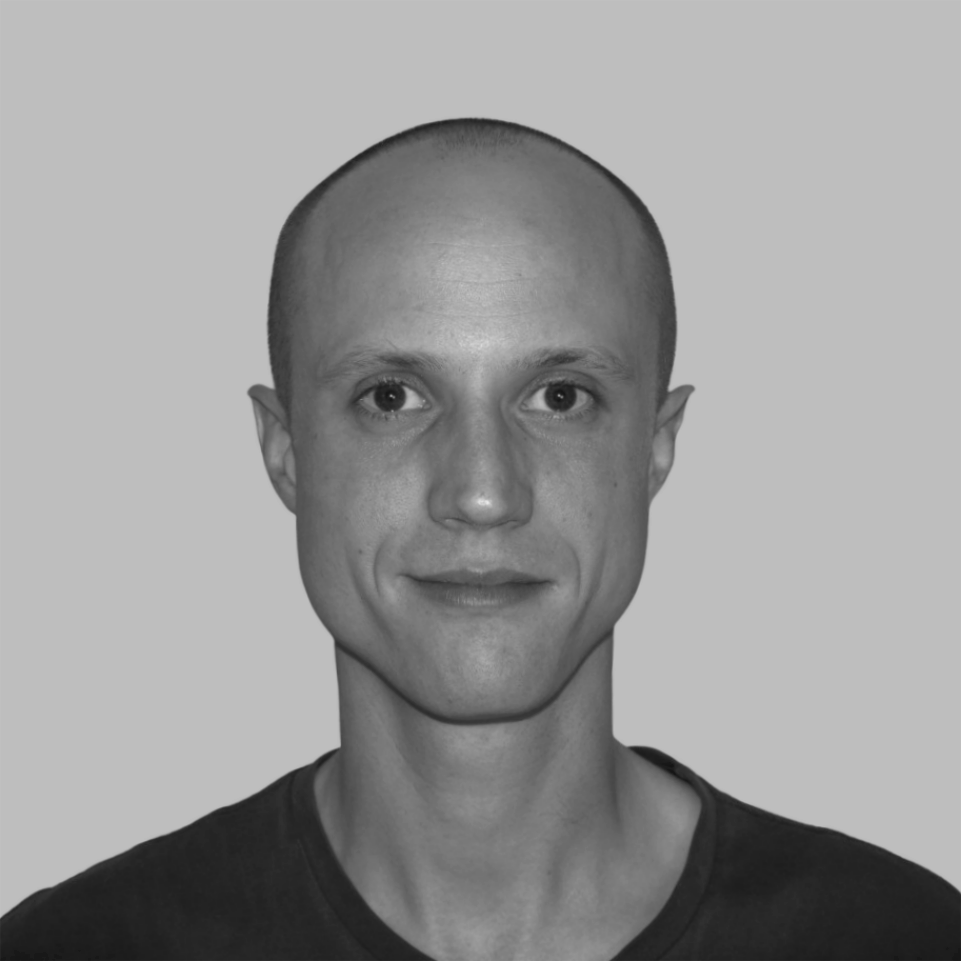
Qi Ma is a Professor at the College of Electronics and Information, Hangzhou Dianzi University. His research focuses on VLSI/SoC design, IC design methodologies, and intelligent audio/voice processing. He holds a B.E. in Radio Technology (1990) and a Ph.D. in Electronic Science and Technology (2000) from Zhejiang University, as well as an M.E. in Computer Application (1997) from Hangzhou Dianzi University. Education: Ph.D. in Electronic Science and Technology, Zhejiang University (2000) M.E. in Computer Application, Hangzhou Dianzi University (1997) B.E. in Radio Technology, Zhejiang University (1990) Dr. Ma's work emphasizes advancing integrated circuit design and audio signal processing techniques. Despite no listed publications or awards in the provided text, his academic trajectory reflects expertise in electronics and information science. Grants and advising activities are not detailed here. No labs or teams are explicitly mentioned in his profile.
Dr. Sheela Ramanna is a Professor and Chair of the Applied Computer Science Graduate Program at the University of Winnipeg , with an adjunct appointment in the Department of Computer Science at the University of Manitoba. She holds a Ph.D. in Computer Science from Kansas State University (2003), an M.S. in Computer Science (1998), and a B.S. in Electrical Engineering (1996) from Osmania University , India. Adjunct Professor, University of Manitoba Professor & Chair, University of Winnipeg Graduate Program Her research focuses on Artificial Intelligence , Machine Learning , and Soft Computing (Rough Sets, Fuzzy-Rough Sets, Tolerance-based Methods) with applications in Multimodal Information Processing , Natural Language Processing , and Topological Data Analysis . She has developed novel tolerance near-set algorithms for sentiment classification, named entity recognition, and community detection in social networks. Recent publications include 2025 work on speech emotion recognition, 2024 studies on diabetic retinopathy detection and plant species recognition, and 2023 research on text summarization and NLP applications. Her work spans 15+ peer-reviewed articles in journals like Scientific Reports , Information Fusion , and Frontiers in Artificial Intelligence . Scientific Awards include the UW Merit Award for Exceptional Performance (multiple years), MITACS Globalink Research Intern (2024), and 3MT People's Choice Award (2018). She has served as Editor for EAAI Journal , Associate Editor for KES Journal , and Organizing Co-Chair for ISCMI 2025 . She supervises 22+ graduate students and postdocs, including Vrushang Patel (President's Scholarship), Habib Ben Abdallah (MITACS Fellow), and Anil Rahate (collaborative PhD with SIT Pune). Her NSERC-funded projects include precipitation forecasting with WeatherLogics Inc., road condition classification, and LULC mapping using satellite imagery.
Jean-Marc Odobez is a Senior Scientist at the IDIAP Research Institute and Adjunct Professor at the Swiss Federal Institute of Technology Lausanne (EPFL), where he is affiliated with the School of Engineering and serves on the Electrical Engineering Doctoral committee (EDEE). He leads the Perception & Activity Understanding Group at Idiap and has extensive teaching responsibilities across multiple departments. Dr. Odobez received his PhD in Computer Science from Rennes University in 1994. His research focuses on multimodal perception systems combining computer vision, statistical machine learning, and deep learning for activity recognition, behavior understanding, and human-robot interaction. His work spans diverse application domains including human health assessment, social robotics, and media content analysis. His recent research shows strong trends in gaze estimation, human activity recognition, and multimodal processing. His team has developed innovative solutions for gaze tracking, head pose estimation, and activity recognition using depth sensors and neural networks. His work increasingly bridges computer vision with digital humanities, particularly in the analysis of ancient Maya glyphs. IEEE member Associate Editor of Machine Vision and Applications journal Dr. Odobez has supervised numerous PhD students and serves as a committee member for the Electrical Engineering Doctoral program. He has been principal investigator for over 16 European and Swiss research projects and has worked on 10 technology transfer projects with SMEs. He co-founded Klewel SA and Eyeware SA, focusing on eye tracking and attention modeling technologies. His research group actively collaborates with industry partners and maintains strong connections with the computer vision and human-computer interaction research communities.
Affiliations Senior Lecturer in People-Centred AI at the Surrey Institute for People-Centred Artificial Intelligence (PAI) and School of Computer Science and Electronic Engineering, University of Surrey. Visiting Faculty at IIIT Lucknow. Former Postdoctoral Research Fellow at the Centre for Translation Studies (CTS), University of Surrey. Education PhD, IIT Bombay & Monash University (2021) - Dissertation on distributional similarity for cognate detection and computational phylogenetics. BTech in CSE, Uttar Pradesh Technical University (2013). Research Interests Focused on NLP and ML, particularly in low-resource languages, machine translation quality estimation, cognitive NLP, and multimodal information processing. Leads research in Human-Machine Interaction at PAI and the NLP subgroup in the Nature Inspired Computing and Engineering (NICE) group. Publications & Awards Over 30 publications in top conferences (ACL, EMNLP, EACL) including Best Paper Honourable Mention at EACL 2021. Awards include CISCO Fellowship (2016-2020) and Teaching Assistant of the Semester (2017, 2019). Teaching Leads NLP module for undergrad and postgrad students at Surrey. Co-teaches NLP at IIIT Lucknow. Integrates cutting-edge topics like multimodal processing into coursework.
Dr Muhammad Awais is a Senior Lecturer in Trustworthy and Responsible AI at the University of Surrey. He leads research on foundation models and self-supervised learning, with affiliations to the Surrey Institute for People-Centred Artificial Intelligence (PAI) and the Centre for Vision, Speech and Signal Processing (CVSSP). His expertise spans AI ethics, audio processing, medical AI, and biometric systems. Education: PhD in AI, MSc in AI, BSc Computer Engineering, BSc Mathematics and Physics. His research focuses on advancing AI through self-supervised learning techniques, with applications in healthcare (e.g., Parkinson’s Disease rehabilitation), transportation, and security systems. He has published extensively on topics like masked autoencoders, audio event classification, and age-invariant face recognition. Key contributions include DailyMAE (fast autoencoder pretraining), ASiT (audio-spectrogram transformers), and AiCareGaitRehabilitation (AI-driven gait rehabilitation). His work emphasizes ethical AI deployment and cross-modal learning.
Dr. Sara Atito Ali Ahmed is a Surrey Future Fellow at the University of Surrey's Faculty of Engineering and Physical Sciences , specifically within the Centre for Vision, Speech and Signal Processing (CVSSP) . She holds a PhD in Computer Science and specializes in advanced machine learning techniques, with a focus on computer vision, medical imaging, and audio signal processing. Her research emphasizes self-supervised learning, multimodal data fusion, and deep learning ensembles for robust decision-making. Her academic journey includes contributions to healthcare AI through projects like SS-CXR for medical image pretraining and DeepChest for multi-task learning in chest X-ray diagnostics. She has also developed innovative models such as the ASiT audio-spectrogram transformer and DailyMAE for efficient masked autoencoder training. Her work spans diverse domains including robotics perception, SAR target recognition, and plant species identification via ensemble methods. Awards and recognitions are not explicitly mentioned in the provided texts, but her prolific publication record highlights her impact in top-tier venues. She has collaborated on interdisciplinary projects ranging from biomedical applications to environmental sensing, demonstrating a commitment to bridging theoretical research with real-world applications.
Dr. Vijaya Kolachalama is an Associate Professor at Boston University, affiliated with both the School of Medicine and the Faculty of Computing and Data Sciences, within the Department of Computer Science. Their research focuses on developing AI-driven solutions for clinical challenges, particularly in neurodegenerative diseases, digital pathology, and domain generalization in medical imaging. Key interests include dementia screening frameworks, clinical-grade software tools for pathology, and neural network advancements for data generalization. Education: B.S. from Indian Institute of Technology, Kharagpur, India; Ph.D. from University of Southampton, UK. Their lab (VKola Lab) emphasizes translational AI for healthcare, with projects addressing Alzheimer’s diagnostics, voice-based cognitive assessment, and gait analysis in osteoarthritis. Collaborations span biomedical engineering, neurology, and nephrology. Research trends in their articles highlight AI applications in healthcare, including privacy-preserving voice analysis, multimodal data fusion for diagnostics, and computational models of amyloid-tau interactions in Alzheimer’s. They also explore digital platforms for brain health monitoring and machine learning in clinical trial design. No scientific awards listed. Advising and grants details are not provided in the text. The VKola Lab website (https://vkola-lab.github.io) serves as a hub for their work, including open-source tools and datasets.
Stefan Goetze is a Visiting Professor in the Department of Computer Science at the University of Sheffield, affiliated with the Speech and Hearing (SpandH) research group. He previously held a Senior Lecturer position from 2020 to 2025. He earned his Dipl.-Ing. (2004) and Dr.-Ing. (2013) in Electrical/Communication Engineering from the University of Bremen, Germany. Prior to his academic role at Sheffield, he led departments at the Fraunhofer-Institute for Digital Media Technology IDMT in Oldenburg, Germany, including the "Audio System Technology for Audiology and Assistive Systems" and "Automatic Speech Recognition" groups. His research focuses on machine learning, signal processing, and assistive technologies, particularly in speech enhancement, dereverberation, and hearing aid systems. He supervises multiple PhD students and has contributed to grants such as the "Participatory co-design of a platform for collecting atypical speech data" (2022). His work spans acoustic event detection, audiovisual processing, and medical applications of speech technology. Key research interests include robust speech recognition in reverberant environments, noise reduction, and the application of deep learning to audio challenges. Notable publications address speech separation models, metric-driven enhancement, and active learning for sound classification. Collaborations include projects on assistive living technologies and healthcare communication systems.
Simon Colton is a Professor of Computational Creativity, Games, and Artificial Intelligence at Queen Mary University of London, affiliated with the School of Electronic Engineering and Computer Science. His research focuses on AI-driven creativity in domains like music, game design, and visual arts, emphasizing generative techniques and philosophical aspects of creative systems. He leads projects in automated composition, procedural content generation, and interdisciplinary AI applications. Education: Extensive background in AI and computational creativity, with a focus on generative systems. Research Interests: Computational Creativity, Generative AI, Music Generation, Game Design Automation, and Neuro-Symbolic Systems. His work explores how AI can autonomously create artistic content, including music, games, and visual art, with notable contributions to frameworks like ANGELINA for game design and The Painting Fool for automated art. Recent projects include AI-driven music composition and tools for creative support (e.g., Gamika, Danesh). Key grants include the £3M EPSRC-funded IGGI2 Centre for Doctoral Training, focusing on Intelligent Games and Game Intelligence. His lab, the Centre for Multimodal AI, advances research in cross-modal AI creativity.
Harry Nguyen (Hoang D. Nguyen) is a Lecturer and Programme Director for the MSc in Computing Science at University College Cork. Affiliated with the SFI Research Centre for Data Analytics, he leads research in reliable AI systems for healthcare and sustainability. Research Focus: Develops robust ML models integrating graph networks and multimodal learning, with applications in medical diagnosis (e.g., COVID-19 detection via cough analysis) and environmental monitoring. Directs the Reliable Machine Intelligence research group. Advising: Mentors 15+ graduate students on projects spanning federated learning, sound-based diagnostics, and conversational AI for diabetes care. Secured funding from Science Foundation Ireland for CRT-AI initiatives.
Robert Rowe is a Professor of Music Technology at New York University's Steinhardt School of Culture, Education, and Human Development, and an Affiliated Faculty member at NYU Abu Dhabi. He is a core member of the Music & Audio Research Laboratory (MARL), specializing in interactive music systems, algorithmic composition, and music cognition. His work bridges music technology, computer science, and artistic performance. Bachelor of Music in Music History & Theory (University of Wisconsin, 1976) Master of Arts in Composition (University of Iowa, 1978) Ph.D. in Music and Cognition (MIT Media Lab, 1991) Rowe's research focuses on interactive systems, real-time music processing, and the intersection of music with cognitive science and artificial intelligence. His compositions have been performed globally and are featured on multiple record labels. Key contributions include the books Interactive Music Systems (1993) and Machine Musicianship (2001), which explore computational approaches to music creation and performance. His recent work emphasizes distributed performance systems, emotion recognition in music, and the application of machine learning to interactive composition. Notable projects include Melting the Darkness (2014) and Arcturus (2006), which showcase real-time interaction between performers and computational systems. Awards : First Prize in the Bourges International Electroacoustic Music Competition (1990) Grants : Multiple grants from NYU and external institutions for research in music technology and cognition. Rowe has led initiatives in NYU’s Steinhardt School, including serving as Associate Dean of Research & Doctoral Affairs, and collaborates internationally with institutions like IRCAM (Paris) and the Sweelinck Conservatory (Amsterdam). His lab, MARL, develops cutting-edge tools for music analysis, generation, and performance.
Dr. Pranava Madhyastha is a Senior Lecturer in Artificial Intelligence at the Department of Computer Science, City, University of London, and a Principal Investigator at The Alan Turing Institute. He holds a PhD from Universitat Politècnica de Catalunya, Spain, and has held research positions at Imperial College London and the University of Sheffield. His primary research interests lie in multimodal machine learning, grounded representation learning, natural language understanding and generation, and their applications in machine translation, syntactic parsing, and language interaction. He explores how models can integrate signals from text, vision, and speech to improve language comprehension and production. The most recent publications highlight a strong focus on multimodal AI, visual analytics with large language models, prosody prediction, toxicity detection, and formal analysis of neural network capabilities in language tasks. His work bridges theoretical and applied aspects of AI, with contributions in top venues like ACL, EMNLP, ICML, and IEEE journals. Scientific Awards: No specific awards listed in the provided text. He advises several PhD students, including Maeve Hutchinson, Chenxi Whitehouse, Nadine El Naggar, Hadeel Al-Negheimish, and Chiraag Lala. His research is supported through academic collaborations and institutional affiliations, with no specific grants mentioned. He leads research activities at City and maintains a strong presence through publications and open research.
Kamel K. Mohammed is a researcher affiliated with Al-Azhar University in Egypt, the Scientific Research Group in Egypt (SRGE), and Biomid Company. His work bridges biomedical engineering and artificial intelligence, with publications spanning medical image analysis, IoT security, and drone identification systems since 2021. His research focuses on applying deep learning to healthcare diagnostics, particularly in cancer detection (oral squamous cell carcinoma and lung cancer) and ear disease classification. He develops innovative solutions using transfer learning, CNN-LSTM architectures, and 3D segmentation techniques while addressing cybersecurity challenges in IoT networks through image-based malware detection and RF fingerprinting for drone identification. Publications from 2021-2023 demonstrate consistent output with an average impact factor of 5.2. His single-authored works (100% single authorship) have received institutional sponsorship from the Japan Society for the Promotion of Science, Princess Nourah Bint Abdulrahman University, and Universidad Carlos III de Madrid, each funding one 2023 publication. He operates within the Scientific Research Group in Egypt (SRGE) ecosystem, which appears to be a collaborative hub for biomedical and engineering research, and maintains industry ties through Biomid Company for applied technology development.
Simon Leglaive is a tenured Assistant Professor at CentraleSupélec in Rennes, France, and a researcher in the AIMAC team at the IETR laboratory (CNRS UMR 6164). He holds a PhD in Audio Signal Processing from Télécom Paris (2017), and previously served as a postdoctoral researcher at Inria Grenoble Rhône-Alpes. His academic affiliations include CentraleSupélec, Télécom Paris, and CNRS, with research collaborations across institutions including Inria, GIPSA-lab, and Sorbonne University. His research focuses on the intersection of signal processing and machine learning, particularly for audio and speech applications. Key areas include probabilistic generative models, deep learning, low-dimensional representation learning, and weakly or semi-supervised learning. His work enables advanced multimodal machine perception tasks such as speech enhancement, audiovisual speech analysis, and human mesh recovery. He teaches machine learning, deep learning, and audio signal processing at CentraleSupélec. The 15 most recent publications highlight a strong trend in deep generative modeling, especially using variational autoencoders (VAEs) and masked autoencoders, for tasks like speech enhancement, source separation, emotion recognition, and human pose recovery. There is a clear emphasis on disentangled and interpretable latent representations, multimodal fusion, and unsupervised or weakly supervised methods. Applications span from speech technology to computer vision, reflecting a cross-disciplinary approach centered on fundamental representation learning. Coordinator and Principal Investigator, DEGREASE project (ANR-23-CE23-0009) Partner, DEESSE project (ANR-24-CE23-2229) Elected member, IEEE AASP Technical Committee (2023–2025) Organizing committee, CHiME-7 UDASE challenge (2023) Conference area chair, ICASSP (2024, 2025), WASPAA (2023, 2025) Simon Leglaive advises multiple PhD students and has served on the IETR laboratory council since 2022. His academic service includes extensive reviewing for top journals and conferences in signal processing and machine learning. His research is supported by competitive grants from the French National Research Agency (ANR). He is actively involved in collaborative research through the AIMAC team at IETR and partnerships with Inria and industry labs.
Riccardo Guidotti is an Assistant Professor (RTD-B) at the Department of Computer Science, University of Pisa, and a member of the Knowledge Discovery and Data Mining Laboratory (KDDLab), a joint research group with the Information Science and Technology Institute of the National Research Council (ISTI-CNR) in Pisa, Italy. His research spans explainable AI, personal data mining, clustering, and transactional data analysis. PhD in Computer Science, University of Pisa Master's Degree in Computer Science, University of Pisa (110/110 cum laude) Bachelor's Degree in Computer Science, University of Pisa (110/110 cum laude) His research interests include Explainable AI , Personal Data Mining , Clustering , and Transactional Data Analysis . He focuses on making AI systems interpretable and understandable, especially through local and global explanation techniques applied to behavioral and mobility data. His work bridges theoretical models with real-world applications in retail, mobility, and social networks. The recent publications highlight a strong trend in explainability of black-box models , with emphasis on rule-based and exemplar-driven methods. His work extends to temporal pattern discovery , privacy risk assessment , and software engineering analytics , demonstrating interdisciplinary reach across AI, data science, and human-centric systems. Scientific awards received: IBM Fellowship Award (2014) ISTI Young Researcher Award (2016, 2017, 2018, 2019) Next Generation Data Scientist Award (NGDS 2018) He has contributed to teaching courses such as Data Mining, Logic Programming, and Advanced Data Mining topics. He has been involved in major EU-funded projects including SoBigData++, XAI, AI4EU, and HumanE-AI-Net, where he contributes to advancing explainable and ethical AI. He collaborates extensively within the KDDLab, focusing on knowledge discovery and data-driven decision-making. His lab work emphasizes scalable, interpretable, and socially aware data mining systems.