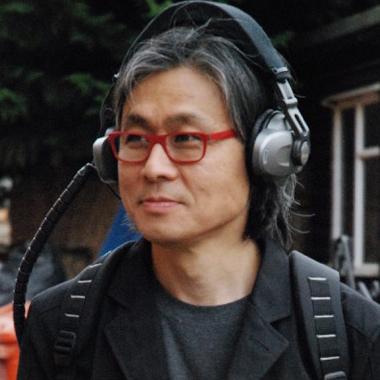
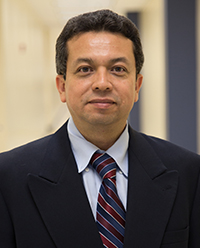
Remigiusz Rak is a Professor at the Institute of the Theory of Electrical Engineering, Measurement and Information Systems within the Faculty of Electrical Engineering at Warsaw University of Technology. His research focuses on biomedical signal processing, brain-computer interfaces (BCIs), and emotion recognition systems. Specializes in EEG, ECoG, and EOG signal analysis Develops machine learning algorithms for physiological monitoring Works on real-time systems for fatigue detection and seizure prediction Research Trends : Recent publications demonstrate expertise in applying convolutional neural networks to BCI systems, developing novel methods for artifact removal in EEG signals, and creating multimodal emotion recognition frameworks combining eye-tracking and physiological data. With over 100 publications and 5 achievements documented, Professor Rak contributes to both academic research and educational innovation, including the SPRINT online learning model implementation at his university.
Professor Axel Berndt is a faculty member at the University of Paderborn, where he is affiliated with the Musicology Seminar Detmold/Paderborn, the Center for Music, Edition, Media (ZenMEM), and the KreativInstitut.OWL. His expertise lies at the intersection of computer science and music, with a focus on music informatics and digital media applications. University of Paderborn Musicology Seminar Detmold/Paderborn Center for Music, Edition, Media (ZenMEM) KreativInstitut.OWL Dr. Berndt studied computer science with a minor in music at Otto-von-Guericke University in Magdeburg. He conducted research and teaching in music informatics at the Department of Simulation and Graphics, earning his PhD in 2011. From 2012 to 2015, he worked at the Faculty of Computer Science at Technische Universität Dresden. From 2015 to 2023, he was a member of the Center for Music and Film Informatics in Detmold. Since 2023, he has been with the University of Paderborn. Professor Berndt's research focuses on the innovative potential of music informatics, exploring how digital tools and data formats enrich creative work with sound and music. His work bridges disciplines including human-technology interaction, musicology, and application domains such as the games industry, organ building, and museum technology. He investigates how digital media enable new approaches to sound and music, even for non-experts, with particular interest in interactive systems, music performance analysis, and digital music editions. His research emphasizes the practical application of theoretical concepts through immediate interdisciplinary exchange. His recent publications demonstrate a strong focus on music technology applications, with particular emphasis on music performance markup, interactive music systems, and digital tools for musicians. A recurring theme across his work is the intersection of traditional musicology with modern computational approaches, especially in the areas of music notation, performance analysis, and digital music editions. His research spans from practical implementations like the Detmold musical Instrument Timbre Explorer (DmITE) to theoretical explorations of music performance description. Digitale Interpretationsedition project Interactive Digital Scores in Music Theatre KreativInstitut.OWL Professor Berndt is actively involved in teaching individual BA/MA projects focused on sound and music in various media contexts and application domains. His approach emphasizes hands-on experience and collaboration with institutions like the Technische Hochschule OWL and the Hochschule für Musik Detmold, as well as partnerships with industry and application domains. His work demonstrates a commitment to translating research into practical applications through immediate interdisciplinary exchange. He maintains active research collaborations that bridge academic disciplines and application domains, ensuring his work remains relevant to both theoretical advancements and practical implementations in music technology and informatics.
David Cardinal is a Lecturer at Stanford University where he co-teaches Psychology 221 (Image Systems Engineering) and Psychology 204A (Human Neuroimaging Methods). He also works as a researcher, currently improving simulation tools for computational photography applications and mentoring students in the lab. Cardinal is a co-contributor to Stanford's ISET imaging toolbox, leading efforts to extend it into machine learning and computational photography areas. His research interests span computational photography, image systems engineering, human neuroimaging methods, machine learning applications in imaging, and digital imaging technologies. Cardinal brings extensive industry experience to his academic role, having held development and management positions at Sun Microsystems where he directed AI and digital imaging efforts, and serving as founding CEO and CTO of First Floor Software (later Calico Commerce). As a professional photographer with two decades of experience in digital travel and nature photography, Cardinal has received significant recognition including First Place in the National Wildlife Federation contest and being a Finalist in the BBC/NHM Wildlife Photographer of the Year competition. His technical expertise is reflected in his co-authorship of one of the first image management solutions for digital photographers - DigitalPro for Windows. First Place in the National Wildlife Federation contest Finalist in the BBC / NHM Wildlife Photographer of the Year competition Cardinal maintains an active presence in the photography technology community through his writing, with articles appearing in numerous publications including PCMag, Dr. Dobbs, Photoshop User, and Outdoor Photographer. His blog covers the latest developments in photography technology, software, and techniques, with recent posts focusing on AI-powered image editing tools, mobile photography workflows, and emerging imaging technologies for both professional and enthusiast photographers.
Andrew C. Singer is a Professor at the University of Illinois at Urbana-Champaign , with joint appointments in the College of Engineering (Electrical and Computer Engineering, Industrial and Enterprise Systems Engineering) and the College of Business (Business Administration). Since 1998, he has held roles including the Fox Family Endowed Professorship , Associate Dean for Innovation and Entrepreneurship (2018–present), and Director of the Technology Entrepreneur Center (2005–2017). He co-founded Intersymbol Communications, Inc. (2000, acquired by Finisar) and OceanComm (2015, underwater video communication). Education: Ph.D. in Electrical Engineering and Computer Science, MIT (1996). Research Interests span statistical signal processing , acoustic communication systems , machine learning , and low-power VLSI design , with applications in underwater acoustics, through-tissue communication, and augmented listening. His work integrates theoretical signal processing with practical hardware implementations. Recent Publications focus on acoustic communication under nonlinear conditions , low-complexity ADC design , and biomedical applications of signal processing . Articles from 2023–2020 highlight innovations in underwater navigation, face mask acoustics, and subsurface data transmission. Scientific Awards include: Hughes Aircraft Masters Fellowship Harold L. Hazen Memorial Award (1991) NSF CAREER Award (2000) Xerox Outstanding Faculty Award (2001) IEEE Fellow IEEE Signal Processing Society Distinguished Lecturer (2014) Best Paper Awards (2006, 2008) Leadership roles include Associate Editor for IEEE Transactions on Signal Processing and service on the MIT Educational Council . He directs the Coordinated Science Lab and advises on expert witness cases in audio and communication industries.
Matthieu Cord is a Professor at Sorbonne University, leading research in the MLIA (Machine Learning and Artificial Intelligence) team within the Institute for Intelligent Systems and Robotics (ISIR). His work focuses on advancing transformers, multimodal learning, and neural network optimization. Research Interests: Vision-language models, multimodal transformers, efficient neural network training, and compression techniques. Article Trends: Recent publications explore in-context learning for multimodal models, diffusion-based pose estimation, and quantization methods for edge AI deployment. Laboratory Affiliation: Active in MLIA, contributing to foundational AI research with applications in computer vision and NLP.
Vegard Antun is a Postdoctoral Fellow at the Department of Mathematics, University of Oslo , specializing in applied mathematics with a focus on inverse problems, imaging, and deep learning. Education: PhD (2020), Master's (2016), and Bachelor's (2013) degrees from the University of Oslo. Research Interests: Stability and accuracy in AI algorithms, compressive sensing, signal recovery, and mathematical paradoxes in deep learning. Key Projects: Supervised a 2022 interdisciplinary project on deep learning observables for partial differential equations. His work explores the theoretical limitations of AI, particularly the instability of neural networks in inverse problems and their implications for scientific computing, as highlighted in his research on mathematical paradoxes and Smale’s 18th problem. His publications span topics such as binary sampling , wavelet reconstruction , and data-efficient neural networks , emphasizing the tension between AI accuracy and robustness. He has contributed to understanding implicit regularization , existence of optimal decoders , and hybrid concept-based models for scientific applications.
Conghui HU is a Lecturer (Educator Track) at the School of Computing, National University of Singapore. Currently teaching courses such as CS1010A Programming Methodology and CS2109S Introduction to AI and Machine Learning. Research Interests Artificial Intelligence and Machine Learning Computer Vision with focus on sketch-based methods Cross-domain Image Retrieval Video Processing and Segmentation Point Cloud Analysis and 3D Vision Publications Trends Recent research outputs emphasize sketch-based video segmentation, cross-modal audio-visual analysis, and domain-generalized image retrieval. Key methodologies include deep learning, unsupervised feature representation, and differentiable particle filters, with applications in video object segmentation, point cloud segmentation, and audio-visual conditioned prediction.
Min Ding is the Bard Professor of Marketing at Penn State's Smeal College of Business with a joint appointment in Information Sciences. Holding dual Ph.D.s (Marketing from UPenn; Molecular Biology from Ohio State), his interdisciplinary research spans artificial empathy, logical creativity methods, digital intelligence, and cultural theory. Research Domains: Develops frameworks including Logical Creative Thinking (LCT), Bubble Theory (socioeconomic development), and Hualish Culture. His technical work focuses on audio-visual analytics applications in marketing, including privacy-preserving face recognition and brand voiceprints. Leadership: Editor-in-Chief of Customer Needs and Solutions. Former VP of INFORMS Society for Marketing Science. Authored books on creativity methods, Chinese culture, and socioeconomic development. Awards: Recognized with the Journal of Marketing's Maynard Award (2007) and Journal of Retailing's Davidson Award (2012).
Nathan Dahlin is an Assistant Professor in the Department of Electrical and Computer Engineering at the University at Albany's College of Nanotechnology, Science, and Engineering. He holds a BS, MS, and PhD in Electrical Engineering and an MA in Applied Mathematics from the University of Southern California. Prior to joining UAlbany, he was a Postdoctoral Research Associate at the University of Illinois Urbana-Champaign and a senior audio DSP research engineer at Audyssey Laboratories. Dr. Dahlin's research focuses on fundamental problems in machine learning, stochastic control, optimization, and microeconomics, with applications in developing computationally efficient decision-making approaches for smart energy systems. His work emphasizes reliability in uncertain environments and risk management. His recent publications demonstrate strong focus on machine learning applications in control systems, energy management, and algorithm design. Articles frequently address topics like imitation learning, economic dispatch optimization, neural network transformation, and kernel-based learning methods, often with practical implementations in energy systems and smart grids. Dr. Dahlin is active in professional organizations including the Institute of Electrical and Electronics Engineers (IEEE) and the Association for the Advancement of Artificial Intelligence (AAAI). He serves as a reviewer for leading conferences and journals including AAAI Conference on Artificial Intelligence, IEEE Transactions on Control of Network Systems, IEEE Transactions on Power Systems, and IEEE Transactions on Smart Grid.
Marcella ASTRID is a Researcher at the University of Luxembourg's Interdisciplinary Centre for Security, Reliability and Trust (SnT), specifically within the CVI2 department. Her research focuses on advanced machine learning techniques applied to cybersecurity and computer vision challenges, particularly in the detection of synthetic media (deepfakes) and anomaly detection systems. She specializes in developing robust models that address vulnerabilities in adversarial scenarios and improve generalizability across diverse datasets. Key research areas include deepfake detection through spatio-temporal analysis, anomaly detection via novel training paradigms, and efficient neural network compression for resource-constrained environments. Her work bridges theoretical advancements in machine learning with practical applications in surveillance systems, autonomous robotics, and cybersecurity infrastructure. Recent contributions emphasize leveraging autoencoder weaknesses, pseudo anomaly generation, and localized attention mechanisms to enhance detection accuracy and model robustness. Marcella’s research also explores cross-modal learning (audio-visual synchronization) and semi-supervised methodologies to tackle data scarcity issues in critical domains like battery thermal imaging and multi-camera traffic classification. She actively publishes in top-tier venues and collaborates on interdisciplinary projects addressing real-world security and reliability challenges.
Prof. Frederic Fol Leymarie is a Professor in the Department of Computing at Goldsmiths, University of London. He specializes in AI, robotics, and computer graphics, with a focus on creative systems and their applications in art and biosciences. His work includes developing robots capable of artistic skills, interactive platforms like FoldSynth for molecular visualization, and projects like Mutator VR. He co-leads the MSc in Computer Games & Entertainment and teaches advanced topics in graphics and game design. His research spans shape understanding, AI-driven art, and interdisciplinary collaborations with bioscience specialists. Education: PhD in Computer Science from Brown University (2003) Key Projects: Mutator VR (2016–2020): An artistic VR project FoldSynth: Interactive tool for visualizing molecular structures Bioblox: Educational game for protein docking Research Interests: AI creativity, human-robot interaction, computer vision, and art-technology interfaces Prof. Leymarie leads London Geometry , a consulting group applying geometric algorithms to solve complex problems. His work bridges computational methods with artistic and scientific domains, emphasizing interdisciplinary innovation.
Prof Atau Tanaka is a Professor of Media Computing at Goldsmiths, University of London. His research focuses on embodied musical interaction, integrating physiological sensing, machine learning, and participatory design methodologies. He leads the EAVI (Embodied AudioVisual Interaction) group, exploring gestural interfaces, bio-interfaces, and audiovisual systems. Tanaka has held roles at institutions worldwide, including Sony CSL and Apple, and his work spans academic research and artistic performance. His educational background includes a Doctor of Musical Arts from Stanford University and degrees from Harvard and Peabody Conservatory. Research Interests: Embodied interaction, gestural computing, EMG-based musical interfaces, HCI, machine learning for live performance, and interdisciplinary art-science collaborations. Awards include recognition from Ars Electronica and Fraunhofer Institute. Publications highlight his work on telematic performance, EMG-based instruments, and audiovisual user interfaces. He explores topics like latency in networked performance and the entanglement of body signals with artistic expression. Tanaka’s projects include installations like Sonic Womb and collaborations with institutions such as the ZKM and SFMOMA.
Armando Barreto is a Professor in the Department of Electrical & Computer Engineering at Florida International University (FIU). He holds a Ph.D. in Electrical Engineering from the University of Florida (1993), an M.S.E.E. from FIU (1989), and a Mechanical-Electrical Engineering degree from the National Autonomous University of Mexico (1987). His research focuses on digital signal processing with applications in biomedical systems, including EEG analysis, adaptive algorithms, neural networks, and real-time embedded systems. He also explores human-computer interaction through sensor technologies like MEMS, inertial measurement units, and multi-touch interfaces. His work addresses accessibility challenges for visually impaired users through dynamic image precompensation and assistive technologies. Key contributions include innovations in signal denoising, affective computing via pupil dynamics analysis, and multimodal data fusion for early detection of neurodegenerative diseases like Alzheimer’s. His research bridges theoretical signal processing with practical applications in healthcare, virtual reality, and wearable devices. Barreto’s publications span over three decades, demonstrating sustained leadership in sensor-based systems, medical signal processing, and computational neuroscience. He collaborates with interdisciplinary teams to advance technologies addressing clinical and accessibility challenges.
Carlos Busso is a Professor in the Department of Electrical and Computer Engineering at The University of Texas at Dallas (UTD), affiliated with the Erik Jonsson School of Engineering & Computer Science. He leads the Multimodal Signal Processing (MSP) Laboratory and holds IEEE Fellow status. His research focuses on affective computing, multimodal human-machine interfaces, and machine learning applications in healthcare, transportation, and education. Education: PhD in Electrical Engineering (University of Southern California, 2008), MS/BS in Electrical Engineering (University of Chile, 2000-2003). Awards include the NSF CAREER Award, ICMI Ten-Year Technical Impact Award, and Best Paper recognitions at IEEE ICME and AAAC ACII. Research interests span human-centered multimodal intelligence, in-vehicle safety systems, and speech-based emotion recognition. He has contributed to landmark datasets like the MSP-GEO Corpus and pioneered label-free metabolic imaging techniques for oral cancer detection. Professional activities include leadership roles as General Chair of ACII 2017 and ICMI 2021, and editorial positions with IEEE Transactions on Affective Computing and IEEE Signal Processing Letters.
Professor Eduardo Miranda is a visionary academic and composer specializing in computer music, AI, and neuroscience. As Head of the Interdisciplinary Centre for Computer Music Research (ICCMR) at the University of Plymouth, he pioneers innovations like brain-computer music interfaces (BCMI) and quantum computing applications in music. His work bridges art and science, focusing on assistive technologies for people with disabilities and dementia through projects like RadioMe. He holds a PhD from the University of Edinburgh (1995), specializing in AI for music, and has supervised over 20 doctoral students globally. His research spans biocomputing, quantum music systems, and neurotechnology, with grants exceeding £5M. Notable collaborations include work with the BBC Concert Orchestra and Jarvis Cocker, and his opera Lampedusa uses particle physics data from the Large Hadron Collider. Research Interests: - AI and Machine Learning in Music - Quantum Computing for Creativity - Biocomputing and Living Organisms as Processors - Music Neurotechnology for Health - Ethical AI in Creative Industries - Historical Computing (e.g., Charles Babbage’s legacy) - Music-Based Palliative Care Projects & Impact: - RadioMe : AI-driven radio personalization for dementia patients. - QuTune : Quantum computing tools for musicians. - Music and the Brain research group at the Brain Research & Imaging Centre (BRIC). - Development of bio-inspired algorithms for composition and performance. Teaching: Courses in AI, quantum computing, unconventional computing, and music technology. Advising & Grants: Supervised 22+ PhD completions. Secured £5M+ in research funding. Doctoral alumni work globally in academia (e.g., McGill University) and industry (e.g., Arm microprocessors). Recognition: Featured in Forbes for quantum music innovation. Keynote speaker at Royal Institution and EG Conference. First classical composer to perform in the Metaverse.